Game review
TUNIC
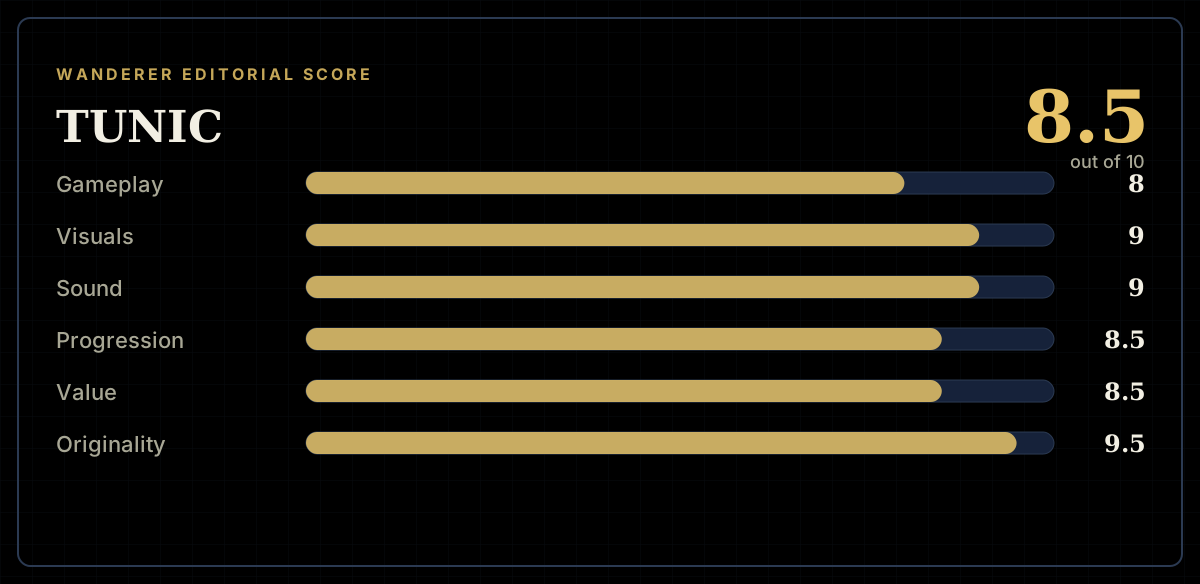
8.5 / 10
- Developer
- TUNIC Team
- Publisher
- Finji
- Released
- 16 March 2022
- Platforms
- Windows, macOS, Nintendo Switch, PlayStation 5, Xbox Series X|S
- Genre
- Action Adventure
- Monetisation
- One-time purchase. Optional soundtrack sold separately. No in-game purchases.
- Players
- Single-player only
The short version
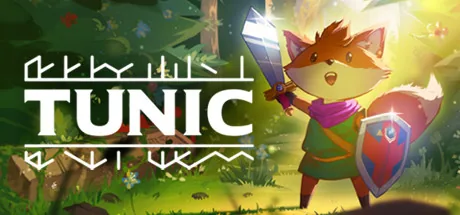
TUNIC's central idea is the best one any game had in 2022. You play a fox in a ruined land, and scattered through that land are pages of the game's own instruction manual — a physical artefact, gorgeously illustrated, written almost entirely in a language you cannot read. You learn to play by reading diagrams in a foreign script, and the manual keeps teaching you things about the world long after you thought you understood it. Some of what it teaches you is that abilities you've had since the first hour were never explained.
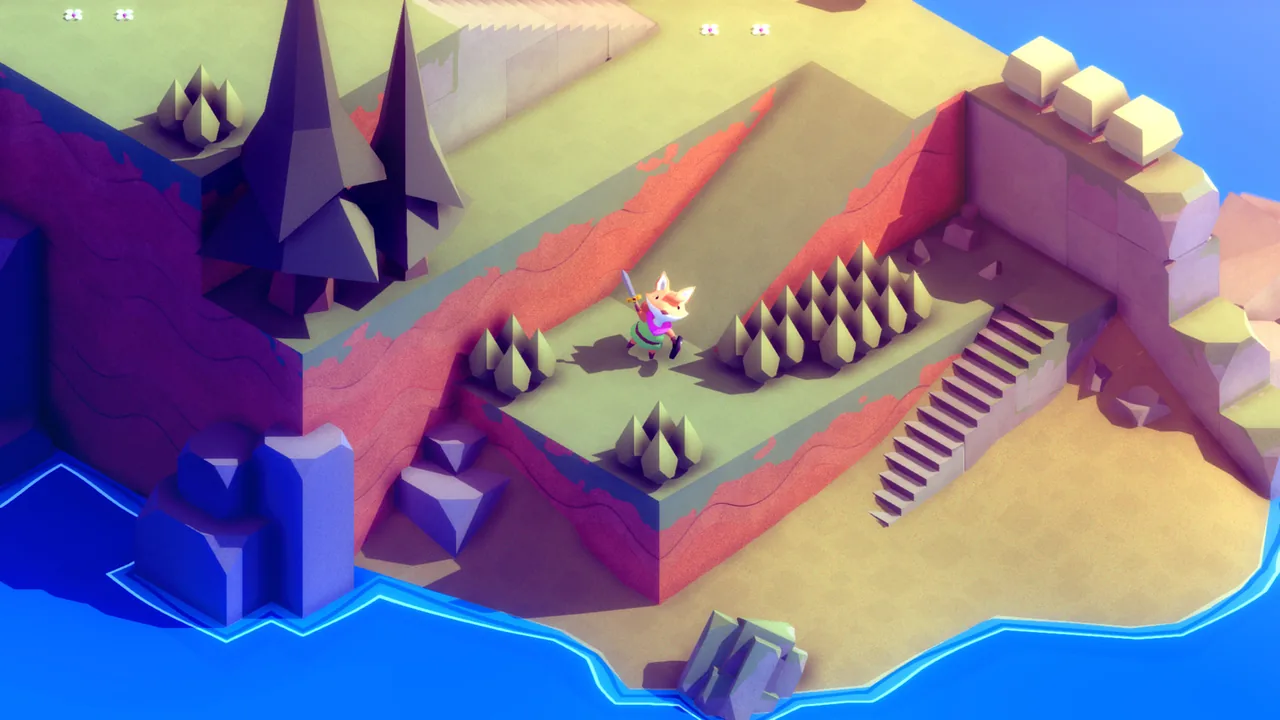
The argument is about everything wrapped around that idea. TUNIC looks like a cosy isometric Zelda homage and plays, for its first half, like a soulslike — stamina, rolls, a death penalty, bosses that will end you repeatedly. A great many people bought the first thing and got the second.
Biggest strengths
- The collectible instruction manual is one of the most original design ideas in modern games, and it's executed beautifully
- Discovery is real — the game routinely reveals that something you'd walked past for hours was always available to you
- Art direction and soundtrack are superb, and both have outlived the game into concerts and an art book
Biggest weaknesses
- It presents as a cute Zelda-like and plays as a soulslike, and that mismatch is the single most common complaint across every year since launch
- Combat is the weakest pillar — serviceable, occasionally frustrating, and clearly not where the design energy went
- The late puzzles are cryptic enough that many players finish only with outside help
Who it's for: Players who want to be trusted rather than instructed, who enjoy taking notes on actual paper, and who won't be put off by genuinely demanding combat. If "I had to look up a guide" ruins a game for you, be careful here.
Our recommendation: Buy it if the idea of decoding a manual sounds thrilling rather than tiring, and go in knowing the combat is soulslike in both difficulty and death penalty. There are accessibility options if the fighting is the barrier rather than the appeal — using them costs you nothing that matters.
8.5 / 10
Every game teaches you how to play it. Most do it with a tooltip that appears when you press the wrong button. TUNIC does it by scattering the pages of a printed instruction manual across a ruined kingdom and writing almost all of it in a language you cannot read.
You find page 12 before page 4. The pages have diagrams — arrows, button glyphs, a crude map with a circle drawn around something — and you understand the diagrams even when the words are noise. You learn that you can do something you've been able to do for three hours. You learn that a wall you walked past has a thing behind it. Occasionally you find a page that reframes what the entire game has been about, and you sit there holding a controller feeling like you've been let in on something.
It is, straightforwardly, one of the best ideas anyone has had in this medium, and four years on nobody has meaningfully copied it.
Why so many people bounced off it anyway
Here's the thing the marketing never quite conveyed, and it's the source of nearly every negative review this game has: TUNIC looks like a gentle isometric Zelda tribute and plays, for a long stretch, like a soulslike.
There's a stamina bar. There's rolling. There's a death penalty in the Dark Souls tradition. There are bosses that will kill you a dozen times while you learn their patterns. Combat is mentioned in 68 of the hundred most-helpful English negative reviews — by a distance the most-cited subject — and the framing is consistent. "THIS IS A DARK SOULS GAME IN ZELDA DRAG," writes one reviewer who had originally left a positive review and changed their mind. "The Steam tags are not there to be pedantic."
What's striking is how gracious the dissent is. The single most-upvoted negative review opens: "I wish Steam had a third option to say 'I didn't enjoy it overall, but understand some people will love this game to death.'" It then makes the sharpest structural observation anyone has made about TUNIC — that it is really two games in sequence, a soulslike first and a puzzle game second, and your enjoyment depends on wanting both, in that order. Another reviewer, at 14 hours, is equally fair: "This isn't a game for everyone — it's a game for a certain kind of person — which is how games ought to be designed. I am just not that person."
That's an unusually healthy argument to find under a 91% game, and it's worth noticing that these complaints never stopped. The negative reviews are spread almost evenly across every year since launch — 26 in 2022, 15 in 2023, 19 in 2024, 24 in 2025, 16 so far in 2026. A launch-window complaint fades. This one doesn't, because it isn't about a defect that got patched. It's about who the game is for, and that hasn't changed.
What the completion data reveals
TUNIC's achievement curve tells a story I haven't seen anywhere else, and it's worth laying out plainly.
96.8% of players pick up the stick — effectively everyone starts. 81.6% find the sword. 76.3% and 54.1% ring the two bells that structure the first act. So far, so ordinary: a healthy funnel with normal attrition.
Then: 25.0% complete the instruction manual.
One player in four assembles the artefact the entire game is designed around. The thing that makes TUNIC TUNIC — the reason it's discussed, the reason it won awards, the idea I opened this review with — is something three-quarters of its buyers never finish putting together. Deeper still, the secret-hunting achievements sit between 16% and 30%, and the rarest, tied to the game's most obscure discoveries, bottom out at 6.6%.
Read alongside the reviews, this is the "two games" thesis confirmed by numbers. Most people play the soulslike. A minority stay for the puzzle game. And the puzzle game is the masterpiece.
I don't think that's a failure of design so much as a consequence of a genuinely uncompromising one. TUNIC never tells you the manual matters that much. It trusts you to work that out, and most people reasonably don't. Outer Wilds makes a similar bet and gets away with it because its whole structure is knowledge; TUNIC hedges by wrapping its knowledge game in a combat game, and the hedge is what costs it.
The combat problem, fairly stated
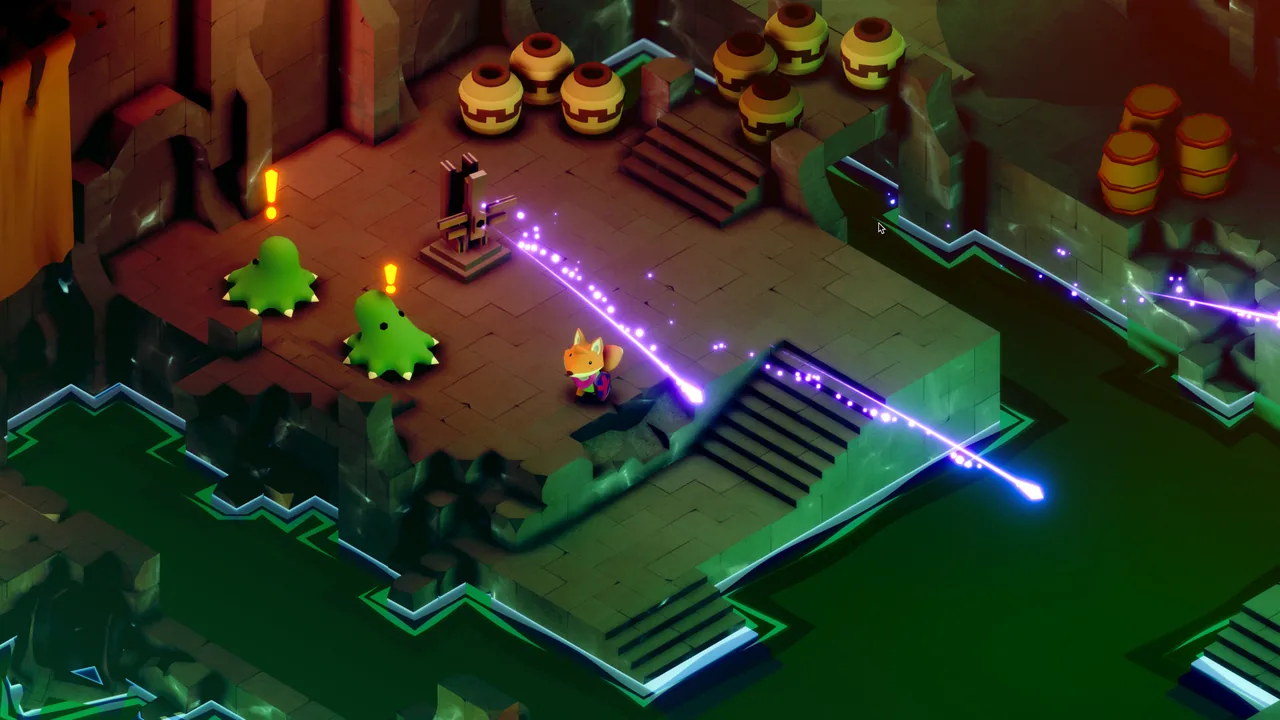
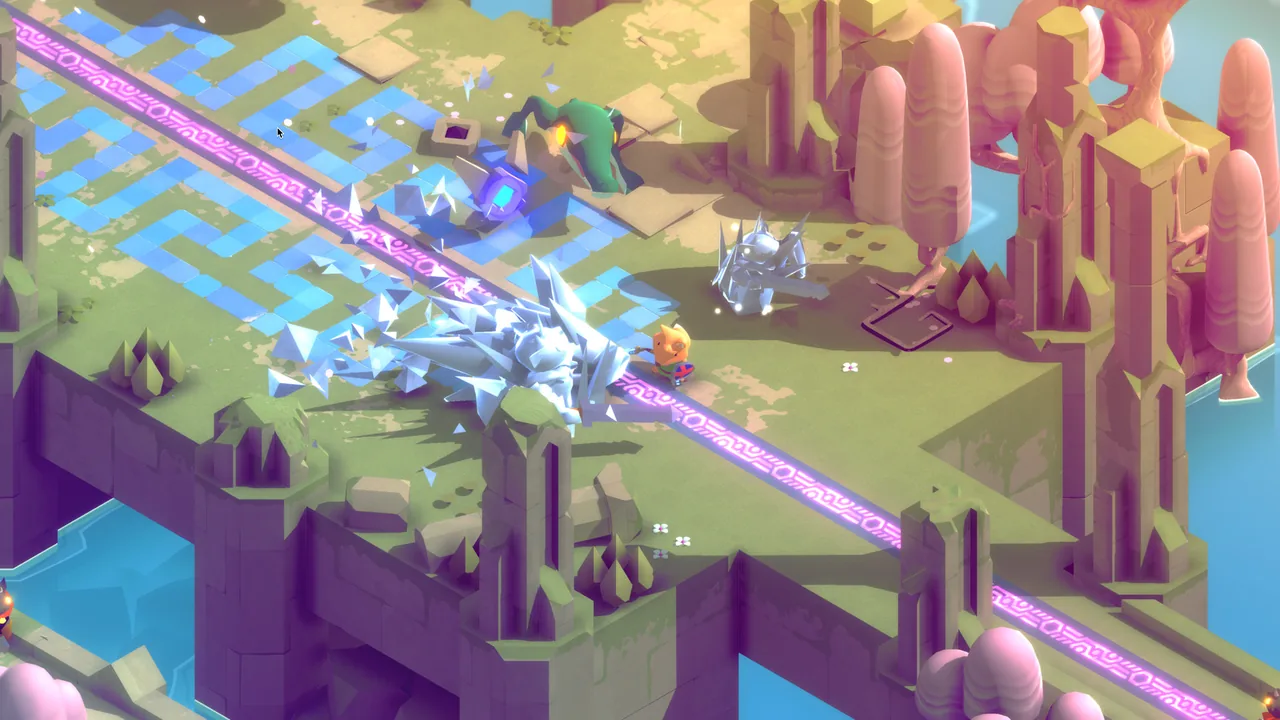
The fighting is fine. That's the honest verdict and it's also the criticism. It's a competent isometric action game with a dodge roll and a stamina meter, and against the elegance of everything around it, "competent" reads as a letdown. Several reviewers note that the last third leans harder on combat than on discovery, which is precisely backwards from where the game's strengths lie.
There are accessibility options for players who want the exploration without the difficulty, and I'd encourage anyone hesitating on that basis to use them without guilt. The manual doesn't get less brilliant if you turn off the death penalty.
The other recurring complaint is that the late puzzles are opaque enough that many players finish with a guide open. That one I'm less sympathetic to, but it's real: the invented script has no in-game Rosetta stone, unlike Fez's, and a couple of the final secrets ask for a leap that plenty of attentive players don't make. Whether that's a flaw or the whole point depends entirely on what you came for.
A game with an afterlife
Four years on, TUNIC is finished in the best sense. There are no patches to report because there's nothing left to fix. What has continued instead is unusual: a live concert tour of its soundtrack, "Music From Distant Shores," playing London in 2025; an art book produced with Lost In Cult; a deck of playing cards; a developer AMA with lead developer Andrew Shouldice in early 2026.
That's what happens when a game becomes an object people want to own rather than a service they subscribe to. It's also a quiet argument for the NZ$43.59 asking price, which has barely moved: you buy it once, it ends, and nothing asks you for money again.
The verdict
TUNIC earns an 8.5. Its central conceit is a 10 — the manual is the most original thing in this library's action-adventure shelf, and the moment a page recontextualises something you did hours earlier is as good as games get. The art and music are superb, the sense of a world holding secrets is real rather than promised, and it respects your intelligence in a way almost nothing else does.
What holds it below a 9 is that the frame around the idea is weaker than the idea. Combat is the part the design cared least about and the part most players spend most of their time doing, and the mismatch between the game's gentle presentation and its soulslike demands has been costing it converts for four straight years. When only a quarter of your players finish the thing your game is about, something in the funnel isn't working, however deliberate the reticence.
Play it if you want to be trusted. Keep a notebook — a real one. And if you find yourself bouncing off the fighting, turn the difficulty options on rather than turning the game off, because the good part is further in than most people get.
Pros and cons
Pros
- The collectible instruction manual is one of the most original design ideas in modern games, and it's executed beautifully
- Discovery is real — the game routinely reveals that something you'd walked past for hours was always available to you
- Art direction and soundtrack are superb, and both have outlived the game into concerts and an art book
- The late-game secret layer rewards the kind of player who keeps a notebook, without gating the ending behind it
- A finished, self-contained purchase with no monetisation and no live-service tail
Cons
- It presents as a cute Zelda-like and plays as a soulslike, and that mismatch is the single most common complaint across every year since launch
- Combat is the weakest pillar — serviceable, occasionally frustrating, and clearly not where the design energy went
- The late puzzles are cryptic enough that many players finish only with outside help
- The invented language has no in-game translation key, which some find magical and others find obstructive
- Only about a quarter of players ever complete the manual the whole game is built around
Screenshots
-
TUNICImage: Finji via Steam -
TUNICImage: Finji via Steam -
TUNICImage: Finji via Steam -
How the review scores each part of the gameWanderer Editorial -
The short versionWanderer Editorial