Game review
Crown Of Silence
6.5 / 10
- Developer
- Nyro Interactive
- Publisher
- Nyro Interactive
- Released
- 5 August 2026
- Platforms
- Windows
- Genre
- Metroidvania / Souls-like Action-Adventure
- Monetisation
- One-time purchase, no in-game store, no IAP. The developer states the price will stay the same through Early Access and after the 1.0 launch.
- Players
- None; fully single-player
The short version
Crown Of Silence is a two-person team's 2D Metroidvania built on Souls-like boss fights and a loadout of weapons, armour and magical artifacts you swap to suit each encounter. The Early Access build is a genuine full playthrough rather than a slice, priced to match, and the ability-gated map and hand-placed lore are already doing real work. What it does not have, despite wearing an RPG tag, is anything resembling RPG progression — no levels, no stat allocation, no skill trees. This is a review of an honestly-scoped Metroidvania that borrows an RPG's equipment variety without its character-building spine.
Biggest strengths
- The Early Access build is a complete start-to-finish playthrough rather than a vertical slice, and the price is set accordingly low
- Weapon, armour and magical-artifact loadouts genuinely change how a fight plays rather than being reskinned stat sticks, per the developer's own combat pitch
- Environmental storytelling is built into the map itself — statues, ruins and item descriptions carry the plot instead of cutscenes doing all the work
Biggest weaknesses
- Despite carrying an RPG tag and genre label, nothing in the store page, the Early Access FAQ or the patch history describes a level system, stat allocation, or a skill tree — progression here is Metroidvania ability-gating and gear-finding, not RPG character building
- The developer's own FAQ says the Early Access version is missing "extra content, visual polish, and balance passes" that are planned for the full release, so what ships today is the roughest version this game will ever be
- Achievements were disabled at launch after a Steam certification issue, so there is no completion curve yet to check drop-off or endgame engagement against
Who it's for: Metroidvania and Souls-like fans who care more about a labyrinthine map and boss patterns than about levelling a character, and who are comfortable buying a still-forming Early Access build from a two-person studio.
Our recommendation: Worth the low asking price for genre fans willing to treat it as Early Access; players drawn in specifically by the RPG tag should know upfront that it means equipment variety, not character progression.
6.5 / 10
A kingdom told through its ruins, not its cutscenes
Crown Of Silence opens on a familiar Metroidvania premise — a silenced, gothic kingdom, a labyrinth of interconnected maps, and a player character working out what happened here one crumbled statue at a time — and it's worth saying up front how deliberately that premise is built. The developer's own pitch leans entirely on environmental storytelling: "the narrative is embedded in the crumbled statues, the background details, and the world itself," with every conversation, item description and enemy encounter meant to hold a clue rather than deliver one outright. That's a common enough ambition in the genre, but committing to it as the only narrative delivery method, with no stated dialogue trees or branching story beats, is a real design choice for a two-person team to make on a debut release.
The map itself follows the genre's rulebook properly rather than gesturing at it. It's described as a true labyrinth of interconnected areas gated by ability rather than key items or difficulty walls — the classic Metroidvania loop of hitting a wall, finding a new traversal or combat tool elsewhere, and doubling back to open a route that was visible from the start. Games in this genre live or die on how well that loop is paced, and it's the one system this review can't verify independently yet: the launch build is two days old, and Crown Of Silence currently carries a single user review on Steam.
Combat built around swapping loadouts, not levelling a character
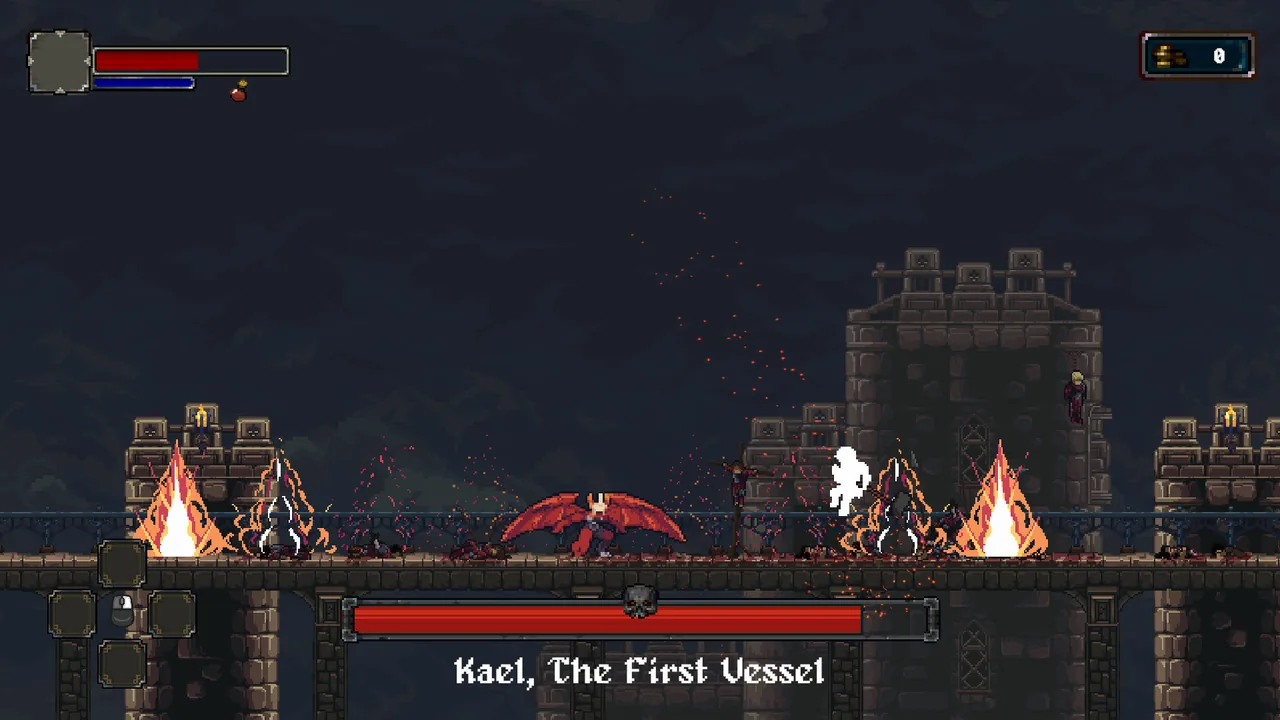
The combat pitch is specific: "do not be bound by a single fighting style," with weapons, armour and magical artifacts found across the map meant to be swapped in and out to answer specific threats — heavy strikes for breaking guards, agile dodging for the fights that punish standing still. Bosses are framed as the game's real test of that system, described as "colossal" guardians of the kingdom, each with distinct attack patterns that are supposed to demand patience and strategy rather than just reflexes, in the vein of the Souls-likes the store page invokes directly.
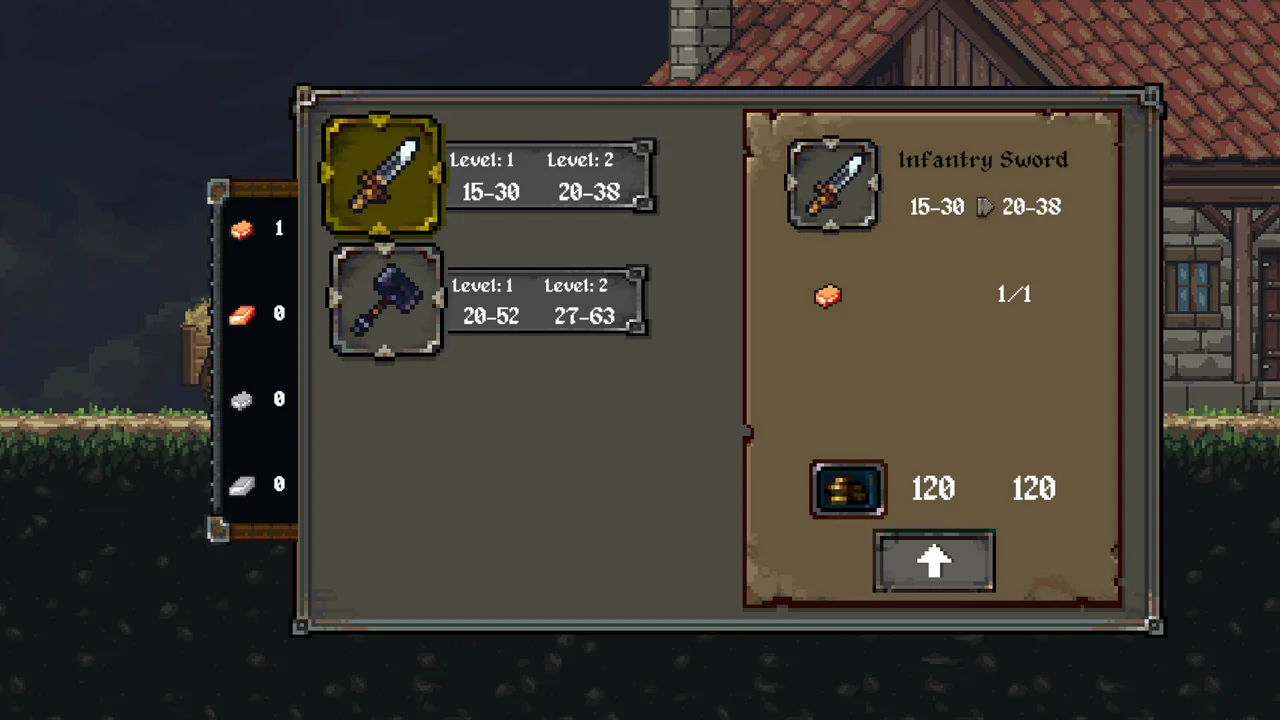
What's conspicuously absent from that pitch, and from the entire store page, Early Access FAQ and patch history checked for this review, is anything resembling RPG character progression. There's no mention of experience points, character levels, stat allocation, talent trees or attribute growth anywhere in the developer's own description of the game. The build variety comes entirely from which gear you're currently wearing, which is a legitimate and well-worn Metroidvania mechanic — but it's a different thing from an RPG's core promise of a character who grows in ways the player chooses. Crown Of Silence carries an RPG tag and genre label on Steam, and Wanderer's own audience skews heavily toward exactly that kind of system, so it's worth being blunt: judged as an RPG, there is currently nothing here to review. Judged as a Metroidvania with an unusually wide loadout of situational gear, the pitch is coherent and the systems described are the right ones for that genre.
What Early Access actually contains right now
Nyro Interactive's own Q&A on the store page is refreshingly direct about scope, and it's worth reading close to verbatim rather than summarised. Asked what the current build offers: "The Early Access version features the core gameplay loop and is fully playable from start to finish. Players can explore the initial areas, test out the main mechanics, and experience the foundation of the game without major blockers." That's a stronger starting claim than most day-one Early Access listings make — a complete playthrough rather than a demo-sized opening slice — and it's immediately qualified: "While it is missing some of the extra content, visual polish, and balance passes planned for the full release, it offers a solid and enjoyable experience right now."
The roadmap answers follow the same pattern of stating a plan without overpromising a date. Asked how long Early Access will run: "We plan to keep the game in Early Access for approximately 6 to 12 months. However, this timeline may adjust depending on player feedback and the scope of new content we add along the way." Asked how the full release differs: "The full version will feature more content and a more polished overall experience. We plan to add new areas, additional items, and expanded features based on player feedback." And on price, a clean commitment that removes one common Early Access anxiety: "No, we plan to keep the price the same during and after Early Access. We want to be fair to everyone who supports us early on as well as those who join us for the full release" — a different approach from studios that use Early Access as a series of price-rise milestones.
The team is explicit about being two people, which context matters for reading the rest of the picture. A pre-launch news post from February 2026, after the Steam Next Fest demo, is candid that the demo build shown to 686 players was "buggier and less polished than we would have liked" due to a tight festival deadline, and lists a parry system, new regions and bosses, and an expanded arsenal of weapons, armour and "ancient runes" as work planned before the eventual release. Whether all of that already shipped in the 5 August build or remains on the Early Access roadmap isn't stated anywhere checked for this review, and readers should treat it as a stated intention rather than a confirmed feature until Nyro Interactive says otherwise.
Launch itself was bumpy in the ordinary indie way rather than a red flag: a news post two days before release says Valve sent the initial build back over "an achievement issue," which the team resolved by disabling achievements for launch rather than delaying further. That's why there's no global achievement curve to check completion or drop-off against in this review — the API returns no data because the feature isn't live yet, not because players aren't finishing the game.
Visuals, requirements and the practical picture
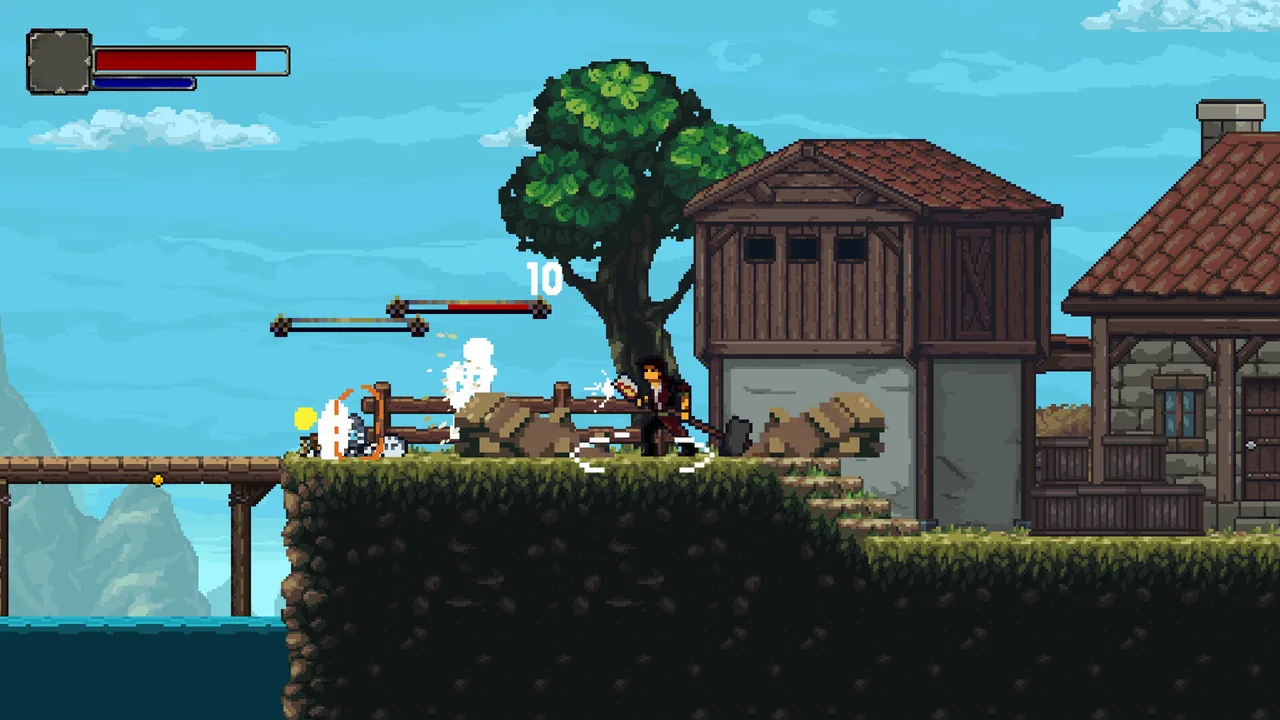
The pixel-art dark-fantasy presentation is the game's clearest strength on the evidence available: gothic ruins, atmospheric lighting and boss silhouettes are the whole visual pitch, and the store page's own screenshots and trailer clips back that up as a coherent, moody aesthetic rather than generic asset-store pixel art. It's also unusually accessible on hardware — the minimum specification lists a GeForce GTX 260 or Radeon HD 4850, a graphics card from roughly 2008, and 4GB of RAM. For a genre where 2D presentation is often the whole budget, that's a sensible choice: the art carries the weight rather than needing horsepower behind it.
Full controller support is listed as a category on the store page, with the game itself flagged as "Gamepad Recommended" — sensible framing for a Souls-like where precise directional input matters. It also lists "Playable without Timed Input," worth flagging for players who find reaction-window mechanics a barrier rather than a challenge. Supported text languages run to fourteen, including Simplified and Traditional Chinese, Japanese, Korean and several European languages, a wide spread for a two-person team's first release.
Final verdict
Crown Of Silence earns real credit for what it does with its Early Access framing: a genuinely complete playthrough rather than a slice, a firm no-price-increase promise, and a developer Q&A that describes the current build's gaps plainly instead of papering over them. The Metroidvania fundamentals it commits to — ability-gated backtracking, environmental storytelling, situational gear over static stat sticks — are the right ingredients for the genre, and the presentation and hardware accessibility both work in its favour.
Where this review has to pull back is the gap between the label and the game. An RPG tag sitting on a store page whose own developer Q&A never once mentions levelling, stats or a skill tree is a tag the game hasn't yet earned, and Wanderer's readers specifically look for RPG systems when they see that tag. Score this as a Metroidvania with an unusually deep equipment layer, and it's a promising, honestly-labelled Early Access launch worth its low asking price for genre fans willing to buy into a still-forming build from a two-person studio. Score it as an RPG, and there's currently nothing here to score. Buyers should go in expecting the former, and check back as the 6-to-12-month Early Access period plays out — starting with whether a real review corpus forms to weigh against a pitch that, for now, rests entirely on the developer's own word.
Pros and cons
Pros
- The Early Access build is a complete start-to-finish playthrough rather than a vertical slice, and the price is set accordingly low
- Weapon, armour and magical-artifact loadouts genuinely change how a fight plays rather than being reskinned stat sticks, per the developer's own combat pitch
- Environmental storytelling is built into the map itself — statues, ruins and item descriptions carry the plot instead of cutscenes doing all the work
- Interconnected, ability-gated exploration follows the genre's own rules properly, rewarding backtracking once new traversal tools open previously blocked routes
- Very light system requirements (a GeForce GTX 260 clears the minimum spec) mean the pixel-art presentation isn't hiding a performance problem
Cons
- Despite carrying an RPG tag and genre label, nothing in the store page, the Early Access FAQ or the patch history describes a level system, stat allocation, or a skill tree — progression here is Metroidvania ability-gating and gear-finding, not RPG character building
- The developer's own FAQ says the Early Access version is missing "extra content, visual polish, and balance passes" that are planned for the full release, so what ships today is the roughest version this game will ever be
- Achievements were disabled at launch after a Steam certification issue, so there is no completion curve yet to check drop-off or endgame engagement against
- Windows-only, with no Mac or Linux build listed
- The review corpus is a single Chinese-language review at time of writing, so there is essentially no independent account yet of how the full campaign holds up over its length
Screenshots
-
Crown Of SilenceImage: Nyro Interactive via Steam -
Crown Of SilenceImage: Nyro Interactive via Steam -
Crown Of SilenceImage: Nyro Interactive via Steam -
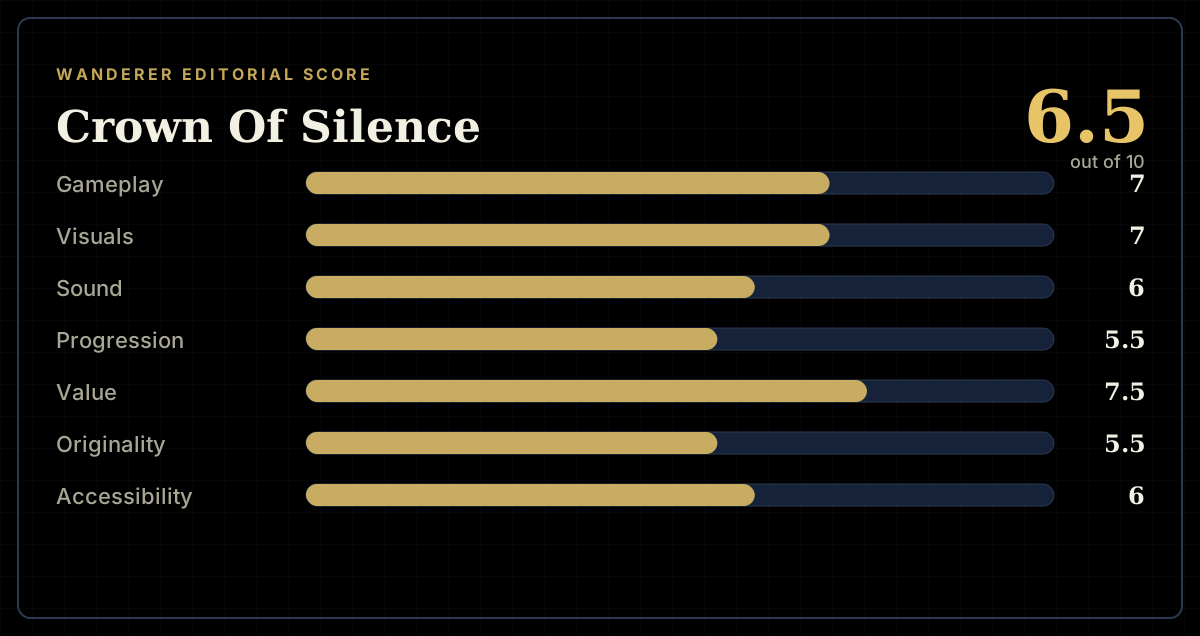
How the review scores each part of the gameWanderer Editorial -
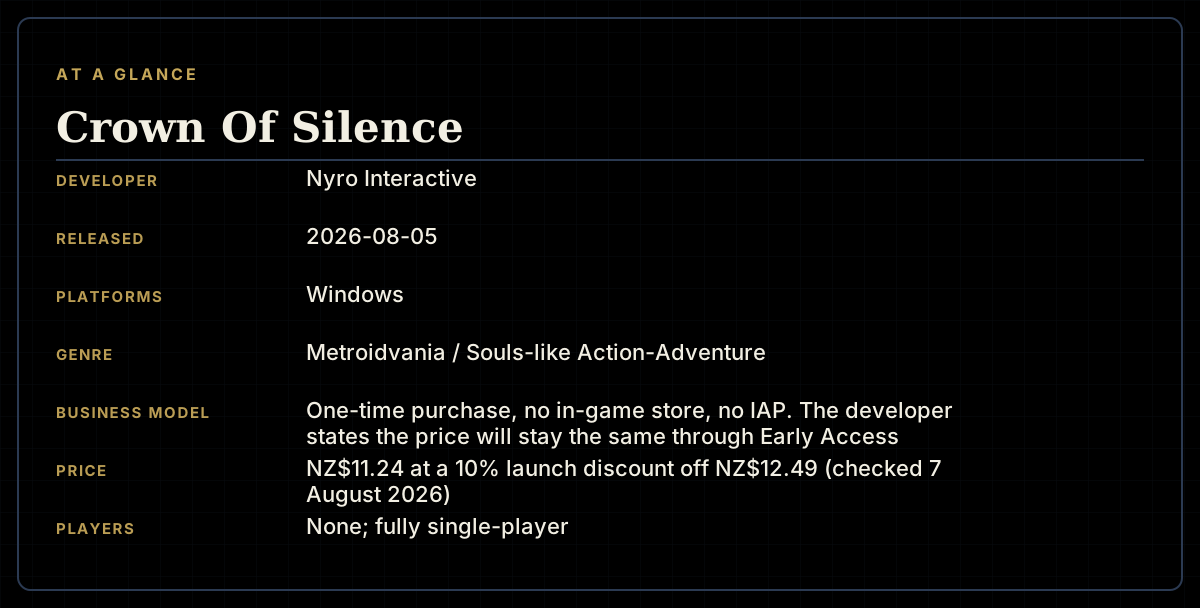
The game at a glanceWanderer Editorial -
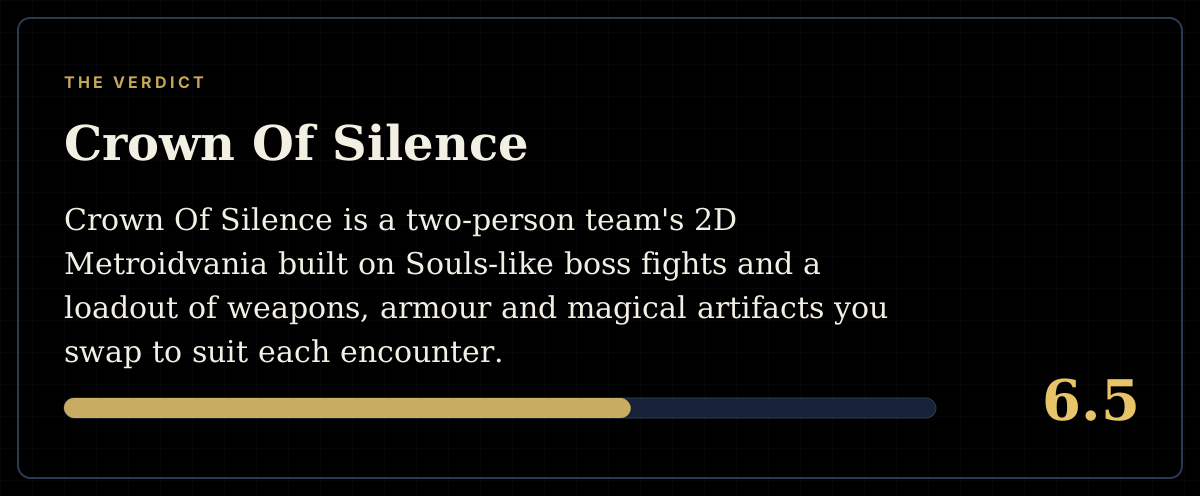
The short versionWanderer Editorial