Game review
CARRION
7 / 10
- Developer
- Phobia Game Studio
- Publisher
- Devolver Digital
- Released
- 23 July 2020
- Platforms
- Windows, macOS, Linux
- Genre
- Reverse-Horror Metroidvania
- Monetisation
- Premium one-time purchase; a free Deluxe Edition content update added extra cosmetic and bonus material in October 2020, no ongoing monetisation since
- Players
- Single-player only
The short version
CARRION nails its core pitch completely: controlling an amorphous, shape-shifting monster as it hunts the humans who imprisoned it feels as fluid and satisfying as its trailers promised, and the pixel-art presentation earns near-unanimous praise. The problem sitting underneath that is just as consistently reported — a Metroidvania built from visually similar biomes with no map, which a large and specific majority of its own review base says turns backtracking into disorientation rather than tension.
Biggest strengths
- Controlling the creature is widely described as the best part of the game — fluid, fast, and satisfying in a way that carries the whole experience even for reviewers otherwise critical of it
- The reverse-horror premise, playing the monster hunting human prey rather than the other way around, is repeatedly called a genuinely fresh twist on a familiar genre
- Pixel-art presentation and atmosphere draw close to unanimous praise, including from reviewers who ultimately don't recommend the game
Biggest weaknesses
- The single most repeated complaint across the review sample, by a wide margin, is the total absence of a map in a Metroidvania built around backtracking through visually similar biomes
- A quality-of-life patch confirmed through the developer's own update history added extra in-level clues to guide players toward objectives, but never introduced a map system, suggesting the omission is a deliberate design choice reviewers continue to push back on rather than an oversight left unaddressed
- Several reviewers say the game's own store tags oversell its action content, since a large share of playtime is spent on navigation and puzzle-solving rather than active hunting
Who it's for: Fans of short, atmospheric indie horror who want a genuinely novel premise and don't mind occasionally getting lost, more than players looking for a lengthy or narratively deep campaign.
Our recommendation: A great few-hour experience worth full price if the monster-movement premise excites you specifically; wait for a sale if you're mainly curious, since the reported length and lack of a map are the two complaints consistent enough to weigh heavily either way.
7 / 10
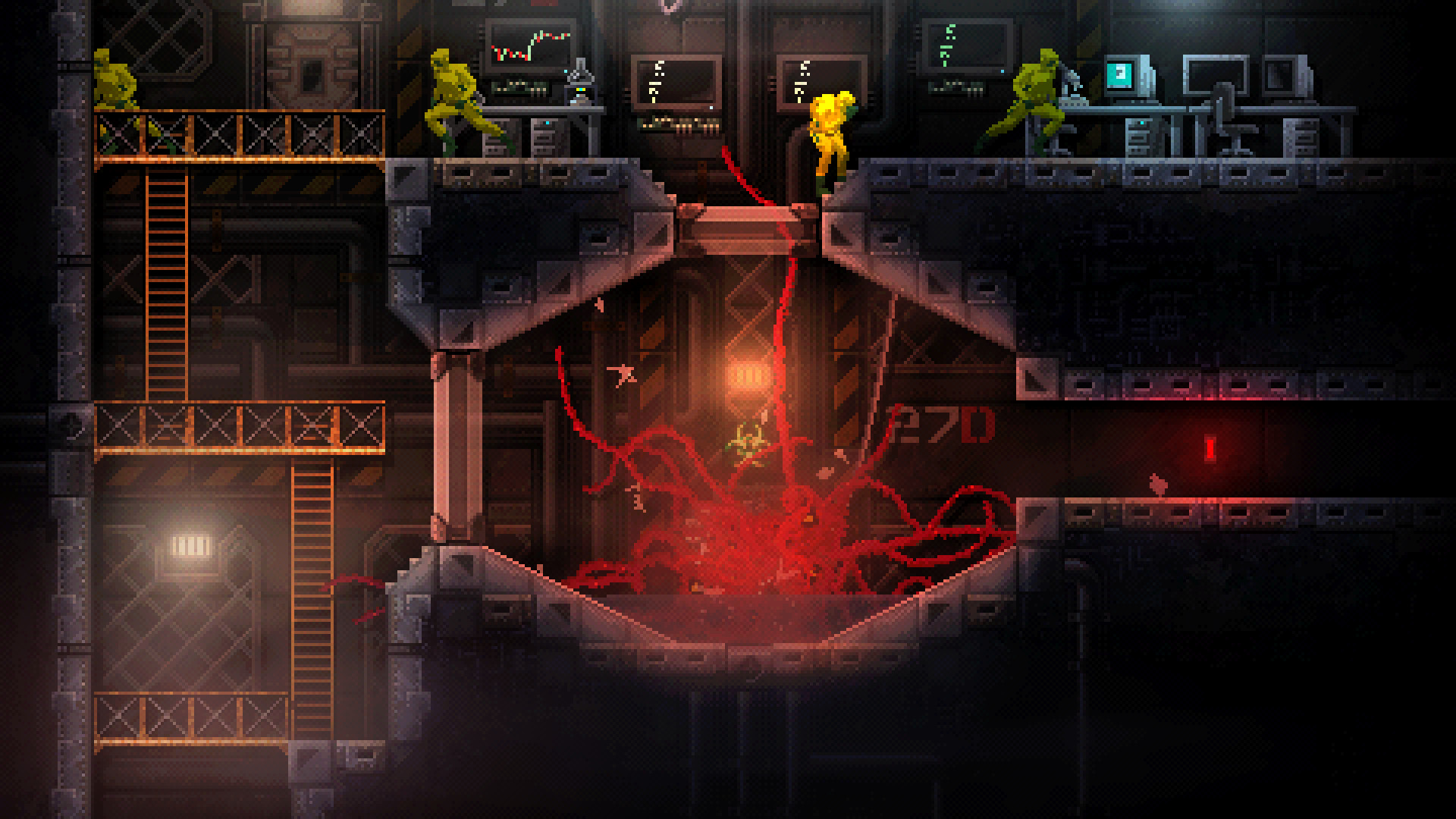
Most horror games put you on the wrong end of the monster. CARRION flips that completely: you are the amorphous, tentacled mass of gore, and the humans in the facility that imprisoned you are the prey. It's a simple inversion, but it's the single idea the review sample returns to most often as CARRION's biggest strength — reviewers describe the reversal itself, not just the execution of it, as something they hadn't really seen done before.
A monster that's genuinely satisfying to control
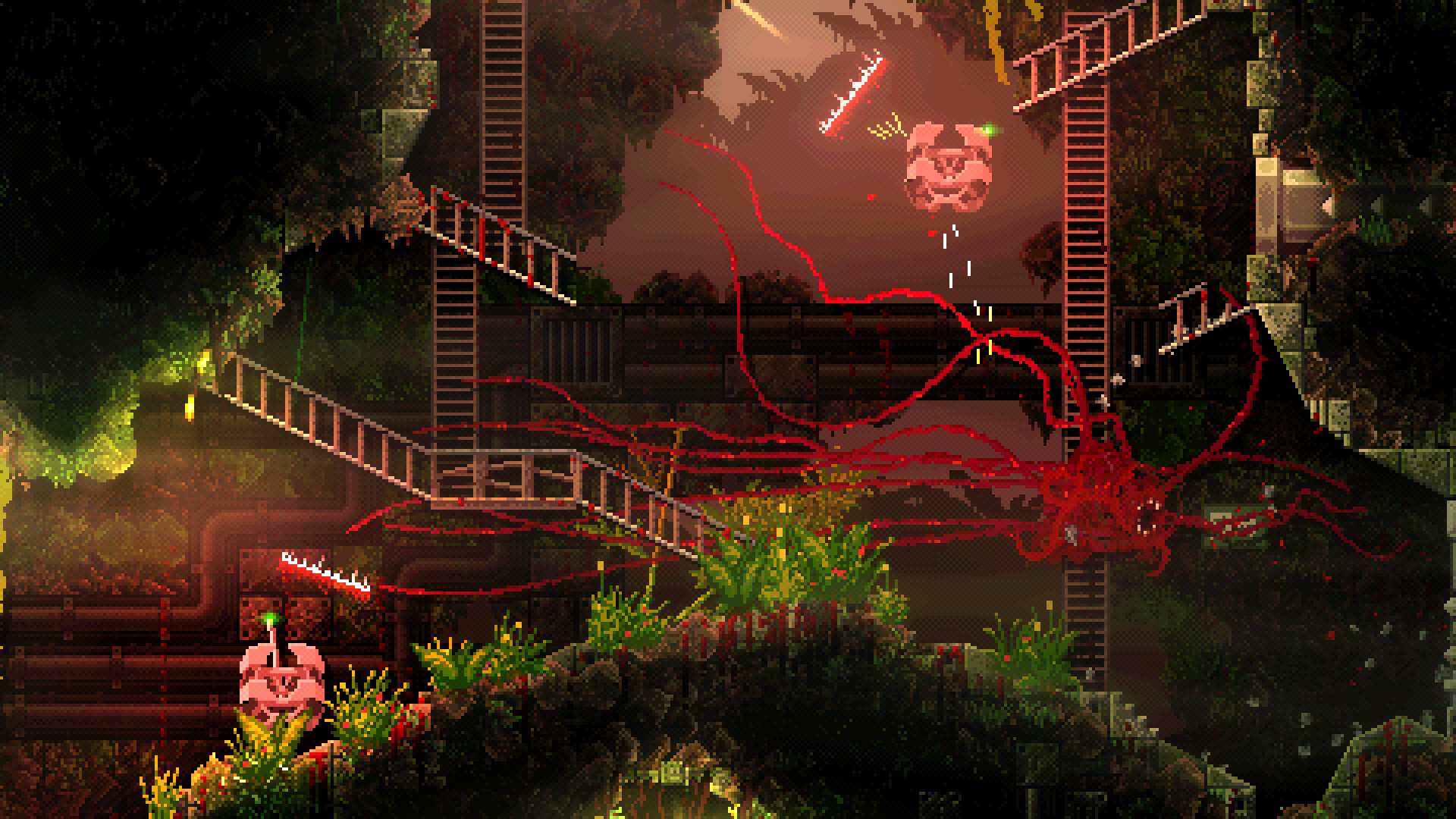
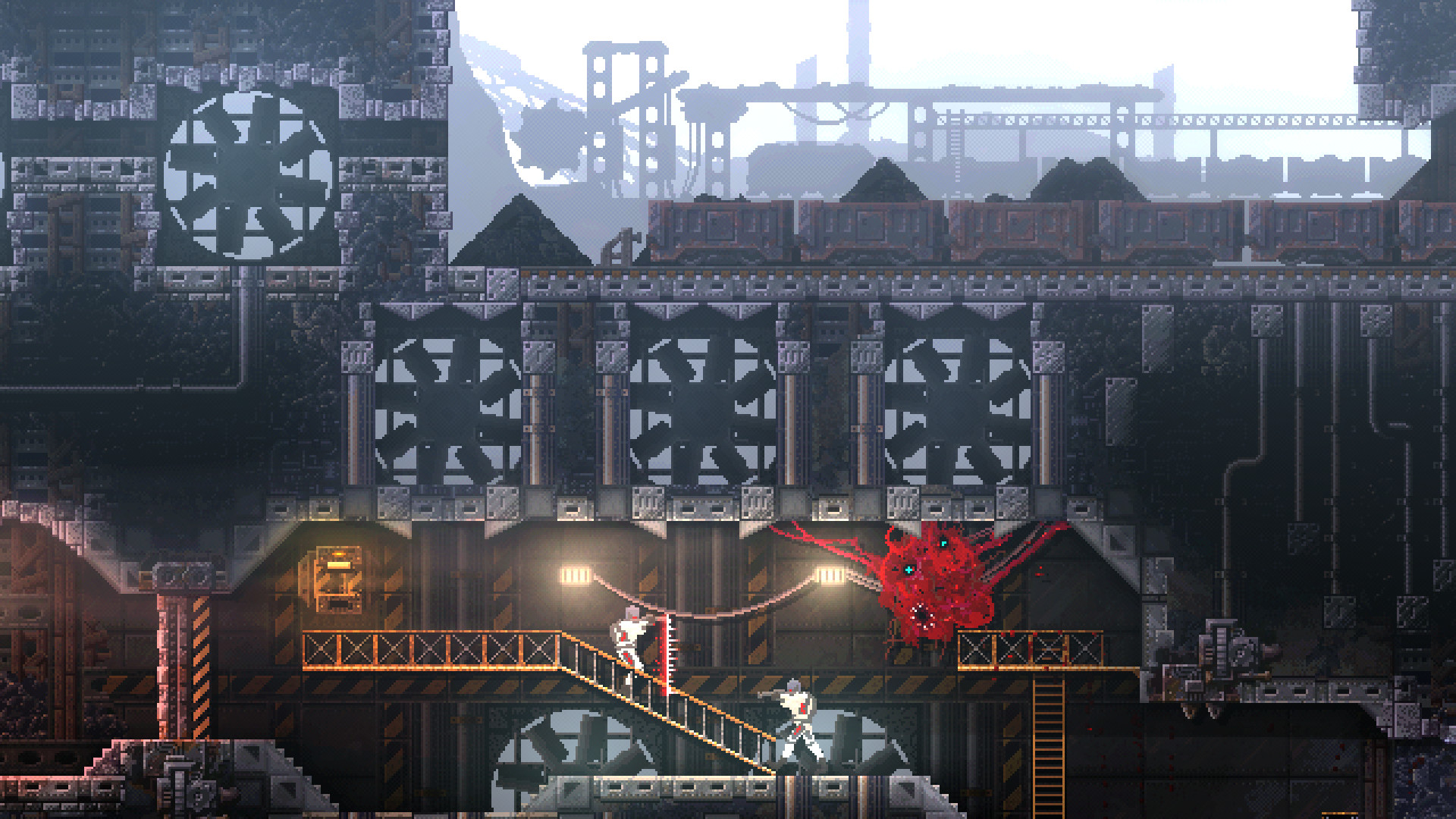
The movement is the game. Whipping tentacles across gaps, squeezing through vents, and swarming a room of armed guards all feel fast and physically convincing in a way multiple reviewers single out as the best part of the experience, independent of everything else they have to say. One especially direct review calls it a game that "does one thing and does it really really well," and that sentiment repeats often enough across the sample that it reads as close to consensus rather than a lone impression. Ability-gated progression — new mutations and powers that open previously blocked paths — is paced well enough in the opening hours to keep introducing fresh options rather than just bigger numbers, and pixel-art presentation draws close to unanimous praise, showing up as a compliment even inside reviews that otherwise recommend against buying at full price.
The complaint that dominates the review sample
Set against that, one specific structural problem shows up so consistently, from so many independent reviewers, that it has to be treated as the review sample's dominant finding rather than a minor gripe: CARRION has no map. Its Metroidvania structure asks players to backtrack through biomes that many reviewers describe as visually similar enough to make retracing steps genuinely disorienting, and the complaint isn't limited to one style of player — it appears in reviews that otherwise love the game just as often as in reviews that don't recommend it.
What makes this more than an ordinary design gripe is that the developers themselves have directly acknowledged navigation clarity as a problem without addressing it the way players keep asking for. A quality-of-life update, confirmed through the developer's own dated changelog, added extra environmental clues in specific areas to guide players toward their next objective after obtaining a required ability — a real, deliberate response to the complaint. But no version of the game has added a map. Read together, that looks less like an oversight the team forgot to fix and more like a considered design stance the developers have held onto even as their own players kept pushing back on it across years of reviews.
A short, atmospheric campaign rather than a long, narrative one
Length and story are the other recurring themes, and they're related. Several detailed reviews describe finishing the entire game in a single extended sitting — comparisons to a short film or to Portal's runtime come up more than once — and narrative content is generally described as minimal, delivered through environment and atmosphere rather than dialogue or plot beats. A number of reviewers also flag that the game's own store page tags oversell its action content relative to how much of an average playthrough is actually spent solving environmental puzzles and finding a way forward, rather than actively hunting prey.
Global achievement data offers a useful, if imperfect, way to weigh how much the navigation complaints actually stop people from finishing: roughly 30% of all owners reach the game's final achievement. That's a real drop-off, and it's plausible some meaningful share of it reflects exactly the disorientation reviewers describe, but it's not the kind of near-total collapse that would suggest most players are getting hopelessly stuck — a large minority does see the story through to its end.
Horror that plays as dark comedy just as often
One tonal detail worth naming directly: despite the "reverse horror" label, a large share of the review sample treats the actual experience as more darkly comic than frightening. Reviewers repeatedly joke about the game giving them "HR experience" for treating coworkers as disposable biomass, or about finally getting to live out being a movie monster rather than fighting one — the humor shows up often enough, and independently enough, that it reads as the game's actual emotional register rather than readers projecting jokes onto something meant to be scary. That's worth flagging for anyone buying it expecting sustained dread: CARRION is more interested in the gleeful power fantasy of being an unstoppable creature than in building tension, and the reviews that enjoy it most tend to be the ones that met it on those terms rather than expecting a traditional horror game.
Post-launch support reinforces that this was a small team building something they cared about past the initial release, not a one-and-done project: Steam Workshop mod support arrived in open beta within a year of launch, console ports followed on Switch, Xbox and eventually PlayStation, and the developers marked the game's first anniversary with a dedicated post looking back at early prototypes — the kind of retrospective transparency that's easy to skip and relatively rare for a studio this size.
Verdict
CARRION succeeds completely at its core premise — playing the monster feels as good as the marketing promised, and the pixel-art horror atmosphere holds up across almost the entire review sample. What keeps it out of the top tier is a specific, well-documented structural flaw the developers acknowledged just enough to patch around without actually fixing: a mapless Metroidvania built from biomes players routinely describe as too similar to navigate confidently. It's a great few hours for the right player, and a frustrating one for anyone who needs a map to feel oriented.
Pros and cons
Pros
- Controlling the creature is widely described as the best part of the game — fluid, fast, and satisfying in a way that carries the whole experience even for reviewers otherwise critical of it
- The reverse-horror premise, playing the monster hunting human prey rather than the other way around, is repeatedly called a genuinely fresh twist on a familiar genre
- Pixel-art presentation and atmosphere draw close to unanimous praise, including from reviewers who ultimately don't recommend the game
- Puzzle and ability-gating design is well-paced early on, introducing new movement and combat tools often enough to keep the moment-to-moment loop from going stale
- A free Deluxe Edition update and a steady stream of post-launch patches, plus later console ports, show the small team supported the game well past its launch window
Cons
- The single most repeated complaint across the review sample, by a wide margin, is the total absence of a map in a Metroidvania built around backtracking through visually similar biomes
- A quality-of-life patch confirmed through the developer's own update history added extra in-level clues to guide players toward objectives, but never introduced a map system, suggesting the omission is a deliberate design choice reviewers continue to push back on rather than an oversight left unaddressed
- Several reviewers say the game's own store tags oversell its action content, since a large share of playtime is spent on navigation and puzzle-solving rather than active hunting
- The campaign is short by design — several detailed reviews compare it to a single afternoon's session — and narrative content is described as minimal, closer to atmosphere than a told story
- Global achievement data shows only around 30% of owners reach the game's final achievement, a real (if not catastrophic) drop-off consistent with some share of the playerbase losing momentum before the end
Screenshots
-
CARRIONImage: Devolver Digital via Steam -
CARRIONImage: Devolver Digital via Steam -
CARRIONImage: Devolver Digital via Steam -
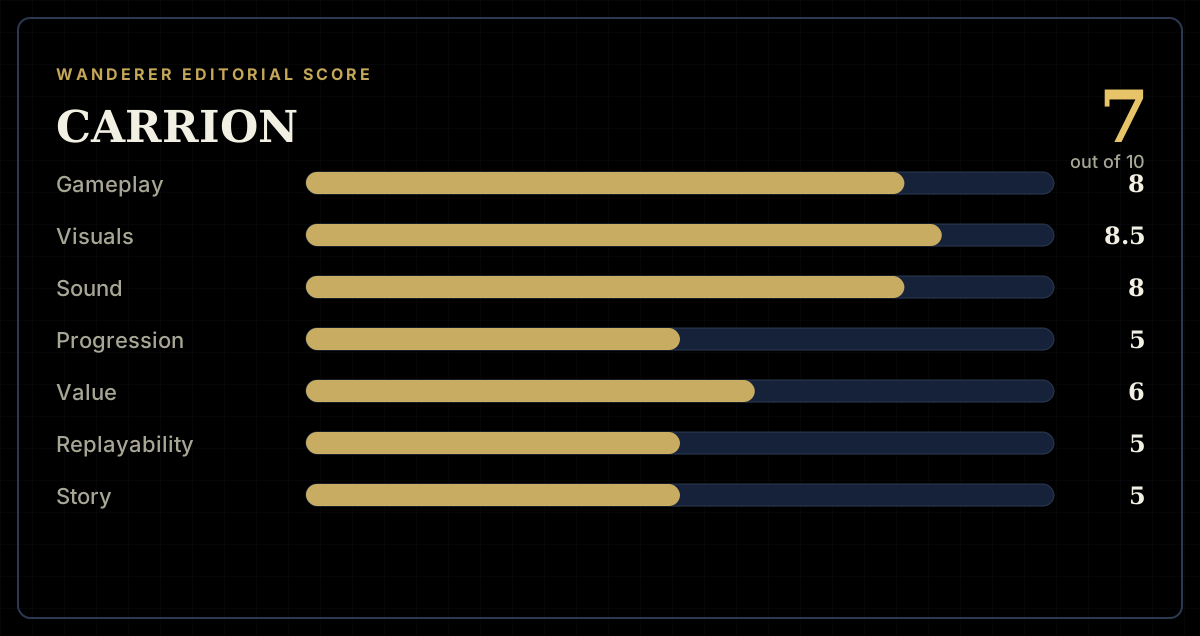
How the review scores each part of the gameWanderer Editorial -
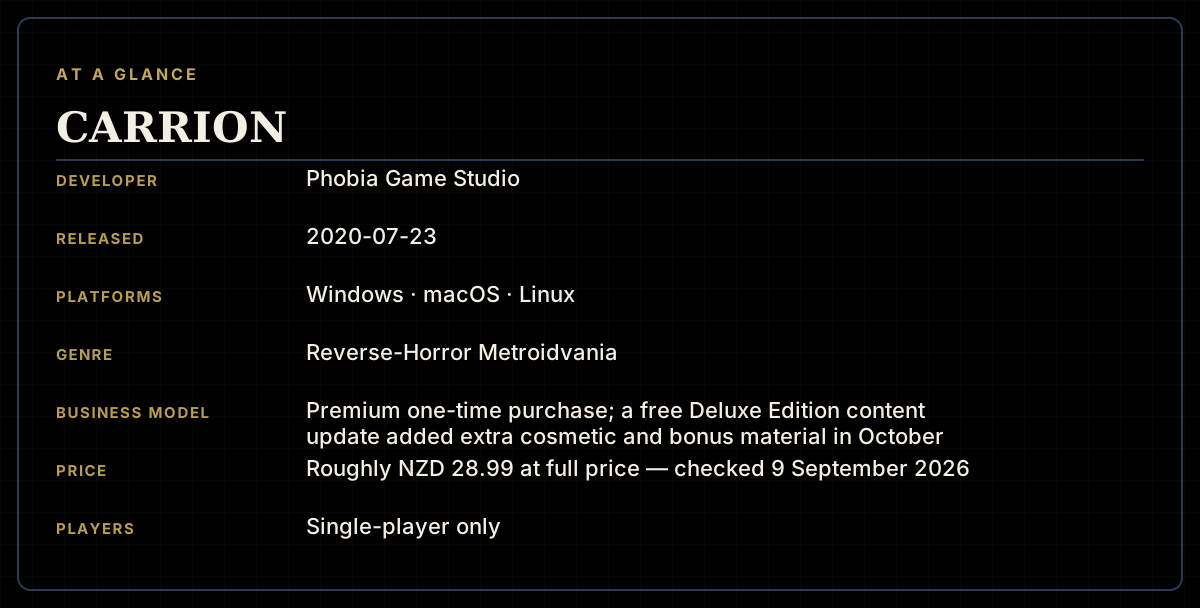
At a glanceWanderer Editorial -
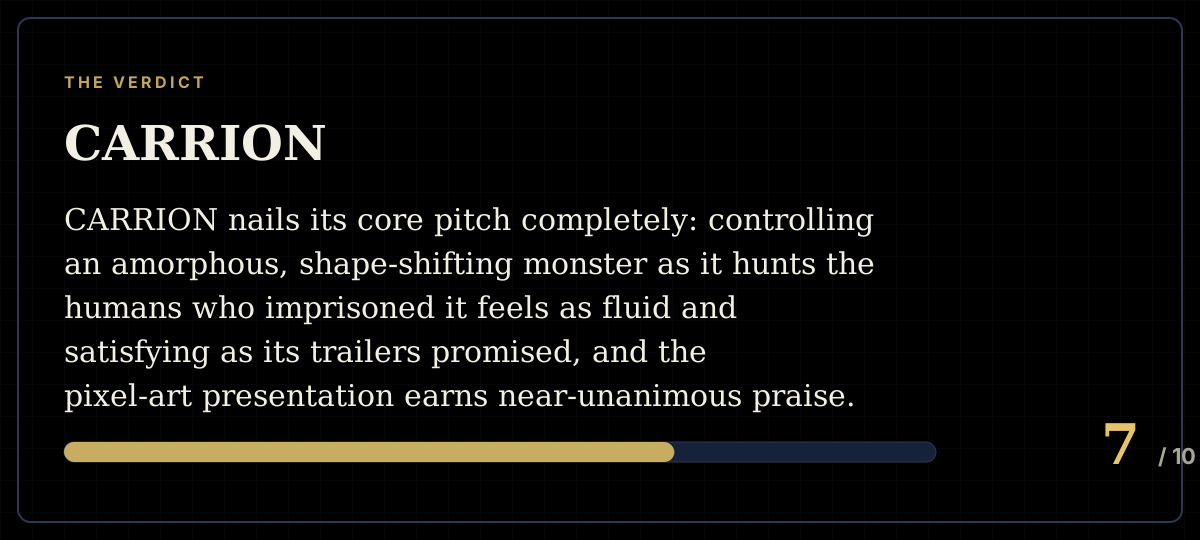
The short versionWanderer Editorial