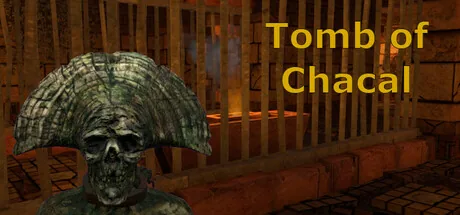
Game review
Tomb of Chacal
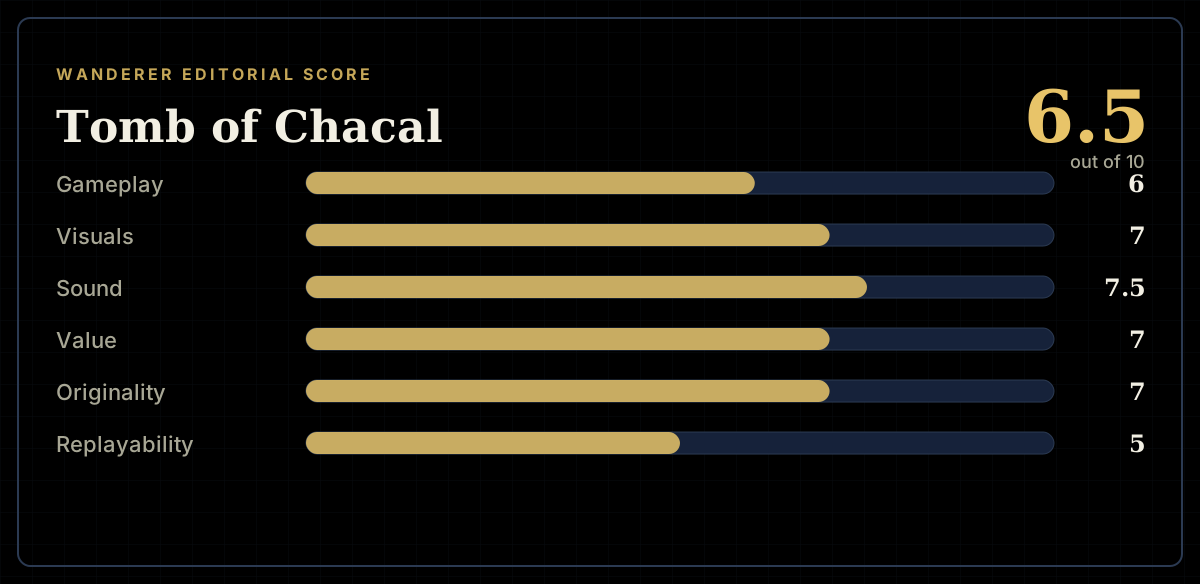
6.5 / 10
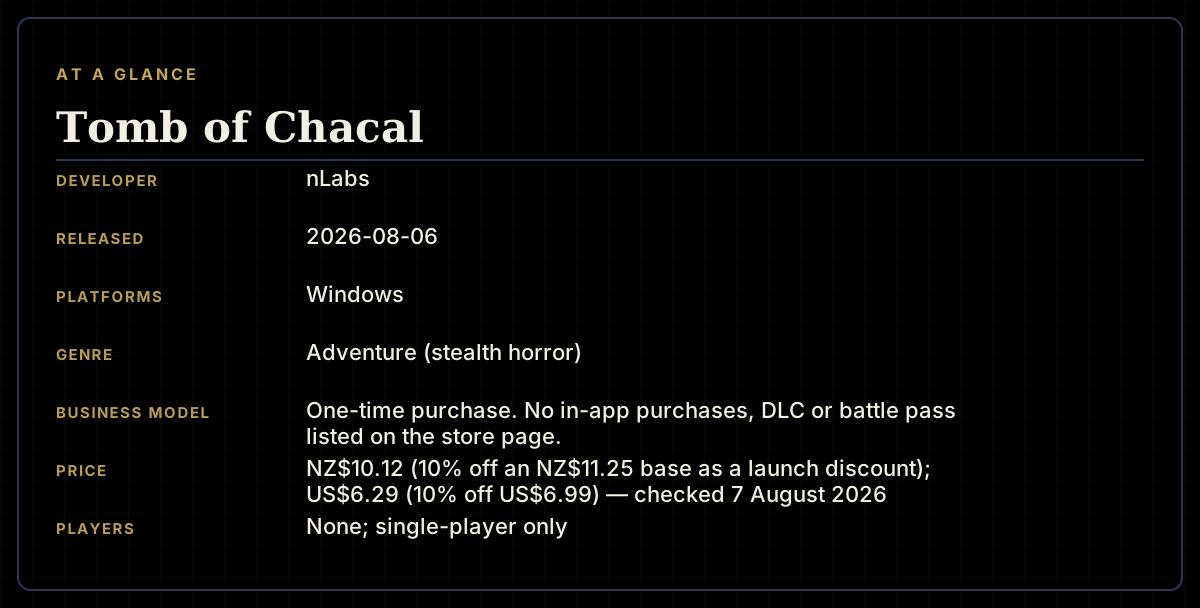
- Developer
- nLabs
- Publisher
- nLabs
- Released
- 6 August 2026
- Platforms
- Windows
- Genre
- Adventure (stealth horror)
- Monetisation
- One-time purchase. No in-app purchases, DLC or battle pass listed on the store page.
- Players
- None; single-player only
The short version
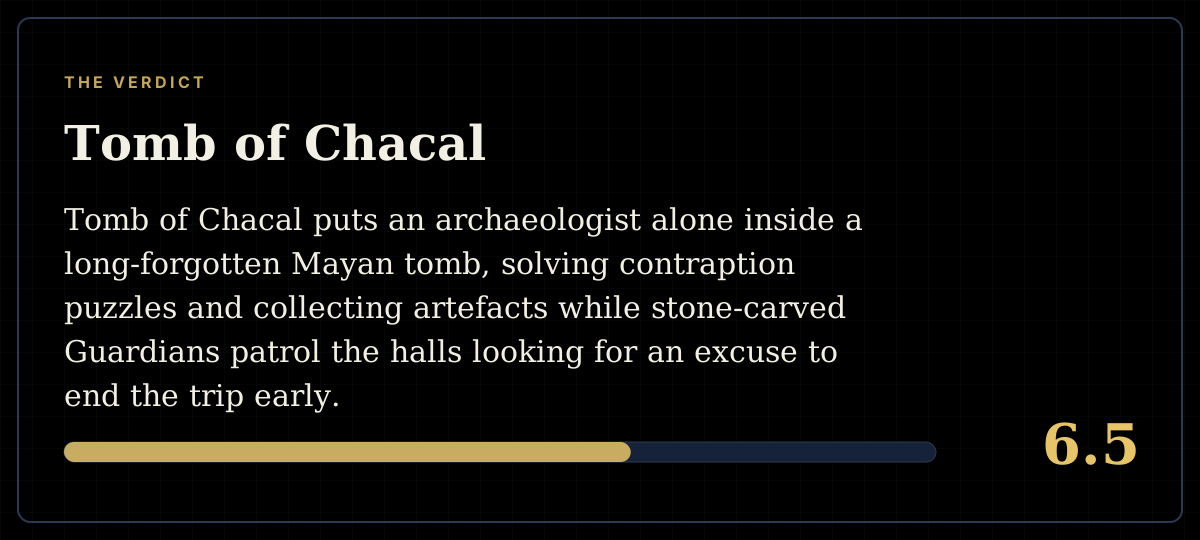
Tomb of Chacal puts an archaeologist alone inside a long-forgotten Mayan tomb, solving contraption puzzles and collecting artefacts while stone-carved Guardians patrol the halls looking for an excuse to end the trip early. It's a first-person cat-and-mouse horror game built around hiding spots and line-of-sight rather than combat, spread across ten chapters, four of which carried over from a free demo that circulated for more than a year before the full game shipped.
That demo left a genuinely useful paper trail. Testers consistently praised the atmosphere and music and just as consistently flagged two specific problems — dungeon rooms that blur together, and a Guardian whose menace evaporates the moment it starts talking or loses sight of you. The full release launched a day before this review with zero Steam user reviews, so there's no way yet to say whether six additional chapters solved those problems or multiplied them.
Biggest strengths
- A first-person Mayan tomb dressed as a patrolling stealth encounter rather than a jump-scare gallery is a genuinely underused setting, and testers who tried the demo singled out its atmosphere and music specifically
- Guardians are not omniscient — hiding spots and breaking line of sight are the stated way to survive an encounter, which puts the tension on route-reading rather than reflexes
- Ten chapters, full controller support, Steam Cloud saves and 15 achievements for a launch price under NZ$11 is a fair amount of structure for a budget indie release
Biggest weaknesses
- Zero Steam user reviews exist for the full game at the time of writing, so none of the demo-era complaints have been independently confirmed as fixed
- Demo testers repeatedly described the dungeon layout as repetitive and hard to read once rooms started blending together — a problem that gets more chances to resurface across ten chapters than it had across four
- The same testers said the Guardian's threat collapses once it starts talking to the player or loses a chase by breaking line of sight, undercutting the stealth tension the whole game is built around
Who it's for: Stealth horror fans who want tension built from patrol routes and hiding spots rather than jump scares or combat, and budget shoppers drawn to a distinctive Mayan-tomb setting few other games have used. A harder sell for anyone who needs guaranteed variety across a full ten-chapter runtime, given what testers said about the shorter demo.
Our recommendation: A low-risk pickup at this price if a slow-burn, puzzle-and-patrol horror game in an unusual setting is the pitch you want. Players who want confirmation that the repetition and weak-monster complaints from the demo got fixed across six new chapters should wait for the full game's own review count to form before spending.
6.5 / 10
Tomb of Chacal opens with a premise horror games rarely bother with any more: you're not a marine, a ghost hunter or a cursed teenager, you're an archaeologist who wandered into a Mayan tomb almost by accident and now has to get back out. There's no weapon to find and no monster to kill. The tomb's stone-carved Guardians are described as neither omniscient nor especially fast, and the entire pitch rests on out-thinking their patrols rather than outrunning or outfighting them. It's a small, specific idea, and it's one the game had more than a year to test in public before committing to a ten-chapter release.
A cat-and-mouse pyramid, not a gauntlet
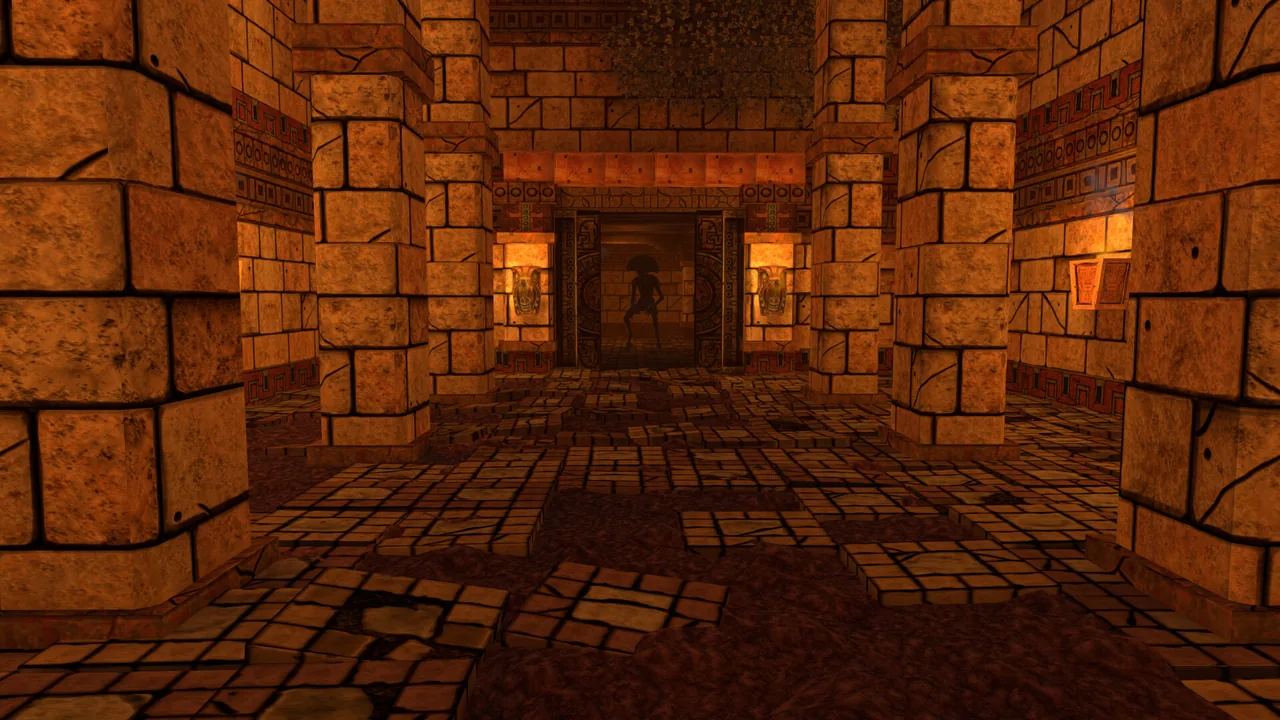
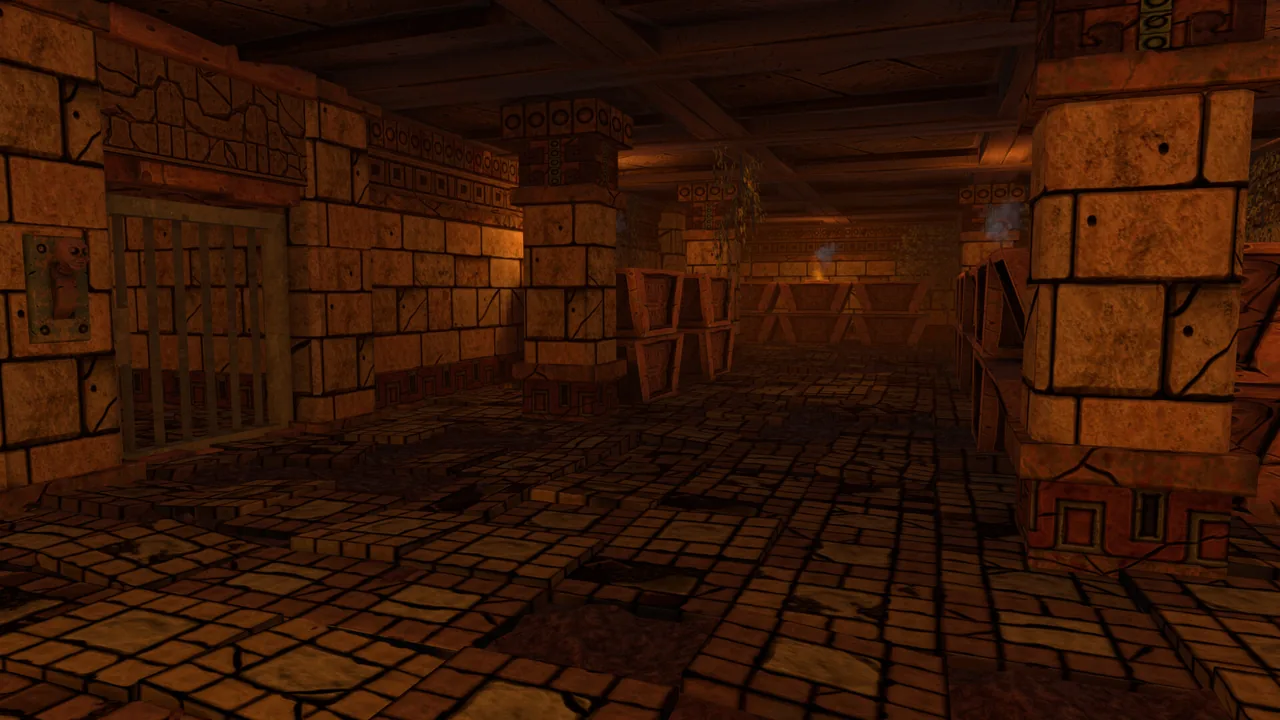
The loop is straightforward on paper: explore a labyrinth of tomb chambers, interact with contraptions to open new paths, collect artefacts destined for a museum, and avoid being seen by whatever is patrolling the halls around you. Hiding spots exist specifically to break a Guardian's attention, and running is presented as a legitimate fallback rather than a failure state. That framing — survival through route-reading and patience rather than combat — puts Tomb of Chacal closer to Amnesia or Alien: Isolation's stealth stretches than to a monster-shooter dressed up in ruins, and it's a defensible choice for a solo or small-team budget release: AI patrol logic and hiding-spot tension are cheaper to build well than combat that has to feel fair.
Testers who worked through the free demo — which circulated for more than a year before the full release, from June 2025 through a patch in June 2026 — described exactly that cat-and-mouse feeling landing, at least in short bursts. One called it "a fun game of cat and mouse in a pyramid," another compared the animation style favourably to classic Doom, and both singled out the puzzle difficulty as pitched well: challenging without becoming a dead stop. That's a genuinely good sign for a stealth-puzzle hybrid, where the two systems fighting each other is the most common way this kind of game falls apart.
What the same three testers all flagged
What makes the demo period useful is that its handful of public reviews didn't just praise different things — they converged on the same two complaints, independently, months apart. First: the dungeon itself. More than one description settled on "repetitive," with rooms blending together to the point that navigation became the actual obstacle rather than the Guardians. Second, and more specific: the Guardian's menace doesn't hold up under scrutiny. One tester asked for its tracking to be tightened, because breaking line of sight was enough to lose it outright. Another went further, arguing that giving the Guardian dialogue with the player character actively undercuts the horror, and that the design would land harder if the lighting hid more of the creature rather than showing it in full.
Those are unusually precise, unusually consistent notes for a demo audience of three public reviews to produce, and they point at the same underlying issue from two directions: the Guardian is meant to be the thing generating tension, and testers kept finding ways it stopped being scary — either by losing them too easily, or by talking to them. Whether the finished game tightened the tracking, cut back the dialogue, or reworked the lighting the way that reviewer suggested isn't something the store page or the patch notes confirm. The one demo patch that did ship, in June 2026, fixed a title-screen hang and a relic-collection bug, and swapped the controller run button — nothing addressing AI tracking, dialogue pacing or level layout.
Six new chapters, and no verdict on any of them yet
The full release keeps four of the demo's chapters and adds six more, roughly tripling the amount of tomb a player will walk through compared to what those three reviews were written about. That's the detail worth sitting with: repetitive room design was already a complaint at a quarter of the final length. Ten chapters gives the same problem far more room to resurface, and there is no external signal yet — no achievement completion curve worth reading, no review corpus, no patch notes addressing it directly — to say whether the extra content varies its toolset or just repeats the demo's rooms at greater length. The global achievement stats currently sitting on the game are drawn from too small a player base to mean anything beyond confirming the achievement list exists; treating any of those early percentages as a difficulty curve would be reading noise as signal.
What is confirmed is the shape of the achievement list itself: fifteen achievements, most of them hidden, with names like "Graveyard," "Pursuit," "Jailbreak" and "Waterworks" hinting at set-piece moments spread across the run rather than being clustered at the very end. Combined with full Steam Cloud support and full controller support at launch, the production values around the core game are solid for the price point, even where the core game's specific weaknesses remain unverified.
Presentation carries more weight than the mechanics, so far
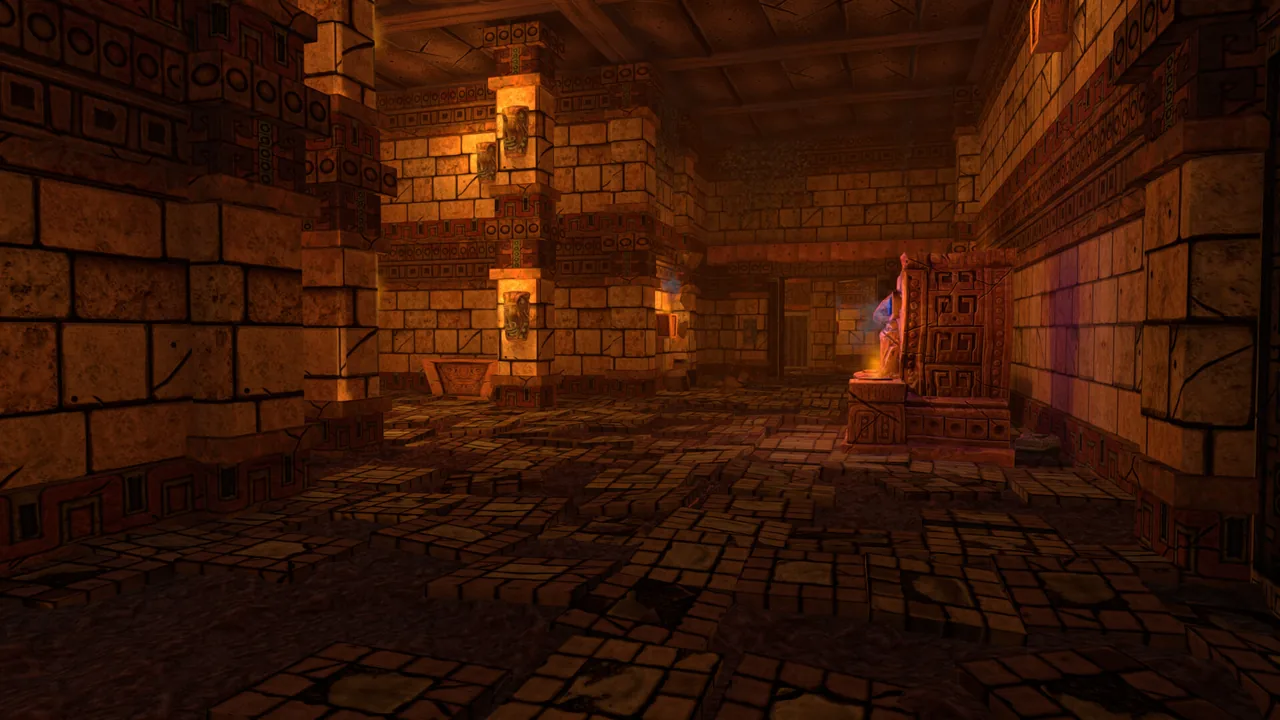
Every piece of tester feedback that exists agrees on one thing without qualification: the atmosphere and the music are the strongest part of the package. That's a narrower compliment than it sounds — it says the mood works even when testers thought the level design or the monster design didn't fully land, which is a genuinely useful signal for a horror game specifically, where tone carries more of the experience than most genres. A tomb that sounds and feels right can survive a repetitive floor plan better than a generic one could; it just can't survive it indefinitely across ten chapters instead of four.
The content descriptor Steam requires on the store page is blunt about the register the game is aiming for: dead bodies, skeletons, and descriptions of violent dismemberment. Nothing in the available material suggests the horror leans on jump scares over dread, which lines up with the stealth-first framing, but it's also not a game built for players who want their horror gentle.
Final verdict
Tomb of Chacal is a well-scoped, single-idea horror game — one archaeologist, one tomb, patrols instead of enemies — from a developer who did something a lot of budget horror releases skip: put a fifth of the finished game in front of the public for over a year and let people say what wasn't working. What came back was specific and consistent, atmosphere and music landing, dungeon repetition and a Guardian whose threat collapses under its own dialogue and tracking not landing, and there's no confirmation yet that the six chapters added since address either problem or simply extend them. At a launch price under eleven New Zealand dollars, with full controller support, cloud saves and a legitimately distinctive setting, the risk of trying it is low. The uncertainty is real, though, and it's specific rather than generic: whether the parts testers already flagged as weak got fixed before being tripled in scope. Six and a half out of ten reflects a genuinely promising, well-tested foundation held back from a stronger score by exactly the two problems its own testers named, neither of which the launch materials confirm as resolved.
Pros and cons
Pros
- A first-person Mayan tomb dressed as a patrolling stealth encounter rather than a jump-scare gallery is a genuinely underused setting, and testers who tried the demo singled out its atmosphere and music specifically
- Guardians are not omniscient — hiding spots and breaking line of sight are the stated way to survive an encounter, which puts the tension on route-reading rather than reflexes
- Ten chapters, full controller support, Steam Cloud saves and 15 achievements for a launch price under NZ$11 is a fair amount of structure for a budget indie release
- The developer spent over a year testing four of the ten chapters as a public demo before finalising the release, which is a longer feedback loop than most solo or small-team horror games get
Cons
- Zero Steam user reviews exist for the full game at the time of writing, so none of the demo-era complaints have been independently confirmed as fixed
- Demo testers repeatedly described the dungeon layout as repetitive and hard to read once rooms started blending together — a problem that gets more chances to resurface across ten chapters than it had across four
- The same testers said the Guardian's threat collapses once it starts talking to the player or loses a chase by breaking line of sight, undercutting the stealth tension the whole game is built around
- Early global achievement data is far too small a sample to draw any conclusions from, leaving no reliable read yet on how the finished game plays out at scale
Screenshots
-
Tomb of ChacalImage: nLabs via Steam -
Tomb of ChacalImage: nLabs via Steam -
Tomb of ChacalImage: nLabs via Steam -
How the review scores each part of the gameWanderer Editorial -
The game at a glanceWanderer Editorial -
The short versionWanderer Editorial