Game review
Dungeon Trail
7 / 10
- Developer
- My Brother And I Make Games
- Publisher
- My Brother And I Make Games
- Released
- 19 February 2026
- Platforms
- PC, Linux
- Genre
- RPG
- Players
- false
The short version
Biggest strengths
- A genuinely novel hook, letting you spend gold and Tricks to manipulate dice mid-combat
- Deep class and party-building variety that rewards experimentation across runs
- A soundtrack singled out repeatedly as punching well above the price point
Biggest weaknesses
- Its review base is still tiny and entirely positive, with no dissenting voices to weigh against the praise
- Some reviewers found the early game rough until the roll-manipulation systems click
- A light, gambling-flavored premise that never pretends to have much story behind it
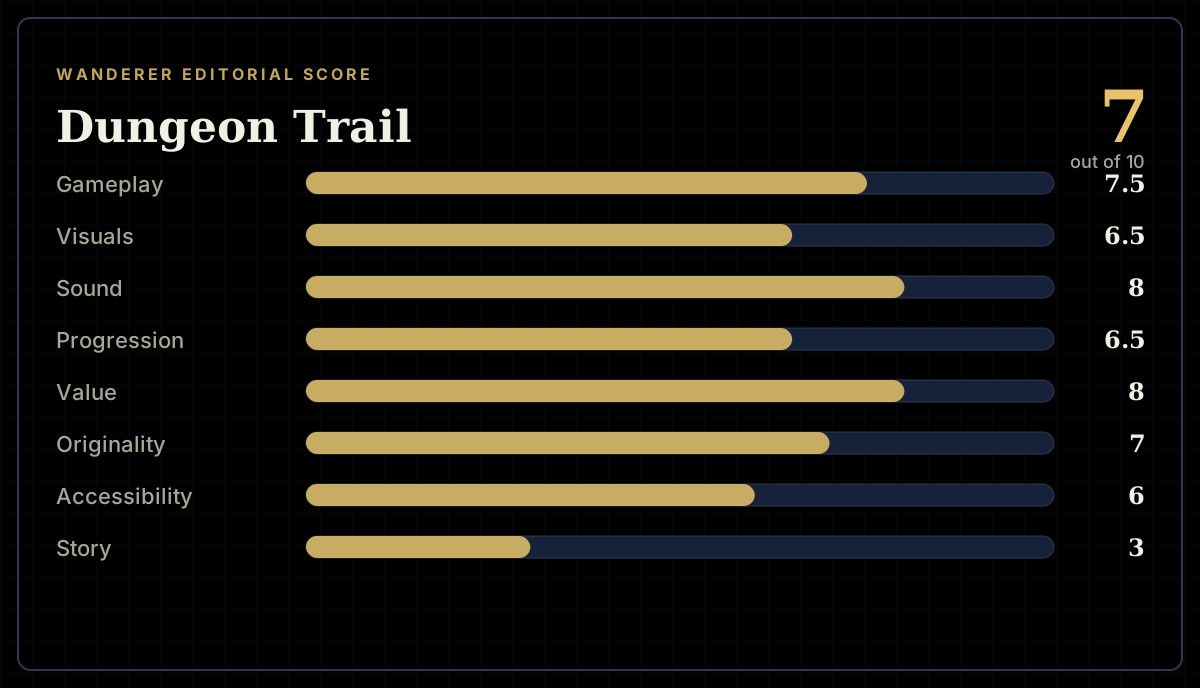
7 / 10
Dungeon Trail is a small, retro-styled roguelike dungeon crawler built around a single clever idea: instead of leaving combat purely to the dice, you're given tools to cheat them. Solo developed under the banner "My Brother And I Make Games" and priced at $7.99, it landed on February 19, 2026 with only a handful of Steam reviews so far — but every one of them, so far, is a thumbs up.
Cheating fate, one reroll at a time
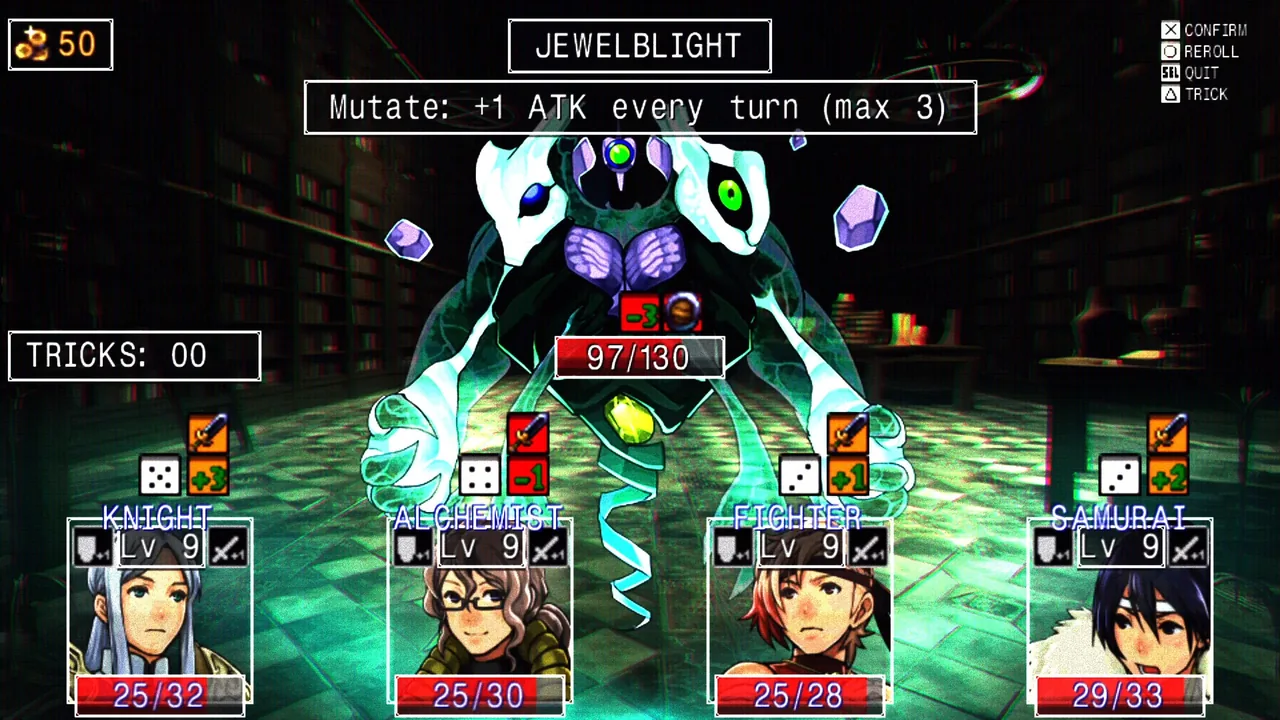
The game's whole identity rests on its dice-manipulation combat, and reviewers who engaged with it in depth came away impressed. One detailed review put it plainly: "The core concept of manipulating dice to overcome challenges is brilliant, and it turns every encounter into a tense little puzzle where strategy and risk-taking go hand in hand." The same review added that "Instead of feeling like pure RNG, the dice mechanics give you meaningful control through gold and Tricks, allowing you to bend fate in clever ways." That same reviewer praised the moment-to-moment decisions this creates: "Deciding when to spend gold for a reroll or when to use a Trick creates constant, exciting decisions during combat. It feels tactical, unpredictable, and incredibly rewarding when a risky play pays off." Another reviewer summed the whole loop up more bluntly: "Pretty good Dungeon Crawler with a cor mechanic based on cheating and bettering your odds. Quite unique in concept and execution!" A third agreed the enemy side of the equation matters just as much: "Cheating as a core mechanic is pretty cool, the enemy skills change the context of rolls dramatically. Tricks are something I wish I saw in other games."
That reviewer also had one of the more memorable individual runs on record: "Party wiped to a skeleton named Bone Jovi, 10/10." It's the kind of throwaway line that says a lot about the tone reviewers took away from the game — a system with real mechanical depth wrapped in something that doesn't take itself too seriously.
Classes, builds, and a learning curve up front
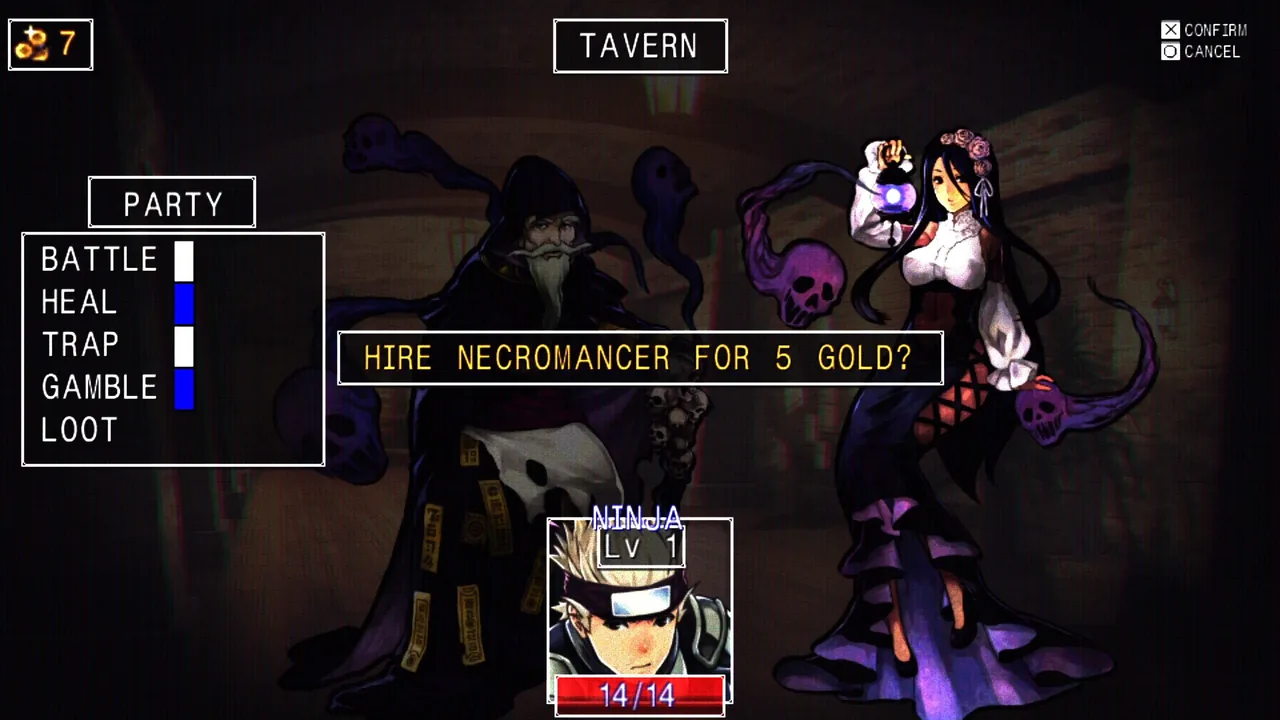
Several reviewers described an early difficulty spike that eases once the systems click. One wrote that "At first it seems this game is impossible (especially if you have bad luck with your rolls) but as you play the game and learn more about the different classes and mechanics, you start to find out how to min-max your rolls the best way possible." They pointed specifically to healers as an early linchpin, "very valuable because it's one of the few free heals you get (at the end of battle)," before noting a broader build philosophy: "The general strategy seems to be to go all-in on one strategy at first, but then start to divest later in the game." Another reviewer framed the same idea around resource risk rather than classes: "Build variety is based around risk vs reward tradeoffs and how much you want to risk on eco in the early game before you invest in your core combo of party members," adding, only half-joking, "My review may or may not be influenced by getting triple sixes on the slots 3 times in a row."
The longest review on file lays out the systems most comprehensively, praising "so many character classes and possible party combinations" that make "every run feels different and encourages experimentation," while calling out "the Prestige system" for making it "fun to jump back in and try again stronger." The same reviewer credited the pacing for respecting players' time: "the game respects the player's time with quick sessions, autosaves, and a design that makes it easy to play 'just one more run' (which usually turns into several)."
An unusually well-liked soundtrack for a budget indie
For a $7.99 dice-roguelike, Dungeon Trail's music comes up again and again as a highlight rather than an afterthought. That same detailed review dedicated a whole section to it: "The music fits the game perfectly and adds a lot to the atmosphere of the adventure. It manages to feel adventurous, tense, and sometimes even a bit mischievous, matching the gambling-with-fate theme really well. It’s the kind of soundtrack that keeps you immersed and makes each run feel like a proper journey." A shorter review echoed the same sentiment in passing: "Good music and anime art." Between the two, the picture of the game's presentation is consistent — modest scope, but with real craft put into the parts players actually spend the most time with.
Portability came up favorably too. Two separate reviewers mentioned running the game on Steam Deck without complaint, one noting it "worked out of the box on Bazzite," the other calling it a good "chill time waster on the Steam Deck during some commutes" with "straightforward but engaging enough combat system and neat retro dungeon crawly vibes."
Small sample, big enthusiasm
There isn't much of a story to speak of here — "Dungeon Trail" is a mechanics-first game about gambling with your party's lives, and the shortest reviews on file make that plain: "i love gambling," "We roll the dice," "Gambling. Pure gambling." That's really the whole pitch. What holds the game back from a stronger recommendation isn't anything in the reviews themselves, which are uniformly positive and often unusually detailed for a release this small, but the sheer size of that sample: eleven reviews, zero negative, is enough to see real enthusiasm from the players who found it, but not enough to rule out that its harder edges — that early difficulty spike, or a dice system that some players may simply bounce off — haven't yet been tested by a wider audience. For $7.99, and for anyone who likes the idea of a roguelike where the dice are a toolset rather than a tyrant, the early word is genuinely good; just don't mistake a small, happy crowd for a settled verdict.
Pros and cons
Pros
- A genuinely novel hook, letting you spend gold and Tricks to manipulate dice mid-combat
- Deep class and party-building variety that rewards experimentation across runs
- A soundtrack singled out repeatedly as punching well above the price point
Cons
- Its review base is still tiny and entirely positive, with no dissenting voices to weigh against the praise
- Some reviewers found the early game rough until the roll-manipulation systems click
- A light, gambling-flavored premise that never pretends to have much story behind it
Screenshots
-

Dungeon TrailImage: My Brother And I Make Games via Steam -
Dungeon TrailImage: My Brother And I Make Games via Steam -
Dungeon TrailImage: My Brother And I Make Games via Steam -
How the review scores each part of the gameWanderer Editorial -
The short versionWanderer Editorial