Game review
Dungeon of the ENDLESS
7 / 10
- Developer
- Amplitude Studios
- Publisher
- Amplitude Studios
- Released
- 27 October 2014
- Platforms
- Windows, macOS, Linux
- Genre
- Roguelike Tower Defense RPG
- Monetisation
- One-time premium purchase, plus several cosmetic and content DLC packs. No ads, no in-app purchases
- Players
- Local and online co-op for up to two players is included alongside a complete single-player campaign, but a detailed long-term reviewer reports the online mode has suffered from unpatched desync bugs since launch
The short version
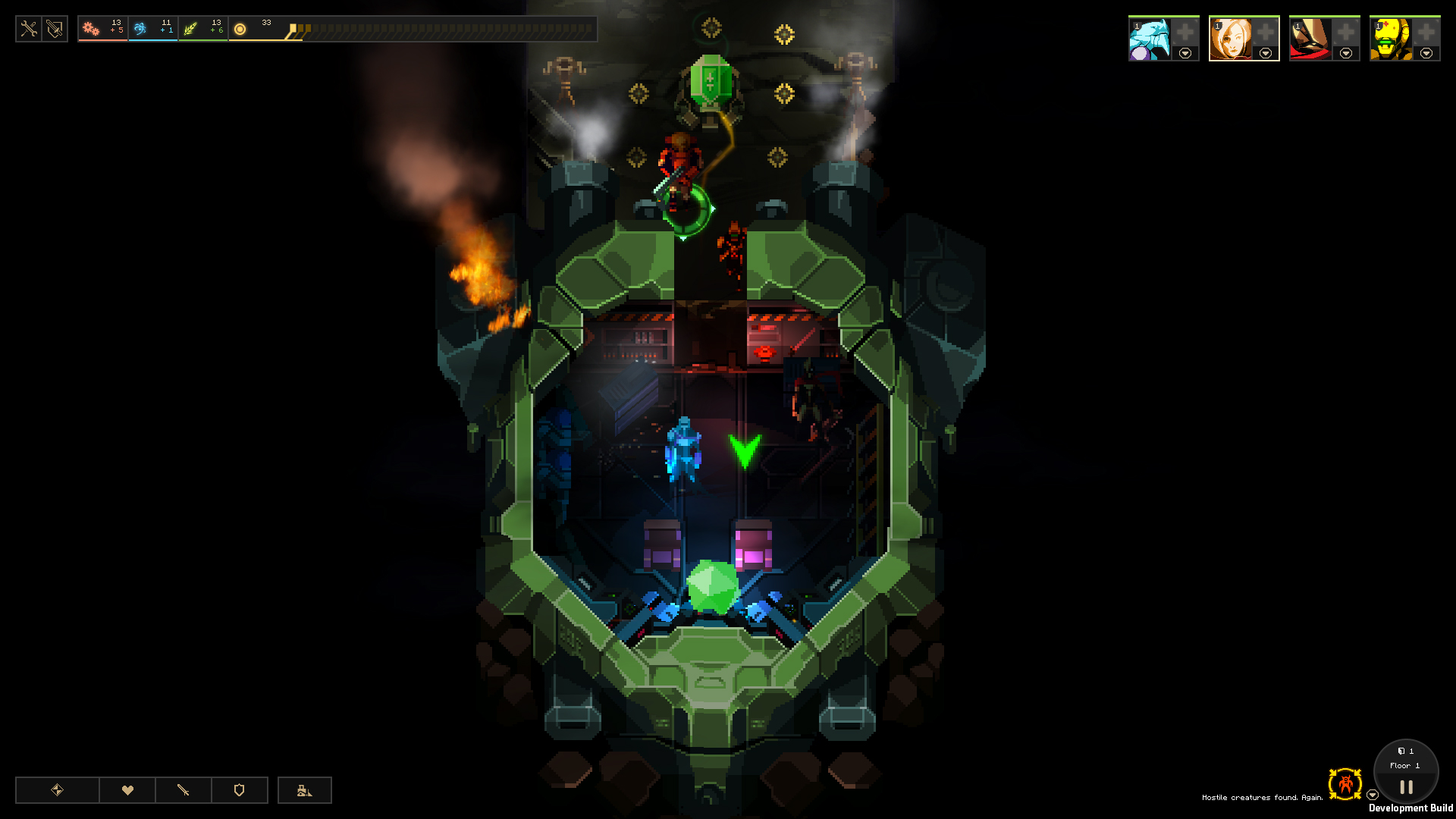
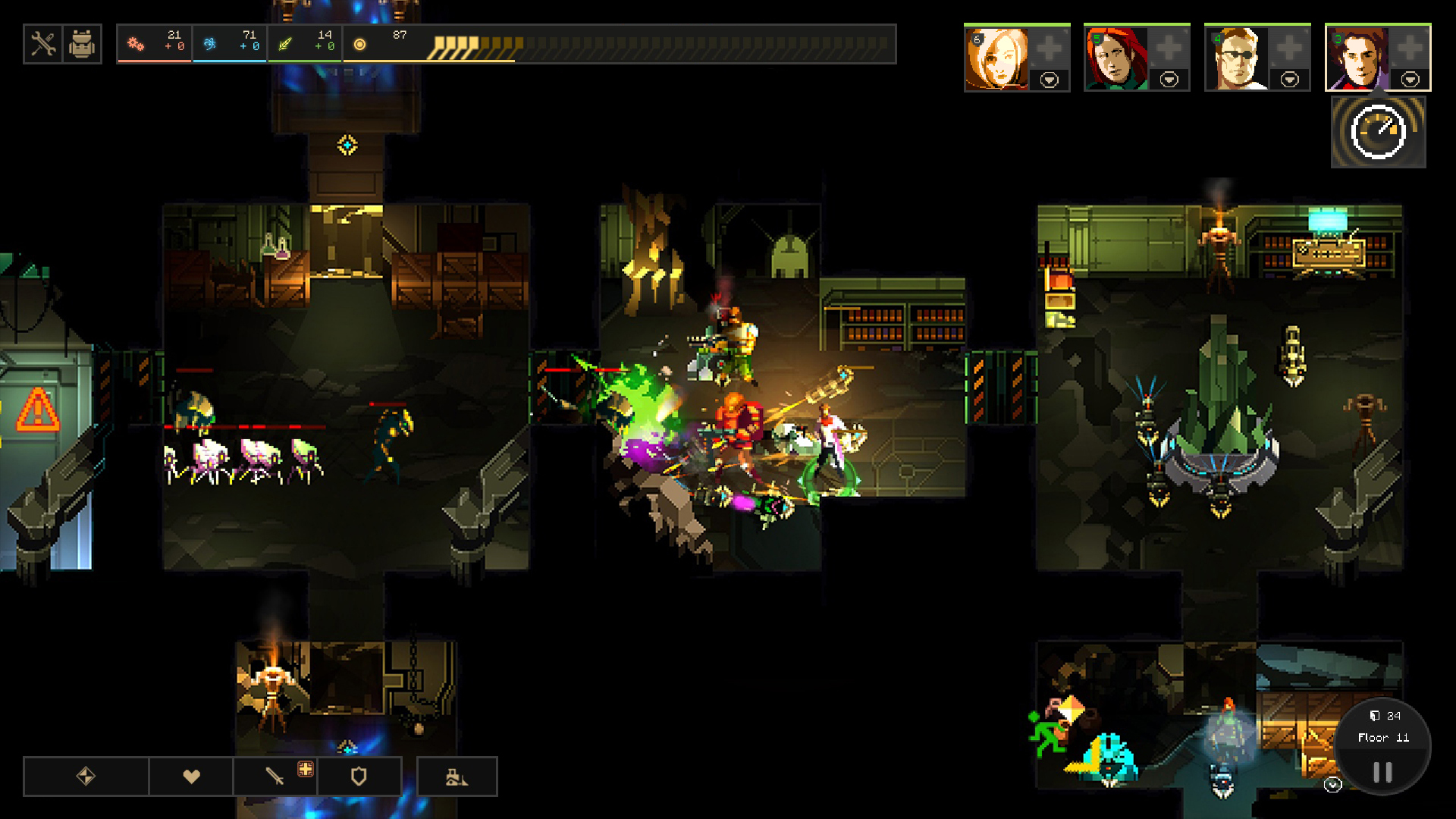
Dungeon of the ENDLESS fuses tower defense, real-time-with-turns strategy and light RPG hero management into something that plays like nothing else on the shelf: every door you open is a turn, and defending a fragile generator against escalating monster waves while exploring a randomly generated dungeon requires planning most roguelikes don't ask for. Its reputation for brutal difficulty is earned honestly — reviewers joke that even Easy mode is genuinely hard — and the game's achievement data backs that up precisely.
A specific, well-reasoned critical thread pushes back on how that difficulty is delivered: detailed reviewers describe losing two-to-three-hour runs to random generation states with no real counterplay, such as a floor offering nowhere to place a needed module or an uncontrollable monster spawn overwhelming a defense the player built correctly. Separately, a long-time reviewer reports the online co-op mode has suffered unpatched desync bugs since launch, and the game has never received a 64-bit client — both specific, checkable technical concerns worth weighing against the single-player campaign's otherwise strong reputation.
Biggest strengths
- A genuinely novel structural idea — opening a door advances a turn, while combat and resource generation happen in real time between doors — that reviewers consistently describe as unlike anything else in the genre
- Distinctive, well-regarded pixel art and a soundtrack reviewers cite specifically as elevating the atmosphere of a fairly grim, high-stakes premise
- Real difficulty that holds up under scrutiny — achievement data confirms even the easiest tracked milestone sits under a third of the playerbase, matching the game's reputation as tough even on its lowest official difficulty
Biggest weaknesses
- A specific, detailed reviewer complaint recurs independently: random dungeon generation can produce genuinely unwinnable states late into a long run — a floor with nowhere to place a critical module, or a monster spawn the player has no tools to control — turning a two-to-three-hour investment into a loss with no clear lesson to learn from
- Reviewers describe the tutorial and early instruction as thin, with the game largely expecting players to learn its systems through repeated deaths rather than explaining them upfront
- Achievement data shows an extremely steep drop-off past the earliest milestones, with several win-condition achievements sitting under 2% of the tracked playerbase
Who it's for: Strategy and roguelike fans who want a genuinely demanding, systems-heavy challenge and don't mind losing hours of progress to bad luck as part of the deal. Less suited to players who want a roguelike where every loss clearly traces back to a mistake they can learn from.
Our recommendation: A distinctive, well-crafted purchase for strategy fans willing to accept real, sometimes unfair-feeling randomness as the cost of one of the genre's more inventive designs.
7 / 10
Amplitude Studios built its reputation on ambitious strategy hybrids (Endless Space, Endless Legend), and Dungeon of the ENDLESS is the studio's stranger, tighter experiment: a roguelike where opening a door is a turn, but everything that happens once you're through it — combat, resource generation, monster waves converging on a fragile generator you're escorting between floors — plays out in real time. It's a genuinely novel structural idea, and a decade on, it's still the reference point reviewers reach for when comparing anything else that tries something similar. Nearly 90% of its 9,400-plus reviews are positive, and the praise is specific rather than generic: reviewers consistently single out the art, the tension of managing multiple real-time systems between fixed decision points, and a difficulty curve that genuinely lives up to its reputation.
Hard by design, and reviewers know it
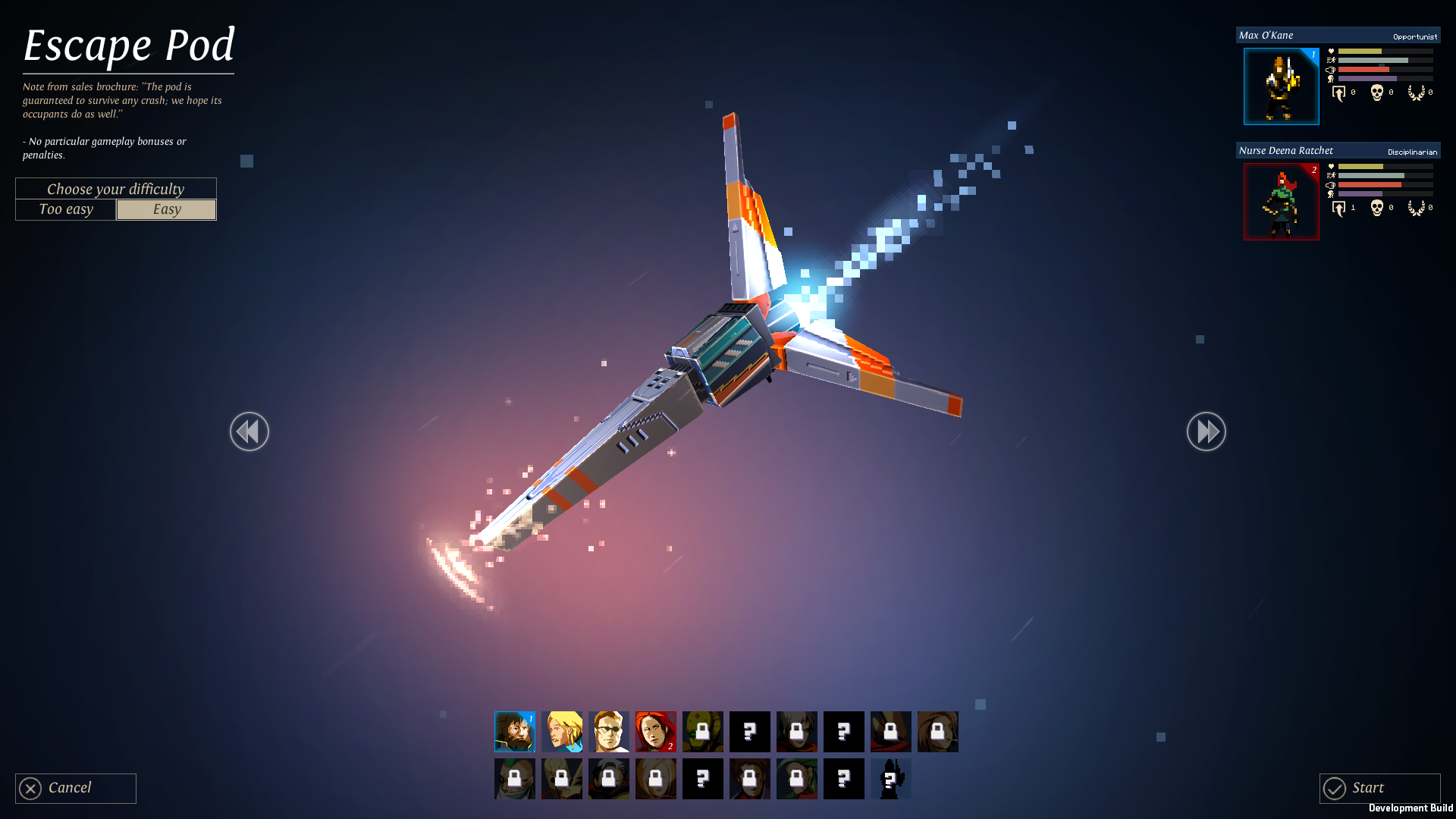
Dungeon of the ENDLESS wears its difficulty as a badge, and reviewers play along — one widely- quoted review jokes that "with the only difficulties being Easy and Too Easy you can also look stupid when you tell your friends that game is too hard on easy difficulty." That's not exaggeration for comic effect: Steam's own achievement data confirms even the single most-earned milestone sits at only 32.6% of the tracked playerbase, and most of the deeper, win-condition achievements sit under 2%. For a genre that often inflates its difficulty claims for marketing purposes, this is a rare case where the aggregate data backs the reputation up precisely.
A specific complaint, distinct from ordinary difficulty
Where a real critical minority pushes back isn't on the difficulty itself but on how it's sometimes delivered. One of the game's most detailed negative reviews draws a careful distinction: the reviewer explicitly says they like hard roguelikes and like randomness as a factor, but object specifically to "RNG that takes the entire possibility of victory out of the players hands... especially when a single run takes 2-3 hours." The account that follows is concrete — reaching floor 12 with resources banked and heroes leveled, only to find no room on the entire floor with space to place a needed defensive module, with no recourse but to lose a swarm-based fight of attrition the player had no tools to prevent. That's a meaningfully different objection than "the game is too hard": it's a claim that specific generation states can be functionally unwinnable regardless of skill or preparation, and it's detailed and internally consistent enough to trust as an accurate account of a real, if occasional, failure mode rather than a sore-loser complaint.
This is worth weighing against the game's broader reputation rather than dismissing outright. Roguelikes as a genre accept some degree of randomness overriding skill as part of the design contract, and most of this game's reviewers clearly do accept that trade. But a run that takes two to three hours raises the stakes of a "no real counterplay" complaint considerably higher than it would in a shorter-format roguelike, where losing an unwinnable run costs minutes rather than a whole evening. That's the specific tension this game's critics are describing, and it's a fair one.
A steep learning curve with thin early guidance
A second, smaller but recurring complaint concerns onboarding: several reviewers describe minimal in-game instruction, with the expectation that players learn the game's interlocking systems through repeated deaths rather than any real tutorial. Combined with the genuinely severe difficulty curve, this produces a rough first few hours for players who don't supplement the in-game guidance with outside strategy resources — a real accessibility gap for a game this mechanically dense, even if the systems underneath reward the effort once understood.
A specific technical decline worth flagging directly
Two more concrete, checkable complaints belong alongside the RNG debate rather than under it. A detailed reviewer who has followed the game since launch reports its online co-op mode has suffered from unpatched desync bugs "since its very inception," estimating roughly three in four multiplayer sessions bug out by the mid-game and force a full restart — a serious, specific claim about a feature this review would otherwise list as a straightforward positive. Separately, the game has never shipped a 64-bit client, prompting at least one recent review to warn against buying it at all on modern hardware as operating systems continue dropping 32-bit support.
Both complaints line up with what Amplitude's own public activity around this game shows: the partner-events feed for Dungeon of the ENDLESS contains nothing after January 2023, the same period the studio was actively promoting Endless Dungeon, its spiritual successor in the same universe, to a full release. The game reaching PlayStation 4 and Nintendo Switch back in 2019 is real and worth crediting, but the specific technical debt reviewers describe — an unfixed multiplayer bug and no 64-bit client — reads as a maintenance question the studio's attention has since moved past rather than an ongoing commitment.
Where it lands
Dungeon of the ENDLESS remains one of the more genuinely inventive entries in the roguelike genre, and its Very Positive reception is earned by real design ambition rather than nostalgia alone. Its difficulty is honestly advertised and backed up by hard completion data, which is more than most "brutally hard" games can claim. But the specific critique that its randomness can erase hours of careful, correct play with no recourse is a real, well-argued weakness worth taking seriously before committing to a long session, and buyers specifically interested in the co-op mode should weigh the reported desync problems and lack of a modern 64-bit client before assuming the current build is as reliable as the single-player campaign's reputation suggests.
Pros and cons
Pros
- A genuinely novel structural idea — opening a door advances a turn, while combat and resource generation happen in real time between doors — that reviewers consistently describe as unlike anything else in the genre
- Distinctive, well-regarded pixel art and a soundtrack reviewers cite specifically as elevating the atmosphere of a fairly grim, high-stakes premise
- Real difficulty that holds up under scrutiny — achievement data confirms even the easiest tracked milestone sits under a third of the playerbase, matching the game's reputation as tough even on its lowest official difficulty
- Reached console platforms years after its original release (PlayStation 4 and Nintendo Switch in 2019), showing real continued reach beyond its original PC launch
Cons
- A specific, detailed reviewer complaint recurs independently: random dungeon generation can produce genuinely unwinnable states late into a long run — a floor with nowhere to place a critical module, or a monster spawn the player has no tools to control — turning a two-to-three-hour investment into a loss with no clear lesson to learn from
- Reviewers describe the tutorial and early instruction as thin, with the game largely expecting players to learn its systems through repeated deaths rather than explaining them upfront
- Achievement data shows an extremely steep drop-off past the earliest milestones, with several win-condition achievements sitting under 2% of the tracked playerbase
- The permadeath, long-run structure means a single bad late-game break costs significantly more time than in most roguelikes, raising the stakes of the RNG complaints above
- A detailed reviewer who followed the game since its original release reports online co-op suffering from unpatched desync bugs "since its very inception," with roughly three in four multiplayer sessions bugging out by the mid-game and forcing a full restart
- The game has never received a 64-bit client, and at least one recent reviewer specifically warns against buying it in 2026 on modern hardware for exactly that reason, as 32-bit application support continues to be dropped across operating systems
Screenshots
-
Dungeon of the ENDLESSImage: Amplitude Studios via Steam -
Dungeon of the ENDLESSImage: Amplitude Studios via Steam -
Dungeon of the ENDLESSImage: Amplitude Studios via Steam -
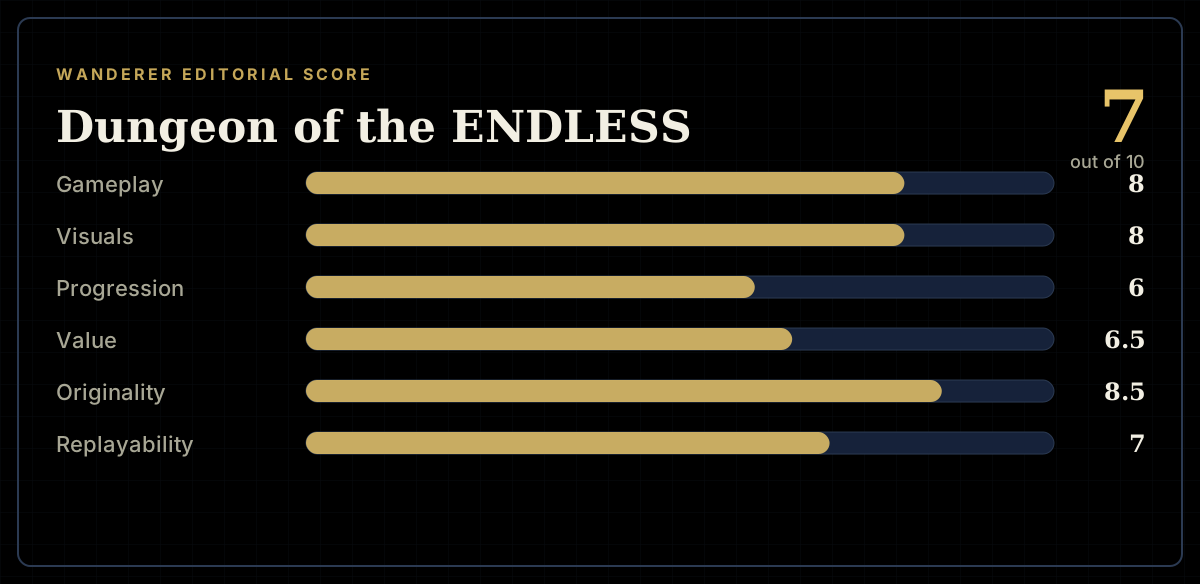
How the review scores each part of the gameWanderer Editorial -
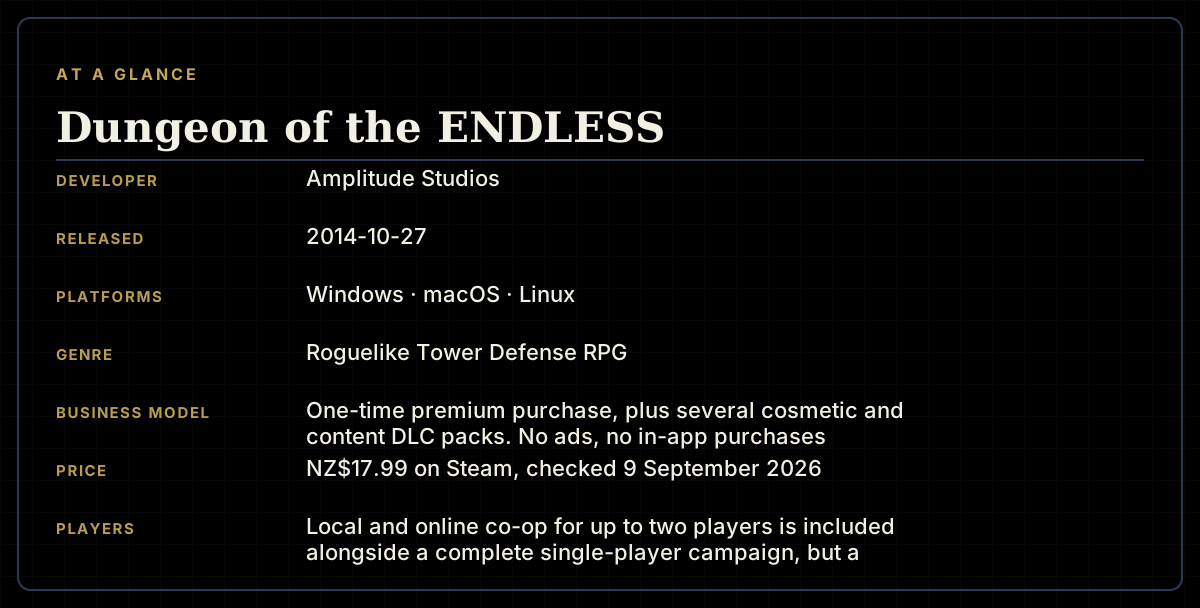
The specsWanderer Editorial -
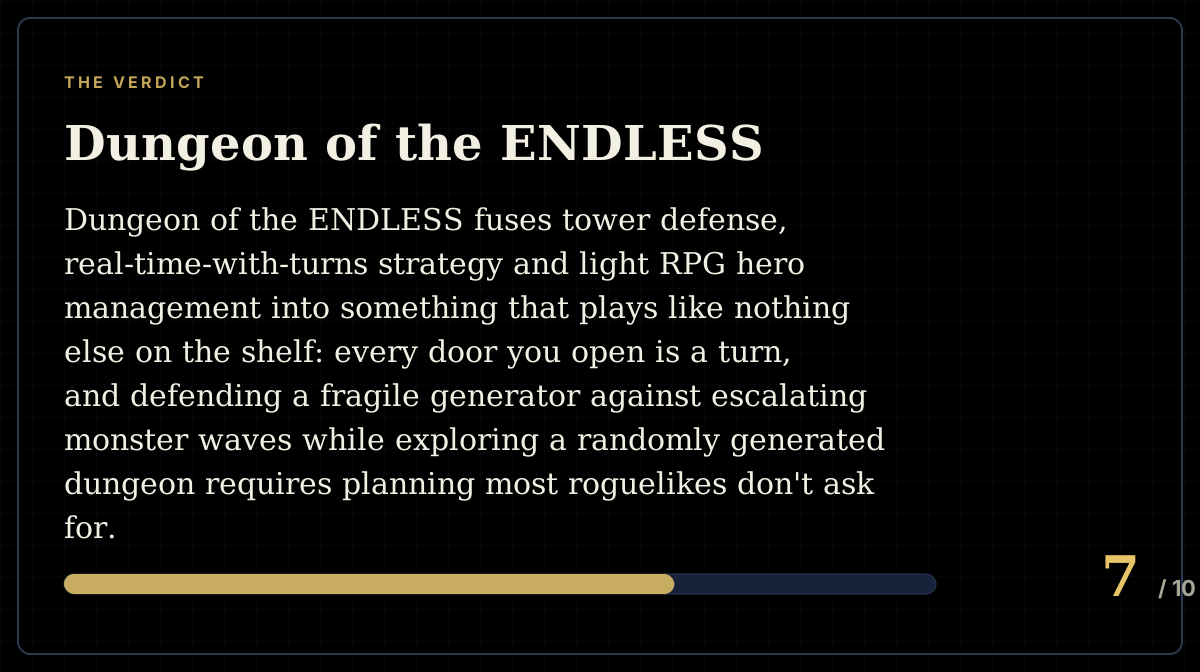
The short versionWanderer Editorial