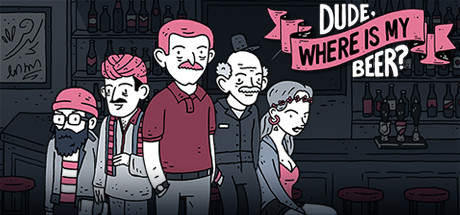
Game review
Dude, Where Is My Beer?
6 / 10
- Developer
- Arik Games, Edo Brenes
- Publisher
- Arik Games, WhisperGames
- Released
- 4 November 2020
- Platforms
- Windows, macOS, Linux
- Genre
- Point-and-Click Adventure
- Monetisation
- Premium one-time purchase; no DLC or in-game purchases
- Players
- Single-player only
The short version
Dude, Where Is My Beer? sets an ordinary, mustachioed everyman loose in a hipster town where nobody remembers what a plain pilsner is, and asks him to get progressively drunk to solve puzzles and hold conversations he'd otherwise be too sober for. Its art, music and comic writing draw close to unanimous praise, even from reviewers who otherwise can't recommend the game. What holds it back is a faithfulness to genre history that cuts both ways: alongside the charm of classic Sierra and LucasArts adventures, it revives their most notorious flaw — "moon logic" puzzles that a large, detailed share of reviewers say require a walkthrough to solve at all.
Biggest strengths
- Hand-drawn art direction draws close to unanimous praise across the review sample, described repeatedly as comic-book-like and full of small, rewarding visual details
- The writing and comic timing earn specific, consistent praise even from reviewers who can't recommend the game overall, with several calling the humor genuinely clever rather than merely referential
- The soundtrack is repeatedly singled out as a highlight, credited with making difficult puzzle stretches more bearable
Biggest weaknesses
- A large, detailed and independently corroborated body of reviews describes the puzzle logic as "moon logic" in the most literal, negative sense of the classic adventure-game complaint, with multiple reviewers reporting they needed a walkthrough to progress at several specific points
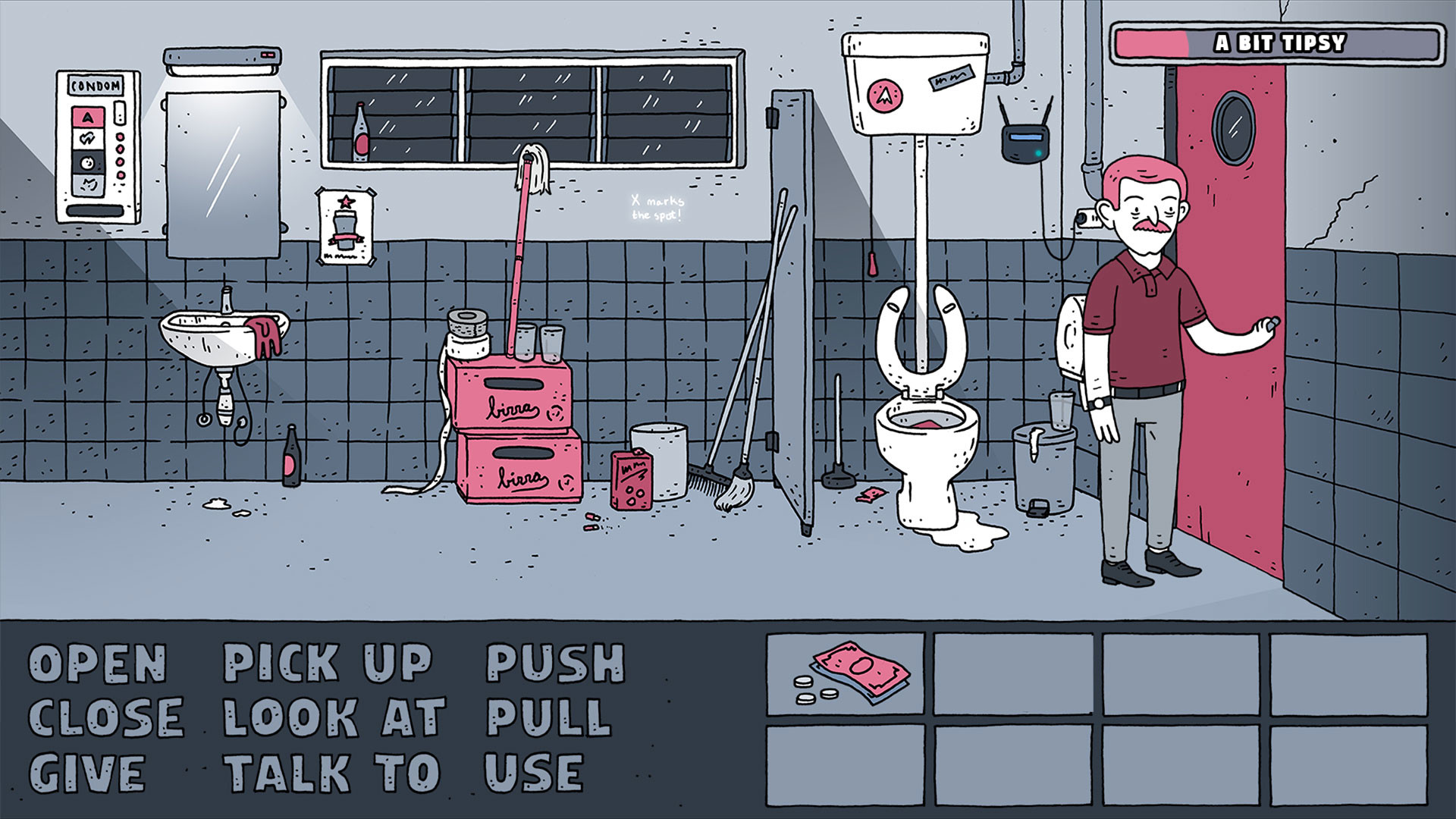
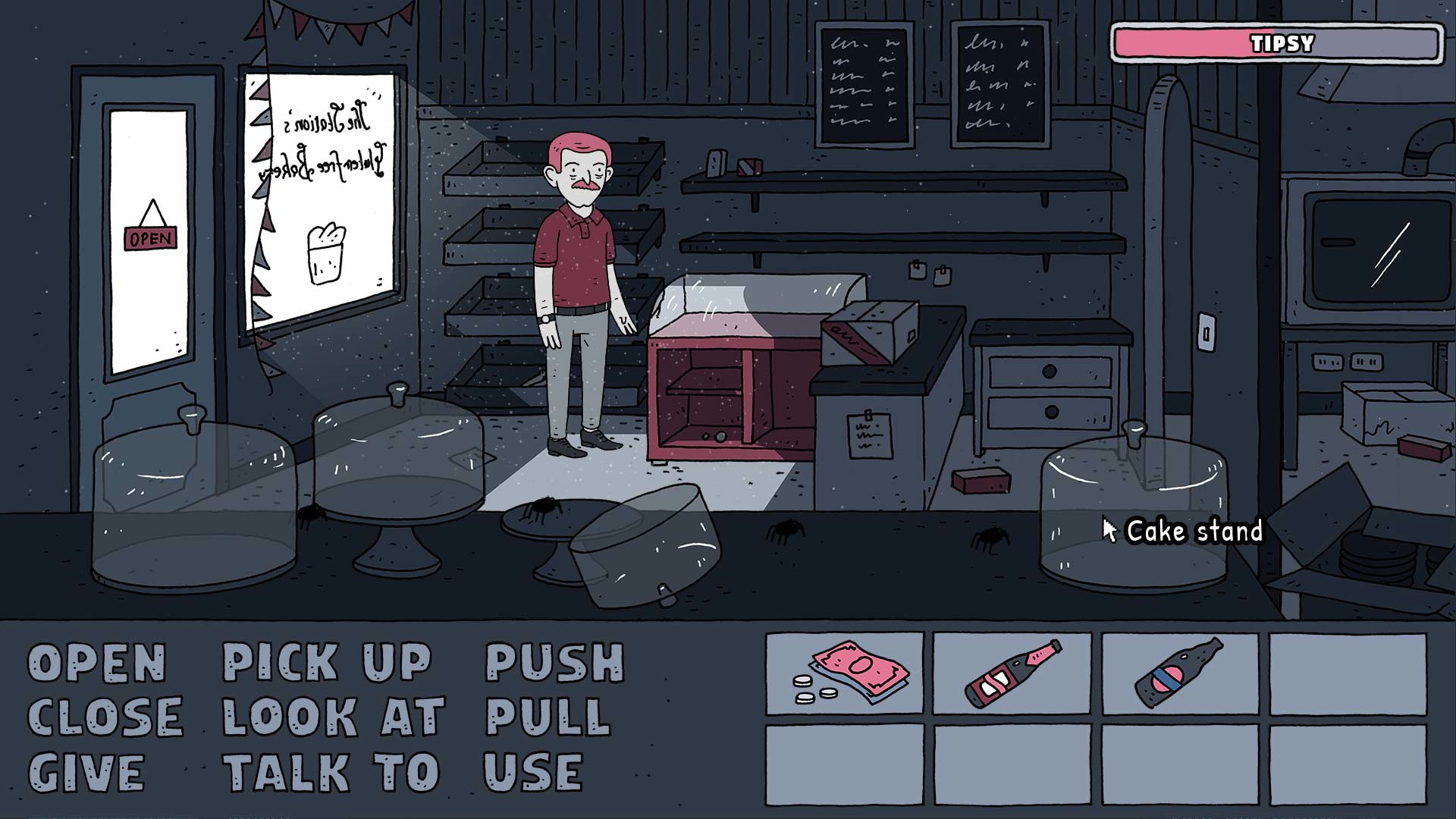
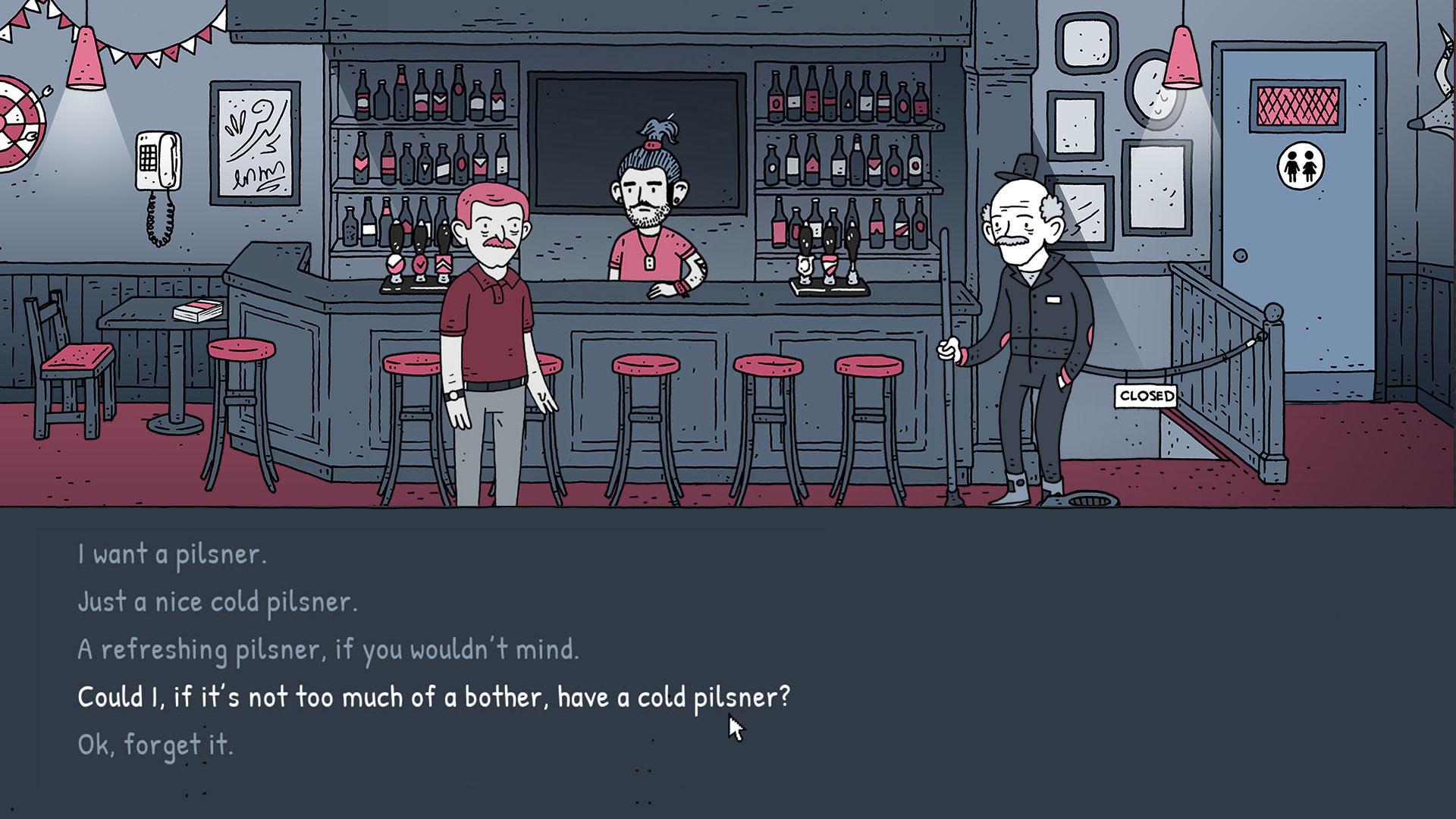
- The interface, a deliberate homage to the classic LucasArts verb-based control scheme, is reported as slow and occasionally janky even with hotkeys enabled, and dialogue is described as sometimes auto-advancing past lines before players finish reading them
- New objectives and interactive triggers reportedly appear without clear signposting, requiring several reviewers to repeatedly re-walk the entire map checking for changes rather than being directed toward what changed
Who it's for: Point-and-click adventure veterans with real nostalgia for the Sierra and LucasArts era who are prepared to occasionally consult a guide, more than newcomers to the genre or anyone who wants puzzle logic to feel fair and internally consistent throughout.
Our recommendation: Worth it for the writing, art and atmosphere on a sale, with a walkthrough bookmarked in advance; go in knowing the story ends on a cliffhanger toward an unmade sequel rather than a full resolution.
6 / 10
An ordinary, mustachioed everyman's tour bus makes an unplanned stop in a hipster paradise of craft breweries and artisanal cocktail bars, and all he genuinely wants, against the entire weight of the town's snobbish drinking culture, is a plain pilsner nobody there seems to remember even exists anymore. Dude, Where Is My Beer? builds an entire Sierra-and-LucasArts-style point-and-click adventure around that simple, funny premise, and reviewers are near-unanimous that the writing and presentation carrying it are genuinely excellent — right up until the puzzles ask them to actually solve something.
A loving, genuinely well-crafted homage right on the surface
Art direction draws some of the most consistent praise in this review's entire sample, described repeatedly as comic-book-like, hand-drawn, and dense with small rewarding details players discover by experimenting with the environment. The writing earns its own specific, sustained credit — reviewers across the spectrum, including several who ultimately can't recommend the game, single out the humor and comic timing as genuinely clever rather than simply nostalgic pastiche. The soundtrack rounds out the presentation with its own consistent praise, and the central hook of the everyman protagonist needing to get progressively drunk to unlock new dialogue options and actions is credited as a genuinely fresh twist on the genre's usual item-combination structure.
The exact genre flaw this loving homage revives right alongside the charm
Where the reception turns sharply critical, it turns on a very specific, well-known adventure- game problem: "moon logic," the term reviewers use again and again to describe puzzle solutions that don't follow any logic a player could reasonably deduce without external help. Multiple independent reviewers report needing a walkthrough at specific, repeated points, and several frame this directly as the game reviving the worst habits of its Sierra and LucasArts inspirations along with their best qualities. A related, more structural complaint compounds this: new objectives and interactive triggers reportedly appear without clear signposting, forcing players to re-walk the entire map checking every location for changes rather than being pointed toward what actually shifted. Several reviewers describe this specific loop — solve one thing, then wander the whole map hoping to notice what else has changed as a result — as more tedious than genuinely puzzling, since it tests patience with the map's geography more than it tests any real deductive reasoning about the puzzle itself.
The interface draws its own specific criticism. The classic verb-based control scheme is a deliberate, faithful homage, but reviewers describe it as slow and occasionally janky even with hotkeys enabled, and dialogue is reported to sometimes auto-advance past lines before a player finishes reading them — a technical annoyance layered on top of the puzzle-design complaints rather than a separate issue entirely. Movement speed draws its own complaint too, with no fast-travel option to ease the repeated backtracking both the puzzle structure and the drunk mechanic's fetch-quest loop demand.
An ending that quietly asks for a sequel it may never actually get
Beyond the moment-to-moment puzzle frustration, the story itself ends on a specific, unresolved note: multiple reviewers report the game repeatedly references a "Part 2" without ever clarifying whether that means a planned sequel, a future update, or something else entirely. For a narrative reviewers otherwise praise for its wit and character work, ending on an undefined cliffhanger is a real letdown independent of the puzzle-design debate, and worth knowing about before expecting a fully resolved story from a single playthrough.
What the completion data shows about where players actually stall
Global achievement data supports the shape of the puzzle-frustration complaints directly. The very first milestone clears 87% of owners, but that figure collapses to under a third by the next tier of achievements and continues falling into single digits for several late-game and completionist goals. That's a genuinely steep drop for a comedy adventure game with no combat or time pressure, consistent with reviewers' accounts of specific, well-defined points where progress simply stops without outside help rather than a gradual, fair difficulty curve.
A small international team behind a genuine genre revival
It's worth noting the game's origins: Arik Games brought together developers based in Norway and Costa Rica to build a specifically old-school American point-and-click experience, a detail several reviewers reference approvingly as evidence of real craft and cross-cultural care going into recreating a genre most active studios have largely abandoned. That context doesn't excuse the puzzle-design complaints, but it does help explain the sincerity reviewers consistently credit the writing and presentation with — this reads as a genuine labor of love for the format rather than a cynical nostalgia cash-in, even where its execution stumbles on the format's own old flaws.
Verdict
Dude, Where Is My Beer? earns its praise honestly on presentation — the art, music and writing are genuinely strong enough to draw agreement across nearly the whole review sample, including from players who can't recommend the finished experience. What holds it to a middling score is equally genuine: a faithful revival of classic adventure-game "moon logic" that frustrates a large, detailed share of its audience, an interface with real friction, and a story that ends on an unresolved promise rather than a payoff. Worth the trip for genre veterans with a walkthrough ready; a harder sell for anyone new to the format, or for anyone who wants their nostalgia served without the specific, well-documented frustrations that came bundled with the genre the first time around.
Pros and cons
Pros
- Hand-drawn art direction draws close to unanimous praise across the review sample, described repeatedly as comic-book-like and full of small, rewarding visual details
- The writing and comic timing earn specific, consistent praise even from reviewers who can't recommend the game overall, with several calling the humor genuinely clever rather than merely referential
- The soundtrack is repeatedly singled out as a highlight, credited with making difficult puzzle stretches more bearable
- The core "getting drunk to unlock new dialogue and actions" mechanic is a genuinely fresh spin on the genre's usual inventory-combination structure, distinct enough from its influences to feel like more than pure pastiche
- A completionist reviewer reports over 20 hours to reach 100% achievements, giving the roughly NZD 19 asking price real scope even before accounting for frequent sales
Cons
- A large, detailed and independently corroborated body of reviews describes the puzzle logic as "moon logic" in the most literal, negative sense of the classic adventure-game complaint, with multiple reviewers reporting they needed a walkthrough to progress at several specific points
- The interface, a deliberate homage to the classic LucasArts verb-based control scheme, is reported as slow and occasionally janky even with hotkeys enabled, and dialogue is described as sometimes auto-advancing past lines before players finish reading them
- New objectives and interactive triggers reportedly appear without clear signposting, requiring several reviewers to repeatedly re-walk the entire map checking for changes rather than being directed toward what changed
- The story explicitly sets up and repeatedly references a "Part 2" that multiple reviewers say is never clarified as a sequel, an update, or anything concrete, leaving the narrative on an unresolved note
- Movement speed is reported as slow with no fast-travel option between areas, compounding the frustration of the repeated backtracking the puzzle design and drunk mechanic both require
Screenshots
-
Dude, Where Is My Beer?Image: WhisperGames via Steam -
Dude, Where Is My Beer?Image: WhisperGames via Steam -
Dude, Where Is My Beer?Image: WhisperGames via Steam -
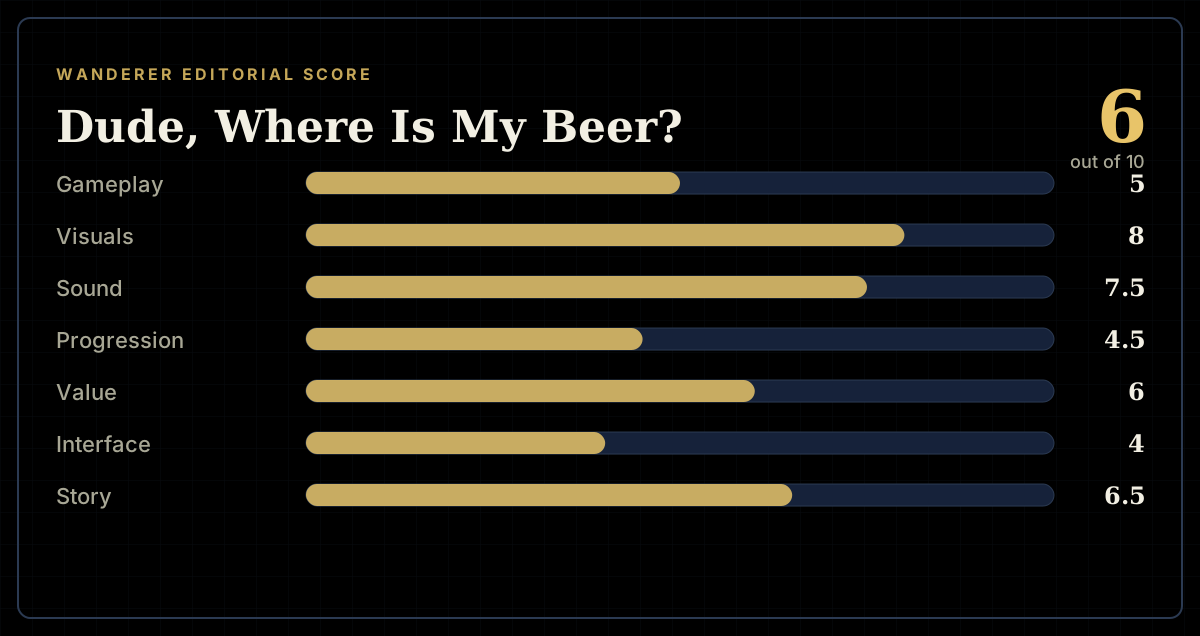
How the review scores each part of the gameWanderer Editorial -
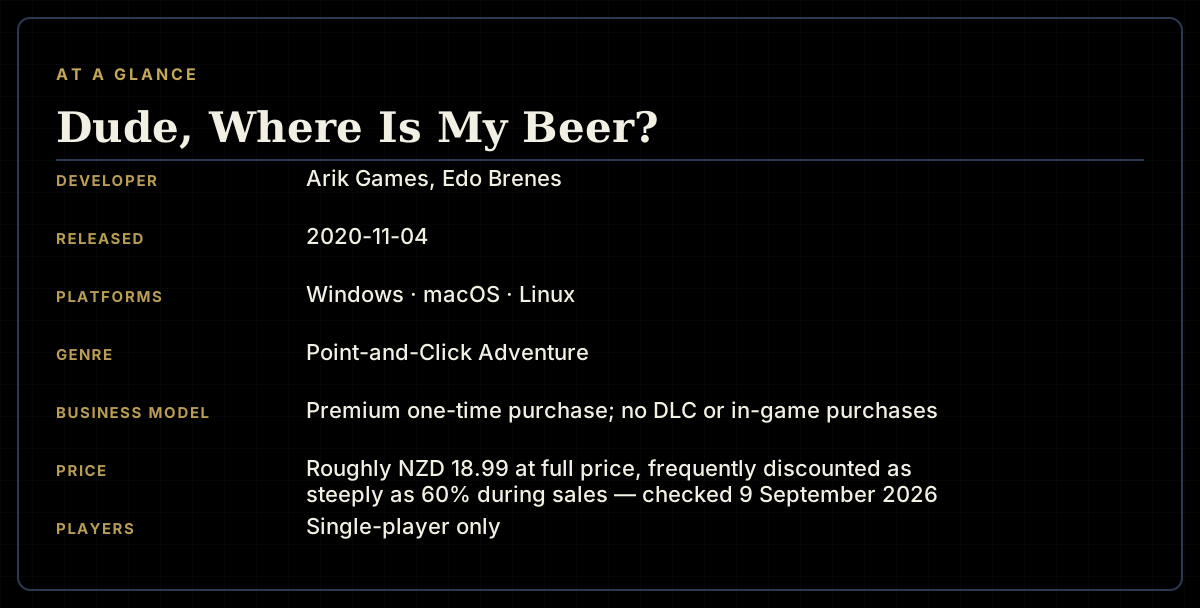
At a glanceWanderer Editorial -
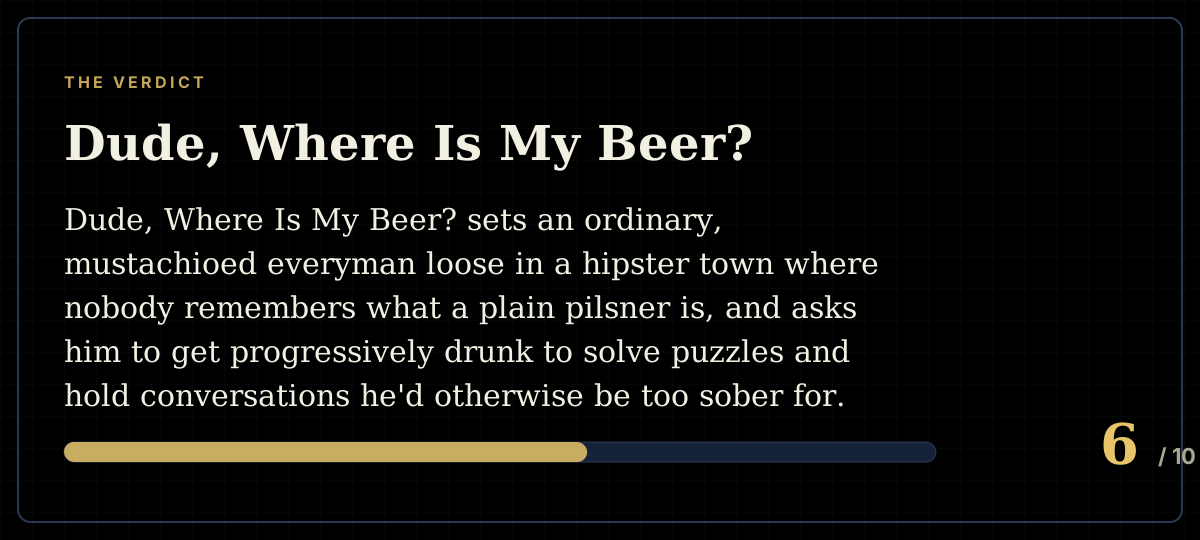
The short versionWanderer Editorial