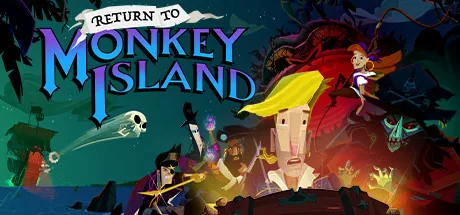
Game review
Return to Monkey Island
7.5 / 10
- Developer
- Terrible Toybox
- Publisher
- Devolver Digital
- Released
- 19 September 2022
- Platforms
- Windows, macOS, Linux
- Genre
- Point-and-Click Adventure
- Monetisation
- One-time purchase at NZ$35.99. No in-app purchases.
- Players
- Single-player only
The short version
Return to Monkey Island is series creator Ron Gilbert's first direct involvement with the franchise since Monkey Island 2 in 1991, and its reception has been warm and specific: 89.6% positive across 5,240 English reviews, Very Positive, with returning voice actor Dominic Armato and composer Michael Land's music drawing close to universal praise.
The negative corpus is dominated, by a wide margin, by a single element: the ending. Sixty-four of the 100 most-helpful English negatives raise it directly, in an echo of the exact controversy Gilbert's own Monkey Island 2 ending caused in 1991 -- a fact several reviewers note themselves. Puzzle quality and humour draw the next largest share of criticism, and a stylised new art direction divides opinion on both sides of the review split.
Biggest strengths
- Dominic Armato's voice performance as Guybrush Threepwood and Michael Land's score both draw near-universal praise, matching or exceeding the earlier games by wide reviewer consensus
- Genuine wit and craft in much of the writing and returning cast, with reviewers crediting real care in how beloved characters and locations are handled
- A complete, well-paced adventure at a reasonable length, with most reviewers reporting 10-16 hours for a full playthrough
Biggest weaknesses
- The ending is the single most contested element in the entire review corpus by a wide margin (64 of 100 negatives), deliberately echoing the divisive tradition Gilbert's own Monkey Island 2 ending set in 1991 -- several longtime fans call it a repeat of the same choice that frustrated them three decades ago
- Puzzle design and difficulty draw real, specific criticism (48 of 100 negatives), with several reviewers calling the solutions less memorable or more linear than the DOS-era LucasArts games they're compared against
- Humour and dialogue are called weaker than the earlier entries by a meaningful share of reviewers (41 of 100), including some lifelong fans disappointed by the joke quality specifically
Who it's for: Long-time Monkey Island and classic LucasArts adventure fans curious to see what the series' original creator does with it decades later, and newcomers who want a well-made, well-acted point-and-click comedy adventure. Go in aware that the ending is genuinely, actively contentious among longtime fans specifically, in a way that echoes the series' own history.
Our recommendation: A strong recommendation for adventure fans on the strength of its writing, voice acting and music, with the caveat that its ending is a real point of division rather than a minor nitpick -- read a spoiler-light negative review or two if you want to calibrate your expectations before committing, especially if Monkey Island 2's ending was a sore point for you personally.
7.5 / 10
Some franchises carry a specific piece of unfinished business for thirty years, and Monkey Island carries one very specific piece: the ending of Monkey Island 2, which creator Ron Gilbert left deliberately ambiguous and divisive in 1991, and which fans have argued about ever since. Return to Monkey Island is Gilbert's first hands-on return to the series since that game, and its review corpus makes clear, in remarkable detail, that history essentially repeated itself.
A genuine, well-crafted return
The reception is warm by a wide margin — 89.6% positive across 5,240 English reviews — and the things reviewers praise are specific rather than generic. Dominic Armato's voice performance as Guybrush Threepwood and Michael Land's score both draw close to unanimous approval regardless of a review's overall verdict; even reviewers who dislike large parts of the game routinely carve out space to say the music and voice work are as good as, or better than, the series has ever managed. "I laughed a bunch," reads one positive review, "and in the end I felt a lovingly crafted homage to the communal joy of experiencing these terrific stories." Multiple reviewers frame the whole release in personal terms — several describe the series as having shaped their decision to work in games at all, and treat Gilbert's direct involvement, after decades of sequels made without him, as a genuinely rare and meaningful event rather than a marketing hook.
The ending, again
Set that goodwill aside, and the negative corpus converges overwhelmingly on one specific element: 64 of the 100 most-helpful English negatives raise the ending directly, and several reviewers make the historical echo explicit themselves. "TLDR: Get it if you don't care about or even like the type of endings that R. Gilbert writes," reads one review. Another, more pointed: "Ron Gilbert and Co. have played the 'the ending does not matter' card in at least other four games now." A third, from a self-described lifelong fan, describes actively regretting having lobbied publicly for Gilbert to get the series back, specifically because of how the story concludes. This isn't a case of a small vocal minority — it's the single largest, most specific pattern in the entire negative sample, and it maps almost exactly onto the exact controversy this same creator caused with the same series three decades earlier.
Puzzle design draws the next-largest share of criticism (48 of 100 negatives), with several reviewers unfavourably comparing the solutions to the harder, more memorable puzzles of the DOS-era LucasArts games. Humour and dialogue quality are raised by 41 of 100, a meaningful but smaller thread than the ending complaint, generally framed as "good but not as sharp as it used to be" rather than a wholesale failure. The new, more stylised art direction is a third recurring point of division — discussed by name in reviews on both sides of the score, with some longtime fans citing it as a genuine barrier even after coming around on the writing and puzzles.
A game most players finish
The achievement curve shows a healthy completion rate for a story-driven adventure: the first chapter milestone sits at 86.8%, with subsequent story-chapter achievements holding in the high-60s through the game's middle stretch — consistent with the high median critic playtime (11.5 hours) and confirming that most of the criticism here comes from players who saw the story through to its contested conclusion, not from people who bounced off early.
7.5 out of 10. Return to Monkey Island is a genuinely well-made, lovingly performed adventure that earns its warm reception on writing, voice acting and music alone. But its own review corpus makes an unusually well-documented case that its ending reopens exactly the debate its creator started with this series in 1991 — and if that history matters to you, it's worth knowing going in rather than discovering at the credits.
Pros and cons
Pros
- Dominic Armato's voice performance as Guybrush Threepwood and Michael Land's score both draw near-universal praise, matching or exceeding the earlier games by wide reviewer consensus
- Genuine wit and craft in much of the writing and returning cast, with reviewers crediting real care in how beloved characters and locations are handled
- A complete, well-paced adventure at a reasonable length, with most reviewers reporting 10-16 hours for a full playthrough
- Made by the series' actual original creator returning after three decades, which reviewers consistently treat as a meaningful, rare event rather than a marketing line
Cons
- The ending is the single most contested element in the entire review corpus by a wide margin (64 of 100 negatives), deliberately echoing the divisive tradition Gilbert's own Monkey Island 2 ending set in 1991 -- several longtime fans call it a repeat of the same choice that frustrated them three decades ago
- Puzzle design and difficulty draw real, specific criticism (48 of 100 negatives), with several reviewers calling the solutions less memorable or more linear than the DOS-era LucasArts games they're compared against
- Humour and dialogue are called weaker than the earlier entries by a meaningful share of reviewers (41 of 100), including some lifelong fans disappointed by the joke quality specifically
- The new stylised art direction is genuinely divisive, discussed by name in both positive and negative reviews, with some longtime fans specifically citing it as a barrier to enjoying the game even when they came around on other elements
Screenshots
-
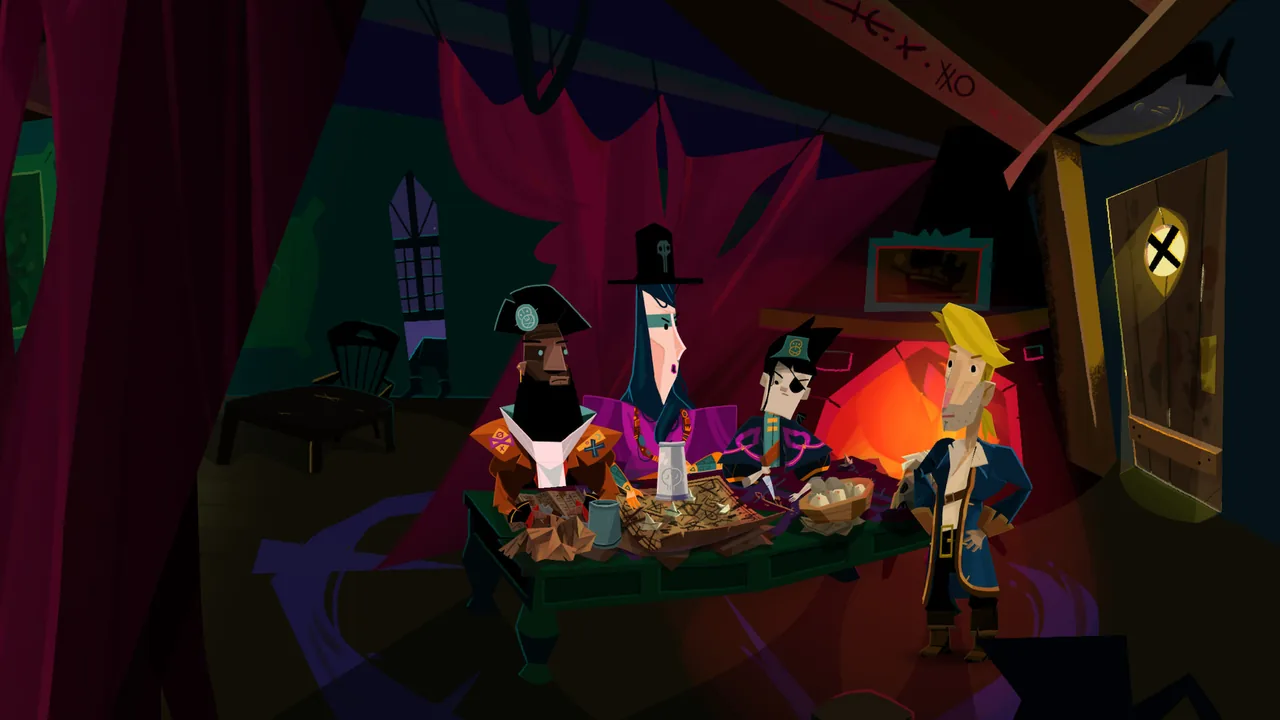
Return to Monkey Island's new art direction is genuinely divisive among longtime fansImage: Devolver Digital via Steam -
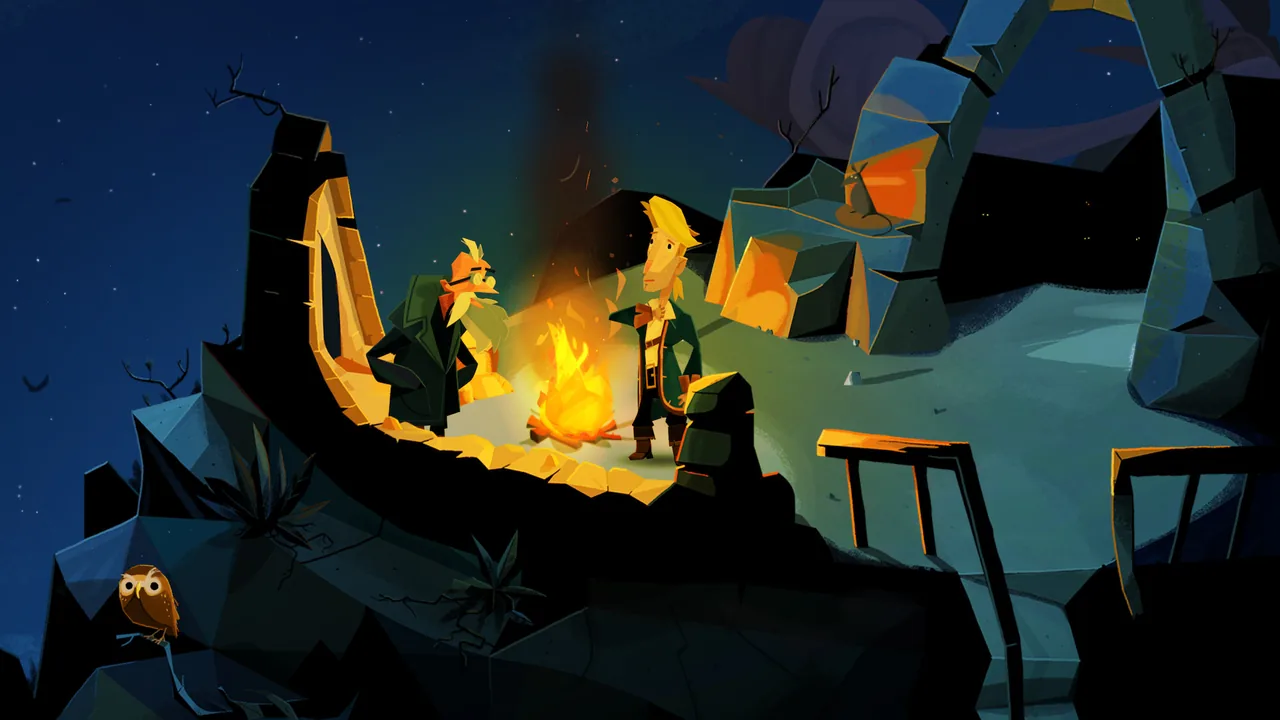
Return to Monkey IslandImage: Devolver Digital via Steam -
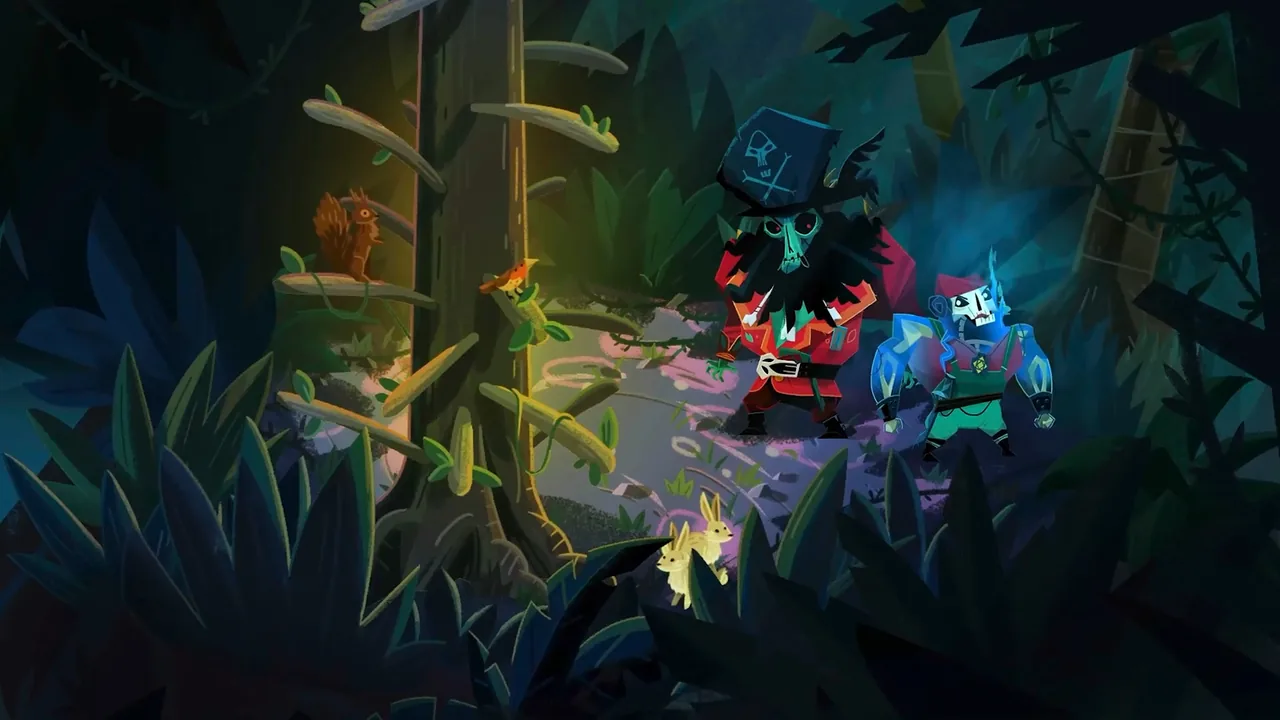
Return to Monkey IslandImage: Devolver Digital via Steam -
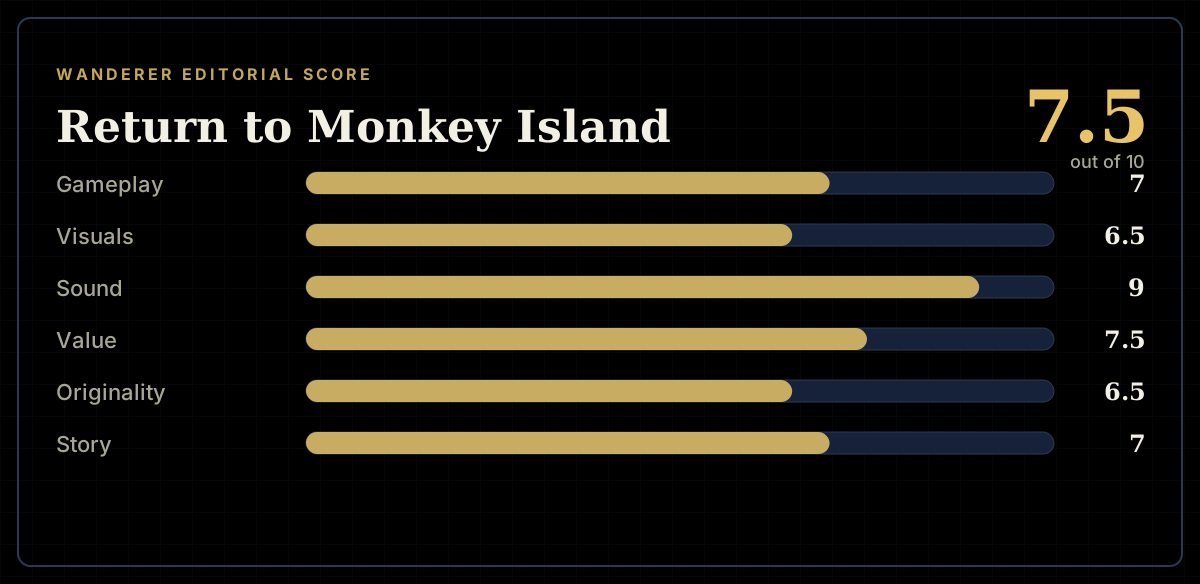
How the review scores each part of the gameWanderer Editorial -
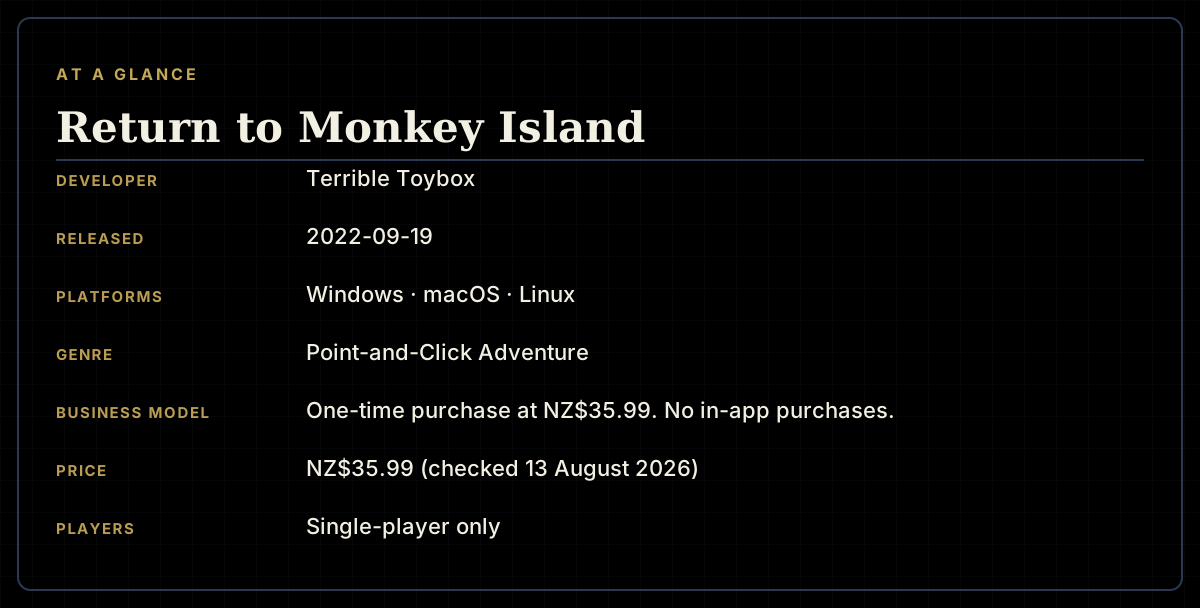
The essentialsWanderer Editorial -
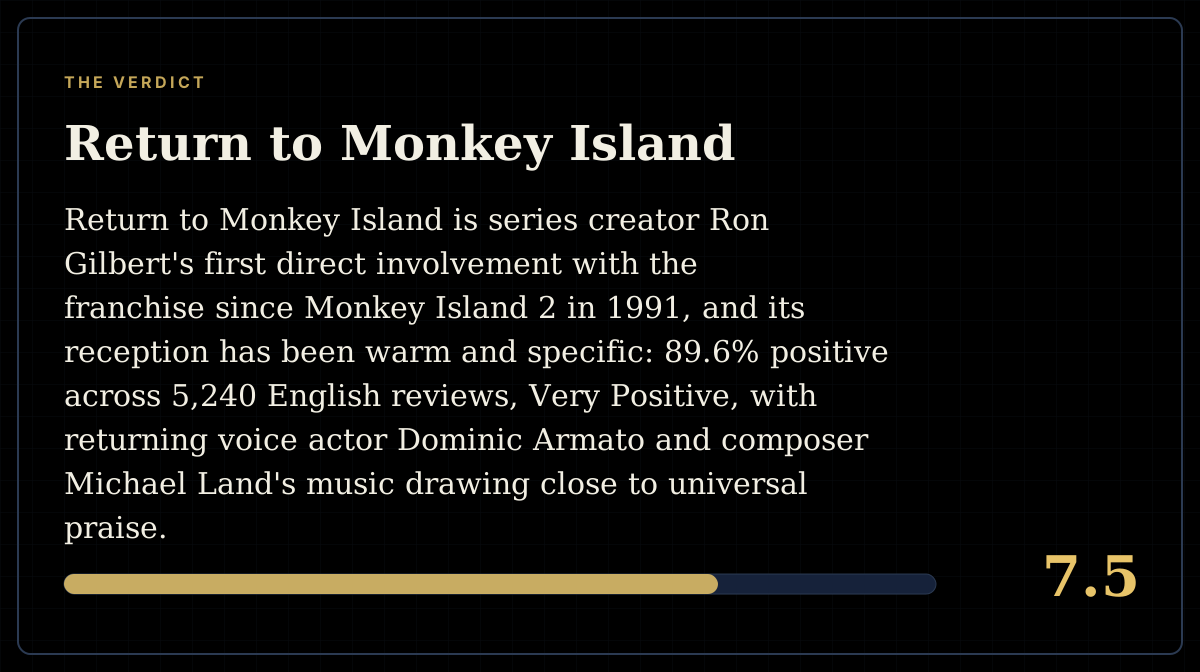
The short versionWanderer Editorial