
Game review
DreamEcho
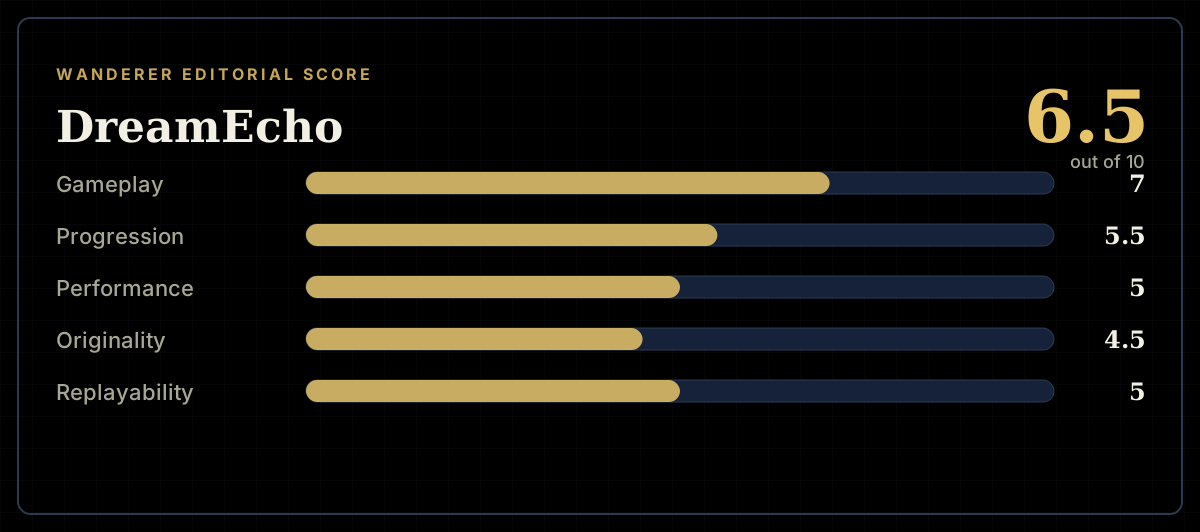
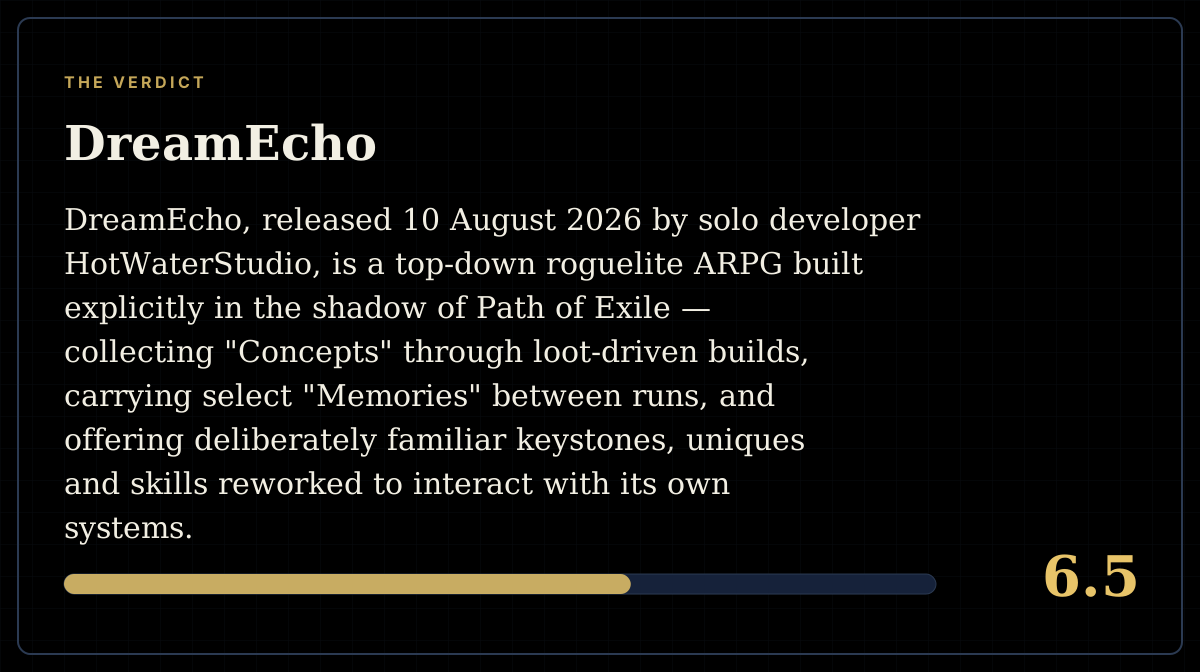
6.5 / 10
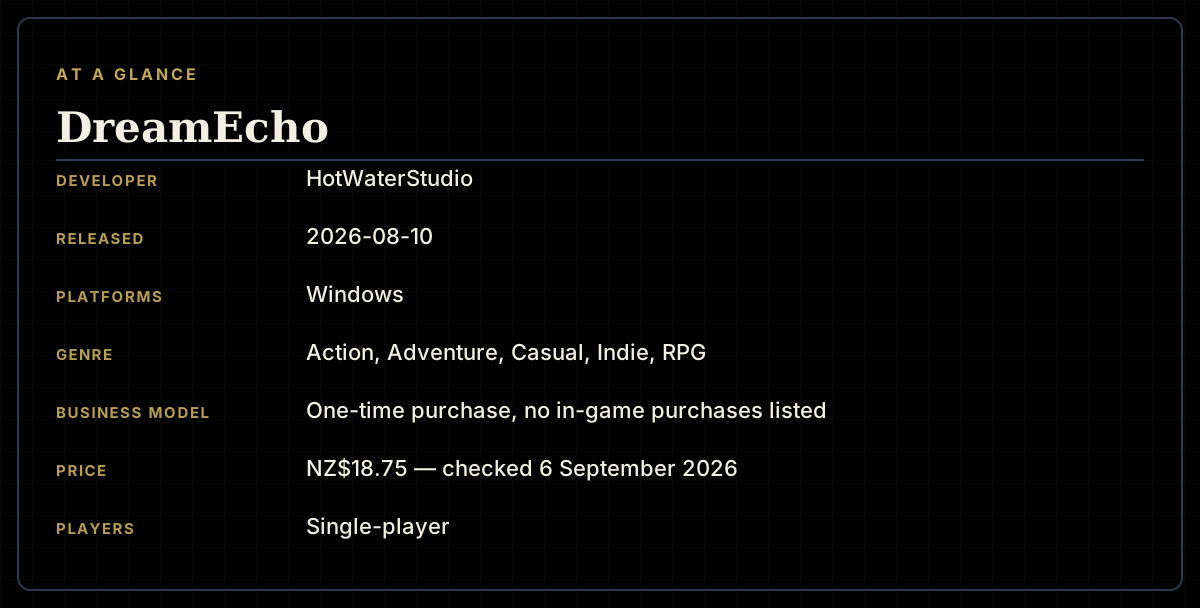
- Developer
- HotWaterStudio
- Publisher
- HotWaterStudio
- Released
- 10 August 2026
- Platforms
- Windows
- Genre
- Action, Adventure, Casual, Indie, RPG
- Monetisation
- One-time purchase, no in-game purchases listed
- Players
- Single-player
The short version
DreamEcho, released 10 August 2026 by solo developer HotWaterStudio, is a top-down roguelite ARPG built explicitly in the shadow of Path of Exile — collecting "Concepts" through loot-driven builds, carrying select "Memories" between runs, and offering deliberately familiar keystones, uniques and skills reworked to interact with its own systems. It sits Positive with a modest sample of 30 reviews, and reading through nearly all of them turns up an unusually consistent, credible endorsement: multiple reviewers with tens of thousands of hours in Path of Exile specifically praise this as capturing genuine build-crafting depth without that genre's characteristic time investment, one explicitly calling it perfect for filling the gap between PoE league cycles. Set against that praise are specific, repeated technical and design complaints: rough English translation causing real confusion between distinct game terms, buggy randomness in talent selection, no way to disable heavy visual effects that reviewers say tank framerate during intense fights, a restrictive two-skill-slot limit multiple experienced players call the single biggest thing holding back build variety, and thin endgame content that at least one detailed reviewer says runs out after roughly seven hours.
Biggest strengths
- Multiple reviewers with extensive Path of Exile experience, including one citing over 15,000 hours in that game, specifically and enthusiastically praise this as capturing genuine build-crafting depth and familiar keystones, uniques and skills reworked to feel native to its own roguelite structure
- The crafting and progression systems draw repeated, detailed comparisons to Path of Exile's own systems, with several reviewers specifically praising an intuitive, more accessible crafting interface and a fast, low-friction semi-automatic auction house compared to genre norms
- Multiple reviewers specifically credit the game with removing genre friction they find tedious elsewhere: no lengthy early-game leveling phase, no restrictive stash space limits, and a build-sharing leaderboard that lets players copy top builds directly
Biggest weaknesses
- English translation quality draws specific, repeated criticism, with one detailed reviewer citing distinct game terms — Faith versus Piety, Agile versus Agility Charge — translated inconsistently enough to create real confusion, compounded by a search function reviewers note is case-sensitive with no indication of why a search might fail
- Randomness in talent and reward selection is reported as buggy by more than one reviewer, with specific complaints about receiving the same talent option repeatedly in situations that should involve genuine variety
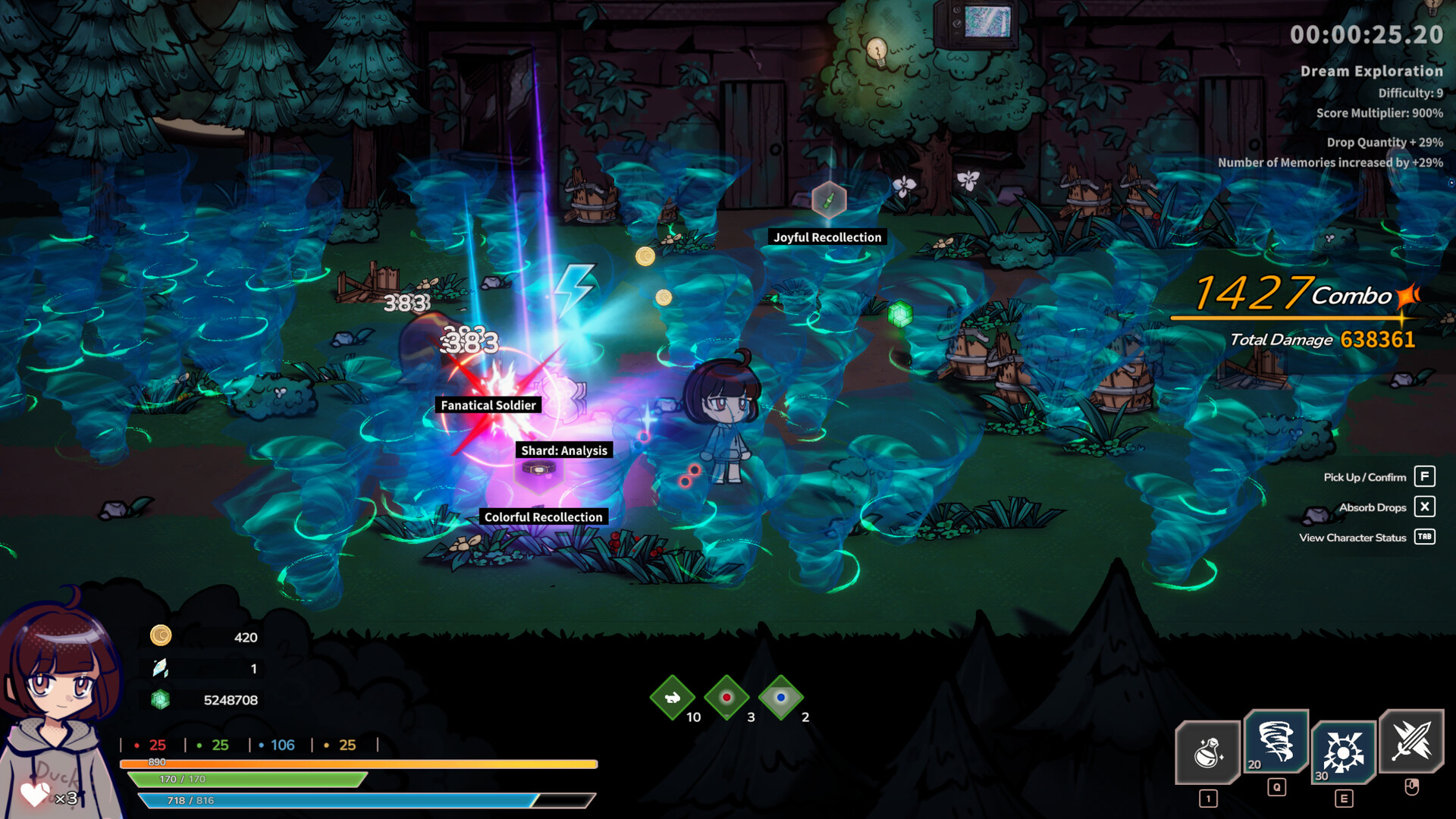
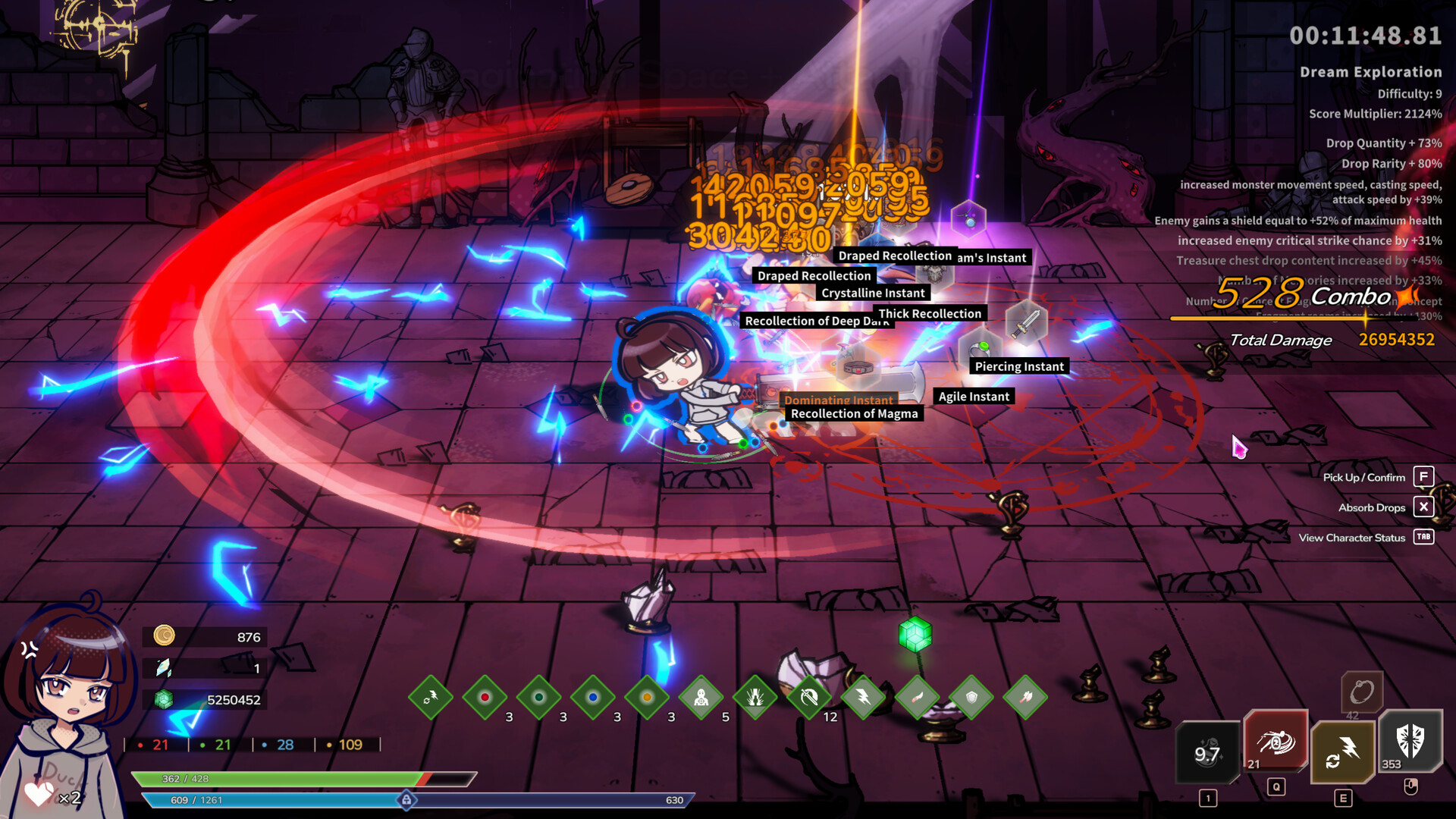
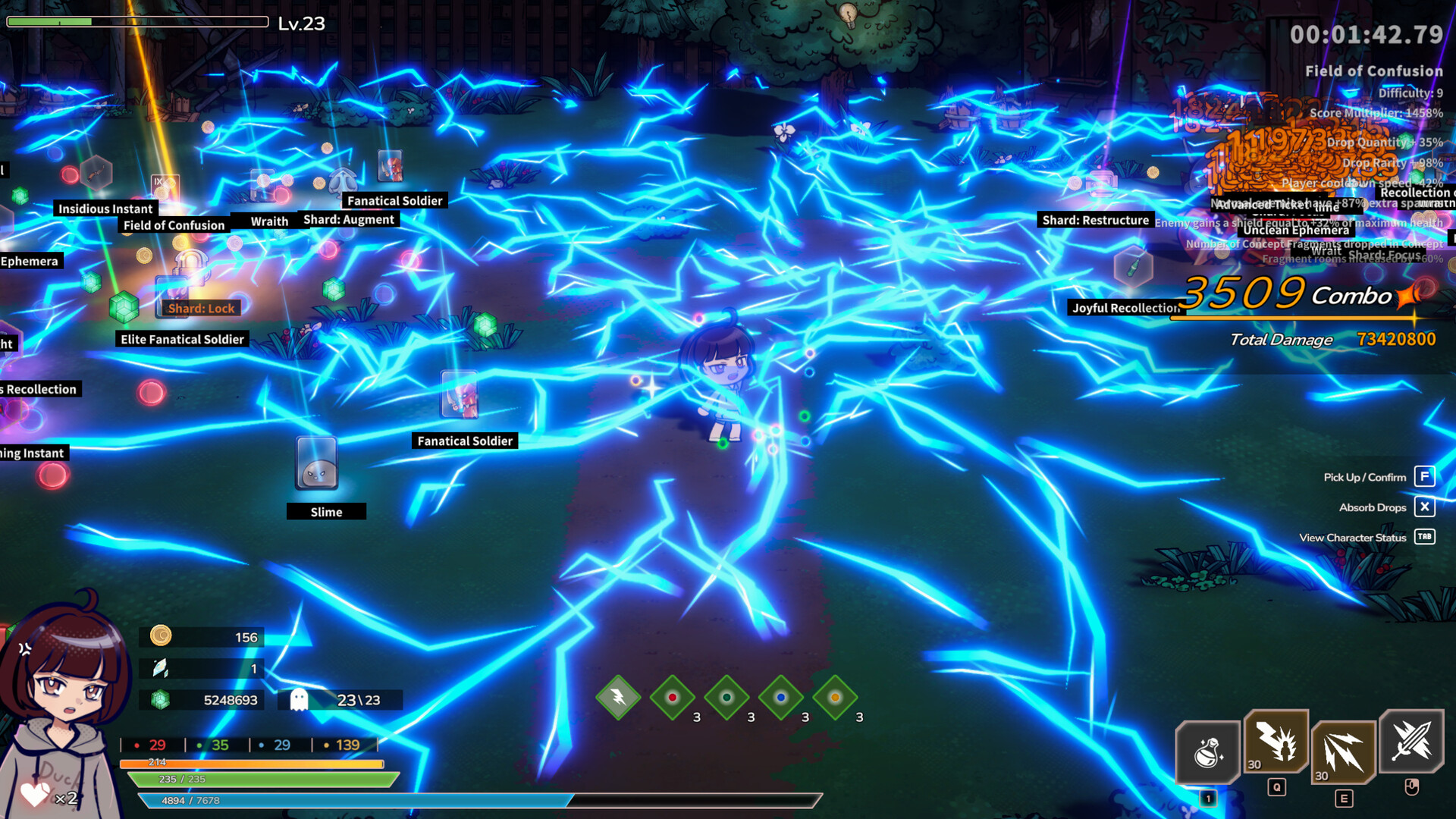
- Multiple reviewers report no way to disable or reduce heavy visual effects, screen shake and stacked animation clutter, with one detailed reviewer citing a drop to roughly 10 frames per second during a build that stacked multiple elemental and projectile effects simultaneously
Who it's for: Path of Exile veterans and ARPG loot-build enthusiasts looking for a shorter, more accessible take on deep build-crafting, who can tolerate real translation and performance rough edges from an actively developing solo project.
Our recommendation: Genuinely worth it at this price for anyone with real ARPG build-crafting experience looking for a lighter-weight alternative; less compelling for newcomers given the rough translation and thin current endgame, though the solo developer's early responsiveness is a good sign for where this could go.
6.5 / 10
Introduction
DreamEcho, released 10 August 2026 by solo developer HotWaterStudio, is a top-down roguelite ARPG built explicitly and openly in the shadow of Path of Exile: explore a dream world, collect "Concepts" through loot-driven combat, and carry select "Memories" into your next run to build toward deeper, more powerful combinations over time. It sits Positive with a modest sample of 30 reviews, and reading through nearly all of them turns up something this review found worth taking seriously: a specific, credible endorsement from players who know exactly what they're comparing it against.
Praise that carries real weight
What makes this review's positive findings unusually credible is who's making them. The first detailed English-language review in this sample comes from a self-described 15,000-hour Path of Exile veteran who calls the game "perfect" for filling the gap between that game's seasonal league cycles, specifically praising the amount of possible builds and items that feel deliberately, knowingly familiar to PoE's own item pool. Multiple other reviewers echo this from similar backgrounds, with one calling it "the closest thing we will ever get to a Poe lite" and another crediting the developer with clearly understanding exactly why Path of Exile itself became popular in the first place — high praise from a community not known for being easily impressed by imitators. Several reviewers specifically single out the crafting interface and a fast, low-friction semi-automatic auction house as improvements on genre norms, and more than one notes approvingly that the game strips out common genre friction points entirely: no drawn-out early leveling phase, no restrictive stash space, and a leaderboard that lets players directly copy top-performing builds to study or use.
Specific, repeated technical rough edges
Set against that praise, this review found a consistent cluster of concrete complaints. English translation quality draws pointed, specific criticism: one detailed reviewer cites the game using inconsistent terms for what should be distinct concepts — Faith and Piety, Agile and Agility Charge — creating genuine confusion about what a given stat or effect actually does, compounded by a search function that's case-sensitive with no visible explanation for why a search might silently fail. Randomness itself is reported as buggy by more than one reviewer, with specific complaints about receiving identical talent options repeatedly rather than the variety the system is meant to provide. Performance draws its own specific complaint: multiple reviewers report no setting to reduce or disable heavy visual effects and screen shake, with one detailed account describing a drop to roughly 10 frames per second once a build combining whirlwind movement with triple elemental and projectile effects was fully assembled — a specific, reproducible performance failure rather than a vague complaint about optimisation.
A skill-slot limit veteran players call the biggest constraint
Beyond bugs and translation, the single most specific design complaint in this sample concerns build flexibility. More than one experienced ARPG player names the game's two active-skill-slot limit as the single biggest obstacle standing between it and being genuinely great rather than just good, with one directly noting that even long-running, comparatively simpler franchises like Diablo offer meaningfully more slots to build around. This complaint carries real weight because it comes specifically from reviewers who otherwise praise the game's crafting depth in detail — it reads as a targeted critique of one constraining decision within an otherwise well-regarded system, not a broader dismissal of the build-crafting the game is built around.
Thin endgame, and a promising trajectory
A final, specific complaint concerns content longevity. At least one detailed reviewer reports clearing every currently available tier and boss in the endgame within roughly seven hours, concluding there isn't yet enough late-game content to fully justify extended play beyond experimenting with additional builds. A separate reviewer states this more bluntly, declining to recommend the game at present specifically due to a lack of endgame content alongside reportedly unbalanced numerical scaling. Set against this, several reviewers frame the game's current state explicitly as an early foundation rather than a finished product, expressing genuine anticipation for what a solo developer they describe as active and responsive might build on top of it over time.
A minority who bounce off it anyway
It's worth reporting the smaller, more ambivalent voices in this sample too, since they complicate a purely enthusiastic read. One reviewer with real Path of Exile and Diablo experience describes the overall experience as boring once past the initial hours of grinding, unable to identify exactly what's missing but concluding it's simply better to return to those bigger, more established games instead. A separate reviewer frames the game's actual combinative freedom as narrower than expected, noting that everything ultimately funnels through the specific "specialty" chosen at the start, delivering a game that's barely recognisable as a proper ARPG sandbox despite the framing — though the same reviewer still lands on a positive recommendation, largely because they weigh it favourably against a specific disliked entry in the wider genre. These accounts are a real minority within this sample, but they matter for calibrating expectations: the strongest praise in this review's research comes specifically from players deeply invested in Path of Exile's systems, and that enthusiasm doesn't universally transfer to every ARPG veteran who tries it.
Final Verdict
DreamEcho earns a genuinely rare endorsement: detailed, specific praise from experienced Path of Exile players who recognise real build-crafting depth reworked thoughtfully enough to feel like its own game rather than a shallow clone. What holds this score down is a consistent set of concrete rough edges — confusing translation, buggy randomness, uncontrollable visual clutter that tanks performance in busy fights, a skill-slot limit veterans call overly restrictive, and endgame content some players clear in under a day. Genuinely worth its low price for ARPG loot-build fans looking for a lighter, shorter alternative to the genre's biggest names; less essential for newcomers until translation and content depth catch up to the strength of its underlying systems.
Pros and cons
Pros
- Multiple reviewers with extensive Path of Exile experience, including one citing over 15,000 hours in that game, specifically and enthusiastically praise this as capturing genuine build-crafting depth and familiar keystones, uniques and skills reworked to feel native to its own roguelite structure
- The crafting and progression systems draw repeated, detailed comparisons to Path of Exile's own systems, with several reviewers specifically praising an intuitive, more accessible crafting interface and a fast, low-friction semi-automatic auction house compared to genre norms
- Multiple reviewers specifically credit the game with removing genre friction they find tedious elsewhere: no lengthy early-game leveling phase, no restrictive stash space limits, and a build-sharing leaderboard that lets players copy top builds directly
- As a reportedly solo-developed project, several reviewers express genuine enthusiasm about its trajectory, citing an active, responsive developer and looking forward to future content expansion built on what they call an already-strong foundation
Cons
- English translation quality draws specific, repeated criticism, with one detailed reviewer citing distinct game terms — Faith versus Piety, Agile versus Agility Charge — translated inconsistently enough to create real confusion, compounded by a search function reviewers note is case-sensitive with no indication of why a search might fail
- Randomness in talent and reward selection is reported as buggy by more than one reviewer, with specific complaints about receiving the same talent option repeatedly in situations that should involve genuine variety
- Multiple reviewers report no way to disable or reduce heavy visual effects, screen shake and stacked animation clutter, with one detailed reviewer citing a drop to roughly 10 frames per second during a build that stacked multiple elemental and projectile effects simultaneously
- A restrictive two active-skill-slot limit is specifically named by more than one experienced ARPG player as the single biggest obstacle to build variety, with one noting even long-running franchises like Diablo offer meaningfully more slots to build around
- At least one detailed reviewer reports finishing all currently available endgame content, including every discoverable boss, in roughly seven hours, and a separate reviewer specifically states there isn't yet enough endgame content to recommend the game without reservation
Screenshots
-
DreamEchoImage: HotWaterStudio via Steam -
DreamEchoImage: HotWaterStudio via Steam -
DreamEchoImage: HotWaterStudio via Steam -
How the review scores each part of the gameWanderer Editorial -
The essentials at a glanceWanderer Editorial -
The short versionWanderer Editorial