Game review
DESORDRE : A Puzzle Game Adventure
6.4 / 10
- Developer
- SHK Interactive
- Publisher
- SHK Interactive
- Released
- 1 June 2023
- Platforms
- Windows
- Genre
- Puzzle
- Monetisation
- One-time purchase, no DLC or in-app purchases.
- Players
- Single-player only
The short version
DESORDRE is a first-person puzzle game built by solo developer SHK Interactive on Unreal Engine, explicitly and openly inspired by Portal: place two linked portals on checkered surfaces and use momentum through them to solve room-by-room puzzles. Its twist is a second mechanic layered on top — the ability to switch between two overlapping "universes," a red and a blue one, each behaving differently, plus a limited bullet-time ability for the trickiest jumps. Steam's aggregate reads Mostly Positive at 72% of 64 English-language reviews, and this review read all 18 of the negative ones alongside a sample of the positive side.
The two sides of that aggregate largely agree on what the game does well: it is, by a wide margin, one of the best-looking path-traced indie games available, and the dual-universe puzzle concept is a genuinely original addition to the Portal formula. Where they diverge is on movement. A large share of the negative reviews single out the same specific complaint — that the portal-to-portal momentum lacks "portal funnelling" (the pull toward a portal's centre that makes Portal's own movement forgiving), leaving jumps that feel floaty, imprecise, and frustrating rather than satisfying. A smaller number report outright crashes or save/room-select bugs.
Biggest strengths
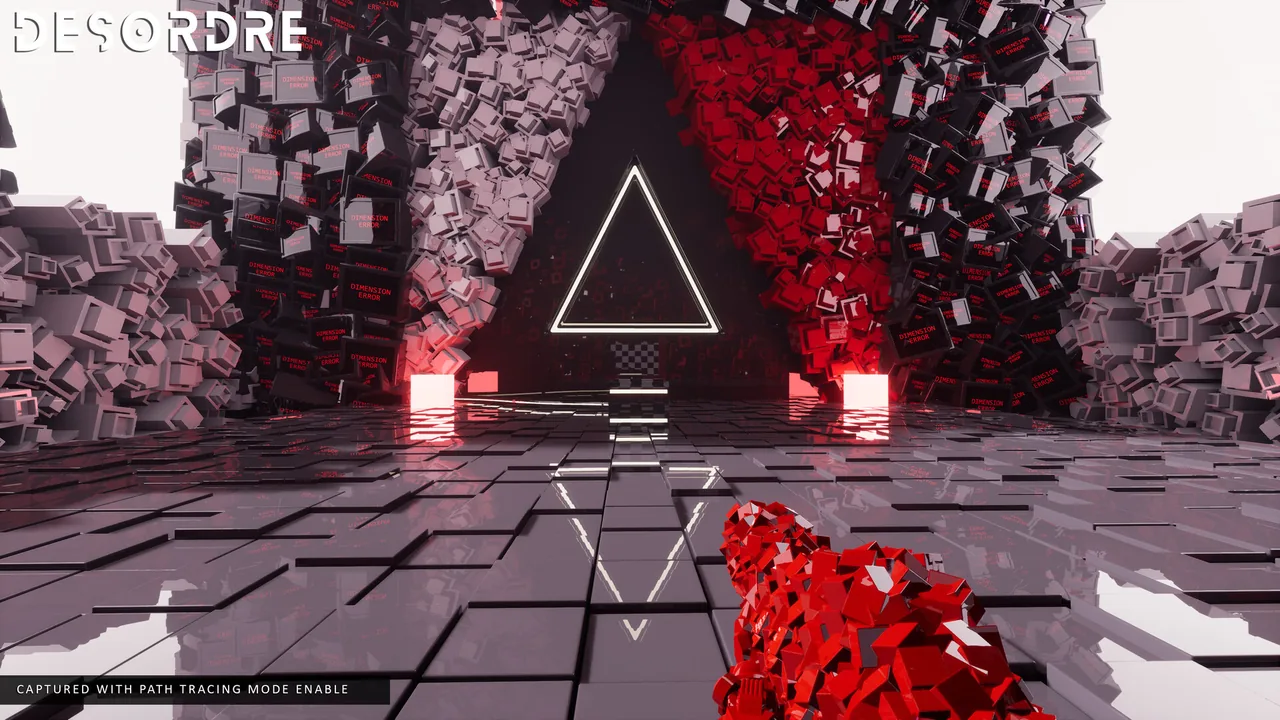
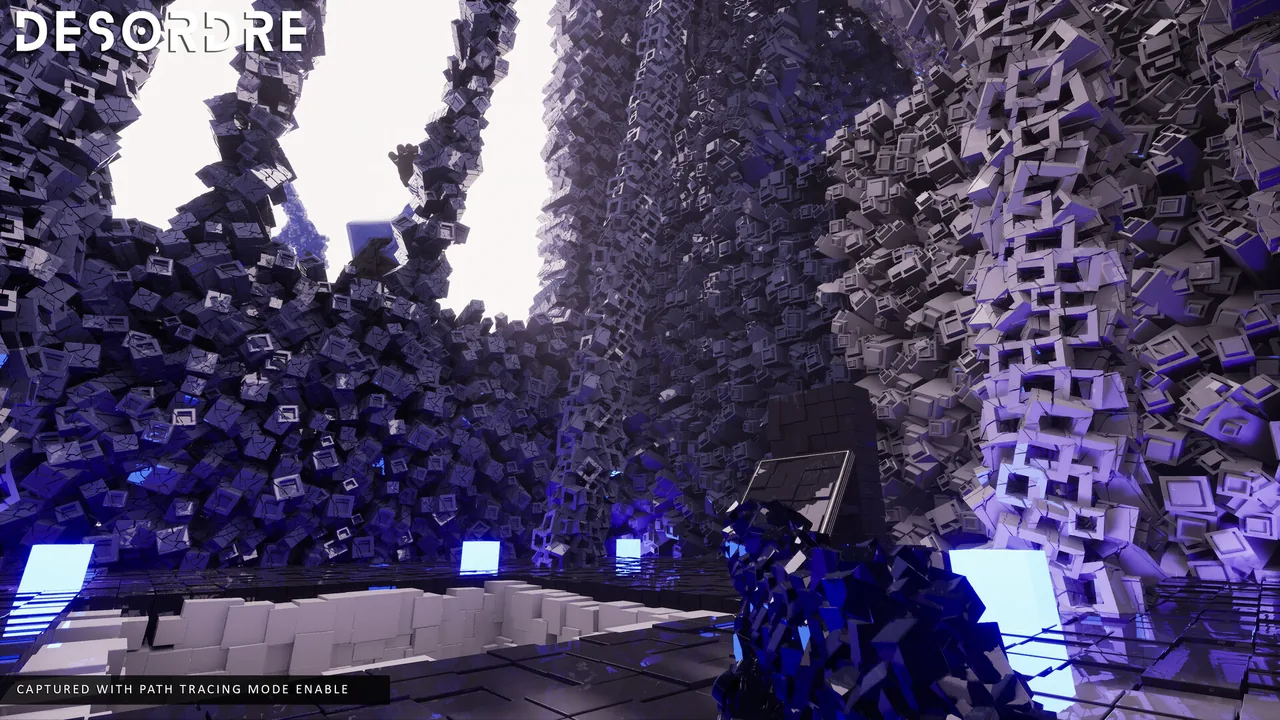
- Genuinely striking path-traced lighting and reflections that multiple reviewers, independently, call a better real-time ray-tracing showcase than far bigger AAA releases
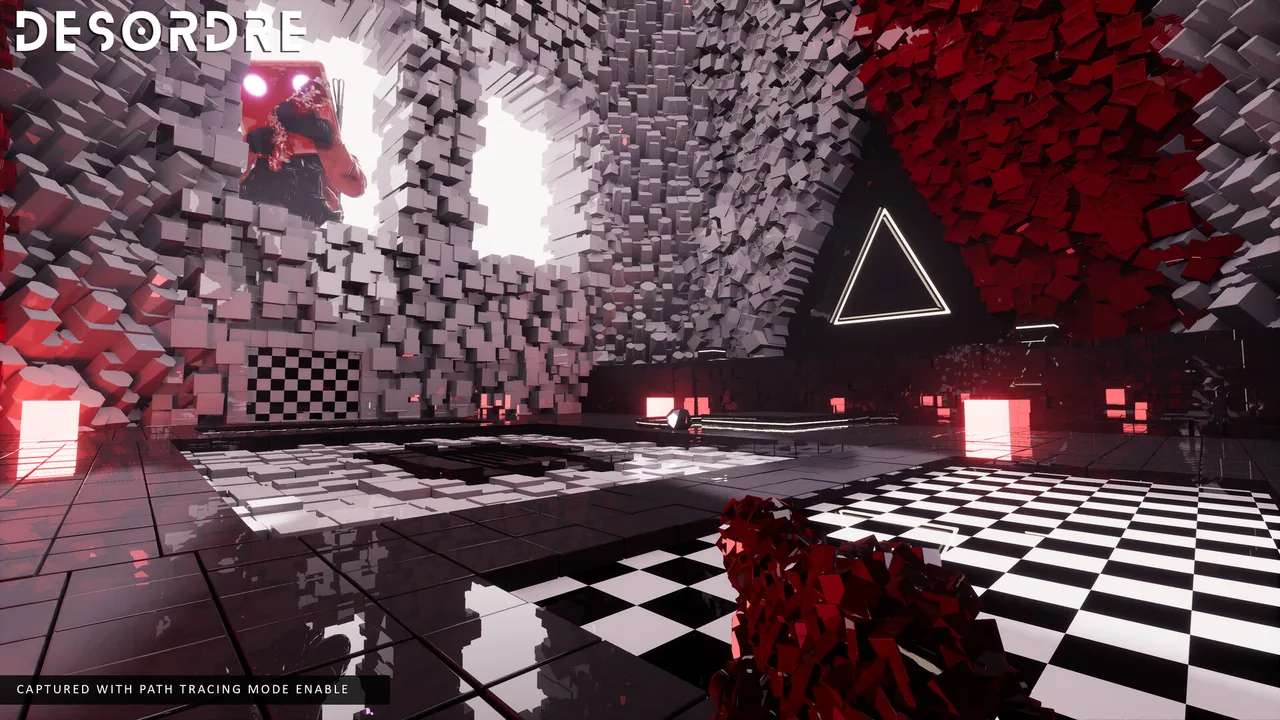
- A real, original twist on the Portal formula: switching between two overlapping "universes" with different physical behaviour, which several reviewers single out as a smart and fun idea
- Built entirely by a solo developer, a genuine achievement given the visual and technical scope on display
Biggest weaknesses
- The single most repeated complaint across the negative-review sample: the portal-to-portal momentum lacks "portal funnelling," the pull toward a portal's centre that makes Portal's own momentum forgiving, leaving jumps described as floaty, imprecise, and frustrating rather than satisfying
- Multiple reviewers report the game demands precise platforming more often than it demands puzzle-solving, with several saying that's a poor match for a game marketed primarily as a puzzle experience
- A minority of reviewers report crashes to desktop, and at least one describes being unable to resume a session or select a different room without starting over entirely
Who it's for: Fans of Portal-style physics puzzles who have a path-tracing-capable GPU and want to see it put to genuine use, and who can tolerate stricter, less forgiving platforming than Valve's games offer.
Our recommendation: A reasonable buy for puzzle fans specifically curious about the dual-universe twist and willing to accept the movement won't be as forgiving as Portal's — check the negative reviews' specific momentum complaints against your own tolerance for floaty platforming before buying at full price.
6.4 / 10
Introduction
DESORDRE: A Puzzle Game Adventure is a first-person puzzle game built on Unreal Engine by solo developer SHK Interactive, released on Steam on 1 June 2023 at NZ$14.75. It wears its inspiration openly: place two linked portals on checkered surfaces, carry momentum between them, and solve room-by-room puzzles in the vein of Valve's Portal. Its own twist, layered on top, is a dual-universe mechanic — swapping between a red and blue overlapping reality that behave differently — plus a bullet-time ability for trickier sequences. Three years on, its 64 English-language Steam reviews sit at 72% positive, Mostly Positive. This review read all 18 negative reviews in that sample alongside a range of the positive ones.
What both sides agree on
Unusually for a Mixed-adjacent aggregate, the two sides of DESORDRE's review sample don't disagree much about what the game gets right. Even reviewers who ultimately didn't recommend it call out the visuals specifically and often generously: "this game can be a better showcase for Path Tracing than Cyberpunk 2077," one wrote, while another negative review still conceded "great graphics and artstyle aside." The dual-universe idea gets similar cross-aggregate respect — "the addition of the dual dimension puzzles is an amazing idea and it makes the game really fun," reads one positive review, and even a lukewarm three-hour negative review called the concept genuinely original rather than a rehash. For a solo developer working in Unreal Engine, that's a real achievement worth naming plainly.
The momentum problem
Where the two sides split is squarely on movement, and the negative-review sample is unusually consistent about exactly what's wrong. Portal's own portals pull the player toward their centre on approach — "portal funnelling," in the genre's own terminology — and several reviewers say DESORDRE's portals simply don't do this, leaving jumps that demand pixel-precise aim without the forgiveness the format has trained players to expect. "Please implement portal funneling or way bigger portals to be able to reliably keep momentum," one wrote. Another, more pointed: "if you make the surfaces reflective and enable path traced lighting, the graphics look next level. However, this game does have a persistent problem with instability" — reporting crashes after the intro room specifically. A few reviewers frame the issue as a genre mismatch rather than a bug: "the puzzles are not difficult, instead, the clunky control and movement make this game too complicated to play," reads one three-hour review, arguing the challenge comes from fighting the physics rather than solving the intended puzzle.
A smaller cluster of complaints point to specific instability: one reviewer reports being unable to resume a session or pick a different room after leaving one, only able to work around it by toggling shader optimization settings; another calls the room-reset button "terrible" and reports getting stuck on the very first level despite over 100 hours in Portal.
How much game is here
Steam's own achievement data shows a gentler decline than many short indie games in this library — 63.4% of players clear the introductory achievement, tapering steadily down to 16.5% completing the final room, rather than the steep single-digit cliffs seen in more padded, grindier titles. That's broadly consistent with reviewer reports that DESORDRE is short but largely completable for players who stick with it — "under two hours" by one account — rather than a game that loses its audience to frustration partway through. The developer's own support record backs up a complete, finished release rather than an abandoned one: performance and path-tracing patches continued through March 2024, after which the developer publicly announced a new project, "A Silent Desolation." A live concurrent-player check for this review returned zero, unsurprising for a short single-player game well past its launch window.
Verdict
DESORDRE is a genuine solo-developer achievement — visually one of the strongest path-traced indie showcases on Steam, with a dual-universe twist on the Portal formula that reviewers on both sides of the aggregate respect. But a consistent, specific complaint runs through nearly all of its negative reviews: portal momentum without funnelling makes platforming feel like the real obstacle rather than the puzzles themselves, and a smaller group ran into outright instability. Worth a look for Portal fans specifically curious about the concept and tolerant of stricter movement, less so for anyone who wants the puzzle, not the platforming, to be the challenge.
Pros and cons
Pros
- Genuinely striking path-traced lighting and reflections that multiple reviewers, independently, call a better real-time ray-tracing showcase than far bigger AAA releases
- A real, original twist on the Portal formula: switching between two overlapping "universes" with different physical behaviour, which several reviewers single out as a smart and fun idea
- Built entirely by a solo developer, a genuine achievement given the visual and technical scope on display
- Runs on Steam Deck per at least one reviewer, and scales down for a range of hardware beyond the flagship path-tracing mode
- A relatively short, focused campaign that respects the player's time rather than padding out the central mechanic past its welcome
Cons
- The single most repeated complaint across the negative-review sample: the portal-to-portal momentum lacks "portal funnelling," the pull toward a portal's centre that makes Portal's own momentum forgiving, leaving jumps described as floaty, imprecise, and frustrating rather than satisfying
- Multiple reviewers report the game demands precise platforming more often than it demands puzzle-solving, with several saying that's a poor match for a game marketed primarily as a puzzle experience
- A minority of reviewers report crashes to desktop, and at least one describes being unable to resume a session or select a different room without starting over entirely
- Some reviewers call the puzzle design itself thin, citing red-herring set-pieces meant to look more complex than the actual solution, and a handful of very similar-looking rooms
- Reported completion length is short — under two hours by at least one account — which several reviewers weigh directly against the asking price
Screenshots
-
DESORDRE : A Puzzle Game AdventureImage: SHK Interactive via Steam -
DESORDRE : A Puzzle Game AdventureImage: SHK Interactive via Steam -
DESORDRE : A Puzzle Game AdventureImage: SHK Interactive via Steam -
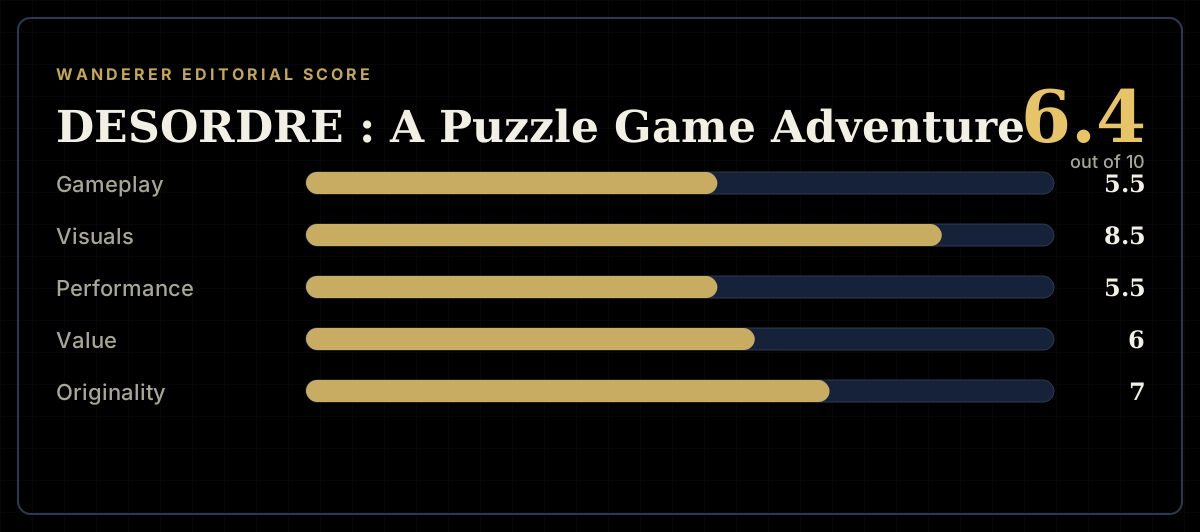
How the review scores each part of the gameWanderer Editorial -
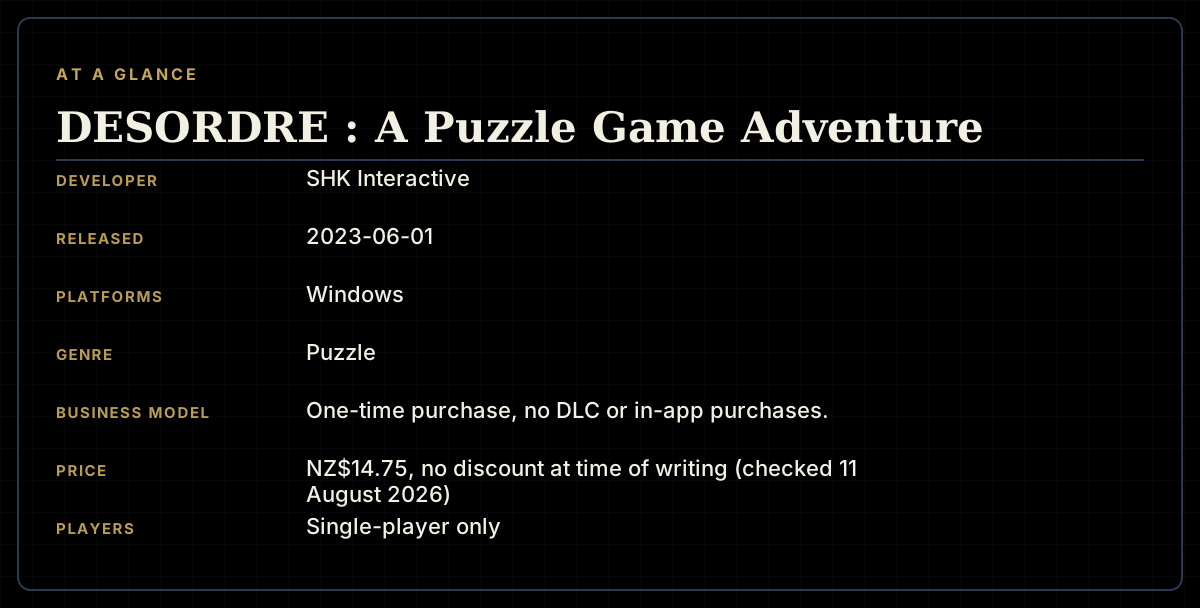
The essentials at a glanceWanderer Editorial -
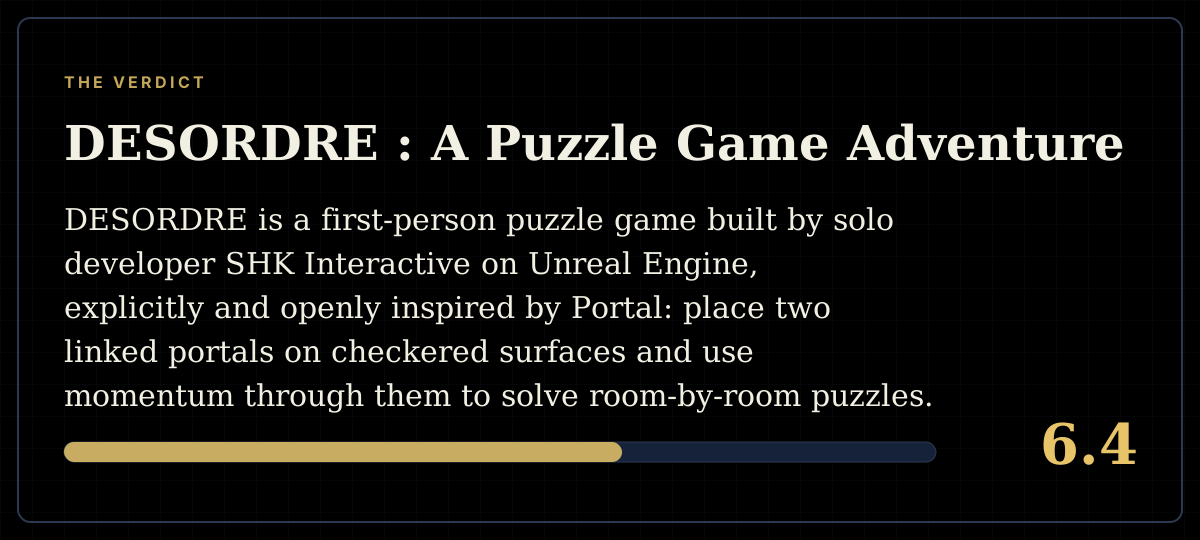
The short versionWanderer Editorial