
Game review
Dead In Vinland
5.5 / 10
- Developer
- Ishtar Games
- Publisher
- Ishtar Games
- Released
- 12 April 2018
- Platforms
- Windows, macOS, Linux
- Genre
- Survival Management RPG
- Monetisation
- Paid, one-time purchase, plus a small DLC and endless-mode expansion.
- Players
- Single-player only.
The short version
Dead In Vinland follows an exiled Viking family building a settlement while managing hunger, disease and raiders, and its Mostly Positive rating across 570 reviews reflects genuine appreciation for its distinctive art direction and characterful writing. What dominates this review base overwhelmingly is a specific, extraordinarily consistent complaint about its random- event system: dozens of reviewers, independently, describe failing high-probability checks — 75%, 80%, even 93% success chances — often enough in succession that many conclude the underlying probability math must be weighted against the player rather than genuinely random. This review found the developer has continued the franchise through two further entries, with the most recent, Dead in Antares, launching in February 2026 and explicitly framed by the studio as addressing lessons learned since this game.
Biggest strengths
- Genuinely striking, distinctive hand-painted art direction and character portraits that reviewers consistently credit as some of the best in the genre.
- Characterful, often darkly funny writing built around a diverse cast of exiled Viking survivors with real personality.
- A distinctive premise combining settlement management, turn-based tactical combat and narrative choice in a genre with relatively few direct competitors.
Biggest weaknesses
- An extraordinarily consistent complaint, repeated independently across years of reviews, describes high-probability event and combat rolls failing often enough that many players conclude the underlying randomness is weighted unfairly against them.
- Survival quotas and resource-management pressure are described by a large share of reviewers as excessive, creating a punishing spiral that several describe as feeling arbitrary rather than earned.
- Several reviewers report the underlying mechanics obscure too much information from the player, making early failures feel like the result of hidden systems rather than legible strategic mistakes.
Who it's for: Fans of narrative-driven survival management who can tolerate genuinely harsh, occasionally seemingly unfair random outcomes; players who want difficulty to feel consistently skill-responsive should consider the developer's more recent entries instead.
Our recommendation: Worth trying at its heavily discounted price for the writing and art alone; go in expecting the difficulty to feel arbitrary rather than consistently fair.
5.5 / 10
A genuinely distinctive premise with real narrative craft
Dead In Vinland's setup is specific and immediately engaging: an exiled Viking family, cast away and forced to rebuild on an unfamiliar island, managing hunger, exhaustion, disease and hostile raiders while navigating relationships between a diverse, characterful cast of survivors. Reviewers consistently credit the writing and presentation as genuine strengths even amid harsher complaints elsewhere. "The art style is nice. So are the characters. The survivors are a diverse bunch, and seeing them interact and learning their stories is fun," reads a 2026 review, one of many that opens with real appreciation before turning to the game's central problem. A 2018 review frames the underlying ambition sympathetically: "the management is thought through, the story good, and it's fun" — again, before pivoting to a specific, structural complaint that dominates nearly the entire negative-review sample.
An extraordinarily consistent complaint about broken-feeling probability
What separates this review base from an ordinary "the game is hard" pattern is the sheer, specific consistency of complaints about probability itself. "RNG too heavy toward the losing side until we know the game is not balance. If flipping a coin is 50%, how can a person continue to miss 5 x 80% chance to hit an enemy?" reads an April 2018 review, posted within days of launch. A 2023 review reports an almost identical, later experience: "In combat I miss 5 times in a row with a 93 [percent chance to hit]." A 2025 review states the pattern most bluntly: "yeah sure, people definitely just unalive themselves if it rains for 10 days also the dice roll is manipulated. you miss 6 times in a row while enemies hit you like a truck." Checking a broad sample of negative reviews spanning the game's entire release history, this exact complaint — not simply "the game is difficult," but specifically that stated high-probability outcomes fail at a rate reviewers find statistically implausible — recurs with remarkable consistency across more than seven years. This review cannot independently audit the game's underlying probability code, but the sheer volume and specificity of independent reviewers converging on the same complaint, citing similar percentage figures, is a meaningful signal about how the system feels in practice regardless of its literal implementation.
A separate, more specific complaint concerns writing tone rather than mechanics: "Terrible, obnoxious writing... I kept playing out of spite because I couldn't return it. Eventually stopped after the nth 'sweetie.' The game reads like it's about a California family on meth larping as vikings," reads a 2025 review. This is a narrower, more subjective complaint than the probability issue, and several other reviewers explicitly praise the same writing this reviewer dislikes, but it's worth naming as a genuine point of disagreement among the game's own audience — the modern, colloquial dialogue style is a deliberate choice that lands very differently depending on how strongly a given player wants period- appropriate tone from a Viking-age setting.
Punishing survival quotas compounding the frustration
A closely related complaint concerns the broader survival-management pressure layered on top of the probability issues. "Survival needs are ridiculous — quotas are brutal and deride from the core survival element... RNG will cause you to lose the game no [matter how carefully you plan]," reads a 2018 review. A 2020 review frames the compounding effect directly: "This game demonstrates a few nice concepts which unfortunately were poorly implemented. The developer just randomly throws all sorts of negative status effects... on the party members" seemingly independent of player choices. Where the probability complaint above concerns individual rolls, this is a broader complaint about overall pacing and pressure — reviewers describe a system where recovering from a single unlucky stretch is disproportionately difficult, compounding one complaint on top of the other rather than either existing in isolation.
Weighing the difficulty complaint against the game's own fans
It's worth being fair to the reviewers who do recommend the game despite these same systems. A 2018 review, after extensive play, reaches a more measured conclusion: acknowledging real balance issues while still crediting "the management," "the story," and overall fun factor as outweighing the frustration for a specific kind of player who enjoys difficult, roguelike-adjacent survival design. The throughline across this review base isn't that every player experiences the RNG identically — some clearly have more forgiving runs than others — but that a large enough share report statistically implausible failure streaks that this review treats the complaint as reflecting a genuine, if perhaps inconsistent, balance problem rather than universal bad luck or player error.
A franchise that learned from this entry
This review checked Ishtar Games' own news feed directly and found meaningful, relevant context: the studio explicitly published a post titled "What changed since Dead in Vinland?" ahead of launching its most recent entry, Dead in Antares, in February 2026. That the developer frames its newest game specifically in relation to lessons learned since this one is a notable, directly verifiable signal that at least some of this review base's core complaints were heard internally, even if this specific 2018 release itself was never comprehensively rebalanced to match.
Final verdict
Dead In Vinland offers genuinely distinctive art direction and characterful writing built around an appealing Viking-survival premise, and this review credits that foundation honestly. What keeps the score below the game's presentation would otherwise earn is an extraordinarily consistent, multi-year complaint about probability and difficulty that a large share of independent reviewers describe in strikingly similar, specific terms. At its heavily discounted current price, this remains a reasonable pick for players prepared to treat harsh, occasionally seemingly unfair outcomes as part of the experience; players who want survival difficulty to feel consistently fair and skill-responsive should look toward the developer's more recent, explicitly rebalanced entries instead.
Pros and cons
Pros
- Genuinely striking, distinctive hand-painted art direction and character portraits that reviewers consistently credit as some of the best in the genre.
- Characterful, often darkly funny writing built around a diverse cast of exiled Viking survivors with real personality.
- A distinctive premise combining settlement management, turn-based tactical combat and narrative choice in a genre with relatively few direct competitors.
- An actively continued franchise, with the developer's most recent entry, Dead in Antares, launching as recently as February 2026 and explicitly addressing balance lessons from this earlier game.
Cons
- An extraordinarily consistent complaint, repeated independently across years of reviews, describes high-probability event and combat rolls failing often enough that many players conclude the underlying randomness is weighted unfairly against them.
- Survival quotas and resource-management pressure are described by a large share of reviewers as excessive, creating a punishing spiral that several describe as feeling arbitrary rather than earned.
- Several reviewers report the underlying mechanics obscure too much information from the player, making early failures feel like the result of hidden systems rather than legible strategic mistakes.
- A minority of reviewers criticise the writing's tone as tonally inconsistent, describing dialogue that reads as jarringly modern for the game's Viking-age setting.
Screenshots
-

Dead In VinlandImage: Ishtar Games via Steam -

Dead In VinlandImage: Ishtar Games via Steam -

Dead In VinlandImage: Ishtar Games via Steam -
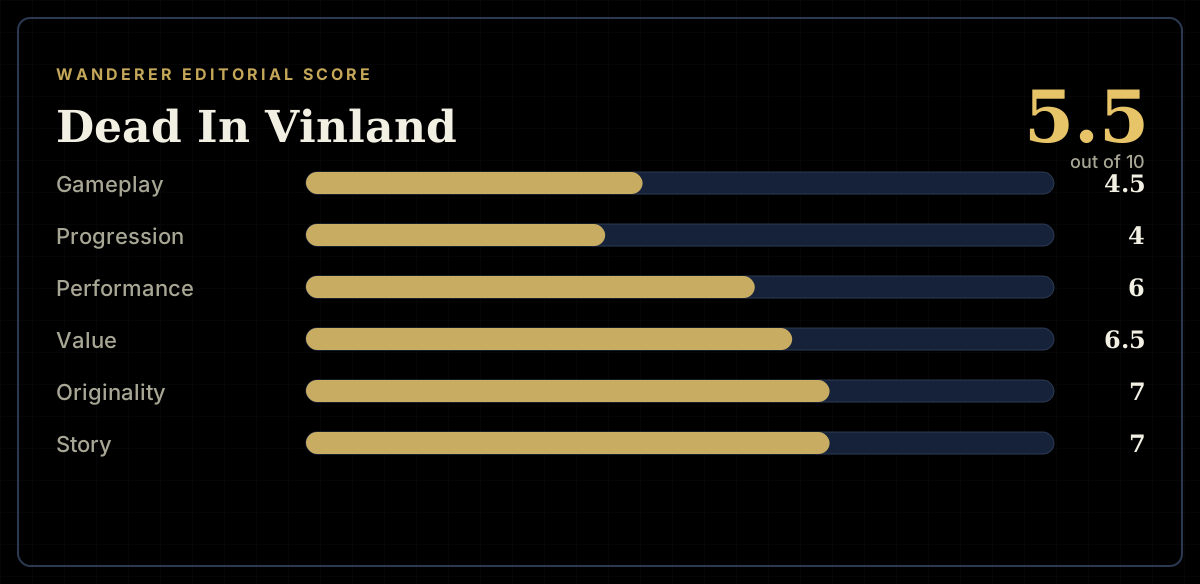
How the review scores each part of the gameWanderer Editorial -
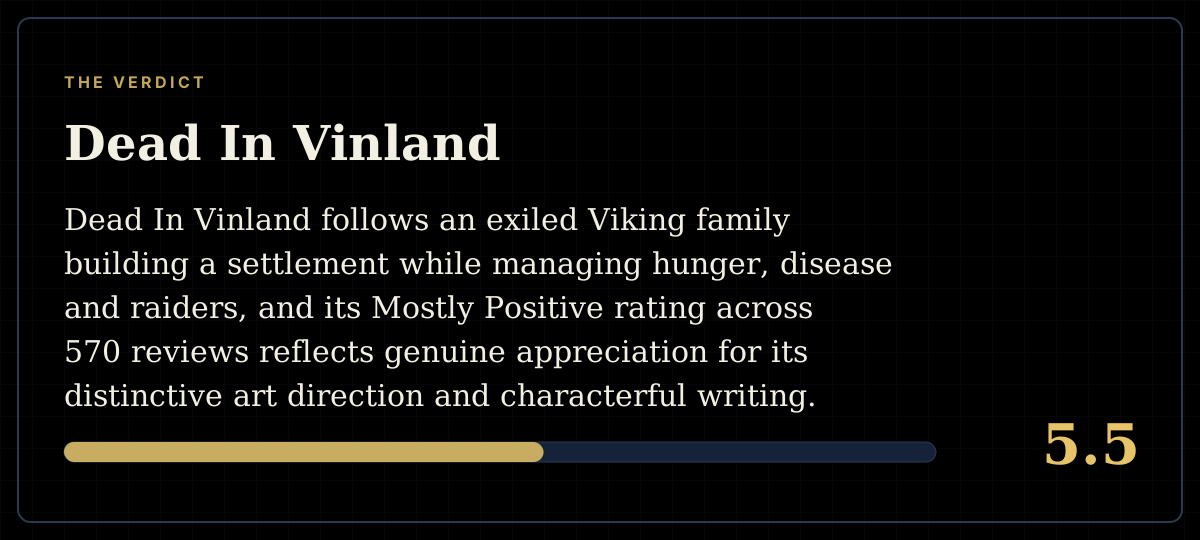
The short versionWanderer Editorial