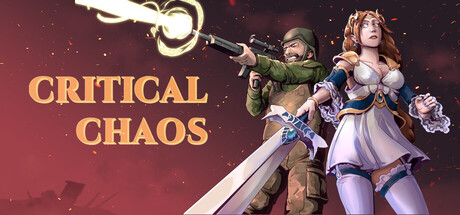
Game review
Critical Chaos Review
6.5 / 10
- Developer
- Red Canopy Games
- Publisher
- Red Canopy Games
- Released
- 9 September 2026
- Platforms
- ["Windows"]
- Genre
- RPG
A Thirty-Second Consecutive Launch Without a Single Review
Critical Chaos released on Steam on 9 September 2026 and has zero user reviews at the time of writing, extending this stretch's run of unreviewed launches to thirty-two. That's a genuinely surprising silence for a release this ambitious on paper: a self-described "return to classic RPG adventure" explicitly modelled on SNES- and PlayStation-era turn-based RPGs, promising a 40-plus-hour main story plus a substantial postgame, is a far bigger undertaking than most titles in this review stretch, and the kind of release that would typically draw at least a handful of early reactions from genre enthusiasts scouting for the next Chrono Trigger or Final Fantasy successor. This review is built entirely from the developer's own store page description, not from verified play.
A Reluctant Family Story, Not a Chosen One
Critical Chaos frames its narrative hook deliberately against genre convention: the protagonist is a middle-aged former martial artist, "out of shape, tired, stubborn, and imperfect," searching for a missing loved one rather than answering a prophecy or accepting a call to greatness. That's a notably different emotional register from the genre's usual chosen-one framing, and pairing it with a squad built from "family members, veterans, warriors, outcasts, and unlikely allies" suggests a story more interested in found-family dynamics and personal stakes than world-ending prophecy stakes, even though the backdrop is a full empire-versus-collapsing-world conflict complete with awakening ancient powers and fracturing time. The store page is also upfront that "some victories come at a cost" and that the story doesn't wrap up neatly at the first credits roll, with choices accumulating across the adventure toward multiple distinct endings — a structural commitment that raises the stakes on player choices meaning something, rather than being cosmetic dialogue branches that funnel back to the same ending regardless.
Visible Enemies and a Deep Systems Stack
The combat pitch is built around a specific, deliberate rejection of one classic-RPG frustration: encounters are visible on the map with no random battles, meaning every fight is one the player chose to engage, avoid, or prepare for in advance. Layered onto that foundation is a genuinely dense systems stack — turn-order management, counterattacks, taunts and shield blocking to protect allies, stealing equipment mid-fight, and exploiting enemy weaknesses — combined with a character-building framework spanning Classes, subclassing, stat investment, Talents, Essences, and unspecified "Ikons," plus cross-Class skill progression that lets abilities carry over between builds. That's an unusually large number of named, interlocking systems for a story-driven indie RPG to juggle at once, and the store page's own framing — "built for players who want more than basic attack, magic, and item loops" — signals real ambition about depth rather than a game content to coast on nostalgia alone. Whether all of those systems actually feel distinct from one another once a player is deep into a save file, or whether some overlap redundantly, isn't something a store page description can settle on its own. Official screenshots do confirm the shape of that combat menu directly: a boss fight against a chimera-like lion shows a command list running Attack, Magic, Talent, Tactic, Initiative, Items, and Defend, alongside tracked HP, MP, and Initiative bars for named party members — a legible, classic JRPG-style interface for the layered systems the store page describes.
Forty-Plus Hours, Then a "Substantial Postgame"
Beyond the stated 40-hour main story, Critical Chaos promises a genuinely large postgame layer: major questlines, hidden storylines, optional superbosses, and a true-ending path gated behind that additional content. That structure — a complete main campaign followed by a distinct, harder postgame tier — is a design choice more associated with long-running JRPG franchises than budget indie RPGs, and if the postgame content is anywhere near as extensive as described, it gives Critical Chaos a genuinely long tail well past the credits, assuming the core 40 hours hold up well enough that players want to keep going. That's also a meaningful commitment for a single studio to deliver without the content feeling thin or repetitive once the main story's narrative momentum is gone, since postgame superboss content in particular tends to live or die on whether the combat systems built for a story-paced campaign also hold up under deliberately harder, more min-max-focused fights.
A Fair Price for the Stated Scope
At NZ$21.14 with a 10% discount from its NZ$23.49 list price at the time of writing, and no in-app-purchase category listed on the store page, Critical Chaos is priced closer to a mid-tier boxed RPG than a budget indie title — a price point the stated 40-hour-plus scope with a full additional postgame would comfortably justify if delivered as described. Full controller support alongside a keyboard-only option, plus accessibility features like camera comfort, custom volume controls, and play without timed input, suggest a reasonably polished technical baseline for a small studio's release, and Steam Achievements point to at least some post-launch structure for tracking the promised optional content.
Verdict
Critical Chaos is pitching itself as a genuinely substantial, systems-heavy throwback RPG — a 40-plus-hour story built around a reluctant, unglamorous protagonist, a deep Class/Talent/Essence customisation stack, visible no-random-battle encounters, and a postgame ambitious enough to include its own superbosses and true ending. That's a far bigger and more specific pitch than most titles in this review stretch, which makes the total absence of reviews after nearly two weeks genuinely notable rather than unsurprising — a release this scoped usually finds at least a few early adopters willing to weigh in, positive or not. Its biggest open question is simply whether execution matches ambition across a scope this large, since a systems stack this dense is exactly the kind of thing that can either deliver real strategic depth or collapse into redundant, half-explained mechanics — and this assessment rests entirely on the developer's own description rather than anyone's actual playthrough.
Screenshots
-
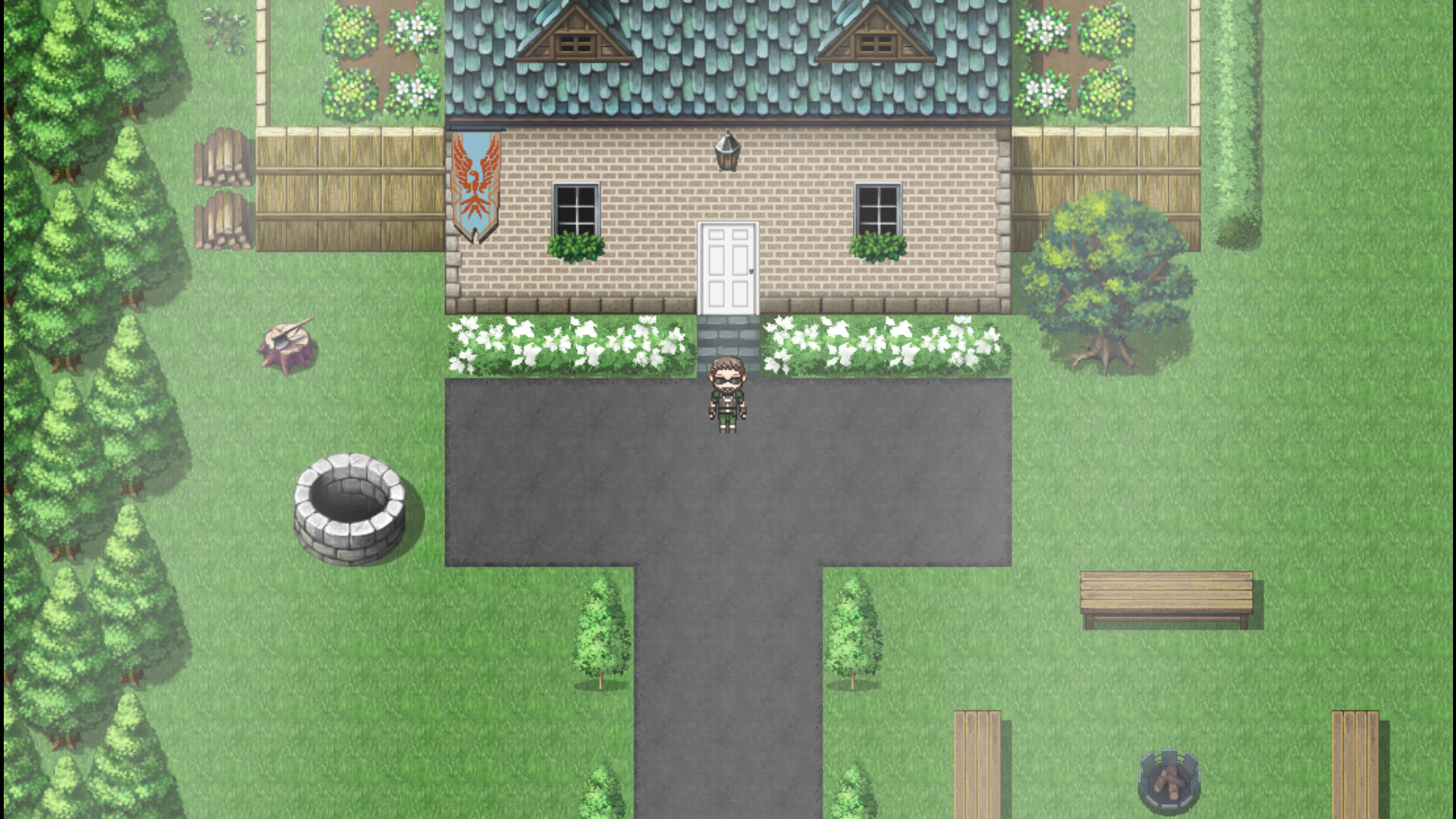
Free-roam exploration of a cottage yard, rendered in a classic top-down RPG art styleImage: Red Canopy Games via Steam -
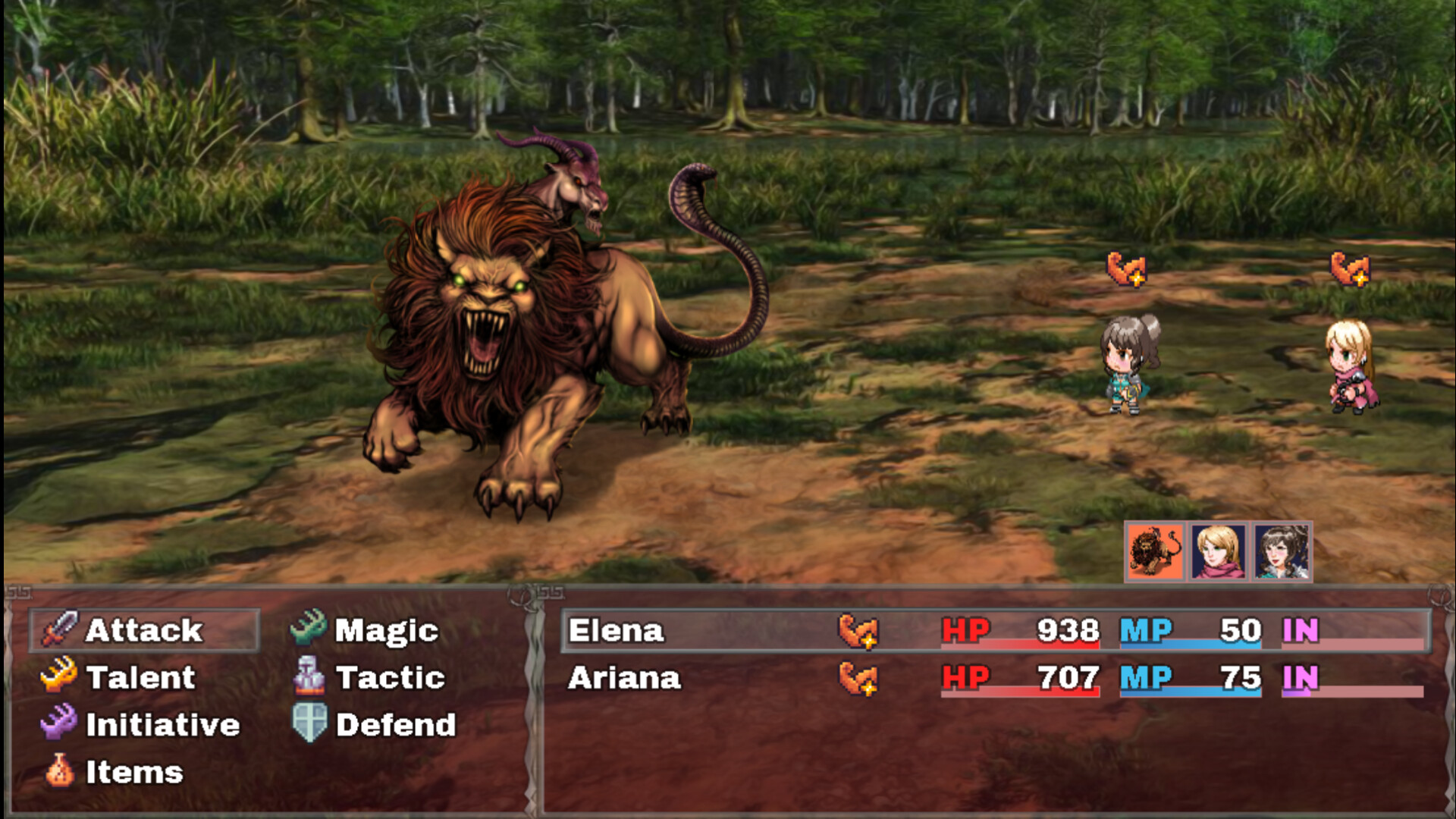
A boss encounter showing the Attack/Magic/Talent/Tactic/Initiative command menu and HP/MP trackingImage: Red Canopy Games via Steam -
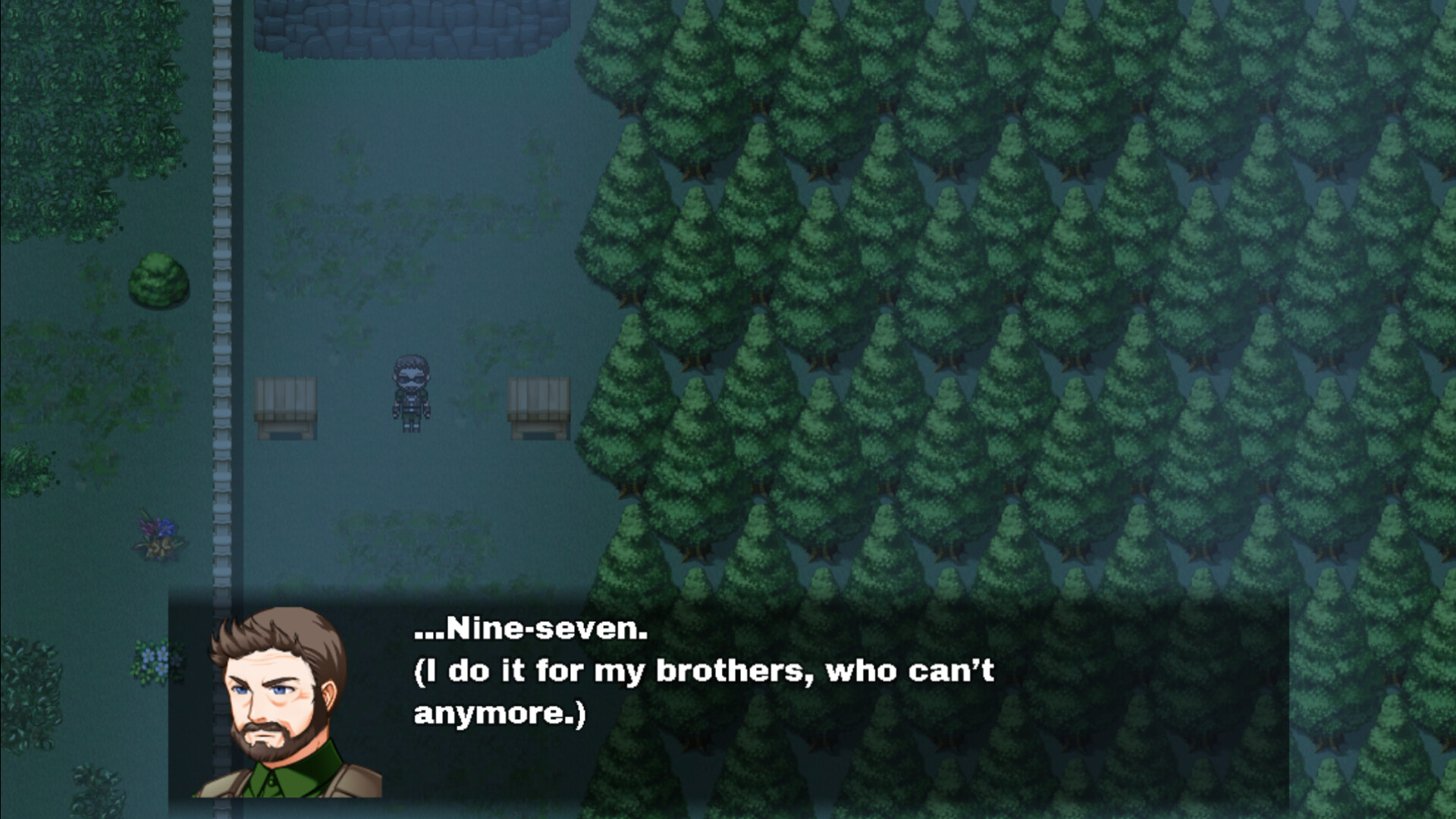
A story dialogue moment hinting at a companion's personal motivationsImage: Red Canopy Games via Steam