Game review
The Architect of Nowhere Review
6 / 10
- Developer
- kollegi51
- Publisher
- kollegi51
- Released
- 16 September 2026
- Platforms
- ["Windows"]
- Genre
- RPG
A Twentieth Consecutive Launch Without a Single Review
The Architect of Nowhere released on Steam on 16 September 2026 and has zero user reviews at the time of writing, extending this stretch's run of unreviewed launches to twenty. That's an especially easy gap to overlook here, since this is a solo-developer visual novel priced at a single dollar and change rather than a title competing for attention in a crowded genre — the kind of release that's genuinely likely to slip past most players entirely regardless of quality. This review draws entirely from the developer's own store page description, not from verified play.
A Pandora's Box, By a Solo Developer
The premise is compact: the wizard Oyuun, "after trying to find some meaning for his life," opens "a Pandora's Box with irreversible consequences" and becomes a hunted man. The store page frames this as "classic fantasy adventure with swords and sorcery," but with an unusual twist — "many events and characters are based on real life history," and the developer specifically cites Soviet-era science fiction and Yoshiyuki Tomino's Gundam novels as influences, noting that Oyuun "ponders on philosophical issues and tries to understand the ideologies of the world around him." That's a distinctive reference pool for a fantasy visual novel, suggesting an ambition toward ideological or political commentary layered under a familiar sword-and-sorcery skin, developed entirely by a single person under the handle "kollegi51." Whether the writing actually earns those influences, or whether they're mentioned as texture rather than genuinely reflected in the narrative's structure, isn't something the store page can settle on its own.
It's also worth asking, up front, how much this release earns its RPG tag rather than sitting more comfortably as a straight visual novel. The store page itself describes the game as "a Visual Novel with rpg elements," and the only mechanical system it names beyond branching narrative is the party-recruitment gacha discussed below — there's no mention of stats, levelling, equipment, or combat resolution of any kind. That's a thinner RPG substance than most titles covered in this stretch, closer to the Grainhold or Chibi Legends judgment calls than to something like Wardenmark's persistent campaign structure. The tag isn't unreasonable given the summoned-familiar party mechanic, but readers coming in expecting genuine RPG systems layered under the narrative should recalibrate: this reads first as a short, philosophically minded visual novel that happens to gesture at RPG framing, not the reverse.
Hand-Drawn Art in an Unusual Mix
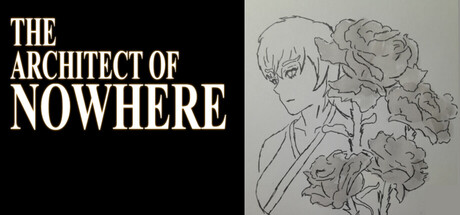
The store page draws specific attention to its visual presentation: "95% is traditional, just photos of my drawings, then the final 5% is pixel art I also made." That's a notably candid, low-polish description for a Steam listing — most developers would simply say "hand-drawn art" rather than clarify that the majority of it is photographed physical drawings rather than digitally illustrated assets. It signals a genuinely personal, low-budget production rather than an attempt to look more technically produced than it is, which fits the overall profile of a one-person, NZ$1.59 release. Whether photographed traditional art scans cleanly and consistently across a full visual novel, especially against the pixel art used for the remaining 5%, is a reasonable point of skepticism that only actual play could resolve.
A Light Gacha Layer for Party Recruitment
The one mechanical wrinkle in an otherwise text-driven game is described as "a light gacha-mechanic for recruiting party members, as Oyuun is a wizard and he summons familiars and spirits to fight by his side." Steam's category tags for the listing don't include any in-app-purchase designation, which suggests this gacha layer runs on an in-game currency or resource rather than real-money transactions — a meaningfully different (and far less concerning) implementation than the term usually implies in free-to-play contexts. Framed as a summoning mechanic tied directly to the protagonist's wizardry, it reads as a thematically justified way of introducing some randomness and party-building into what is otherwise a linear visual novel, though the store page gives no detail on how deep or consequential that system actually is relative to the roughly 24,000-word narrative.
A Short, Inexpensive Read
At around 24,000 words and a stated 2-3 hour completion time, The Architect of Nowhere sits firmly in short-visual-novel territory, and its NZ$1.59 price with no discount at the time of writing makes it one of the least expensive titles in this entire zero-review stretch — a genuinely negligible outlay for readers curious about its unusual philosophical framing. The game is English-only, supports full controller input despite being a text-driven experience, and lists no other monetisation beyond the base purchase. For a genre where reading speed varies enormously between players, the quoted runtime should be treated as a rough guide rather than a guarantee, but the price makes that uncertainty low-stakes.
There's a further consideration worth flagging for a visual novel this dependent on its prose: the developer's handle and the game's specific citation of Soviet-era science fiction suggest English may not be the writer's first language, which is not itself a mark against the game but does raise a genuine question about how the philosophical dialogue reads in practice. Visual novels live or die on the texture of their sentences far more than action-driven genres do, so a story built around characters "pondering ideologies" needs prose precise enough to carry that weight; whether the English-only text achieves that, or reads more roughly than the ambitious premise suggests, is exactly the kind of detail that only a full playthrough — and, eventually, the reviews this game currently lacks — could confirm.
Verdict
The Architect of Nowhere pairs a compact, philosophically ambitious fantasy premise with a candidly low-budget, hand-drawn presentation and a light, currency-based gacha layer for party recruitment — an unusual but coherent combination for a solo-developer visual novel priced under two dollars. Like every other title in this stretch, it remains completely unreviewed by Steam's user base at the time of writing, so whether its Soviet-scifi-inflected writing and photographed traditional art actually cohere into something worth its short runtime is entirely unverified rather than confirmed. Its negligible price makes it one of the lowest-risk picks in this entire zero-review run for readers drawn to its specific, unusual influences, with the standing caveat that this assessment rests entirely on the developer's own description rather than anyone's actual playthrough.
Screenshots
-
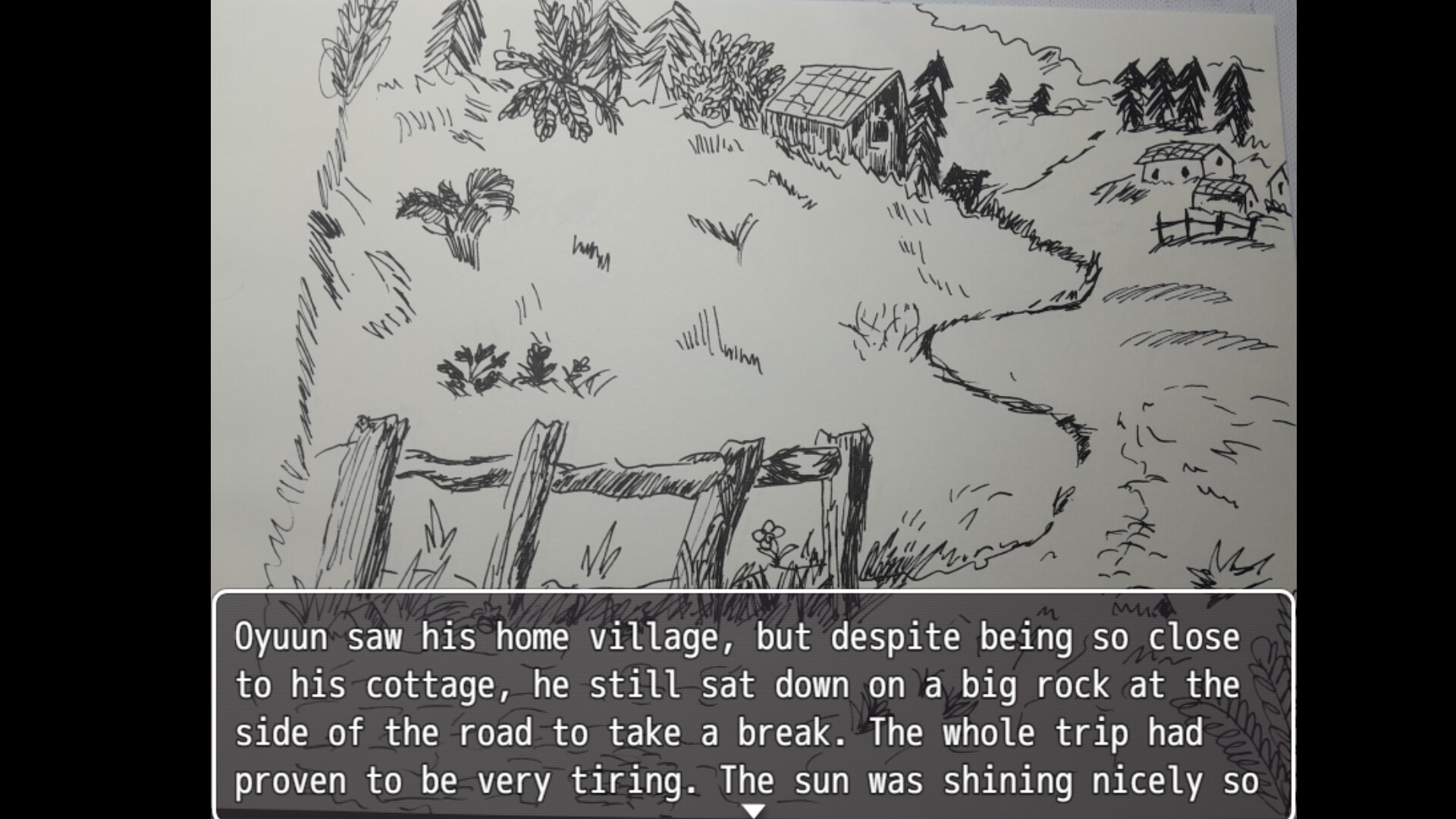
Backgrounds are photographed traditional pen drawings rather than digitally rendered art, giving the visual novel a distinctly handmade, sketchbook lookImage: kollegi51 via Steam -
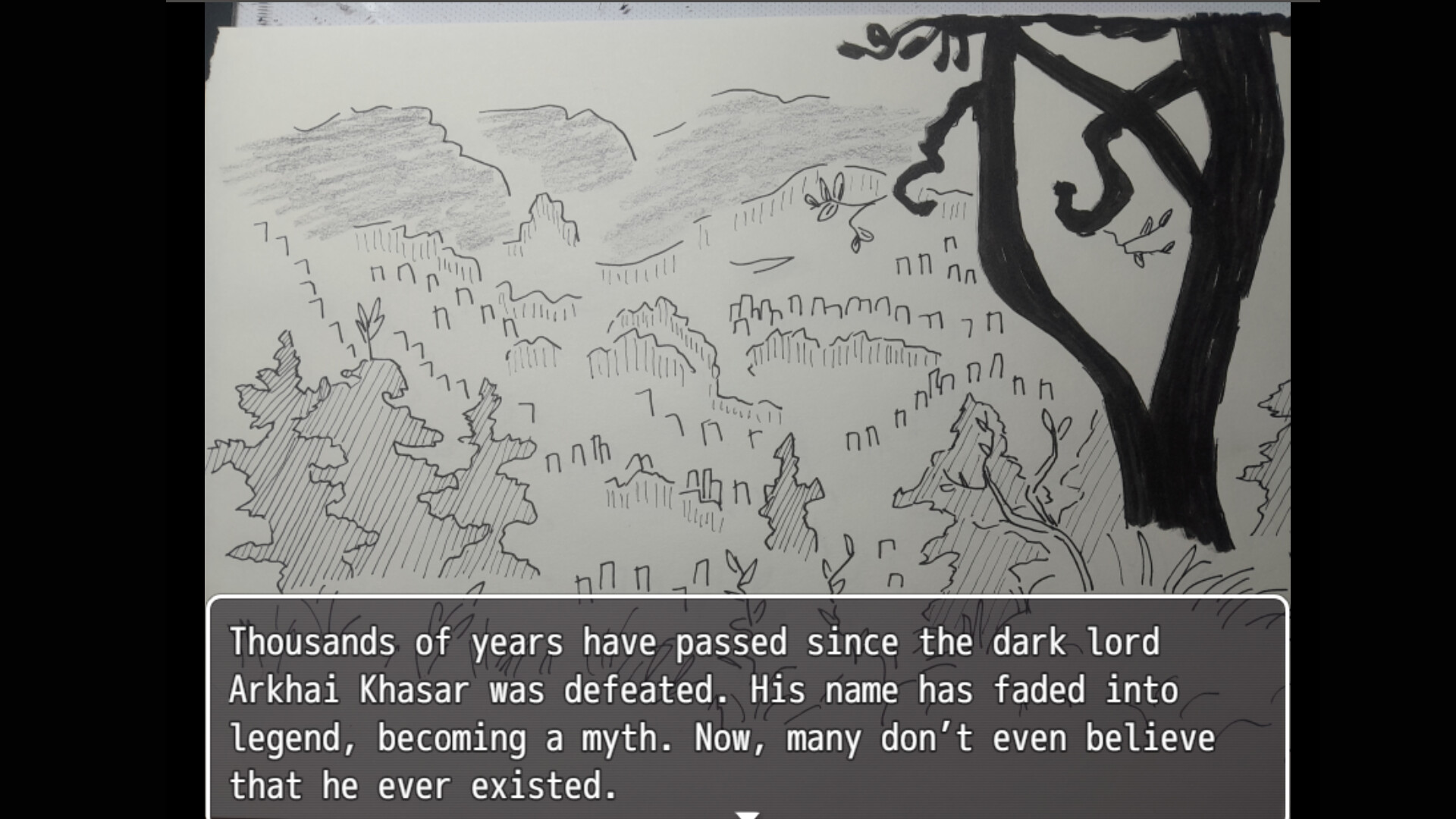
Exposition establishing the game's backstory and its long-dead antagonist, Arkhai Khasar, over a hand-drawn ruined cityscapeImage: kollegi51 via Steam -
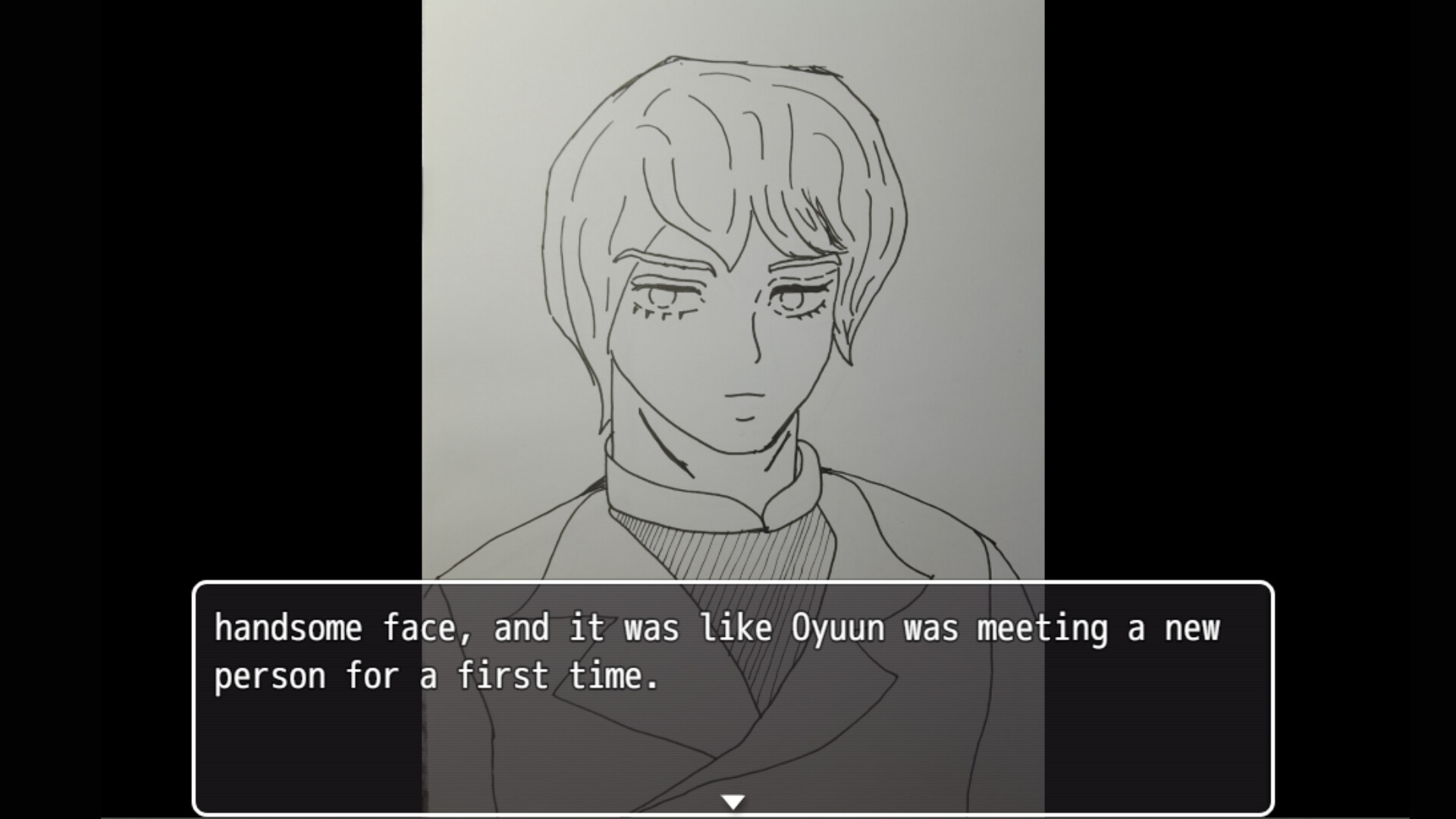
Character portraits share the same photographed pencil-and-ink style as the backgrounds, including occasional rough phrasing in the English textImage: kollegi51 via Steam