Game review
Peacemaker: Bloody Emperor Review
6.2 / 10
- Developer
- Sounding Stone / MaouCat Studio / Hidari Migiko
- Publisher
- Sounding Stone / RMAsia
- Released
- 14 September 2026
- Platforms
- ["Windows"]
- Genre
- RPG
A Princess Knight's Slow, Deliberate Fall
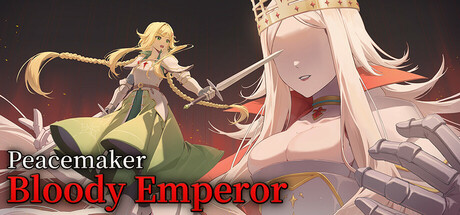
Peacemaker: Bloody Emperor is a pixel-art JRPG about a princess knight's psychological downfall, the third entry in Sounding Stone's loosely connected Peacemaker series. The pitch is unapologetically dark: an honorable knight sets out to fight the Bloody Emperor, a ruthless usurper, only to be worn down by a forced marriage to a vassal lord, the looming threat of a female dark lord, and the slow erosion of the ideals she started the story with. The game is explicit about its intentions in its own store description, promising a heroine whose principles "gradually begin to crumble" rather than a straightforward tale of good triumphing over evil, and reviewers confirm that promise is kept. Structurally, it plays as a series of story chapters bridged by turn-based combat encounters, following the same dialogue-then-battle rhythm as its predecessors, Peacemaker: Glorious Princess among them, with this entry positioned as an intersecting side story that reveals what happened to a supporting character, Gloria, around the events of the second game. Developed by Sounding Stone, MaouCat Studio, and Hidari Migiko, and published by Sounding Stone and RMAsia, Peacemaker: Bloody Emperor launched on Steam on September 14, 2026, priced at $13.99, following a demo period and a Q3 2026 marketing push that began months earlier.
A Small, Mostly Positive Early Reception
Peacemaker: Bloody Emperor has drawn 13 reviews so far, 12 positive and 1 negative, for a 92% approval rating, or "Very Positive" on an admittedly small sample. The pool splits along familiar lines for a story-driven series entry: English-language reviews from longtime fans praising the narrative's emotional weight, against a single, more clinical Simplified Chinese review focused squarely on the mechanical side of the experience.
Fans Say the Fall Hits Harder Than the Previous Two Games
Multiple reviewers who identify themselves as having completed the earlier Peacemaker entries describe this installment landing with more emotional force than its predecessors. One reviewer, who claims to have 100% completed the previous two games, writes that this entry "will have a heavier impact than the previous entries," describing genuinely yelling at the screen while watching the protagonist begin to falter, and coming away wanting more even while wishing the character had made different choices along the way. Another longtime fan calls this the best entry in the series so far, crediting the pacing of its story beats and events for surpassing the earlier games, though that same reviewer flags a smaller complaint worth noting: a few pieces of dialogue appear reused from Peacemaker: Glorious Princess, or at least closely resemble lines from it. A third, more detailed review lays out the plot in full: the protagonist grows up looked down upon within a rigid system, rises to knighthood, endures humiliation and the burden of mediating for a misunderstood brother, and eventually commits atrocities in pursuit of a dream she once shared with someone close to her, all while a dark lord's presence stirs a buried animosity in her. That reviewer explicitly frames the game as "an intersecting point from the second game," meaning certain scenes and dialogue only make full sense to players who already know Gloria's arc from Peacemaker: Glorious Princess, and notes bluntly that the underlying combat and progression systems are "pretty much the same as the others," pinning most of their enthusiasm for the sequel squarely on story rather than mechanics. A short one-line review sums up the tone for newcomers considering picking it up cold: "don't play this if you want a happy ending."
Thin Combat, a Fixed Loop, and a Steep Price for the Format
The lone negative review, written in Simplified Chinese by a player evaluating the game on its systems rather than its story, pushes back hard on exactly the elements the English-language fans gloss over. That reviewer dismisses the narrative as a fairly conventional entry in the female-oriented web-novel tradition, then turns most of their criticism toward combat, arguing the game dresses itself up with the premise of commanding troops while the party in practice amounts to controlling a single character, with bosses that only repeat scripted lines rather than offering any real encounter design, and turn-based skill sets thin enough that fights reduce to stacking raw numbers rather than making meaningful tactical choices. The same review describes the overall structure as rigidly fixed regardless of chapter, always the same sequence of talking to a handful of characters, fighting a couple of battles, and moving to the next chapter, calling that loop low quality even by the standards of an old-school pixel RPG, and questioning whether the price is justified for a game built around such a repetitive shell. It's a sharply different read from the fan reviews, but not necessarily a contradictory one: the enthusiastic reviews consistently treat the systems as an afterthought bolted onto a story they came for, which lines up with a critique that the systems themselves offer little to engage with on their own terms. Newcomers should also weigh the series-continuity issue raised by the English reviews: this entry leans on familiarity with Peacemaker: Glorious Princess for some of its intersecting dialogue and character beats to land, so jumping in cold risks missing exactly the connective tissue longtime fans single out as its biggest strength.
Verdict
Peacemaker: Bloody Emperor is a story-first pixel JRPG that asks players to care more about watching a principled knight slowly break than about the turn-based battles connecting each chapter, and on that narrow measure, its small early audience of returning fans says it delivers the series' darkest, most affecting chapter yet. Where it falters is exactly where a JRPG usually needs to hold its own weight: combat that a critical reviewer describes as a single-character affair dressed up as troop command, repetitive boss encounters, and a fixed talk-then-fight structure that repeats unchanged from chapter to chapter. At $13.99, that's a tougher sell for players who want mechanical depth to match the story's ambitions, and a much easier one for existing fans of the series who came for the fall of another Peacemaker heroine and are prepared to treat the battles as connective tissue between the scenes that actually matter to them.
Screenshots
-
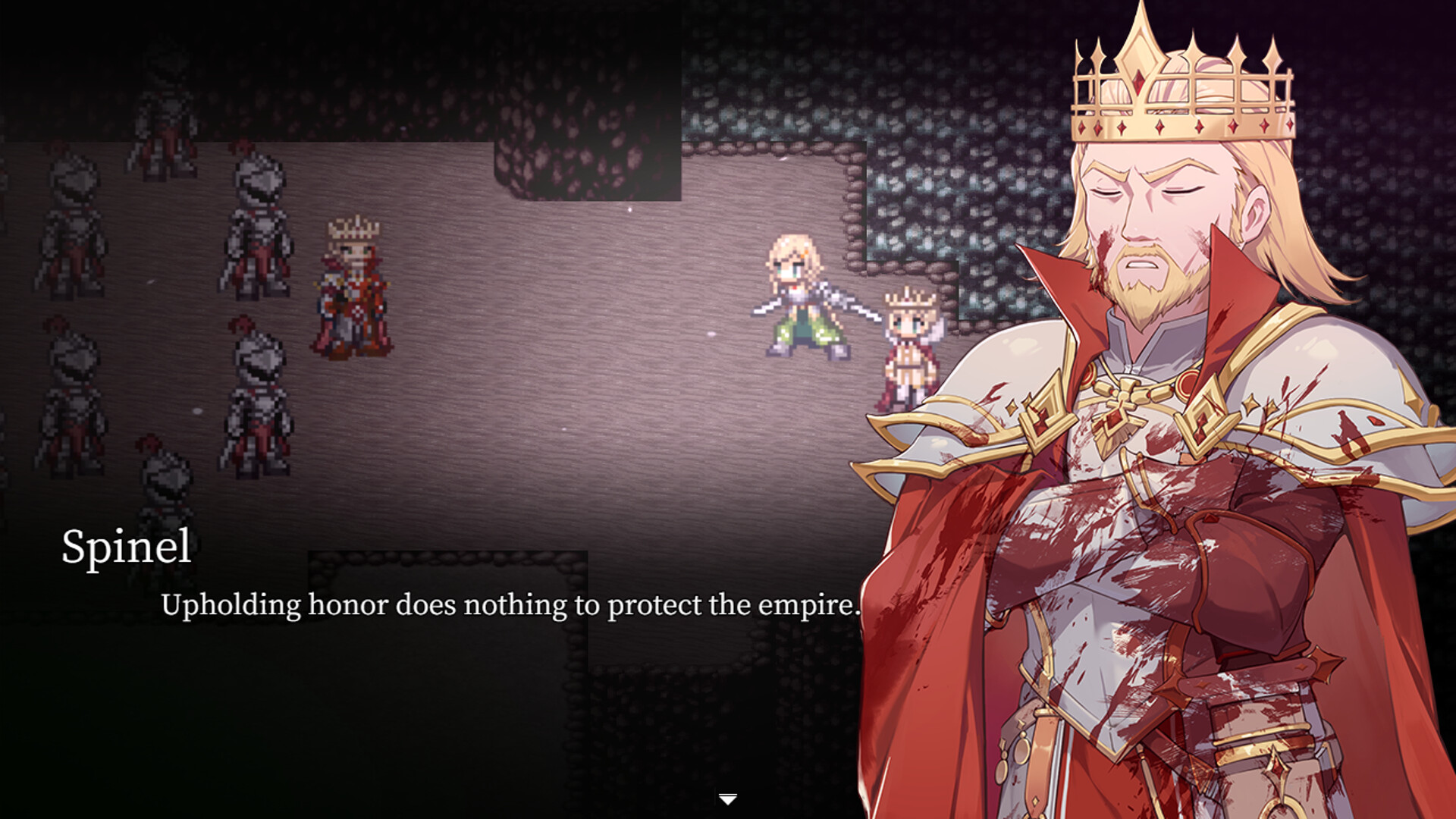
A bloodied Emperor Spinel argues that honor does nothing to protect the empire, one of the ideological clashes driving the protagonist's fallImage: Sounding Stone via Steam -
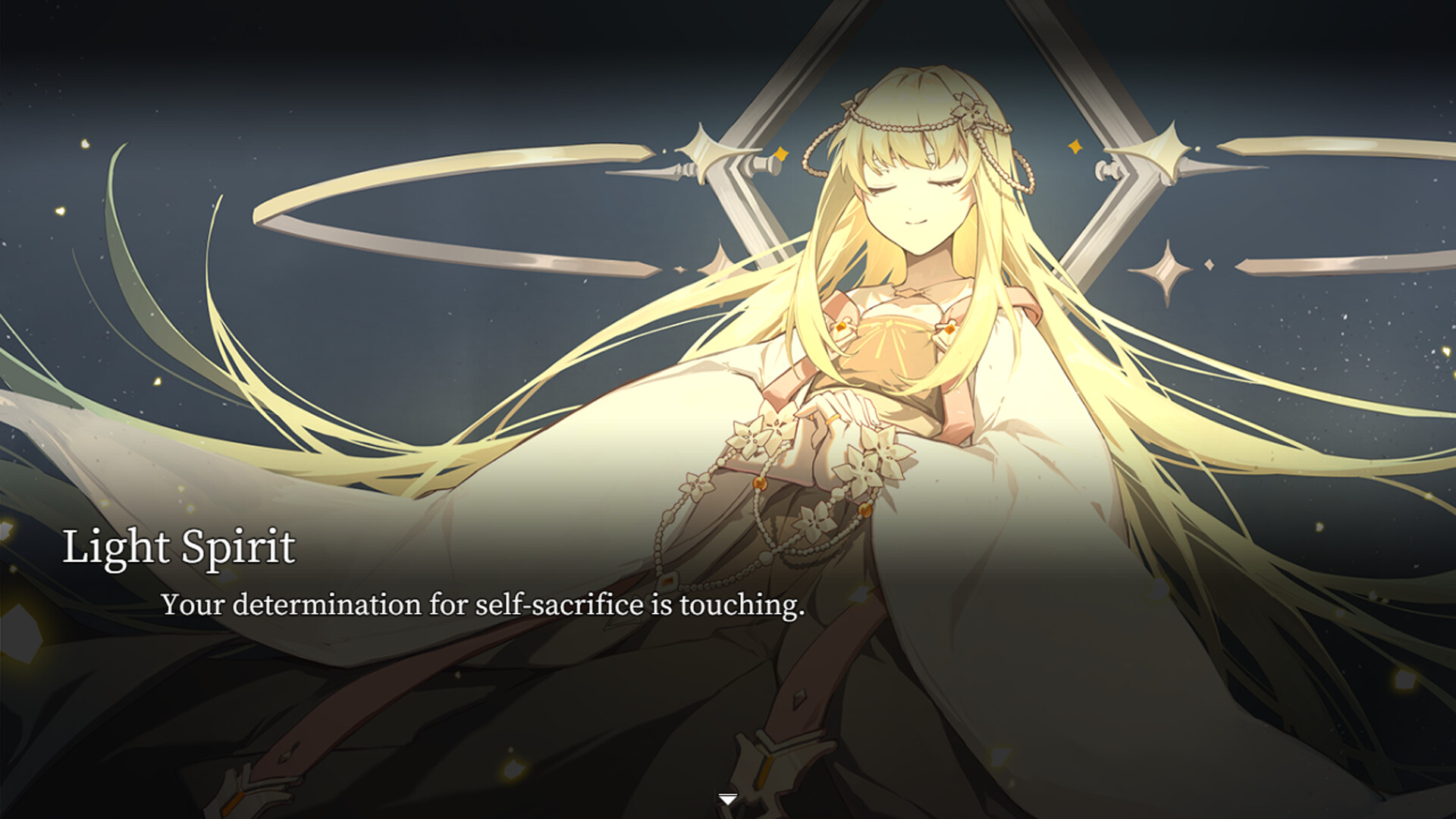
A Light Spirit comments on the protagonist's growing willingness toward self-sacrifice, foreshadowing the story's darker turnsImage: Sounding Stone via Steam -
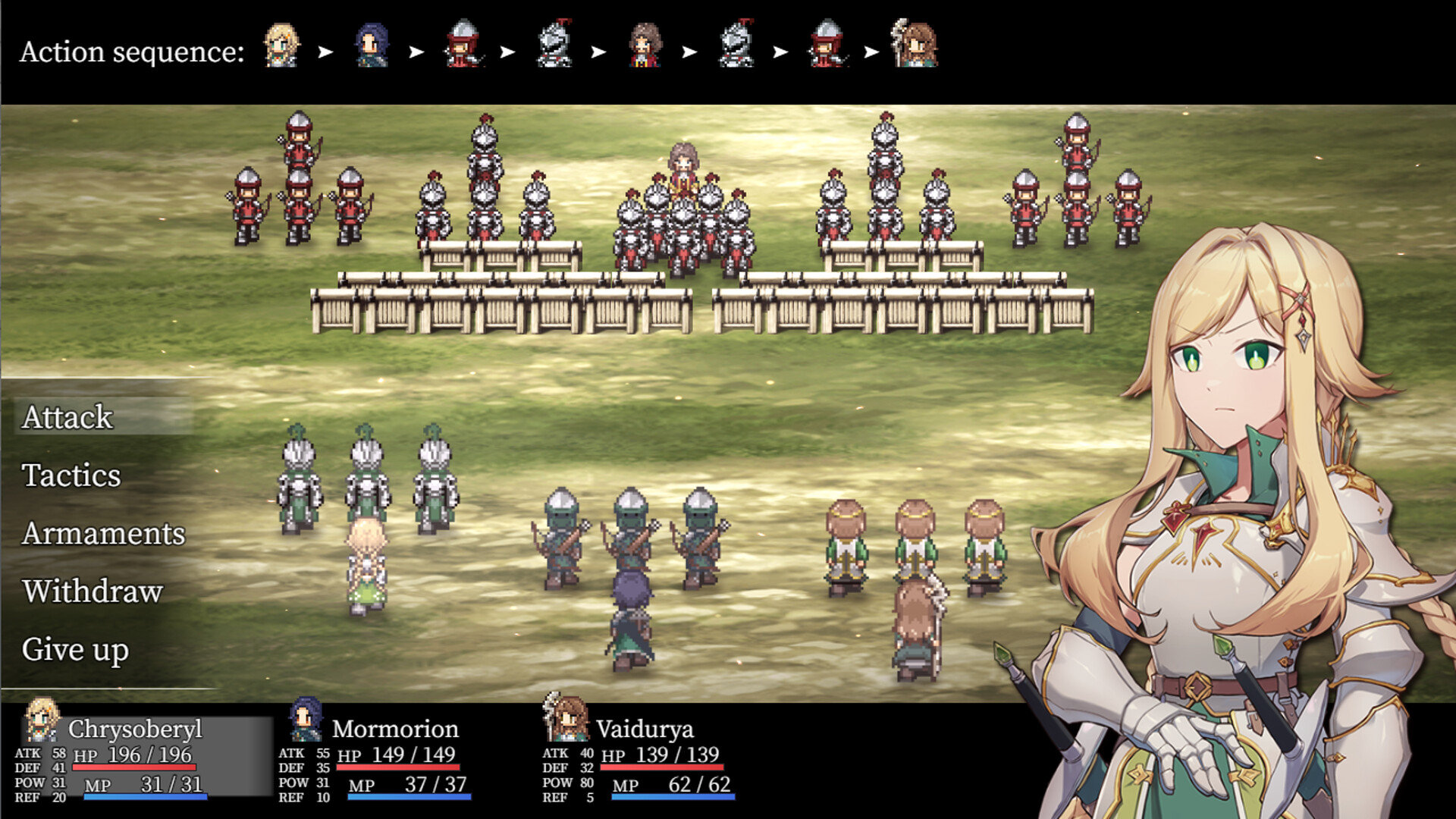
Turn-based battles pit rows of pixel-art troops against each other, though a critical reviewer argues the underlying command options offer little tactical depthImage: Sounding Stone via Steam