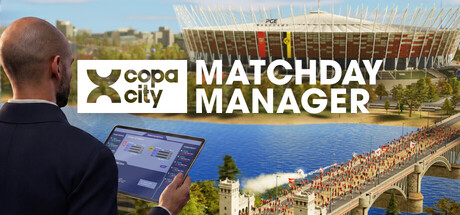
Game review
Copa City: Matchday Manager
5 / 10
- Developer
- Triple Espresso S.A.
- Publisher
- Triple Espresso S.A.
- Released
- 16 June 2026
- Platforms
- Windows
- Genre
- Simulation, Sports, Strategy
- Monetisation
- One-time purchase, no in-game purchases listed
- Players
- Single-player
The short version
Copa City: Matchday Manager, released 16 June 2026 by Triple Espresso S.A., pitches itself as the first event management game built on "football DNA" — rather than coaching a team through a match, players manage the sprawling logistical chaos of an entire host city preparing for a major event: fan zones, security, food, transport and atmosphere across real clubs, cities and stadiums. It sits Mostly Positive with a substantial sample of 241 reviews, and reading widely through it reveals a genuinely distinctive, well-received concept sitting alongside a severe, widely reported barrier to actually experiencing it. A large number of reviewers report the game's mandatory tutorial as broken or confusingly vague, with multiple detailed accounts describing being permanently stuck partway through it — unable to progress, complete required objectives, or in some cases even interact with basic game functions like demolishing a placed item. Layered on top of this, several reviewers report the game's GPU usage pinning at 100 percent regardless of graphics settings, and multiple reviewers separately describe the overall presentation and interface as feeling closer to a mobile game than a premium-priced PC release. Set against these complaints, reviewers who get past the early hours consistently praise the underlying concept's depth and originality, with several specifically comparing its layered systems favourably to established grand-strategy games.
Biggest strengths
- The core concept draws genuine, repeated praise as something new within the management genre: rather than playing or coaching a match, players manage an entire host city's logistics, fan behaviour, security and atmosphere, which multiple reviewers specifically describe as a fresh, engaging angle they hadn't seen done before
- Reviewers who push past the early hours consistently praise the depth of interlocking systems, with one detailed reviewer comparing the level of control favourably to Europa Universalis IV and several describing a strong "just one more turn" pull once the basics click
- Real clubs, cities and stadiums are specifically named as a strength, giving the simulation concrete, recognisable grounding rather than generic fictional venues
Biggest weaknesses
- A large number of reviewers report the mandatory tutorial as broken or severely unclear, with multiple detailed accounts describing being permanently stuck partway through — unable to progress campaign missions, complete required objectives with no clear indication of what's needed, or in at least one case unable to use a basic demolish function no matter how many times it's attempted
- Several reviewers separately report GPU usage pinning at 100 percent regardless of graphics settings, including at the lowest presets and with upscaling technology enabled, raising concerns about the underlying optimisation of the game's engine
- Multiple reviewers describe the overall presentation, interface and moment-to-moment feel as closer to a free-to-play mobile game than a PC release priced at a premium tier, with more than one specifically objecting to that mismatch given the asking price
Who it's for: Management and tycoon fans specifically drawn to an unusual, logistics-focused football premise who are prepared to push through a difficult, sometimes broken early-game tutorial to reach the deeper systems reviewers say lie beyond it.
Our recommendation: Worth it for the genuinely distinctive concept if you're prepared for real early-game friction and the risk of getting stuck on a tutorial bug; more cautious buyers should wait for further patches given how many detailed reviewers report the current build blocking their progress entirely.
5 / 10
Introduction
Copa City: Matchday Manager, released 16 June 2026 by Triple Espresso S.A., pitches a genuinely unusual idea within the sports management genre: rather than coaching a team through ninety minutes, players manage the sprawling logistical operation of an entire host city preparing for a major football event — fan zones, security, transport, food and atmosphere across real clubs and stadiums. It sits Mostly Positive with a substantial sample of 241 reviews, and reading widely through that sample tells a story of real, distinctive promise badly let down by how difficult the game reportedly is to simply get started with.
A genuinely fresh concept, once you reach it
The core idea draws consistent, real praise from reviewers who make it past the early hours. Multiple reviewers specifically describe the city-logistics angle as a fresh, engaging departure from typical sports management games, and reviewers with deeper engagement compare the layered systems favourably to established grand-strategy titles, with one specifically likening the level of control to Europa Universalis IV. Real clubs, cities and stadiums give the simulation concrete grounding, and the sense of a living city — fans dynamically moving between districts, reacting visibly to the player's decisions — draws repeated, specific praise for making the simulation feel genuinely alive rather than a static backdrop.
A tutorial multiple reviewers say blocks the game entirely
Set against that praise is this sample's single most severe, most widely reported complaint. A large number of reviewers describe the mandatory tutorial as broken or confusingly vague, with multiple detailed accounts reporting being permanently stuck partway through it with no way to progress. One reviewer with 18 hours logged reports remaining stuck on a specific ticket-sales target that can't be reached without first unlocking a level that itself requires reaching that same target — a specific, reproducible progression lock rather than a vague difficulty complaint. A separate reviewer reports a demolish function that simply does nothing no matter how many times it's used or how often the game is reloaded, blocking a required tutorial step entirely. Several reviewers connect this directly to a wave of players reportedly abandoning the game before ever completing onboarding.
Performance concerns and a mismatch with its price
Beyond the tutorial, this review found specific, repeated technical complaints. Multiple reviewers report GPU usage pinning at 100 percent regardless of graphics settings, including at the lowest presets and with upscaling technologies like DLSS enabled, raising real questions about the engine's underlying optimisation. Separately, several reviewers describe the overall presentation and interface as feeling closer to a mobile free-to-play game than a PC release priced at a premium tier, with more than one explicitly objecting to that gap given the asking price of over NZ$40.
Falling short of pre-release expectations
A further specific complaint concerns scope. Several reviewers report the shipped game falls well short of pre-release marketing and community expectations of a Cities Skylines-style city builder with sandbox or endless modes, describing the actual structure as limited to a fixed campaign and single-match mode with considerably less customisation than anticipated. This isn't a complaint about execution quality so much as a mismatch between what was promised and what was delivered, and it recurs specifically enough across independent reviews to be worth naming directly.
Signs of active post-launch improvement
It's worth reporting that at least one detailed reviewer, returning to the game after initial frustration, specifically credits the developers with fixing most interface issues and improving campaign mission stability in a relatively short window after launch, singling out the dynamic fan-zone management system as newly impressive once those fixes landed. This suggests the developer is actively patching known issues, though this review cannot confirm how comprehensively the specific tutorial-blocking bugs described above have been addressed as of this writing.
A two-year wait that raises the stakes of a rough launch
Context matters for reading how sharply some of this sample's disappointment is worded. More than one reviewer specifically mentions having anticipated Copa City for roughly two years before its release, and that anticipation appears to sharpen the disappointment where the shipped game falls short — several of the most detailed, harshly critical reviews explicitly frame their frustration in terms of expectations built up over a long wait rather than a snap judgment from someone encountering the game cold. This review reads that pattern as a meaningful part of the story here: a genuinely ambitious, long-anticipated concept that needed its early hours to land cleanly, and instead delivered a tutorial experience specific and widely reported enough to actively drive away some of its most invested potential fans before they ever reached the deeper systems those same reviewers' peers describe finding real satisfaction in.
Difficulty options and accessibility requests
A smaller but recurring request in this sample concerns difficulty tuning rather than outright bugs. Multiple reviewers who otherwise enjoy the game once past onboarding specifically ask for adjustable difficulty settings, with one detailed account describing real enjoyment overall while still struggling to clear a specific tutorial checkpoint tied to "match reads" and wishing for an easier setting to fall back on rather than being stuck at a single fixed difficulty. This reads as a distinct, more moderate complaint from the outright progression-blocking bugs covered above — a request for better accommodation of different skill levels and paces, rather than a report of something not functioning as designed.
Final Verdict
Copa City: Matchday Manager pursues a genuinely original idea within its genre — managing the chaos around a football event rather than the match itself — and reviewers who get past its early hours consistently find real depth and a satisfying sense of a living, reactive city underneath. What holds this score down is a severe, widely reported barrier standing between many buyers and that experience entirely: a broken or confusing mandatory tutorial that multiple detailed reviewers say blocks all further progress, compounded by performance concerns and a presentation several reviewers say doesn't match its premium price. Worth it for management fans excited by the concept and willing to risk hitting a currently-documented tutorial wall; more cautious buyers should wait for confirmation that these specific progression-blocking bugs have been resolved.
Pros and cons
Pros
- The core concept draws genuine, repeated praise as something new within the management genre: rather than playing or coaching a match, players manage an entire host city's logistics, fan behaviour, security and atmosphere, which multiple reviewers specifically describe as a fresh, engaging angle they hadn't seen done before
- Reviewers who push past the early hours consistently praise the depth of interlocking systems, with one detailed reviewer comparing the level of control favourably to Europa Universalis IV and several describing a strong "just one more turn" pull once the basics click
- Real clubs, cities and stadiums are specifically named as a strength, giving the simulation concrete, recognisable grounding rather than generic fictional venues
- The sense of a living city is repeatedly praised, with reviewers describing fans moving dynamically between districts and reacting to the player's decisions in ways that make the simulation feel genuinely alive rather than static
Cons
- A large number of reviewers report the mandatory tutorial as broken or severely unclear, with multiple detailed accounts describing being permanently stuck partway through — unable to progress campaign missions, complete required objectives with no clear indication of what's needed, or in at least one case unable to use a basic demolish function no matter how many times it's attempted
- Several reviewers separately report GPU usage pinning at 100 percent regardless of graphics settings, including at the lowest presets and with upscaling technology enabled, raising concerns about the underlying optimisation of the game's engine
- Multiple reviewers describe the overall presentation, interface and moment-to-moment feel as closer to a free-to-play mobile game than a PC release priced at a premium tier, with more than one specifically objecting to that mismatch given the asking price
- Several reviewers report the game falls well short of pre-release marketing and community expectations of a Cities Skylines-style city builder with a sandbox or endless mode, describing the actual shipped structure as limited to campaign missions and single matches with considerably less customisation than anticipated
- Specific progression-blocking bugs are reported beyond the tutorial itself, including quest objectives that provide no information about what's required until after being manually accepted, and district-value tracking that at least one reviewer reports failing to update correctly, forcing a full campaign-level restart
Screenshots
-
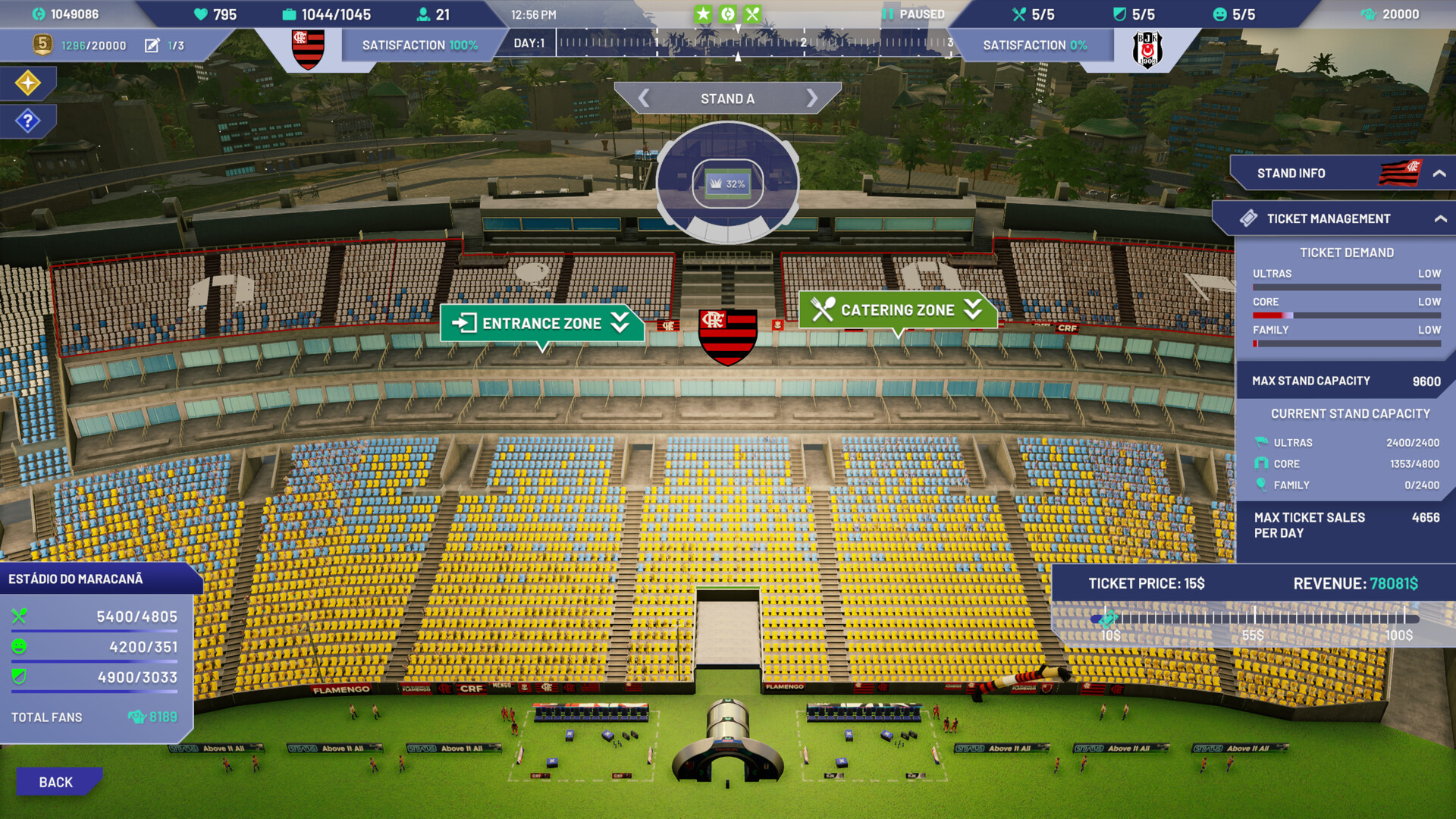
Copa City Matchday ManagerImage: Triple Espresso S.A. via Steam -
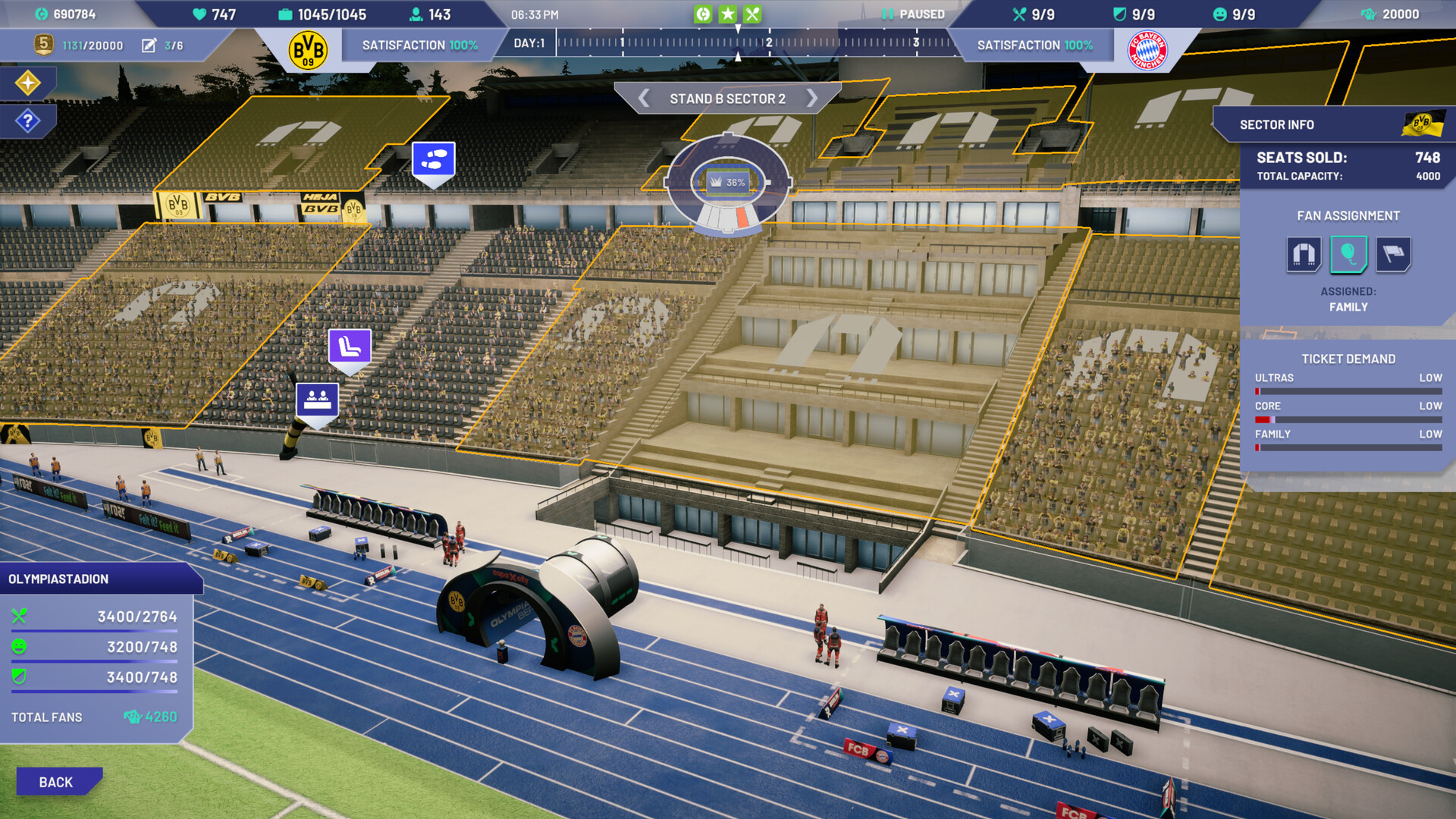
Copa City Matchday ManagerImage: Triple Espresso S.A. via Steam -
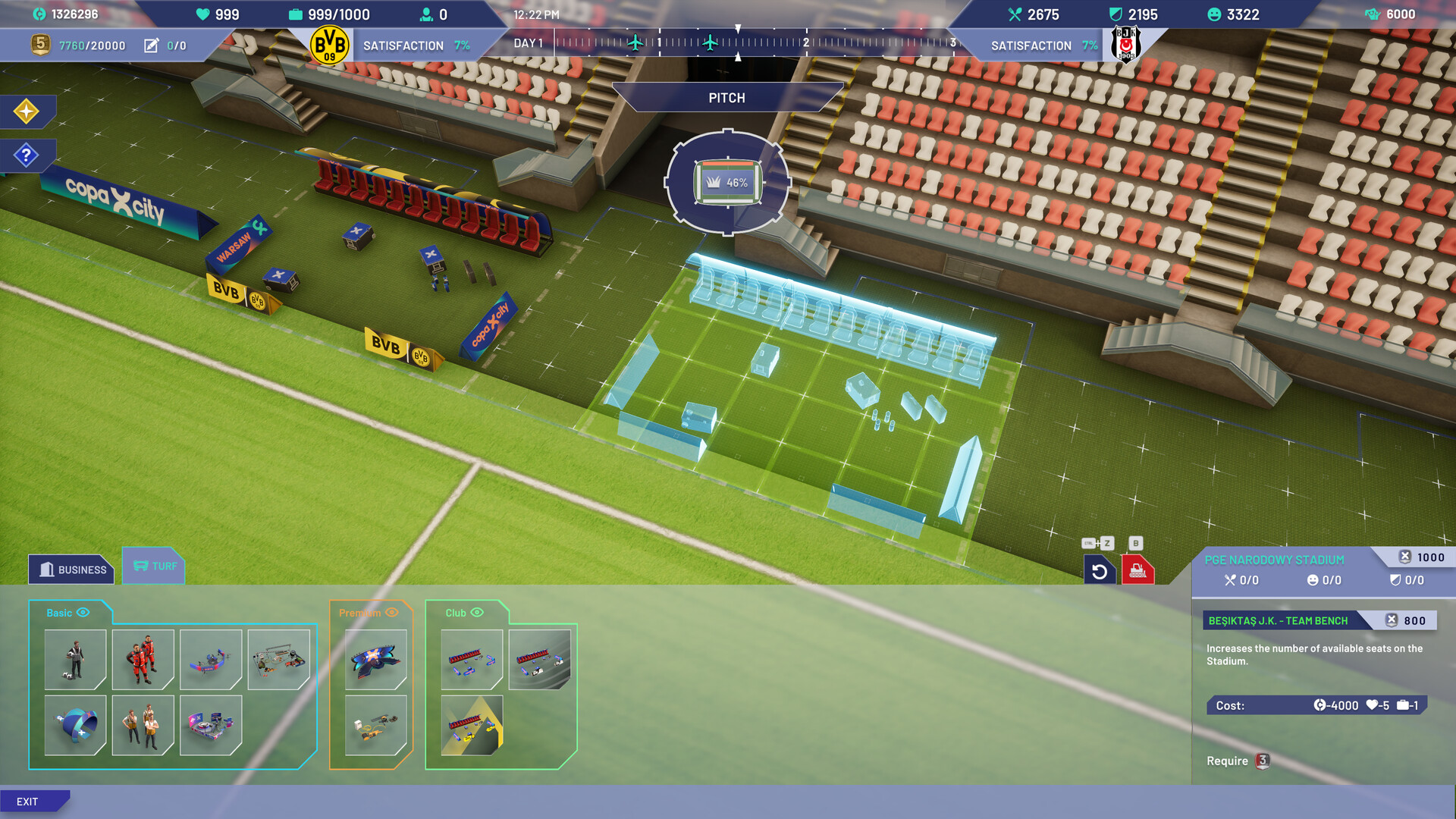
Copa City Matchday ManagerImage: Triple Espresso S.A. via Steam -
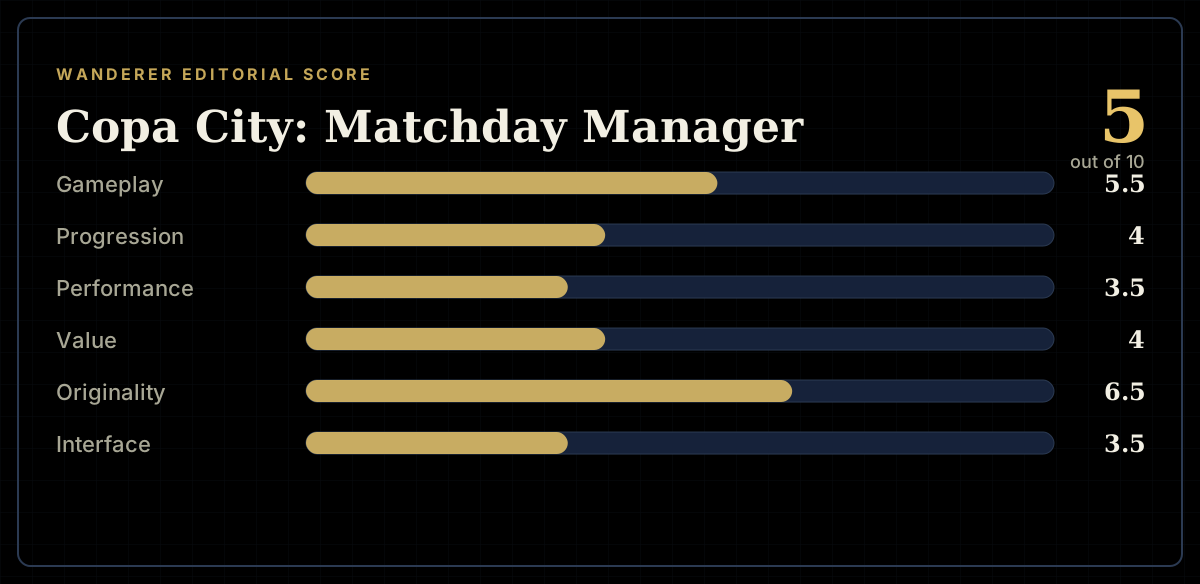
How the review scores each part of the gameWanderer Editorial -
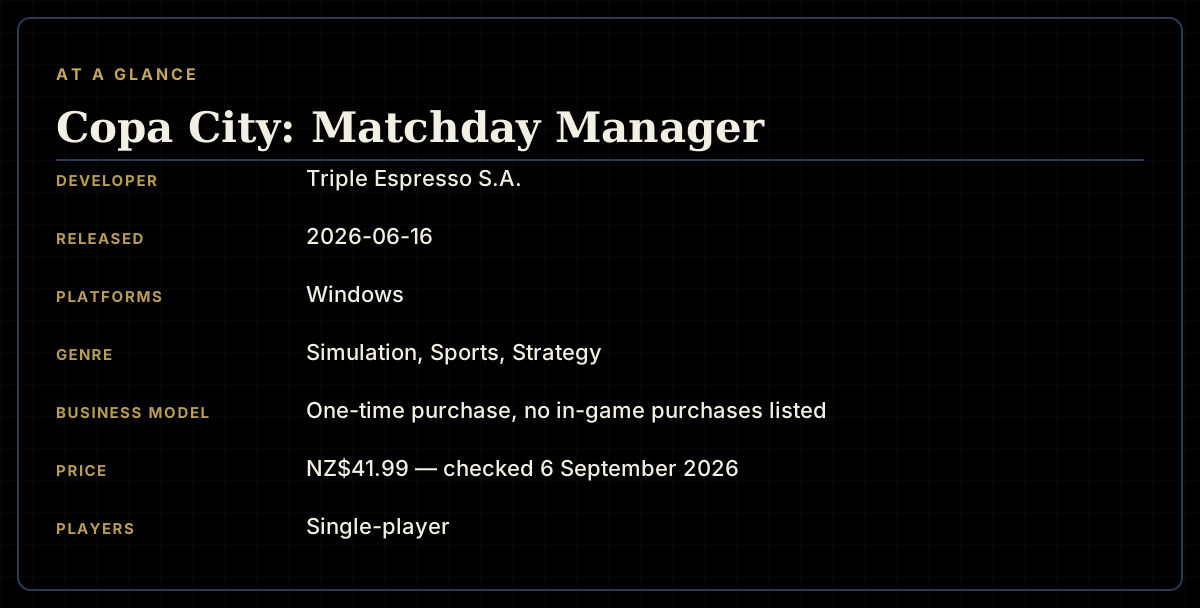
The essentials at a glanceWanderer Editorial -
The short versionWanderer Editorial