Game review
PC Tycoon 2
7 / 10
- Developer
- Insignis Games
- Publisher
- Insignis Games
- Released
- 28 March 2024
- Platforms
- Windows, macOS, Linux
- Genre
- Tycoon, Management Simulation, Strategy
- Monetisation
- One-time purchase, no DLC. An early "watch ads" button was removed from the game manager the day after launch and has not returned
- Players
- Single-player only
The short version
PC Tycoon 2 starts the player with one tiny office and a plan to out-engineer the tech industry, designing processors, graphics cards and laptops and racing rivals for market share. Made by solo developer Insignis Games and released 28 March 2024, it sits at Very Positive among its 95 English-language reviews (81%), and this review's full read of all 18 English negatives finds a genuinely absorbing loop — the median critical reviewer logged over five hours before writing a bad review — undone by one specific, well-corroborated flaw: a product-rating system that several long-time players describe as internally inconsistent, and that the developer patched everything around without ever fixing before support ended.
Biggest strengths
- The core build-price-release loop is genuinely engaging, evidenced by a top-voted positive review logged at over 123 hours and multiple critical reviewers who still put in 15 to 40 hours before writing their negative review
- A relaxed, low-pressure pace suits players who want a management sim they can leave running without split-second demands, with a sandbox mode for testing builds freely
- Genuinely broad platform support for a solo project, including macOS and Linux added within the first month
Biggest weaknesses
- The product-rating system that determines how well a released item sells is described by several detailed, high-playtime reviews as internally inconsistent — products with strictly better specs and pricing than rivals can still score lower, which stalls progress rather than rewarding good decisions
- Steam's own achievement data shows only 39.5% of everyone who owns the game plays past two hours, and under half ever reach its easiest revenue milestone — a much steeper early drop-off than the review score alone suggests
- Bankruptcy becomes close to impossible once two or three products are established, which several reviewers say removes the tension that made the opening hours interesting
Who it's for: Fans of business and tycoon sims — Game Dev Tycoon and Startup Company are the closest comparisons — who enjoy a hardware-engineering theme and don't mind an unfinished feel once the systems are fully unlocked.
Our recommendation: A charming, well-built tycoon sim for a fair price, worth playing for its first several hours without reservation and worth going in knowing its core scoring mechanic never quite got fixed before its solo developer moved on to similar games.
7 / 10
Introduction
PC Tycoon 2 hands the player a single office, a small budget and a simple goal: out-engineer and out-market every rival tech company until a one-room startup becomes a household name. Built solo by developer Insignis Games and released 28 March 2024, it sells for NZ$11.79 with no DLC or lingering monetisation attached, and it has settled into a solidly Very Positive reputation — 81% among its 95 English-language reviews. This review reads all 18 of those English negatives in full, and what stands out first is how invested the critics are: the median playtime among them is over five hours, and several logged fifteen, twenty or even forty hours before deciding the game had let them down. That's not the profile of a game people bounce off — it's the profile of a game that hooks players and then frustrates the ones who stay longest.
Designing hardware, one generation at a time
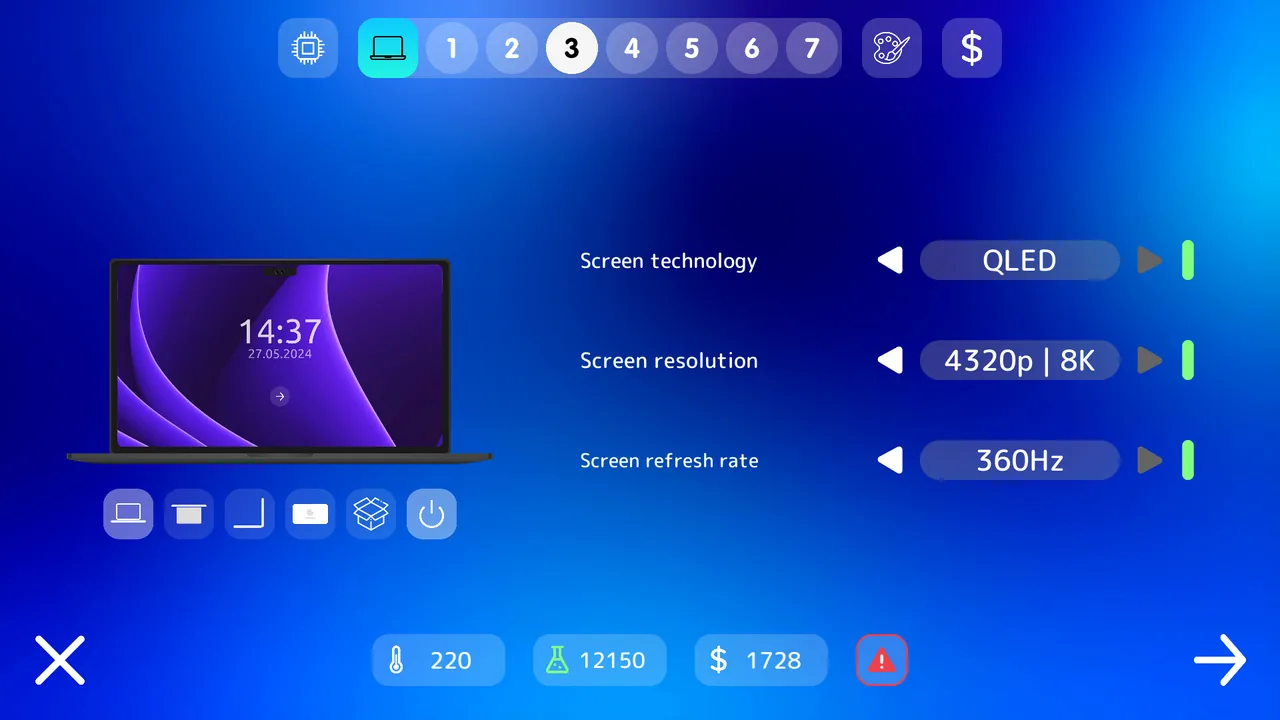
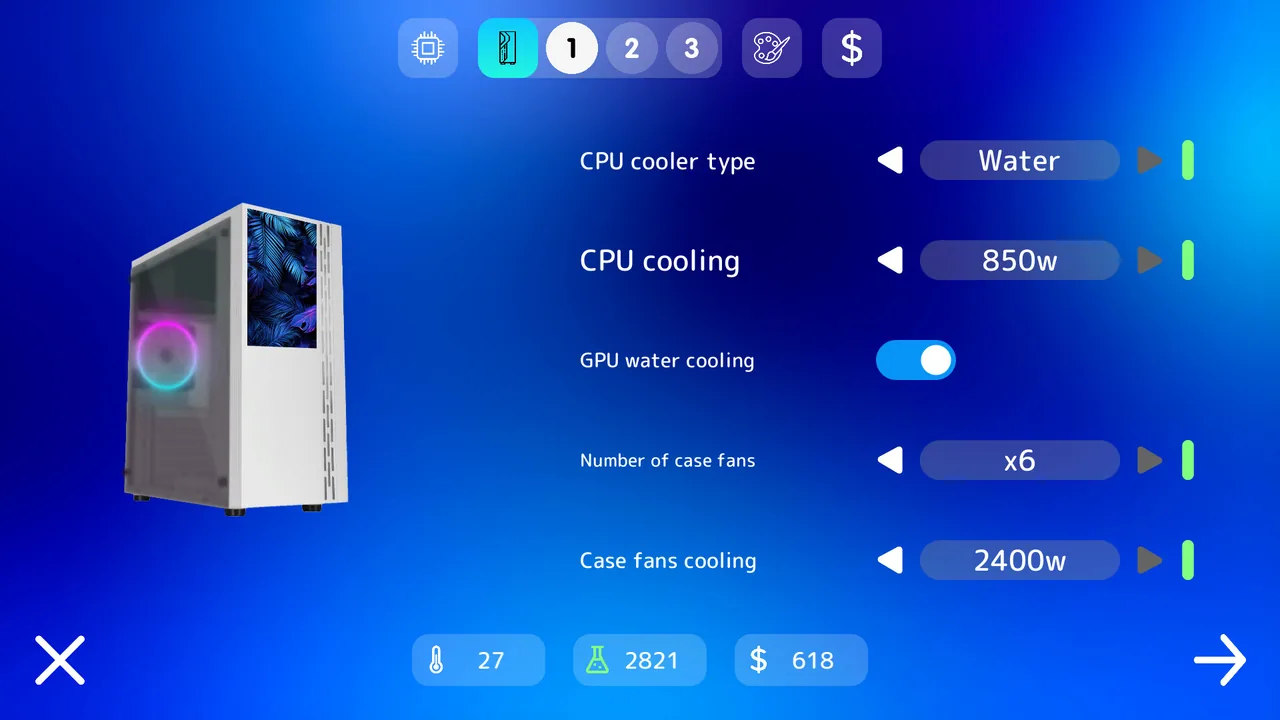
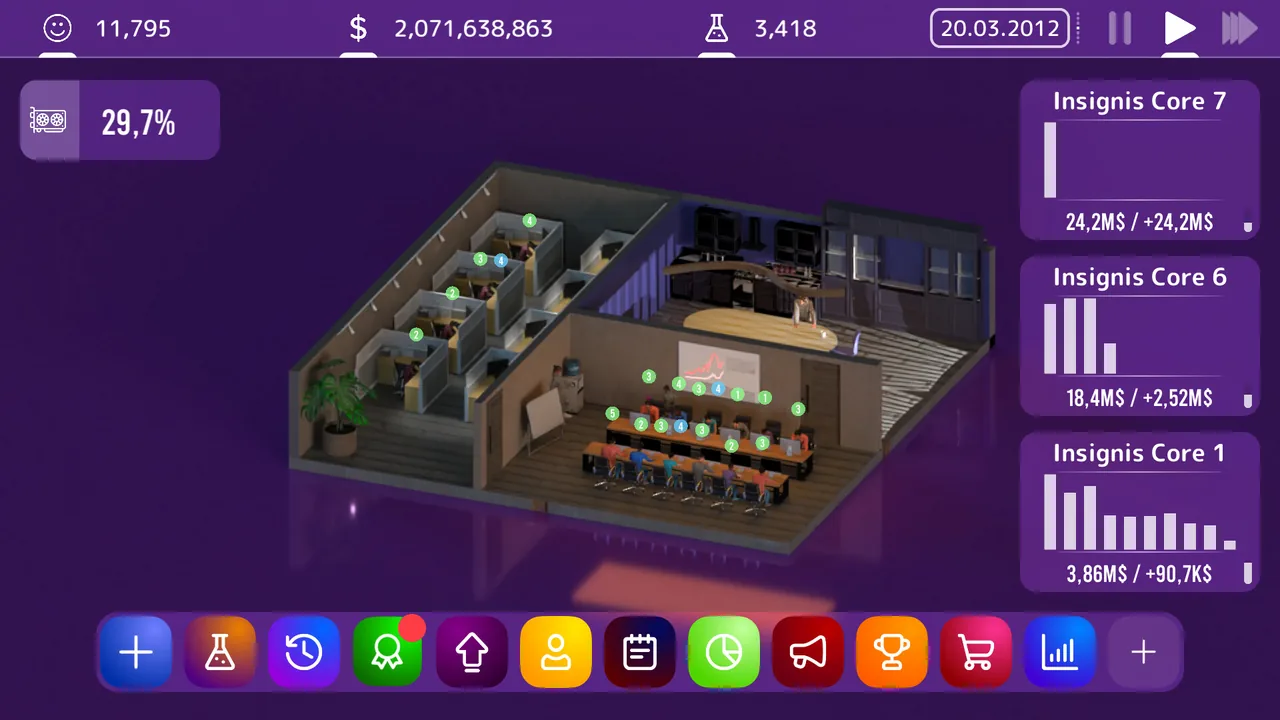
The moment-to-moment loop is straightforward and, for its target audience, genuinely satisfying: research new component technology, design a processor or graphics card by balancing performance against cost and power draw, set a price and a market segment, and watch the sales roll in before reinvesting the profits into the next generation. It sits comfortably alongside Game Dev Tycoon and Startup Company as a spiritual relative, and one detailed, 123-hour positive review lays out exactly who it's for: people who know PC hardware, enjoy watching component architecture tick over in something close to real time, and want a management sim they can leave running at a relaxed pace rather than one that demands constant attention. The interface and presentation draw consistent praise across both the positive and negative samples — several critical reviewers who otherwise disliked the game still called the UI attractive and the sound design solid, which suggests the production values were never really the problem.
A rating system several long-time players call broken
The single most repeated, most specific and most highly-voted complaint in this game's negative column concerns the mechanic that decides whether a released product actually sells: an automatic critic-style rating applied to every product a company ships. The top-voted negative review, from a player with over eighteen hours logged who identifies as exactly the kind of hardware-literate audience the game is built for, lays out a concrete example — a processor priced 47% below the competition, drawing half the power, and delivering 220% more compute, still scoring only 4.7 out of 10. That isn't an isolated frustration: a separate reviewer with nearly forty hours reports testing a maximum-technology product at triple the fair cost in the game's own sandbox mode and still failing to earn a perfect score, and a third describes late game as a wall where "when you release, it's under 5/10, when your competitors still release 7+ items, only because there was 'no changes.'" Read together, these are specific, technical, mutually corroborating reports from players who understand the systems well enough to notice when the scoring stops tracking the inputs — not vague dissatisfaction dressed up as a bug report.
That complaint is also the quiet explanation behind Steam's achievement curve, which tells a different story than the review score alone. Only 39.5% of everyone who owns PC Tycoon 2 has played past the two-hour mark, and the single easiest milestone in the whole achievement list — reaching 500 million in lifetime earnings — sits at just 48.1%. Fewer than half of the game's entire ownership ever gets that far. Review scores are written by a self-selecting group of people engaged enough to leave one; achievement data captures everybody, and here it shows a much steeper early drop-off than "Very Positive" would suggest on its own.
Patched around the edges, not through the middle
To the developer's credit, PC Tycoon 2 was actively updated for about five months after launch, and several of that period's real problems were fixed. Windowed display mode, entirely absent at launch and drawing its own specific negative review, arrived in version 1.2.8 that May. "Hacker attacks," the slot machine and the lottery — random events several players singled out as intrusive and unwanted — were disabled that same update "at the request of the players," according to the developer's own patch notes. macOS and Linux support arrived within the first month. What never changed across four versions, from launch through the final August 2024 update, is the rating mechanic itself — the complaint with the most votes, the most detail and the most invested reviewers behind it. One positive review from a player with over 45 hours logged put it as a plea rather than a criticism: "PLEASE RELEASE UPDATE SOON." No update has followed. Insignis Games has instead released two further, similarly-themed business sims since — Mobiles Tycoon in July 2024 and an announced Games Tycoon — rather than returning to patch this one, which is a fair thing for a prospective buyer to know rather than assume will eventually be addressed.
Where the tension goes
A smaller, related complaint concerns the game's other half of its difficulty curve: once two or three products are established, several reviewers report that bankruptcy becomes close to impossible, which drains the stakes out of decisions that mattered in the opening hours. Paired with the rating-system frustration, the shape of the complaint across this game's negative column is consistent — not that the ideas are bad, but that the systems meant to create ongoing challenge either stopped making sense or stopped applying pressure at all once a player got past the tutorial stretch.
Final Verdict
PC Tycoon 2 earns its Very Positive reputation honestly for its first several hours: an attractive, relaxed business sim with a genuinely engaging hardware-design loop that holds attention for dozens of hours in the right hands, priced fairly with no strings attached. What keeps it from a stronger score is specific rather than vague — a product-rating mechanic that several of its most dedicated players, independently and in detail, describe as disconnected from the inputs it's meant to judge, sitting alongside a near-impossible-to-lose late game and a year and a half of silence from a developer who has since moved on to other, similar projects. For the price, it's still an easy recommendation for anyone drawn to the theme — just go in expecting the back half of the game to feel less finished than the front half, because the evidence says it does.
Pros and cons
Pros
- The core build-price-release loop is genuinely engaging, evidenced by a top-voted positive review logged at over 123 hours and multiple critical reviewers who still put in 15 to 40 hours before writing their negative review
- A relaxed, low-pressure pace suits players who want a management sim they can leave running without split-second demands, with a sandbox mode for testing builds freely
- Genuinely broad platform support for a solo project, including macOS and Linux added within the first month
- Fair, one-time pricing with no DLC, premium currency or lingering monetisation, and an early "watch ads" option that was removed the day after launch and never reintroduced
Cons
- The product-rating system that determines how well a released item sells is described by several detailed, high-playtime reviews as internally inconsistent — products with strictly better specs and pricing than rivals can still score lower, which stalls progress rather than rewarding good decisions
- Steam's own achievement data shows only 39.5% of everyone who owns the game plays past two hours, and under half ever reach its easiest revenue milestone — a much steeper early drop-off than the review score alone suggests
- Bankruptcy becomes close to impossible once two or three products are established, which several reviewers say removes the tension that made the opening hours interesting
- Development support ran for five months after launch and stopped in August 2024; the developer has since released two further, similarly-themed tycoon games rather than continuing to patch this one
Screenshots
-
PC Tycoon 2Image: Insignis Games via Steam -
PC Tycoon 2Image: Insignis Games via Steam -
PC Tycoon 2Image: Insignis Games via Steam -
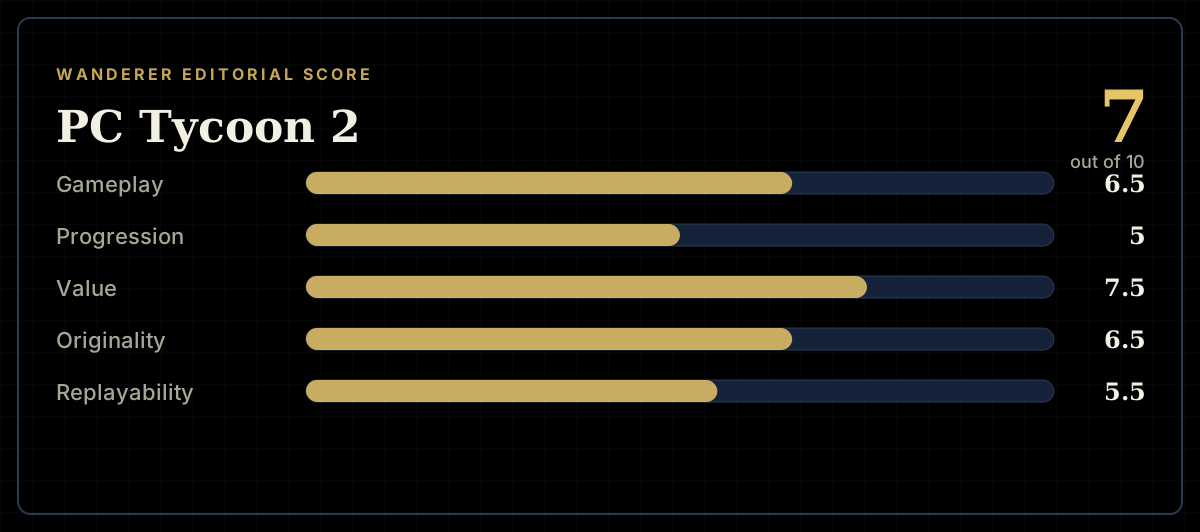
How the review scores each part of the gameWanderer Editorial -
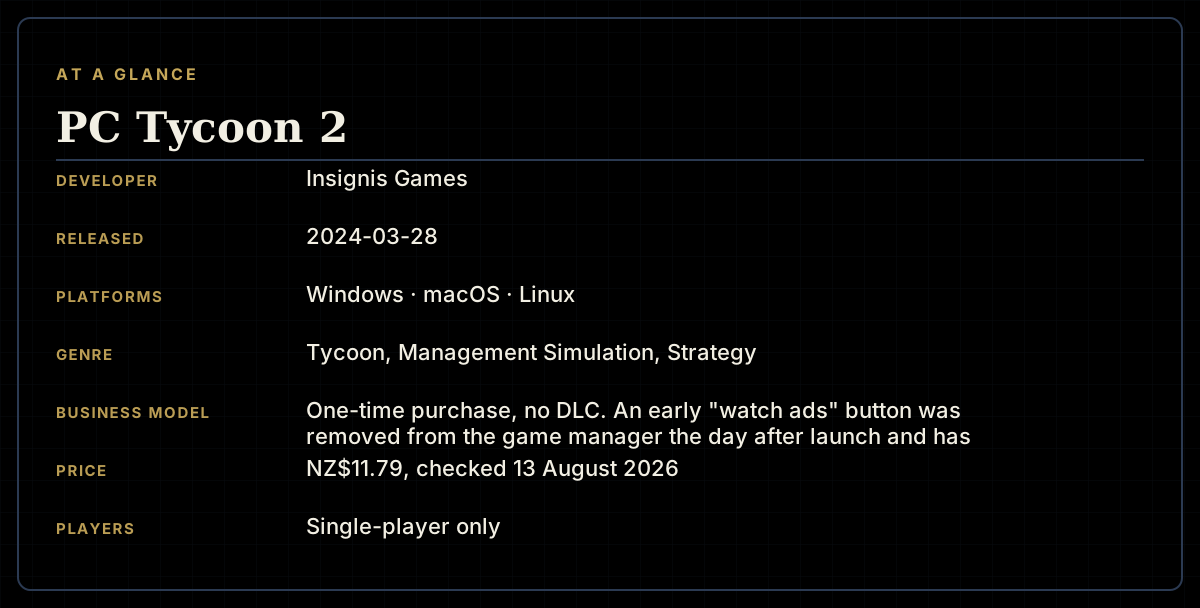
The essentials at a glanceWanderer Editorial -
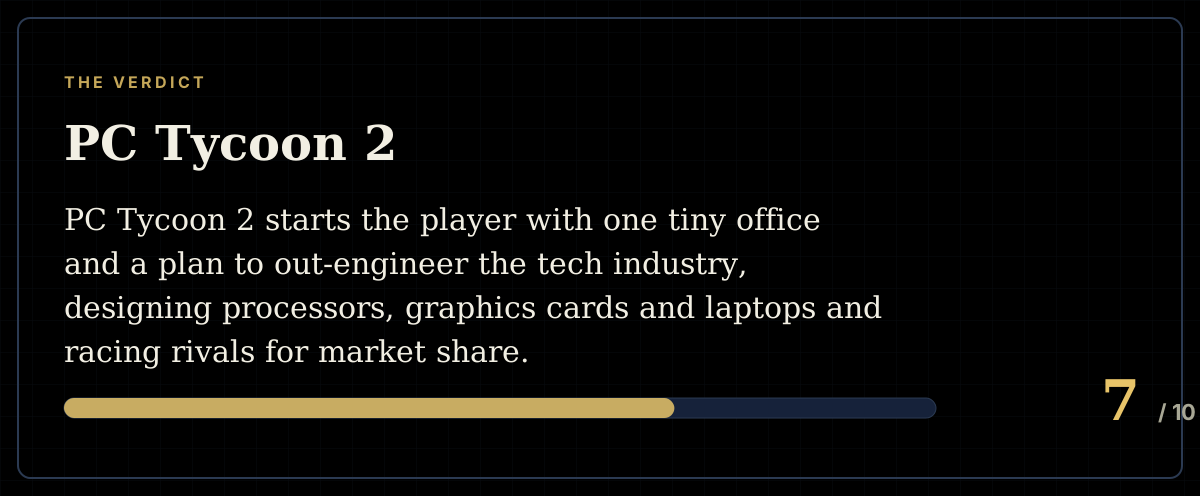
The short versionWanderer Editorial