Game review
Mad Games Tycoon 2
8 / 10
- Developer
- Eggcode
- Publisher
- Eggcode
- Released
- 31 May 2023
- Platforms
- Windows, macOS
- Genre
- Business Management Sim / Tycoon
- Monetisation
- One-time purchase. No in-app purchases and, as of this review, no paid DLC at all.
- Players
- Online multiplayer for up to 4 players, cooperative or competitive
The short version
Mad Games Tycoon 2 is a genuinely deep management sim about running a game studio from a 1970s garage to a console-manufacturing conglomerate, sold once for NZ$35.99 with no DLC and no in-app purchases three years after launch. Its own audience rates it higher than the original Mad Games Tycoon, which answers the loudest complaint in its negative reviews — that it's just the first game again — more convincingly than any counter-argument could. What it doesn't answer is the second-loudest complaint: once you've learned the right slider settings for a genre, there's a correct answer to almost every decision, and roleplaying as a scrappy indie studio making a passion project isn't really on the menu. Buy it to optimise an industry, not to be creative inside one — and expect its 4-player multiplayer to be the roughest part of the package.
Biggest strengths
- Extraordinarily deep systems — engine development, console manufacturing, IP management, publishing contracts and more, all under one roof
- One straightforward purchase price with no DLC and no microtransactions, three years after 1.0
- Rates higher with its own English-speaking audience than its predecessor did
Biggest weaknesses
- Nearly every decision has a mechanically "correct" answer once you've learned the sliders, which several reviewers describe as solving a spreadsheet rather than making games
- Multiplayer save-corruption reports and a low completion rate on multiplayer achievements
- No Steam Workshop or official mod support, requested repeatedly by its most invested players
Who it's for: Fans of deep, numbers-heavy tycoon and management sims who want to actually own their purchase — poor fit for anyone hoping to roleplay a scrappy indie studio rather than min-max a publishing empire.
Our recommendation: Buy
8 / 10
The pitch
Mad Games Tycoon 2 starts you in a garage sometime between 1976 and 2020 and asks you to build a game studio from nothing: hire staff, license or build your own engines, choose genres and platforms for every release, and grow into a company that develops, publishes and eventually manufactures its own consoles. It's Game Dev Tycoon's premise turned into a full management sim, with production lines, research trees, IP portfolios and up to four players sharing one industry.
Depth is the whole sell
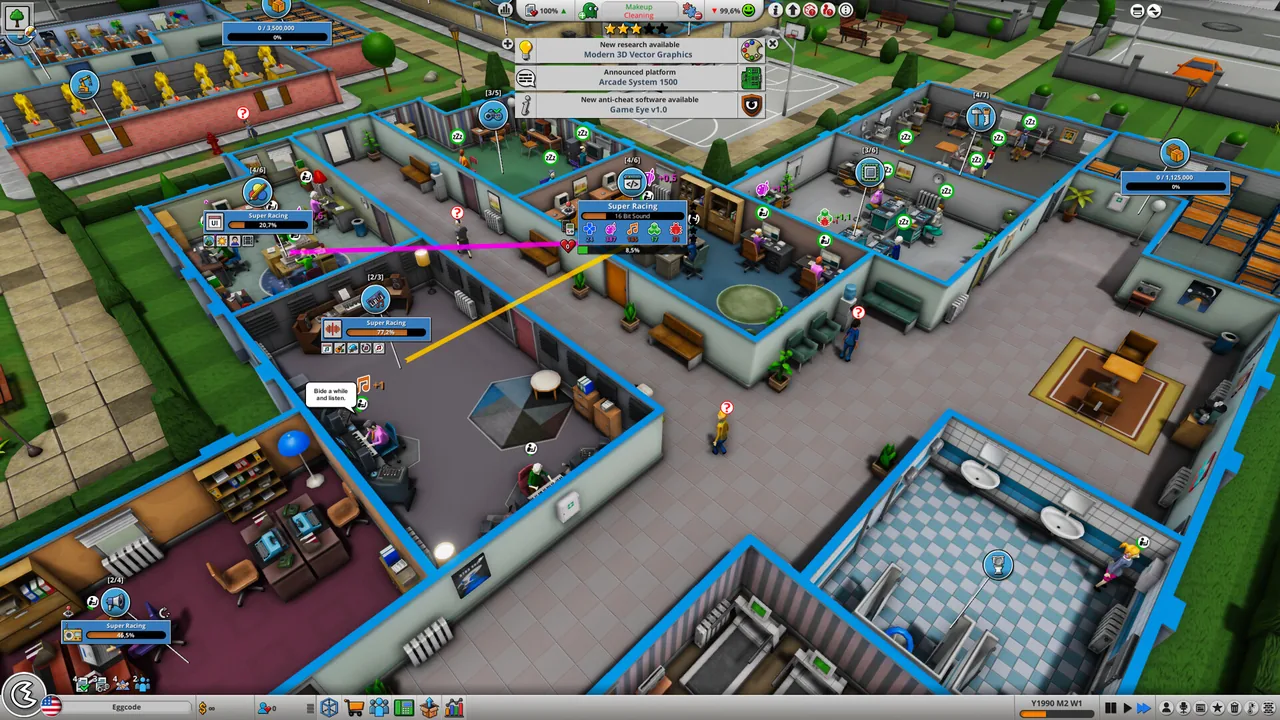
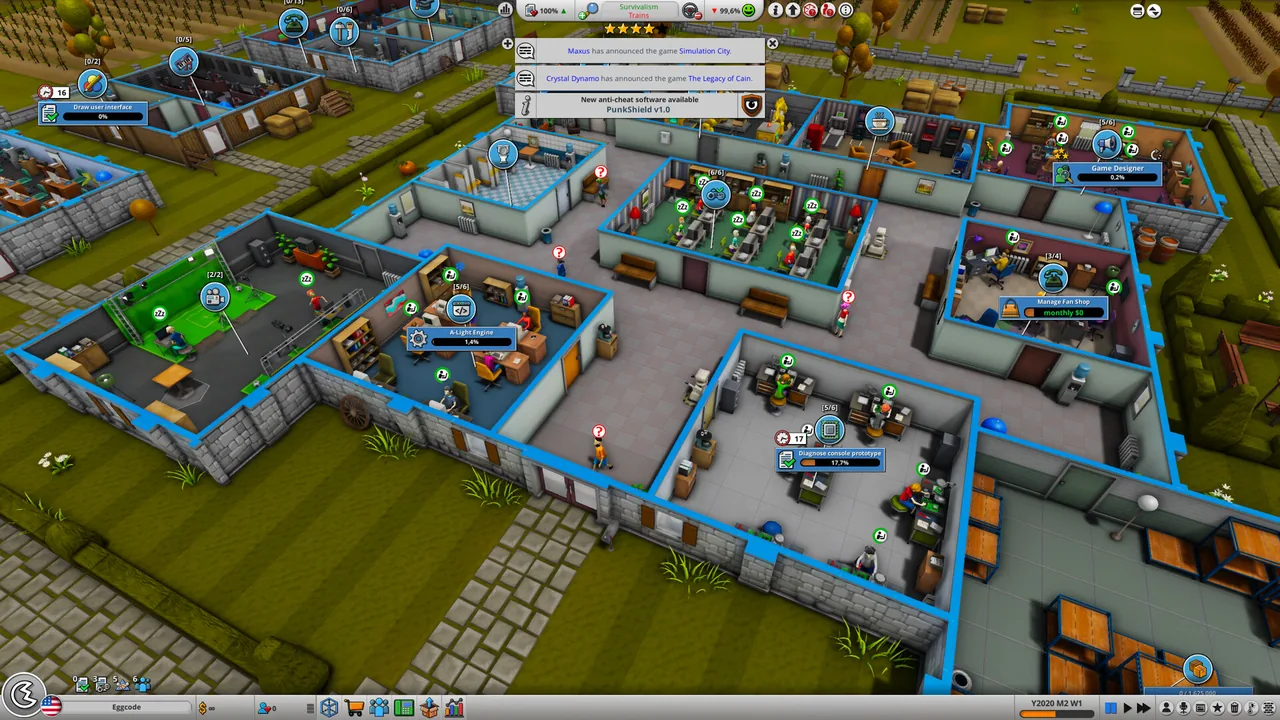
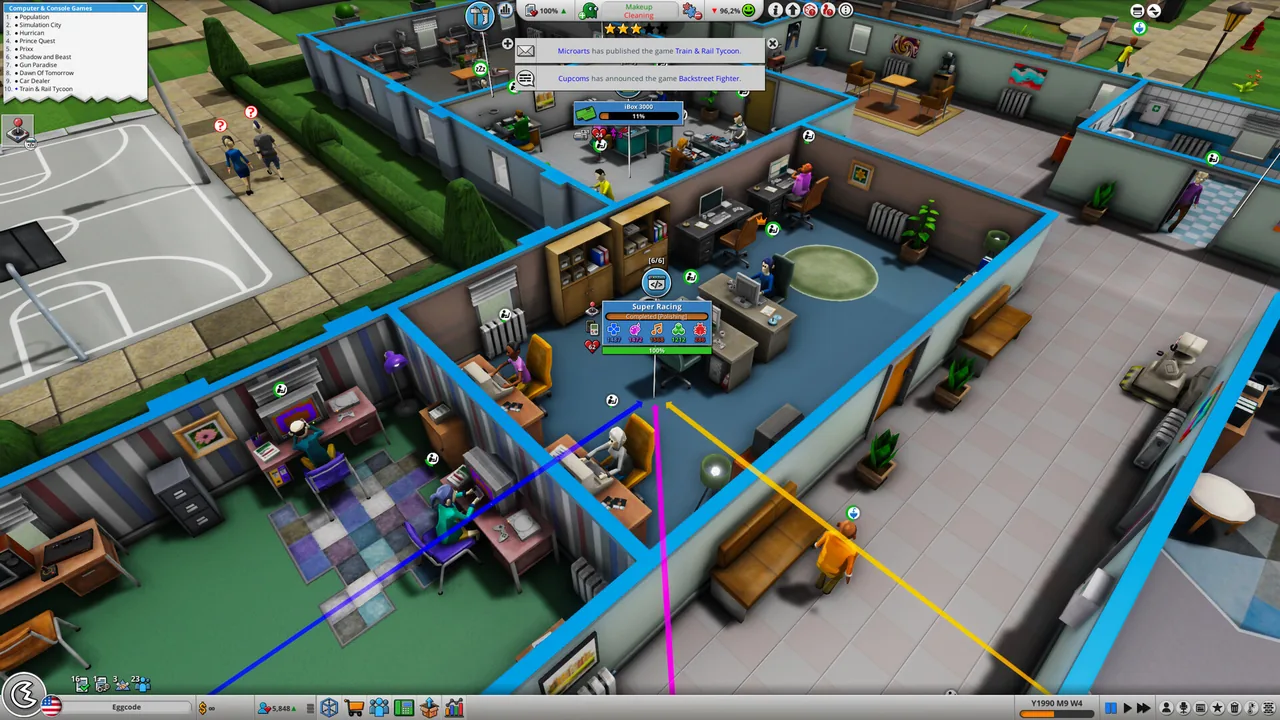
The review corpus is consistent on this point regardless of overall verdict: there's an enormous amount to manage here. You're not just picking a genre and a release date — you're tuning engine features, balancing graphics against gameplay against sound on sliders per project, signing publishing deals, running your own arcade and console hardware lines, and keeping a growing office full of specialists happy with lounges and bathrooms. Reviewers who stick with it report hundreds of hours; one 706-hour player's only real complaint was the lack of Workshop support for mods.
The sequel question, settled by the numbers
The single most common complaint in Mad Games Tycoon 2's negative reviews isn't a bug or a balance issue — it's that reviewers feel they're playing the first Mad Games Tycoon again with a new coat of paint. Phrases to that effect ("the same game," "the first game," "MGT1") appear across dozens of the 100 most-helpful negative English reviews, including one with 28 votes calling it "hardly a paid update."
It's a real pattern in the corpus, but it isn't what the wider audience concluded. Checked live against both games' current English review scores:
| English reviews | Positive | Score | |
|---|---|---|---|
| Mad Games Tycoon (2016) | 1,545 | 1,348 | 87.2% (Very Positive) |
| Mad Games Tycoon 2 (2023) | 2,315 | 2,156 | 93.2% (Very Positive) |
The sequel is the better-reviewed game by its own players' verdict, not just a repaint that happened to keep the brand's goodwill. Worth remembering the pattern from elsewhere in this library: a vocal cluster of returning fans preferring the original is not the same claim as "the original was preferred," and here the actual numbers say the opposite.
Where the depth turns into a formula
The second complaint is harder to wave away, because it isn't really a complaint about quality — it's a complaint about what kind of game this is. Several reviewers describe reaching a point where every genre/platform/audience combination has a mechanically optimal slider setup, and once you know it, decisions stop being creative choices and start being a checklist. One negative review put it plainly: "there is always a right answer and a wrong answer when setting them." Another said the game "is not recommendable if you're looking for being creative or roleplaying... playing off-meta."
Tellingly, the game's own defenders don't dispute this so much as reject the premise that it's a flaw. One of the most-upvoted positive reviews answers a version of the same complaint directly: "Complaints that you cannot be an indie company are hilarious. What did you expect? The word Tycoon is literally in the title." That's a fair read of the genre, and it means the honest audience-fit question is simple: do you want to run a studio optimally, or play at being one imaginatively? This is built for the former.
Multiplayer is the rough edge
Up to four players can run a shared industry cooperatively or competitively, and it's the part of the package the corpus trusts least. Negative reviews describe a "game-saving bug" in multiplayer sessions that has gone unresolved for some players, and Steam's own achievement data backs up that multiplayer is where engagement falls off hardest: only 10.8% of players have earned the basic multiplayer achievement, and just 2.0% have done it with a full four-player lobby — both far below the 27.7% median completion rate across the game's 73 achievements. If multiplayer is the reason you're buying, budget for some friction.
A healthy completion curve, and a quiet news feed
Achievement data across the board tells a more reassuring story about the single-player game: the top achievement (building your own engine) sits at 65%, and the median across all 73 sits at 27.7% — a gradual slope typical of a game people actually keep playing, not one where everyone bounces off the tutorial. Recent English reviews (the 100 most recent as of this review, spanning February to August 2026) run 92% positive, in line with the lifetime figure, so there's no sign of a current-day revolt hiding behind an old score.
One caveat worth stating plainly: Eggcode's official Steam news posts stop in February 2024, even though the review flow — and a "bring back support!" comment on one recent review — continues into 2026. That doesn't mean development has stopped; smaller patches don't always get a news post, and reviews aren't reporting the kind of mass technical breakage that would suggest an abandoned build. But if a visible, actively-marketed content roadmap matters to you, know that the last one was posted a while ago.
Value
There's very little to criticise here. NZ$35.99 buys the entire game, no paid DLC exists as of this review, and there are no in-app purchases of any kind — a genuinely rare combination for a management sim with this much scope, three years after its full release. Whatever else divides its reviewers, monetisation isn't one of the fault lines.
Verdict
Mad Games Tycoon 2 is a mechanically rich, honestly priced management sim that comfortably beats its own predecessor by its own audience's verdict — the "it's just MGT1 again" complaint is real but is a minority position, not a majority one. Its actual limitation is that depth here means optimisation, not creative expression: if you want the fantasy of running a beloved indie studio on your own terms, the sliders will tell you there's a better way to do it. Buy it to master an industry. Don't buy it to roleplay a garage band that made it big.
Pros and cons
Pros
- Extraordinarily deep systems — engine development, console manufacturing, IP management, publishing contracts and more, all under one roof
- One straightforward purchase price with no DLC and no microtransactions, three years after 1.0
- Rates higher with its own English-speaking audience than its predecessor did
- A healthy, gradual achievement completion curve suggests most buyers who start actually keep playing, not just the opening hour
Cons
- Nearly every decision has a mechanically "correct" answer once you've learned the sliders, which several reviewers describe as solving a spreadsheet rather than making games
- Multiplayer save-corruption reports and a low completion rate on multiplayer achievements
- No Steam Workshop or official mod support, requested repeatedly by its most invested players
- The Steam news feed has been quiet since February 2024 even as the review flow continues into 2026, so don't expect frequent headline updates
Screenshots
-
Mad Games Tycoon 2Image: Eggcode via Steam -
Mad Games Tycoon 2Image: Eggcode via Steam -
Mad Games Tycoon 2Image: Eggcode via Steam -
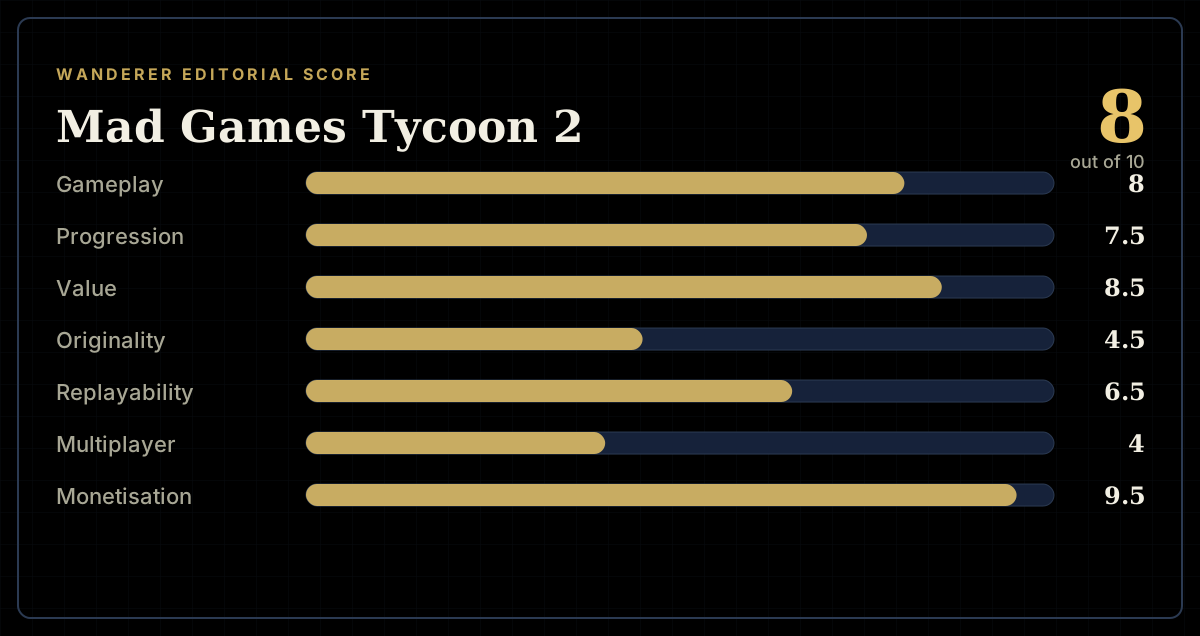
How the review scores each part of the gameWanderer Editorial -
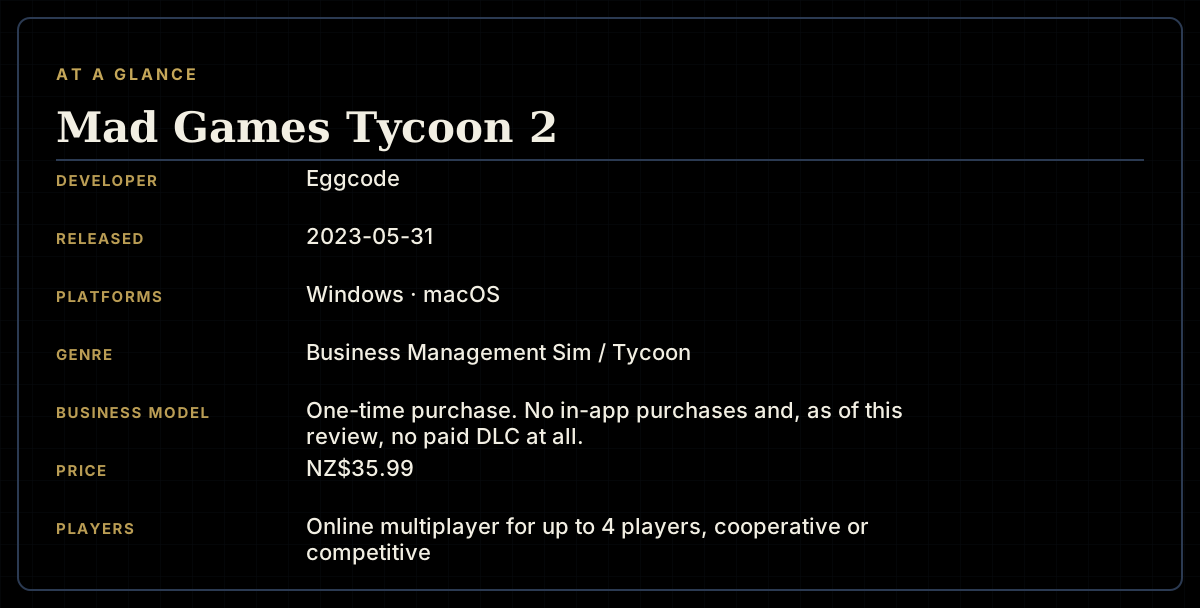
The game at a glanceWanderer Editorial -
The short versionWanderer Editorial