
Game review
Football Fictional World Simulator
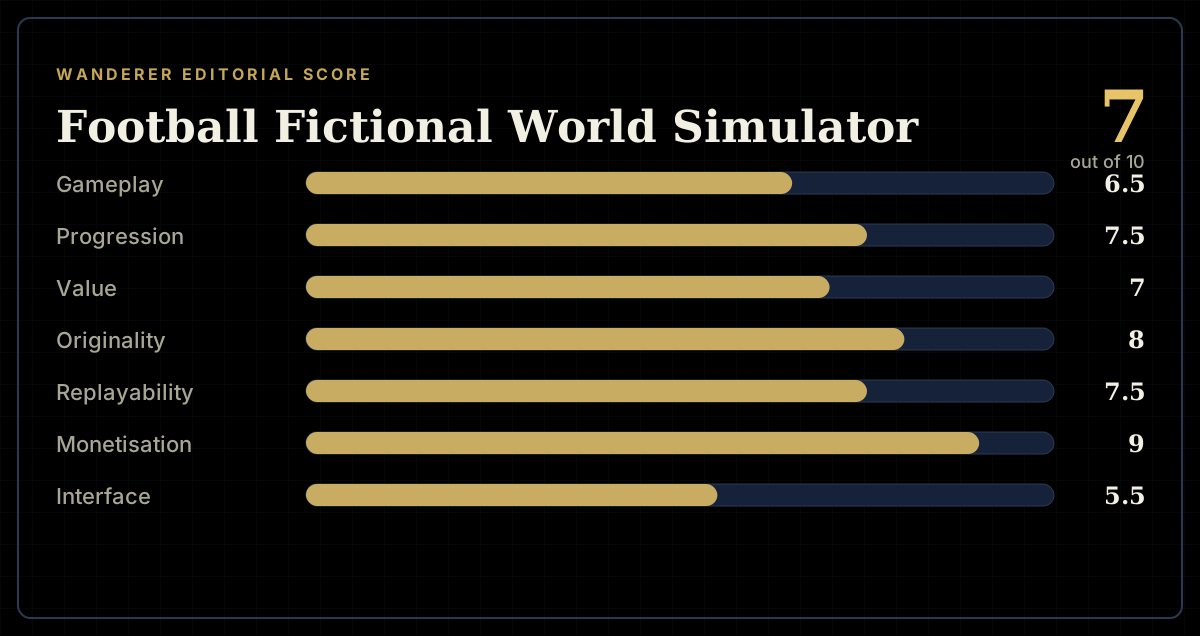
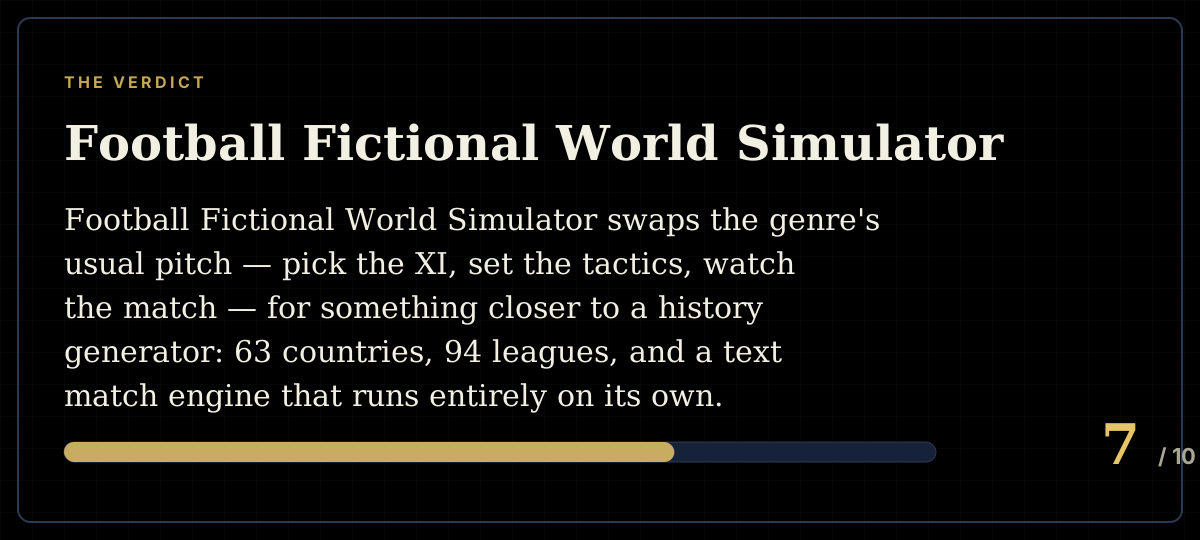
7 / 10
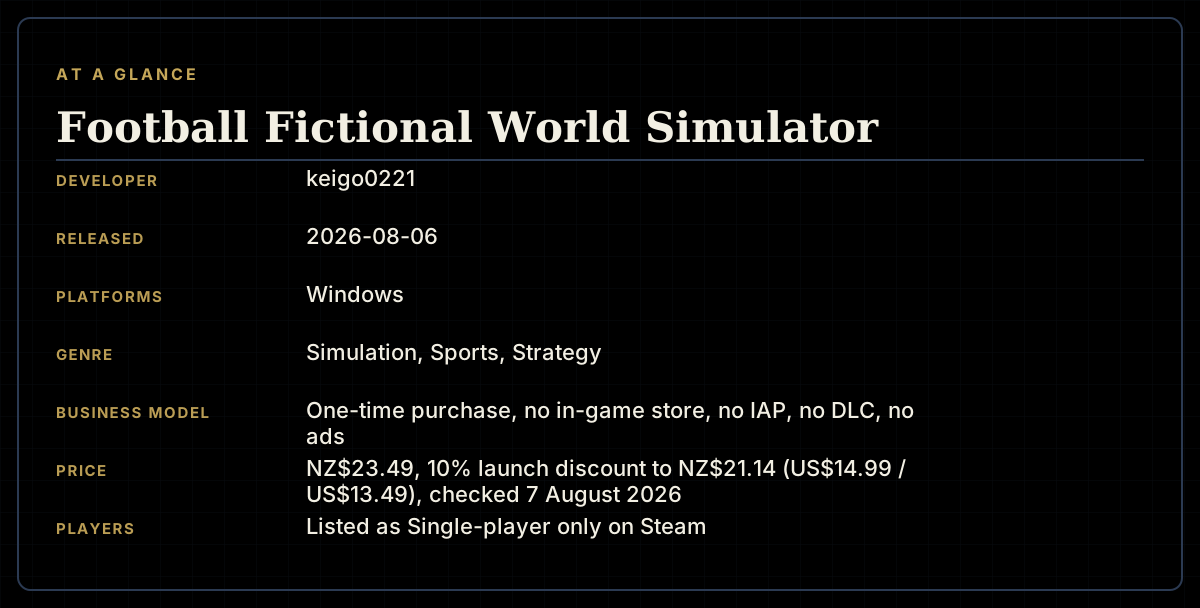
- Developer
- keigo0221
- Publisher
- Fictional World Sim
- Released
- 6 August 2026
- Platforms
- Windows
- Genre
- Simulation, Sports, Strategy
- Monetisation
- One-time purchase, no in-game store, no IAP, no DLC, no ads
- Players
- Listed as Single-player only on Steam
The short version
Football Fictional World Simulator swaps the genre's usual pitch — pick the XI, set the tactics, watch the match — for something closer to a history generator: 63 countries, 94 leagues, and a text match engine that runs entirely on its own. Your one lever is the transfer market, where clubs bring you proposals to approve or reject, and you can step back entirely and just watch decades of invented football history play out. It's a genuinely distinctive idea, well described on its own store page, but its first handful of reviews already flag real friction between that "hands-off if you want" pitch and what at least two players report actually happening at the negotiating table.
Biggest strengths
- The core premise is a genuine departure from Football Manager-style genre norms — you never touch a lineup or a tactic, only the transfer proposals clubs bring you, which makes the game read as a history generator with football as its subject rather than a manager sim
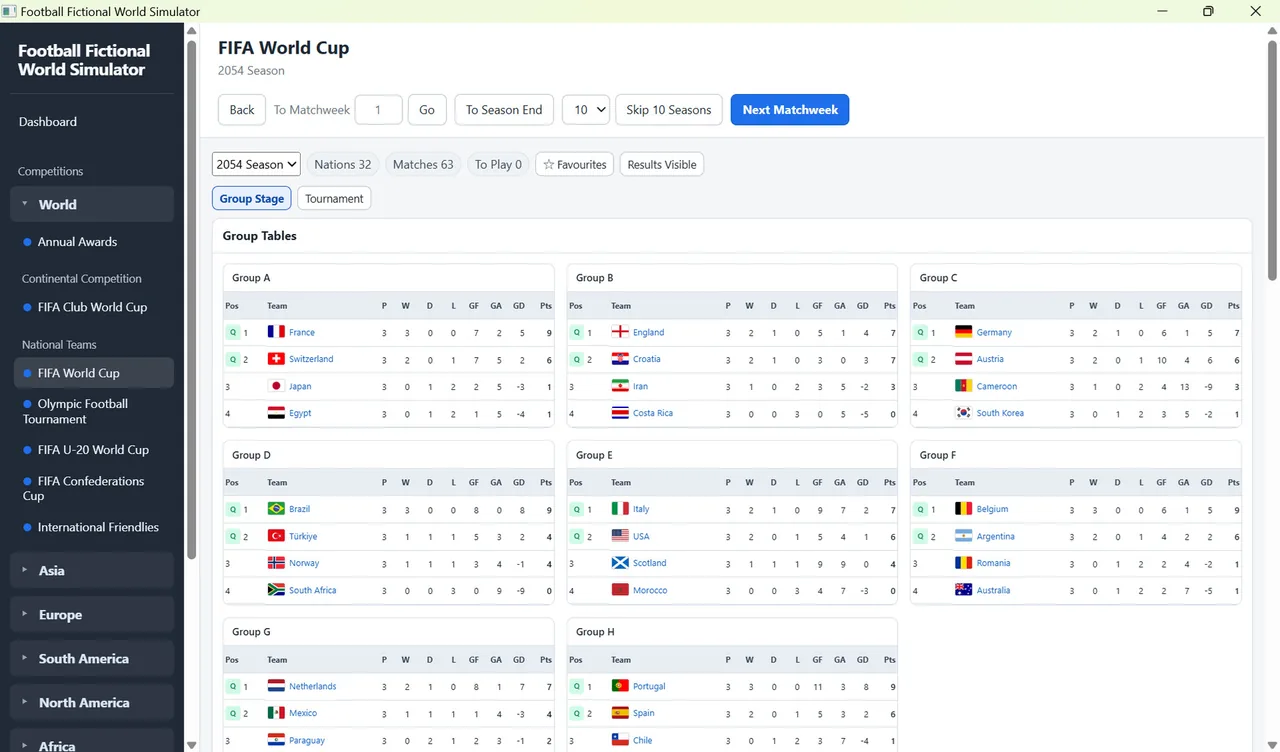
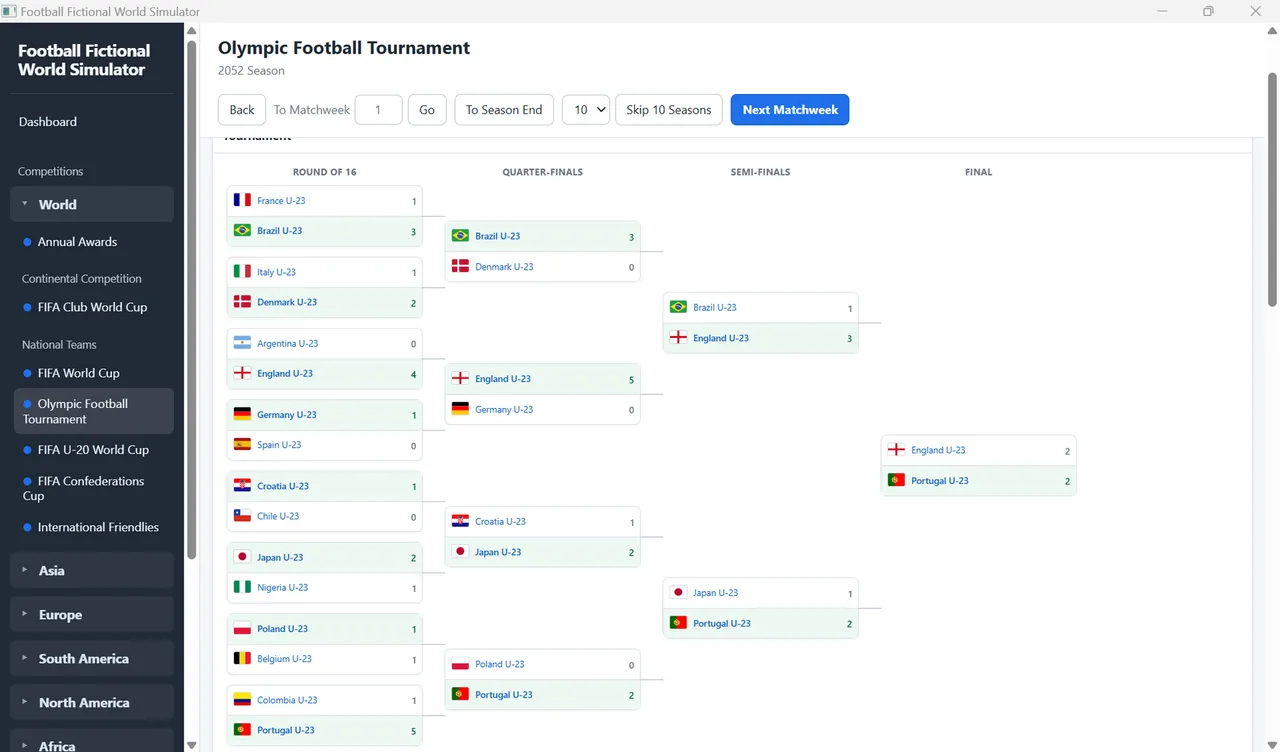
- Enormous simulated scope for a solo-developer release: 63 countries, 94 leagues across five continents, continental cups, World Cup qualifying, and senior/U-23/U-20 national teams all running in parallel, with a full season simulating in roughly ten minutes
- Clean one-time purchase at a genuinely low price for its scope, with no IAP, DLC, ads or live-service layer sitting on top of any of it
Biggest weaknesses
- Two of the five current reviews, independently, describe being forced into repeated unwanted transfers rather than freely choosing to intervene or not — one names losing 10 of 11 chosen players in a spiral and having to backfill with free agents, which cuts directly against the store page's "leave every decision to the clubs" pitch
- The Argentine name generator was reported to be drawing heavily from archaic or biblical names no longer used in the country it's meant to represent, and a men's league was reported mixing male and female first names with no gender option found to fix it
- A reviewer flagged real-world clubs starting from the wrong competitive tier by default — Manchester United outside the top flight, Real Madrid and Barcelona relegatable in season one — and season awards (Team of the Year, top individual honours) apparently going to players on relegated sides purely by average rating, regardless of team result
Who it's for: Fans of history generators, world sims and long-horizon idle-adjacent progression who want to watch an emergent football world evolve rather than manage one directly; not for anyone who wants tactics, lineups or match control.
Our recommendation: Worth a look for anyone drawn to the concept of football as a decades-long emergent story rather than a season-by-season job — the scope of the simulated world is real and the price is fair for it. Buyers who specifically want the "hands-off observer" experience advertised should read the early reports of forced transfer decisions first, and anyone who wants recognizable real-world balance on day one (current club strength, accurate regional names) should wait for a patch or two.
7 / 10
Most football management games sell you a job: pick the eleven, set the shape, win the match. Football Fictional World Simulator sells you a window instead. There's no lineup screen, no tactics board and no match you control in any direct sense — clubs across a simulated world of 63 countries and 94 leagues make their own footballing decisions, and the only lever in your hands is whether to approve or reject the transfer proposals they bring you. Step back entirely and the world keeps going without you, generating decades of careers, rivalries and record books on its own. It's a genuinely different pitch for the genre, arriving on day one with just five Steam reviews to judge it by, and those five already describe a tension between what the store page promises and what at least some players are experiencing.
A history generator wearing a football skin
The clearest way to understand what this actually is: it's closer to a Dwarf Fortress-style world generator than to Football Manager. You are not a manager, and the store page says so directly — no lineups, no training, no in-match control. A text-based engine runs every match on its own, with player attributes, positions, formations, shots, saves and substitutions feeding the outcome, and a full simulated year takes about ten minutes of real time regardless of whether you touch anything. That's the whole design idea: run the clock far enough forward and a football world starts producing its own stories — a striker from a minor league becoming his generation's greatest scorer, a former giant spending decades in the wilderness, a small country's golden generation reaching a World Cup final. You can follow a single prospect to retirement or fast-forward a hundred years and watch a completely different football map emerge. For an audience that likes watching systems run rather than piloting them directly, that's a real and specific appeal, closer to this site's core idle and incremental readership than to a typical sports-management crowd.
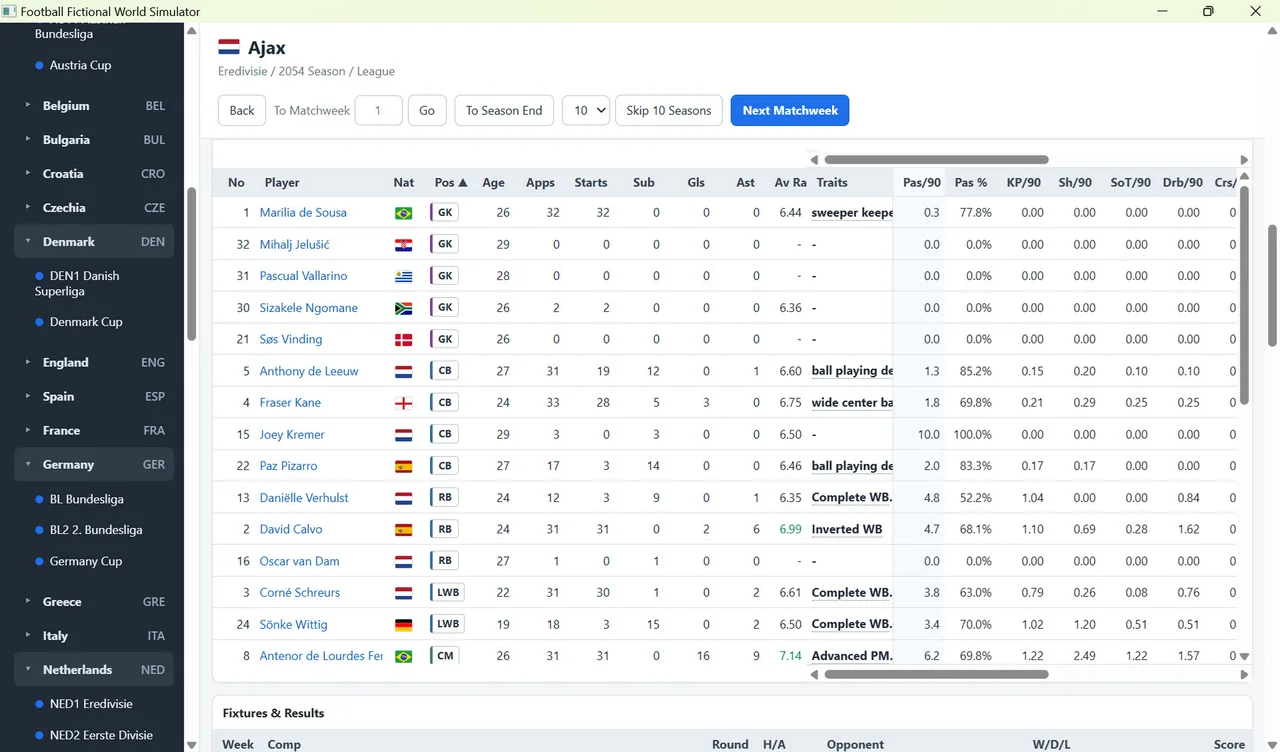
The scope backing that idea is unusually large for a solo release: 63 countries and 94 leagues across five continents, domestic cups and continental tournaments including Champions League-style and Copa Libertadores-style competitions, senior national teams plus U-23 and U-20 sides, and World Cup qualifying running in parallel with everything else. Post-season statistics go well past goals and assists into appearances, average match ratings, shots on target, and separate passing, defensive and goalkeeper numbers, with seasonal and historical Best XIs to browse once a few years have passed. One three-hour reviewer summed up the appeal plainly: "a really good base to work with. It already has a huge database to play with."
The one lever, and the complaint about how it actually feels
Your entire hands-on role is the transfer desk: clubs identify targets, negotiate and bring you a proposal, and you approve or reject it. The pitch is explicitly that you can move freely between intervening and doing nothing — "leave every decision to the clubs and play as a completely hands-off observer" is the store page's own phrase for one of the two ways to play.
That's the part worth reading the early reviews on closely, because two of the five describe something that doesn't match a purely optional system. One reviewer, managing Gateshead, described being pushed to sell ten of their eleven chosen players in succession, then having to buy expensive replacements in what they called "a downward spiral" until the budget ran out, finally backfilling with free agents. A second, shorter review makes the same point on its own: "Should not be forced to sell players all the time." Two independent reports of the same specific friction, on a five-review page, is a small sample but not a nothing — it's exactly the kind of pattern this site treats as worth flagging rather than dismissing, because if the transfer desk turns out to pressure you into moves rather than merely offering them, that undercuts the exact selling point that makes this game different from a normal management sim in the first place. Nothing here confirms whether that's a bug, a difficulty curve working as intended, or wording on the store page that oversells how "hands-off" the option really is — only that it's the first thing two separate buyers wanted future players to know.
Early data quality and interface friction
The other detailed review, from a player based in Argentina, raises two separate design concerns worth taking on their own terms rather than as generic launch grumbling. First, name generation: they report roughly 80% of generated Argentine names drawing from archaic or biblical names — Silverio, Benedicto, Porfirio, Higinio — that they say nobody in the country actually uses any more, which matters directly for a game whose whole appeal rests on watching invented careers feel like real ones. A separate reviewer reported a men's league mixing male and female first names with no way found to set gender, a more clear-cut data bug rather than a matter of taste. Second, that same Argentine reviewer flagged the starting world state ignoring real-world football hierarchy — Manchester United starting outside the top division, Real Madrid and Barcelona both relegatable in the first season — and season awards apparently being decided purely by average match rating with no weight given to team success, producing a Team of the Year pick from a club that finished 20th and went down. Whether that's the intended design (a genuinely alternate football history from kickoff) or an unfinished starting dataset isn't something this review can settle, but it's a real fork in what kind of game this is meant to be, and early buyers should know it's currently unresolved.
On presentation, one reviewer flagged the interface's light background as hard on the eyes over a session and asked for a darker option, and a second separate complaint was more functional: no clear match summary showing who scored or assisted, forcing a full read of the match log just to find a World Cup final's goalscorers. For a game whose entire appeal is generated football history, not being able to quickly see who actually made that history is a real gap, even in a release this new.
Price and monetisation
There's nothing complicated about the business model, which is worth stating plainly since it's one of the review's clearer positives: a single upfront purchase — NZ$23.49, or NZ$21.14 during the current 10% launch discount (US$14.99 / US$13.49) — with no in-game store, no IAP, no DLC and no ads. For a game promising decades of playtime out of a single world seed, that's the right shape, and it means none of the complaints above are complicated by a monetisation layer sitting on top of them. It's Windows-only with no Mac or Linux build, and English is currently the only supported language despite the game simulating football across dozens of countries and languages — both plain limitations rather than hidden ones, and both visible on the store page before buying.
One other football sim, THE REF - Football Referee Simulator, launched the same day. It's from a different developer and publisher (HustleGrow AB), covers officiating rather than club management or world simulation, and shares nothing with this release beyond the release date and the sport — worth naming only because a reader skimming new football releases from 6 August 2026 could otherwise conflate the two.
Final verdict
Football Fictional World Simulator has a genuinely distinctive idea at its centre — a football world that runs its own history and hands you only the transfer pen, with the option to step back and simply watch — backed by a real amount of simulated scope for a solo release. That idea is worth the entry price on its own for the audience it's built for: people who like watching an emergent system produce its own stories more than they like calling tactics. What holds it below a stronger score on day one is concrete rather than speculative: two independent reports that the transfer system pressures rather than merely offers, a name generator and starting-hierarchy dataset that need real regional attention, awards logic that doesn't weight team success, and a missing basic feature — a readable match summary — that a history-focused game shouldn't be without for long. None of that is unusual for a one-day-old release, and the developer has a clear, specific list of exactly what to fix first, courtesy of its own early reviewers. Buy it for the concept and the scope; go in aware that the "hands-off observer" promise isn't yet matching everyone's experience of it.
Pros and cons
Pros
- The core premise is a genuine departure from Football Manager-style genre norms — you never touch a lineup or a tactic, only the transfer proposals clubs bring you, which makes the game read as a history generator with football as its subject rather than a manager sim
- Enormous simulated scope for a solo-developer release: 63 countries, 94 leagues across five continents, continental cups, World Cup qualifying, and senior/U-23/U-20 national teams all running in parallel, with a full season simulating in roughly ten minutes
- Clean one-time purchase at a genuinely low price for its scope, with no IAP, DLC, ads or live-service layer sitting on top of any of it
- Deep post-season statistics beyond goals and assists — appearances, average match ratings, shots on target, passing and goalkeeper numbers, and historical Best XIs — for players who want to dig into the record books their world produces
- A player who logged three hours called it "a great idea well executed" with "a really good base to work with" and "a huge database to play with," while flagging real issues without asking for a refund over them
Cons
- Two of the five current reviews, independently, describe being forced into repeated unwanted transfers rather than freely choosing to intervene or not — one names losing 10 of 11 chosen players in a spiral and having to backfill with free agents, which cuts directly against the store page's "leave every decision to the clubs" pitch
- The Argentine name generator was reported to be drawing heavily from archaic or biblical names no longer used in the country it's meant to represent, and a men's league was reported mixing male and female first names with no gender option found to fix it
- A reviewer flagged real-world clubs starting from the wrong competitive tier by default — Manchester United outside the top flight, Real Madrid and Barcelona relegatable in season one — and season awards (Team of the Year, top individual honours) apparently going to players on relegated sides purely by average rating, regardless of team result
- No clear match summary showing who scored or assisted; one reviewer had to read an entire match log line by line to find a World Cup final's goalscorers
- Only Windows is supported, English is the only listed language despite the game simulating 63 countries' worth of football, and the interface's light background drew a specific eye-strain complaint
Screenshots
-
Football Fictional World SimulatorImage: Fictional World Sim via Steam -
Football Fictional World SimulatorImage: Fictional World Sim via Steam -
Football Fictional World SimulatorImage: Fictional World Sim via Steam -
How the review scores each part of the gameWanderer Editorial -
The game at a glanceWanderer Editorial -
The short versionWanderer Editorial