Game review
Chronicles Of Lumethis
6.5 / 10
- Developer
- YAY Games
- Publisher
- YAY Games
- Released
- 31 July 2026
- Platforms
- Windows
- Genre
- Idle RPG
- Monetisation
- One-time purchase. No in-app purchases, no premium currency, no ads, no DLC listed on the store page
- Players
- Single-player only
The short version
Chronicles of Lumethis takes the entire visual and mechanical language of mobile gacha — rarity-tiered champion banners, duplicate shards, a fusion path to the top-tier heroes — and attaches it to a single NZ$9.99 Steam purchase with nothing else to buy. That's a genuinely unusual bet: the systems are built to create the itch a gacha game normally monetises, but there's no wallet anywhere in the loop to scratch it with. The champion roster and shared-gear economy are deep enough to hold attention for a while, but the game is two days old with zero player reviews to test any of its claims against, and a shared "one activity at a time" action system limits how much of that 70-champion roster you can actually put to work at once.
Biggest strengths
- No purchase beyond the sticker price anywhere in the game — champions, gear enhancement and Relic hunts are all earned through play rather than gated behind a shop
- Duplicate champions have somewhere real to go, since Synthesis turns spare pulls into the fusion material for Legendary and Mythic heroes rather than leaving them as clutter
- A shared gear pool across the whole roster means switching which champion you're playing doesn't mean starting its equipment from zero
Biggest weaknesses
- Battle, mining and fishing all draw from the same small pool of action slots, so a roster built around 70-plus champions can still only advance one or two fronts at a time
- Legendary and Mythic champions are unreachable by direct summon at all — they exist solely through Synthesis, which means the banner's most exciting rarities are locked behind a duplicate-grinding wall rather than a lucky pull
- Gear enhancement runs up to a stated +9 with explicit risk, and the store page doesn't specify what "risky" costs you at the higher levels
Who it's for: Idle RPG players who like gacha-style collection mechanics but are tired of paying for them, and anyone curious what a duplicate-fusion hero economy looks like with the exit built in rather than the shop.
Our recommendation: A reasonable bet at ten dollars if the champion-collecting hook appeals to you, provided you go in knowing this is a brand-new, unreviewed release from a small studio rather than a proven quantity — there is no public track record yet to lean on.
6.5 / 10
Gacha design and one-time pricing don't usually appear in the same sentence. The entire genre exists because a rarity-tiered summon banner is one of the most reliable ways ever devised to get players to open their wallets one more time, and Chronicles of Lumethis borrows that whole apparatus — six champion rarities, duplicate shards, a fusion ladder up to the heroes you can't otherwise get — while charging exactly one price, once, for the privilege of pulling on it forever. That's the thing worth taking seriously here, more than any individual system: a developer built every lever a mobile gacha game would use to extract money, then didn't wire a shop up to any of them.
A banner with no shop behind it
The store page is blunt about this, describing the game as built around a broken world "and all the time it keeps working for you," and closing its pitch with a line that reads almost like a dare to the genre it's borrowing from: every summon is earned in play, no microtransactions. There is no premium currency to buy, no gem pack, no VIP tier, no rewarded-ad loop standing next to the free content the way it does in almost every mobile equivalent. The summon currency, whatever it's called in-game, comes from playing — mining, fishing, dungeon runs, the Demon God Invasion's climbing stages — and that's the whole acquisition path. There isn't a second one sitting behind a paywall.
That matters because of what the roster actually asks of a player. Chronicles of Lumethis stacks 70-plus champions across six rarities, and — this is the detail worth underlining — Legendary and Mythic champions cannot be pulled directly at all. They only exist through Synthesis, fusing duplicate copies of lower-rarity champions up the ladder. In a free-to-play gacha game, a duplicates-only path to the best heroes is one of the oldest monetisation levers in the book: it turns "I want that hero" into "I need to pull the same banner dozens more times," and real money is almost always the fast lane through that math. Here, the fast lane doesn't exist. The grind is the only lane, for everyone, which reframes what would normally be a pressure point into something closer to a long-term crafting goal. Whether that's satisfying or just slower depends entirely on how generous the drop rates turn out to be in practice — information the store page doesn't publish and no player review yet exists to confirm.
Where the economy actually lives
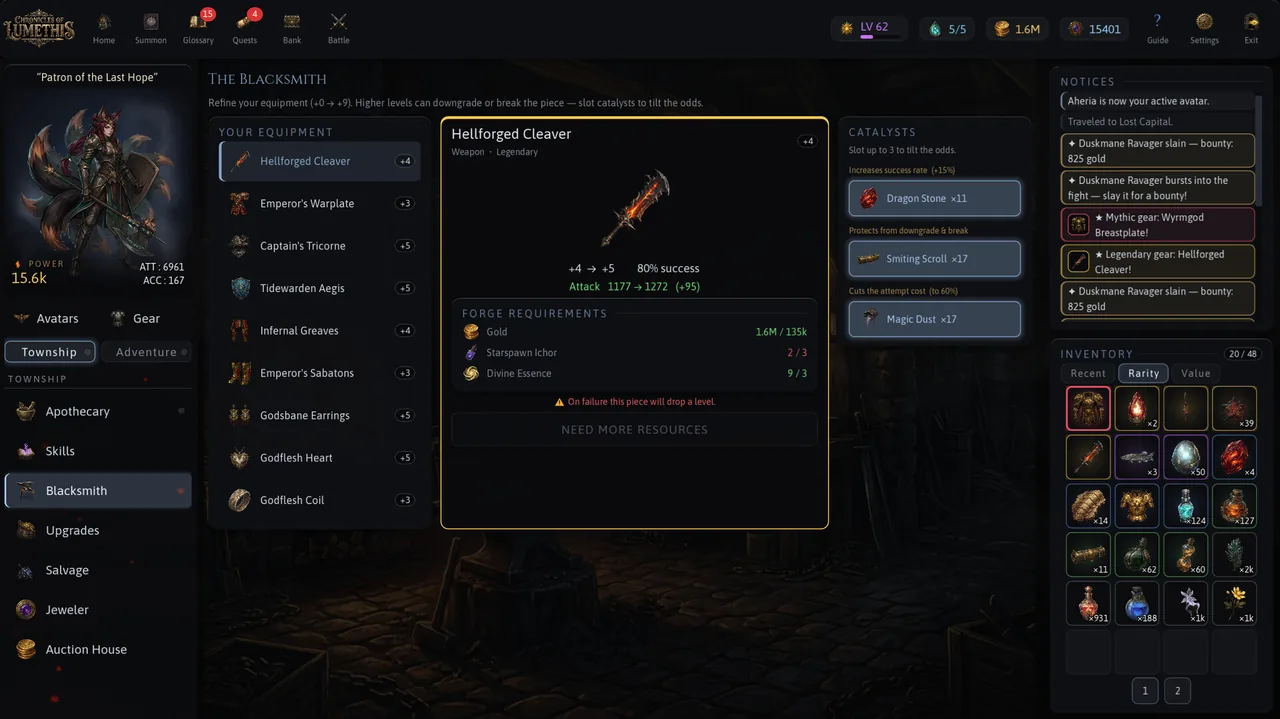
Underneath the champion banner sits a genuinely dense crafting and gear economy: ore mining on node picks, a fishing timing minigame, potion brewing, gem socketing, and equipment enhancement that runs from +1 up to a stated +9 with explicit risk attached at the top end — the kind of gambling-adjacent mechanic that shows up across the enhancement systems of a dozen other idle RPGs, though this one doesn't say on the store page what failure actually costs you. Gear is pooled across the whole roster rather than tied to individual champions, which is the single most player-friendly decision in the whole design: switching which champion you're actively playing doesn't mean rebuilding that champion's kit from nothing, the way equipment-per-hero systems in games like Summoners War: Sky Arena tend to force.
The 51 collection teams and monster-trophy bonuses do real work making that pooled economy pay off, too — a common-rarity champion sitting in a themed team still contributes a permanent, account-wide bonus even after it's stopped being useful in a party, which gives the lower half of a 70-champion roster a reason to exist beyond padding a collection count. That's a smarter piece of design than it might look at first glance, because collector-genre games live or die on whether the champions you're not actively using still feel like they matter.
The one-lane bottleneck
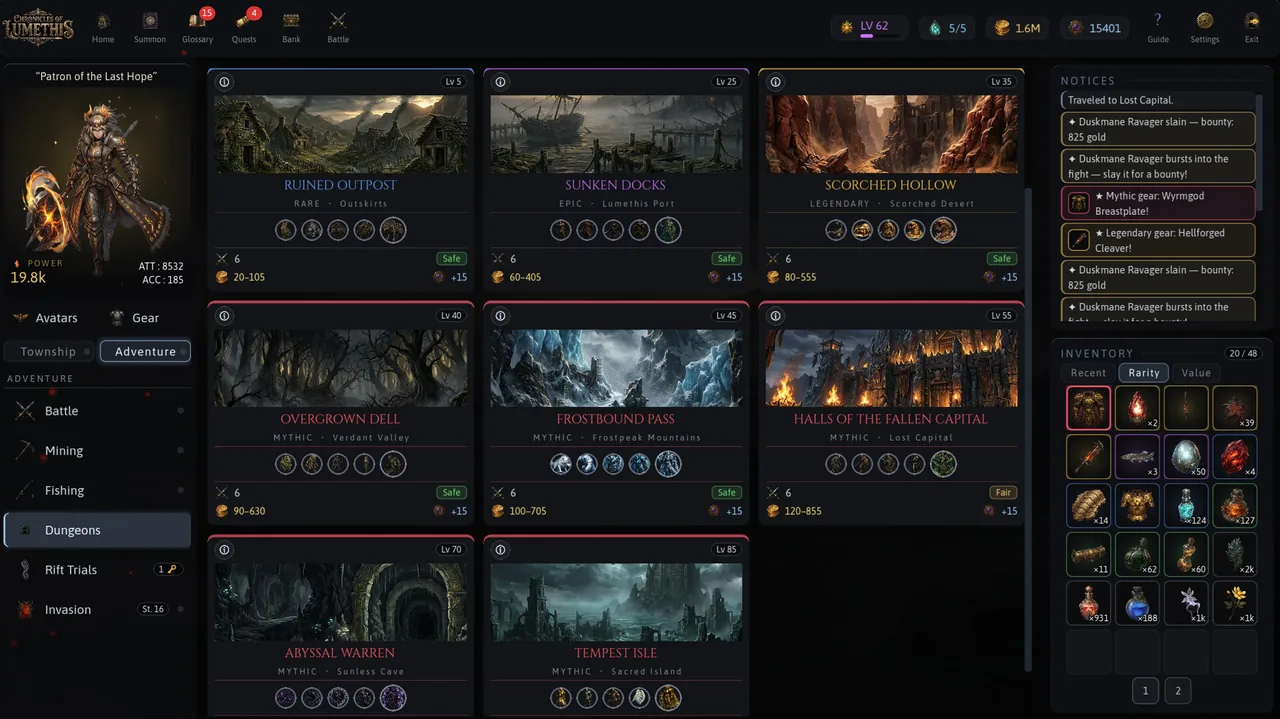
The system most likely to frustrate anyone who takes the roster size at face value is the shared action-slot pool. Battle, mining and fishing all draw from the same small allotment of concurrent activities, and the store page frames this explicitly as "a real decision" rather than apologising for it — but a real decision and a real bottleneck are often the same thing wearing different labels. Seventy champions and eight kingdom zones' worth of content sound like an invitation to run several systems in parallel; a handful of action slots says otherwise. It's the same shape of problem that held back Archmage Idle's multiplicative skill economy — a genuinely interconnected system gated by how few things can actually run at once — and it's worth going in expecting the same trade-off rather than the wide-open automation the genre sometimes promises.
The offline design at least delivers on its own premise cleanly: whatever activity was running when you last closed the game keeps running while you're away, with no rebirth, prestige or reset mechanic ever clawing progress back. For a genre where "forward, forever" is often marketing language layered over a soft reset every few weeks, an idle RPG that genuinely commits to never resetting the account is a meaningfully different promise, even before judging how well it's paced.
Presentation, and the disclosure worth knowing about
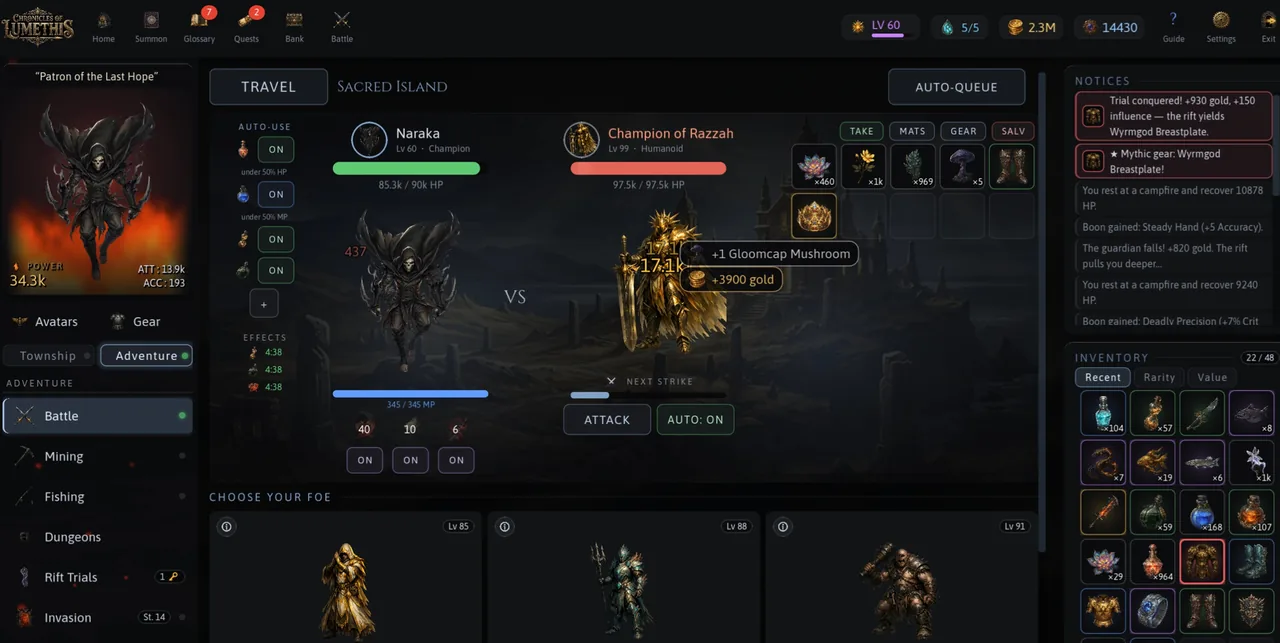
Visually, Chronicles of Lumethis reads as a fairly conventional 2D dark-fantasy idle RPG — colourful champion portraits, banner art, monster illustrations, the works. Steam's AI Generated Content Disclosure on the store page states plainly that all of the game's 2D art, including character portraits, monster and item illustrations and marketing banners, was produced with generative AI tools and then hand-reviewed and edited by the developer before shipping, with no content generated live during play. That's a fact worth knowing going in rather than discovering after the purchase, particularly in a genre whose whole pitch is built on wanting to collect and look at its cast — some players will not care at all, and some collectors specifically buy into gacha-adjacent games for the character art, which is exactly the audience most likely to weigh this disclosure heavily.
Value and the review-score gap
At NZ$9.99 (currently discounted 20% off a NZ$12.49 list price), Chronicles of Lumethis is priced like a small indie idle game and monetised like one too — there's genuinely nothing else to buy, which puts it in the same rare company as 10-Man Idle rather than alongside gacha peers like AFK Journey, where nearly every competitive system points back at a spending decision. That comparison is the whole argument for the game: if you like what gacha collection systems feel like and resent what they cost, this is close to the cleanest version of that idea currently on Steam.
What keeps the score from climbing higher is that none of this comes with any outside confirmation yet. The game launched 31 July 2026 and carries zero Steam user reviews at the time of writing — not a mixed score, not early complaints, nothing at all — which means every claim about drop rates, enhancement risk and how the action-slot bottleneck feels forty hours in is currently untested by anyone but the developer's own store copy. That's not a mark against the design itself, but it is a reason to treat this as a promising, honestly priced bet rather than a proven one.
Final verdict
Chronicles of Lumethis is worth attention for one reason above all its individual systems: it proves a gacha-shaped economy doesn't need a gacha-shaped business model attached to it. The champion roster, duplicate-fusion path and shared gear pool are legitimately well-considered, and charging once for all of it rather than drip-feeding a shop behind the same hooks is a genuinely commendable choice. The shared action-slot system undercuts how much of that 70-champion roster you can realistically use at once, the AI-art disclosure is worth knowing before you buy, and — most importantly — this is a two-day-old release with no public track record to weigh those trade-offs against yet. Buy it for the idea it's testing, not for a guarantee about how it plays a hundred hours in.
Anyone drawn to the idea of a persistent world that keeps working on your behalf, gacha trappings or not, might also want a look at Wanderer.
Pros and cons
Pros
- No purchase beyond the sticker price anywhere in the game — champions, gear enhancement and Relic hunts are all earned through play rather than gated behind a shop
- Duplicate champions have somewhere real to go, since Synthesis turns spare pulls into the fusion material for Legendary and Mythic heroes rather than leaving them as clutter
- A shared gear pool across the whole roster means switching which champion you're playing doesn't mean starting its equipment from zero
- 51 collection teams and monster trophy sets reward building a wide roster with permanent account-wide bonuses, giving low-rarity champions a reason to stay in the pack
- Progress continues while the game is closed, with no rebirth or prestige reset ever wiping what's been earned
Cons
- Battle, mining and fishing all draw from the same small pool of action slots, so a roster built around 70-plus champions can still only advance one or two fronts at a time
- Legendary and Mythic champions are unreachable by direct summon at all — they exist solely through Synthesis, which means the banner's most exciting rarities are locked behind a duplicate-grinding wall rather than a lucky pull
- Gear enhancement runs up to a stated +9 with explicit risk, and the store page doesn't specify what "risky" costs you at the higher levels
- The game shipped two days before this review with precisely zero Steam user reviews, so there is no independent account yet of how the loop holds up past the opening hours
- All 2D art — champion portraits, monster art, icons, banners — is disclosed as generative-AI output, hand-reviewed but not hand-drawn, which will be a dealbreaker for some collectors in a genre that usually sells itself on character art
Screenshots
-
Chronicles Of LumethisImage: YAY Games via Steam -
Chronicles Of LumethisImage: YAY Games via Steam -
Chronicles Of LumethisImage: YAY Games via Steam -
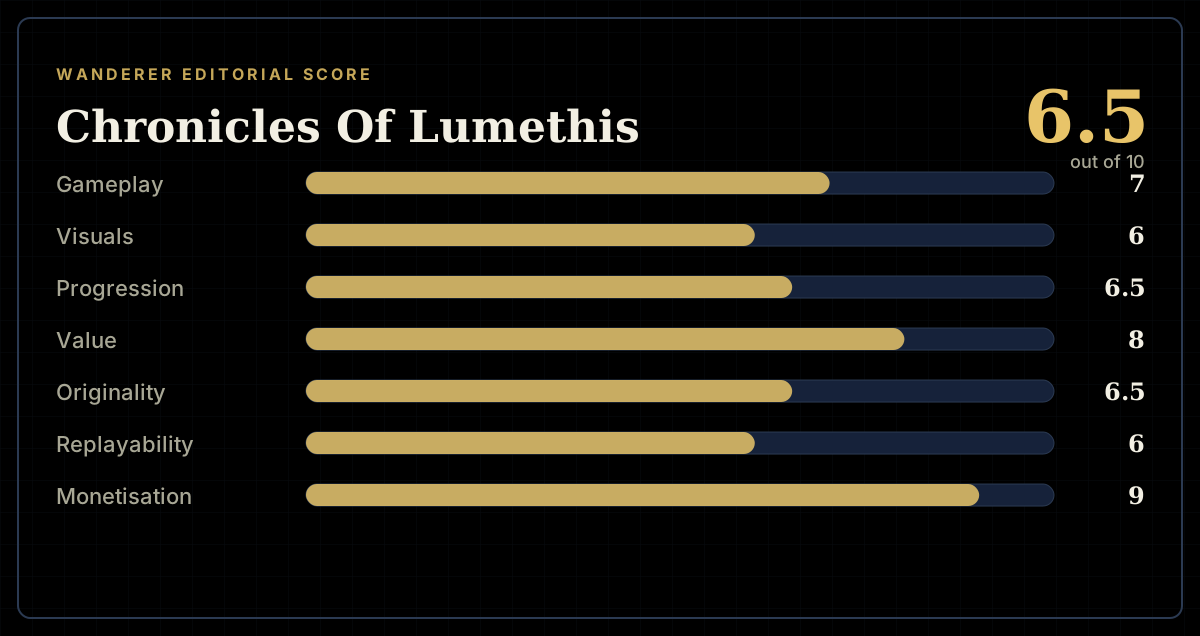
How the review scores each part of the gameWanderer Editorial -
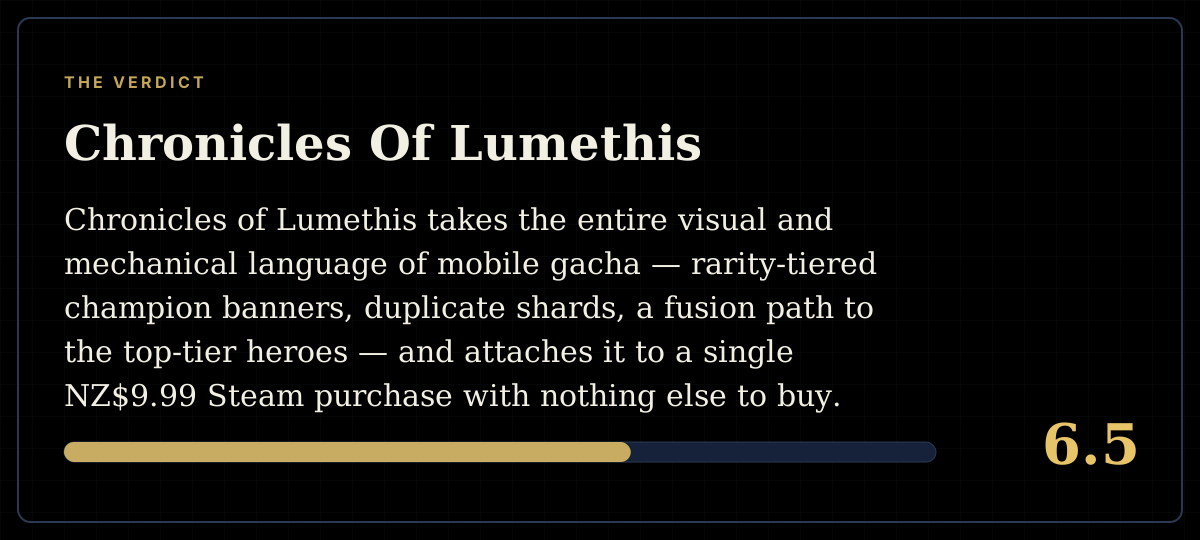
The short versionWanderer Editorial