
Game review
Cattails | Become a Cat!
6.5 / 10
- Developer
- Falcon Development
- Publisher
- Falcon Development
- Released
- 1 December 2017
- Platforms
- Windows, macOS, Linux
- Genre
- Animal life-simulation RPG
- Monetisation
- One-off purchase, no in-game currency, ads or gameplay-affecting purchases
- Players
- None; single-player only
The short version
Cattails' core appeal is specific and genuine: it's one of the only games that lets you actually live as a feral cat, joining a colony, hunting for food, romancing one of sixteen eligible mates, and raising a litter of kittens across an open wilderness. For anyone who grew up on the Warrior Cats book series, several reviewers describe this as a dream finally realized, and the game's 96% Overwhelmingly Positive reception reflects real, specific affection rather than generic praise. Set against that is an equally specific, equally repeated critical thread from detailed reviewers who found the actual moment-to-moment mechanics frustrate rather than support the fantasy — hunting described as unreliable and tedious, an open world several reviewers say leaves them wandering without clear direction, and a thin central story that repeats the same fetch-quest structure without much characterization behind it. Both readings come from real, invested engagement with the game rather than a taste mismatch, and the honest recommendation depends heavily on how much a reader's enthusiasm for the premise itself can carry them through mechanics several experienced reviewers found genuinely frustrating.
Biggest strengths
- A genuinely rare, specific fantasy — actually living as a feral cat with real social, romantic, and survival stakes — that few other games attempt at all
- Sixteen distinct romanceable cats and a real family-raising system give the life-sim side genuine depth and personalization
- Deep, specific appeal for Warrior Cats book fans, several of whom describe the game as realizing a specific childhood fantasy the book series itself never let them actually play
Biggest weaknesses
- Hunting mechanics draw sustained, specific criticism as unreliable and frustrating, with multiple detailed reviewers reporting repeated failed attempts to catch prey while their character starves
- The open world is described by several reviewers as directionless, with no clear indication of what to do next beyond wandering, leading more than one reviewer to abandon the game within their first 15-20 minutes
- The main story is criticized as a repetitive fetch-quest structure with thin characterization, undercutting the emotional connection the dating and family-raising systems are meant to build
Who it's for: Warrior Cats fans and anyone specifically drawn to the "become an animal" fantasy who can tolerate real friction in hunting and navigation. Less suited to players expecting Stardew Valley-level polish just because reviewers frequently invoke that comparison — several reviewers specifically warn the comparison oversells how refined the mechanics actually are.
Our recommendation: Worth it at its typical discount specifically for the premise, especially for Warrior Cats fans; go in with patience for genuinely frustrating hunting mechanics, and consider the developer's own later, more polished standalone sequel if the core idea appeals more than this specific execution of it.
6.5 / 10
Cattails asks a simple question few games bother with: what if you could actually be a cat? Join a colony, hunt mice and rabbits, fight rival cats over territory, court one of sixteen potential mates, and raise a litter of kittens across an open wilderness that shifts with the seasons. Released in December 2017 by solo-ish developer Falcon Development, it built a devoted following — 96% Overwhelmingly Positive across nearly 2,160 English reviews — anchored substantially in how rare and specific its premise is, especially for readers of the long-running Warrior Cats book series. Reading the review sample closely reveals a game whose fans and critics are often describing the exact same specific experiences and reaching very different conclusions about them.
A fantasy few other games even attempt
The praise across the sample is remarkably consistent in what it credits: not polish, but specificity. One reviewer frames it as a childhood dream finally realized: "I remember seeing the trailer for this game as a kid and being upset I couldn't get it, now? nothing stopping me from 100 percenting it all." Another draws the most common comparison directly: "It reminds me a lot of Wolf Quest combined with Stardew Valley," while a third states plainly, "An absolute must-play for Warrior Cats fans. The game itself is pretty different, of course, but it got the feel." That last distinction matters — reviewers aren't claiming Cattails perfectly recreates its inspirations, they're crediting it for capturing an emotional register (the specific fantasy of feral cat life) that few other games even attempt.
Hunting draws the same specific complaint, over and over
Set against that is a remarkably consistent negative thread, and it's worth taking seriously precisely because of how specific and repeated it is. One reviewer sums up the frustration in three words: "hunting... is terrible." Another describes the actual experience of trying: "Just wondering/sneaking around trying to find anything to eat whilst my cat starves isn't exactly fun." A third, more detailed account: "I spent the whole game starving, trying and failing to figure out how to hunt." This isn't three isolated complaints about difficulty — it's the same specific mechanical failure point named independently across a meaningful share of the critical reviews, strong enough convergence to treat as an accurate account of a genuine weak point in the shipped game rather than a skill issue on any one player's part.
An open world some reviewers find aimless
A second, related complaint concerns direction. One reviewer's account is direct: "I kind of didn't really know what to do. It felt like a completely open sandbox but with no interesting goals I could think of, I just wandered around." Another reports giving up entirely: "I've started this game over 3 times now and can't make myself play for more than like 15-20 minutes before I give up... All I do is wander around lost and hungry." Combined with the hunting complaints above, this paints a coherent picture: for a share of players, the specific combination of unclear direction and unreliable survival mechanics compounds into genuine early frustration rather than the exploratory freedom the open-world framing intends.
A comparison that cuts both ways
The Stardew Valley comparison that draws so much positive attention also becomes a stick several critical reviewers use directly: "Like Stardew, except cats... yeah. And except inferior in every imaginable way," writes one, while another states, "this game simply does not compare really at all to Stardew Valley." That's worth flagging as a genuine risk for a prospective buyer: the comparison that attracts many players to Cattails in the first place is also the comparison its own more critical reviewers say the game can't live up to, and going in expecting Stardew-level systemic depth is likely to disappoint regardless of how much affection a reader has for cats or Warrior Cats specifically.
A studio that kept building on the idea
The developer's own history shows real, sustained investment beyond the initial release: a free Custom Colonies content update, a 2019 Nintendo Switch port, and eventually a fully Kickstarter- funded standalone sequel, Cattails: Wildwood Story, which launched in 2023. More than one reviewer in this sample points directly to that sequel as the more refined way to experience the same core idea, with one flagging "a GLARING flaw" in this original before recommending readers "just play the second" game instead. That's a useful, actionable piece of context for anyone drawn to the premise here but put off by the specific mechanical complaints above.
Verdict
Cattails succeeds at something genuinely rare — actually letting players live the "become a wild cat" fantasy with real social, romantic, and survival stakes — and its devoted fanbase's praise reflects real, specific engagement with that premise rather than generic enthusiasm. Its own detailed critics are equally specific and equally credible describing hunting and navigation as genuine, repeated sources of frustration, and a story thin enough to undercut the emotional investment the life-sim systems are meant to build. Both readings are true of the same game. Go in for the premise, be patient with the execution, and know a more polished sequel exists if this specific version doesn't click.
Sources: Steam store page and appdetails API (release date, pricing, platform data); Steam's aggregate review data (query_summary totals, English-language sample); individually read user reviews, both positive and negative, sorted by helpfulness and recency; Steam's global achievement statistics API; Falcon Development's own partner-events history, from launch in December 2017 through the 2023 announcement and release of its standalone sequel.
Pros and cons
Pros
- A genuinely rare, specific fantasy — actually living as a feral cat with real social, romantic, and survival stakes — that few other games attempt at all
- Sixteen distinct romanceable cats and a real family-raising system give the life-sim side genuine depth and personalization
- Deep, specific appeal for Warrior Cats book fans, several of whom describe the game as realizing a specific childhood fantasy the book series itself never let them actually play
- Real, sustained post-launch support including a free content update, a Nintendo Switch port, and eventually a fully-funded, more polished standalone sequel
- Achievement data confirms a smooth, healthy engagement curve rather than an early wall, evidence the core loop holds attention for a meaningful share of players despite its flaws
Cons
- Hunting mechanics draw sustained, specific criticism as unreliable and frustrating, with multiple detailed reviewers reporting repeated failed attempts to catch prey while their character starves
- The open world is described by several reviewers as directionless, with no clear indication of what to do next beyond wandering, leading more than one reviewer to abandon the game within their first 15-20 minutes
- The main story is criticized as a repetitive fetch-quest structure with thin characterization, undercutting the emotional connection the dating and family-raising systems are meant to build
- Frequent comparisons to Stardew Valley, made by fans and critics alike, set an expectation of polish several detailed reviewers say the game doesn't actually meet, calling it an inferior version of that comparison rather than its own distinct success
- The developer's own later work suggests awareness of these issues: multiple reviewers point directly to the studio's newer, standalone sequel as the more refined way to experience the same core idea
Screenshots
-

Cattails | Become a Cat!Image: Falcon Development via Steam -

Cattails | Become a Cat!Image: Falcon Development via Steam -

Cattails | Become a Cat!Image: Falcon Development via Steam -
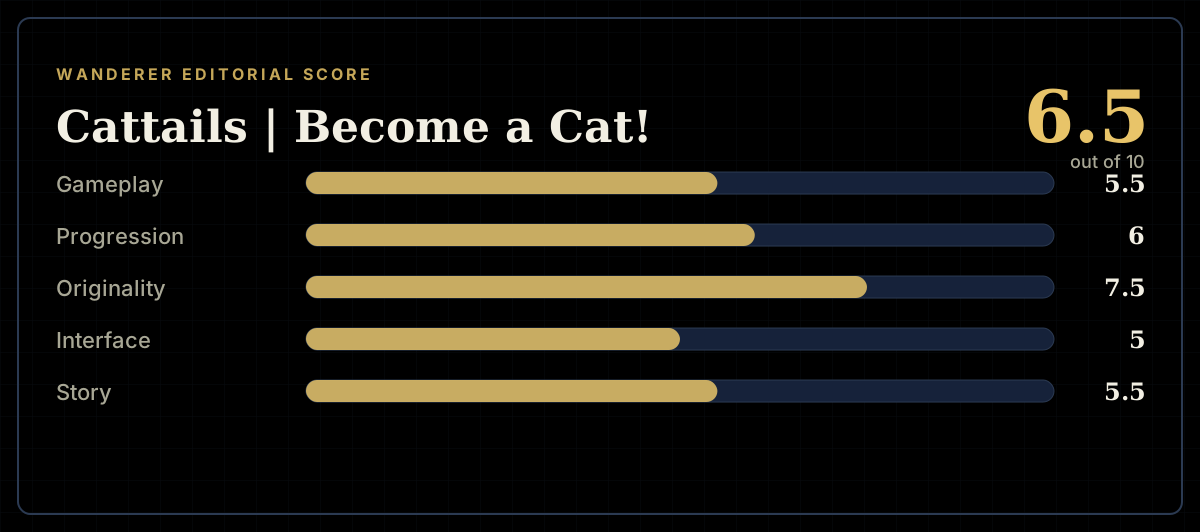
How the review scores each part of the gameWanderer Editorial -
The short versionWanderer Editorial