Game review
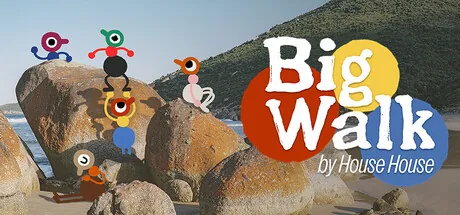
Big Walk
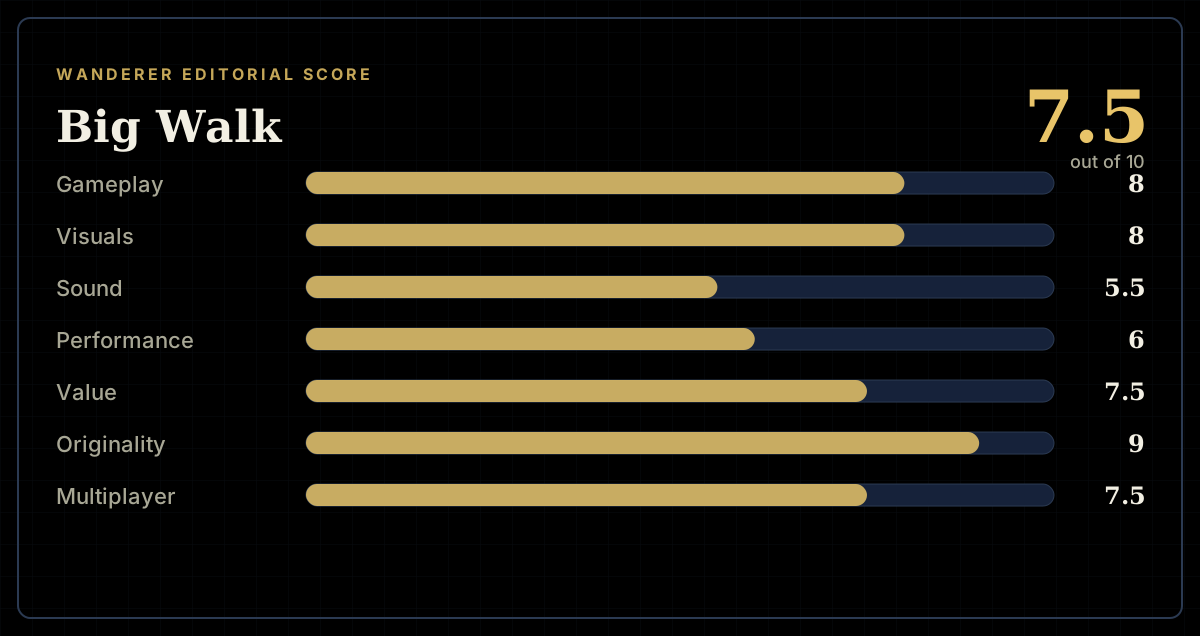
7.5 / 10
- Developer
- House House
- Publisher
- Panic
- Released
- 4 August 2026
- Platforms
- Windows, macOS, PlayStation 5, Nintendo Switch 2
- Genre
- Co-op Adventure
- Monetisation
- One-time purchase. No in-game purchases, no DLC.
- Players
- Online co-op with proximity voice chat and cross-platform play. Puzzles cannot be completed alone
The short version
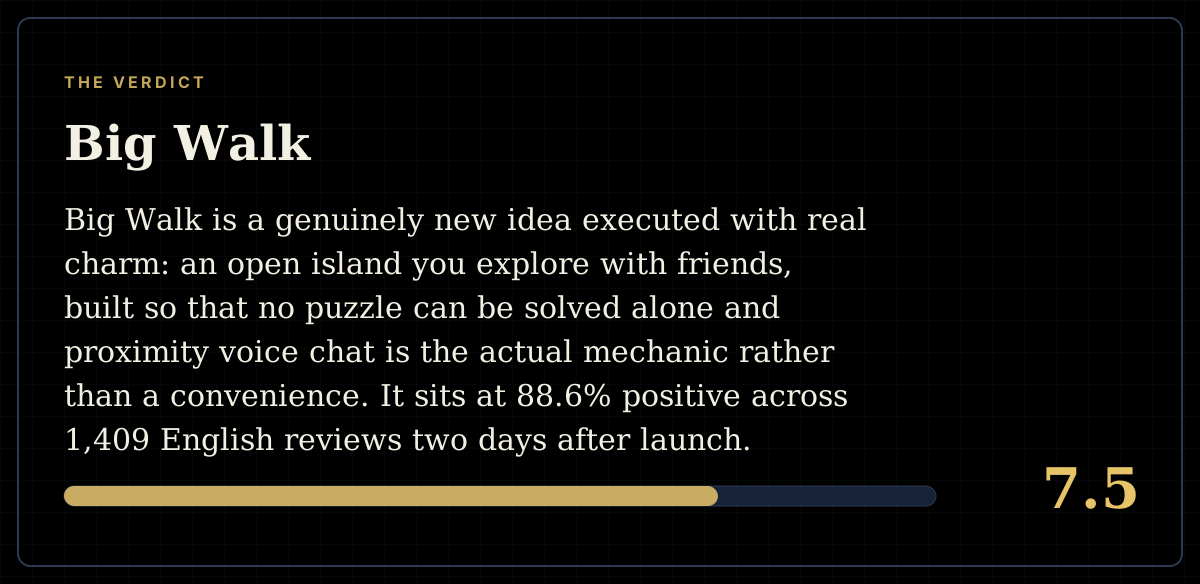
Big Walk is a genuinely new idea executed with real charm: an open island you explore with friends, built so that no puzzle can be solved alone and proximity voice chat is the actual mechanic rather than a convenience. It sits at 88.6% positive across 1,409 English reviews two days after launch.
It also shipped without separate sliders for game audio and voice audio, in a game whose entire premise is hearing your friends. That one omission dominates the review corpus so completely that the **top positive review, at 2,279 votes, is a bug report** — and it's the same complaint as the top negative. House House acknowledged it on 5 August and said a fix is coming as soon as they can. Read this review as a snapshot of a launch week.
Biggest strengths
- A genuinely original co-op premise, built so progress requires actual conversation
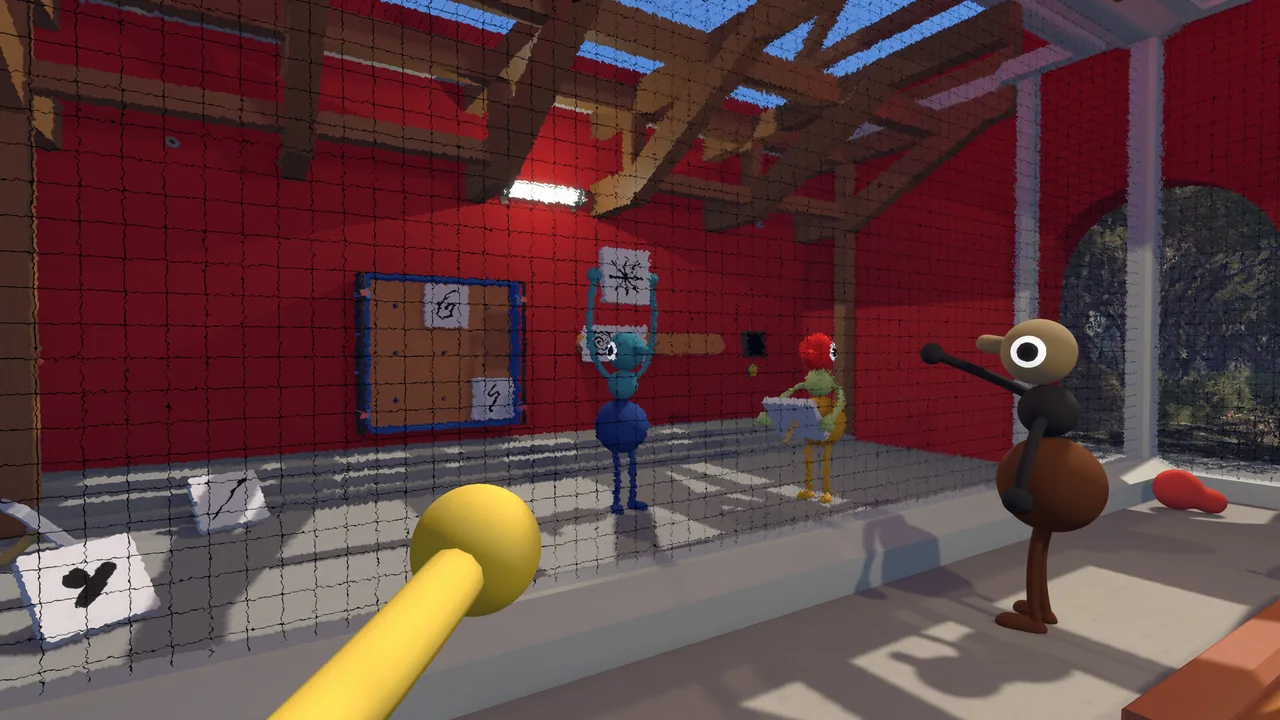
- Puzzles that reward group problem-solving rather than reflexes or combat
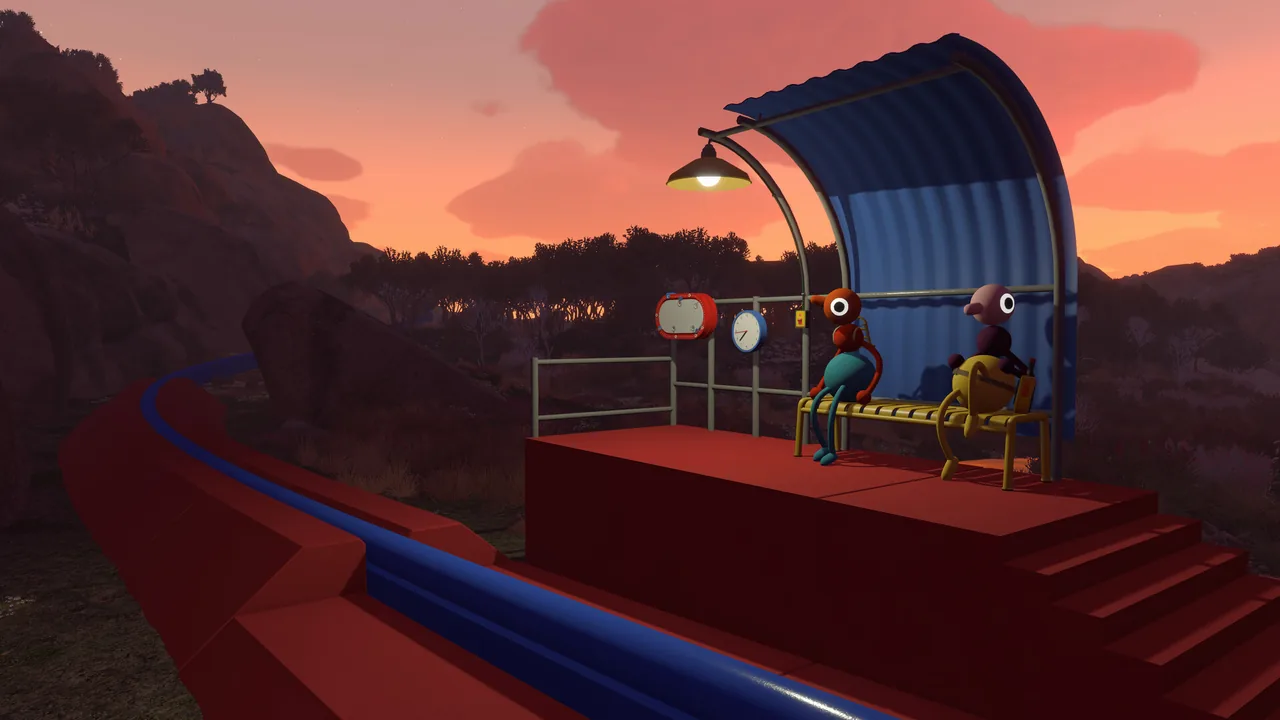
- Warm, distinctive art direction in the House House tradition
Biggest weaknesses
- No separate voice and game volume sliders, so friends are near-inaudible at normal settings
- Voice reportedly drops off within about ten metres, which several reviewers found too short
- Desync and lag reported by groups playing across continents
Who it's for: Groups of two to four friends who already talk while they play and want something warm and puzzle-led instead of another survival loop. You need people — there is no meaningful solo game here, and that's by design.
Our recommendation: Buy it if you have friends to play it with and can wait out an audio patch; the design underneath is lovely and unlike anything else. If you're buying to play alone, don't — and if you want it working perfectly today, give it a fortnight.
7.5 / 10
The most-upvoted review of Big Walk is a thumbs-up with 2,279 votes. It reads, in its entirety:
Great so far, but DEAR GOD PLEASE ADD DIFFERNT VOLUME SLIDERS FOR GAME AUDIO AND MIC AUDIO
The most-upvoted negative review, at 482 votes, is about the same thing. So is the second positive at 834 votes, and the fourth at 310. Voice appears in 31 of the 89 English negative reviews I read — over half of every English negative this game has — with "chat" in 12 and "sound" in 10.
I've read a lot of review corpora for this library. I have never seen one this unanimous. Big Walk isn't a game people disagree about; it's a game everyone agrees about, sorted into thumbs-up and thumbs-down purely by how patient each person felt that day.
The idea
House House made Untitled Goose Game, and this is not a sequel to it in any way except temperament. Big Walk is an open island you explore with friends, and the design's central commitment is that nothing can be solved alone. Puzzles need people in different places doing different things, which means they need you to describe what you're looking at.
That's the trick. Proximity voice chat isn't a convenience feature bolted on — it's the mechanic. The game is about the specific comedy of trying to explain a lever to someone who can't see it. House House have said publicly that the game grew out of COVID lockdown and a distaste for birthday Zoom calls, and you can feel that lineage: it's built for the shape of a conversation, not the shape of a mission.
When it lands, reviewers describe it beautifully. A 131-vote positive: "The balance they've managed to find between puzzle-solving/progress-oriented mentality and the feeling of walking around exploring and looking at a world with your friend(s) is unparalleled." A 108-vote one is the more honest recommendation: "We found a flare gun in the first area and now someone's hoarding it constantly off cooldown causing everything to be tinged yellow. 10/10."
The problem
There is one slider missing, and it happens to be the load-bearing one.
Game audio and voice audio share a single volume control. Voices are also quiet by default and, per multiple reviewers, fall off within roughly ten metres. The result is described the same way over and over: to hear your friend, you turn the master volume up until the wind and the ambience are deafening. A 123-vote reviewer put it precisely — "you can't hear anyone unless you wish to be deafened by windswept grass and blinking lanterns." A 171-vote review notes, drily, that for a game about walking around talking to each other, "it would be nice if you could hear eachother without increasing your system volume to hearing damage inducing levels."
The same reviewer adds: "the graphics are nice and the puzzles are decent." That is the whole corpus in miniature.
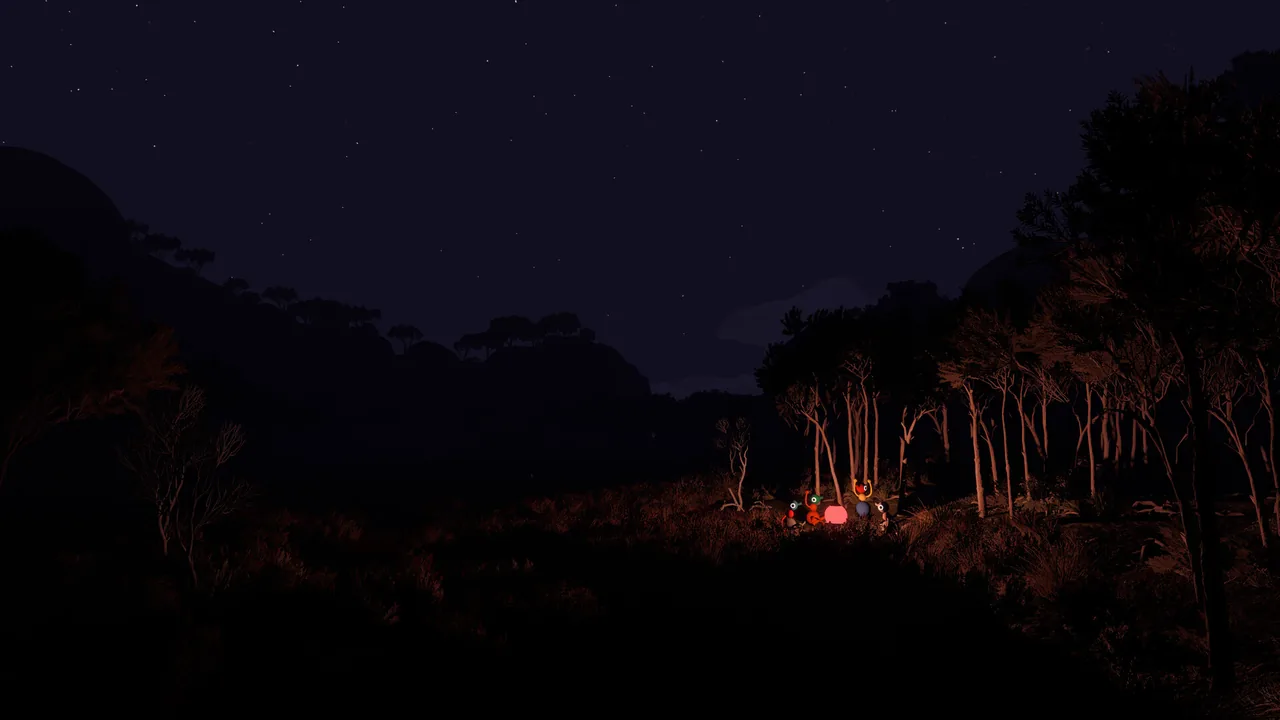
Secondary issues cluster behind it: desync and lag for groups spread across continents, optimisation complaints, and no brightness slider, which makes the night sections a black screen on darker monitors. Those are ordinary launch problems. The audio one is not ordinary, because it sits on top of the reason to buy the game.
What happened next
On 5 August, roughly a day after release, House House posted an acknowledgement:
We understand that some people are having a problem where their friends' voices are too quiet in the game. Sorry about this! … We're working to put out a fix as soon as we can.
That is the correct response at the correct speed, and it's why this review scores where it does rather than lower. Compare Assetto Corsa EVO, or The Ascent, where a save-deleting bug went five years without a patch note. A studio that names the problem in public within a day is a studio that fixes it.
The friends question
A handful of negatives call this "friend slop" — the label attached to co-op hits like REPO, Lethal Company and PEAK. Two of those reviews are from accounts with six minutes played, and the substance amounts to "you need friends to play it."
Which is true, and which the store page says plainly: "Hang out and get lost with close friends." There's no matchmaking safety net here and no solo mode worth the name. That's a real constraint on whether you should buy it, and I'd rather state it flatly than dress it up — but it isn't a defect. It's the design. The game is worse than useless alone and quite unlike anything else in a group, and those are the same decision.
The verdict
Big Walk earns a 7.5, and I'd expect that to age upward.
The concept is a 9 — the most original co-op idea I've assessed in this library, executed with warmth and no monetisation attached, at NZ$22.49 for the launch fortnight. The puzzles work, the world is lovely, and 88.6% of 1,409 English reviewers are positive about it two days in, most of them while asking for the same fix.
It isn't higher because right now, in a game whose entire subject is hearing your friends, you probably can't hear your friends. That's acknowledged and being worked on, and when the patch lands this becomes an easy recommendation to any group of two to four people.
Buy it now if you have the friends and the patience. Wait a fortnight if you'd rather it just worked.
Pros and cons
Pros
- A genuinely original co-op premise, built so progress requires actual conversation
- Puzzles that reward group problem-solving rather than reflexes or combat
- Warm, distinctive art direction in the House House tradition
- Crossplay across PC, Mac, PlayStation 5 and Switch 2, which matters for a friends-only game
- One-time purchase at NZ$22.49, no DLC, no monetisation of any kind
Cons
- No separate voice and game volume sliders, so friends are near-inaudible at normal settings
- Voice reportedly drops off within about ten metres, which several reviewers found too short
- Desync and lag reported by groups playing across continents
- Performance and optimisation complaints, plus a missing brightness slider for night sections
- Genuinely unplayable without friends who also own it
Screenshots
-
Big WalkImage: Panic via Steam -
Big WalkImage: Panic via Steam -
Big WalkImage: Panic via Steam -
How the review scores each part of the gameWanderer Editorial -
The short versionWanderer Editorial