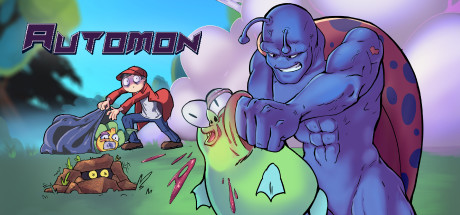
Game review
Automon
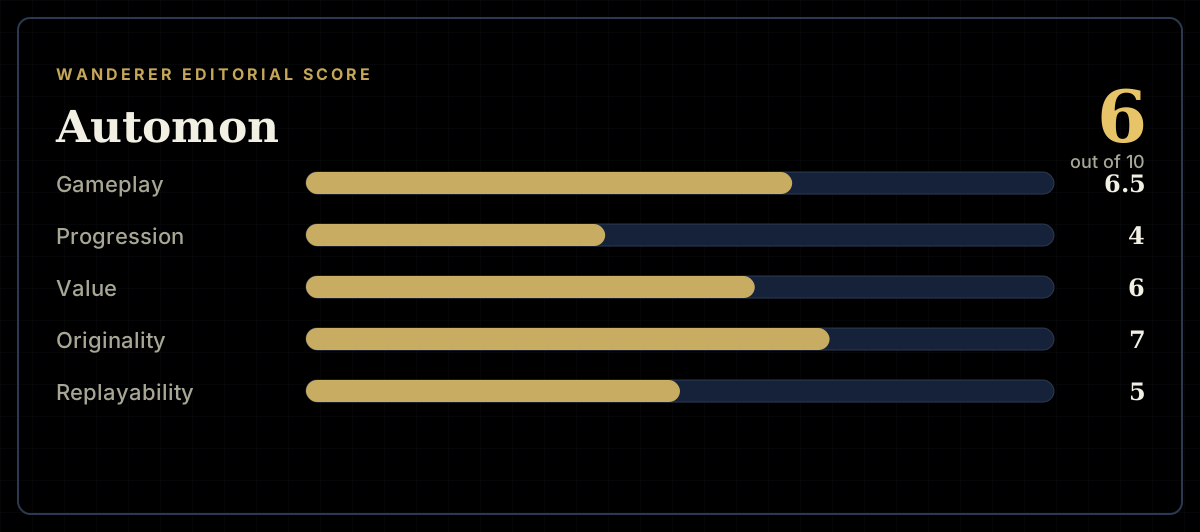
6 / 10
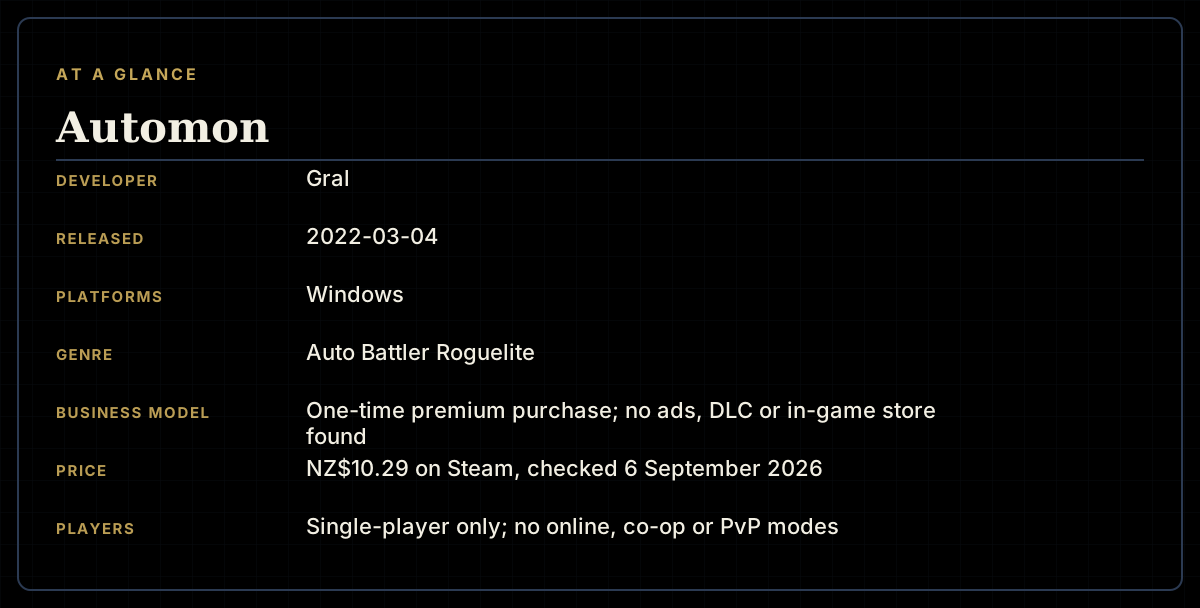
- Developer
- Gral
- Publisher
- Gral
- Released
- 4 March 2022
- Platforms
- Windows
- Genre
- Auto Battler Roguelite
- Monetisation
- One-time premium purchase; no ads, DLC or in-game store found
- Players
- Single-player only; no online, co-op or PvP modes
The short version
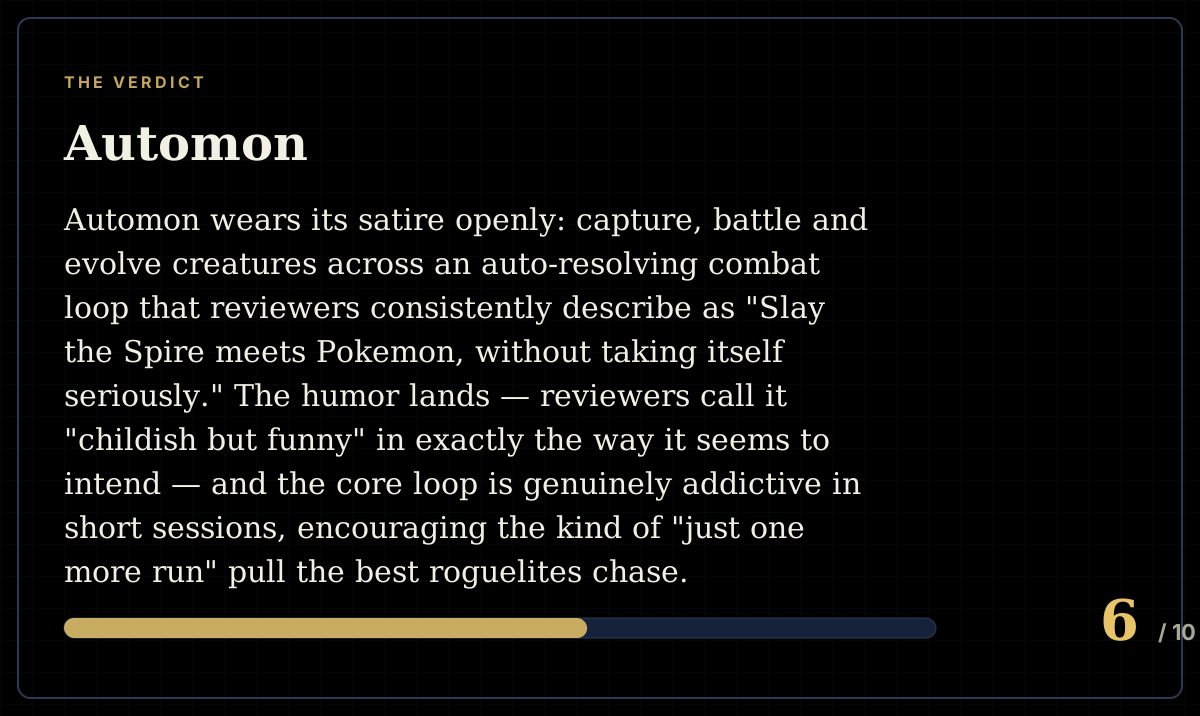
Automon wears its satire openly: capture, battle and evolve creatures across an auto-resolving combat loop that reviewers consistently describe as "Slay the Spire meets Pokemon, without taking itself seriously." The humor lands — reviewers call it "childish but funny" in exactly the way it seems to intend — and the core loop is genuinely addictive in short sessions, encouraging the kind of "just one more run" pull the best roguelites chase.
What holds it back from matching that ambition is structural: there's essentially no persistent progression between runs beyond starting character choice and area knowledge, viable build diversity is narrow enough that reviewers describe one specific creature as close to mandatory, and encounter pools are reported as fixed enough per area that replays can feel repetitive rather than freshly randomized. Global achievement data confirms just how steep the resulting curve is: under 1% of players have ever beaten the game's final champion.
Biggest strengths
- Genuinely funny, committed satire of Pokemon's mechanics and tropes that reviewers describe landing exactly as intended, whether or not you're a fan of the games it's mocking
- A fast, addictive core loop with real short-session appeal, several reviewers describing opening it "just for a little bit" daily without meaning to
- Confident, distinctive artwork and genuine mechanical variety in elemental typing and creature abilities, giving early hours real strategic texture
Biggest weaknesses
- Almost no persistent progression exists between runs beyond starting character and area knowledge, a specific and repeated complaint from reviewers who otherwise enjoyed individual sessions but found nothing pulling them back for a next one
- Viable build diversity is narrow, with reviewers describing one specific support creature as close to mandatory and several elemental-type combinations as simply non-functional
- Encounter pools per area are reported as more fixed than randomized, meaning replaying the same area after a bad run can feel like repeating an identical sequence rather than a fresh roguelite attempt
Who it's for: Fans of short, funny roguelite sessions who don't need deep meta-progression to stay engaged, and who enjoy a genuinely brutal difficulty curve. Less suited to anyone expecting build variety or long-term unlocks typical of the genre's bigger names.
Our recommendation: A fun, cheap curiosity worth trying on a discount for the humor and short-session appeal, but temper expectations around depth and be ready for one of the steeper difficulty curves in the genre.
6 / 10
Pokemon parodies are common enough that most don't need a second look, but Automon earns one by actually building a functional auto-battler underneath its jokes rather than coasting on the premise alone. Capture creatures, assign them elemental types and abilities, and let battles largely resolve automatically while you make the strategic calls that matter between fights. Reviewers repeatedly describe the result as genuinely addictive in short bursts — "Slay the Spire meets Pokemon, but without taking itself seriously" is about as concise a summary as this review's research turned up, and it's an accurate one.
Genuine humor, genuine short-session pull
The satire lands specifically because the mechanics underneath it are sound rather than an afterthought. Elemental typing creates real rock-paper-scissors tension, boss encounters every fifth level force players to prepare for randomized elemental threats, and the artwork — deliberately crude in a way that reads as confident rather than lazy — backs up the tone throughout. Reviewers describe genuinely addictive short-session play, several specifically noting they found themselves opening the game daily "just for a little bit" without intending a longer session, which is about as clean a description of a well-tuned roguelite loop as a review can ask for.
A loop with nothing pulling you back to it
Where that loop runs into real trouble is structural rather than mechanical. A specific, repeated complaint concerns the almost complete absence of persistent progression between runs: dying ends a run with nothing meaningfully carried forward beyond which starting character a player picks and whatever area knowledge they've accumulated personally. One reviewer's plea captures the gap directly: "There's nothing to unlock, nothing to upgrade. If I die, I just die, but I don't want to try again." That's a significant structural absence for a genre whose appeal typically rests substantially on exactly that kind of accumulating, run-to-run reward.
Compounding this, several reviewers describe area encounter pools as more fixed than randomized in practice, meaning a replay of the same area after a failed run can feel like repeating an identical sequence rather than encountering the fresh variation roguelites are built around. Build diversity draws a similar complaint: multiple reviewers independently describe one specific support creature (an owl that boosts experience gain) as close to mandatory for effective play, while several elemental-type combinations are reported as simply weak or non-functional, narrowing what should be a wide combinatorial design space down to a smaller set of reliably viable strategies.
A genuinely brutal difficulty curve, confirmed by the numbers
Global achievement data offers a stark, objective picture of just how steep Automon's difficulty actually is: the achievement for beating the game outright sits at under 1% of the playerbase, with several intermediate milestones (ten consecutive wins, a full badge set) sitting only marginally higher. This tracks precisely with reviewer accounts — including from reviewers who recommend the game highly — of never having beaten the final champion despite real, sustained effort and advice from both the community and the developer directly. That's either a serious mark against the game's balance or a genuine badge of honor depending on temperament, but it's worth knowing going in that the vast majority of buyers, including engaged, skilled ones, simply don't finish it.
Real early support, then a shift to something new
The game's origins are worth a brief note too: Automon first released on itch.io before coming to Steam, a common path for small solo passion projects to build an initial audience before a wider storefront launch, and one reviewer specifically expresses relief that the game made that jump rather than staying platform-limited.
Automon received real, sustained patch attention through its first thirteen months, including a dedicated "Automonniversary" content update in early 2023 and continued balance work into April that year. Public development activity for this specific game then goes quiet until October 2024, when the developer announced work on an apparent successor project, "Automon Arena," with progress updates continuing into mid-2025. That timeline suggests the specific structural gaps reviewers raise here — thin meta-progression, narrow build diversity, fixed encounter pools — were judged by the developer to need a larger rework than incremental patches to this release could deliver, rather than issues likely to be addressed within Automon itself going forward.
A dissenting view: is it even an autobattler?
Worth including for balance: at least one detailed critical review pushes back on the genre label itself, arguing Automon lacks the drafting or combining mechanics that define the autobattler genre properly, and that its "autoplay" button — which resolves fights automatically — doesn't by itself qualify the game for the label. That reviewer also found the art unconvincing even accounting for its deliberately ironic presentation, and described the underlying combat as making "the boring combat of Pokemon even more boring." This is a minority view relative to the broadly positive sample, but it's a specific, considered dissent rather than a driveby pan, and worth weighing alongside the more enthusiastic majority rather than dismissing outright — reasonable, engaged players clearly land on both sides of whether the mechanical foundation here is as sound as its biggest fans describe.
Where it lands
Automon succeeds at being funny and mechanically sound in the short term, delivering real addictive pull across individual sessions at a very fair price. Its lack of meaningful run-to-run progression, narrow viable build space, and an achievement-confirmed near-impossible completion rate are real, specific structural shortcomings that keep it from matching the deeper roguelites it invites comparison to. Worth a cheap, funny few hours on its own terms — just don't expect it to hold your attention the way a genre standard-bearer would.
Pros and cons
Pros
- Genuinely funny, committed satire of Pokemon's mechanics and tropes that reviewers describe landing exactly as intended, whether or not you're a fan of the games it's mocking
- A fast, addictive core loop with real short-session appeal, several reviewers describing opening it "just for a little bit" daily without meaning to
- Confident, distinctive artwork and genuine mechanical variety in elemental typing and creature abilities, giving early hours real strategic texture
- Extremely inexpensive for the amount of humor and short-form replayability on offer
- A real, sustained first year of patches, including a dedicated "Automonniversary" content update and ongoing balance work through April 2023
Cons
- Almost no persistent progression exists between runs beyond starting character and area knowledge, a specific and repeated complaint from reviewers who otherwise enjoyed individual sessions but found nothing pulling them back for a next one
- Viable build diversity is narrow, with reviewers describing one specific support creature as close to mandatory and several elemental-type combinations as simply non-functional
- Encounter pools per area are reported as more fixed than randomized, meaning replaying the same area after a bad run can feel like repeating an identical sequence rather than a fresh roguelite attempt
- The difficulty curve is extremely steep — global achievement data shows under 1% of players have ever beaten the final champion, and multiple reviewers who recommend the game separately describe never managing to win themselves despite real effort
- Public development on this specific game slowed substantially after its first year, with the developer's subsequent public activity centered on an apparent successor project rather than further expanding or rebalancing this one
Screenshots
-
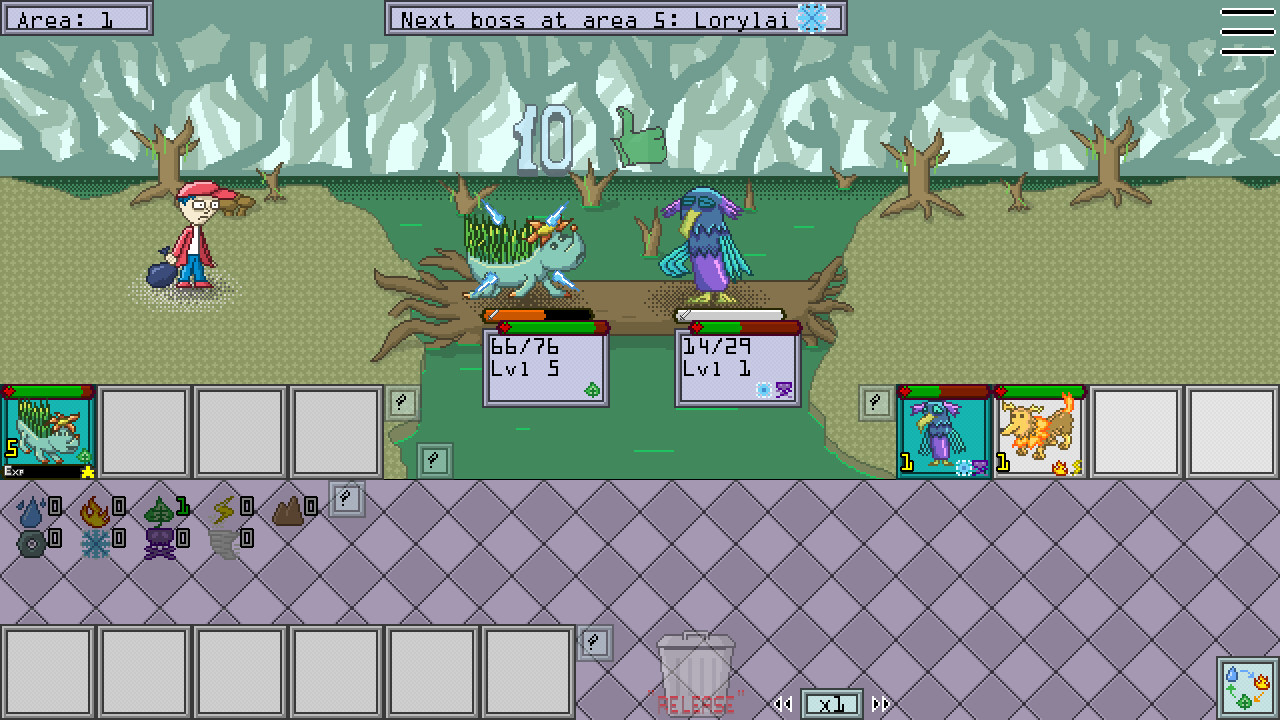
AutomonImage: Gral via Steam -
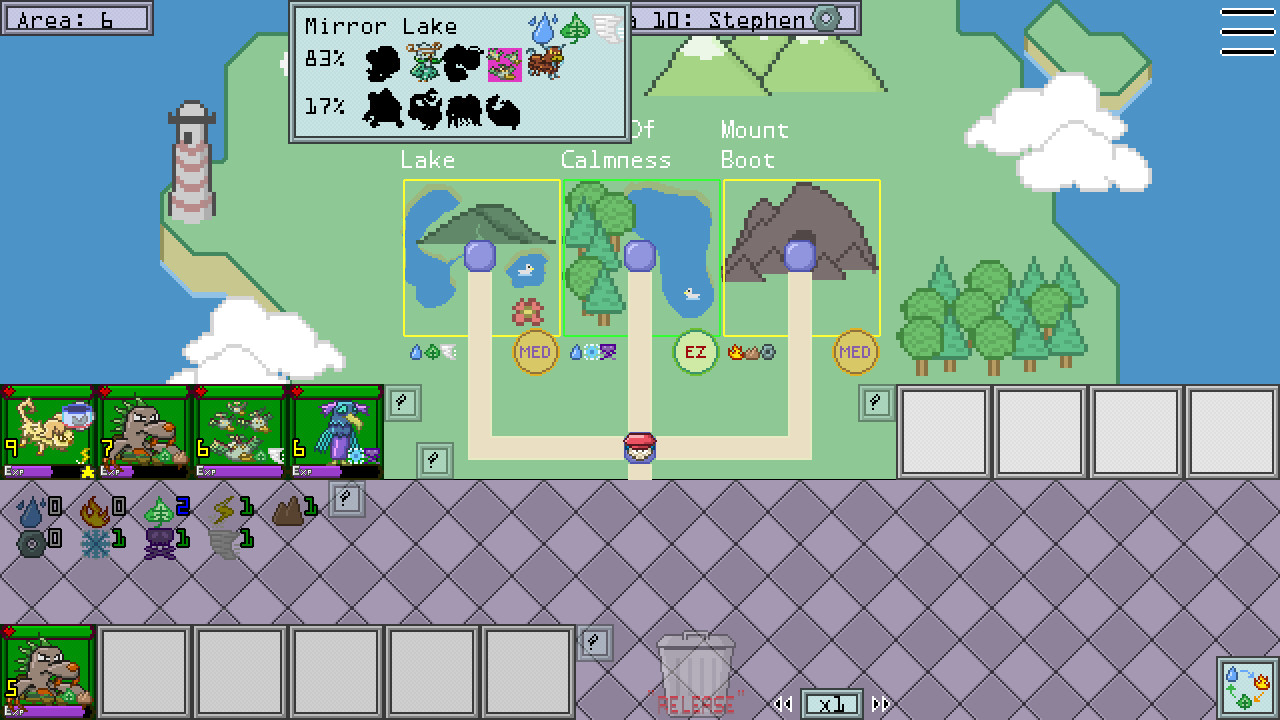
AutomonImage: Gral via Steam -
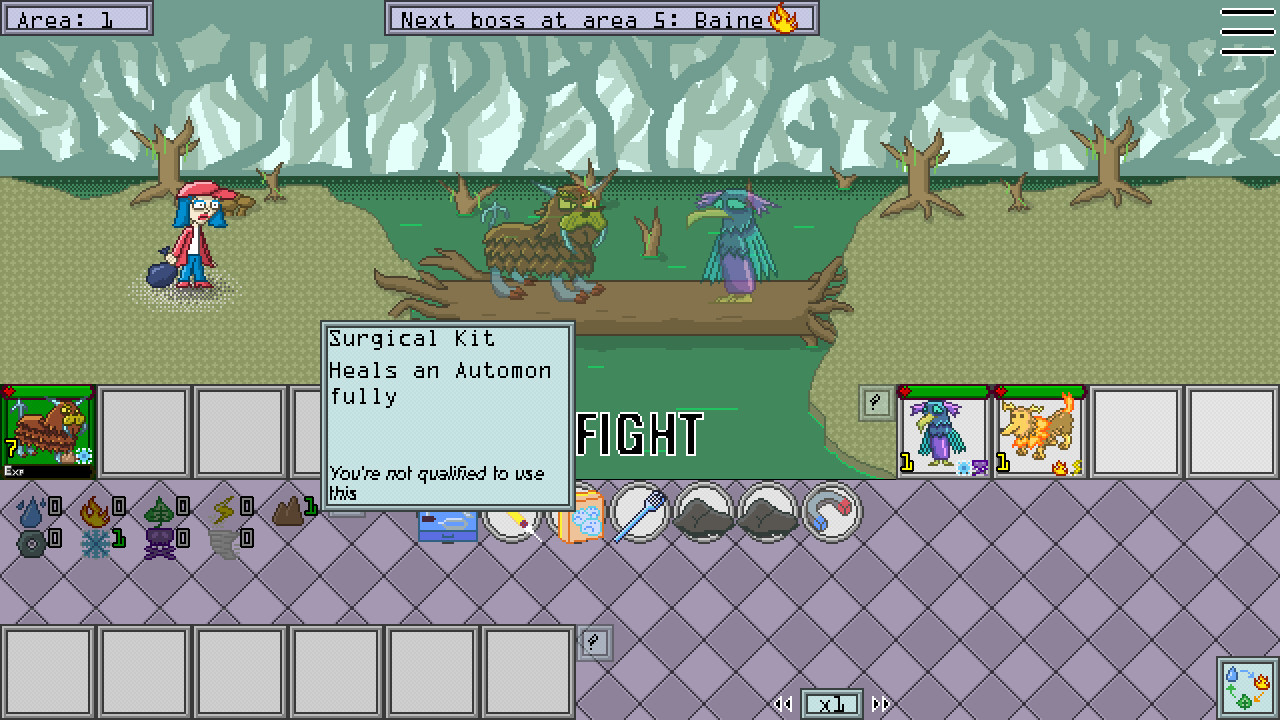
AutomonImage: Gral via Steam -
How the review scores each part of the gameWanderer Editorial -
The specsWanderer Editorial -
The short versionWanderer Editorial