Game review
Mage and Monsters
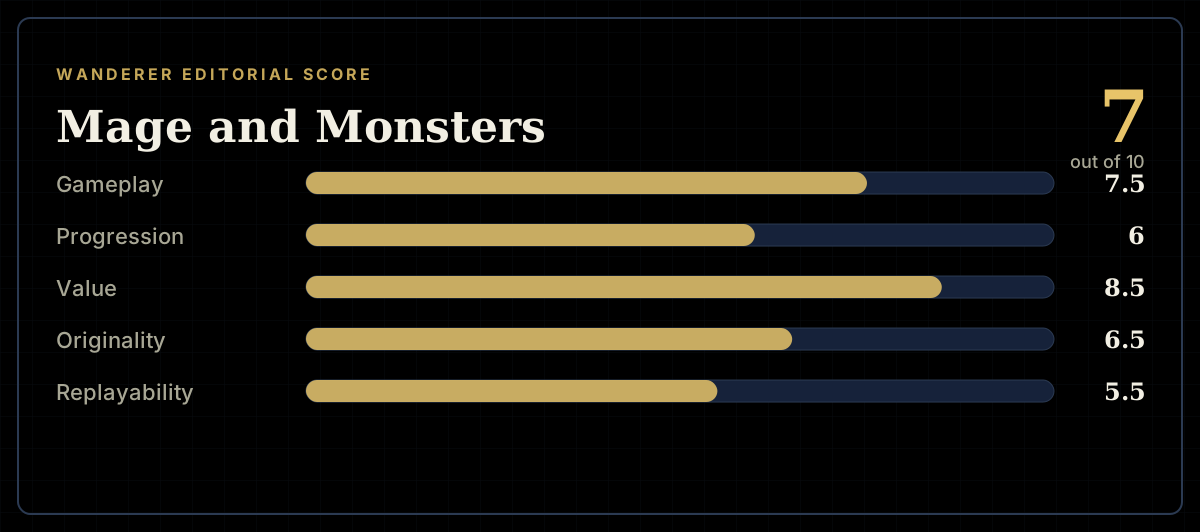
7 / 10
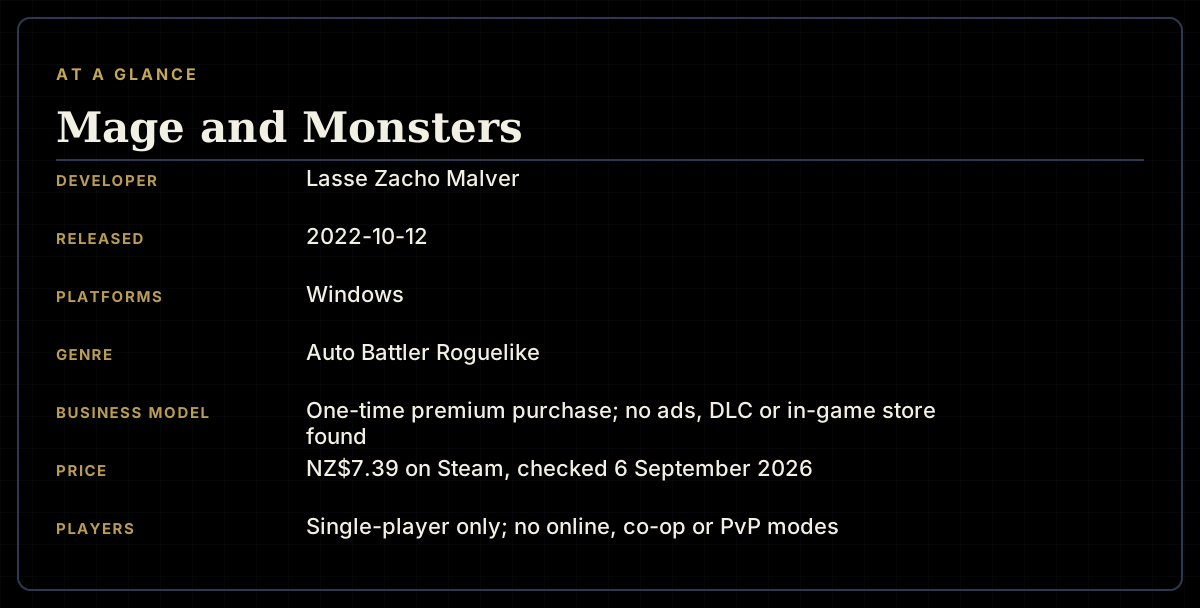
- Developer
- Lasse Zacho Malver
- Publisher
- Lasse Zacho Malver
- Released
- 12 October 2022
- Platforms
- Windows
- Genre
- Auto Battler Roguelike
- Monetisation
- One-time premium purchase; no ads, DLC or in-game store found
- Players
- Single-player only; no online, co-op or PvP modes
The short version
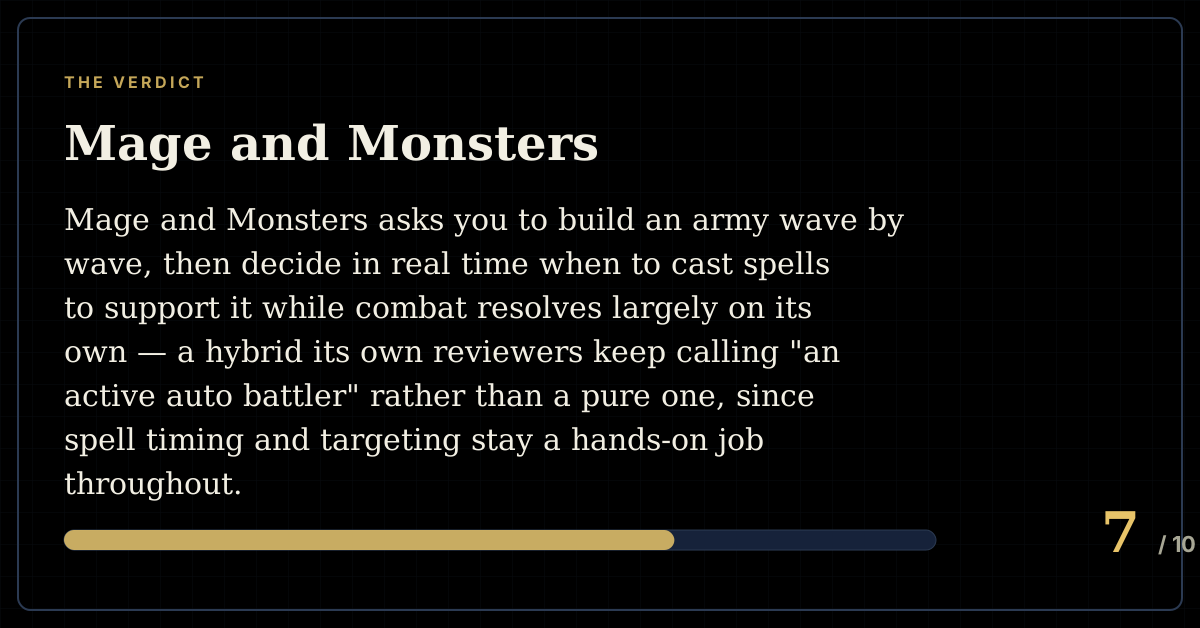
Mage and Monsters asks you to build an army wave by wave, then decide in real time when to cast spells to support it while combat resolves largely on its own — a hybrid its own reviewers keep calling "an active auto battler" rather than a pure one, since spell timing and targeting stay a hands-on job throughout. At a price most reviewers describe as barely worth mentioning, it delivers a genuinely engaging strategic loop that draws direct, favourable comparisons to Hero's Hour's combat.
What almost every reviewer, positive or negative, agrees on is that the loop doesn't stay fresh for long: two of the game's three maps use fixed, pre-defined wave compositions, and most players report having seen everything the game has to offer within one to three hours. A genuinely active solo developer has since added a whole randomized-enemy map and continued content through 2023, and has since moved on to a confirmed sequel — but the base game's content ceiling remains real and low relative to its strategic promise.
Biggest strengths
- A genuinely engaging strategic core — choosing units, timing and targeting spells, and managing a "spend now or save for later" gold economy — that reviewers compare favourably to established genre names like Hero's Hour
- Extremely inexpensive, with reviewers consistently framing even a few hours of engagement as excellent value regardless of any other complaint
- A demonstrably active, responsive solo developer who reviewers describe implementing community-suggested fixes and balance changes directly via Discord
Biggest weaknesses
- Two of the game's three maps use entirely fixed, pre-defined enemy wave compositions, which a large share of reviewers say removes meaningful randomness and makes repeat runs of those maps feel identical once memorized
- Most reviewers report having seen the majority of what the game offers within one to three hours, with higher difficulty tiers described as adding numbers to grind through rather than new decisions to make
- No cloud save support as of this review, a specific and repeated complaint from reviewers who otherwise rate the game highly
Who it's for: Players who want a cheap, focused couple of hours of genuine tactical decision-making and don't need a deep meta-progression system to justify the price. Less suited to anyone looking for a long-term auto-battler to sink dozens of hours into.
Our recommendation: An easy recommendation at its usual price, provided you go in expecting a short, sharp couple of hours rather than a game built to be replayed indefinitely.
7 / 10
Auto battlers live or die on how much genuine decision-making survives the word "auto" in their name. Mage and Monsters keeps more of it than most: you assemble an army from units and spells between waves, but once combat starts you're still actively casting and targeting spells in real time while your army fights largely on its own — closer to what its own community calls an "active auto battler" than a pure hands-off one. For a few dollars, that hybrid delivers a strategic loop reviewers repeatedly compare to well-regarded genre names, and just as repeatedly describe running out of new things to offer within a handful of hours.
A tight, genuinely strategic core
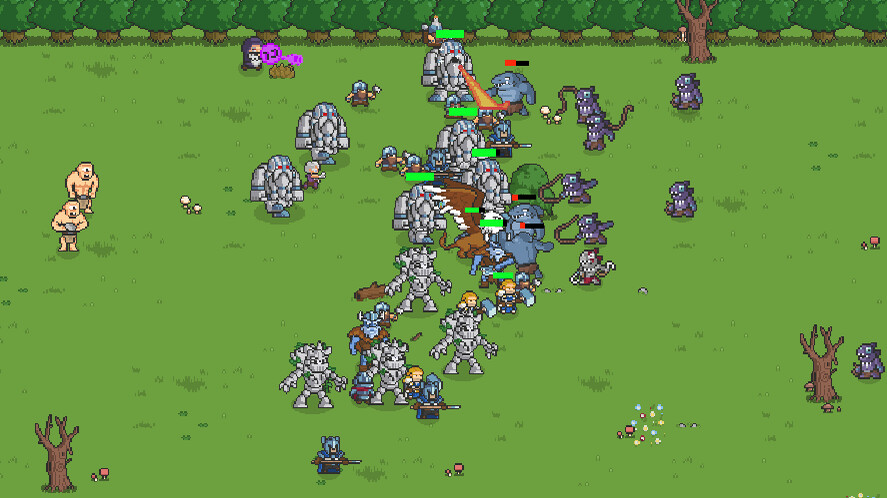
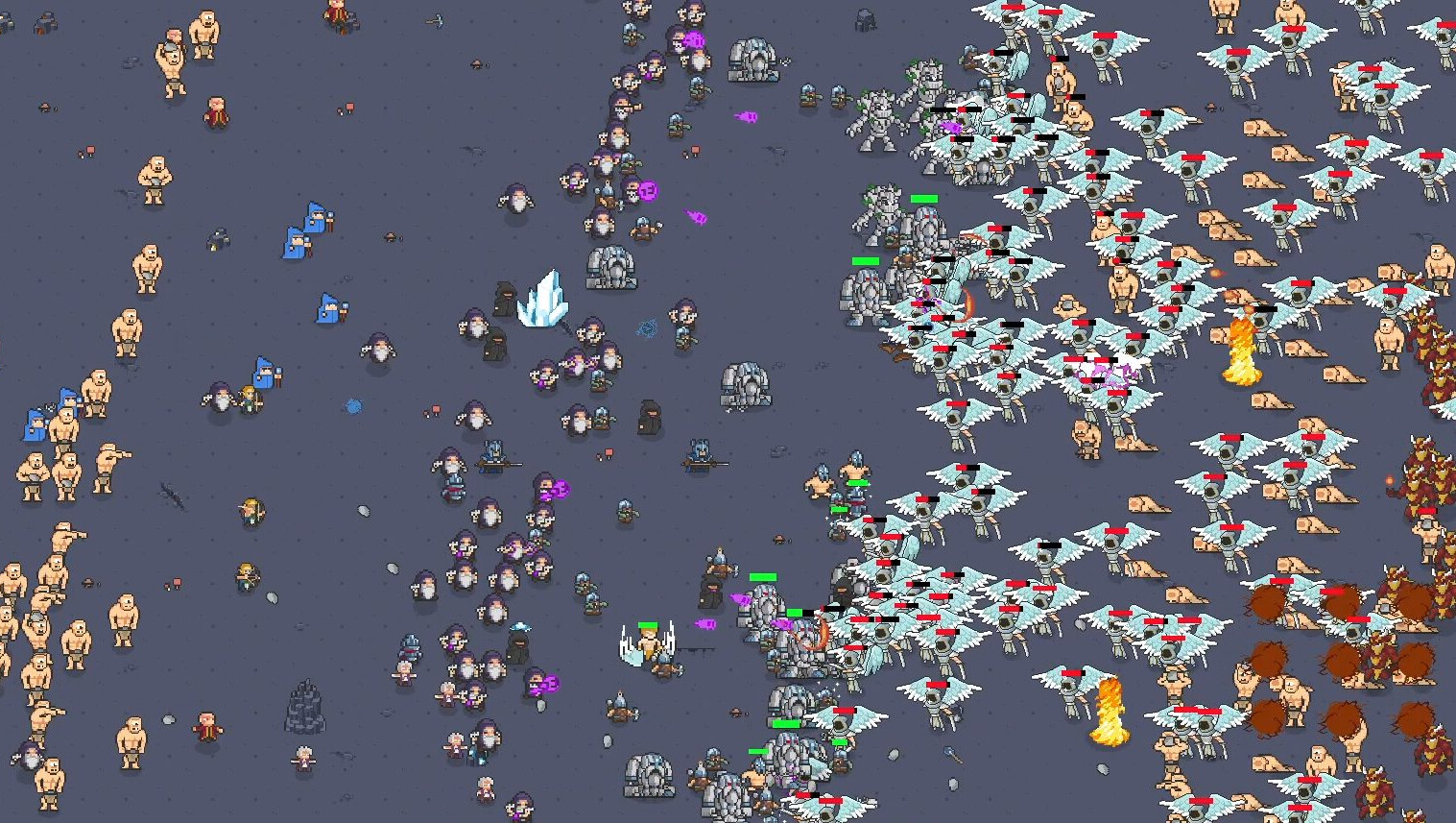
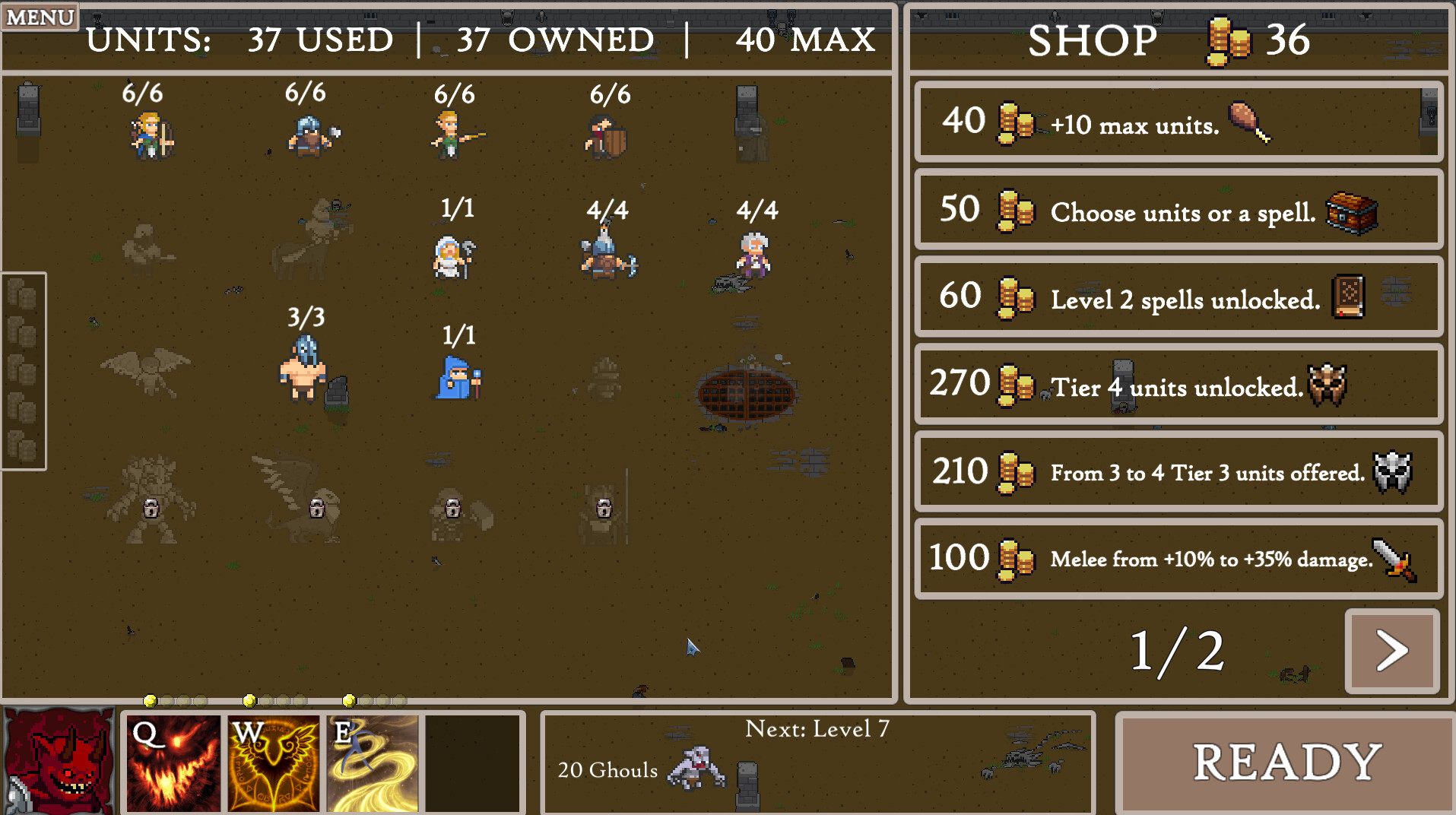
The moment-to-moment loop is straightforward to describe and, by wide reviewer agreement, satisfying to actually play: choose which units to add to your army each round, decide when to spend gold versus bank it for a bigger purchase later, and manage spellcasting — timing and targeting matter, not just having a spell available — while waves of enemies close in. Several reviewers specifically praise the balance of the early game, difficult enough to demand a coherent unit-and-spell strategy without being punishing, and a "Blood Shards" currency earned each run gives even a loss some permanent forward progress toward new unlocks. One detailed review sums up the appeal precisely: "utterly engaging... and yet it's so simple," a description echoed across a wide range of the positive sample.
A short game wearing a longer game's price tag
The dominant critical thread, appearing almost as often in positive reviews as negative ones, concerns how much is actually here. Two of the game's three maps use entirely fixed, pre-determined wave compositions — a design choice some reviewers appreciate for letting them plan strategies in advance, but one a larger share describe as removing the randomness that would make repeat runs feel distinct. The practical result reviewers converge on is a short content ceiling: most report having effectively seen what the game offers within one to three hours, after which higher difficulty tiers largely add bigger numbers to overcome rather than new decisions to make. One reviewer's blunt framing captures the general sentiment well: "10/10 for neat little concept... 2/10 for content."
To be clear, this isn't a universal complaint — reviewers who treat the game as a cheap, few-hours diversion rather than a long-term investment consistently rate it highly regardless, and several explicitly frame the low price as making the content ceiling a non-issue. But for anyone evaluating it as a deeper strategy game to return to repeatedly, the fixed-wave design on two-thirds of its maps is a real, specific limitation worth knowing about before buying.
Real post-launch investment, even if the base loop stayed the same
Where this review's research complicates the "thin and abandoned" reading is the developer's actual patch history. Mage and Monsters shipped with one forest map in October 2022, and by December 2022 had already added a second, distinct forest map with twenty new enemies. Most significantly, a September 2023 update added an entirely new cave map built specifically around randomly generated enemy compositions — a direct, if partial, answer to the fixed-wave-composition complaint, roughly a year after launch. Balance patches, new playable mage characters, and a Simplified Chinese translation followed through 2023, alongside reviewer accounts of a developer personally responsive to community feedback and bug reports via Discord. That's a substantially more active support record than "released once and left alone," even though it doesn't fully resolve the content-density concerns raised above.
Public development attention shifted meaningfully in mid-2023, when the developer announced a sequel, with a playable demo released in October 2024 — several reviewers explicitly reference discovering this game after seeing footage of its successor, and at least one reviewer notes the sequel appears to address some of this game's shortcomings directly. Anyone drawn in by this review should treat the base game as a complete, if compact, experience rather than one likely to receive substantial further content of its own going forward.
What the achievement data shows
Global achievement figures back up the "short but front-loaded" shape reviewers describe. Of 77 tracked achievements, the earliest handful sit above 85-95% completion — nearly every buyer clears the game's opening stretch — while a long tail of harder, endgame-specific achievements sits at a flat 0.5%, a steep and sudden cliff rather than the gradual taper this review has seen in other short indie games. That pattern is consistent with reviewer accounts that the jump from "easy, satisfying early game" to "grindy, numbers-based Brutal difficulty" is abrupt rather than a smooth curve, and that relatively few players push into the game's hardest tiers once the core loop's novelty has worn off.
A smaller number of reviewers raise a more specific concern worth naming directly: at least one review speculates the game's visual assets might be sourced rather than custom-made, without offering concrete evidence beyond a general impression. This review can't verify that claim either way, and it's worth noting the broader reviewer consensus doesn't treat the presentation as a serious mark against the game — most reviews focused their criticism on content volume rather than asset originality.
Where it lands
Mage and Monsters delivers exactly what a large majority of its reviewers say it does: a short, genuinely engaging strategic auto-battler loop, priced low enough that its real content limitations rarely feel like a betrayal rather than an honest tradeoff. The fixed wave compositions on two of its three maps and a content ceiling most players hit within a few hours are real, specific and worth going in aware of — but a demonstrably active developer who kept adding meaningful content for a year after launch, including the exact kind of randomization reviewers asked for, earns real credit against the "thin and abandoned" reading a lower price alone might otherwise invite.
Pros and cons
Pros
- A genuinely engaging strategic core — choosing units, timing and targeting spells, and managing a "spend now or save for later" gold economy — that reviewers compare favourably to established genre names like Hero's Hour
- Extremely inexpensive, with reviewers consistently framing even a few hours of engagement as excellent value regardless of any other complaint
- A demonstrably active, responsive solo developer who reviewers describe implementing community-suggested fixes and balance changes directly via Discord
- A real, substantial post-launch content addition — a new cave map with randomized enemy compositions, added roughly a year after launch — that specifically answers the most common complaint about fixed, memorizable wave patterns
- A meta-progression currency ("Blood Shards") that rewards better runs with permanent unlocks, giving even short sessions a sense of accumulating progress
Cons
- Two of the game's three maps use entirely fixed, pre-defined enemy wave compositions, which a large share of reviewers say removes meaningful randomness and makes repeat runs of those maps feel identical once memorized
- Most reviewers report having seen the majority of what the game offers within one to three hours, with higher difficulty tiers described as adding numbers to grind through rather than new decisions to make
- No cloud save support as of this review, a specific and repeated complaint from reviewers who otherwise rate the game highly
- Spell casting requires constant manual timing and targeting even during hectic combat, which some reviewers feel sits awkwardly against the "auto battler" framing and would prefer an auto-cast option for
- The developer's public attention has shifted toward an announced and in-development sequel since mid-2023, meaning further content for this specific game is unlikely going forward
Screenshots
-
Mage and MonstersImage: Lasse Zacho Malver via Steam -
Mage and MonstersImage: Lasse Zacho Malver via Steam -
Mage and MonstersImage: Lasse Zacho Malver via Steam -
How the review scores each part of the gameWanderer Editorial -
The specsWanderer Editorial -
The short versionWanderer Editorial