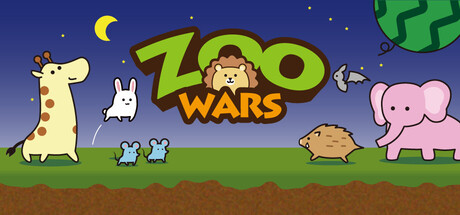
Game review
Zoo Wars
6 / 10
- Developer
- Studio GG
- Publisher
- Studio GG
- Released
- 31 March 2026
- Platforms
- [Windows]
- Genre
- Strategy
- Monetisation
- Paid
- Players
- Single-player skirmishes vs AI, plus online cross-platform PvP
The short version
Zoo Wars takes the Clash Royale-style lane-battler template and files almost everything off it — no unit levelling, no resource-speed upgrades, just six animals out of eighteen and a single two-minute round. Reviewers who like that minimalism call it a cheap, focused distraction; the flip side is a roster small enough that matches can start to feel predictable once the early excitement of unlocking animals wears off.
Biggest strengths
- Fast, focused two-minute rounds that respect a player's time
- Genuinely tactical resource and timing decisions despite the small roster
- Very cheap, and playable cross-platform with friends who don't own the game
Biggest weaknesses
- No unit levelling or resource-speed upgrades to build toward over time
- Small six-of-eighteen deck size can make matches feel repetitive once familiar
- At least one reviewer flagged a specific unit as noticeably unbalanced
Who it's for: Players who enjoy Clash Royale-style auto-battlers but want something faster, cheaper and far less demanding of long-term investment.
Our recommendation: Worth its low asking price for short, tactical PvP sessions, but go in expecting a tightly scoped skirmish game rather than a deep, ever-expanding strategy title.
6 / 10
Animals Instead of Armies, Cards Instead of Micromanagement
Zoo Wars belongs to a lane-battler lineage that stretches back to Flash-era browser games and runs through modern hits like Clash Royale, Battle Cats and Minion Masters: players don't directly control their units, they spawn them from a hand of cards using auto-generating resources, and those units then march toward the enemy base, fighting anything in their path along the way. What Zoo Wars adds to that formula is a zoo theme — animals stand in for the usual fantasy troops — and, more importantly, a degree of minimalism that one detailed reviewer called perhaps the smallest entry in the entire sub-genre. Players build a deck of six animals from a pool of eighteen, and every match is a single two-minute round against either an AI opponent or another player online. There's no second round, no best-of-three, and no escalating match structure — just one focused skirmish and then it's over.
That tight scope is deliberate, and it shapes almost every other design decision in the game. Where Clash Royale-style titles typically layer on unit levelling, upgrade currencies and slowly expanding card pools, Zoo Wars strips all of that away. There's no way to raise a unit's level and no way to increase how quickly resources generate — the only lever a player has is which six animals they bring and when they choose to spend on them mid-match. It's a genuinely different design philosophy from most of its genre peers, closer to a pure card-timing puzzle than a long-term collection game.
Six Cards Is Enough to Be Tactical, Barely Enough to Stay Fresh
The reviews in the sample are consistently positive about how that minimalism plays out moment to moment. One detailed write-up, comparing Zoo Wars directly against better-known names in the genre, praised how the small roster keeps the screen readable — with fewer units and less resource spam than sprawling competitors, it's easier to actually see how each animal performs and to reason about counters and timing rather than getting lost in visual noise. That same reviewer described deck-building in Zoo Wars as being "more like how you build a flexible toolbox" than a pure damage-race, with players favouring animals that patch their weaknesses or let them pivot game plans mid-match rather than simply picking the biggest numbers.
The trade-off is durability. That same in-depth review flagged that because most animals are broadly useful across a wide range of situations, there's limited incentive to rotate more than one or two slots in a deck once a player has settled into a comfortable core of three or four — and once that happens, matches "can become repetitive and stale." It's a fair criticism of a design built around restraint: cutting the roster down to six-of-eighteen makes each match legible and quick to parse, but it also caps how much variety returning players will find once the initial thrill of unlocking new animals has worn off. One casual reviewer captured that exact arc directly, saying they'd "already opened up all the animals" after a couple of hours and hoped there would be more to look forward to.
A Genre Newcomer's Best Friend, a Veteran's Quick Diversion
Several reviews frame Zoo Wars as an unusually good entry point for players who don't normally gravitate toward strategy games. One player described their wife — who they said doesn't typically enjoy strategy titles and mostly sticks to retro games — getting drawn in and improving at Zoo Wars specifically, which speaks to how approachable the format is compared to genre giants with sprawling card pools and long onboarding curves. Another reviewer simply called it "better than Clash of Clans," a comparison that says less about direct feature parity and more about the appeal of a game that respects short attention spans and doesn't demand a daily-login habit to stay competitive.
Balance is the one recurring technical concern in the sample, even among positive reviews. The same in-depth reviewer who praised the toolbox-style deckbuilding was candid that ideal balance — where every deck combination has an equal chance to win purely on timing and mind games — hadn't fully arrived yet, though they were optimistic about where the game could go. A separate, shorter review was blunter about it, singling out one specific unit — described only as "the american" — as carrying stats and a weapon that felt noticeably out of line with the rest of the roster. With such a small pool of eighteen animals total, a single unbalanced pick has an outsized effect on the overall meta compared to genres with hundreds of cards to dilute the problem.
A Bare-Bones Presentation That Mostly Gets Out of the Way
Zoo Wars doesn't try to compete with its genre's bigger names on spectacle, and reviewers seem to have made peace with that trade-off. The in-depth review in the sample was upfront that the game runs on "barely minimal graphic, music, and story," and that framing is accurate — there's no narrative wrapper explaining why zoo animals are fighting each other, and the presentation stays functional rather than flashy throughout. What that minimalism buys back is clarity: with only six animals in play per side and a two-minute time limit, the battlefield never turns into the visual soup that busier lane-battlers can produce once both players are spamming everything off cooldown. It's a reasonable trade for a game pitched at a low price point rather than as a prestige release, though it does mean Zoo Wars has little to offer players who want a strategy game with real atmosphere or stakes attached to each match.
The price itself is arguably the strongest single argument for trying it. At under six dollars, Zoo Wars costs a fraction of what most genre peers ask for cosmetics alone, and the ability to play cross-platform with a friend who doesn't own a copy — mentioned specifically by one reviewer as a standout feature — makes it an easy, low-commitment way to introduce someone to the lane-battler format without asking them to buy in first. For a game this cheap and this tightly scoped, that combination of accessibility and price does a lot of the heavy lifting that a larger production budget usually has to cover.
Verdict
Zoo Wars is a confident, cheap little experiment in taking a crowded genre and cutting it down to its studs — six cards, one two-minute round, no long-term progression systems to grind through. That focus makes it unusually approachable, genuinely tactical in the moment, and easy to pick up for a quick match with a friend regardless of what platform they're on. It also means the ceiling on long-term variety is lower than genre veterans might expect, and at least one specific balance outlier suggests the small roster still needs some tuning. At its price, it's an easy recommendation for players who want a fast, focused zoo-themed skirmish rather than another sprawling collection game to maintain.
Pros and cons
Pros
- Fast, focused two-minute rounds that respect a player's time
- Genuinely tactical resource and timing decisions despite the small roster
- Very cheap, and playable cross-platform with friends who don't own the game
- Clean, uncluttered screen that makes it easy to read what units are doing
Cons
- No unit levelling or resource-speed upgrades to build toward over time
- Small six-of-eighteen deck size can make matches feel repetitive once familiar
- At least one reviewer flagged a specific unit as noticeably unbalanced
- Minimal presentation — sparse graphics, music and no framing story
Screenshots
-
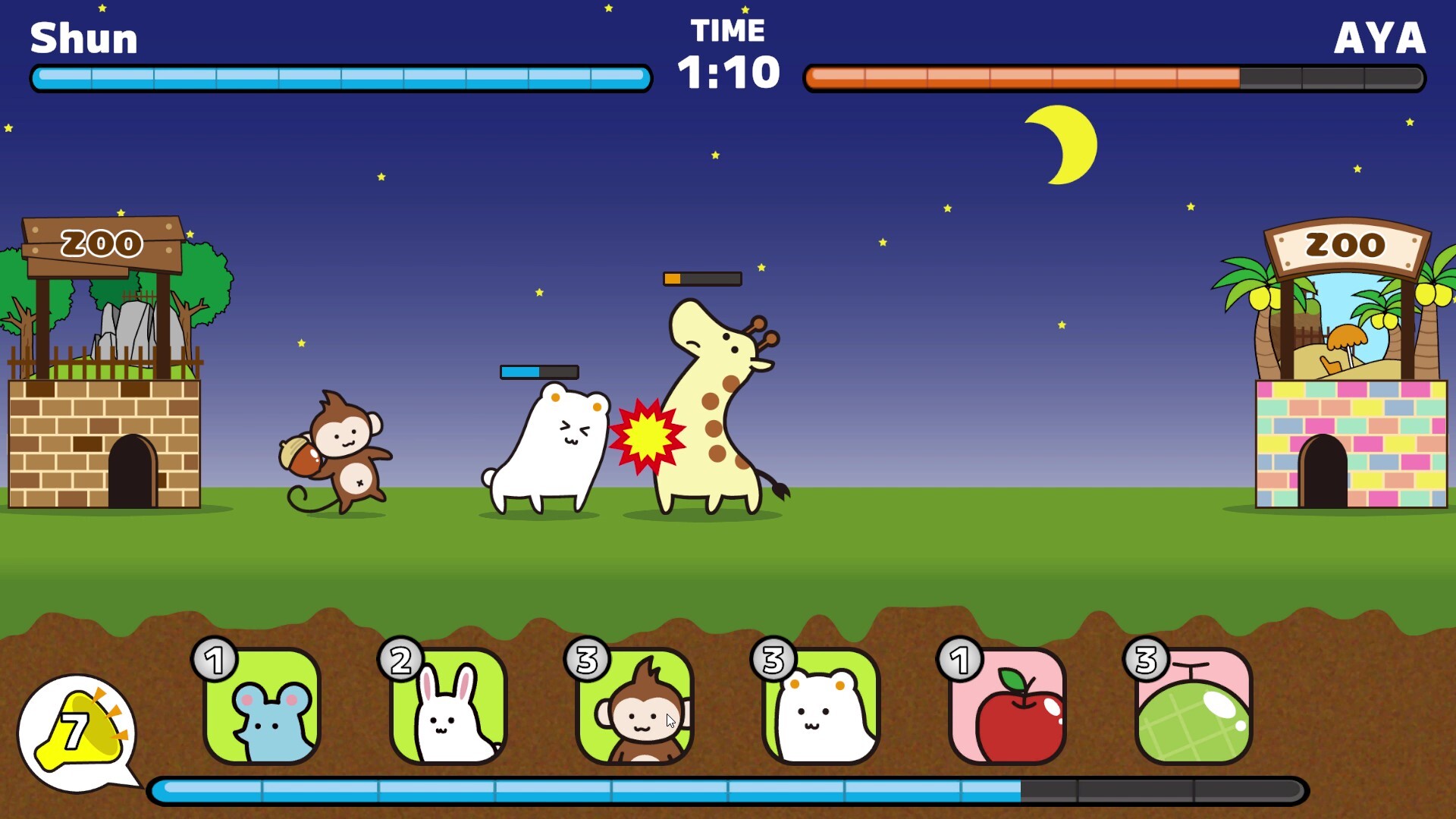
The six-card hand along the bottom is the entire toolkit for a two-minute roundStudio GG -
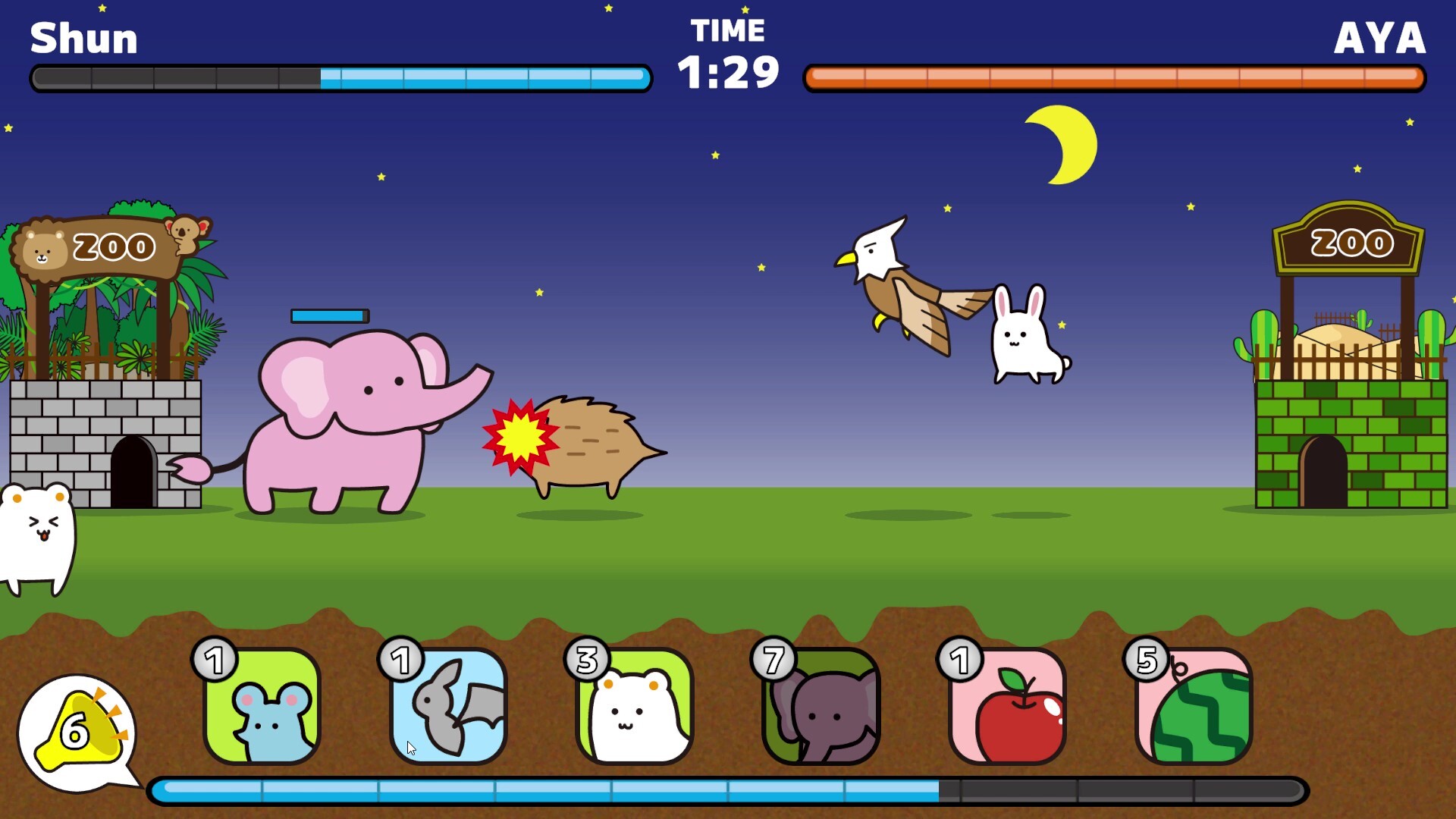
Six animals per deck keeps the lane readable even as units clash and fly overheadStudio GG -
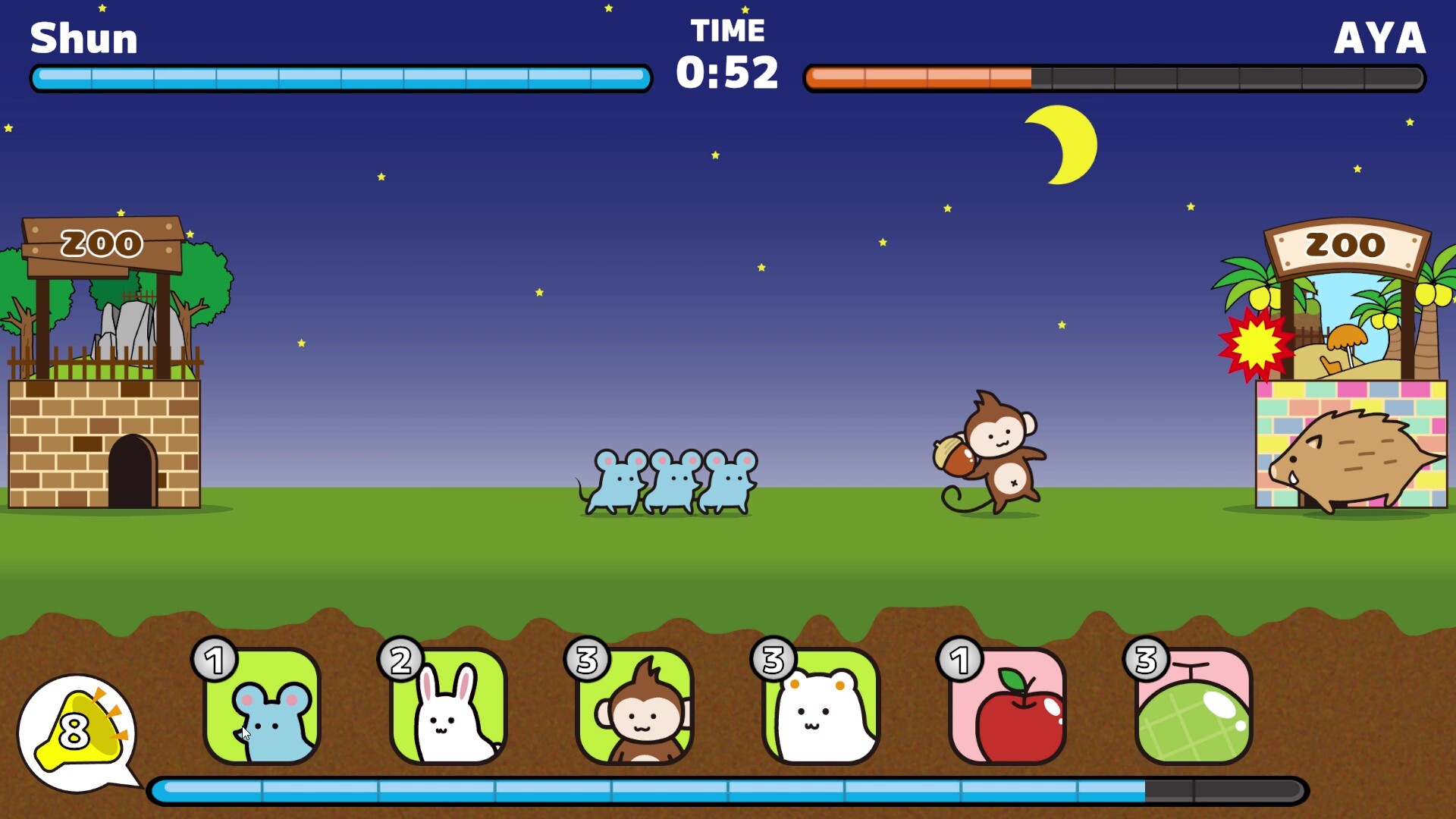
A wild boar defends the base as the timer counts down toward the round's endStudio GG -
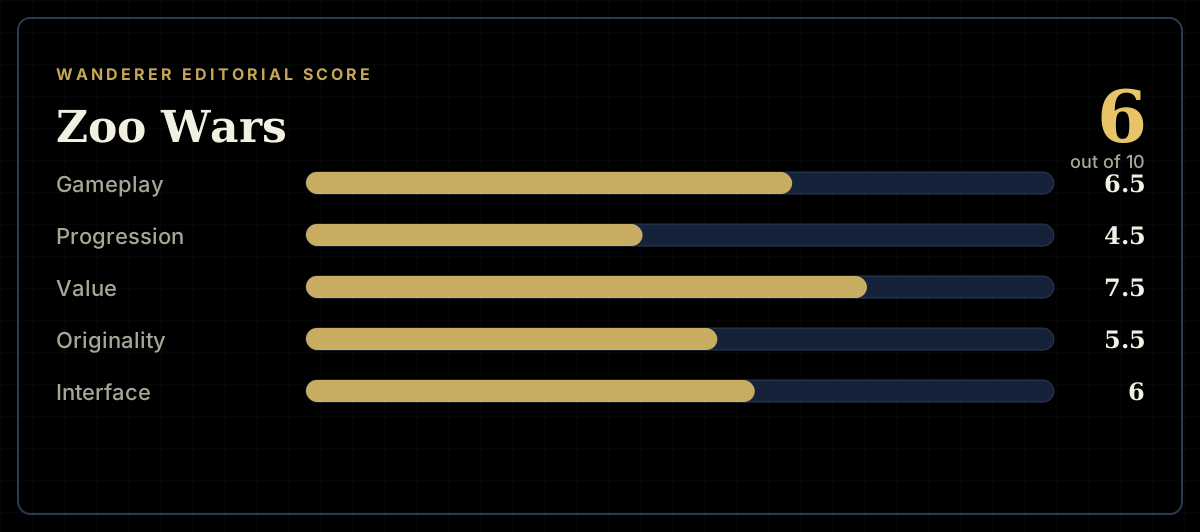
How the review scores each part of the gameWanderer Editorial -
The short versionWanderer Editorial