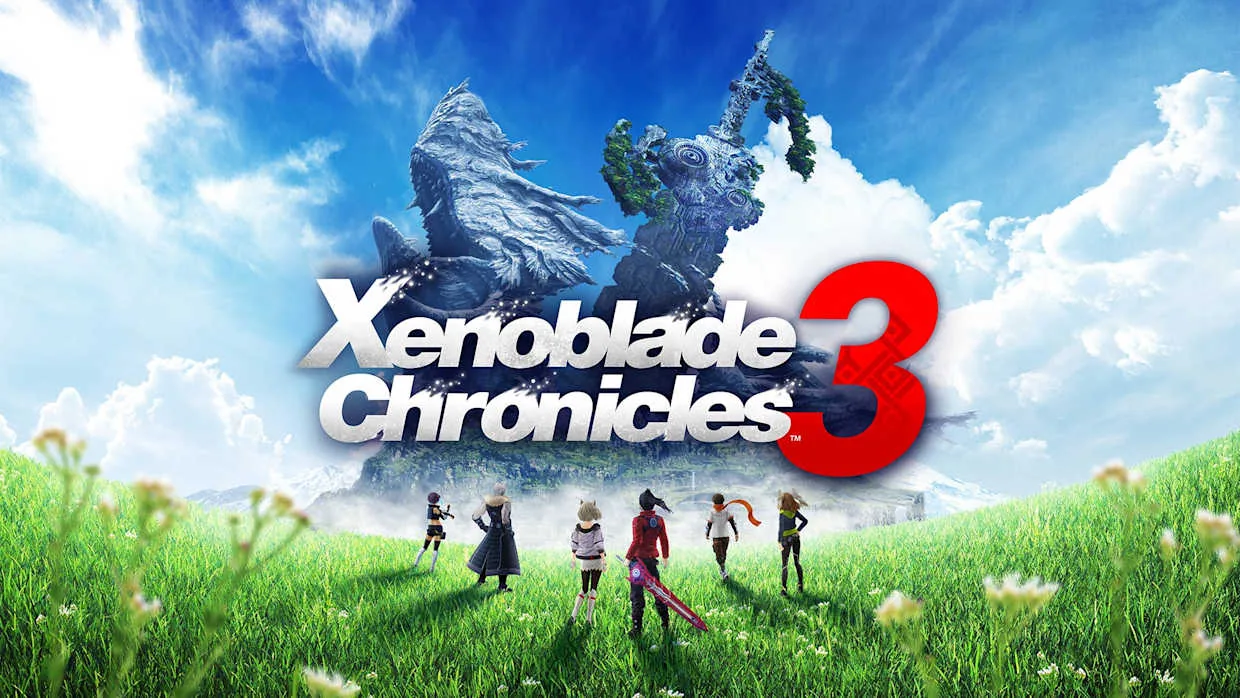
Game review
Xenoblade Chronicles 3
8.5 / 10
- Developer
- Monolith Soft
- Publisher
- Nintendo
- Released
- 29 July 2022
- Platforms
- Nintendo Switch
- Genre
- JRPG
- Monetisation
- Premium, one-off purchase, plus a separately sold Expansion Pass covering four content waves (new Heroes and classes, challenge battles, cosmetics, and the Future Redeemed story epilogue). Nothing in the base game is locked behind the pass — it adds content rather than gating anything already present at launch.
- Players
- Single-player only. There is no co-op or online mode.
The short version
Xenoblade Chronicles 3 fuses the worlds of the first two games into a shared battlefield and gives that reunion a combat system built around Chain Attacks — a genuine strategic peak most turn-based JRPGs don't attempt. Six leads and dozens of recruitable Heroes keep party-building fresh across an eighty-hour campaign. It's also a game whose story some major outlets found predictable and whose open world leans on generic biomes more than its side-quest design assumes players will forgive.
Biggest strengths
- Chain Attacks turn careful turn order planning into the game's genuine strategic and visual centerpiece, well beyond what a standard turn-based exchange usually offers
- Six lead characters and dozens of recruitable Heroes each unlock a distinct class, so party composition keeps changing meaningfully deep into the postgame
- Merging Bionis and Alrest — the settings of the first two games — into one shared world gives series veterans a payoff two entries spent building toward
Biggest weaknesses
- Game Informer's review, among others, singled out "frustratingly obvious" plot twists and a cast it called forgettable — a genuine minority view worth weighing against the 89 Metacritic average
- Open-world environments lean on generic forest, desert and mountain biomes that don't always reward the exploration the side-quest design expects
- Late-game class mastery grinding repeats the same handful of activities well after the systems have made their point
Who it's for: Series veterans who want to see Bionis and Alrest's stories converge, and turn-based JRPG fans who want deep class-based party building. Less suited to players who bounced off Xenoblade's dialogue-heavy pacing before, or who want an open world with more distinctive environmental hooks than "forest, desert, mountain."
Our recommendation: One of the best-reviewed JRPGs of its generation and worth playing on that strength alone, but go in aware that its critical consensus isn't unanimous — at least one major outlet scored it well below the Metacritic average specifically over its writing and world design, and that critique lines up with real limits in what the Switch's hardware can render.
8.5 / 10
Xenoblade Chronicles 3 spends its opening hours doing something the series had never quite tried before: telling players, in plain terms, that the world they're standing in is built from the wreckage of the previous two games. Aionios is what's left when Bionis and Alrest — the settings of Xenoblade Chronicles and Xenoblade Chronicles 2 — collide and get fused into a single dying timeline, and six soldiers conscripted from two warring nations have to figure out what to do about it. That's a genuinely bold structural choice for a trilogy closer, and Monolith Soft mostly earns it. It's also, according to at least one major outlet, a game whose script undercuts that ambition more than its 89 Metacritic average lets on — and both of those things are worth taking seriously.
Chain Attacks are the reason to play this over the last two games
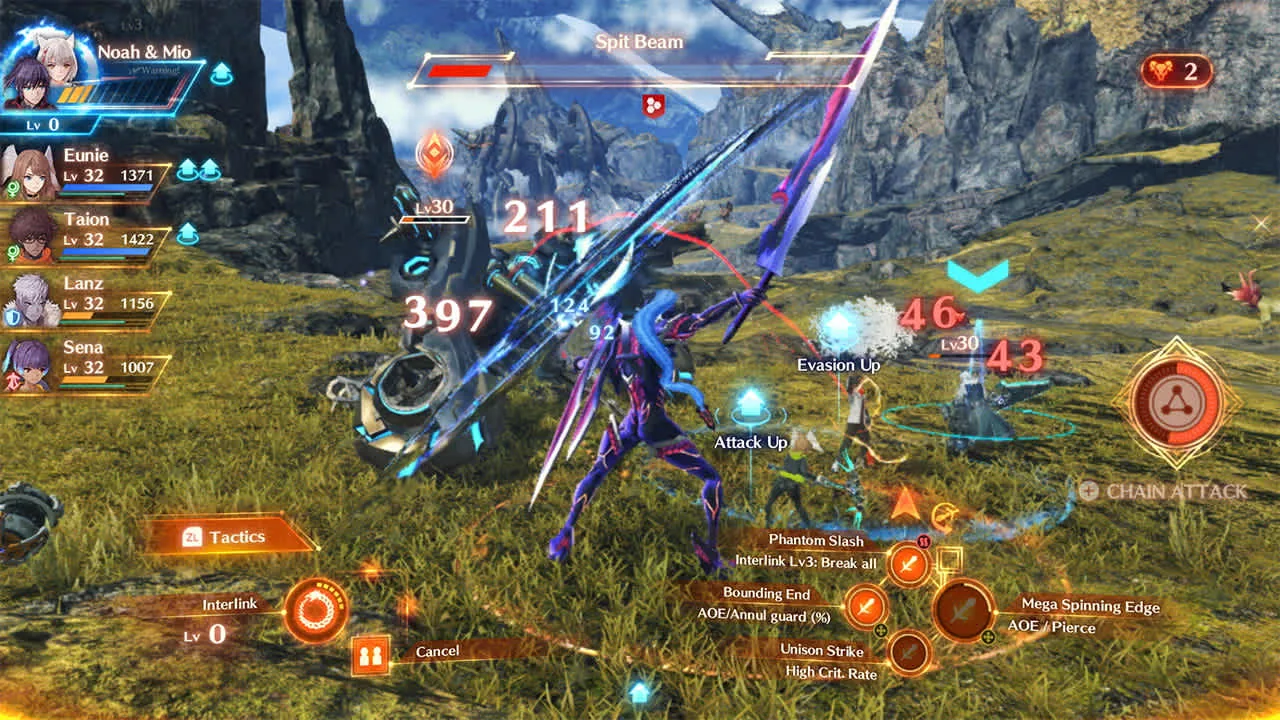
The combat skeleton is familiar Xenoblade — real-time positioning, auto-attacks, arts on cooldown — but the system built on top of it is new, and it's the strongest single addition the trilogy has made. Chain Attacks let the party link up mid-battle into an extended, player-directed combo sequence, spending accumulated tension to chain arts across every active character before handing control back. Getting the order right measurably changes the outcome of tough fights, turning what could have been a flashy cutscene finisher into a real tactical decision point players have to plan around rather than just trigger. Layered under that is a class system: six playable leads and dozens of recruitable side Heroes each unlock a distinct class with its own arts and role, so party composition keeps shifting meaningfully long after a typical JRPG would have settled into a fixed lineup.
Where the critical consensus splits
Most of the review conversation around Xenoblade Chronicles 3 lines up behind that 89 average, but it isn't unanimous, and the dissent is specific enough to name. Game Informer's review scored the game 7.25 out of 10 — well below the Metacritic mean — and its central complaint was the writing: "critical plot twists are frustratingly obvious," and the cast reads as "forgettable caricatures" next to the emotional weight the story is asking players to invest. That review also flagged the open world's "generic locales — forests, deserts, mountains" as barren stretches between story checkpoints rather than places worth detouring into. Neither point is a minority-of-one gripe buried in an otherwise glowing review; they're the entire basis for a score noticeably below consensus, and they're worth weighing against the acclaim rather than treating the 89 as the final word.
Colonies, camps, and a postgame that runs long
Outside of combat, Xenoblade Chronicles 3 spends real effort on its colony and camp systems — resting at a camp between fights improves party affinity and unlocks cooking bonuses, and colony-building side content ties directly into raising each character's class level rather than sitting off to the side as busywork. That integration is a genuine improvement over the series' past habit of treating camp scenes as pure flavor. Where the design shows its age is late in the postgame: mastering every class for every character means repeating the same handful of battle types well past the point where the system has taught players anything new, and it's the part of the game most likely to test a completionist's patience rather than reward it.
Presentation, and what the Switch can't quite do
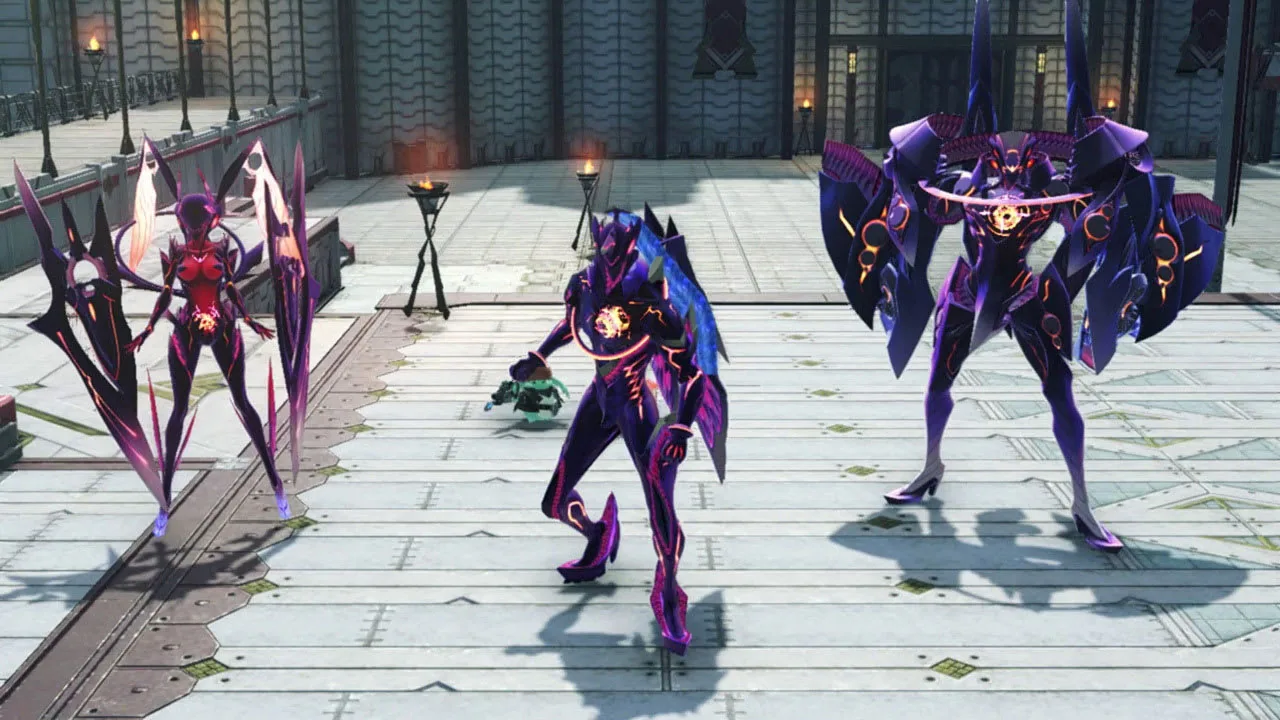
The character writing and vocal performances carry scenes the environments sometimes can't. Boss design and Chain Attack choreography look genuinely spectacular, and the soundtrack — a large ensemble effort spanning battle themes, exploration pieces and vocal tracks — is one of the most consistently singled-out elements of the whole trilogy, arguably its strongest entry musically. Where the presentation strains is scale: Aionios is an enormous, largely open world running on Nintendo Switch hardware that was already several years old at launch, and the generic-feeling biomes Game Informer criticized are also where the hardware shows its limits most visibly — draw distance, texture work and frame pacing all take a step down from what a more powerful platform would allow, and that tradeoff was part of the technical conversation around the game at launch.
Future Redeemed and the Expansion Pass
The four-wave Expansion Pass adds two new playable Heroes with their own classes, challenge battles including the single-character "Archsage's Gauntlet," a set of cosmetic outfits, and — as its final wave — Future Redeemed, a standalone story scenario built around new and returning characters with its own combat wrinkle, the Unity Combo. None of that content is required to finish or fully experience the base campaign; it's additive rather than a way of completing a story that was left deliberately unfinished. Future Redeemed in particular functions as a genuine epilogue to the trilogy rather than a victory-lap cameo reel, and it's the strongest reason to own the full pass rather than the base game alone.
Verdict
Eight and a half out of ten. Xenoblade Chronicles 3 does what a trilogy closer needs to do — it makes the collision of two previous games' worlds feel earned, and it backs that up with Chain Attacks and a class system that keep combat interesting across an eighty-hour campaign, one of the reasons it became the fastest-selling entry the series has had. What keeps it from climbing higher is exactly what Game Informer's outlier review named: dialogue that leans on predictable beats more than the story's ambition deserves, and open-world environments that don't always reward the time the side content asks players to spend in them. Series fans and turn-based JRPG players who can look past generic biomes and some hardware strain will find one of the strongest combat systems the genre has produced this decade. Players hoping the writing matches that mechanical ceiling should read a review or two beyond the Metacritic number before buying in.
Price and critic-score figures checked 3 August 2026.
Pros and cons
Pros
- Chain Attacks turn careful turn order planning into the game's genuine strategic and visual centerpiece, well beyond what a standard turn-based exchange usually offers
- Six lead characters and dozens of recruitable Heroes each unlock a distinct class, so party composition keeps changing meaningfully deep into the postgame
- Merging Bionis and Alrest — the settings of the first two games — into one shared world gives series veterans a payoff two entries spent building toward
- The Future Redeemed epilogue closes the trilogy with a real, self-contained story rather than a victory-lap cameo reel
Cons
- Game Informer's review, among others, singled out "frustratingly obvious" plot twists and a cast it called forgettable — a genuine minority view worth weighing against the 89 Metacritic average
- Open-world environments lean on generic forest, desert and mountain biomes that don't always reward the exploration the side-quest design expects
- Late-game class mastery grinding repeats the same handful of activities well after the systems have made their point
- Switch hardware limits show in this game's scale, and technical rough edges were part of the critical conversation at launch
Screenshots
-
Xenoblade Chronicles 3Image: Nintendo, official Nintendo eShop product page -
Xenoblade Chronicles 3Image: Nintendo, official Nintendo eShop product page -
Xenoblade Chronicles 3Image: Nintendo, official Nintendo eShop product page -
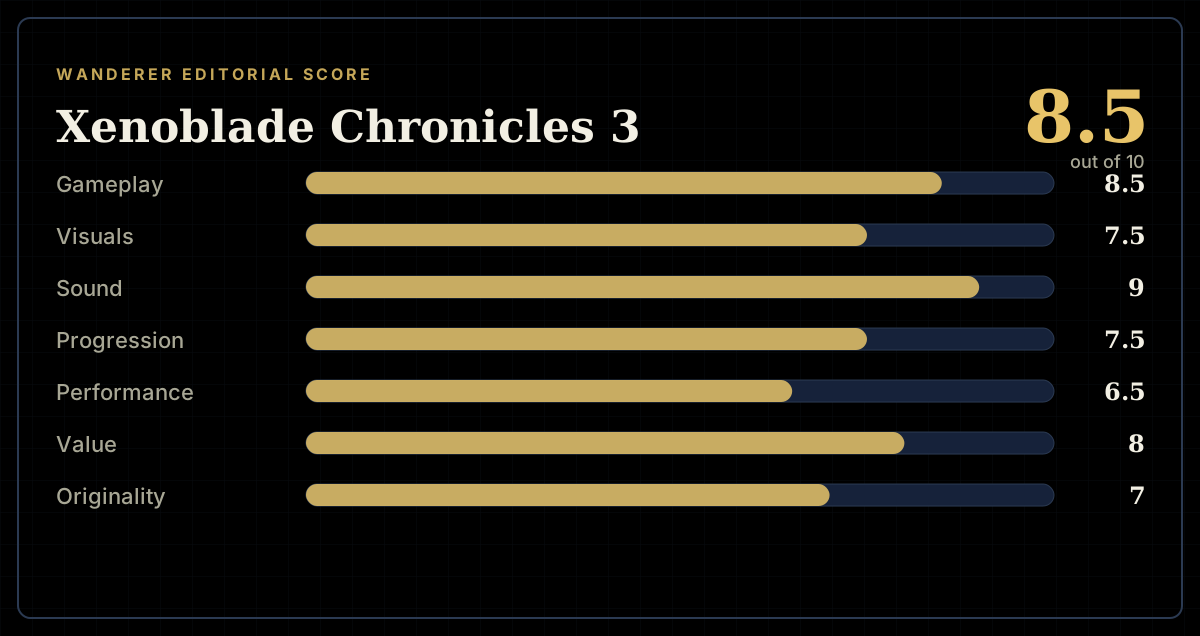
How the review scores each part of the gameWanderer Editorial -
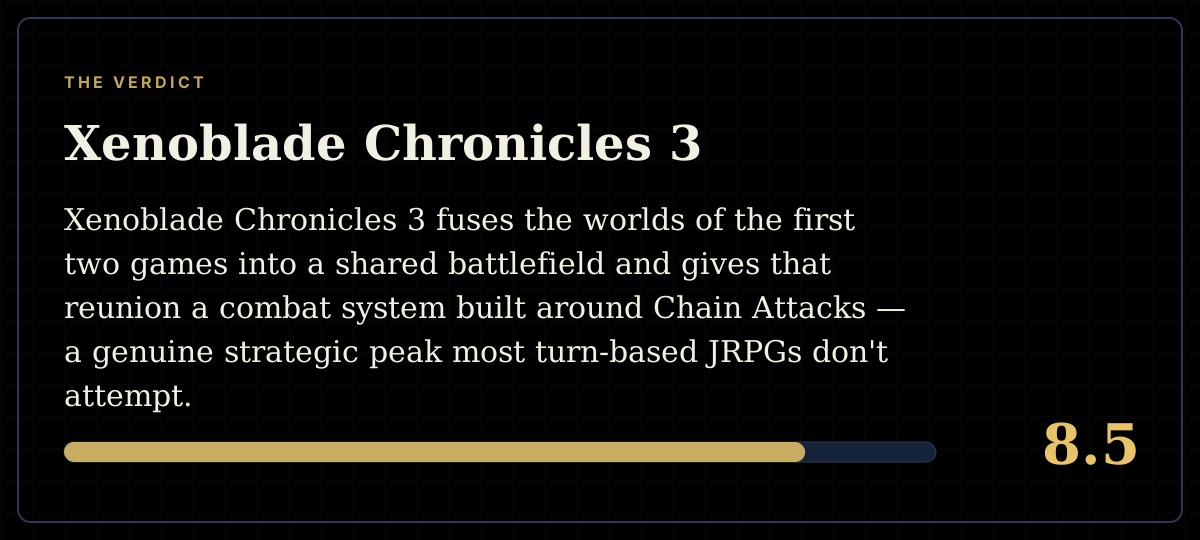
The short versionWanderer Editorial