Game review
Bravely Default II
7 / 10
- Developer
- Square Enix, Claytechworks
- Publisher
- Square Enix
- Released
- 26 February 2021
- Platforms
- Nintendo Switch, Windows
- Genre
- JRPG
- Monetisation
- Premium, one-off purchase. No DLC or in-game purchases on Steam at time of writing.
- Players
- Single-player only
The short version
Bravely Default II is a soft reboot in the truest sense — new cast, new continent, no connection to the first two games' story — that keeps the Brave and Default battle system and the Asterisk job system fans came for. Those systems are as good as ever. The story around them is the thing a meaningful share of this game's own Steam reviews single out as a step down from its predecessors, and the PC port carries a documented pattern of technical complaints the Switch original doesn't have to answer for.
Biggest strengths
- The Brave and Default system — banking or borrowing future turns for an immediate burst of actions — turns basic encounters into genuine risk-management decisions rather than routine turn-taking
- The Asterisk job system lets any party member take on any of dozens of unlocked jobs, and remains one of the deepest build-crafting systems in the genre
- Composer Revo, returning after sitting out Bravely Second, delivers a score reviewers and players consistently single out as one of the game's strongest elements
Biggest weaknesses
- Over half of this game's negative Steam reviews raise the story or writing specifically, frequently comparing it unfavourably to the sharper plotting of the first two entries
- A significant share of the negative sample describes the mid-to-late game becoming trivially easy once job combinations scale up, turning extended stretches into a victory lap rather than a challenge
- A recurring, if inconsistent, pattern of PC-specific technical complaints — memory leaks, texture loading problems and reports of the game failing to launch at all — shows up across the negative review sample
Who it's for: Turn-based JRPG fans who want one of the deepest job systems the genre has produced, and who can treat the story as a light frame around the combat rather than the main event. Less suited to players hoping for a direct narrative sequel to the first two games, or players sensitive to a PC port with a real, if inconsistent, technical complaint pattern.
Our recommendation: Buy it for the job system and the Brave/Default battle mechanic, which are as strong as anything in the genre. Go in with modest expectations for the story, and if buying on PC, be aware of the technical complaints below before assuming a smooth install.
7 / 10
Bravely Default II doesn't continue the story of Bravely Default or Bravely Second: End Layer — it's a soft reboot, with a new cast (Seth, Gloria, Elvis and Adelle), a new continent called Excillant, and its own hunt for lost Crystals that owes more to classic Final Fantasy than to either of its own predecessors' plots. What it keeps is the machinery those two games built their reputation on: the Brave and Default battle system, and the Asterisk job system that lets any character take on almost any class in the game. That machinery is still excellent. The new story built around it is the thing a meaningful share of this game's own Steam reviews single out as a step down.
Brave and Default, still the best idea in the series
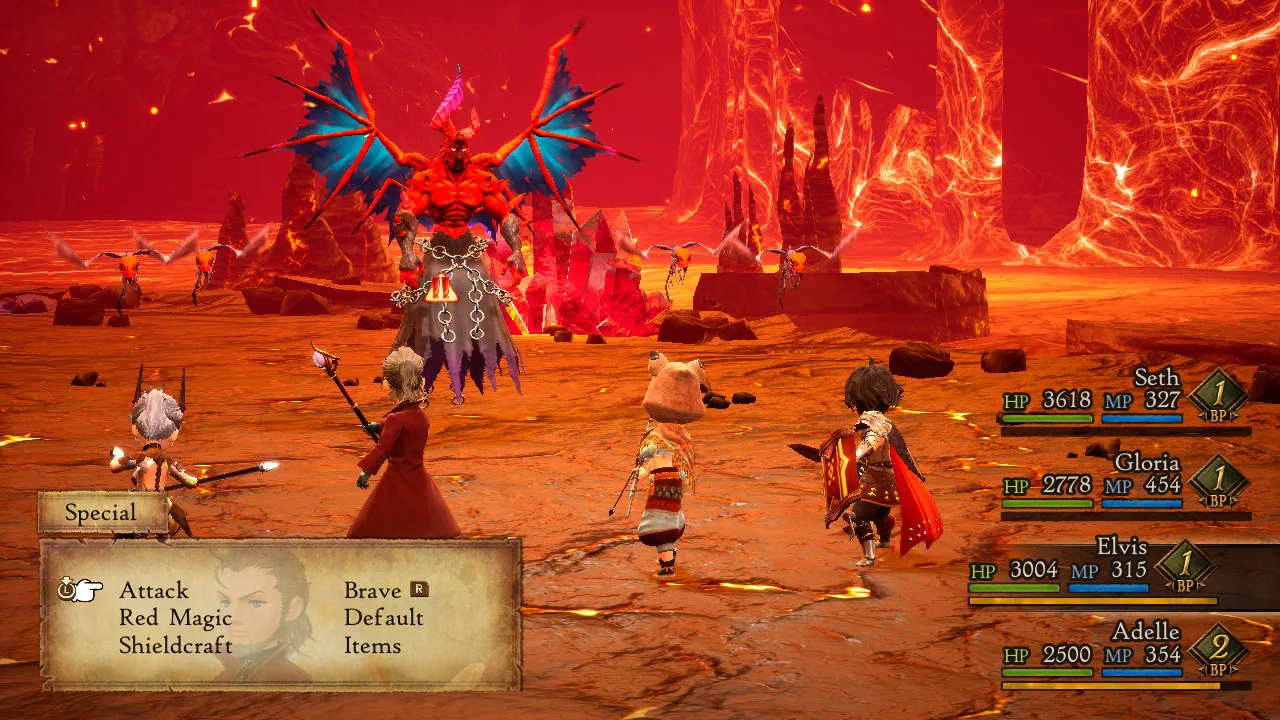
The core battle mechanic hasn't changed, because it didn't need to: Default banks a turn for later at the cost of taking less damage that round, and Brave spends banked turns to act multiple times in a single go, at the risk of leaving a character with no actions at all next round if the gamble doesn't pay off. It turns ordinary encounters into a running risk calculation rather than a straightforward exchange of attacks, and boss fights in particular reward planning several turns ahead rather than reacting one at a time. Layered on top of it, the Asterisk job system — earned by defeating specific bosses and freely assignable to any party member — remains one of the deepest build-crafting systems the genre currently offers, letting players mix and match dozens of jobs' abilities into hybrid builds long after a more rigid class system would have run out of ideas.
Where the story doesn't match the systems
Set against that strength, over half of this game's negative Steam reviews raise the story or writing specifically, and the comparison they keep making is to the series' own back catalogue: multiple reviews describe Bravely Default II's plot and cast as thinner and more generic than either of its predecessors, with one long-time fan calling it "an alright game" but not really part of the series it stems from in spirit. That's a specific, recurring judgment rather than a one-off complaint, and it's worth taking seriously alongside the praise for the combat — this is a game where a meaningful share of the people who bought it for the Bravely name came away feeling the story didn't hold up its end of that name.
The point where the job system out-scales the challenge
A related complaint shows up almost as often: once players start combining jobs effectively, the mid-to-late game gets noticeably easier, to the point that several reviews describe boss fights turning into one-sided victories well before the campaign ends. That's partly the natural consequence of a build-crafting system this open-ended — the ceiling on what a well-built party can do is high enough that the game's own difficulty curve doesn't always keep pace with it — but it does mean the back half of a playthrough can feel more like execution than challenge for players who lean hard into job optimisation rather than pacing it out.
Revo's return, and a soft reboot's real upside
Composer Revo, who scored the original Bravely Default but sat out Bravely Second, returned for this entry, and it's one of the least contested parts of the whole package — reviewers and players alike consistently name the soundtrack as a highlight, and it holds up against the rest of the series' well-regarded scores. The soft-reboot structure has a genuine practical upside too: because the story doesn't assume familiarity with the first two games, new players can start here without homework, which is more than most long-running JRPG series are willing to offer a newcomer.
The PC port's specific technical baggage
Distinct from the story and difficulty complaints, a recurring pattern in the negative review sample points at technical problems specific to the Steam release: reports of texture loading failures paired with a memory leak that pushes RAM use toward 100% over long sessions, and separate reports of the game failing to launch entirely, attributed to its DRM. Neither issue appears in every review, and this pattern is documented rather than universal, but it shows up often enough across the negative sample to be worth flagging plainly for anyone considering the PC version specifically rather than the Switch original.
Verdict
Seven out of ten. Bravely Default II's Brave and Default battle system and Asterisk job system are as good as the series has ever managed, and Revo's score is a genuine highlight on top of them. What holds the overall package back is specific and comes largely from the game's own players: a story a meaningful share of them consider a real step down from its predecessors, a difficulty curve that job-system mastery can outrun well before the campaign ends, and — on PC specifically — a documented, if inconsistent, run of technical complaints. Buy it for the combat system, which earns its reputation on its own. Keep expectations for the story modest, and if you're buying on Steam rather than Switch, go in aware of what some players have run into.
Price and review counts checked 3 August 2026.
Pros and cons
Pros
- The Brave and Default system — banking or borrowing future turns for an immediate burst of actions — turns basic encounters into genuine risk-management decisions rather than routine turn-taking
- The Asterisk job system lets any party member take on any of dozens of unlocked jobs, and remains one of the deepest build-crafting systems in the genre
- Composer Revo, returning after sitting out Bravely Second, delivers a score reviewers and players consistently single out as one of the game's strongest elements
- A soft reboot means new players can start here without needing the first two games' story
Cons
- Over half of this game's negative Steam reviews raise the story or writing specifically, frequently comparing it unfavourably to the sharper plotting of the first two entries
- A significant share of the negative sample describes the mid-to-late game becoming trivially easy once job combinations scale up, turning extended stretches into a victory lap rather than a challenge
- A recurring, if inconsistent, pattern of PC-specific technical complaints — memory leaks, texture loading problems and reports of the game failing to launch at all — shows up across the negative review sample
- At NZ$99.95 with no discount, it's priced at the top of the JRPG market for a game whose story is one of its most commonly criticised elements
Screenshots
-
BRAVELY DEFAULT IIImage: Square Enix via Steam -
BRAVELY DEFAULT IIImage: Square Enix via Steam -
BRAVELY DEFAULT IIImage: Square Enix via Steam -
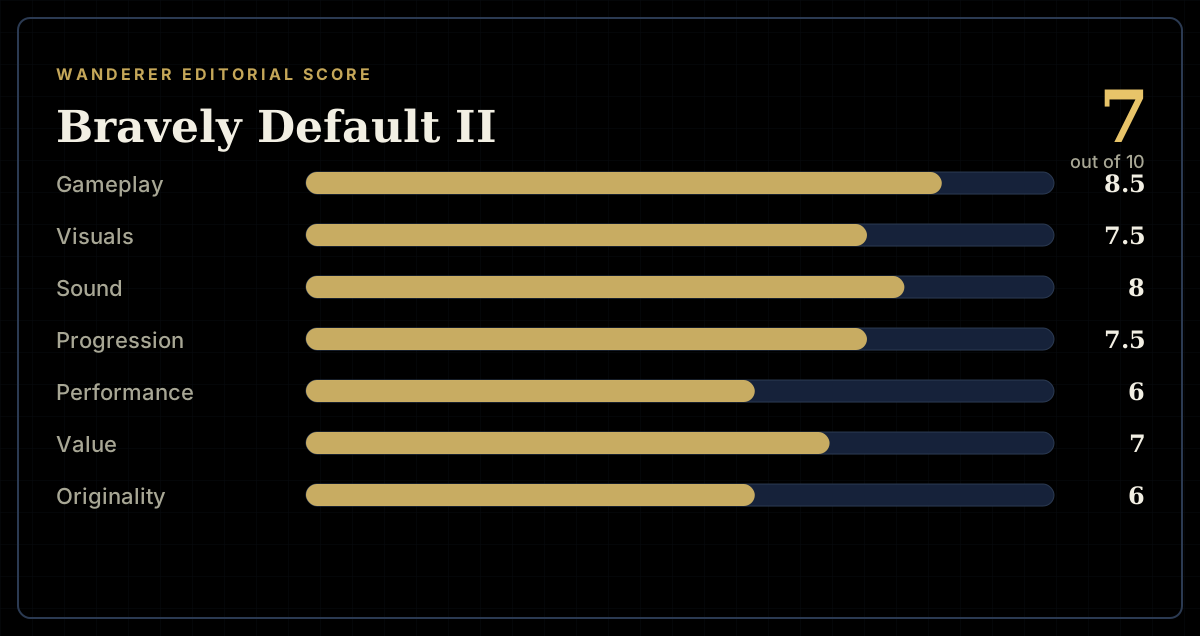
How the review scores each part of the gameWanderer Editorial -
The short versionWanderer Editorial