
Game review
Woodo Review
8.8 / 10
- Developer
- Tiny Monks Tales
- Publisher
- Daedalic Entertainment
- Released
- 16 September 2026
- Platforms
- ["Windows"]
- Genre
- Puzzle
A Coloring Book You Can Hold in Your Hands
Woodo describes itself as feeling like a 3D coloring book you can touch, and that turns out to be an unusually precise pitch. Each level is a wooden diorama, a small carved-looking scene waiting to be built piece by piece, and as you find and place the right pieces the scene slowly gains color, texture, and life, revealing little animations and surprises tucked into corners you might not think to look at first. It's less a traditional puzzle game and more an interactive storybook, where the act of solving each diorama is also the act of watching a story unfold around a young fox named Foxy and her distant relative Ben, a frog who spends his days tending a garden in the countryside.
The framing story is simple but effective: Foxy, glued to her phone and thoroughly unimpressed with the slower pace of country life, is sent to spend a summer with Ben, who finds her attachment to technology as baffling as she finds his contentment with gardening and working with his hands. Across a series of interconnected dioramas, that gap closes, scene by scene, and the game trusts its audience to feel the shift rather than spelling it out. It's a gentle, nostalgic story about slowing down, and reviewers overwhelmingly describe getting emotionally invested in it far more than they expected from what looks, on the surface, like a cozy puzzle toy.
Puzzles That Reward Curiosity Over Speed
The core mechanic asks you to explore each diorama in three dimensions, rotating the camera to find where a given piece belongs, since the solution is rarely obvious from a single angle. Pieces click into place with a satisfying, tactile weight that reviewers consistently single out as one of the game's best qualities, and placing them triggers small animated reactions throughout the scene, birds shifting, insects scattering, a window shutter swinging open, that make each diorama feel alive rather than static. The game adapts its pacing and available assistance to how a given player is doing, and a built-in hint system means nobody gets stuck for long, which matters given how much of the appeal here comes from momentum and flow rather than genuine difficulty.
A comforting narrator's voice accompanies the entire experience, and while a handful of reviewers note that its formal, slightly exaggerated delivery style won't land with everyone, most describe it as a perfect match for the game's storybook tone, adding warmth rather than distraction. Between the narration, an original soundtrack reviewers repeatedly say they'd happily listen to outside the game, and layered ambient sound design, wood creaking, birds chirping, the soft clack of pieces settling into place, Woodo builds an atmosphere that's doing as much emotional work as the puzzles themselves.
Small Details, Consistently Well Judged
What stands out across dozens of reviews isn't any single standout feature so much as the accumulation of small, well-considered choices: an in-game photo mode for capturing finished dioramas, achievement objectives visible from within the game itself rather than buried in a menu, full controller support alongside a mouse-only option, adjustable text size and color alternatives, and autosave that lets you step away mid-puzzle without losing progress. None of these individually would make a review, but together they paint a picture of a small development team, Tiny Monks Tales, that clearly sweated every detail of the experience rather than just the headline puzzle mechanic. Accessibility options extend further still, with subtitle controls, custom volume mixing, and support for playing without timed input, making this an unusually welcoming game regardless of a player's comfort with precision controls.
The one recurring piece of friction, and it's a minor one, is that hovering the mouse over a character replays their dialogue every single time with no apparent way to toggle it off, which a few reviewers found mildly repetitive on longer sessions. It's the kind of small quality-of-life gap that stands out precisely because everything else has clearly been so carefully considered.
Short, Sweet, and Built to Be Replayed for the Details
At roughly three hours for a full playthrough, Woodo is not a long game, and reviewers are candid about that; several describe finishing it in a single sitting. But almost none of them frame the runtime as a complaint, pointing instead to the depth of detail packed into each diorama and the achievement hunting that rewards a second pass to find everything missed the first time through. At its $11.89 launch discount off a $16.99 list price, reviewers consistently describe the value proposition as fair to generous for the craft on display, especially for a game built by a small team that had been building anticipation, and refining the experience through public demos at events like PAX and Gamescom, for well over a year before launch.
The response across the board is remarkable in its consistency: this is a game that seems to land almost exactly as intended for nearly everyone who plays it, evoking genuine emotional reactions, comparisons to beloved touchstones like Yoshi's Crafted World, and repeated declarations that it was worth however long players had been waiting for it. Several reviewers mention following the project since its earliest announcements, some citing years of watching dev diaries and playing convention demos at events like PAX and Tokyo Game Story, and describe the finished game as not just meeting but exceeding what that long buildup had promised. That kind of sustained, patient anticipation paying off cleanly on release day is rare, and it says as much about the care Tiny Monks Tales put into the final product as any individual feature does.
Performance also earns a quiet mention across several reviews: despite the density of detail packed into each scene, players report the game running smoothly even on Steam Deck, without the stutter or slowdown that sometimes accompanies visually rich, physically simulated puzzle pieces. For a small team's first major release, that level of technical polish alongside the emotional and artistic ambition on display is a genuinely impressive combination.
Verdict
Woodo takes a simple premise, tactile 3D puzzle pieces slotting into wooden dioramas, and elevates it into something genuinely moving through careful pacing, a warm narrated story, and an almost obsessive attention to small sensory details. It won't challenge anyone looking for a demanding puzzle game, and its three-hour runtime means the experience is over before some players will want it to be, but what's here is confidently, consistently well made from start to finish. For anyone drawn to cozy, story-driven puzzle games, Woodo is close to an ideal example of the genre, and one of the most purely likable releases of the year.
Pros:
- Tactile, satisfying 3D puzzle mechanic that rewards careful exploration of each scene
- Genuinely affecting story told through interconnected dioramas rather than cutscenes or text
- Exceptional attention to small sensory and accessibility details throughout
- Warm narration and an original soundtrack that reviewers want to revisit outside the game
- Fair pricing and craft-per-minute value for a small-team production
Cons:
- Short overall runtime, around three hours for most players
- Hovering over characters replays their dialogue repeatedly with no option to disable it
- Formal, exaggerated narration style may not land with every player
- Built-in hint system keeps difficulty gentle throughout, which won't suit players seeking a real puzzle challenge
- Limited platform support at launch, Windows only with no Mac or Linux builds
Screenshots
-
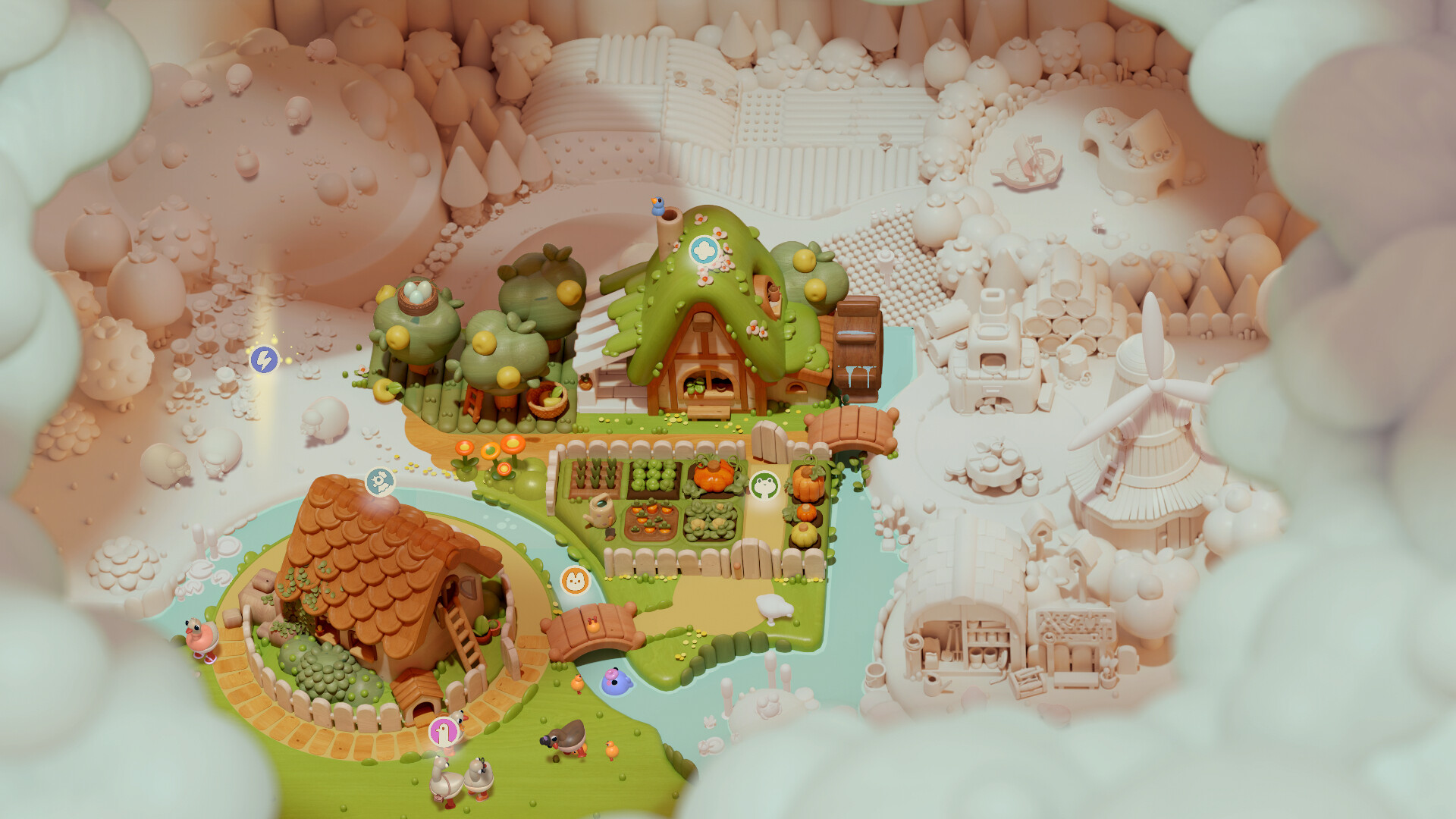
A fully assembled diorama scene from the countrysideImage: Tiny Monks Tales -
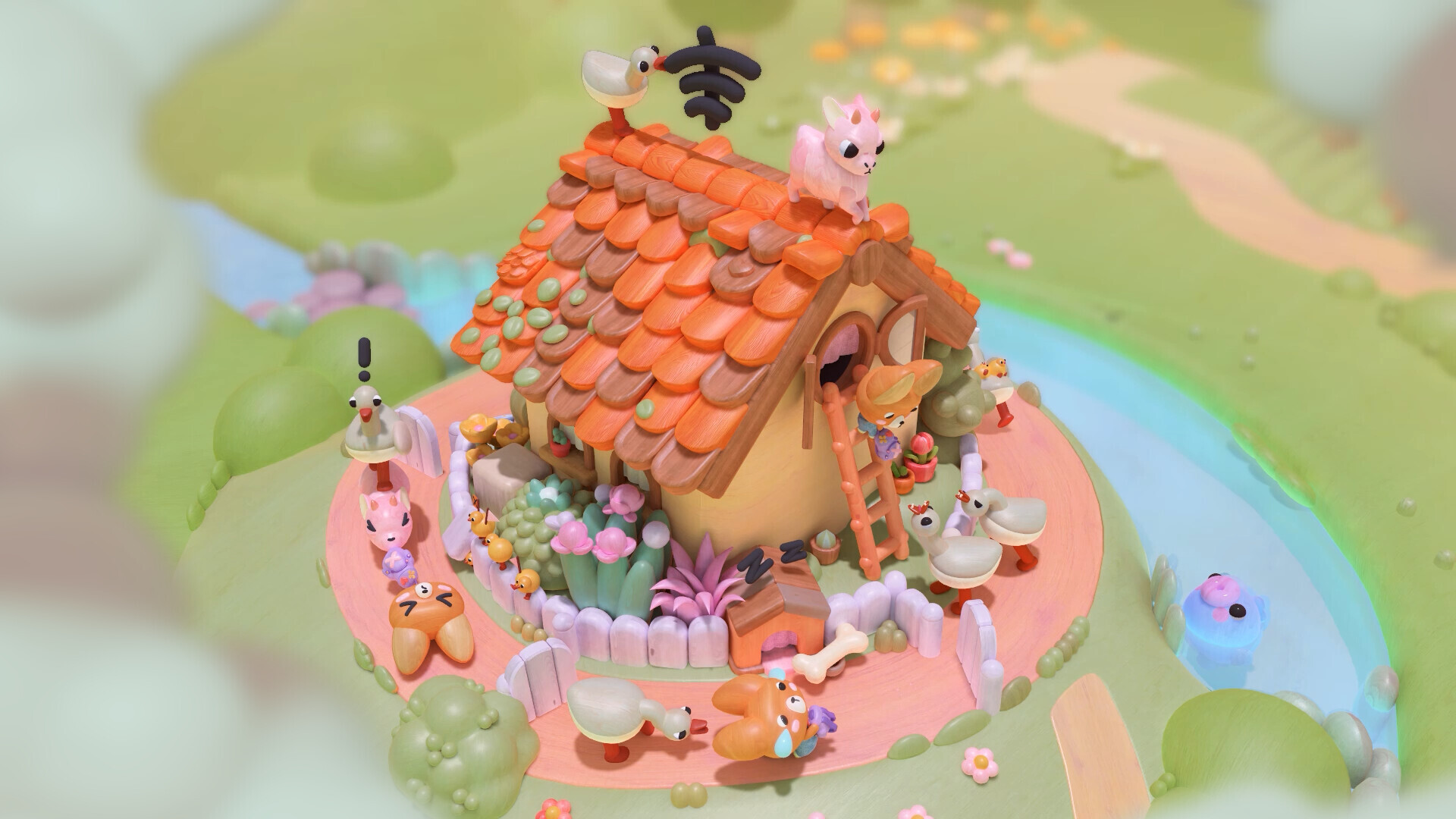
Small animated details fill every finished sceneImage: Tiny Monks Tales -

Foxy's attachment to her phone before her summer in the countryImage: Tiny Monks Tales -
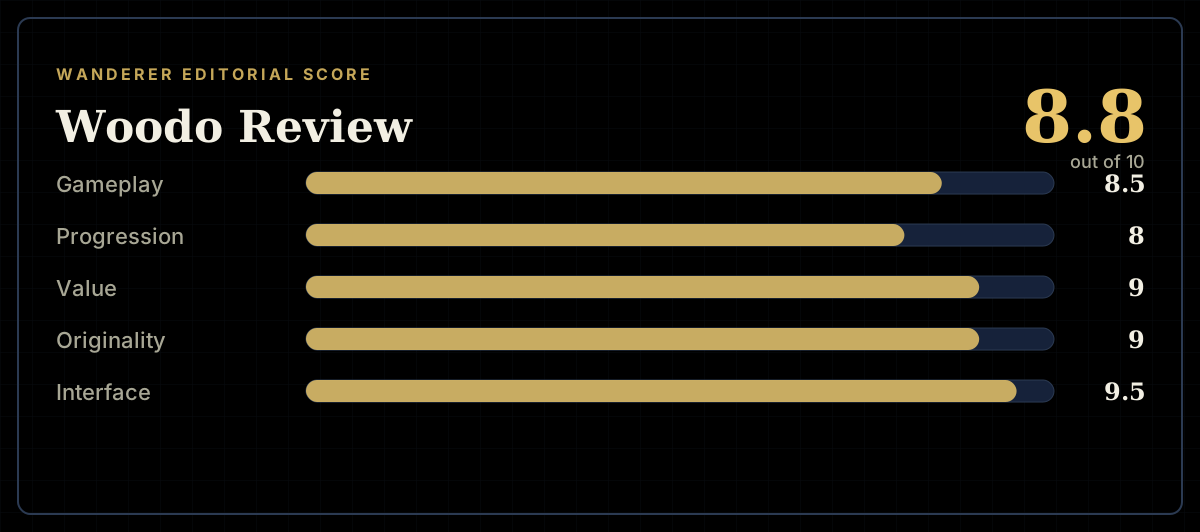
How the review scores each part of the gameWanderer Editorial -
The short versionWanderer Editorial