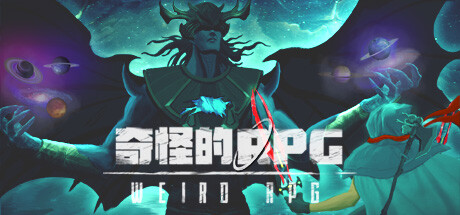
Game review
Weird RPG
6.5 / 10
- Developer
- yuzhen
- Publisher
- yuzhen
- Released
- 30 September 2022
- Platforms
- Windows
- Genre
- Action RPG
- Monetisation
- One-time premium purchase; no ads, in-game purchases or premium currency found
- Players
- Single-player only; no online, co-op or PvP modes
The short version
Weird RPG commits to its name in a way genuinely few games do: equipment can buff you for screaming into a microphone, reward you for having a worse graphics card, or scale off how low you've capped your frame rate. Reviewers consistently call it the most creative combat gimmick they've encountered in years, and it's earned real commercial success on the strength of that novelty alone — over 200,000 copies sold within its first year.
The trouble is that the "weird" part of Weird RPG is nearly the entire pitch. There's no leveling, no skill trees, no classes — every meaningful decision runs through randomly-dropped gear, and a substantial share of reviewers describe the wildest ideas repeating rather than escalating, with a five-to-six-hour game that starts to feel like a grind well before the credits roll. It's a genuinely one-of-a-kind gimmick wrapped around a fairly ordinary boss-rush ARPG.
Biggest strengths
- A genuinely inventive set of equipment gimmicks — microphone-triggered abilities, graphics-card- and frame-rate-scaling bonuses, and high-risk/high-reward effects — that reviewers repeatedly call the most creative thing they've seen in the genre in years
- A real commercial success story for a small solo project, passing 200,000 copies sold within its first year according to the developer's own posted sales milestones
- A real, dense burst of post-launch patches in its first week addressed bugs and balance quickly, and a free content-adding map update followed within two months of release
Biggest weaknesses
- Equipment is the entire progression system — there is no leveling, no skill tree and no class selection, which a meaningful share of reviewers cite as leaving the game feeling thin once the novelty of the item gimmicks wears off
- Several reviewers describe the game's wildest ideas concentrating early, with runs becoming repetitive well before the five-to-six-hour campaign concludes
- The "Souls-like" tag draws direct pushback from at least one detailed review, arguing death carries little real penalty beyond a short walk back, unlike the genre it's tagged alongside
Who it's for: Players chasing genuinely novel mechanics and willing to tolerate a short, somewhat repetitive core loop and some rough translation to get them. Less appealing to anyone wanting a souls-like with real stakes for death or deep character-building systems.
Our recommendation: Worth trying for the novelty alone, especially on sale, but go in expecting the wildest ideas up front rather than a game that keeps escalating them for its full runtime.
6.5 / 10
Most games that call themselves "weird" are exaggerating. Weird RPG mostly isn't. This is a game where equipment can ask you to hum into a microphone to fire a weapon, reward you for owning a worse graphics card, or scale its bonus off however low you've deliberately capped your frame rate — mechanics reviewers describe, without much exaggeration of their own, as unlike anything else they've played in the genre. That novelty carried the game to real commercial success for a solo developer, past 200,000 copies sold within its first year according to the developer's own posted milestones. The question a review has to answer is whether there's a full game holding up that gimmick, and the honest answer from a large share of its own audience is: not quite as much as the marketing suggests.
A genuinely novel set of ideas
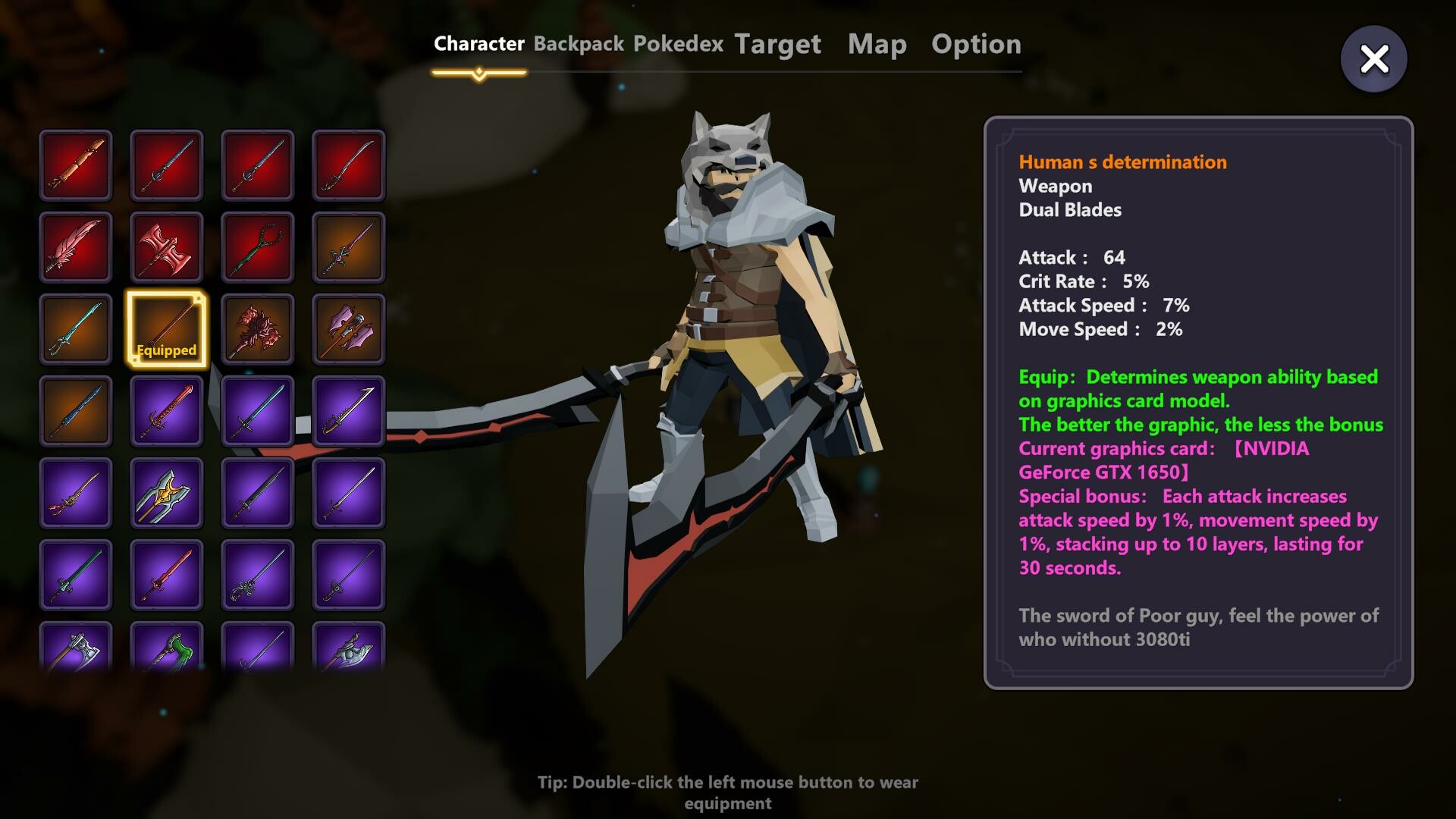
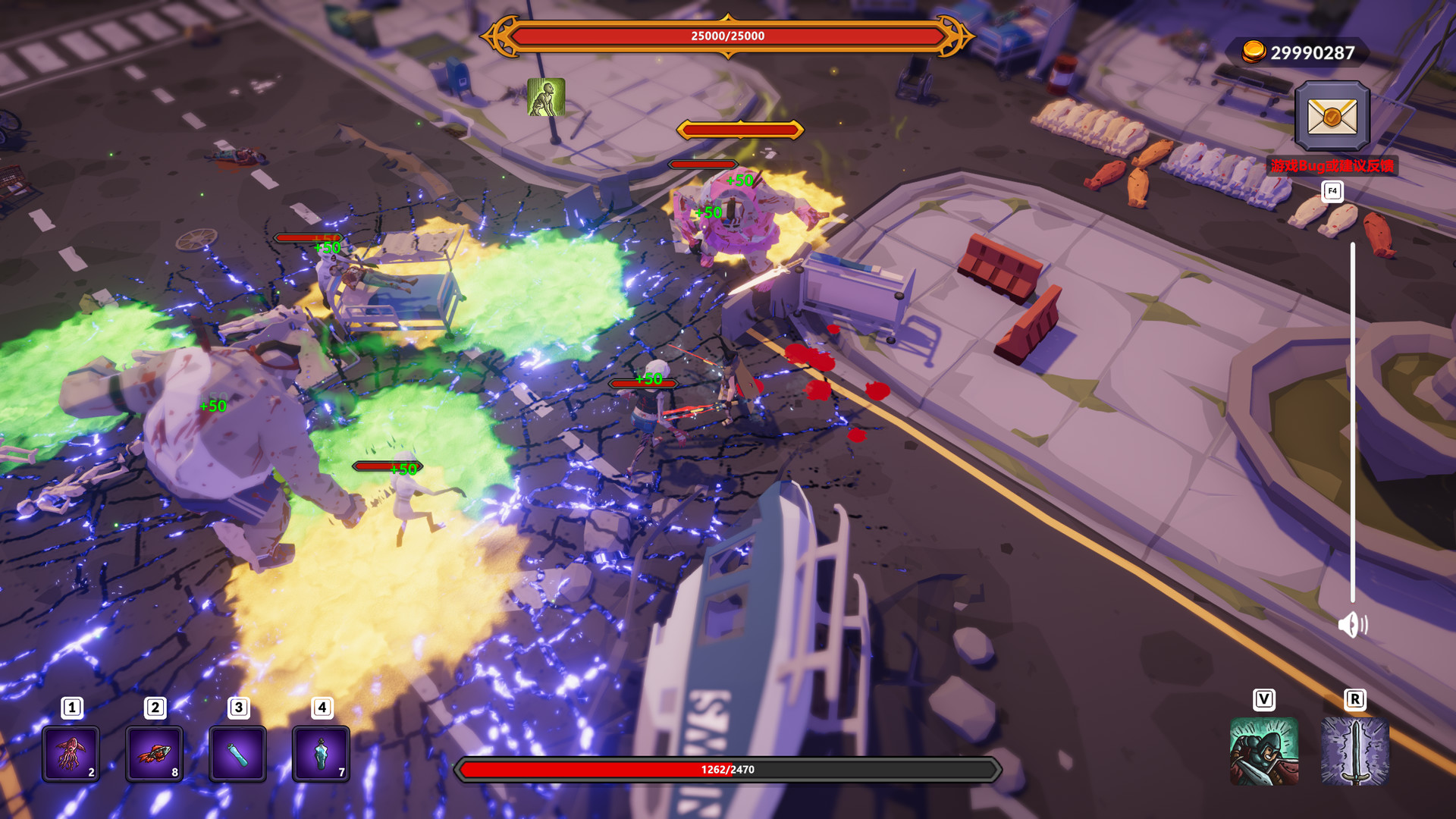
The core combat is a fairly conventional top-down, dodge-roll action RPG pitched around difficult boss encounters — reviewers consistently praise the "rapid response" controls and describe the rolling and repositioning as satisfying on their own mechanical terms. What sets the game apart is entirely in its equipment: items with effects tied to real-world inputs and hardware rather than in-fiction stats. A sword might fire a gun when you hum a specific pitch into your microphone. A piece of gear might buff you specifically for running an older or weaker graphics card, or for capping your frame rate at 30 instead of 60. Some items carry genuine risk, like a weapon with a chance to damage its wielder on use. Reviewers repeatedly single these out by name as the reason to play the game at all, and it's hard to argue with that framing — this genuinely doesn't read like anything else on the market.
The gimmick is nearly the whole game
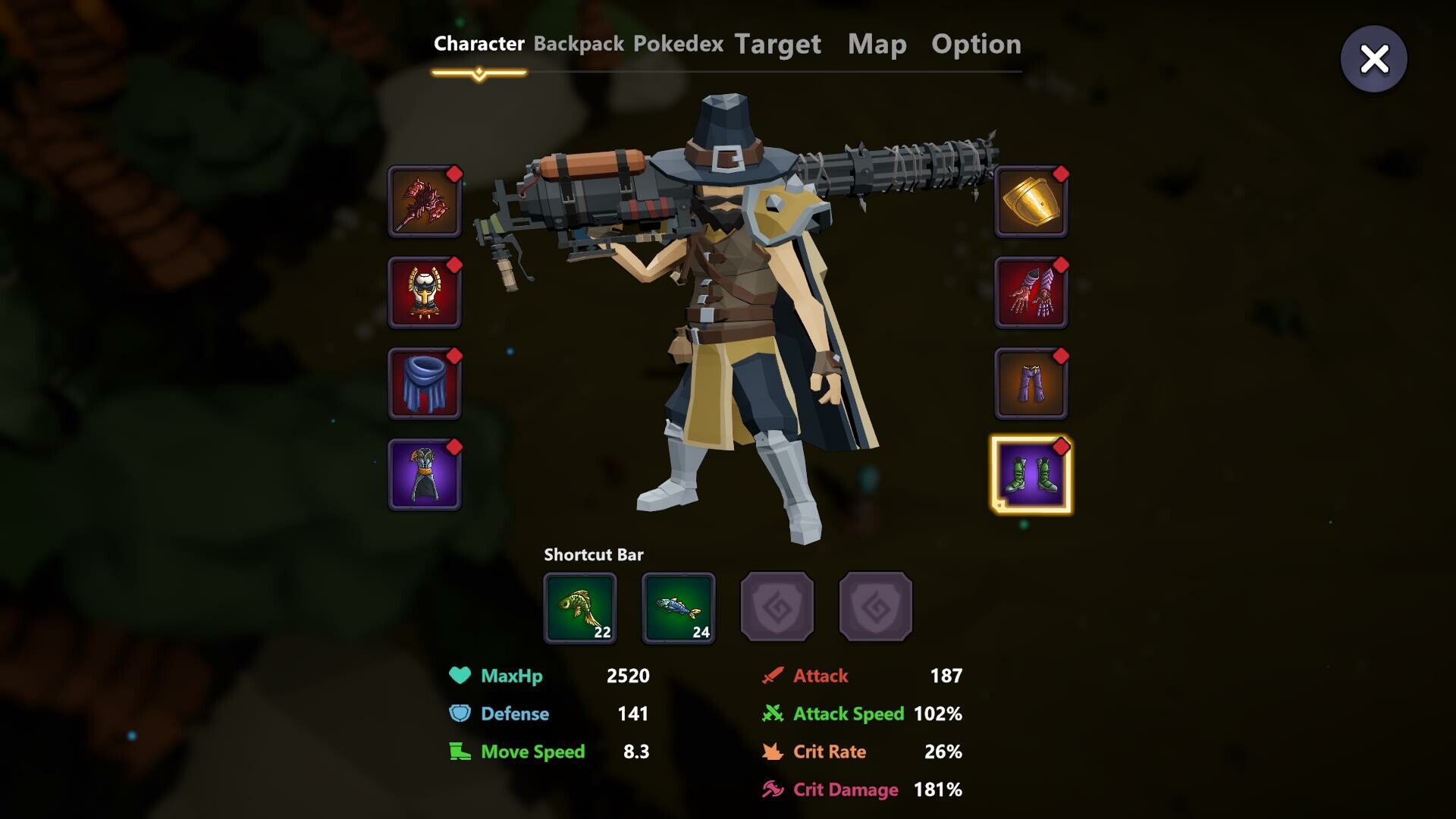
Where the criticism concentrates is on what's underneath that gimmick. There's no character leveling, no skill tree, and no class system of any kind — every meaningful build decision runs entirely through what gear randomly drops, which several reviewers describe as leaving very little for a player to actually control or plan around beyond hoping for better rolls. One detailed critical review lays out the arc bluntly: the special effects and conditions on gear "were not nearly as varied as I was hoping," and "the appeal wore off after 10 minutes of using these items." That's a sharper timeline than most reviews give it, but the broader shape — early novelty giving way to repetition well before the credits roll on a five-to-six-hour campaign — recurs often enough across independent reviews to treat as a real, representative pattern rather than one person's impatience.
A related and more pointed criticism targets the game's "Souls-like" tag specifically. At least one detailed review argues the label doesn't hold up on inspection: dying costs a player very little beyond a short walk back to where they died, without the meaningful setback structure the tag usually implies, making comparisons to the genre it's marketed alongside feel like a mismatch rather than an accurate descriptor.
A performance concern worth flagging
Two independent reviewers raise a more concrete technical complaint: the game reportedly draws noticeably more GPU resources than its simple, top-down visual presentation would suggest it should need, to the point that one reviewer speculates — without offering evidence beyond the resource draw itself — about the possibility of something running in the background beyond the game itself. That speculation isn't verifiable from a review alone, but the underlying, more measured complaint (unusually heavy GPU load for what's on screen) comes from more than one source independently and is worth stating plainly as a reported concern rather than dismissing outright.
Global achievement data offers a useful, more concrete picture of how the difficulty actually plays out: completion rates decline steadily from 93% for the first boss kill down to under 9% for the final one, a curve consistent with reviewer descriptions of bosses escalating sharply in difficulty as the run progresses, whatever else is or isn't holding up around them.
A real, if short, launch and afterward
Weird RPG's own history backs up that this was a genuinely successful small release rather than a quiet one. Launch on 1 October 2022 was followed within days by a dense run of bug-fix and balance patches, the developer publicly celebrated selling 50,000 copies within two weeks and 100,000 within seven weeks, and a free new map arrived as a content update by early December 2022 — a real commitment to the game in its first couple of months on sale. The most recent event on record is an October 2023 sales-milestone post marking 200,000 copies sold, with nothing further logged since; whether that reflects the game being considered feature-complete or the developer having moved on isn't clear from the public record alone.
A rough presentation problem
A secondary, more fixable-sounding complaint concerns how the game presents itself before purchase. Multiple reviewers explicitly wish a demo existed, arguing that screenshots and store page copy alone undersell exactly what makes the combat loop distinctive — the gimmick items are the entire selling point, and they're the hardest part of the game to convey without hands-on time. Layered on top of that is a translation reviewers describe as rough in places, with typos and thin narrative text that reads as unpolished even by the modest standards of a small solo project. Neither complaint touches the core mechanical identity of the game, but together they describe a release that may be underselling itself to exactly the audience most likely to enjoy it, while still reaching enough of the right players to sell 200,000 copies regardless.
Where it lands
Weird RPG earns its reputation as one of the more inventive small releases of its year on the strength of ideas that genuinely don't exist anywhere else — hardware- and voice-driven equipment effects layered onto responsive, satisfying dodge-and-strike combat. What it doesn't quite deliver is a full game built to match that novelty: no character-building systems beyond gear RNG, a short runtime that several reviewers say outstays its welcome before it ends, and a "Souls-like" label that doesn't fully hold up under scrutiny. It's a worthwhile curiosity, especially discounted, for anyone who wants to see the idea for themselves — just don't expect the wildest hour to be anything but the first one.
Pros and cons
Pros
- A genuinely inventive set of equipment gimmicks — microphone-triggered abilities, graphics-card- and frame-rate-scaling bonuses, and high-risk/high-reward effects — that reviewers repeatedly call the most creative thing they've seen in the genre in years
- A real commercial success story for a small solo project, passing 200,000 copies sold within its first year according to the developer's own posted sales milestones
- A real, dense burst of post-launch patches in its first week addressed bugs and balance quickly, and a free content-adding map update followed within two months of release
- Rapid, responsive dodge-roll combat that reviewers describe as satisfying on its own mechanical terms, independent of the gimmick items layered on top
- Runs well on Steam Deck according to reviewers, and is short enough (five to six hours) to fit into a single dedicated sitting for players who want to see everything it has to offer
Cons
- Equipment is the entire progression system — there is no leveling, no skill tree and no class selection, which a meaningful share of reviewers cite as leaving the game feeling thin once the novelty of the item gimmicks wears off
- Several reviewers describe the game's wildest ideas concentrating early, with runs becoming repetitive well before the five-to-six-hour campaign concludes
- The "Souls-like" tag draws direct pushback from at least one detailed review, arguing death carries little real penalty beyond a short walk back, unlike the genre it's tagged alongside
- Two independent reviewers report unusually heavy GPU resource use for a simple top-down ARPG, with one speculating (without evidence beyond the resource draw itself) about hidden cryptocurrency mining
- Rough English translation and a presentation that undersells the actual gameplay are cited by multiple reviewers, several of whom specifically wish a demo existed to show off what makes the game distinctive before asking for the purchase
Screenshots
-
Weird RPGImage: yuzhen via Steam -
Weird RPGImage: yuzhen via Steam -
Weird RPGImage: yuzhen via Steam -
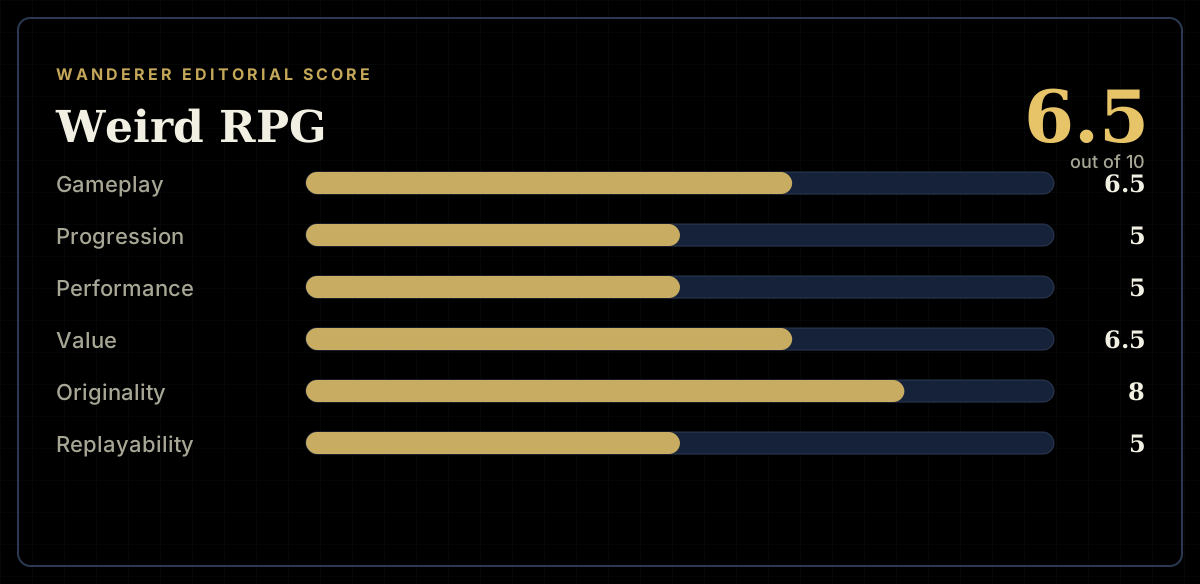
How the review scores each part of the gameWanderer Editorial -
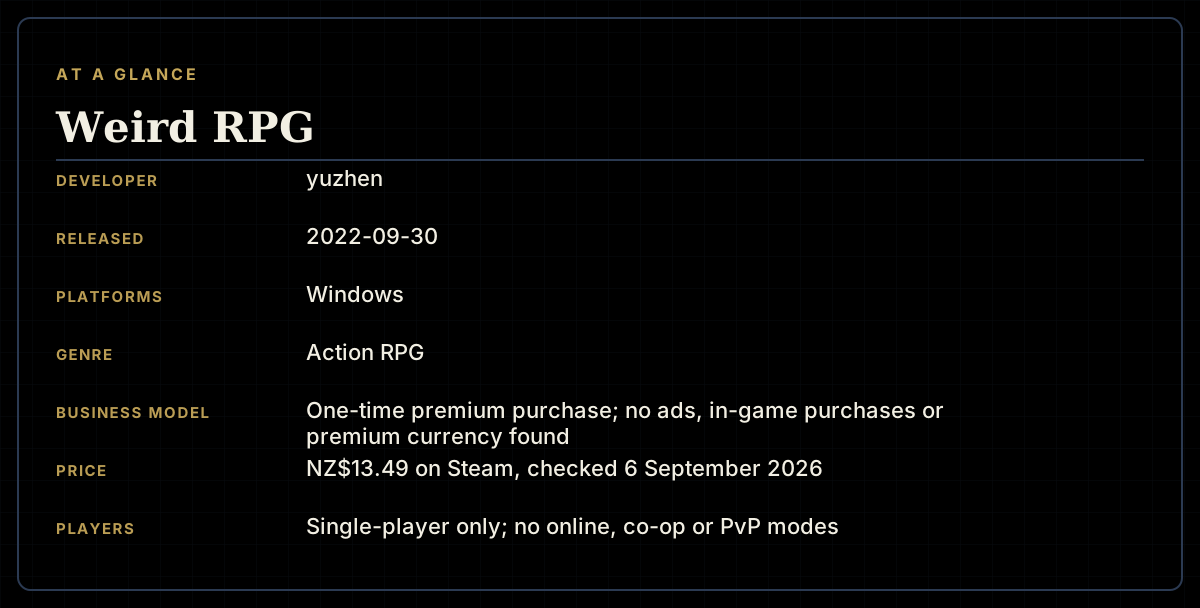
The specsWanderer Editorial -
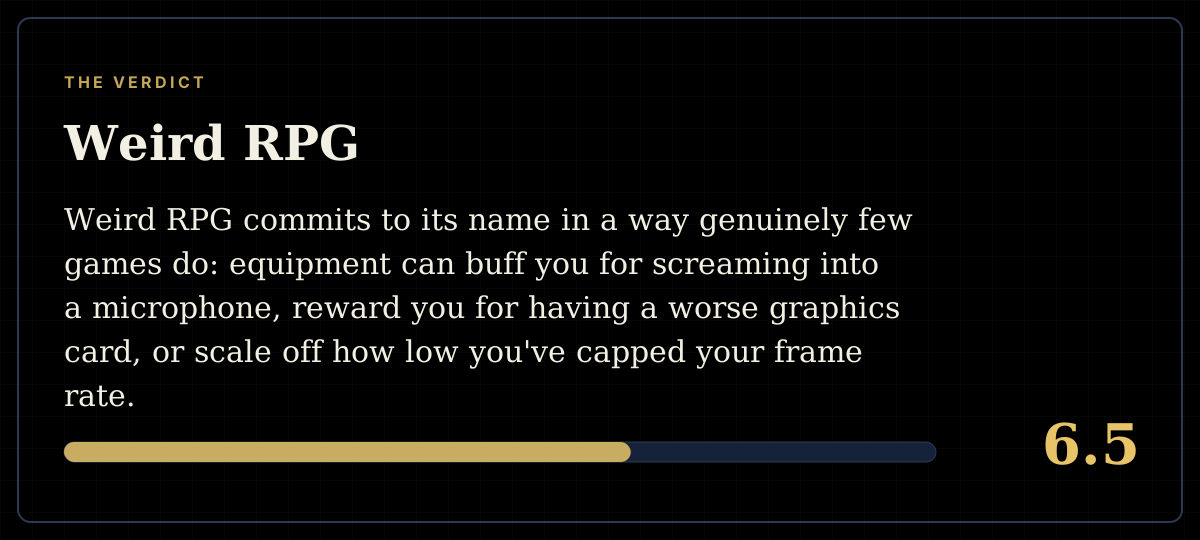
The short versionWanderer Editorial