Game review
Weapon Shop Fantasy
6 / 10
- Developer
- INDIECN
- Publisher
- INDIECN
- Released
- 27 March 2017
- Platforms
- Windows
- Genre
- Shop management RPG
- Monetisation
- One-off purchase, no in-game currency, ads or gameplay-affecting purchases
- Players
- None; single-player only
The short version
Weapon Shop Fantasy's premise — manage a fantasy weapon shop, hire staff to craft and adventure, and slowly build toward a surprisingly earnest political revenge plot underneath the shopkeeping — is a genuinely good idea that arrived a full year before Moonlighter made the shop-and-dungeon hybrid fashionable. It's let down less by the concept than by the execution around it: a translation that several reviewers call rough or broken in places, a punishing lost-run penalty that erases progress on a failed expedition, and a five-month burst of daily patches in 2017 that answered none of the structural complaints still being repeated in reviews years later. The 131-achievement completion curve shows real content and real players working through a meaningful amount of it, which is the strongest argument for the game's depth; the same curve's gentle, unbroken slope down to under 2% for the hardest achievements shows just how much of that content very few people ever reach.
Biggest strengths
- The shop-and-adventure dual loop is a genuinely clever structural idea that predates Moonlighter's more polished take on the same pitch by roughly a year
- A surprisingly substantial story — a vampire shopkeeper paying off debt while caught between two warring nations, with named, written supporting characters — exceeds what several reviewers expected from what looked like a bare-bones incremental shop game
- 131 tracked achievements with a smooth, gradual completion curve indicate real content depth that a meaningful share of the playerbase engages with, not padding nobody touches
Biggest weaknesses
- Multiple reviewers independently describe the localization as rough or outright broken in places, including one specific, checkable report that selecting Traditional Chinese displays Simplified Chinese content instead
- A harsh penalty structure where a failed adventuring expedition can erase accumulated progress is repeatedly cited as the single biggest source of frustration, described by more than one reviewer as punishing rather than tense
- The same genre-identity tension seen elsewhere in this era's shop-idle hybrids shows up here too: reviewers call it "arranged like an idle game" that "lacks idling functions," since production queues, worker assignment and combat outcomes all demand constant manual attention
Who it's for: Players who enjoyed Kairosoft-style management sims or Holy Potatoes and want a rougher, more RPG-inflected take on the formula, and anyone curious about a genuine forerunner to the shopkeeper-roguelite hybrid genre. Less suited to players sensitive to translation quality or who want responsive, precise controls — reviewers are unusually consistent that both are weak points here.
Our recommendation: A reasonable buy at its regular discounted price for the shopkeeping-RPG curious, with the expectation that the interface and translation will show their age and their budget origins more than the underlying design does.
6 / 10
Weapon Shop Fantasy's own store page can't quite decide what to call itself — "a shop game with RPG? Or is it RPG with a shop?" — and that indecision turns out to be the most honest marketing copy on Steam. You run a weapon shop, hiring crafters to turn raw materials into gear and adventurers to go collect that gear's ingredients, while slowly paying down a debt and, underneath the spreadsheet, following a surprisingly earnest story about a vampire shopkeeper caught between two warring nations. Released in March 2017, a full year before Moonlighter made this exact dual-loop pitch a recognized subgenre, it's a useful reminder that good structural ideas in games often show up first in rougher, cheaper packages before a better-funded successor smooths out the edges. The review sample bears that reading out almost exactly: reviewers consistently credit the concept and the amount of content on offer, and just as consistently describe fighting the interface and the translation to get at it.
More story than the pitch promises
Several detailed reviews specifically call out being surprised by how much narrative the game actually has. One reviewer who "went into it anticipating a pretty bare-bones incremental shop game" instead found "a surprisingly involved story about a vampire out for revenge opening a shop to pay off debt while balancing a political situation between two warring nations," with named NPCs carrying real backstories rather than generic quest-givers. That's a genuinely uncommon depth of investment for a budget management sim from a small Chinese indie studio in 2017, and it's worth crediting directly rather than assuming a game this cheap and this mechanically busy couldn't also have bothered with writing. The 131-achievement roster backs up that there's real breadth here to discover — a completion curve that tapers smoothly from 85% down to under 2% without a single dramatic cliff suggests a game with a genuinely long tail of content that a real slice of the playerbase works through step by step, rather than one that front-loads everything and pads out the rest.
The same genre-identity tension as its contemporaries
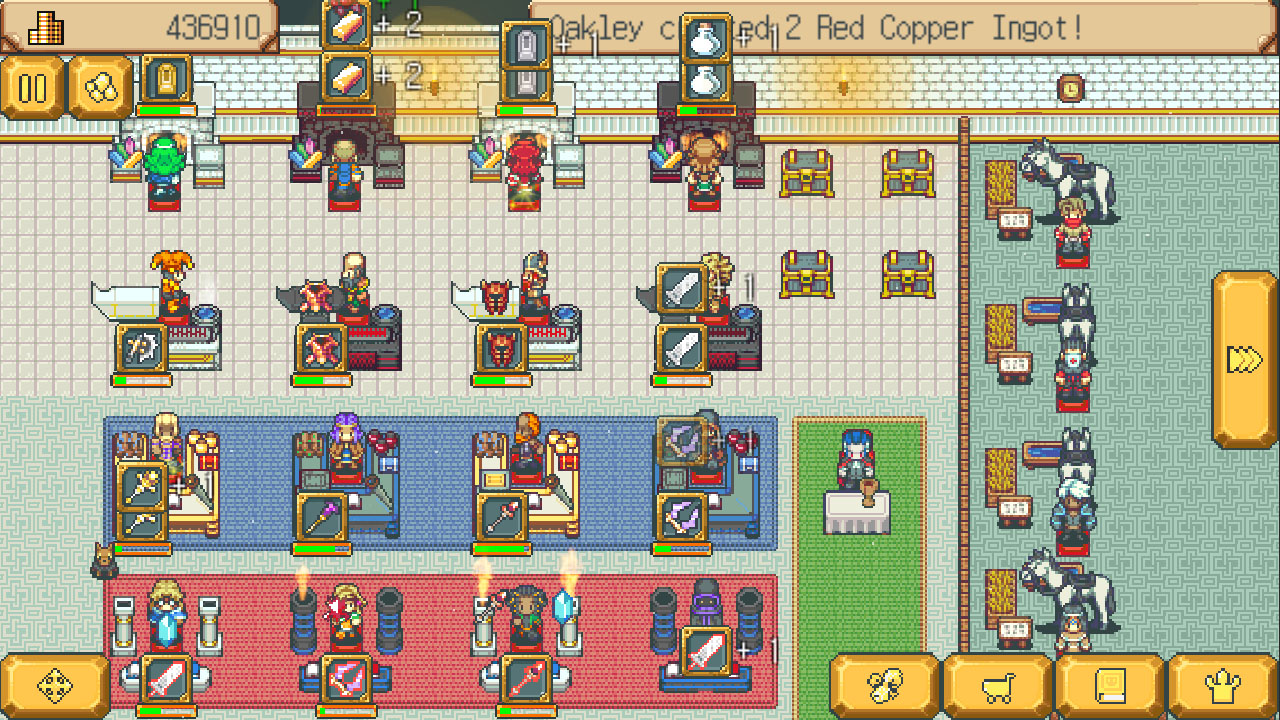
A recurring complaint across this review sample lines up closely with a pattern found elsewhere in this era of shop-and-idle hybrids: players expecting something closer to a passive idle game running into a system that demands constant attention instead. One reviewer summarizes it exactly: "It's arranged like an Idle game. But lacks idling functions." Another calls it "a clicker disguised as store management game." A third puts the core frustration precisely: "It demands too much attention to be a proper idler and there's not enough to entertain you to have a proper gameplay loop of sorts." The single feature that would resolve this tension — automated adventuring, so staff can be sent out without babysitting every expedition — exists, but multiple reviewers report it's locked behind content near the very end of the game, meaning the vast majority of any playthrough happens under the manual system players are complaining about. That's a design choice with a real, specific fix already implemented and simply gated too late to help the people it would help most.
A punishment that outweighs the tension it's meant to create
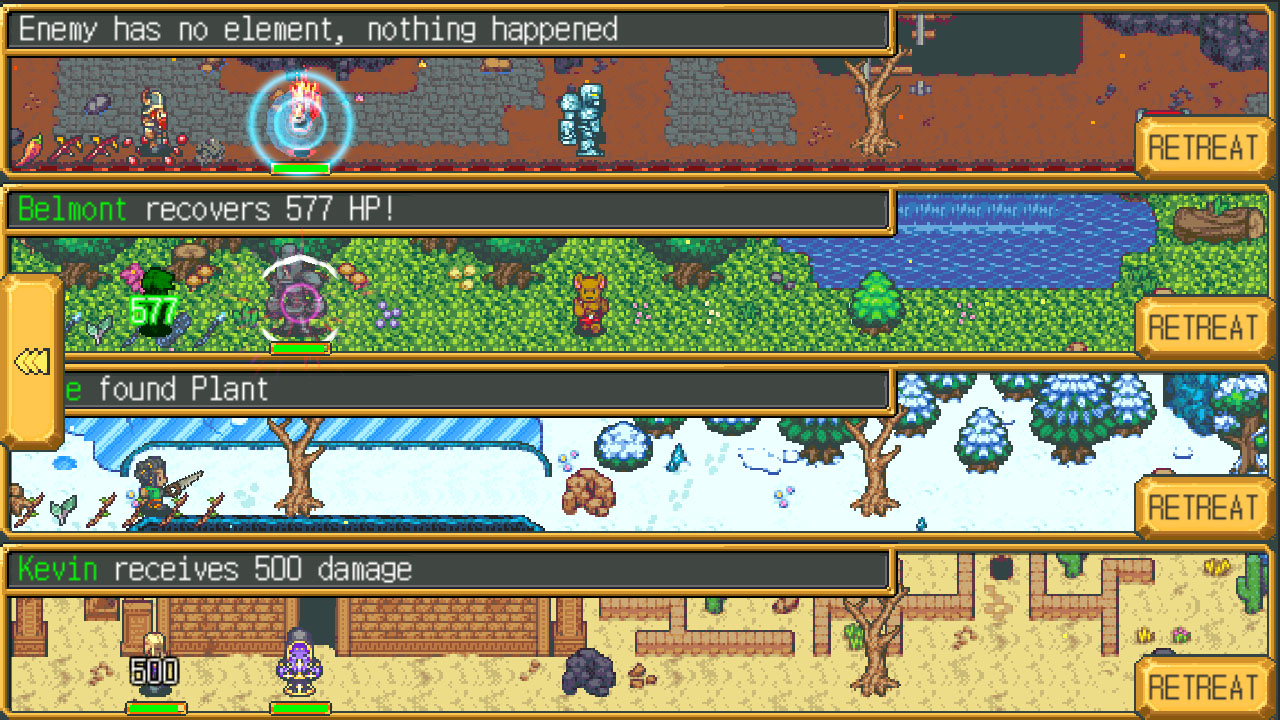
The other complaint repeated often enough to treat as a structural issue rather than one player's bad luck: a failed adventuring expedition can cost a character everything they were carrying, and several reviewers describe this as tipping past "tense" into simply punishing. One detailed negative review calls the concept of losing everything on a failed expedition "very frustrating," while a separate reviewer notes the game does offer mitigations for this but that unlocking them itself requires "grindear muchísimo" (a great deal of grinding) — meaning the fix for the punishment is gated behind more of the exact grind players are already frustrated by. That's a different shape of problem than a simple difficulty complaint: it's a system whose safety net has to be earned through the very mechanic it's meant to protect against.
Rough edges that never got sanded down
Interface and localization complaints appear with unusual specificity and consistency for a game this size. One reviewer reports plainly that "Traditional Chinese language option is not working, it display all Simplified Chinese game content" — a specific, checkable claim rather than a vague translation gripe. Others describe softlock risk from mismatched station and worker counts, an unreliable scroll wheel, and item-selling menus that default focus to the wrong item after a sale. The partner-events patch history shows why none of this ever got fixed: Update 2017/03/28 is effectively the last substantive patch to the game itself, following roughly five weeks of daily fixes immediately after launch. Everything in the events feed after that is either a holiday greeting or an announcement for one of the developer's other games — Legioncraft, Cultivation Fantasy, and others across 2019 through 2025 — meaning the studio's attention moved on within months of release and the specific bugs reviewers describe, some posted years after launch, were never in line to be addressed.
Verdict
Weapon Shop Fantasy earns real credit for a genuinely clever dual-loop idea and a story with more craft in it than its budget-shop presentation suggests, executed a year ahead of the genre's better-known breakout. What keeps it from a stronger recommendation is exactly what a short, concentrated development window would predict: a punishing loss mechanic whose own safety valve is gated behind more of the grind it protects against, a genre identity caught between idle and active that leaves neither audience fully satisfied, and specific, checkable localization and interface bugs that a five-month support window in 2017 never got around to before the studio's attention moved elsewhere. Worth a look at its usual discounted price for the concept and the content; go in expecting the rough edges to stay rough.
Sources: Steam store page and appdetails API (release date, pricing, platform and language data); Steam's aggregate review data (query_summary totals, English-language and all-language samples); individually read user reviews, both positive and negative, sorted by helpfulness and recency; Steam's global achievement statistics API; INDIECN's own partner-events patch notes from launch in February 2017 through subsequent, unrelated announcements for later games.
Pros and cons
Pros
- The shop-and-adventure dual loop is a genuinely clever structural idea that predates Moonlighter's more polished take on the same pitch by roughly a year
- A surprisingly substantial story — a vampire shopkeeper paying off debt while caught between two warring nations, with named, written supporting characters — exceeds what several reviewers expected from what looked like a bare-bones incremental shop game
- 131 tracked achievements with a smooth, gradual completion curve indicate real content depth that a meaningful share of the playerbase engages with, not padding nobody touches
- Retro pixel-art presentation runs comfortably on modest hardware, a point several reviewers specifically appreciate
- Frequent, heavy discounting makes it an easy impulse buy relative to the amount of content on offer
Cons
- Multiple reviewers independently describe the localization as rough or outright broken in places, including one specific, checkable report that selecting Traditional Chinese displays Simplified Chinese content instead
- A harsh penalty structure where a failed adventuring expedition can erase accumulated progress is repeatedly cited as the single biggest source of frustration, described by more than one reviewer as punishing rather than tense
- The same genre-identity tension seen elsewhere in this era's shop-idle hybrids shows up here too: reviewers call it "arranged like an idle game" that "lacks idling functions," since production queues, worker assignment and combat outcomes all demand constant manual attention
- The most useful quality-of-life feature, automated adventuring, is locked behind near-endgame progress, meaning the vast majority of playtime happens under the more tedious manual system reviewers complain about
- The developer's active support window was short and concentrated (daily patches for roughly five months after launch, essentially none since), leaving reported softlock and interface bugs unresolved for years
Screenshots
-
Weapon Shop FantasyImage: INDIECN via Steam -
Weapon Shop FantasyImage: INDIECN via Steam -
Weapon Shop FantasyImage: INDIECN via Steam -
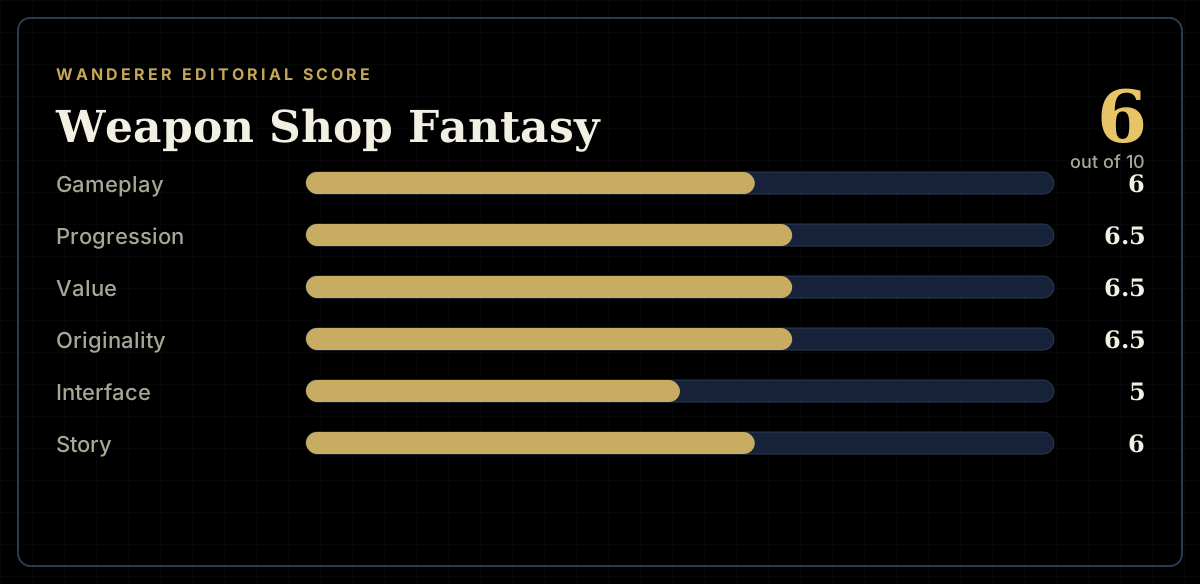
How the review scores each part of the gameWanderer Editorial -
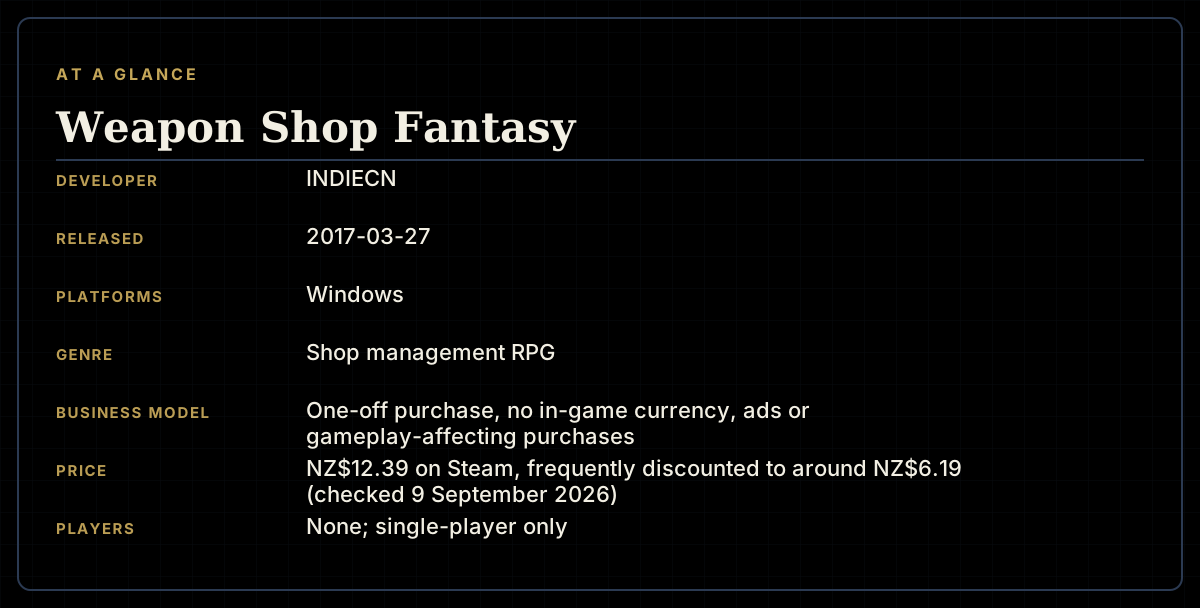
The specsWanderer Editorial -
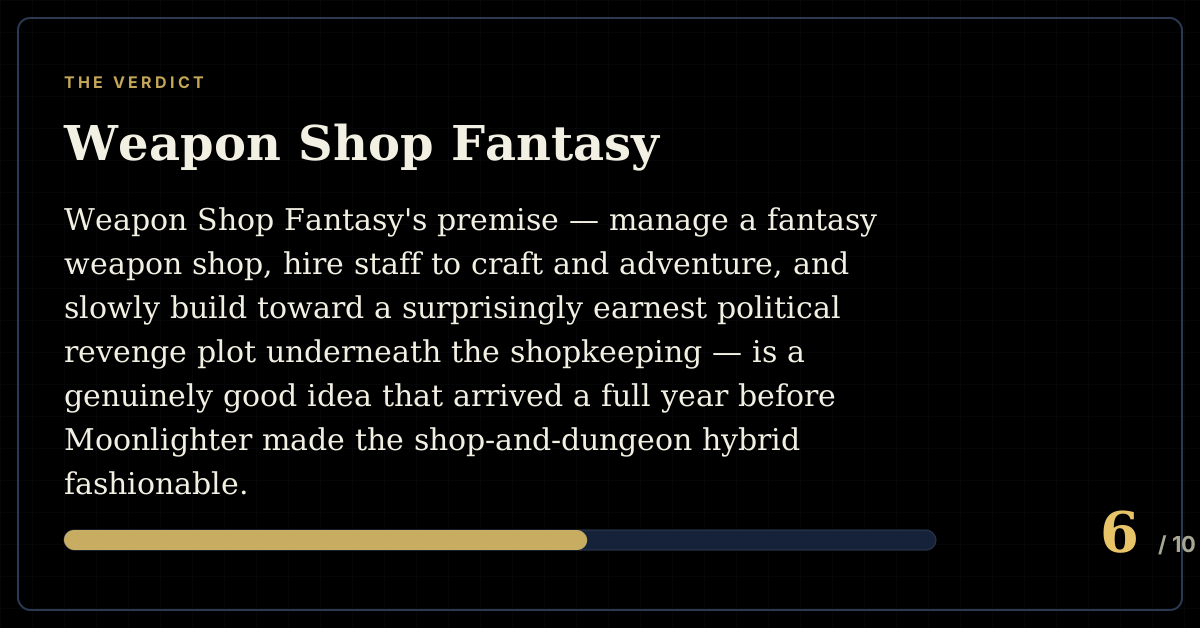
The short versionWanderer Editorial