Game review
Idle Awakening: Mages Path
6 / 10
- Developer
- Strange Matter Gaming
- Publisher
- Strange Matter Gaming
- Released
- 25 September 2025
- Platforms
- Windows
- Genre
- Idle, RPG, Sandbox, Magic
- Monetisation
- One-time purchase; no in-app purchases, no DLC and no advertising
- Players
- Single-player only
The short version
Idle Awakening: Mages Path casts the player as a would-be mage planning daily routines through reusable action lists — brewing potions, gathering resources, casting spells — that can run manually or automate themselves while the player is away. Developed and self-published by Strange Matter Gaming, it entered Early Access 25 September 2025 with a deliberate design choice that sets it apart from most of the genre: no prestige or reset system, just permanent, continuous progress. That idea has won it real, deeply invested fans — reviewers reporting thousands of hours are not rare in this game's sample — but a comparable number of reviewers describe the mid-to-late game collapsing into a sluggish, unrewarding grind, and this review found real, independently reported crash issues alongside a store-disclosed use of AI-assisted background art that a specific, vocal share of players say costs the game their recommendation on principle.
Biggest strengths
- A genuinely rare design choice for the genre — no prestige or reset system at all, just permanent forward progress — that dedicated fans specifically credit as the game's best idea
- Deep, list-based automation planning that reviewers compare favourably to established genre touchstones Orb of Creation and Arcanum: Theory of Magic
- Extraordinary engagement from its core fanbase, with multiple reviewers independently reporting playtimes in the thousands of hours
Biggest weaknesses
- A severe, widely reported grind wall: several reviewers describe unlock costs jumping from every 50 resources to every 1,000 to every 25,000 within the same progression track, turning hours of active play into single-digit-percent gains
- Offline progress is capped by a fixed speed multiplier rather than full accrual, which several reviewers say falls well short of what the genre usually promises
- Real, independently reported stability issues, including one detailed account of roughly ten crashes and ten freezes across a single playthrough
Who it's for: Systems-focused idle-RPG fans who want genuine automation planning and a permanent, no-prestige structure, and who can tolerate an Early Access build's rough edges; a poor fit for anyone who needs guaranteed offline progress or objects to AI-assisted art on principle.
Our recommendation: A genuinely distinctive, systems-deep idle RPG in active Early Access development, capable of extraordinary long-term engagement for the right player, held back by a severe mid-game grind wall, real stability issues and a disclosed AI-art choice that's cost it real goodwill.
6 / 10
Introduction
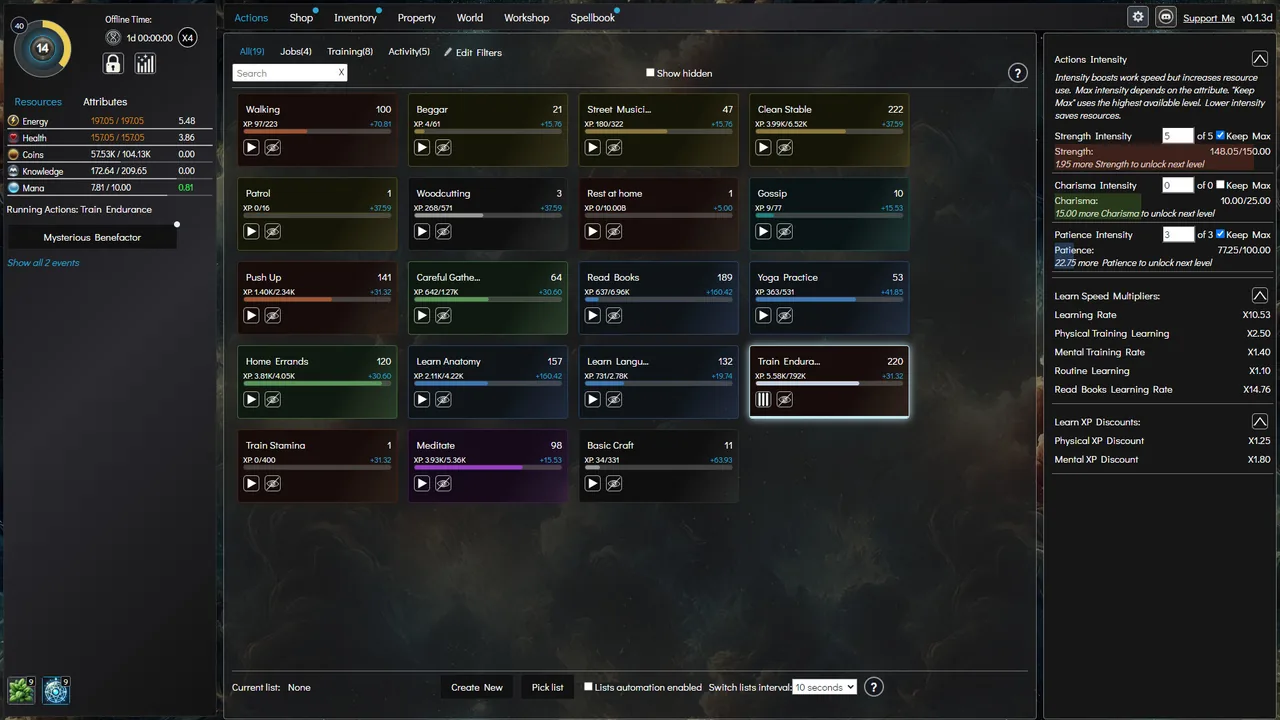
Idle Awakening: Mages Path starts the player as an ordinary human with nothing, planning daily routines through combinable, reusable action lists — gathering herbs, brewing potions, casting spells, upgrading a home full of bonus-granting furniture — that can be run manually or automated to continue while the player is away. Developed and self-published by Strange Matter Gaming, it entered Early Access on 25 September 2025 carrying one deliberately unusual design decision for its genre, stated plainly on its own store page: "No Prestige System. Your progress is permanent. No forced resets or repetitive loops — only forward momentum." This review reads all 34 of the game's English-language negative reviews, plus a hundred-review positive sample, to understand how that idea holds up in practice roughly ten months into Early Access.
A rare structural idea, with real believers
The no-prestige design has won genuine, deep loyalty from a specific slice of this game's audience. "If you'd like an idle game without a prestige/restart mechanic that offers continuous progress and development, this is the game for you," reads one review — from a reviewer with 3,484.5 hours logged. A second, at 7,350.2 hours, calls it "fantastic... with great flavor," specifically enjoying the arc from "town vagrant to town archmage." Those aren't typos: this game's top positive reviews include some of the highest playtime figures this library has encountered, and multiple reviewers independently compare it to Orb of Creation and Arcanum: Theory of Magic — two well-regarded systems-heavy incrementals — rather than to more casual genre entries. One reviewer sums up the appeal precisely: "Both games are incrementals that have more logic than just numbers go up... there are some choices to make how you want to do it and where to focus."
The grind wall that breaks the momentum for many
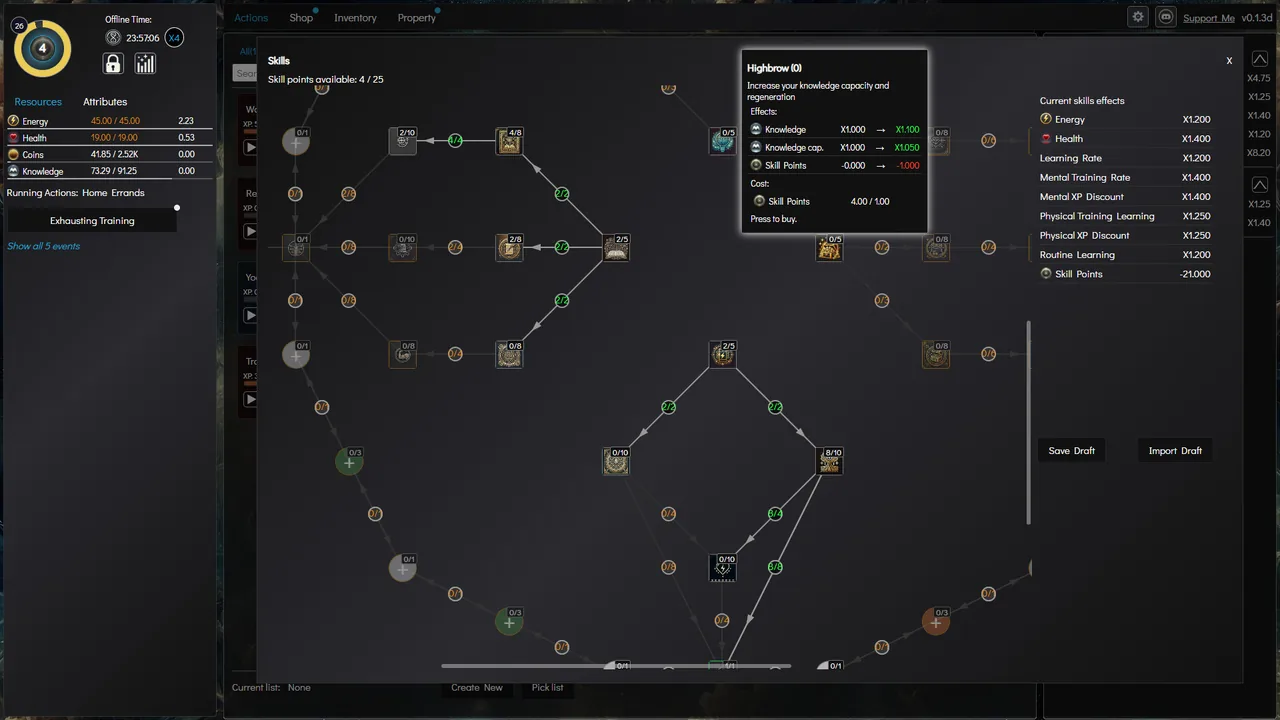
Set against that is this game's single most consistent complaint, and it's specific enough to be more than a vague "it's grindy" objection. Several reviewers describe unlock costs escalating in sudden, disproportionate jumps — one details a resource requirement moving "from every 50 to every 1,000 and then to 25,000" within the same progression track, adding that clearing the next tier "would have to run for probably 20 hours straight on 4x speed." Others frame the same pattern more generally: "sluggish past the start and just feels more and more stagnant," "you may grind for many hours to just reveal another ability that makes your routine less sluggish by 10-20%." One particularly sharp review frames the disconnect as a design-philosophy problem rather than a balance oversight: "It's like the dev went to idle game school, got a degree in idle games, made a game. But doesn't play or like idle games" — a pointed way of saying the systems are technically sound but the moment-to-moment feel of playing them hasn't been tuned the way genre veterans expect. A related, more specific complaint concerns offline time: several reviewers note that time away is compressed through a fixed speed multiplier rather than full accrual, which more than one describes as falling short of what an idle game's core promise usually means.
Real stability problems, and an AI-art disclosure that costs real goodwill
Two further issues deserve separate, careful treatment. First, stability: one detailed review reports "constant crashes and freezes (at least ten of each in the total playtime)," and a second, independent review agrees the game "cannot be liable to crash every few hours" for something structured like a spreadsheet-style idle game — a fair standard to hold it to. Second, and more unusual for this library to report as confirmed rather than alleged: Idle Awakening's own store page carries an AI Generated Content Disclosure, stating plainly that "some visual assets used in the game and on this store page were created with the assistance of AI tools," specifically background illustrations and certain icons, while stating gameplay design, logic and writing were created manually. That's a verified fact rather than a reviewer's guess, and it clearly matters to a real, specific share of this game's audience — one negative review opens in capital letters, "THIS GAME USES AI 'ART' DO NOT PURCHASE UNTIL THIS HAS BEEN FIXED," and a separate positive review independently calls the AI art use "a bummer" while still awarding an "extremely hesitant" thumbs up. This isn't a fringe objection contained to one corner of the sample — it shows up on both sides of the recommend button, and buyers who weigh that question heavily should know the developer has been transparent about it rather than concealing it.
An Early Access build that's still actively moving
One April 2026 review states plainly that "the game is probably abandoned. Dev is working on other projects." That claim doesn't hold up against the record as of this writing: Strange Matter Gaming's own update history shows a burst of patches in July 2026 — five updates between the 22nd and 30th, the most recent just two weeks before this review — following a genuinely quieter stretch from March through June. Ten months into Early Access, this remains a build in visible, if uneven, motion rather than an abandoned one, though the earlier quiet period is a fair thing for a cautious buyer to note.
Value and monetisation
At NZ$7.39, with no DLC and no in-app purchases, there's nothing to criticise on the monetisation front. For a player who clicks with the no-prestige structure, the sheer volume of playtime this game's most dedicated fans report — weeks and months by their own accounts — makes it an easy value case. For a player who bounces off the mid-game wall described above, the same low price limits how much that disappointment actually costs.
Final Verdict
Idle Awakening: Mages Path takes a genuine risk on its genre's most sacred cow — the prestige loop — and its most dedicated players reward that risk with extraordinary, sustained engagement this library rarely sees. What keeps the score from climbing higher is equally real: a grind curve a substantial share of reviewers describe as breaking down into stagnation, offline progress that doesn't fully deliver on the genre's core promise, reported crashes serious enough to matter for a game meant to run unattended, and a disclosed AI-art choice that's cost it real goodwill among players who feel strongly about it. This is still Early Access, actively patched as recently as two weeks before this review, and worth watching — but go in knowing the current build asks real patience for its rewards, and check your own tolerance for AI-assisted art before buying.
Pros and cons
Pros
- A genuinely rare design choice for the genre — no prestige or reset system at all, just permanent forward progress — that dedicated fans specifically credit as the game's best idea
- Deep, list-based automation planning that reviewers compare favourably to established genre touchstones Orb of Creation and Arcanum: Theory of Magic
- Extraordinary engagement from its core fanbase, with multiple reviewers independently reporting playtimes in the thousands of hours
- No in-app purchases, no DLC and a low flat price for what dedicated players describe as weeks or months of content
Cons
- A severe, widely reported grind wall: several reviewers describe unlock costs jumping from every 50 resources to every 1,000 to every 25,000 within the same progression track, turning hours of active play into single-digit-percent gains
- Offline progress is capped by a fixed speed multiplier rather than full accrual, which several reviewers say falls well short of what the genre usually promises
- Real, independently reported stability issues, including one detailed account of roughly ten crashes and ten freezes across a single playthrough
- The store page discloses that background illustrations and icons were created with AI assistance; a specific, vocal share of reviewers — including some giving the game a hesitant thumbs-up — say that costs it real credibility regardless of the gameplay underneath
Screenshots
-
Idle Awakening: Mages PathImage: Strange Matter Gaming via Steam -
Idle Awakening: Mages PathImage: Strange Matter Gaming via Steam -
Idle Awakening: Mages PathImage: Strange Matter Gaming via Steam -
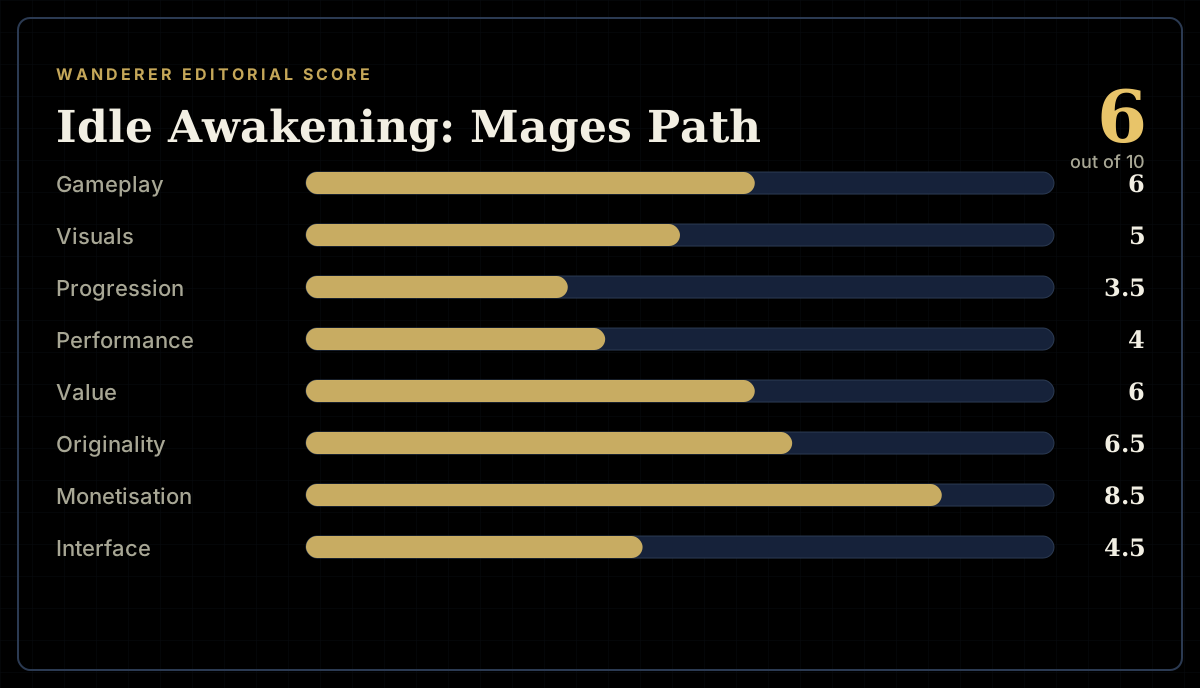
How the review scores each part of the gameWanderer Editorial -
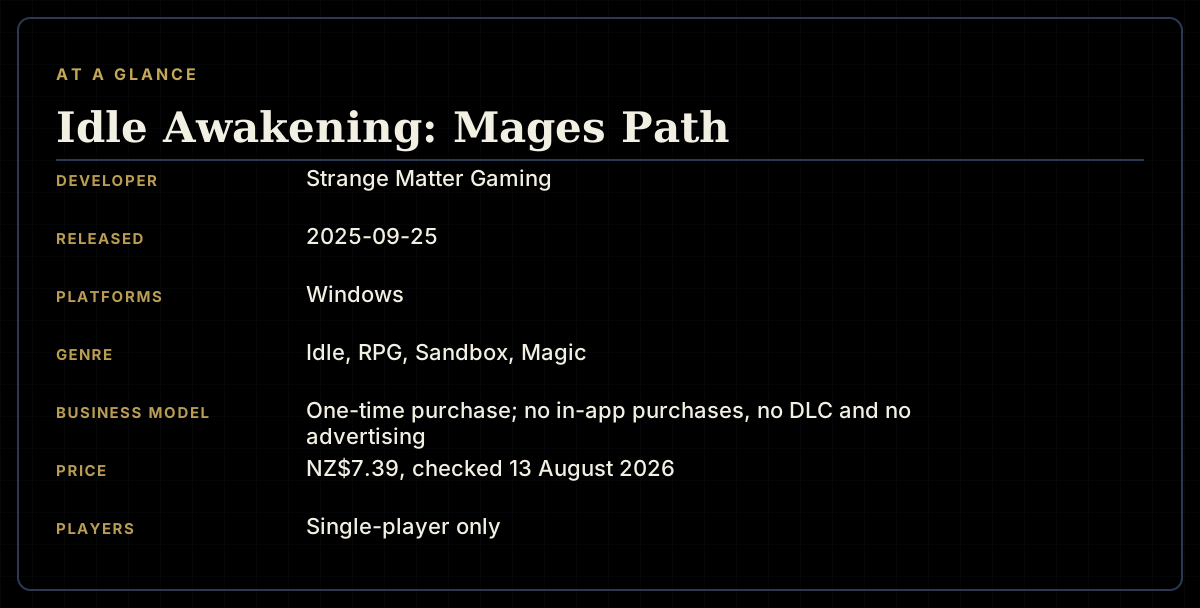
The essentials at a glanceWanderer Editorial -
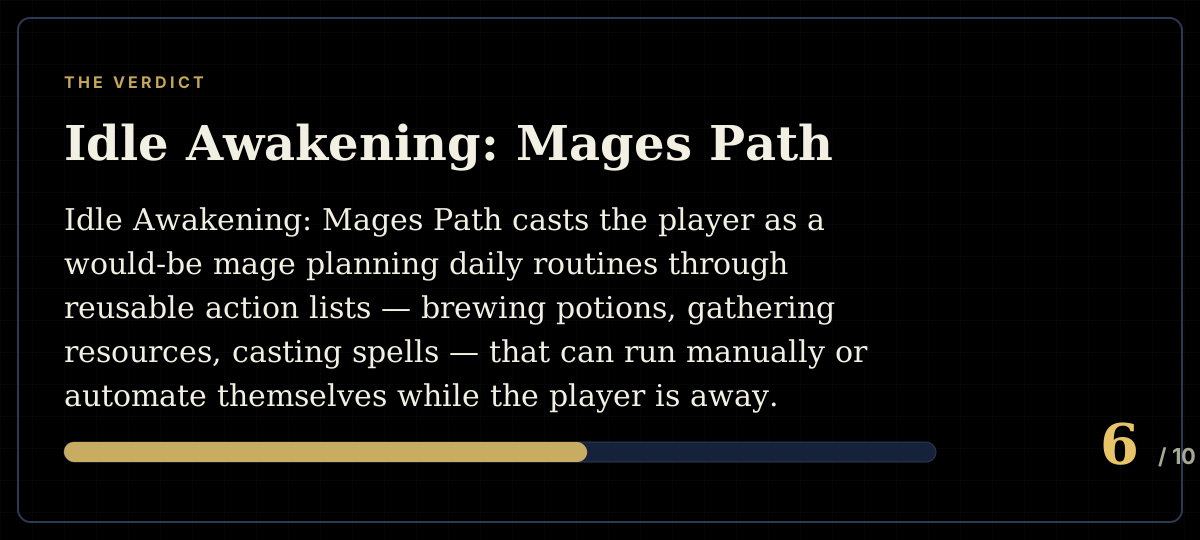
The short versionWanderer Editorial