Game review
Tombwater
7 / 10
- Developer
- Moth Atlas
- Publisher
- Midwest Games
- Released
- 31 March 2026
- Platforms
- PC
- Genre
- Action RPG, Soulslike, Metroidvania, Indie
- Monetisation
- Premium (one-time purchase)
- Players
- false
The short version
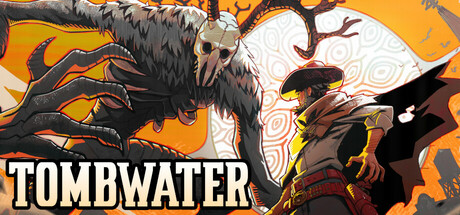
Tombwater takes an unlikely pitch — a 2D demake of Bloodborne filtered through the top-down structure of A Link to the Past, set in a cursed Wild West town — and makes it work far more often than not. Its interconnected world, occult class system, and gorgeously grim pixel art carry it a long way, even if a vague map and a handful of combat and bug-related rough edges keep it just short of essential.
Biggest strengths
- A genuinely novel and well-executed genre blend of soulslike combat and top-down Zelda-style exploration
- A distinct, atmospheric weird-west-meets-Lovecraft aesthetic backed by an excellent ambient soundtrack
- Deep character-build variety across weapons, guns, spells and the Madness system, with secrets still being found well into the late game
Biggest weaknesses
- The map is notoriously vague, with hidden or underground obstacles going unmarked and no route guidance between areas
- Combat is limited to four attack directions, and several reviewers describe weapon variety as padded with underwhelming options
- Starting class locks in fixed offensive stats with no way to respec, which can feel restrictive later on
Who it's for: Soulslike and metroidvania fans who want a genre mashup that genuinely earns its comparisons, and who don't mind a map that expects them to do some of the work themselves.
Our recommendation: Recommended, especially for players who enjoy Bloodborne's tone and Zelda-style non-linear exploration in equal measure — go in prepared for a map that leans on you to mark your own waypoints.
7 / 10
Bloodborne Meets A Link to the Past in a Weird West Town
Tombwater's pitch sounds almost too strange to work: a top-down, pixel-art soulslike set in a cursed Old West town, where the frontier's usual horrors — bandits, wasteland heat, dwindling supplies — have been replaced with something closer to cosmic dread. Reviewers are quick to point out the game's own origin story as a clue to why the combination lands so well: "the game actually started out as a 2D demake of Bloodborne, and you can definitely feel that influence in the combat, tone, and overall design philosophy." That DNA shows up everywhere, from the campfire-and-corpse-run structure to the way its Eldritch western setting is described repeatedly across the review sample as "Bloodborne as a top-down Zelda game in a weird west setting."
That comparison to Zelda isn't incidental either. One long, detailed review draws the connection directly to a classic: "this game is very set up like A Link to the Past, and that makes me love it even more," praising the way Tombwater borrows that game's structure of tool-gated progression and open, non-linear world traversal, layered underneath a much darker, more punishing combat system. It's an unusual pairing of influences, and the review sample is remarkably consistent in agreeing it pays off.
Class-Based Builds, Spells, Guns and the Madness System
Character building is one of Tombwater's strongest hooks. Players choose a starting class — Drifter, Occultist, Soldier and others are mentioned across the sample — that shapes their build for the rest of the run, with access to melee weapons, firearms, renewing craftable items, and spells drawn from an occult "Madness" system that one reviewer calls "an excellent replacement for my ancient enemy, the mana bar." Rather than gating power behind stat requirements, Tombwater hands players a wide toolkit early and lets playstyle preference do the rest: "Every player has access to weapons, guns, renewing craftables, spells, and weapon arts... No stat requirements!"
That openness does come with a caveat several reviewers flag: your starting class locks in your offensive stat spread for good. "You can't level individual offensive stats despite how they're displayed at class selection... If you start as an Occultist, you'll always deal 50% less melee damage than a Soldier, with no way to pivot." For a game that otherwise encourages experimentation, that's a meaningfully restrictive design choice, and it's worth knowing about before committing to a class for a long run.
A Sprawling, Interconnected World That Rewards (and Frustrates) Exploration
Tombwater's map design draws consistent praise for its density and interconnection — "the map is extremely dense and interconnected, the devs obviously poured a lot of passion into developing this," with multiple entries and exits from most areas allowing for genuinely non-linear play. Reviewers report finding new spells, weapons, and charms well into the game's final act, and roughly half of the total content is described as entirely optional for players chasing a leaner playthrough.
The map itself, however, is the single most consistent complaint in the sample, appearing in both glowing and critical reviews alike. "The map is only a smidgen above being completely useless, this game is not for anyone who doesn't like to be lost or backtracking constantly," reads one otherwise enthusiastic review, while another notes that "obstacles requiring upgrades aren't marked, but there are map markers...! But if those obstacles are indoors or below-ground, that doesn't get a separate map." Nearly every longer review in the sample independently arrives at the same piece of advice for new players: mark everything yourself, immediately, because the game won't do it for you. It's a deliberate design decision that fits the soulslike ethos of self-directed discovery, but it's also one that clearly tests some players' patience.
Combat: Tight and Punishing, With a Few Rough Edges
Most reviewers describe the combat itself as tight and satisfying, blending melee weapons, firearms and spellcasting into "tight and responsive" encounters that punish careless play. "Furthermore it's punishing if you make a stupid mistake of going in for an extra hit you can (and will) be punished," notes one early-hours review, and the balance between gunplay and melee is repeatedly singled out as well-tuned rather than favouring one approach outright.
The most detailed critical review in the sample, however, raises several combat-specific concerns worth weighing. It notes that attacks are limited to four directions rather than a full 360 degrees, which "adds a wrinkle... but I'd prefer to attack in 360°," and flags a meaningful chunk of the weapon roster as underwhelming: "tons of dud weapons. Awkward ranges, unfortunate hitstun thresholds, and for some reason only 1/3 of em have Weapon Arts." The same review also points out that large enemies and bosses can often be rushed down by dumping resources into them quickly, undercutting some of the tactical depth the genre usually demands. These are real, specific criticisms from an otherwise fair-minded Not Recommended review, even if they run against the overwhelming majority of the sample, which found the combat consistently enjoyable across dozens of hours.
Presentation: Atmosphere Carries the Weird West Horror
Where the sample reaches near-total consensus is on presentation. The pixel art, lighting and especially the soundtrack draw repeated praise — "relaxing, almost lonely guitar following you as you weave down city alleys, wander across desert plains, and trudge through haunted swamps" — and the Lovecraftian-western tone is consistently described as distinct and well-sustained across the whole runtime. Boss encounters come in for particular praise as "well telegraphed and designed," and the game's accessibility options, which let players tune incoming and outgoing damage, are highlighted more than once as a thoughtful inclusion for players who want the story and exploration without the genre's usual difficulty spike.
A handful of players report minor technical issues — a health bar occasionally failing to display, or getting stuck on terrain and needing to reload — though these are consistently described as infrequent rather than run-breaking. Performance on Steam Deck draws specific praise from more than one reviewer, with the game described as running smoothly on the handheld.
Verdict: A Genre Blend That Mostly Works
Tombwater's premise could easily have collapsed under the weight of its own influences, but the review sample is unusually consistent in confirming that it doesn't. The combination of Bloodborne's dread and combat rhythm with A Link to the Past's open, tool-gated exploration produces something that feels genuinely distinct rather than like a pastiche, and the atmosphere — sound design especially — does a huge amount of work in selling the Eldritch western setting. The map's stubborn vagueness and a short list of combat-balance quirks keep it from being flawless, but for players willing to do a bit of their own cartography, Tombwater delivers one of the more interesting soulslike hybrids in recent memory.
Pros and cons
Pros
- A genuinely novel and well-executed genre blend of soulslike combat and top-down Zelda-style exploration
- A distinct, atmospheric weird-west-meets-Lovecraft aesthetic backed by an excellent ambient soundtrack
- Deep character-build variety across weapons, guns, spells and the Madness system, with secrets still being found well into the late game
- A large, non-linear, densely interconnected world that rewards curiosity
Cons
- The map is notoriously vague, with hidden or underground obstacles going unmarked and no route guidance between areas
- Combat is limited to four attack directions, and several reviewers describe weapon variety as padded with underwhelming options
- Starting class locks in fixed offensive stats with no way to respec, which can feel restrictive later on
- Minor bugs — including a health bar that occasionally fails to display and characters getting stuck on terrain — persist for some players
Screenshots
-
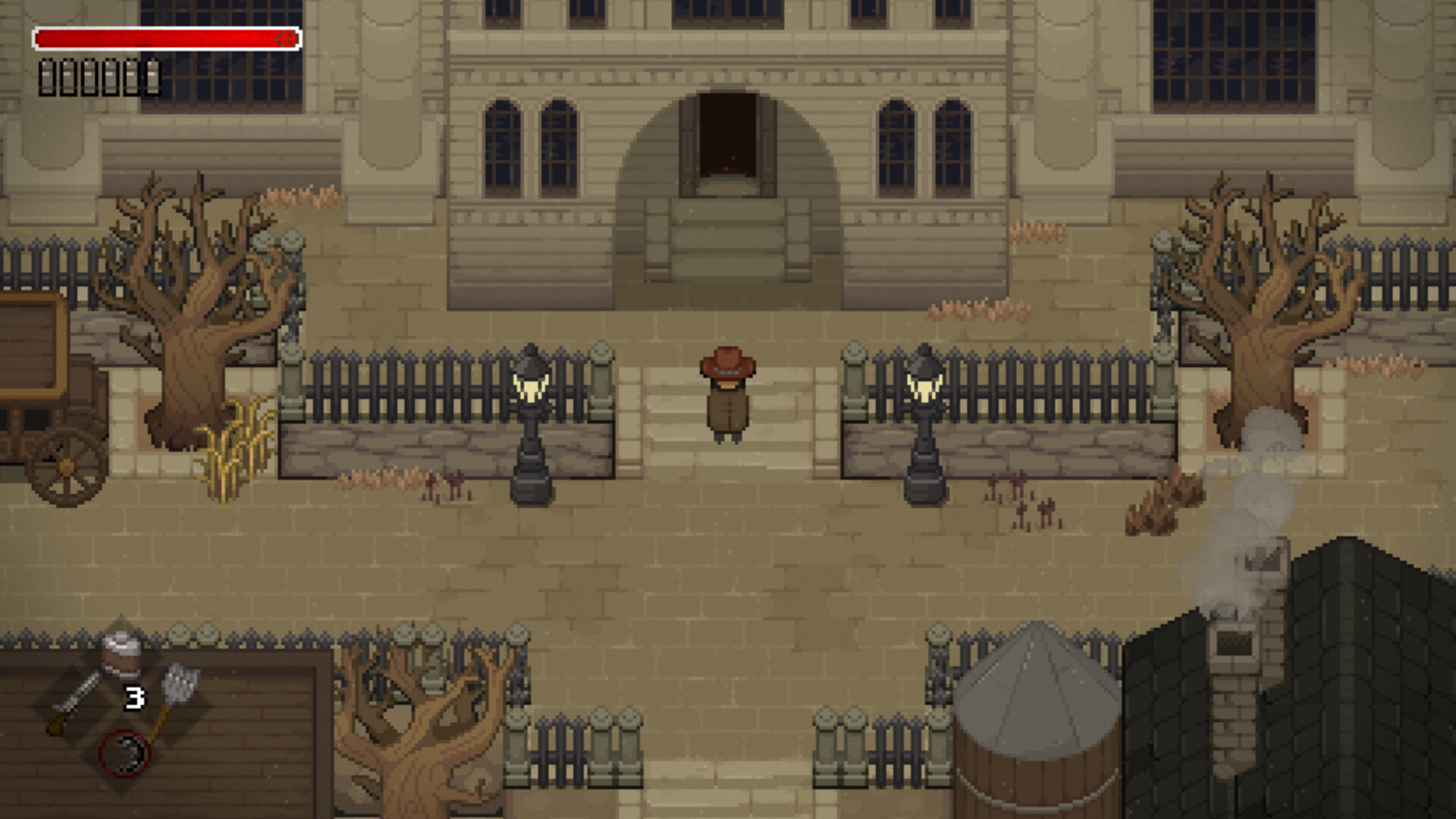
The game's Zelda-style top-down exploration, arriving at one of Tombwater's many interconnected locationsMidwest Games -
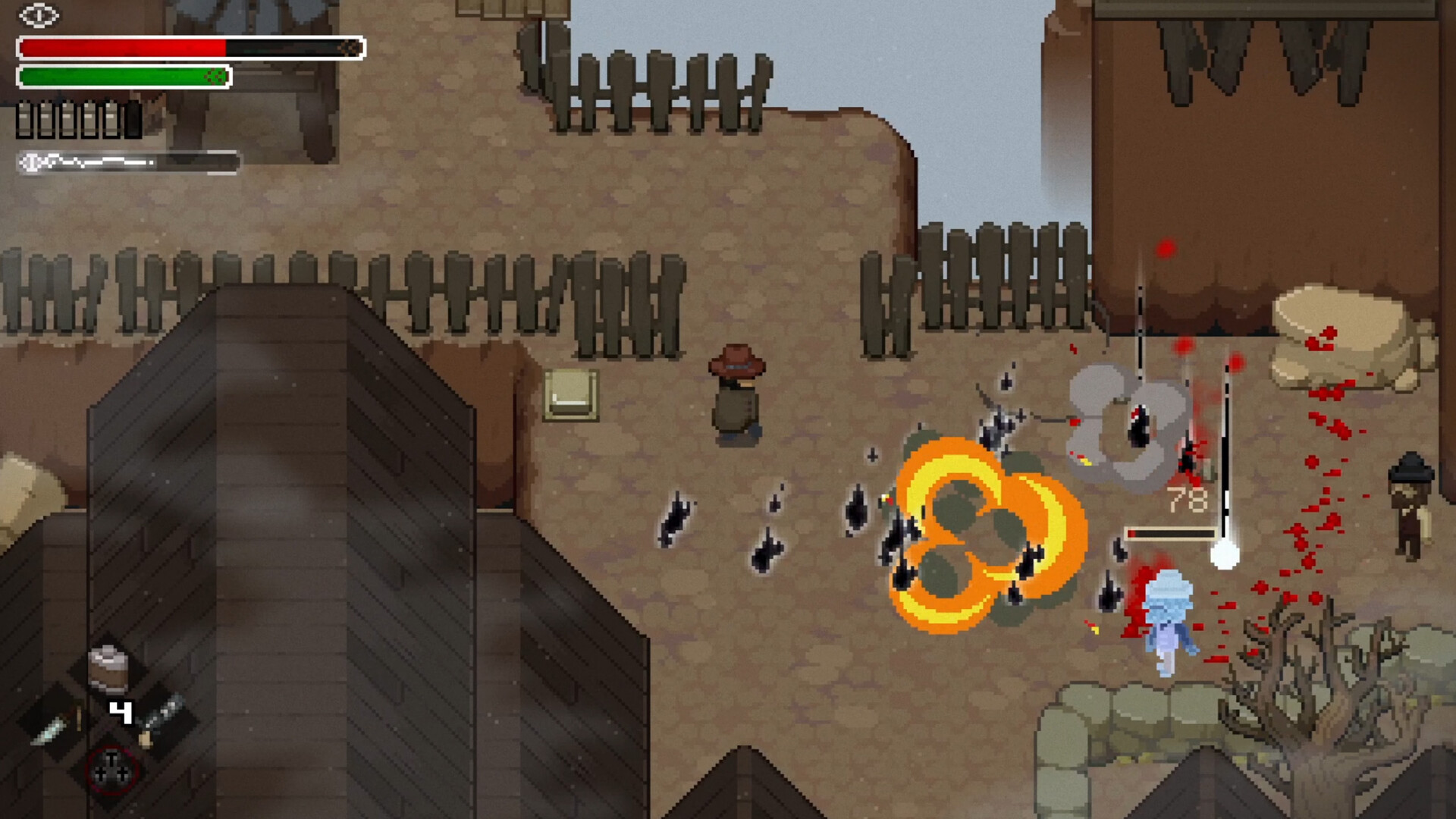
Combat blends melee weapons, firearms and occult spells, with reviewers praising its tight, punishing rhythmMidwest Games -
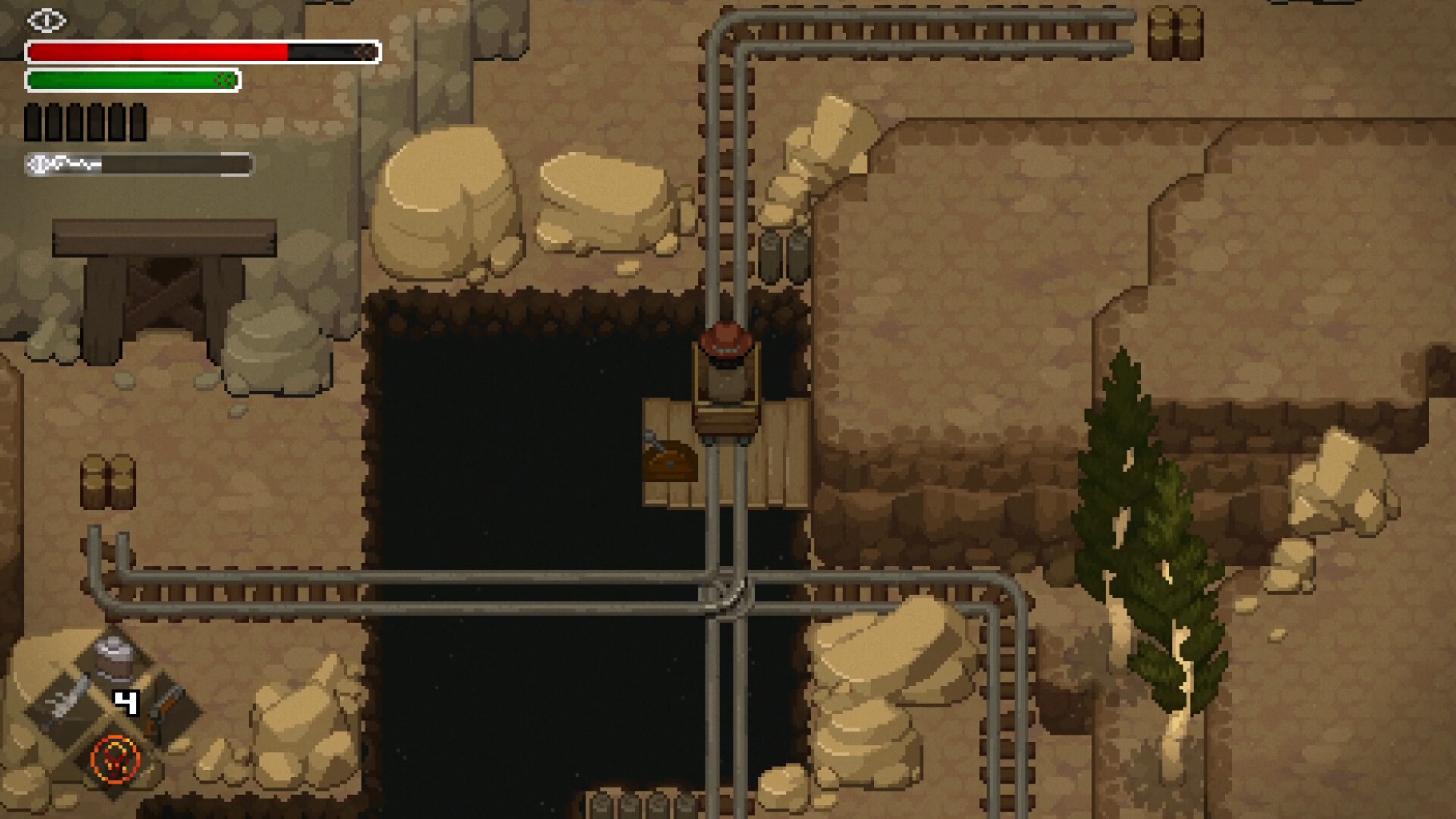
One of the unmarked underground obstacles reviewers say the game's notoriously vague map fails to trackMidwest Games -
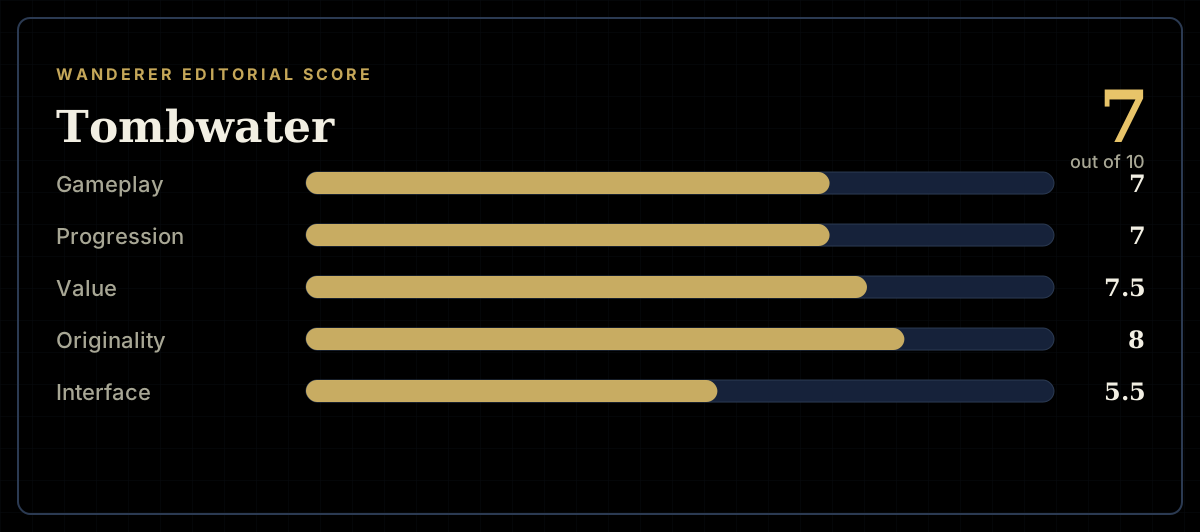
How the review scores each part of the gameWanderer Editorial -
The short versionWanderer Editorial