Game review
The Last Spell
8 / 10
- Developer
- Ishtar Games
- Publisher
- Nacon
- Released
- 9 March 2023
- Platforms
- Windows
- Genre
- Fantasy Tactics Tower-Defense Roguelite
- Monetisation
- One-time premium purchase; three paid DLC expansions released across 2024-2026 alongside ongoing free balance and content updates
- Players
- Single-player only; no online, co-op or PvP modes
The short version
The Last Spell casts you as the last line of defense around a mage attempting to cast a world-saving spell over ten increasingly brutal nights, blending Final Fantasy Tactics-style positioning and skill trees with tower-defense base-building between waves. Reviewers consistently single out the combat as genuinely deep and demanding, the pixel art and soundtrack as exceptional, and the overall concept as a distinctive, well-executed mashup rather than a simple genre mix.
What keeps the reception from being uniformly glowing is a real, ongoing tension over difficulty and balance: this review's research confirms achievement data showing an extremely steep drop-off from early-game milestones to actually winning a run, and finds a genuinely years-long, still- active pattern of contentious balance patches that the developer has responded to with unusually direct community feedback drives, though the debate itself remains unresolved for some players. Separately, a specific, repeated complaint about the game's unlock system making runs harder as players progress, and a request for a way to undo a single costly mistake without losing an entire run, do not appear to have been directly addressed across the sampled patch history.
Biggest strengths
- Deep, demanding tactical combat that reviewers repeatedly compare favorably to Final Fantasy Tactics, built around genuine positioning and resource decisions rather than simple attrition
- Exceptional pixel art and an "amazing" soundtrack that draw consistent, specific praise even from reviewers otherwise critical of the game's difficulty or balance
- An unusually long, still-active five-year post-launch support record, including three paid DLC expansions and a fourth in development as of this review
Biggest weaknesses
- Achievement data confirms a punishingly steep difficulty curve: this review's research found only roughly 7.5% of the playerbase has won a base-game run, falling to a fraction of a percent at the hardest difficulty tier
- Weapon and perk balance patches draw sustained, specific criticism from some reviewers as overly aggressive nerfs favoring only the most extreme difficulty players, a debate this review's research confirms is still ongoing rather than settled
- A specific, repeated complaint that unlocking more weapons and items dilutes the loot pool and makes builds harder to plan, rather than more rewarding; no confirmed fix for this specific complaint was found
Who it's for: Tactics and roguelite fans who want a genuinely difficult, deeply systemic challenge and don't mind a still-contentious balance conversation; less suited to players who want a relaxed or forgiving strategy game.
Our recommendation: A strong pick for tactics and roguelite fans willing to engage with real difficulty and an active, still-evolving balance philosophy — five years of sustained content and DLC support make this one of the more thoroughly maintained games reviewed in this lane.
8 / 10
The Last Spell puts a small band of heroes between a mage and the endless waves of monsters trying to stop them from casting a spell that will save the world — a process that takes ten nights of building walls, positioning units and managing a shrinking pool of resources between increasingly dangerous waves. It's part tactical RPG, part tower defense, part roguelite, and reviewers consistently describe that blend as one of the most distinctive things released in the genre.
Tactical combat reviewers compare to Final Fantasy Tactics
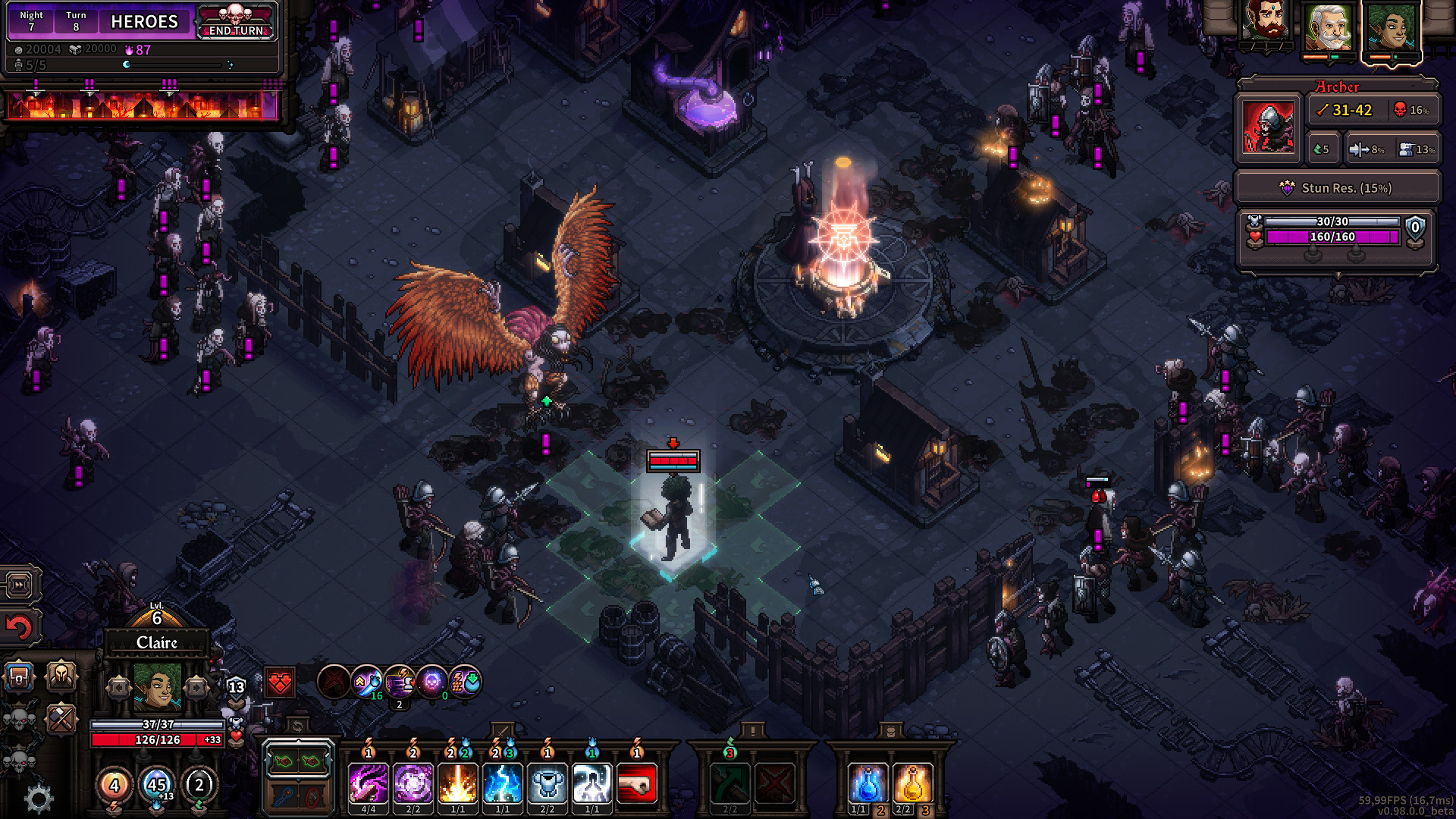
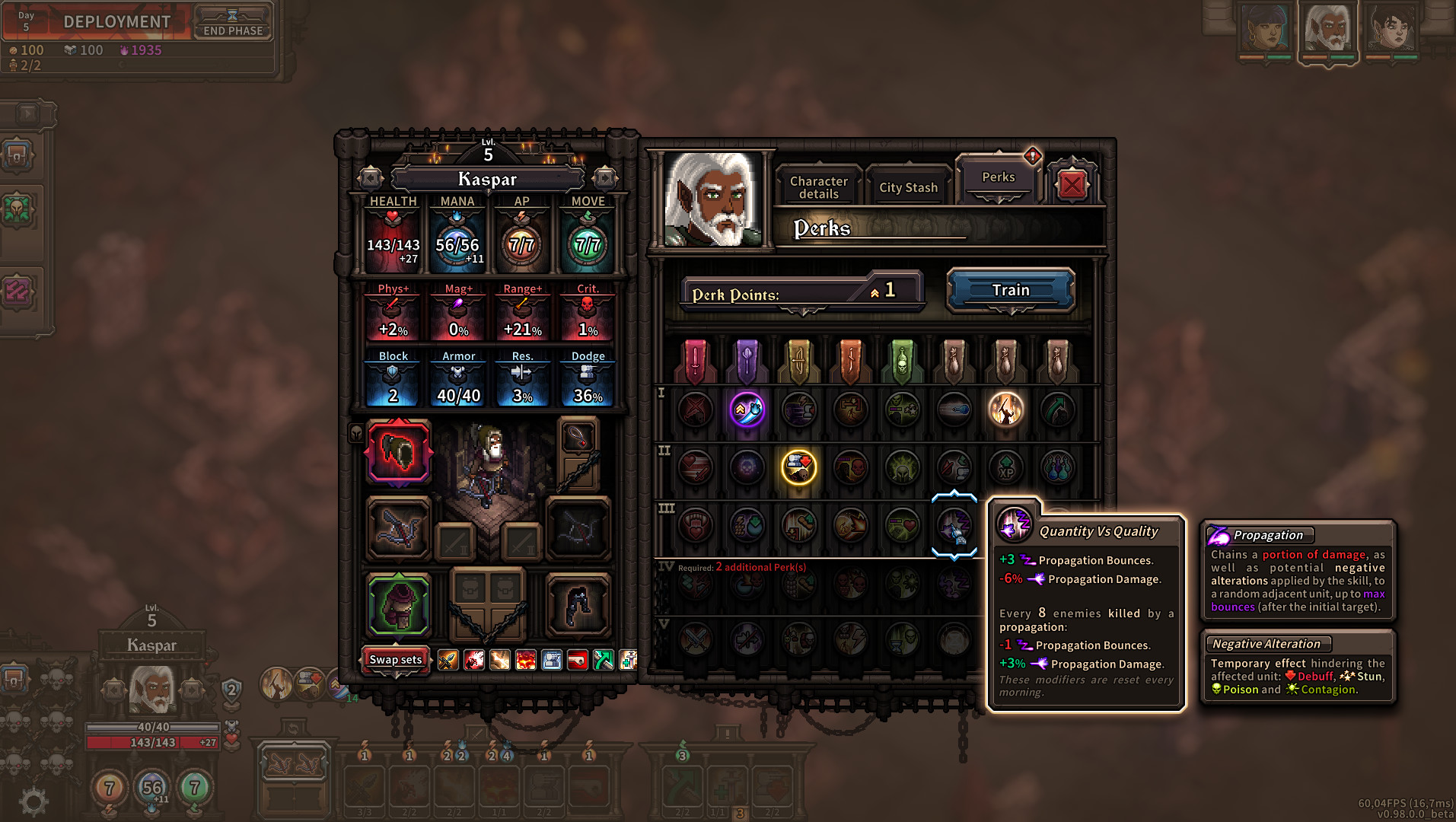
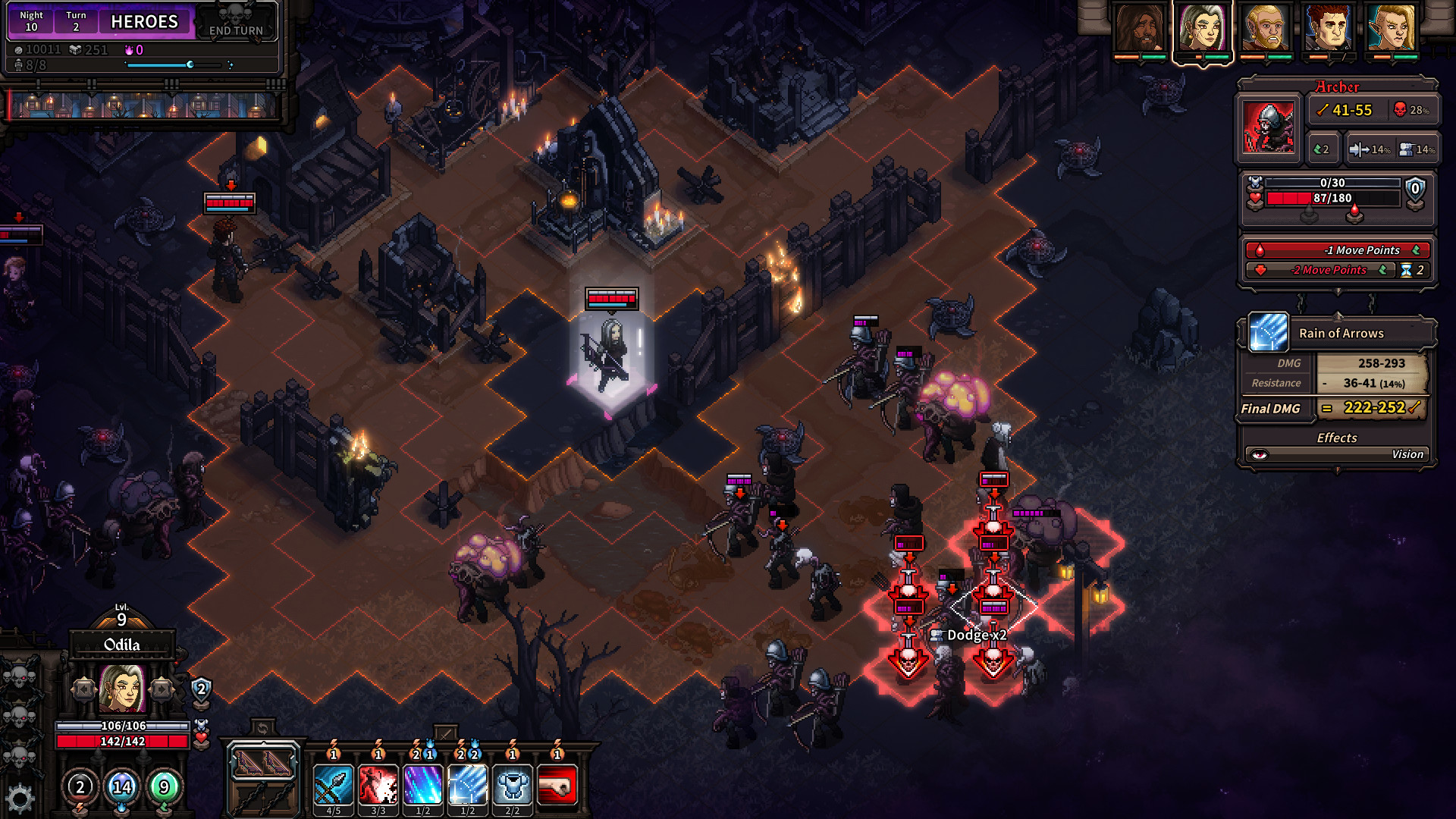
The strongest, most consistent praise concerns the depth of the moment-to-moment combat. Reviewers with deep tactics-genre backgrounds repeatedly invoke Final Fantasy Tactics as a comparison point, crediting the game's skill trees, positioning demands and resource management with real strategic weight rather than simple numbers-go-up progression. Between-wave base building — placing walls, traps and defensive structures — adds a genuinely distinct layer most pure tactics games don't attempt, and reviewers credit that combination with keeping runs feeling fresh even after dozens of hours.
Achievement data confirms a brutal difficulty curve
Multiple reviewers describe the game as genuinely, deliberately punishing, with one estimating only about 5% of owners ever finish a run. This review's research confirms that figure closely: global achievement data shows 66.1% of the playerbase completing an early first-unlock milestone, falling to just 7.5% for actually winning a base-game run, and collapsing further to a fraction of a percent for winning at the game's hardest "Apocalypse" difficulty tiers. That's an unusually steep drop-off even by roguelite standards, and it corroborates reviewer descriptions of the game as a genuine, sustained test of skill rather than an exaggerated complaint from a vocal minority.
A balance debate the developer has engaged with directly, but not settled
Weapon and perk balance draws the most contentious, specific criticism in the review base, with some reviewers describing successive nerf-heavy patches as catering exclusively to the hardest-difficulty players at the expense of everyone else, particularly melee builds. This review's research confirms the developer took that criticism seriously in a structured, transparent way: a public feedback form circulated in December 2024 and January 2025 directly asked players to weigh in on weapon, perk and building balance, followed by a detailed blog post explaining exactly how that feedback shaped a subsequent rebalance patch. That's a genuinely substantive response — but reviewers posting after those changes continued to debate specific numbers, meaning this is a case of demonstrated, transparent engagement rather than a fully resolved dispute.
What wasn't found addressed
Two specific, repeated complaints don't appear to map onto a confirmed fix in the sampled patch history. Several reviewers describe the game's unlock system as counterproductive: unlocking more weapons and items expands the random loot pool available during a run, which some feel dilutes their chances of getting the specific gear their build needs, effectively punishing players for playing more. A related, separately-voiced request asks for a way to undo or restart just the current day after one costly mistake, rather than losing an entire multi-hour run outright. This review's research found no patch note directly targeting either complaint. A related but distinct feature — multiple save slots, letting players run separate playthroughs without deleting old saves — was added in November 2024, but that addresses a different problem than either of the complaints above.
Five years of sustained, still-active support
Few games in this lane can match The Last Spell's post-launch record: from its March 2023 full release through this review's research in September 2026, the developer has shipped three paid DLC expansions (Dwarves of Runenberg, Elves of Amberwald, and Tales of Torment), each paired with a free major content update, alongside a steady stream of balance patches and hotfixes that continued through mid-2026. A fourth DLC is confirmed in active development as of this review, described by the developer as reworking systems across the entire game rather than simply adding new content on top — a level of sustained investment well beyond what most games in this price range receive.
Frustrating enemy gimmicks in the final maps
Beyond the balance debate, several reviewers separately criticize the design of the game's final two maps specifically, describing a shift away from the core positioning-and-resource combat that earns the game its strongest praise elsewhere. Complaints center on enemy types that reviewers describe as feeling less like tactical puzzles and more like scripted inconveniences: spawning bombs that can't be peacefully defused and punish standing nearby, and temporarily invincible units that force wasting a turn at a specific location rather than rewarding smart positioning. Reviewers who raise this complaint are careful to separate it from the broader balance debate above, framing it specifically as a late-game design choice rather than a numbers problem, and this review's research did not find a patch specifically walking back or redesigning those particular late-game enemy mechanics.
A game built to be replayed, not just finished
The steep achievement drop-off documented above isn't purely a difficulty complaint in isolation; several reviewers frame repeated failed runs as central to how the game is meant to be played, each attempt unlocking permanent account-wide progress even without a win. That structure means a given player's personal sense of the game's difficulty curve varies enormously depending on how many hours they've already invested in earlier, unsuccessful runs — worth keeping in mind when weighing the achievement figures above against any individual review's framing of the game as either "brutal" or "fair."
Where it lands
The Last Spell earns its Very Positive reception through genuinely excellent tactical combat, art and music, and a distinctive structural hook that reviewers consistently credit as more than the sum of its familiar parts. Its difficulty is real and confirmed by the game's own data, not an exaggeration, and its balance history is a live, ongoing conversation the developer has engaged with directly rather than ignored — even if that conversation hasn't fully satisfied every player who's weighed in. For tactics and roguelite fans prepared for a serious challenge, backed by five years of unusually committed support, this remains a strong recommendation.
Pros and cons
Pros
- Deep, demanding tactical combat that reviewers repeatedly compare favorably to Final Fantasy Tactics, built around genuine positioning and resource decisions rather than simple attrition
- Exceptional pixel art and an "amazing" soundtrack that draw consistent, specific praise even from reviewers otherwise critical of the game's difficulty or balance
- An unusually long, still-active five-year post-launch support record, including three paid DLC expansions and a fourth in development as of this review
- A distinctive tower-defense/tactics/roguelite hybrid structure that reviewers credit as genuinely innovative rather than a simple mashup of familiar parts
- Confirmed, direct developer engagement with the game's balance controversy through public feedback forms and a detailed blog post explaining exactly how player feedback shaped a major weapons-and-perks rebalance
Cons
- Achievement data confirms a punishingly steep difficulty curve: this review's research found only roughly 7.5% of the playerbase has won a base-game run, falling to a fraction of a percent at the hardest difficulty tier
- Weapon and perk balance patches draw sustained, specific criticism from some reviewers as overly aggressive nerfs favoring only the most extreme difficulty players, a debate this review's research confirms is still ongoing rather than settled
- A specific, repeated complaint that unlocking more weapons and items dilutes the loot pool and makes builds harder to plan, rather than more rewarding; no confirmed fix for this specific complaint was found
- A request for a way to undo or restart just the current day after a costly mistake, rather than losing an entire multi-hour run, does not appear to have been directly implemented, though a related feature adding multiple save slots was
- Some reviewers describe the two final maps as leaning on frustrating enemy gimmicks (unavoidable spawning bombs, invincible units) that feel like a departure from the core combat system's strengths
Screenshots
-
The Last SpellImage: Nacon via Steam -
The Last SpellImage: Nacon via Steam -
The Last SpellImage: Nacon via Steam -
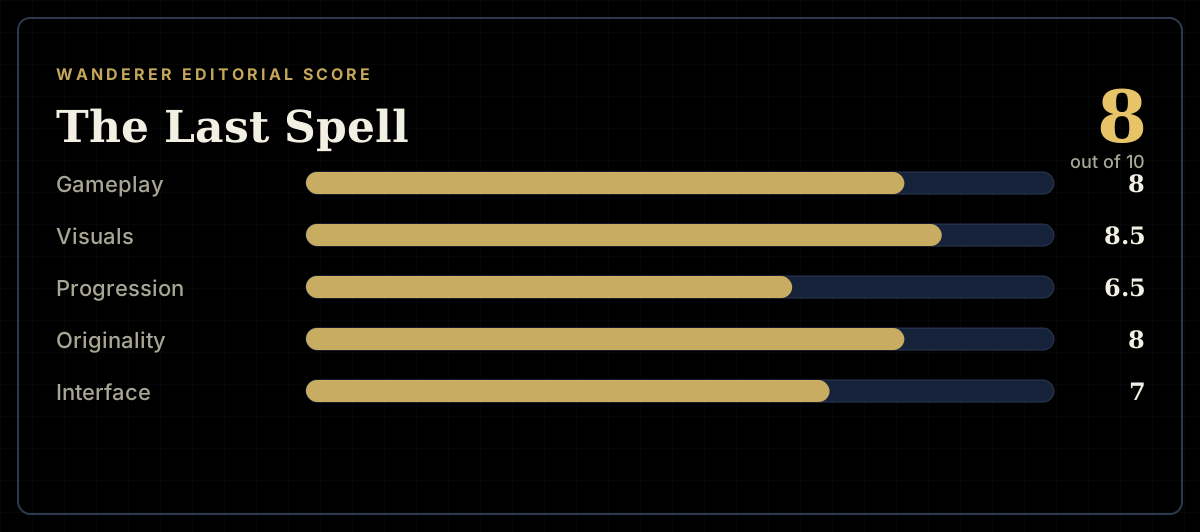
How the review scores each part of the gameWanderer Editorial -
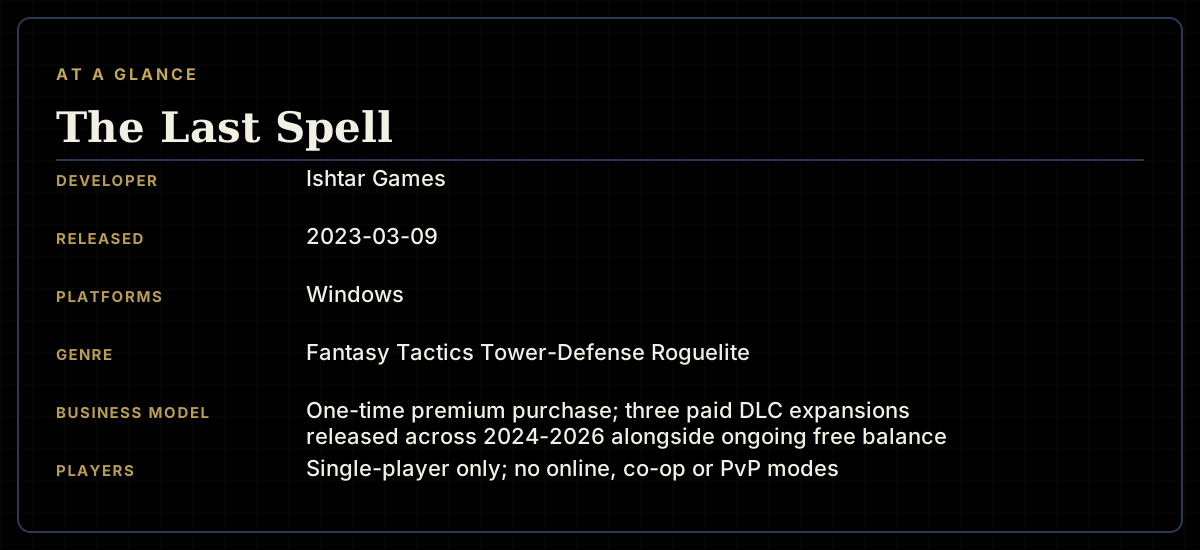
The specsWanderer Editorial -
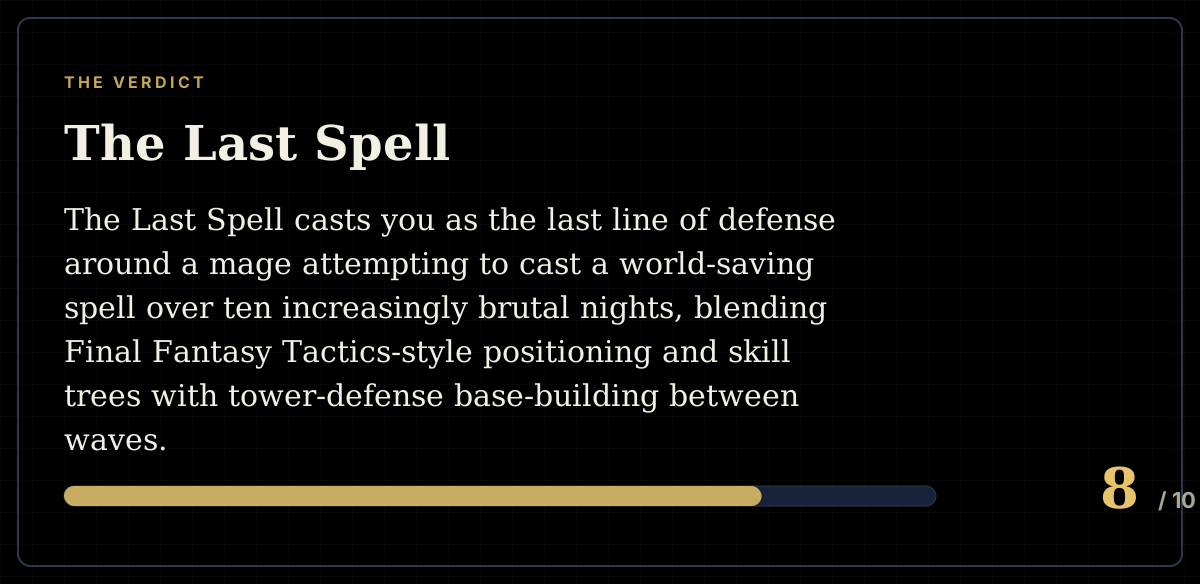
The short versionWanderer Editorial