Game review
The Last Clockwinder
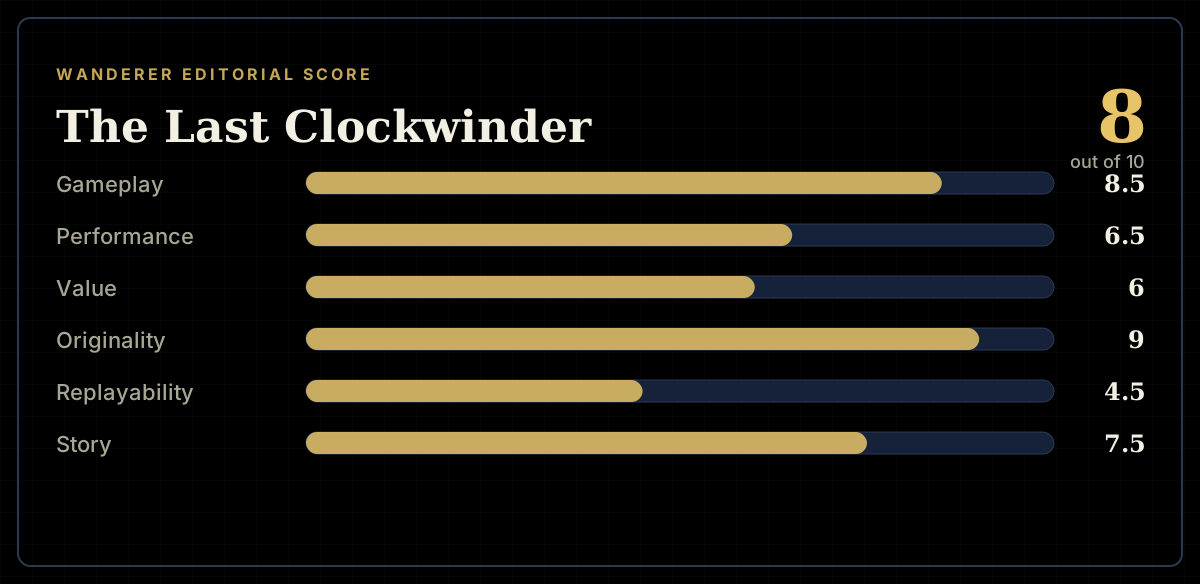
8 / 10
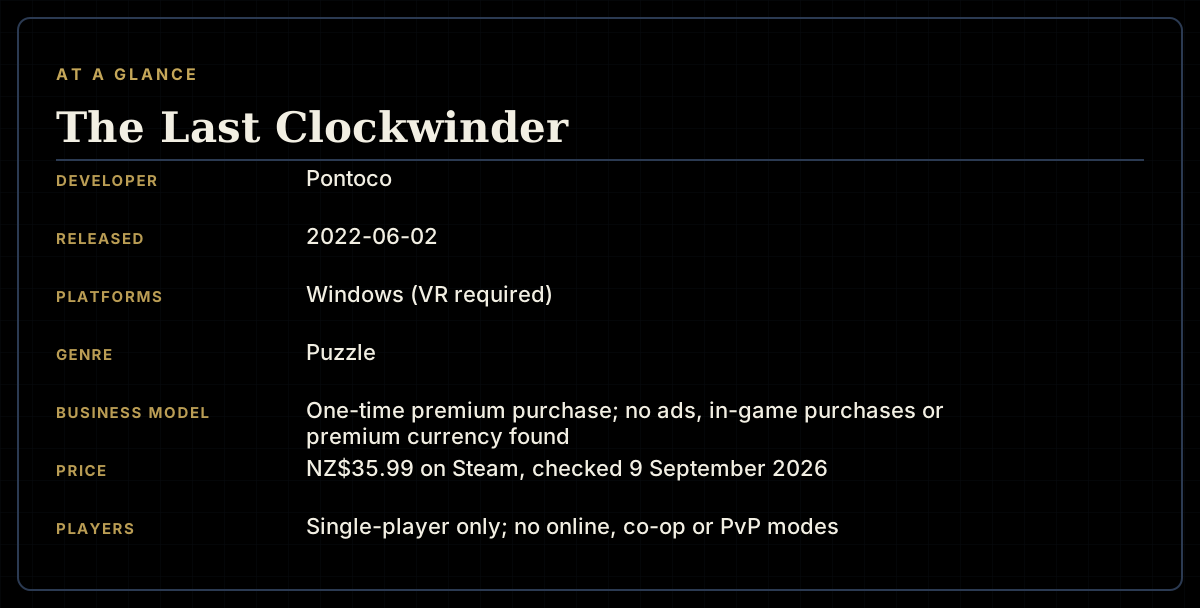
- Developer
- Pontoco
- Publisher
- Cyan Ventures
- Released
- 2 June 2022
- Platforms
- Windows (VR required)
- Genre
- Puzzle
- Monetisation
- One-time premium purchase; no ads, in-game purchases or premium currency found
- Players
- Single-player only; no online, co-op or PvP modes
The short version
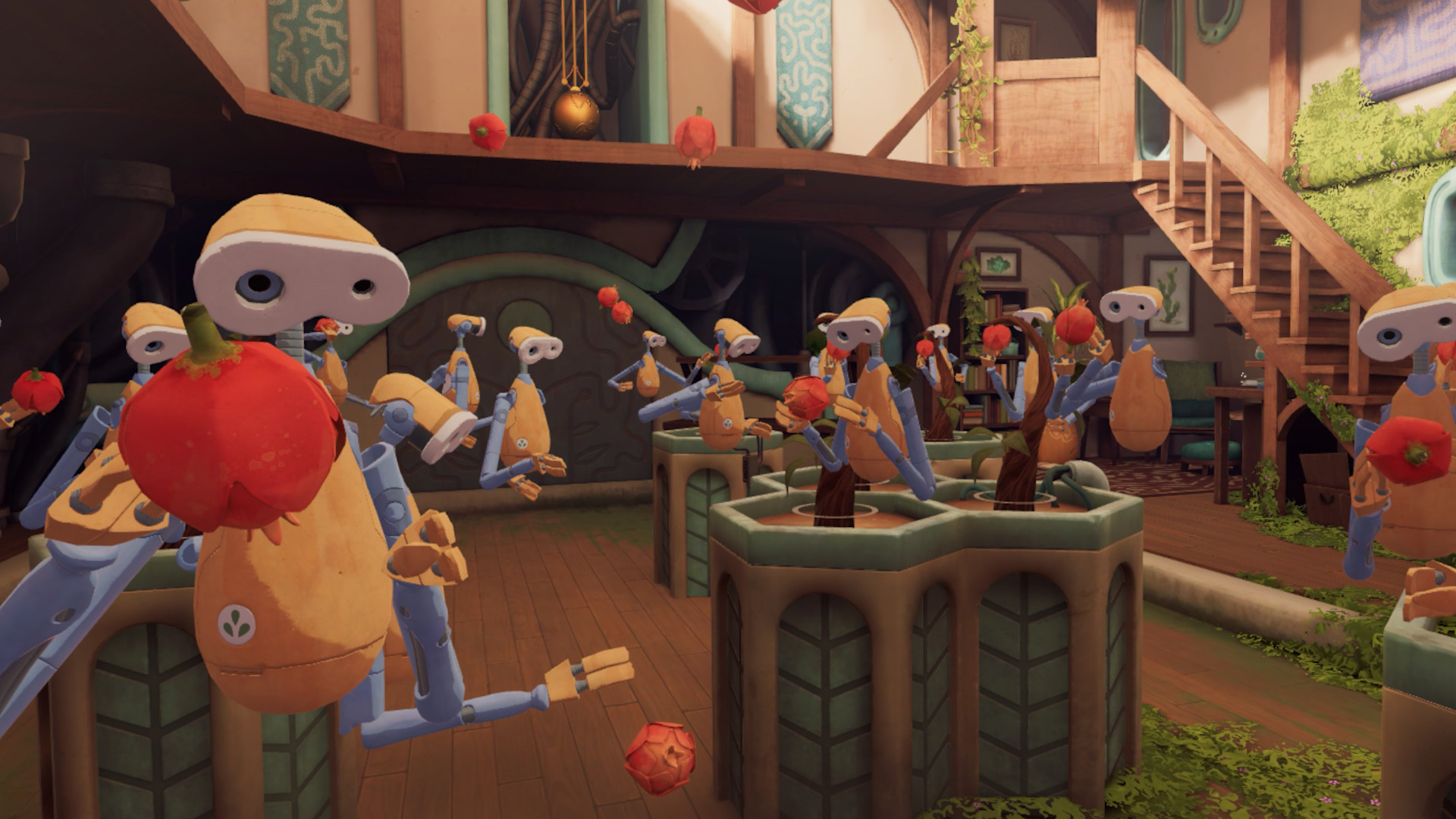
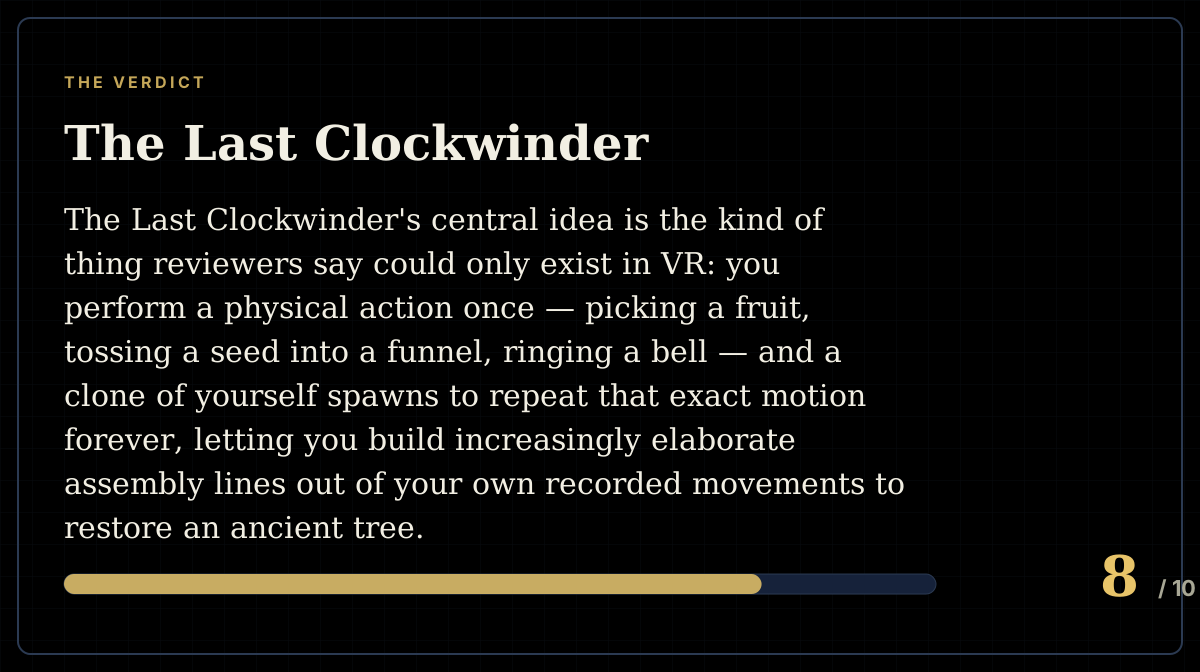
The Last Clockwinder's central idea is the kind of thing reviewers say could only exist in VR: you perform a physical action once — picking a fruit, tossing a seed into a funnel, ringing a bell — and a clone of yourself spawns to repeat that exact motion forever, letting you build increasingly elaborate assembly lines out of your own recorded movements to restore an ancient tree. Reviewers across nearly 700 combined ratings describe it with real, specific enthusiasm rather than generic praise, several explicitly crediting it with restoring their faith that VR could still produce genuinely new ideas. Published by Cyan Ventures — the studio behind Myst — and named Meta's Best Game of 2022, the recognition matches the reception.
What keeps this from a perfect score is specific and consistent: clones don't always reproduce your recorded motion reliably, sometimes fumbling a grab or freezing in a position your own hands never held, and the physics can shift unpredictably as more clones are added to a scene. The full game is also short — most reviewers reach full completion in around eight hours — with several saying they wanted more precisely because what's here is so good. A specific, disorienting bug that strands players without functioning hands on reload was fixed within weeks of launch, though at least one player reported an identical-sounding issue years later, in 2025.
Biggest strengths
- A genuinely novel core mechanic — recording your own physical actions to spawn repeating clones — that reviewers consistently credit as something only VR could deliver, not a flat mechanic ported from elsewhere
- Excellent, "top-notch" voice acting and a warmly written, unobtrusive story that reviewers say complements rather than interrupts the puzzle-solving
- Genuinely satisfying, non-janky physics interaction that multiple reviewers single out as better than almost anything else they've played in VR
Biggest weaknesses
- Clones don't always faithfully reproduce a recorded action — reviewers describe grabs failing, hands freezing in positions the player's own hands never occupied, and physics shifting unpredictably as more clones are added to a busy scene
- The full campaign is short, reaching 100% completion in around eight hours for most reviewers, and several say the difficulty curve and content don't extend meaningfully past that point
- Once the story and main challenges are complete, reviewers describe little remaining replay value beyond a set of optional efficiency challenges per room
Who it's for: VR owners specifically looking for a genuinely inventive puzzle mechanic, warm storytelling, and physics interaction that reviewers consistently call some of the best VR has to offer. Less suited to players wanting a long campaign or who are sensitive to occasional physics unpredictability.
Our recommendation: One of the strongest VR-exclusive experiences reviewed this lane — worth the asking price for the idea alone, with the caveat that it's a shorter, denser experience than its price might suggest.
8 / 10
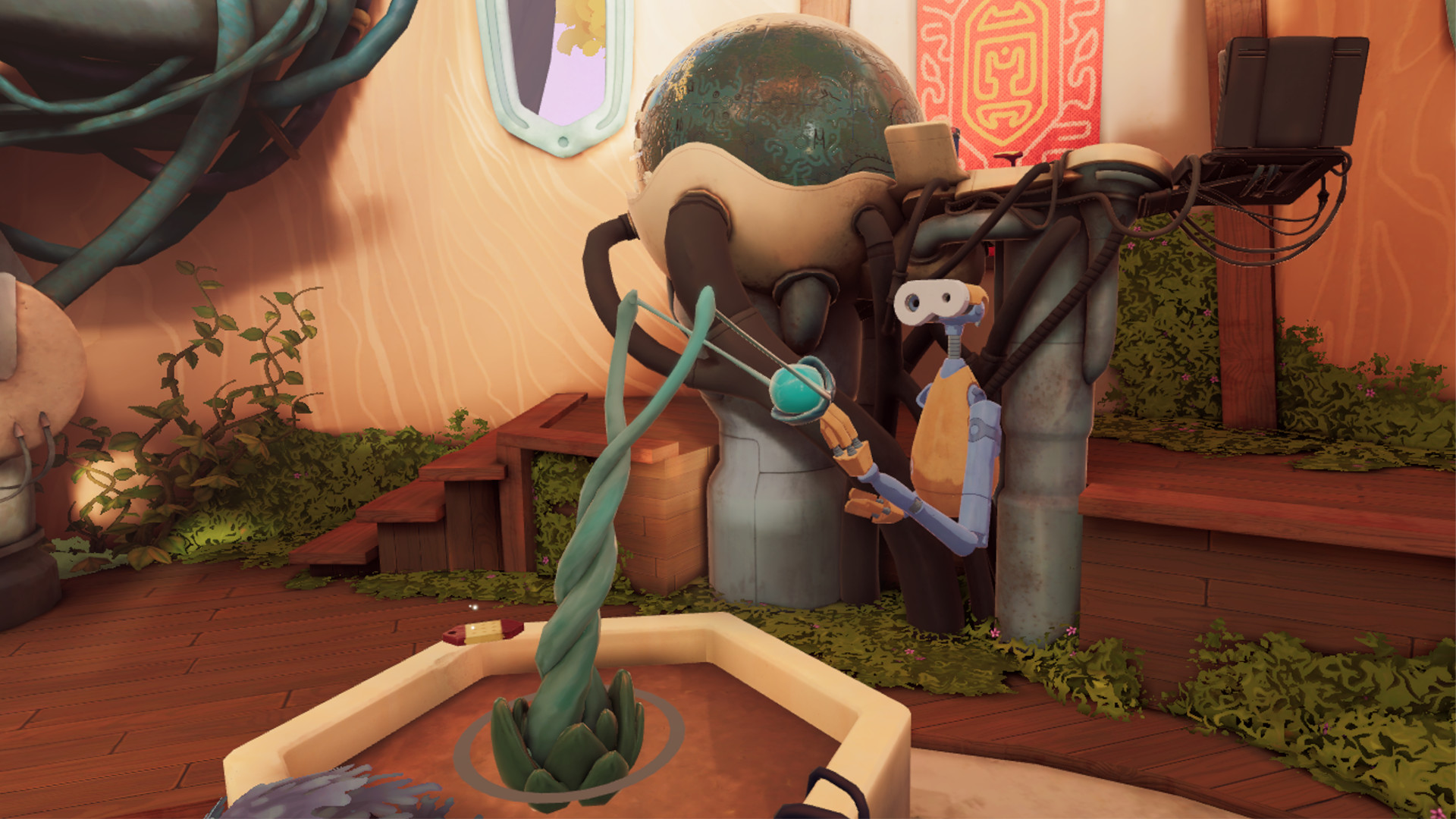
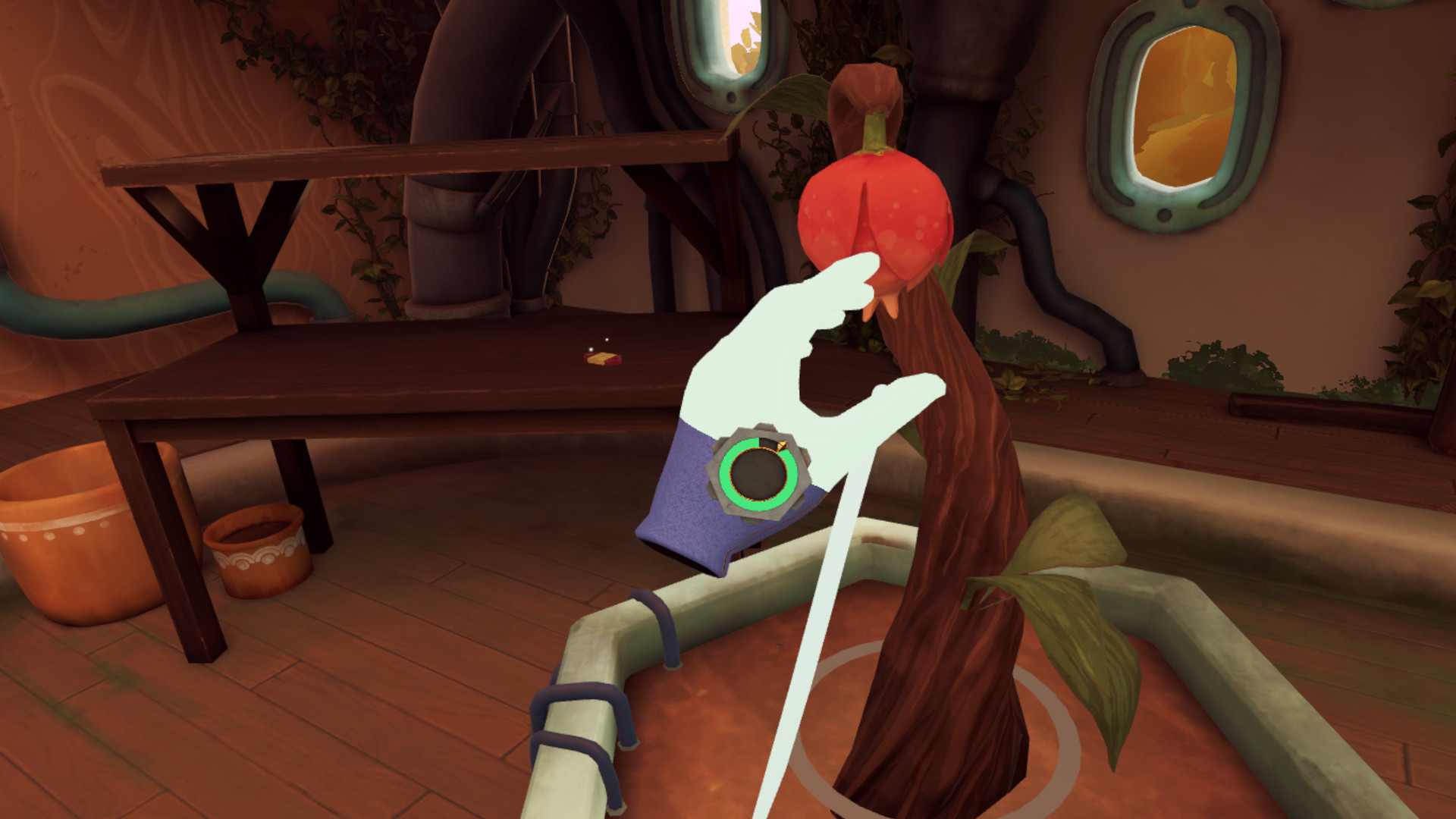
The Last Clockwinder's pitch sounds almost too simple to work: perform an action with your hands — pick a fruit, toss it into a machine, catch what comes out — and a clone of yourself appears to repeat that exact motion, forever, in sync with every other clone you've recorded. Layer enough of these recorded selves together and you're not solving a puzzle so much as choreographing an assembly line out of your own body, restoring an ancient, dying tree one increasingly elaborate contraption at a time. Reviewers across this game's very large, very positive review base describe this idea with the kind of specific enthusiasm that's hard to fake — more than one explicitly says it restored their faith that VR could still produce something genuinely new, not just a familiar genre reskinned with motion controls.
An idea that earns its acclaim
The praise here is unusually consistent in what it credits: not generic "fun VR game" enthusiasm, but specific admiration for interaction quality. Reviewers describe grabbing, throwing and catching as feeling "right" in a medium where that's still a genuine challenge for most developers, and the recorded-clone mechanic itself draws comparisons to Factorio — except, as one reviewer puts it, "YOU are the machines." The story, delivered through well-voiced narration that reviewers consistently call excellent, stays out of the puzzle-solving's way rather than interrupting it, and the presentation — colourful, tactile, warm — earns real affection even from the small number of reviewers who go on to list complaints about other aspects of the game. That combination of mechanical originality, execution quality and industry recognition (Meta's own Best Game of 2022 award, a VR Game of the Year nomination) is a rare enough alignment that this review is comfortable scoring it near the top of everything reviewed in this lane so far.
Where the clones stop cooperating
The specific, repeated complaint that keeps this from a higher score concerns reliability. Multiple reviewers describe clones failing to faithfully reproduce a recorded action — a grab that worked perfectly when the player performed it might fail entirely when a clone repeats it, or a clone's hand might freeze in a position the player's own hand never actually occupied. A related complaint describes physics behaving unpredictably as a scene fills with more clones, changing in ways that aren't clearly tied to anything the player did. These are specific, mechanical complaints rather than vague dissatisfaction, and they matter more here than they might in another genre, since the entire premise depends on trusting that a recorded action will repeat exactly as performed.
Short by design, and reviewers are genuinely split on whether that's right
Most reviewers who finish the game reach full completion — main story plus the majority of optional efficiency challenges — in around eight hours, and opinion on whether that's a flaw is divided in an interesting way. Several reviewers explicitly say they wish it were longer, precisely because the difficulty curve and idea execution felt so well-judged that they didn't want it to end; one reviewer frames the shortness as a deliberate, correct choice, arguing more length might have diluted a curve that currently feels close to perfect. A more critical read from at least one detailed reviewer argues the opposite: that the game's back stretch narrows into repetitive, single-action loops rather than continuing to introduce new ideas at the rate its opening hour promised. Both readings can be true of the same game, and this review reports them as the genuine, unresolved difference in reviewer experience that they are, rather than picking one as more correct.
A bug, fixed, then reported again years later
One specific technical issue is worth tracing carefully. A "Minor Bug Fix Patch" dated 11 July 2022 — about six weeks after launch — explicitly describes fixing a bug that "on rare occasions, caused players to load into the Main Menu far above the floor and with unresponsive hands." That's a precise match for a frustrated, detailed negative review describing exactly this symptom — but that review is dated September 2025, more than three years after the confirmed fix. This review can't determine from available sources whether the original bug was reintroduced by a later update, a platform-specific edge case the 2022 fix didn't fully cover, or a coincidentally similar but distinct issue — only that both the fix and the much later report are real, dated, and worth reporting honestly rather than assuming either that the bug was never fixed or that the 2025 report must be describing something unrelated.
A confusing early gate, and a fair fix
One more specific complaint deserves mention: several reviewers describe the inventory system being locked behind picking up a particular resource object that looks visually identical to other, non-unlocking resource objects nearby, with no in-game hint distinguishing it. More than one reviewer reports losing real time confused about why basic systems weren't available, before realising which specific object they needed to interact with first. It's a small, specific onboarding gap rather than a deep design flaw, and it's worth naming precisely because everything else about the game's tutorialisation is handled about as gracefully as VR puzzle games get — making this one unclear moment stand out by contrast rather than blend into a broader pattern of confusion.
Where it lands
The Last Clockwinder is one of the strongest, most inventive VR experiences this lane has come across: a genuinely new mechanical idea, executed with real care, wrapped in a story reviewers consistently enjoy, and backed by real industry recognition and years of continued support. Clone reliability quirks and a short runtime are real, documented limitations rather than nitpicks, but they sit against a game doing something few others attempt at all. An 8 reflects genuine excellence with real, specific rough edges rather than a flawless recommendation.
Pros and cons
Pros
- A genuinely novel core mechanic — recording your own physical actions to spawn repeating clones — that reviewers consistently credit as something only VR could deliver, not a flat mechanic ported from elsewhere
- Excellent, "top-notch" voice acting and a warmly written, unobtrusive story that reviewers say complements rather than interrupts the puzzle-solving
- Genuinely satisfying, non-janky physics interaction that multiple reviewers single out as better than almost anything else they've played in VR
- Real industry recognition backing up the enthusiasm: named Meta's Best Game of 2022 and nominated for VR Game of the Year
- A real, multi-year support record with patches, new language support and bug fixes continuing from launch through at least 2025
Cons
- Clones don't always faithfully reproduce a recorded action — reviewers describe grabs failing, hands freezing in positions the player's own hands never occupied, and physics shifting unpredictably as more clones are added to a busy scene
- The full campaign is short, reaching 100% completion in around eight hours for most reviewers, and several say the difficulty curve and content don't extend meaningfully past that point
- Once the story and main challenges are complete, reviewers describe little remaining replay value beyond a set of optional efficiency challenges per room
- A specific, disorienting bug that spawns players without functioning hands and far above the floor on reload was reported and fixed within about six weeks of launch, but at least one detailed review describes an identical-sounding issue as recently as September 2025
- At least one detailed critical review argues the game's later stretch narrows into repetitive single-action loops (one reviewer compares it to "a basketball free throw simulator") rather than continuing to introduce new ideas at the same rate as its opening hour
Screenshots
-
The Last ClockwinderImage: Cyan Ventures via Steam -
The Last ClockwinderImage: Cyan Ventures via Steam -
The Last ClockwinderImage: Cyan Ventures via Steam -
How the review scores each part of the gameWanderer Editorial -
The specsWanderer Editorial -
The short versionWanderer Editorial