
Game review
The Crush House
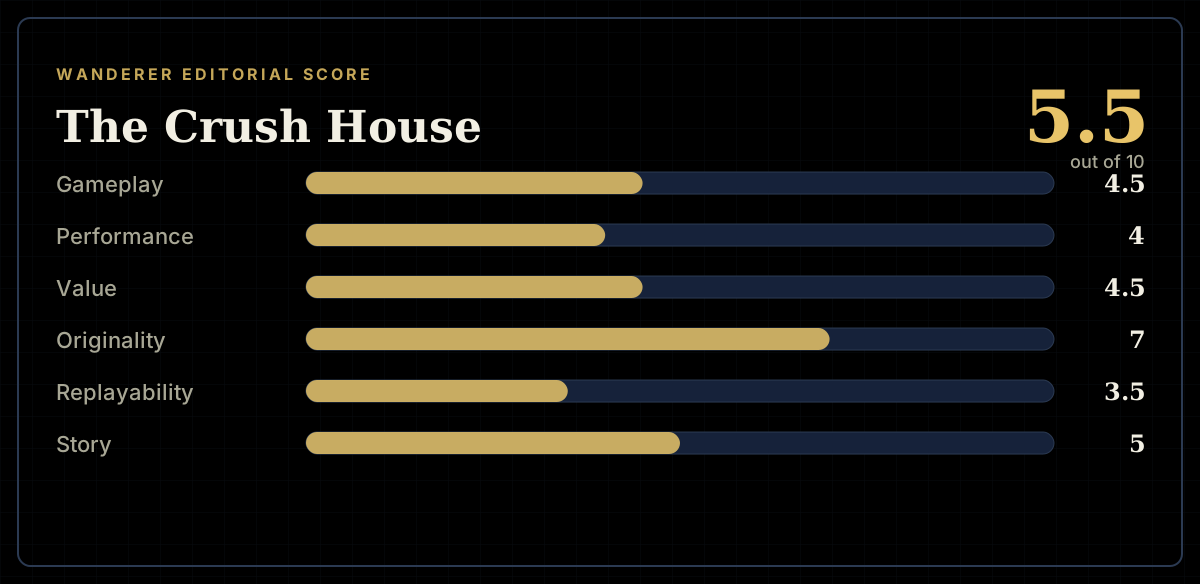
5.5 / 10
- Developer
- Nerial
- Publisher
- Devolver Digital
- Released
- 9 August 2024
- Platforms
- Windows
- Genre
- Reality-TV cameraman simulation
- Monetisation
- One-time purchase, no DLC or microtransactions
- Players
- Single-player only
The short version
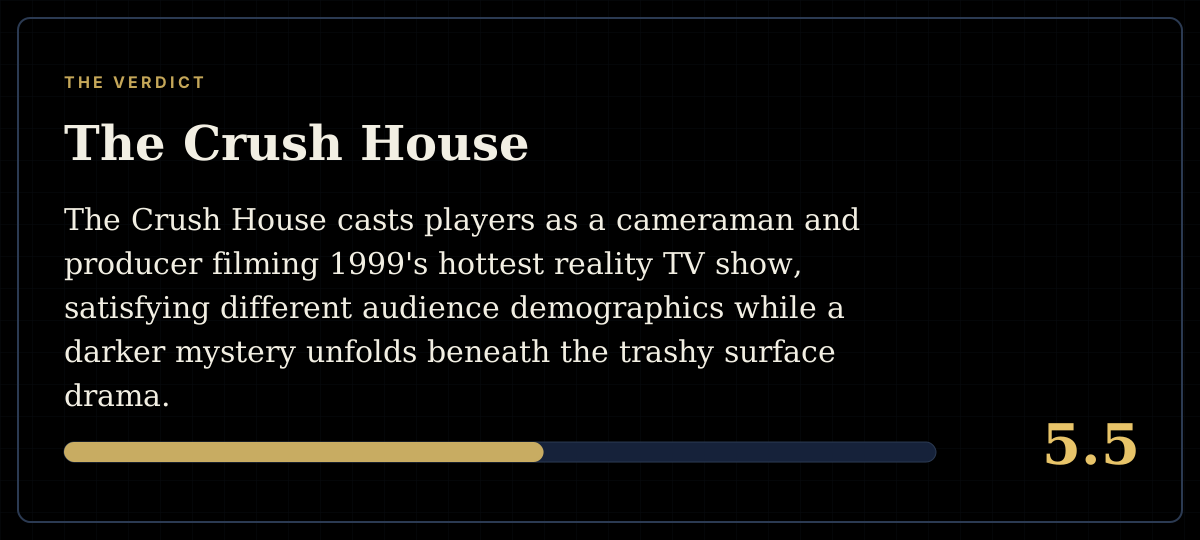
The Crush House casts players as a cameraman and producer filming 1999's hottest reality TV show, satisfying different audience demographics while a darker mystery unfolds beneath the trashy surface drama. This review's sample confirms the premise and art direction earn genuine, wide admiration on a first playthrough, but a remarkably consistent negative-review theme — echoed even by many reviewers who ultimately recommend the game — describes dialogue that repeats heavily past the first in-game season, a mystery that teases answers it never delivers, and at least one persistent progress-blocking bug that appears to have gone unpatched for an extended period.
Biggest strengths
- The core premise — filming a reality show and satisfying rotating audience demographics through camera framing choices — earns consistent, specific praise as a genuinely original idea rarely seen elsewhere in the genre
- The 90s-inspired art direction and colour palette are repeatedly singled out as a real strength, with reviewers describing the visual identity as distinctive and well-executed even when disappointed by other elements
- Several reviewers specifically credit the underlying mystery and tonal shift from trashy comedy to something darker as genuinely intriguing during a first playthrough, even those who found its resolution unsatisfying
Biggest weaknesses
- A remarkably consistent negative-review theme, echoed even by many positive reviewers, describes character dialogue as heavily repetitive past the first in-game season, with several reviewers reporting hearing the same lines redistributed across different cast members regardless of stated personality differences
- This review's own achievement-data check corroborates a steep completion cliff, from 93.2% for an early milestone down to 3.7% for full task completion, consistent with reviewer reports that most of the game's content is exhausted within the first couple of sessions
- Multiple reviewers describe the game's central mystery and multiple endings as unsatisfying, arguing the story raises questions it never answers and appears to tease a sequel rather than reach a real conclusion
Who it's for: Fans of clever, short-session narrative simulations with a distinctive premise, willing to accept a game that plays best as a single, focused first experience rather than a long-term commitment; not a fit for players expecting a fully resolved story or extensive replay value.
Our recommendation: Worth a purchase on sale specifically for the concept and first playthrough, with clear expectations that the mystery won't resolve and that repeat sessions reveal the content's limits quickly.
5.5 / 10
The Crush House casts players as the cameraman and producer of 1999's hottest reality TV show, satisfying rotating audience demographics with well-framed footage of a trashy, gossip-filled cast while a darker mystery simmers beneath the surface. This review's sample confirms the premise is genuinely inventive and well-realised on a first playthrough — and identifies a remarkably consistent set of complaints, echoed by fans and critics alike, about how quickly the game's content runs out.
A genuinely original premise, well received
Reviewers across the sample consistently credit the core idea as something new. "The setting is unique with an original style and interesting gameplay loop that feels like a strange puzzle," one reviewer writes. Another frames the appeal directly: "I really enjoyed the basic gameplay and found the 'get the number to go up' style fun and addictive." A third reviewer, ultimately unable to recommend the full game, still concedes: "Crush House feels like something of an artistic experiment... a student with a lot of potential who really wants to try something new." That consistent acknowledgment of genuine originality, even from disappointed reviewers, suggests the core concept lands as intended.
A remarkably consistent complaint about repetition
The single most repeated criticism in this review's sample appears almost identically across dozens of otherwise independent reviews, on both sides of the recommendation. "After the first season, you've pretty much seen 95% of the dialogue. I don't really understand the point of having so many cast options when they have VERY FEW unique dialogues," one reviewer writes. Another agrees precisely: "Lines that I thought were character specific to fit their personality were later repeated by completely different characters." A third reviewer sums up the practical consequence: "you've seen pretty much everything and the game doesn't actually do a whole lot with the idea." This review's own check of Steam's achievement data supports the scale of that drop-off directly: completion rates fall from 93.2% for an early milestone to just 3.7% for full task completion.
A mystery reviewers feel goes nowhere
Beyond repetition, multiple reviewers raise a specific, shared disappointment about the story's resolution. "You ever just want to invest 3-8 hours in a story only to get 2 lacklustre endings baiting a second game, gives 0 answers to the questions that it brings up," one reviewer writes. Another independently echoes the same complaint: "the game's multiple 'endings' are just teasers for another chapter that just doesn't come. Nothing is truly wrapped up, nothing is solved, and nothing changes in the end." That level of specific, matching disappointment across reviewers who otherwise engaged deeply and enthusiastically with the mystery suggests a genuine structural gap rather than a subjective quality complaint.
A serious, specific bug report
At least one detailed reviewer raises a concrete technical concern distinct from the content debates above: "there's a game breaking bug for me, that has been reported several times and hasn't been fixed it seems. It's been months of non communication, and since there's multiple endings it sort of locks out an ending for me." This review's own check of the partner-events feed found only two update posts within about a month of the August 2024 launch, with nothing documented since — a pattern directly consistent with that reviewer's account of an extended, unresolved silence from the developer.
A detailed identity-crisis critique
At least one reviewer offers a more structural, analytical explanation for why the game feels underdeveloped, worth quoting at length for its specificity. "The Crush House is a game with a major identity crisis, it's trying to be many things at the same time and as such falls short of securely executing any of the three. The first thing it is attempting to be is a Pokemon-Snap-like set in a reality TV house, which is a really great concept... However, because the game also wants to be a procedur[ally generated story]," the mechanics meant to support one genre pull against the mechanics meant to support the other. That's a more analytical framing of the same underlying problem other reviewers describe more simply as "repetitive" — a game whose ambitious blend of systems doesn't leave any single one fully realised.
Constructive suggestions from invested players
Several reviewers go beyond simple criticism to offer specific, constructive suggestions for what a stronger version of the game might look like, a pattern worth noting as a sign of genuine engagement rather than dismissal. "Distinct dialogue and actions for each character. Cast selection that influences the storyline and game dynamics. A highlights system, where players can create episode reels and an end-of-season highlight reel," one detailed reviewer proposes. That kind of specific, systems-level feedback suggests reviewers see real potential in the underlying concept even while concluding the current execution falls short, echoing the broader pattern of reviewers wishing for more from an idea they clearly find compelling.
An accompanying real-world ARG element
Beyond the core game, at least one reviewer specifically credits an unusual, additional layer of content: an alternate-reality-game element tied to the developer's own blog, extending the game's fiction beyond the software itself. That kind of cross-media world-building is a distinctive, if niche, touch that adds a small amount of extra texture for players willing to dig beyond the base game, though it doesn't resolve the core repetition and pacing complaints raised throughout the rest of this review's sample.
Final verdict
The Crush House succeeds at delivering a genuinely original, well-produced premise that earns real admiration across this review's sample, and its art direction and core camera-framing loop are both real strengths. But a remarkably consistent negative-review theme — repetitive dialogue past the first season, an unresolved central mystery, and at least one persistent, unaddressed bug — describes a game that runs out of things to say considerably faster than its premise promises. This is a worthwhile purchase specifically for a single, focused playthrough, ideally at a discount, rather than a game built to reward extended return visits.
Pros and cons
Pros
- The core premise — filming a reality show and satisfying rotating audience demographics through camera framing choices — earns consistent, specific praise as a genuinely original idea rarely seen elsewhere in the genre
- The 90s-inspired art direction and colour palette are repeatedly singled out as a real strength, with reviewers describing the visual identity as distinctive and well-executed even when disappointed by other elements
- Several reviewers specifically credit the underlying mystery and tonal shift from trashy comedy to something darker as genuinely intriguing during a first playthrough, even those who found its resolution unsatisfying
- The core "satisfy the audience" puzzle-like gameplay loop is credited by multiple reviewers as a fun, if simple, moment-to-moment challenge distinct from the broader narrative debate
- An accessible easy mode removes the pressure of show cancellation for players who want to focus on completing the story without failure risk, according to at least one reviewer
Cons
- A remarkably consistent negative-review theme, echoed even by many positive reviewers, describes character dialogue as heavily repetitive past the first in-game season, with several reviewers reporting hearing the same lines redistributed across different cast members regardless of stated personality differences
- This review's own achievement-data check corroborates a steep completion cliff, from 93.2% for an early milestone down to 3.7% for full task completion, consistent with reviewer reports that most of the game's content is exhausted within the first couple of sessions
- Multiple reviewers describe the game's central mystery and multiple endings as unsatisfying, arguing the story raises questions it never answers and appears to tease a sequel rather than reach a real conclusion
- At least one reviewer reports a specific, persistent, progress-blocking bug that has reportedly been acknowledged by multiple players without a fix, describing "months of non-communication" from the developer on the issue; this review's own check of the partner-events feed found only two update posts within a month of launch and nothing since, consistent with that account
- Several reviewers describe character interactions and relationships as underdeveloped, with romantic and social dynamics between cast members forming and resolving in ways multiple reviewers found unearned or arbitrary
Screenshots
-

The Crush HouseImage: Devolver Digital via Steam -

The Crush HouseImage: Devolver Digital via Steam -

The Crush HouseImage: Devolver Digital via Steam -
How the review scores each part of the gameWanderer Editorial -
The short versionWanderer Editorial