
Game review
Chicken Police: Into the HIVE!
6 / 10
- Developer
- The Wild Gentlemen
- Publisher
- Joystick Ventures
- Released
- 7 November 2024
- Platforms
- Windows
- Genre
- Noir detective adventure
- Monetisation
- One-time purchase, no in-game store or additional currency purchases
- Players
- Single-player only
The short version
Chicken Police: Into the HIVE! reunites rooster detectives Sonny and Marty for a second noir adventure into the criminal underworld, promising a bigger, darker follow-up to the beloved original. This review's sample is remarkably unified in describing the first two-to-three chapters as living up to that promise, with genuinely strong atmosphere, dialogue, and world expansion. What follows is an equally consistent, specific collapse: the final act is widely described as rushed, disjointed, and unfinished, with reviewers pointing to the game's own credits acknowledging real-world production hardship — including the COVID pandemic and an economic downturn — as the likely cause. This is one of the more emotionally difficult reviews in this series to write, precisely because so many reviewers clearly love the franchise and are heartbroken by how its second entry ends rather than dismissive of its ambitions.
Biggest strengths
- The first two to three chapters draw near-universal praise for matching or exceeding the atmosphere, dialogue, and noir tone of the original Chicken Police, with several reviewers specifically calling the sequel's early stakes higher and its writing sharper
- The expanded world-building and new locations earn consistent credit, with returning fans praising the chance to revisit familiar characters and settings alongside genuinely new ones
- A new color-mode toggle, letting players switch between the series' signature black-and-white noir presentation and full color, draws specific appreciation as a welcome visual option
Biggest weaknesses
- The single most repeated, specific complaint across nearly this entire review sample is that the final act — variously described as the last one to two chapters — is rushed, disjointed, and feels genuinely unfinished compared to the strong first half
- Multiple reviewers point directly to the game's own credits, which acknowledge disruption from the COVID pandemic and an economic downturn, as the evident real-world cause of the story's abrupt, underdeveloped conclusion
- Several reviewers report specific textual and audio quality issues in the back half, including typos, missing voice lines, and text mismatches that don't appear in the more polished earlier chapters
Who it's for: Fans of the original Chicken Police who want to see the story continue, and noir adventure fans drawn to strong atmosphere and dialogue who can accept a genuinely unsatisfying final act as the cost of admission.
Our recommendation: Worth playing for fans of the first game and the noir-detective genre generally, provided you go in aware that the story's conclusion is widely and specifically described as unfinished — this is a game to play for its considerable strengths, not for a satisfying ending.
6 / 10
Chicken Police: Into the HIVE! reunites Sonny and Marty, the rooster detective duo from the beloved original noir adventure, for a bigger, darker follow-up investigating a criminal underworld hidden beneath their city. This review's sample tells an unusually consistent, genuinely poignant story about the game: for its first several chapters, it delivers exactly what fans hoped for, and then something happens.
A worthy sequel, for as long as it lasts
The praise for the game's opening chapters is specific and heartfelt. "In a lot of ways, Into the HIVE tops the standard from Paint it Red. The scope is larger, the stakes are higher, and the dialogue feels sharper. The inventory system has some really clever tricks to it and the occasional minigame is just as fun a[s the original]," one reviewer writes. Another describes genuine investment in the returning cast: "Only in chapter 3 just now, but have to express my feelings: this is a wonderful game! All, who played the first game, will feel at home, you meet NPCs, you have met there, you have new locations but some are of course the same." A third calls it "one of the rare occasions where the sequel outshines the already amazing first installment. Darker, funnier, and oozing with style."
The collapse nearly every reviewer describes at almost the same point
What makes this review's sample distinctive is how precisely reviewers agree on where the game changes character. "Story was good for a first 3 chapters. It was captivating, made you questing motives of the characters you only met and also old acquaintances. But then it goes from such a great setup to a complete information dump from a 2 characters, which makes all previously mysterious world and characters" feel abruptly resolved rather than earned, one reviewer writes. Another, clearly devastated by the experience, describes the same pattern: "This game wanted to be bigger, bolder, and more emotional than the first, only to fail spectacularly." A third reviewer, a self-described "devoted Chicken Police fan," writes with visible pain: "writing this review pains me deeply. While Into the Hive starts with the noir excellence we've come to expect, its final two chapters completely derail the experience, potentially damaging the entire franchise beyond repair."
A specific, disclosed reason reviewers point to directly
What separates this from a typical "the ending was bad" complaint is how many reviewers independently point to the same documented cause. "The credits indicated they were heavily affected by COVID and the economic downswing and it just shows in the work. The large picture is that the first 2 and a half [acts feel complete, and the rest doesn't]," one reviewer writes, treating the credits themselves as confirmation rather than speculation. Another echoes the same read with real generosity toward the developers: "I feel like if the developers had better circumstances, they would've produced another b[eautiful chapter of this story]." This review takes that pattern seriously — it's not merely reviewers guessing at a cause, but multiple independent readers of the same credited acknowledgment reaching the same conclusion about what happened during development.
Specific technical evidence of a rushed conclusion
Beyond narrative pacing, several reviewers point to concrete production-quality gaps that corroborate the rushed-ending theory. "The narrative of the second half of the game feels kind of rushed and unfinished. There are typos, missing voice lines and mismatches in text," one reviewer writes — the kind of specific quality-control gap that tends to appear when a project runs out of time or budget near the finish line, distinct from a simply unsatisfying but polished ending. Separately, one reviewer documents a specific bug that a developer hotfix apparently failed to resolve: "In one of their updates they said they fixed a bug in the graveyard glass puzzle, however it's still occurring for me."
A soft recommendation many reviewers land on, and why it's fair
Notably, many reviewers who describe this collapse in detail still recommend the game, and their reasoning is worth taking at face value. "Call this a SOFT recommendation... The scope is larger, the stakes are higher" they write, weighing the genuine strengths of the majority of the game against its weaker conclusion. Another reviewer, having replayed the game, offers a softened but sincere take: "Honestly the second time around the game was a lot more enjoyable, The last chapter will always feel like we needed a bit more time but I am quite happy with how it ended." That range of response — genuine disappointment paired with continued affection for the franchise and craft on display — feels like the most honest way to characterize this review's overall sample.
What the achievement data confirms about engagement
Steam's own completion figures show a fairly standard narrative-adventure curve: an early story milestone sits at 66.8%, falling to under 10% for full completionist achievements. That's consistent with a story-driven game where most buyers who start do engage meaningfully with the plot, even if — per the reviewer consensus — that plot doesn't land as intended by its conclusion.
A studio that moved forward, rather than one that vanished
This review found clear evidence the developer's evident production difficulties reflect a specific, disclosed hardship rather than studio collapse. The game's partner-events feed documents three post-launch hotfixes addressing technical bugs, and — as recently as 2026 — an announcement of the studio's next game, Moses & Plato - Last Train to Clawville. The Wild Gentlemen remain an active studio; whatever happened during this game's final development stretch, it didn't end their ability to keep making games.
Final verdict
Chicken Police: Into the HIVE! delivers a genuinely strong first three-quarters of a noir detective sequel that lives up to its beloved predecessor, undercut by a widely and specifically documented collapse in its final act that reviewers consistently and credibly attribute to disclosed real-world production hardship rather than a lack of creative ambition. Play it for the atmosphere, dialogue, and world it builds — just go in knowing, honestly, that its ending won't deliver the satisfaction its first chapters promise.
Pros and cons
Pros
- The first two to three chapters draw near-universal praise for matching or exceeding the atmosphere, dialogue, and noir tone of the original Chicken Police, with several reviewers specifically calling the sequel's early stakes higher and its writing sharper
- The expanded world-building and new locations earn consistent credit, with returning fans praising the chance to revisit familiar characters and settings alongside genuinely new ones
- A new color-mode toggle, letting players switch between the series' signature black-and-white noir presentation and full color, draws specific appreciation as a welcome visual option
- The inventory system and minigames are repeatedly singled out as clever, well-designed additions that improve on the original game's mechanics
- The developer remains active and has already announced its next project, indicating the studio's evident production difficulties with this game reflect a specific, acknowledged hardship rather than the studio disappearing or abandoning its craft
Cons
- The single most repeated, specific complaint across nearly this entire review sample is that the final act — variously described as the last one to two chapters — is rushed, disjointed, and feels genuinely unfinished compared to the strong first half
- Multiple reviewers point directly to the game's own credits, which acknowledge disruption from the COVID pandemic and an economic downturn, as the evident real-world cause of the story's abrupt, underdeveloped conclusion
- Several reviewers report specific textual and audio quality issues in the back half, including typos, missing voice lines, and text mismatches that don't appear in the more polished earlier chapters
- At least one reviewer documents a specific bug in a "graveyard glass puzzle" that the developer's hotfix notes claimed to have fixed, but which the reviewer reports persisting after the patch
- At least one reviewer notes a shooting-range mechanic introduced early in the game is never meaningfully used again, representing an apparently cut or unfinished gameplay thread rather than a deliberate one-off flourish
Screenshots
-

Chicken Police: Into the HIVE!Image: Joystick Ventures via Steam -

Chicken Police: Into the HIVE!Image: Joystick Ventures via Steam -

Chicken Police: Into the HIVE!Image: Joystick Ventures via Steam -
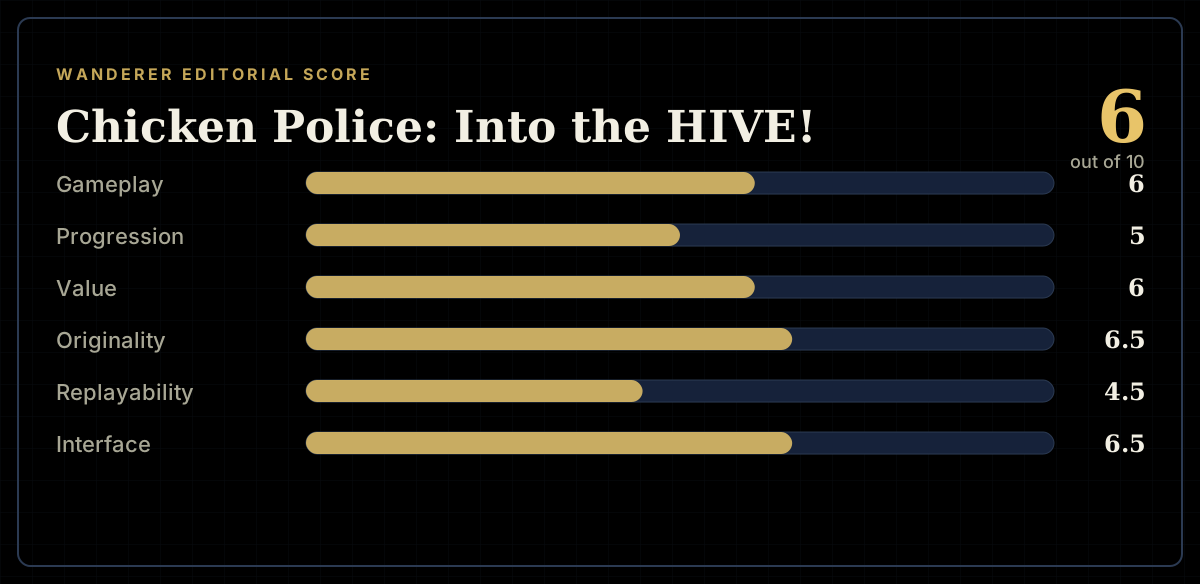
How the review scores each part of the gameWanderer Editorial -
The short versionWanderer Editorial