
Game review
Nobody Wants to Die
7 / 10
- Developer
- Critical Hit Games
- Publisher
- PLAION, Deep Silver
- Released
- 17 July 2024
- Platforms
- Windows, PlayStation 5, Xbox Series X|S
- Genre
- Narrative Adventure
- Monetisation
- One-time purchase, no DLC or in-game currency
- Players
- Single-player
The short version
Nobody Wants to Die sets Detective James Karra loose in a 2329 New York where immortality is bought and sold, investigating a serial killer targeting the city's wealthiest body-hoppers using a time-rewind ability to reconstruct crime scenes. Critics gave it a solid 77-78 on Metacritic, praising a "graphical and atmospheric treat" while consistently flagging that "the gameplay lacks challenge and variety" — and Steam's own audience, Very Positive at 83.1% across nearly 5,800 reviews, arrives at almost exactly the same conclusion in far greater and more specific detail. Reviewer after reviewer independently describes the same experience: the detective tools tease real investigative reasoning, but the game always tells you precisely which tool to use and when, reducing what looks like deduction to following instructions to unlock the next chunk of dialogue. At a typical six-to-seven-hour length, several reviewers also flag a specific structural complaint — parts of the story require replaying earlier scenes or maintaining separate save files to see everything, which more than one reviewer describes as padding a short game out rather than genuinely extending it.
Biggest strengths
- The art deco, retrofuturistic vision of a 2329 New York where death has been commodified is visually distinctive and consistently praised, including by the game's harshest critics
- The time-rewind mechanic for reconstructing crime scenes is a genuinely clever presentational idea, even where reviewers criticise how little real choice it offers in practice
- The central premise — bodies as a tradeable, class-stratified commodity — gives the noir setting real thematic weight distinct from a purely aesthetic homage to the genre
Biggest weaknesses
- The single most consistent complaint across dozens of independent reviews is that "detective work" amounts to the game telling the player exactly which tool to use and when, with no real room to reason through a scene or reach a different conclusion
- Several detailed reviews describe needing to replay earlier scenes, sometimes multiple times, or maintain separate manual save files to see the game's different endings — padding criticised as making a short game feel long rather than genuinely extending its content
- At least one detailed review argues the narrative logic is incoherent at both the scene level and the overall plot, with thematic ambitions that feel unfocused rather than fully explored
Who it's for: Players drawn primarily to atmosphere, world-building and a well-told noir mystery will likely have a genuinely good time — the retrofuturistic art deco setting is one of 2024's most distinctive, and the central "bodies as commodities" premise gives the story real thematic texture. Players specifically hoping for meaningful detective gameplay, real deductive choice, or a mystery where the investigation itself is the challenge should adjust expectations, since that's precisely where this game's own reviewers, in remarkable agreement, say it falls shortest.
Our recommendation: Recommended for the atmosphere and premise, with a clear caveat about the gameplay. Go in treating this as an interactive noir film with light puzzle-solving dressing rather than a genuine detective game, and the six-to-seven-hour length becomes a reasonable fit rather than a disappointment. If detective-game mechanics with real agency are what you're after, this isn't where you'll find them, however good the world around them looks.
7 / 10
A beautiful noir with a real premise underneath the aesthetic
Nobody Wants to Die imagines a 2329 New York where death has become negotiable — bodies can be swapped, memories transferred, immortality purchased by anyone wealthy enough to afford it. Detective James Karra investigates a killer specifically targeting the city's elite body-hoppers, using an augmentation that lets him rewind time within a crime scene to watch events unfold and gather evidence. It's a genuinely strong premise for a noir story, giving the genre's classic fatalism a literal, mechanical hook — what does mortality mean in a city where the wealthy have simply opted out of it — and critics responded to the atmosphere and world-building with real enthusiasm, landing the game at 77 to 78 across Metacritic's platform scores. The specific language critics used is worth noting: GamePro Germany called it "a graphical and atmospheric treat that captivates to the end," immediately followed by "however, the gameplay lacks challenge and variety" — a two-part verdict that turns out to predict almost exactly what Steam's far larger review base would go on to say in much greater detail.
The gameplay complaint that shows up almost everywhere
What's striking about reading through Nobody Wants to Die's negative reviews isn't variety of complaint — it's how narrowly focused they are on one specific mechanical issue, described independently by dozens of reviewers in strikingly similar language. The detective tools — reconstructing a scene via time rewind, scanning for specific clues, cross-referencing evidence — all exist and all look, on the surface, like the foundation of real investigative gameplay. But reviewer after reviewer describes the same experience: the game always makes clear exactly which tool to use next and precisely how to use it, leaving no room to reason through a scene independently or arrive at a different conclusion than the one the story has already decided on. One reviewer's summary captures the pattern about as plainly as it can be stated: "there's no room to think things through or make choices — just follow instructions to unlock the next chunk of dialogue." Multiple other reviewers, entirely independently, land on close variations of the same sentence. That kind of consensus, appearing in almost identical phrasing across reviewers who clearly didn't coordinate with each other, is a strong signal that this is a real, structural design choice rather than a difficulty-dependent complaint some players simply didn't warm to.
A related complaint concerns choice itself: several detailed reviews describe the game gesturing toward consequential player decisions without those decisions meaningfully altering the story that follows, an "illusion of agency" criticism that compounds the detective-work complaint rather than standing apart from it. Between the two, the throughline is consistent — Nobody Wants to Die wants players to feel like active investigators making real choices, and a large, consistent share of its own audience says that feeling doesn't survive contact with how the systems actually function.
Length, padding, and a story some found rushed
At a typical six to seven hours, Nobody Wants to Die sits at a reasonable length for a tightly-focused noir mystery, and several reviewers explicitly credit that pacing as appropriate — long enough to tell its story, short enough to avoid the repetitive-investigation fatigue a longer game in this specific format might risk. Where that praise curdles is in how the game handles its multiple endings: rather than branching organically from earlier choices in a way a single playthrough can meaningfully explore, several detailed reviews describe needing to replay specific earlier scenes, sometimes more than once, or maintain separate manual save files at key decision points to see everything the game has to offer. One reviewer's blunt framing sums up the frustration directly: "if you have a 'short game,' forcing the player to play it multiple times doesn't make it a 'long game.'" It's a fair distinction — replayability built on genuine narrative branching is different from replayability built on manually re-triggering content you've already technically seen, and several reviewers who otherwise liked the game specifically flag this as an unnecessary irritation rather than added value.
A smaller but notable minority of detailed reviews go further on the story itself, describing the narrative logic as genuinely incoherent rather than merely rushed — arguing that both individual scenes and the larger plot don't hold together as tightly as the atmosphere suggests they should, and that the game's thematic ambitions around class, mortality and revolutionary politics feel underexplored rather than fully realised. At least one such review offers a specific, pointed political reading of how the story resolves its class-conflict themes; that's one reviewer's interpretation of contested creative choices rather than a verifiable fact about the game, but it's a genuine, substantive critique worth knowing exists alongside the more common "pacing felt rushed" complaint.
Verdict
Nobody Wants to Die succeeds at exactly what critics said it would: it's a genuinely gorgeous, atmospherically confident piece of retrofuturistic noir with a premise substantial enough to carry real thematic weight. Where it falls short is almost entirely mechanical, and the consistency with which independent reviewers describe the exact same limitation — detective gameplay that tells rather than asks — makes it hard to read as anything other than a real design choice rather than a matter of individual taste. Go in expecting an interactive noir film with light puzzle dressing rather than a genuine detective game, and its six-to-seven-hour length and striking presentation deliver exactly what they promise. Go in hoping to actually solve something yourself, and you'll likely land where a large, consistent share of this game's own reviewers already have.
Pros and cons
Pros
- The art deco, retrofuturistic vision of a 2329 New York where death has been commodified is visually distinctive and consistently praised, including by the game's harshest critics
- The time-rewind mechanic for reconstructing crime scenes is a genuinely clever presentational idea, even where reviewers criticise how little real choice it offers in practice
- The central premise — bodies as a tradeable, class-stratified commodity — gives the noir setting real thematic weight distinct from a purely aesthetic homage to the genre
- Critics were solidly positive, 77-78 across Metacritic's platform scores, specifically praising the atmosphere and presentation
- At six to seven hours, the length suits a tightly-paced noir mystery well for players who go in expecting a narrative-forward experience rather than a lengthy investigation sim
Cons
- The single most consistent complaint across dozens of independent reviews is that "detective work" amounts to the game telling the player exactly which tool to use and when, with no real room to reason through a scene or reach a different conclusion
- Several detailed reviews describe needing to replay earlier scenes, sometimes multiple times, or maintain separate manual save files to see the game's different endings — padding criticised as making a short game feel long rather than genuinely extending its content
- At least one detailed review argues the narrative logic is incoherent at both the scene level and the overall plot, with thematic ambitions that feel unfocused rather than fully explored
- The story is criticised by some reviewers for escalating quickly with limited setup, making later revelations feel rushed rather than earned
- Illusory player choice is a specific, repeated complaint — the game gestures at consequential decisions without meaningfully altering the narrative based on them, according to multiple detailed reviews
Screenshots
-

Nobody Wants to DieImage: PLAION via Steam -

Nobody Wants to DieImage: PLAION via Steam -

Nobody Wants to DieImage: PLAION via Steam -
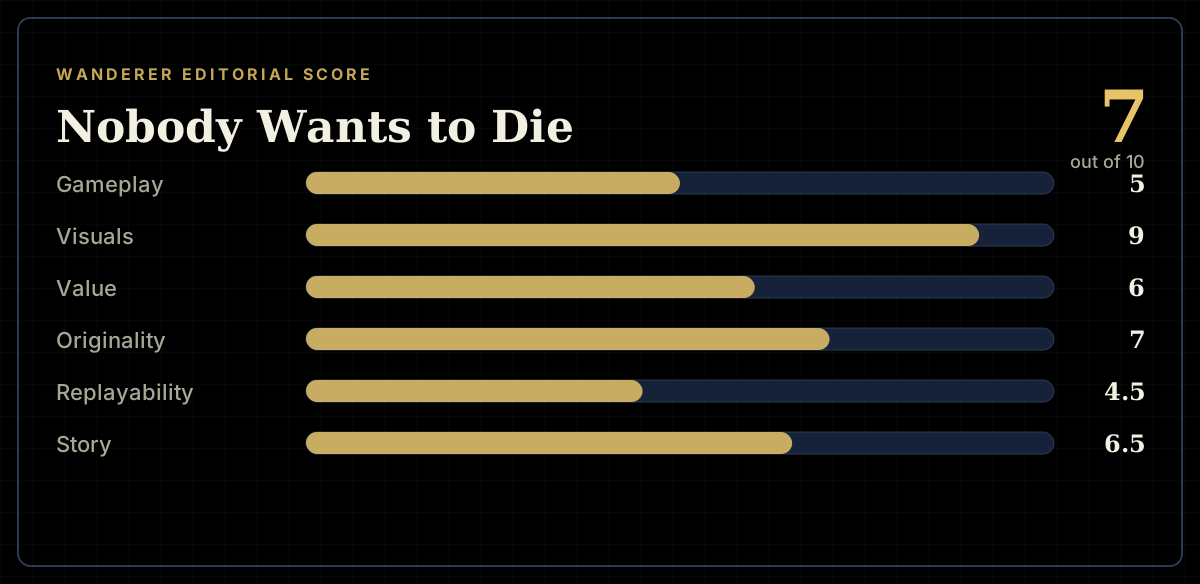
How the review scores each part of the gameWanderer Editorial -
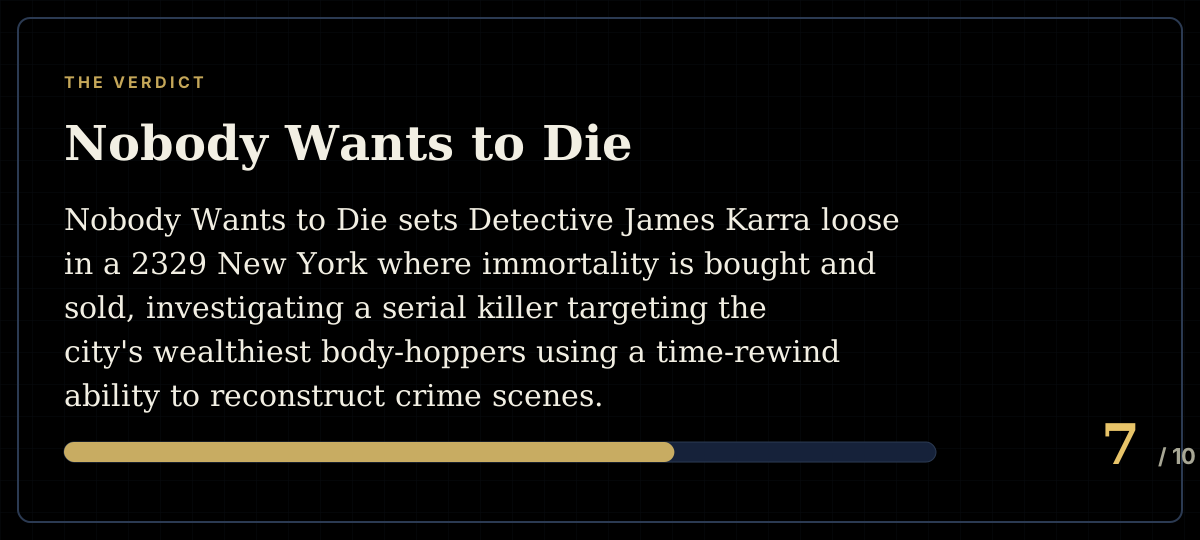
The short versionWanderer Editorial