
Game review
Harold Halibut
6.5 / 10
- Developer
- Slow Bros.
- Publisher
- Slow Bros.
- Released
- 16 April 2024
- Platforms
- Windows, macOS, PlayStation 5, Xbox Series X|S
- Genre
- Narrative Adventure
- Monetisation
- One-time purchase, no DLC or in-game currency
- Players
- Single-player
The short version
Harold Halibut follows a lab assistant living aboard a city-sized spaceship stranded on the floor of an alien ocean, and its most remarkable quality has nothing to do with its story: every character, room and object was physically sculpted and built by hand, then scanned into the game over a ten-year development process, giving it a stop-motion look no other game has attempted at this scale. Critics were genuinely split on the result — Metacritic scores range from 68 on PC to 78 on Xbox, with individual reviews spanning from perfect scores to as low as 5 out of 10 — and Steam's own audience lands at a more forgiving but still notably softer Very Positive, 82.4% across roughly 1,190 reviews. The recurring, remarkably consistent complaint from both critics and a real share of players isn't about the visuals, which nobody disputes: it's that underneath the handcrafted presentation, there's almost no traditional gameplay at all — no inventory, no puzzles, no meaningful choices, just walking between locations to trigger the next fetch task or conversation, repeated across a runtime several reviewers found dragged badly by its middle chapters.
Biggest strengths
- The stop-motion visual style is a genuinely unprecedented achievement — every character, room and prop was physically sculpted, built and scanned into the game over ten years of development, giving it a tactile, handmade look no other game currently on the market can match
- Voice acting is consistently praised even by the game's harshest critics, giving the handcrafted cast real warmth and personality
- The soundtrack draws specific, repeated praise across nearly the entire review spectrum
Biggest weaknesses
- A remarkably consistent complaint from critics and Steam reviewers alike describes the actual gameplay as almost nonexistent — no inventory, no puzzle-solving, and tasks amounting to walking from one point to another to trigger the next piece of dialogue or a simple fetch objective
- Several detailed reviews describe significant tedium setting in by the game's third chapter or around the five-hour mark, with repetitive backtracking between the same locations cited specifically as the source of the frustration
- Critics were genuinely divided rather than uniformly positive, with Metacritic platform scores ranging from 68 to 78 and individual reviews spanning from perfect scores to as low as 5 out of 10 — a wider critical split than most games this library covers
Who it's for: Players who prioritise a genuinely unique artistic achievement and a slow, contemplative pace above traditional interactivity will find something here no other game has attempted at this scale, and the story's themes of found family and searching for home land well for many. Players who need actual puzzle-solving, meaningful choice or mechanical engagement to stay invested in an adventure game should sample before buying, since the near-total absence of traditional gameplay is the single most consistent complaint across both critics and Steam's own audience.
Our recommendation: A cautious recommendation, best taken at a discount and with clear expectations set in advance. The stop-motion presentation is worth experiencing on its own artistic merits, and ten years of dedicated handcrafted work deserves genuine respect. Go in knowing this plays closer to an interactive art installation than a conventional adventure game, and the mismatch between that reality and typical genre expectations is exactly what's driving both the critical divide and the softer-than-usual Steam score.
6.5 / 10
Ten years, one puppet at a time
Harold Halibut's story is, in some ways, secondary to the story of how it was made. Slow Bros. spent roughly a decade building every character, room, prop and set piece in the game as a real, physical model — sculpted, painted and lit by hand using traditional model-making and stop-motion techniques, then scanned into the game engine and animated. It's an approach no other commercial game has attempted at this scale, and the result is genuinely striking: characters that move with a distinctive, tactile puppet-like quality even during smooth, lip-synced dialogue, sets that carry the specific texture of handmade craft rather than digital modelling. Whatever else this review has to say about the game underneath that presentation, the visual achievement itself is close to undisputed — even the harshest critical reviews consistently credit it as something genuinely special.
A critical reception more divided than most
What sets Harold Halibut apart from most games in this library isn't the presence of criticism — it's how genuinely split professional critics were on the final product. Metacritic's platform scores range from 68 on PC to 78 on Xbox, and individual critic reviews span from perfect 10-out-of-10 scores to marks as low as 5, a spread wide enough that one commentator publicly expressed being "shook" by the low aggregate given how beautiful and well-crafted the world clearly is. Steam's own player base is more forgiving in aggregate — Very Positive at 82.4% — but that's still a notably softer score than most acclaimed 2024 narrative games manage, and reading the negative reviews reveals the same specific complaint critics were making, just from a much larger sample of voices.
The complaint underneath the craft
That complaint, stated plainly and repeatedly: there's very little actual game here. Multiple detailed reviews independently describe the experience in almost identical terms — no inventory system, no puzzle-solving of any kind, objectives that amount to walking from one location to another to trigger the next conversation or a simple fetch task. One reviewer's blunt summary captures the sentiment as directly as it can be stated: the game is essentially a train on a track that goes to the next station, with no meaningful choices along the way. Another offers a specific, memorable metaphor — like being handed a beautifully wrapped gift, only to discover the wrapping paper itself is the entire gift, with nothing more substantial inside once you finish unwrapping it.
Several reviewers who otherwise enjoyed the presentation describe a specific breaking point where the tedium overtook their patience, most commonly cited around the third chapter or the five-hour mark, as the same walking-and-fetching loop repeats without meaningfully evolving. At a runtime several reviewers put at ten to fifteen hours, that repetition compounds into real frustration for a genuine share of the audience, distinct from simply preferring a faster pace — these are reviewers explicitly saying the specific loop of tasks became actively boring well before the story's themes had room to land.
What still works, even for critics of the gameplay
It's worth being fair to what does land, because a meaningful number of the same critical reviews explicitly credit real strengths alongside the gameplay complaint. Voice acting draws consistent praise across nearly the entire spectrum, giving the handcrafted characters genuine warmth. The soundtrack earns similarly consistent credit. And the overarching story — about isolation, found family, and searching for a sense of home aboard a ship that's been drifting for generations — resonates for a real share of players and critics alike, even some who spent much of the review complaining about the walking in between. This isn't a case of a genuinely bad story wrapped in pretty visuals; it's a decent, sometimes affecting story that a real, vocal share of its audience feels doesn't need — or reward — the amount of repetitive traversal asked of the player to reach it.
A cost that's easy to underestimate from the outside
It's worth pausing on why a decade-long, hand-crafted production still ended up this thin on interactivity, since it's a fair question a reader might reasonably ask. Building every character, room and prop as a physical model before scanning it in is an enormously labour-intensive process compared to conventional 3D modelling, and it's reasonable to infer that the sheer scale of that undertaking left comparatively little development capacity for iterating on systems like puzzles, branching dialogue or meaningful player choice — the kinds of features that usually demand their own dedicated design and testing cycles independent of the visual pipeline. That's not an excuse offered by the developers in any statement this review found, and it doesn't change what players are actually getting for their money. But it does help explain, rather than simply criticise, why a studio capable of this level of visual ambition ended up shipping a game so many reviewers describe as mechanically thin — the ambition and the thinness may well be two sides of the same extraordinary, decade-long bet.
Verdict
Harold Halibut is a genuine, one-of-a-kind artistic achievement — ten years of physical craftsmanship translated into a video game in a way nothing else in the medium has attempted at this scale, and that alone makes it worth knowing about regardless of how the review below lands. Where it falls short, according to a critical reception more divided than almost any other game this library has covered and a real, consistent share of its own Steam audience, is gameplay: walking, fetching and talking, repeated across a runtime several reviewers found dragged well before its themes had room to fully land. If a slow, contemplative pace and a genuinely unprecedented visual style are enough to carry you through on their own terms, there's real emotional payoff here. If you need an adventure game to actually challenge you along the way, the near-unanimous complaint about what's missing underneath the presentation is worth taking seriously before buying at full price.
Pros and cons
Pros
- The stop-motion visual style is a genuinely unprecedented achievement — every character, room and prop was physically sculpted, built and scanned into the game over ten years of development, giving it a tactile, handmade look no other game currently on the market can match
- Voice acting is consistently praised even by the game's harshest critics, giving the handcrafted cast real warmth and personality
- The soundtrack draws specific, repeated praise across nearly the entire review spectrum
- The overarching story about found family, isolation and the search for a sense of home resonates genuinely for a large share of players, even some who are critical of the gameplay wrapped around it
- As a decade-long passion project from an independent German studio, the scope of ambition on display is difficult to find a comparable example of anywhere else in the medium
Cons
- A remarkably consistent complaint from critics and Steam reviewers alike describes the actual gameplay as almost nonexistent — no inventory, no puzzle-solving, and tasks amounting to walking from one point to another to trigger the next piece of dialogue or a simple fetch objective
- Several detailed reviews describe significant tedium setting in by the game's third chapter or around the five-hour mark, with repetitive backtracking between the same locations cited specifically as the source of the frustration
- Critics were genuinely divided rather than uniformly positive, with Metacritic platform scores ranging from 68 to 78 and individual reviews spanning from perfect scores to as low as 5 out of 10 — a wider critical split than most games this library covers
- At a typical ten-to-fifteen-hour runtime, multiple reviewers argue the story and its themes, while decent, don't justify the length or the NZ$49.99 launch price given how repetitive the moment-to-moment experience becomes
- One reviewer's specific framing captures a recurring sentiment: the beautifully wrapped presentation is mistaken for the substance underneath it, when in practice the packaging is close to the entirety of what's on offer
Screenshots
-

Harold HalibutImage: Slow Bros. via Steam -

Harold HalibutImage: Slow Bros. via Steam -

Harold HalibutImage: Slow Bros. via Steam -
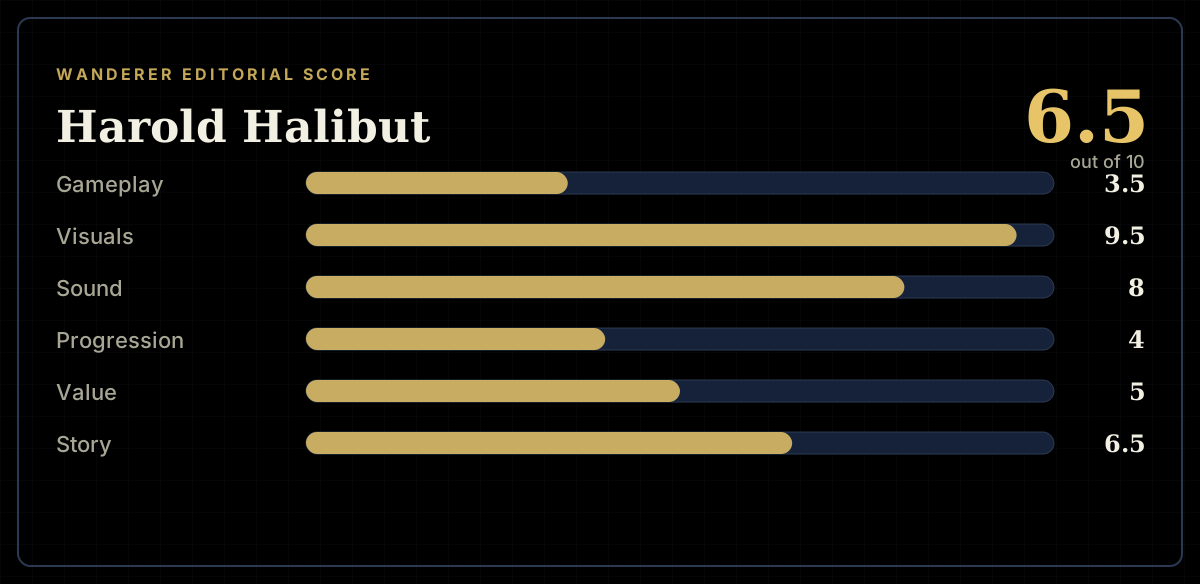
How the review scores each part of the gameWanderer Editorial -
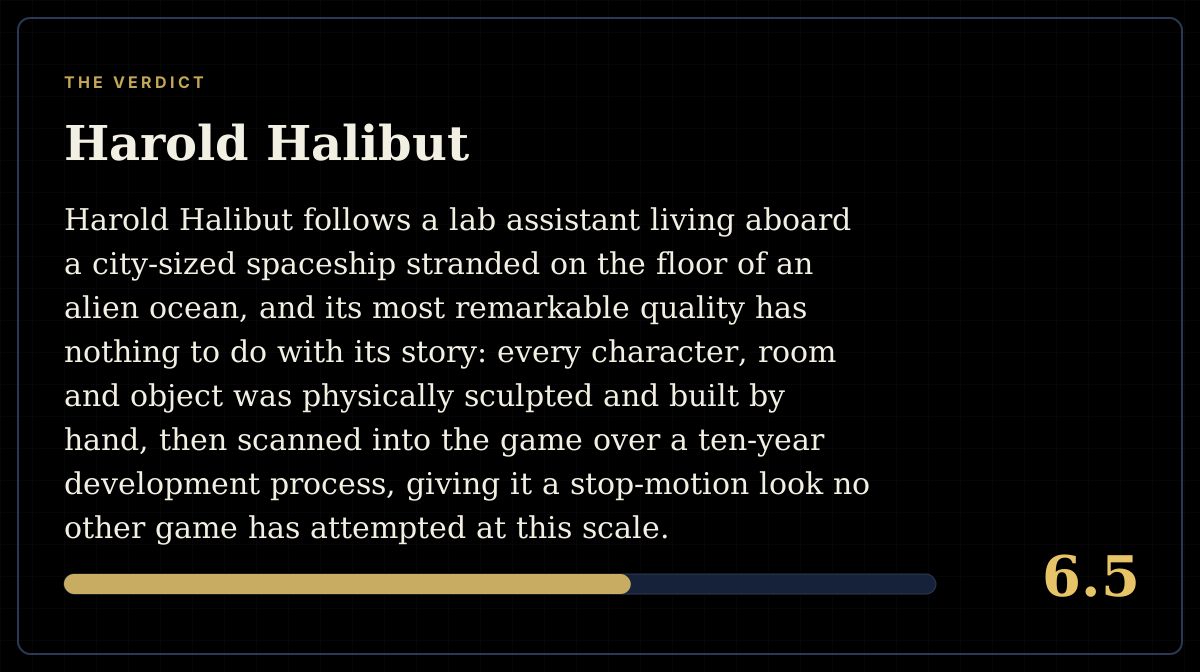
The short versionWanderer Editorial