
Game review
Great God Grove
7 / 10
- Developer
- LimboLane
- Publisher
- LimboLane, Fellow Traveller
- Released
- 15 November 2024
- Platforms
- Windows, macOS
- Genre
- Point-and-click narrative adventure
- Monetisation
- One-time purchase, no in-game store or additional currency purchases
- Players
- Single-player only
The short version
Great God Grove drops you into a world where the sky periodically opens a rift to the pantheon of squabbling gods, arming you with the Megapon — a device that lets you suck up one character's dialogue and play it back to another — as your primary tool for navigating puzzles, relationships, and an unraveling mystery about who or what will close the rift this time. This review's sample is close to unanimous in its praise for the game's art direction, character writing, and sheer inventive personality, several reviewers naming it among the best they've played this year. Set against that praise is a specific, recurring complaint from a smaller but detailed portion of the sample: that the Megapon mechanic itself, and the puzzles built around it, feel fiddly and underbaked compared to the world and characters it's wrapped around, with several reviewers directly and unfavorably comparing it to the same developer's earlier, more mechanically confident game, Smile For Me.
Biggest strengths
- The art direction, character design, and overall visual presentation draw close to unanimous, often rapturous praise, with reviewers repeatedly citing individual god and character designs as career highlights for the studio
- The writing and characters earn deep, specific affection across the sample, with multiple long-playtime reviewers describing genuine emotional investment in the cast and citing it among their favorite games of the year
- The world's central premise — a periodic rift to a chaotic pantheon of gods — is praised as a genuinely original hook that supports a story with real thematic ambition around community, censorship, and love
Biggest weaknesses
- A specific, recurring complaint across the negative sample is that the core Megapon dialogue-stealing mechanic feels fiddly and underdeveloped relative to the writing and art surrounding it, with several reviewers directly describing the resulting puzzles as trial-and-error rather than genuinely clever
- Multiple reviewers who enjoyed the developer's earlier game, Smile For Me, describe Great God Grove as a mechanical step down, citing a smaller inventory of usable dialogue and less room for experimentation as concrete regressions rather than vague disappointment
- At least one reviewer raises a specific, serious content concern: a scene involving a character physically abusing her partner that the review describes as played for comedic effect, a legitimate critique of tonal handling distinct from complaints about mechanics or pacing
Who it's for: Fans of narratively driven point-and-click adventures who prioritize world-building, character writing, and visual design over demanding puzzle mechanics, and players drawn to bold, colorful, unapologetically personal creative visions.
Our recommendation: A strong recommendation for players who go in valuing story, character, and presentation above mechanical depth — just don't expect the dialogue-stealing puzzle system itself to be the highlight, since a real and detailed portion of this review's sample found it the game's weakest element.
7 / 10
Once every thirty years, a rift opens in the sky over Great God Grove's world, briefly bridging the human realm to a pantheon of squabbling, chaotic gods. You play the Messenger, armed with a device called the Megapon that lets you suck up a line of dialogue from one character and play it back to another, using stolen words as your primary tool for solving puzzles, building relationships, and figuring out how to close the rift before it consumes everything. This review's sample loves almost everything about the world LimboLane built here; where it gets genuinely specific and useful is in describing exactly where the mechanics supporting that world fall short of it.
An overflowing, specific kind of charm
The praise in this sample rarely stays vague. "There is passion in every little detail; The art, the writing, the music, the characters, the game is charming and full of warmth," one reviewer writes, a sentiment echoed by dozens of others in their own words. Another distills the game's tonal range with genuine enthusiasm: "yuri, MILFs, speed dating, cobigail, taking down a fascist regime, dogs, ritual sacrifice, volleyball, yaoi, mukbangs, and the bizzyboys. just to name a few very awesome game." A more measured reviewer, comparing the experience directly to a genre landmark, writes: "This and Inscryption are the only two games where I lost sleep in order to beat it in one sitting. Great God Grove is an interesting take on the adventure game genre using a never-before-seen mechanic and a world brimming with charming writing and wonderful character design." The god designs specifically draw out some of the sample's most enthusiastic language, with one reviewer simply exclaiming, "LIMBOLANE HA[S OUTDONE THEMSELVES]" over the pantheon's visual identity.
The mechanic the game is built around, examined honestly
Where this review's sample earns real credibility is in how specifically its critics describe the Megapon system's shortcomings, rather than dismissing the whole game on vibes. "You wield a device called the Megapon, a megaphone that allows you to pull dialogue from one character's speech to 'speak' later to another; all of the game's puzzl[es depend on this]... but the gameplay is seriously lacking," one reviewer writes, praising the style while flagging the substance underneath it. Another, more blunt: "Fun writing. Bad game. Controls too fiddly. Puzzles are trial and error." A third reviewer with over a thousand minutes logged offers one of the sample's most useful summaries, wishing Steam had a middle option between recommend and don't: "This is, overall, a good game... but unlike most games I'd" recommend without reservation, "the gameplay" specifically holds it back from a clean thumbs-up.
A direct, informed comparison to the developer's earlier work
What sharpens this critique considerably is how many reviewers are explicitly comparing Great God Grove to LimboLane's previous game, Smile For Me, rather than judging it in a vacuum. "I loved 'Smile For Me', so this was a let-down in comparison, I neither got interesting cha[racters with the same depth]," one reviewer writes. Another goes further, calling it "a massive step down from limbolane's last game in almost every way," specifically citing writing that felt "sledgehammer blunt" and mechanics that "discourage experimentation by limiting your inventory to a very small number of speech bubbles." A third makes the comparison structurally specific: the interaction system here amounts to "parroting lines back" rather than the richer, more personal player expression Smile For Me allowed, with the added frustration of characters who "are all quirk" without the earlier game's deeper insight into the player character's own perspective. These aren't reviewers unfamiliar with the developer's strengths — they're fans of the earlier game, offering a genuinely comparative critique that carries real weight.
A specific content concern worth taking seriously
Separate from the mechanical critique, at least one reviewer raises a concern this review treats as legitimate and worth flagging directly: a scene depicting a character named Lumber Jacqueline "physically abusing her boyfriend, which is played for laughs," with the reviewer noting the game "goes out of its way" to frame the dynamic as something the recipient secretly enjoys rather than genuinely objects to. Whatever one's read on the intended tone, that's a real content note for prospective buyers sensitive to domestic-violence themes played for comedy, and it's distinct from — and more concrete than — the general "not everyone will vibe with the humor" caveat that accompanies most idiosyncratic comedic games.
What the achievement data adds
Steam's own completion figures show a wide, gradual spread rather than a sharp cliff, running from 92.3% for an early story beat down to 15.4% for the hardest optional late-game achievement. That pattern is consistent with a mostly linear main story that the overwhelming majority of buyers see through to some meaningful point, alongside a real layer of optional content — likely the extensive character-flirtation and relationship threads reviewers repeatedly praise — that a smaller but still substantial fraction of players go out of their way to fully explore.
A confirmed record of exceptional ongoing support
This review can confirm directly that Great God Grove has received unusually sustained attention well beyond its November 2024 launch. The game's partner-events feed documents several launch-week hotfixes, then continues through 2025 and into 2026 with a Mac port, physical merchandise drops, Steam Awards recognition, and repeated promotional activity tied to storewide sales — a genuinely active, multi-year commitment from a small studio that speaks well of the developer's ongoing investment in the game's life well past release.
Final verdict
Great God Grove is a visually dazzling, deeply personal point-and-click adventure whose world, characters, and writing earn wide and specific affection, held back by a central dialogue-manipulation mechanic that a detailed, credible portion of its audience — including fans of the developer's earlier, stronger game — found fiddlier and shallower than the game deserved. Go in for the world and the characters, temper your expectations for the puzzles themselves, and be aware of at least one specific tonal choice worth knowing about before you dive in.
Pros and cons
Pros
- The art direction, character design, and overall visual presentation draw close to unanimous, often rapturous praise, with reviewers repeatedly citing individual god and character designs as career highlights for the studio
- The writing and characters earn deep, specific affection across the sample, with multiple long-playtime reviewers describing genuine emotional investment in the cast and citing it among their favorite games of the year
- The world's central premise — a periodic rift to a chaotic pantheon of gods — is praised as a genuinely original hook that supports a story with real thematic ambition around community, censorship, and love
- Steam's own partner-events feed documents exceptionally sustained, multi-year post-launch support, including patches, a Mac port, physical merchandise, and continued promotional activity well into 2026, confirming a developer still actively invested in the game long after launch
- The flirtation and relationship-building systems, while not part of a dedicated dating sim, are praised by multiple reviewers as a fun, well-integrated layer that adds warmth without overcomplicating the core adventure structure
Cons
- A specific, recurring complaint across the negative sample is that the core Megapon dialogue-stealing mechanic feels fiddly and underdeveloped relative to the writing and art surrounding it, with several reviewers directly describing the resulting puzzles as trial-and-error rather than genuinely clever
- Multiple reviewers who enjoyed the developer's earlier game, Smile For Me, describe Great God Grove as a mechanical step down, citing a smaller inventory of usable dialogue and less room for experimentation as concrete regressions rather than vague disappointment
- At least one reviewer raises a specific, serious content concern: a scene involving a character physically abusing her partner that the review describes as played for comedic effect, a legitimate critique of tonal handling distinct from complaints about mechanics or pacing
- Some reviewers describe the story and character writing, for all its style, as ultimately less substantial than the earlier Smile For Me, with one specifically noting reduced player agency in shaping the protagonist's own perspective
- Achievement data shows a fairly wide spread from 92.3% down to 15.4%, consistent with reviewer reports of a mostly-linear main story alongside a meaningful amount of optional content that a smaller fraction of players engage with fully
Screenshots
-

Great God GroveImage: LimboLane via Steam -

Great God GroveImage: LimboLane via Steam -

Great God GroveImage: LimboLane via Steam -
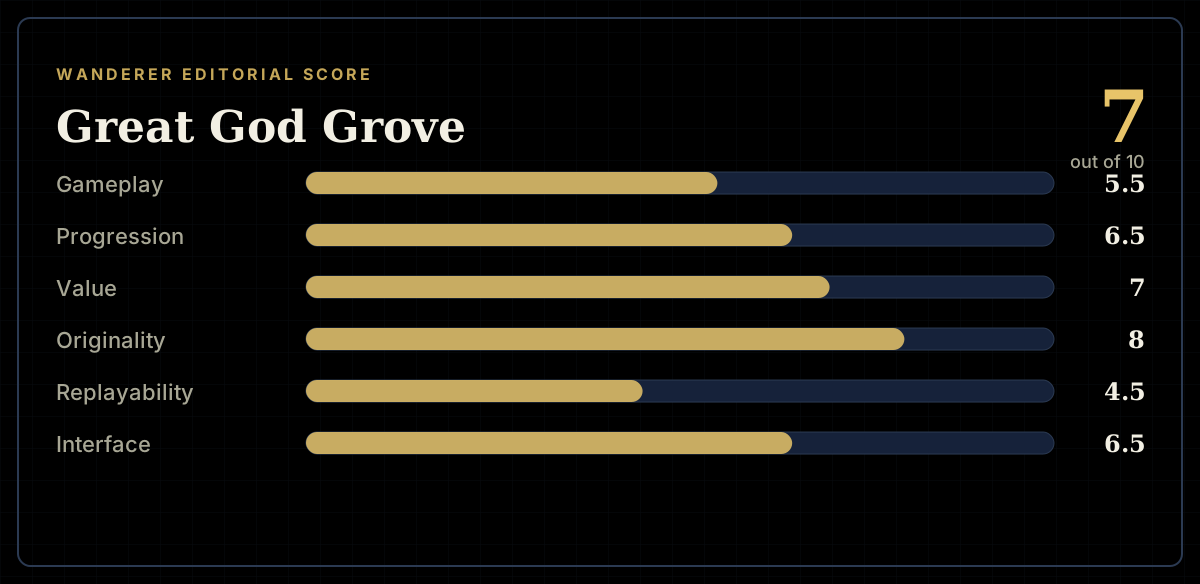
How the review scores each part of the gameWanderer Editorial -
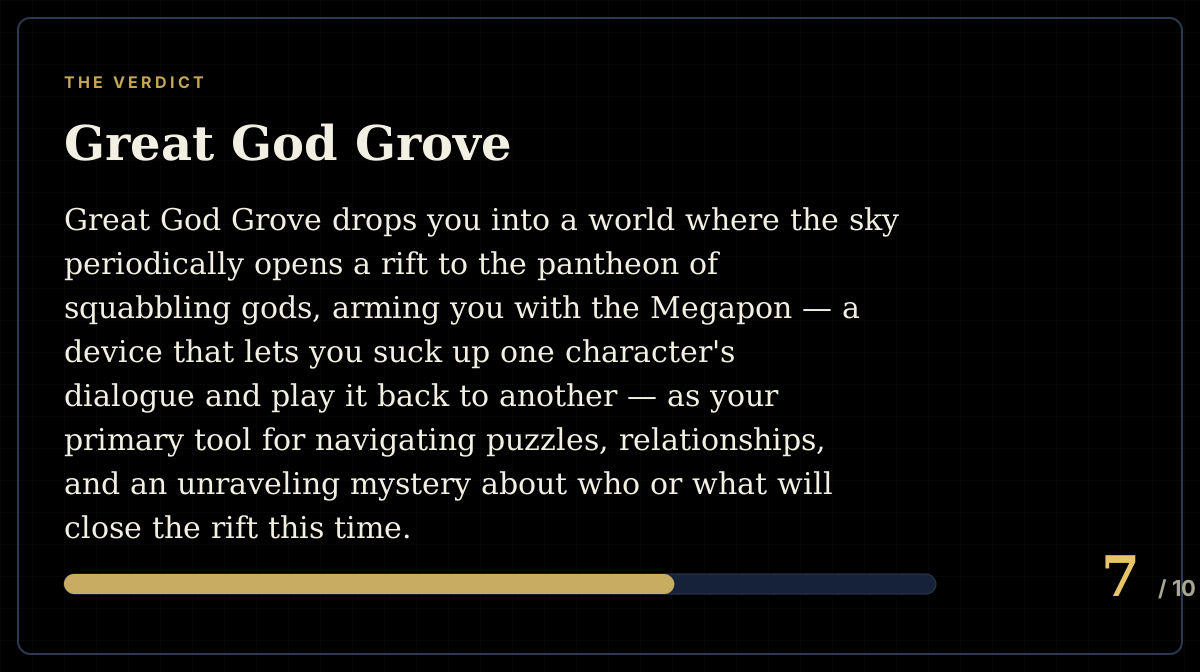
The short versionWanderer Editorial