
Game review
Mindlock - The Apartment
6 / 10
- Developer
- Roof Cut Media
- Publisher
- USM
- Released
- 26 November 2024
- Platforms
- Windows
- Genre
- Point-and-click narrative adventure
- Monetisation
- One-time purchase, no in-game store or additional currency purchases
- Players
- Single-player only
The short version
Mindlock - The Apartment traps you and its protagonist Colin within an increasingly surreal version of his own home, using classic point-and-click puzzle design to explore depression, self-doubt, and a difficult relationship with an authoritarian father. This review's sample is genuinely, deeply divided along a specific line: a substantial portion of players describe the game's emotional honesty as personally moving, comparing it to beloved genre touchstones like Deponia and Edna & Harvey for handling dark psychological material with real care. An equally substantial portion finds the protagonist actively unlikeable and the emotional writing heavy-handed, while independently converging on the same complaint about the game's puzzle logic: obtuse, occasionally illogical solutions that push many players toward external walkthroughs.
Biggest strengths
- The emotional writing around depression, self-doubt, and family trauma earns genuinely deep, personal praise from a substantial portion of reviewers, several describing the story as resonating with their own life experiences
- The art direction, voice acting, and soundtrack draw consistent, specific praise, with multiple reviewers singling out an in-game music video sequence as a particular highlight
- Reviewers familiar with genre touchstones like Deponia and Edna & Harvey draw direct, informed comparisons, crediting the game with achieving a similarly effective blend of dark humor and genuine psychological depth
Biggest weaknesses
- A substantial portion of reviewers describe the protagonist as actively unlikeable and the game's handling of its emotional themes as heavy-handed or condescending, with at least one reviewer describing it as feeling like "forced therapy"
- A widely repeated, specific complaint concerns puzzle logic, with multiple reviewers independently describing solutions that don't follow clear internal rules, requiring external walkthroughs to progress even for players otherwise engaged with the story
- At least one detailed reviewer documents a specific, serious quality-assurance gap: a jump-scare sequence involving a screaming sound effect can block menu access during a timed puzzle, making that puzzle's time limit impossible to meet through no fault of the player
Who it's for: Fans of narrative-heavy point-and-click adventures with a strong psychological focus, in the vein of Deponia or Edna & Harvey, who are drawn to genuinely personal, unflinching stories about depression and family trauma and can tolerate obtuse, occasionally illogical puzzle design.
Our recommendation: A genuinely personal, emotionally resonant adventure for the right player, let down by inconsistent puzzle logic that frustrates even sympathetic reviewers — try the demo first to gauge your tolerance for both the protagonist's voice and the game's puzzle style before buying.
6 / 10
Colin lives in an apartment that, as the story progresses, becomes something considerably stranger than it first appears, its rooms and rules bending to reflect his own depression, self-doubt, and a lifetime of difficult expectations from an authoritarian father. Mindlock - The Apartment is a solo developer's deeply personal point-and-click adventure, and this review's sample shows that personal quality landing with real force for a large portion of players — and landing very differently for an equally substantial portion who find the same emotional honesty grating rather than moving.
Reviewers who found something true here
The praise for the game's emotional writing is often intensely personal rather than generic. "Mindlock is a beautifully crafted game that resonates deeply with me. It mirrors my current stage in life and thoughtfully explores themes like self-doubt in a way that feels both authentic and meaningful. The game doesn't just entertain — it invites reflection and emotional conn[ection]," one reviewer writes. Another, drawing on real genre familiarity, situates it precisely: "I am a big fan of the old (and one new) games by Poki. Deponia series, the two Edna and Harvey games. Those games are not only funny, but they have a deeper meaning. Especially the Edna games explore a more darker psychological" territory that this reviewer feels Mindlock achieves in its own right. A third writes with striking directness: "It deals wonderfully with topics such as depression and mental trauma. It never comes across as too heavy, but always has a light touch. I can proudly say that the game touched me deeply and changed my l[ife perspective]."
Reviewers who found the same material grating
Set against that emotional resonance, a comparably substantial portion of this review's sample describes the exact same material landing very differently. "Really shocking this game is listed as 'overwhelmingly positive' with such a charmless main character and boring story," one reviewer writes bluntly. Another gets specific about what didn't work: "It tackles complex emotional theme, like authoritarian father son relationships, but in a very simplistic way almost to the point of being condescending. The writing is basic, the game play mechanics are simple, but annoying as hell after" the novelty fades. A third describes their reaction even more sharply: "Good puzzles but was not a fan of the story. Came off like forced therapy." This isn't a case of one side simply misunderstanding the game — both camps describe the same emotional intensity and directness, disagreeing sharply on whether that intensity earns its weight or oversteps it.
A puzzle-logic complaint that crosses the emotional divide
What's notable is that the game's puzzle design draws frustration from reviewers on both sides of the emotional debate. "Unfortunately no recommendation. It started pretty well and fun, the first 4 chapters were Ok. Kind of strange ideas to follow, but you can kind of guess the solutions. But after a while I needed hints from walkthroughs to progress and one point, even walkthroughs didn't help me any more," one reviewer writes. Another sums up a specific, memorable frustration: "Abysmal. Protagonist is insufferable, puzzles make no sense (Hamster food in a can?? Use a stop sign to open a can instead of a can opener?!)." Even a reviewer who found the story genuinely moving cautions: "Good puzzles but was not a fan of the story," and a separate positive reviewer describes the puzzles as "made sense and weren't too taxing," suggesting the puzzle-quality experience itself may vary considerably depending on how a given player approaches the game's internal logic.
A specific, serious quality-assurance gap
At least one reviewer documents a concrete technical problem worth flagging directly rather than folding into general puzzle-logic complaints: "the blowtorching made me uninstall the game. Did you guys play test that? him screaming in the last second and me not being able to open the menu due to that scream essentially counting as a tiny cut scene makes it simply impossible to be fast enough." That's a specific, reproducible bug in a timed sequence — worth taking seriously as a genuine defect rather than a difficulty complaint, since it describes a mechanical failure state outside the player's control.
A useful comparison for genre-focused buyers
One reviewer offers pointed, specific guidance for readers primarily seeking strong puzzle design over narrative depth: "If you are looking for an entertainingly innovative puzzle game that doesn't stall you with an abundance of story breaks, play" a different specific title instead — recommending an alternative adventure-puzzle game as a better fit for players prioritizing mechanics over Mindlock's heavier emotional focus. That's fair, practical guidance for readers trying to decide between similarly-styled titles based on what they actually want from the genre.
What the achievement data confirms about engagement
Steam's own completion figures show an early story milestone at a strong 89.6%, with several mid-game achievements remaining comfortably above 60%, suggesting most buyers do engage meaningfully with the main story regardless of which side of the emotional divide they land on. The hardest optional achievements fall to around 10-17%, a reasonable falloff for optional side content rather than evidence of a severe difficulty wall in the main experience.
A solo developer with a documented, personal process
This review found genuine evidence of the deeply personal investment several reviewers sensed in the writing. Mindlock's partner-events feed documents an unusually extensive pre-launch devblog series from the solo developer, covering everything from character origins to the game's musical influences, followed by a post-launch patch and inclusion in a "Games Forged in Germany" showcase — confirmation that the emotional authenticity reviewers describe reflects a genuinely personal creative process rather than a marketing framing.
Final verdict
Mindlock - The Apartment is a genuinely personal, sometimes deeply affecting point-and-click adventure about depression and family trauma that lands powerfully for a large portion of its audience and grates for an equally substantial portion who find its emotional directness heavy-handed. Its puzzle logic draws real, specific frustration from reviewers on both sides of that divide. Try the demo first to gauge your own reaction to both the protagonist's voice and the puzzle style before committing to the full experience.
Pros and cons
Pros
- The emotional writing around depression, self-doubt, and family trauma earns genuinely deep, personal praise from a substantial portion of reviewers, several describing the story as resonating with their own life experiences
- The art direction, voice acting, and soundtrack draw consistent, specific praise, with multiple reviewers singling out an in-game music video sequence as a particular highlight
- Reviewers familiar with genre touchstones like Deponia and Edna & Harvey draw direct, informed comparisons, crediting the game with achieving a similarly effective blend of dark humor and genuine psychological depth
- The game is the work of a single solo developer, and Steam's own partner-events feed documents an unusually extensive, personal pre-launch devblog series detailing the game's origins and development process
- Steam's own partner-events feed confirms the developer shipped a post-launch patch and secured inclusion in a "Games Forged in Germany" showcase, indicating continued investment and growing recognition
Cons
- A substantial portion of reviewers describe the protagonist as actively unlikeable and the game's handling of its emotional themes as heavy-handed or condescending, with at least one reviewer describing it as feeling like "forced therapy"
- A widely repeated, specific complaint concerns puzzle logic, with multiple reviewers independently describing solutions that don't follow clear internal rules, requiring external walkthroughs to progress even for players otherwise engaged with the story
- At least one detailed reviewer documents a specific, serious quality-assurance gap: a jump-scare sequence involving a screaming sound effect can block menu access during a timed puzzle, making that puzzle's time limit impossible to meet through no fault of the player
- Several reviewers report early sections of the game feeling padded, describing extended backtracking through a small number of rooms while waiting for the story to unlock new areas or items
- One reviewer specifically contrasts the game unfavorably against a different, already-reviewed adventure-puzzle title, recommending that alternative directly for players who want a purer puzzle experience without extensive narrative interruption
Screenshots
-

Mindlock - The ApartmentImage: USM via Steam -

Mindlock - The ApartmentImage: USM via Steam -

Mindlock - The ApartmentImage: USM via Steam -
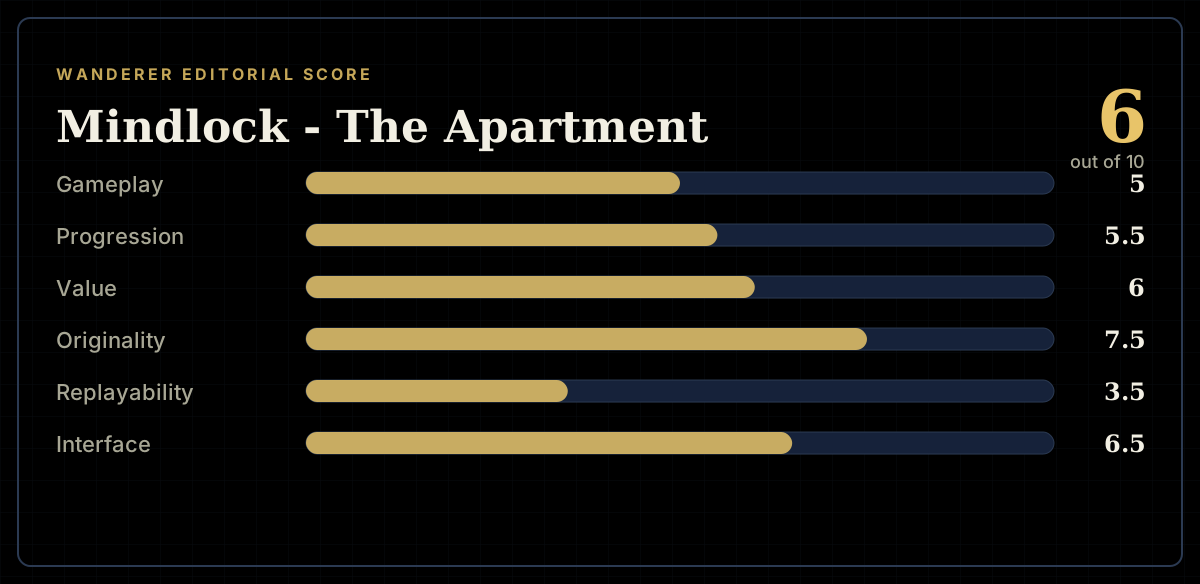
How the review scores each part of the gameWanderer Editorial -
The short versionWanderer Editorial