
Game review
Follow the meaning
6 / 10
- Developer
- HiKing Mind Studio
- Publisher
- Second Maze
- Released
- 22 November 2024
- Platforms
- Windows
- Genre
- Surreal point-and-click puzzle adventure
- Monetisation
- One-time purchase, no in-game store or additional currency purchases
- Players
- Single-player only
The short version
Follow the meaning sends detective Paul Trilby into a strange island town shadowed by a nearby hospital, unraveling its mysteries through hand-drawn, cat-hiding, Rusty Lake-flavored point-and- click puzzles. This review's sample consistently credits the atmosphere, art direction, and suspenseful music with real quality, several reviewers explicitly invoking Rusty Lake by name as the clearest reference point. What tempers that praise, repeated across a large portion of the sample, is a specific pairing of complaints: puzzles widely described as too easy even for casual players, and a story that many say ends before it fully develops the themes it raises — including at least one detailed, serious objection to how the game handles mental health and psychiatric themes specifically.
Biggest strengths
- The hand-drawn art style and overall atmosphere draw consistent, specific praise, with multiple reviewers directly and favorably comparing the visual and tonal identity to Rusty Lake's celebrated catalog
- The suspenseful, dynamically shifting music earns repeated appreciation for enhancing the game's central mystery and mood
- Several reviewers describe genuine narrative surprises and tonal twists that subvert initial expectations set by the game's marketing and trailers
Biggest weaknesses
- The single most repeated complaint across the negative sample concerns puzzle difficulty, with reviewers consistently describing the challenges as too easy even for casual audiences and disproportionately simple relative to the game's mysterious framing
- A large portion of reviewers describe the story as underdeveloped or rushed, with the game's central mysteries and themes introduced without being fully explored before the credits roll
- At least one detailed reviewer raises a specific, serious content concern, describing the game's treatment of mental health and psychiatric themes as discriminatory and archaic in the language and framing it uses, a critique this review takes seriously rather than dismissing
Who it's for: Fans of Rusty Lake-style surreal point-and-click puzzle games looking for a short, atmospheric, low-cost experience, with modest expectations for puzzle difficulty and narrative depth.
Our recommendation: A charming, inexpensive, atmospheric puzzle game well worth its low price for a single evening's play — just temper expectations for challenge and narrative depth, and be aware of at least one serious, specific content concern raised about its handling of mental health themes.
6 / 10
Follow the meaning drops you into the shoes of detective Paul Trilby, investigating a strange island town shadowed by a nearby psychiatric hospital, piecing together its secrets through hand-drawn point-and-click puzzles and a healthy dose of hidden-cat collecting. It wears its inspiration proudly, and this review's sample confirms both what that inspiration gets right and where the resulting game falls short of its clearest reference point.
An atmosphere that earns its comparisons
The praise for the game's mood and presentation is specific and consistent. "The game Follow the meaning immediately reminded me of games by Rusty Lake (The White Door, Underground Blossom, ...). Not only with its cartoonish graphics, but also with the suspenseful music that changes according to your progress in the game," one reviewer writes. Another frames the connection even more directly: "I tried the demo and wasn't sure if I'd go for the full version—but then Rusty Lake endorsed the game. How could I deny the influence of one of my favorite studios?" A third describes genuine narrative surprise within that familiar framework: "This game is full of surprises! It had so many small twists in the story and aesthetics that I truly was not expecting."
The puzzle-difficulty complaint that dominates the negative sample
Set against that atmospheric praise, this review's negative sample converges consistently on one specific gameplay concern: the puzzles simply don't challenge. "The atmosphere, graphics, and music were all very good, but the puzzles were a bit too easy and the story was super basic and underdeveloped. It's a shame because it had the potential to be something really speci[al]," one reviewer writes. Another, comparing it directly to the game's clearest genre influence, notes: "i love rusty lake but this game strayed a bit too far from the usual style I was not a huge fan. Puzzles seemed a bit too simple to solve and the story lacked depth and a proper conclusion." A third puts it plainly: "Nice hand drawn art, but too easy puzzles. I'm not sure what the target demographic is, but the topic seems to be more for young adults, while the puzzles can be solved by children."
A serious, specific content concern this review takes seriously
At least one reviewer raises a substantive concern distinct from the puzzle-difficulty or length complaints, and this review treats it as a legitimate critique worth reporting directly rather than folding into general disappointment. "If you or someone you love has had experiences with the mental health 'system' you may avoid this game. The gameplay and puzzles were clever but the underlying message and the words used to deliver it are awful, discriminatory and archaic," the reviewer writes. That's a specific, substantive objection to how the game's own themes and language handle a sensitive real-world subject — mental health and psychiatric care — and it's worth flagging clearly for prospective buyers who might be personally affected by how that subject matter is portrayed, separate from any assessment of the game's puzzle design or pacing.
A short runtime that many still find worthwhile
The brevity complaint recurs often but lands with varying severity depending on the reviewer's expectations. "I don't like when someone says a game is too short. But this game's problem I think is really the length. The plot feels underdeveloped and it kinda just leaves you unfulfilled with how it ends," one reviewer writes, treating the short runtime as directly connected to the story's incompleteness rather than a separate issue. Another reviewer, more forgiving given the price, offers a useful counterpoint: "Kinda of a silly plot, and the game didn't flow well. I guess for the price, which was just a little over [a few dollars], it was an okay experience." At its very low asking price, several reviewers frame the short length as a fair trade rather than a broken promise, echoing patterns seen elsewhere in this review series with similarly modest indie releases.
What the achievement data confirms about engagement
Steam's own completion figures show a game most buyers engage with successfully, with a real but modest tail of harder optional content. An early collectible milestone sits at 90.6%, and even the primary ending achievement sits at a healthy 80.3%. The rarer alternate endings fall to 20.4% and 10.1% respectively, suggesting most players see the game's main story through to a single conclusion without necessarily exploring every narrative branch — consistent with reviewer descriptions of a short, mostly linear experience with some optional depth for curious replayers.
An unverified but specific claim
One reviewer's assertion that Rusty Lake formally endorsed this game is a specific, notable claim this review attempted to verify directly. Checking the game's own extensive partner-events feed — which documents everything from convention appearances to magazine features in detail — turned up no specific post referencing a Rusty Lake endorsement. This review reports the claim as stated by the original reviewer, but treats it as unconfirmed rather than established fact, since no independent corroboration was found.
A genuinely well-supported, recognized release
Whatever this review's content and depth criticisms, Follow the meaning has received real, sustained attention. Its partner-events feed documents two awards won at Digital Dragons, a feature in Edge magazine, an extensive pre-launch convention and demo circuit, numerous post-launch content and translation updates, and even a retro MS-DOS release — a genuinely impressive level of ongoing investment and critical recognition for a small, inexpensive indie puzzle game.
Final verdict
Follow the meaning delivers real atmospheric charm at a very low price, earning fair comparisons to Rusty Lake's celebrated catalog even as it falls short of that inspiration's puzzle depth and narrative development. Its brevity is easy to forgive given the cost, but the specific content concern raised about its handling of mental health themes deserves genuine consideration before buying, separate from any assessment of its puzzles or pacing.
Pros and cons
Pros
- The hand-drawn art style and overall atmosphere draw consistent, specific praise, with multiple reviewers directly and favorably comparing the visual and tonal identity to Rusty Lake's celebrated catalog
- The suspenseful, dynamically shifting music earns repeated appreciation for enhancing the game's central mystery and mood
- Several reviewers describe genuine narrative surprises and tonal twists that subvert initial expectations set by the game's marketing and trailers
- The optional hidden-cat collectibles add a light, low-pressure replayability layer for players wanting a reason to revisit completed areas
- Steam's own partner-events feed documents exceptional, sustained post-launch support and real critical recognition, including two awards won at Digital Dragons and a feature in Edge magazine
Cons
- The single most repeated complaint across the negative sample concerns puzzle difficulty, with reviewers consistently describing the challenges as too easy even for casual audiences and disproportionately simple relative to the game's mysterious framing
- A large portion of reviewers describe the story as underdeveloped or rushed, with the game's central mysteries and themes introduced without being fully explored before the credits roll
- At least one detailed reviewer raises a specific, serious content concern, describing the game's treatment of mental health and psychiatric themes as discriminatory and archaic in the language and framing it uses, a critique this review takes seriously rather than dismissing
- The overall runtime is consistently described as very short, with most reviewers reporting completion in one to two hours even while actively searching for hidden collectibles
- One reviewer's claim that Rusty Lake formally endorsed the game could not be independently verified by this review through the developer's own documented public announcements, and is reported here as an unconfirmed assertion rather than an established fact
Screenshots
-

Follow the meaningImage: Second Maze via Steam -

Follow the meaningImage: Second Maze via Steam -

Follow the meaningImage: Second Maze via Steam -
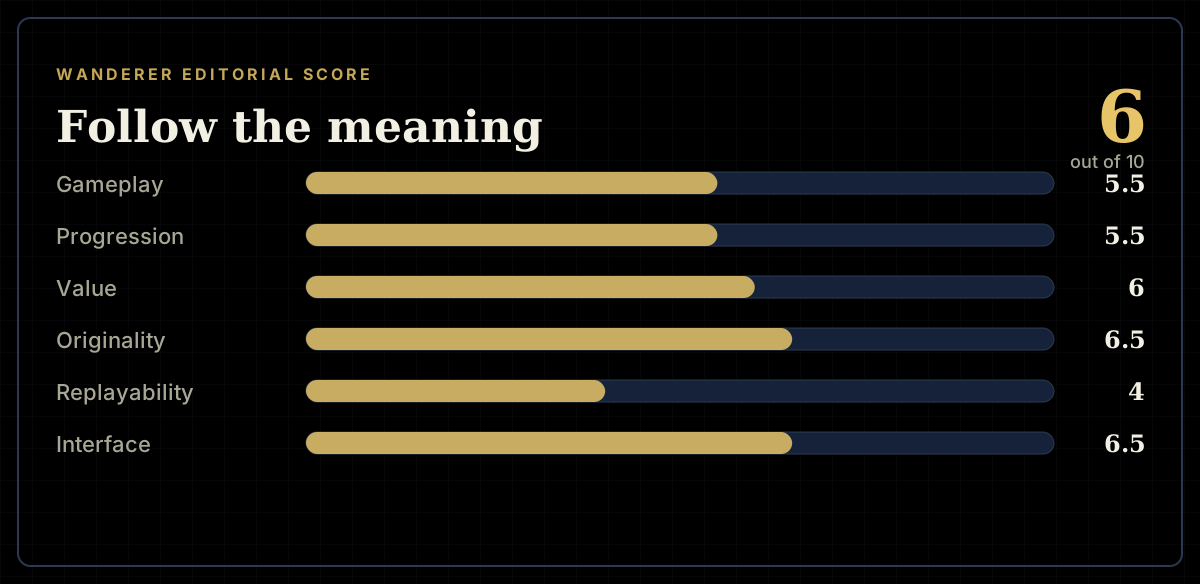
How the review scores each part of the gameWanderer Editorial -
The short versionWanderer Editorial