Game review
The Blood Mage 2 Review
6 / 10
- Developer
- Daniel da Silva
- Publisher
- SmokeSomeFrogs
- Released
- 27 August 2026
- Platforms
- ["Windows", "Linux"]
- Genre
- RPG
A Ninth Consecutive Launch Without a Single Review
The Blood Mage 2 released on Steam on 27 August 2026 and currently has zero Steam user reviews, continuing an unbroken run of unreviewed launches covered in this stretch of the schedule. This review is built entirely from the developer's own store page description, not from verified play, which is a particularly important caveat for a game the developer itself frames as "a rare puzzle experience" — the sequel's central appeal rests on how well its specific resource-management puzzle logic holds together over repeated attempts, and that's exactly the kind of thing no store description can confirm on its own.
Your Health Is Your Mana Pool
The core conceit is stated plainly on the store page: "every spell you cast is draining your life essence; your health doubles as your mana pool." That's a meaningfully different resource model from the typical RPG split between health and a separate mana bar, since it collapses offense and survival into a single shared resource — casting a powerful spell doesn't just cost a resource, it directly reduces the same pool that determines whether the blood mage survives the next hit. The developer bills the game as "a turn-based Puzzle game disguised as a Dungeon Crawler RPG," which is a useful framing: rather than optimising for damage output in the way a conventional RPG might, players are pushed toward optimising for survival efficiency, treating every spell cast as a trade-off against the character's own remaining lifespan for that run.
The Dungeon Itself Is the Puzzle
Beyond individual fights, the store page describes "the path you take and the order in which you encounter the fights" as "the puzzle you need to solve," with players able to "use everything strategically, items and enemies alike." That framing suggests the dungeon layout and encounter order matter as much as any individual battle's tactics — sequencing fights in the wrong order, given a shared and depleting health-mana pool, could plausibly turn a survivable encounter into a fatal one purely through resource mismanagement earlier in the run. Combat itself is described as "deterministic," meaning encounters should play out consistently given the same inputs rather than relying on random damage rolls — a design choice that fits a puzzle-first game far better than a typical RPG, since it means failure can be attributed to a specific misstep rather than bad luck, and a puzzle can in principle be solved with perfect information.
That deterministic framing also raises the stakes of the game's stated encouragement to "try out unorthodox solutions." In a randomised combat system, an unconventional approach might simply get lucky or unlucky regardless of its underlying soundness; in a deterministic one, a genuinely clever unorthodox play should reliably work every time it's attempted correctly, which in turn means the game's puzzle design has to actually support multiple valid solutions rather than funnelling players toward one intended path while merely tolerating detours. Whether the encounter design lives up to that promise of real solution variety, rather than technically allowing off-path attempts that are simply worse, is squarely the kind of thing that only shows up once players start comparing notes on how they actually solved each room.
Built Around Restarting, Not Grinding
The store page is upfront that failure is expected and even intended: "prepare to restart more than once. Next time you will get further!" That's a structural admission that the game leans on iterative learning across multiple attempts rather than character-level grinding as its main progression loop — players aren't expected to out-level a tough encounter, they're expected to learn the dungeon's layout and refine their spell-casting sequence with each attempt. Whether that loop stays engaging across many restarts, rather than becoming tedious once the early sections of the dungeon are memorised, is a question that's central to whether the puzzle-RPG hybrid actually works, and it's not something a feature list can settle on its own. The store page's mention of "fast-paced movement and fights" suggests the developer is at least aware of this risk and has tried to keep individual restart attempts brisk rather than dragging players back through slow, repetitive early sections every time they die — a reasonable design instinct for a restart-driven structure, even if it's impossible to confirm from a description alone how quickly a run can actually be restarted in practice.
A Standalone Sequel at a Low Price
At NZ$7.49 with no discount at the time of writing, The Blood Mage 2 sits at the budget end of the indie puzzle-RPG space, and the store page is explicit that "you don't need to play the first entry to enjoy this game," positioning it as a fresh start with "new graphics, new environments, new spells" rather than a direct continuation requiring prior familiarity. There's no mention on the store page of any monetisation beyond the base purchase. Given the restart-heavy design the developer describes, the low price feels appropriately scaled to a game that's explicitly built around repeated short attempts rather than a single long playthrough.
Verdict
The Blood Mage 2 pitches a genuinely distinctive resource model — health and mana collapsed into a single shared pool — wrapped in a deterministic, puzzle-focused take on the dungeon crawler, where sequencing fights correctly matters as much as winning them individually. Like every other title covered in this stretch, it remains completely unreviewed by Steam's user base at the time of writing, so whether its restart-driven puzzle loop stays engaging across many attempts is an unverified claim rather than a confirmed strength. Its low price and standalone design make it a reasonable low-risk pick for puzzle-RPG fans specifically curious about its health-as-mana mechanic, with the standing caveat that this assessment rests entirely on the developer's own description rather than anyone's actual playthrough.
Screenshots
-
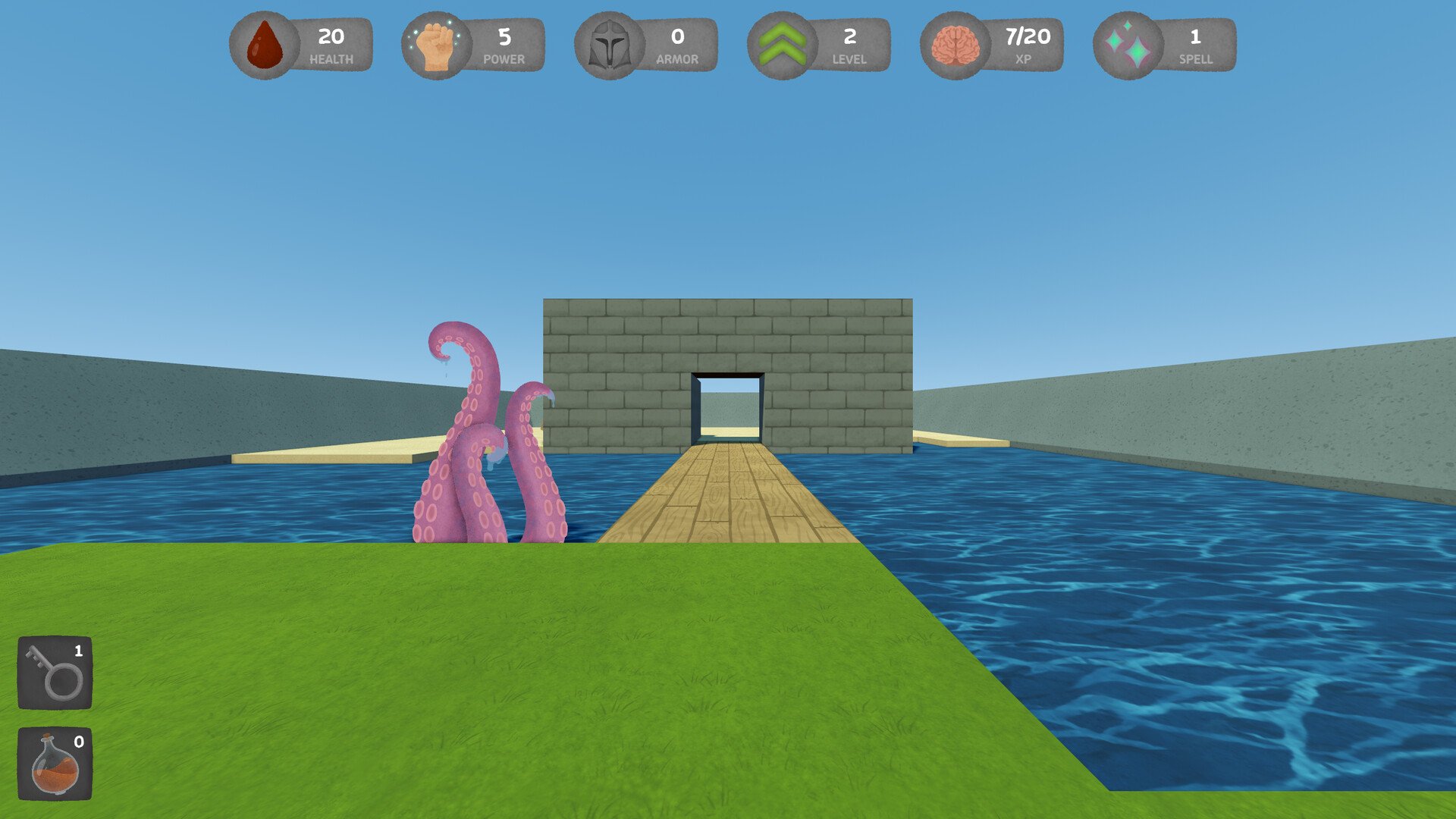
A first-person HUD tracks health, power, armor, level, XP, and available spell charges as tentacles lurk in the water aheadImage: Daniel da Silva via Steam -
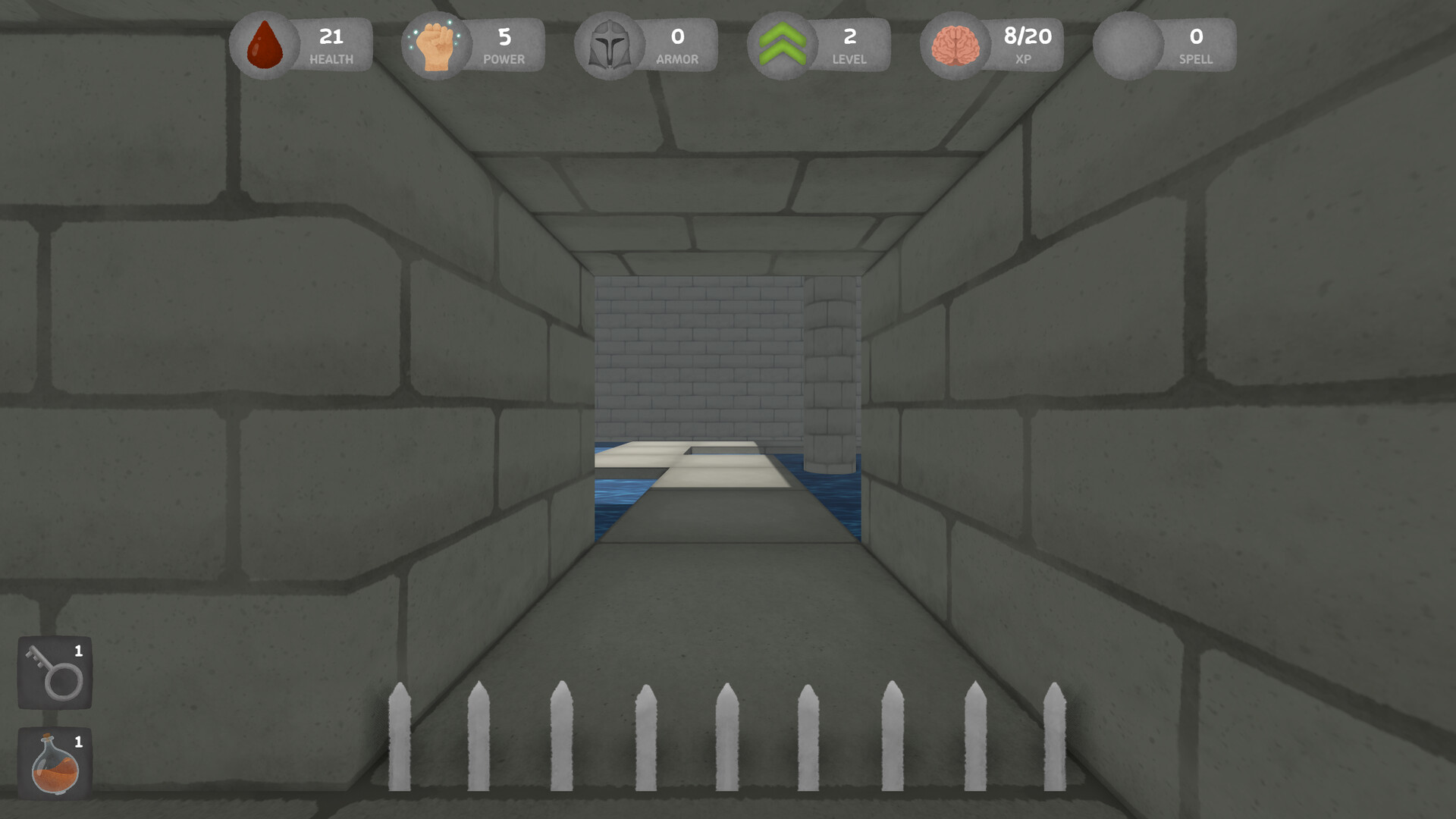
A spiked barrier blocks a narrow corridor, forcing a decision with the spell counter already depleted to zeroImage: Daniel da Silva via Steam -
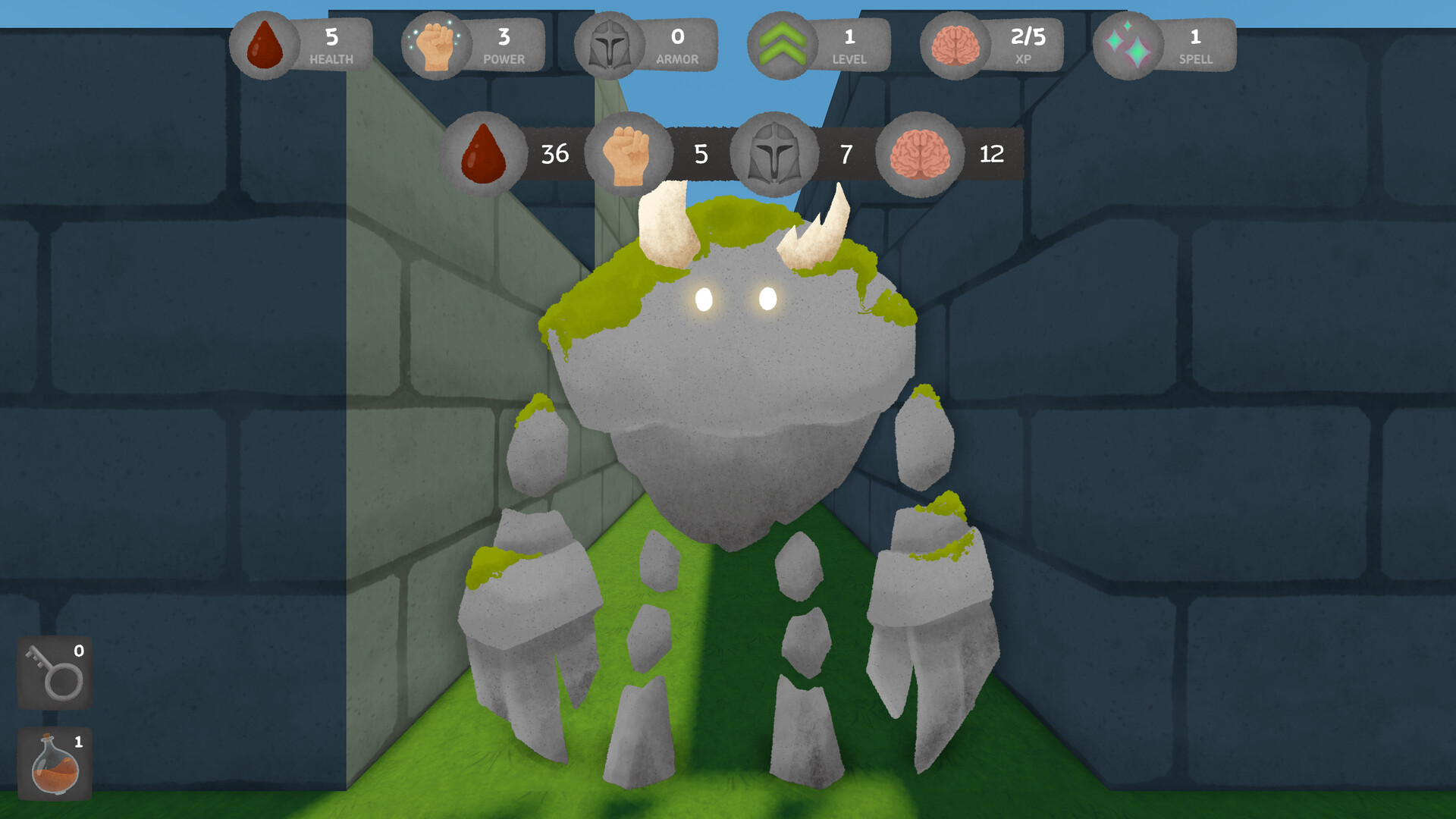
A rock golem's full stat block is displayed on screen, letting players weigh its health and armor against their own depleted 5-health poolImage: Daniel da Silva via Steam