
Game review
Tell Me Why
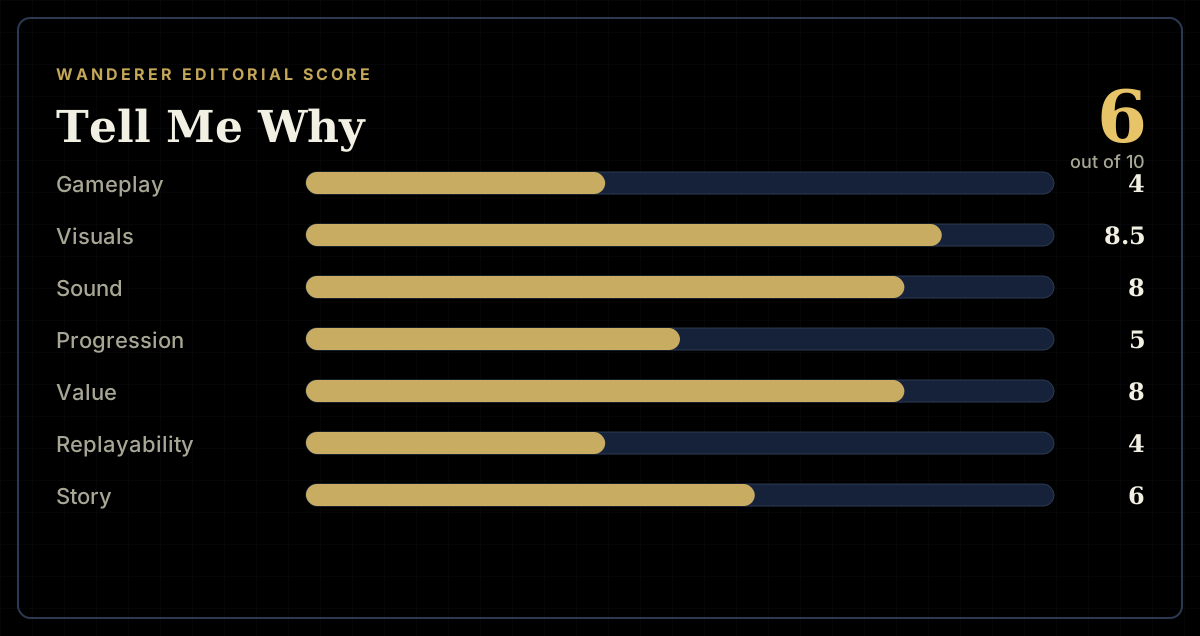
6 / 10
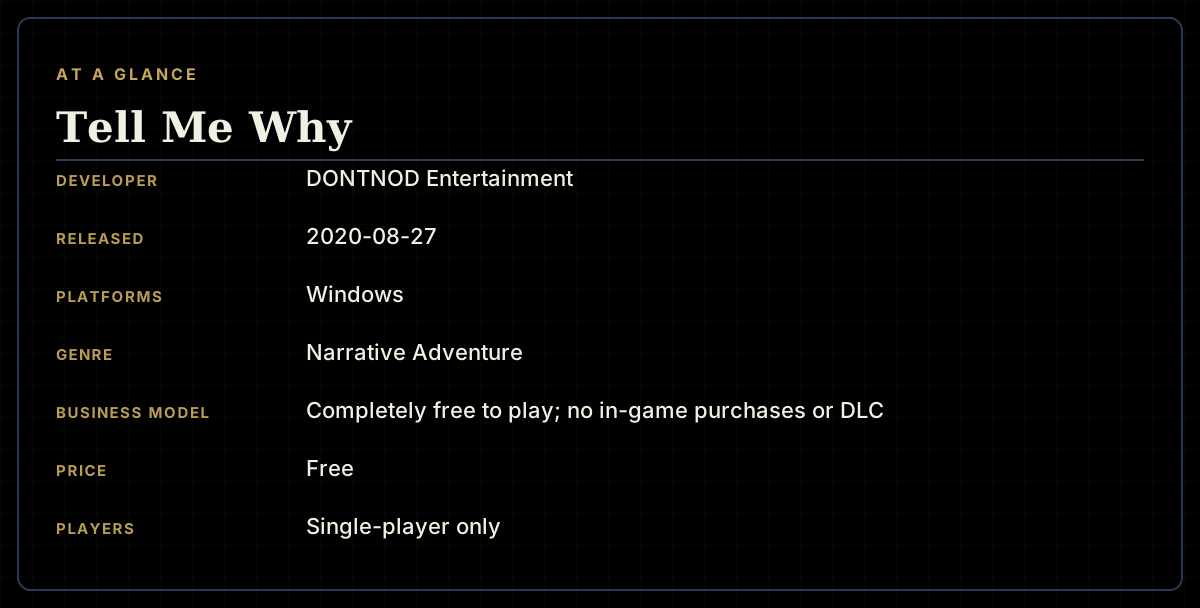
- Developer
- DONTNOD Entertainment
- Publisher
- Xbox Game Studios
- Released
- 27 August 2020
- Platforms
- Windows
- Genre
- Narrative Adventure
- Monetisation
- Completely free to play; no in-game purchases or DLC
- Players
- Single-player only
The short version
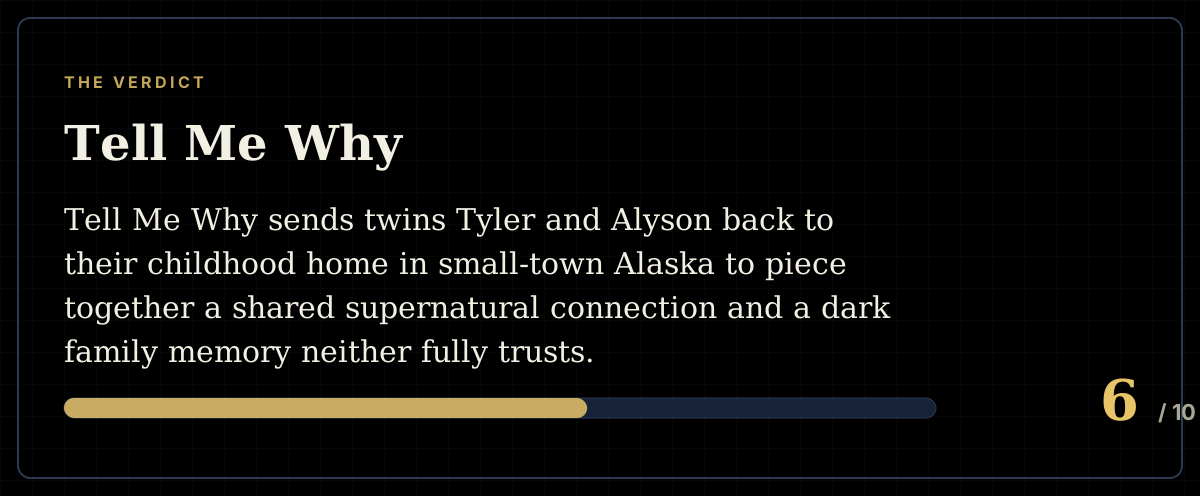
Tell Me Why sends twins Tyler and Alyson back to their childhood home in small-town Alaska to piece together a shared supernatural connection and a dark family memory neither fully trusts. DONTNOD's art direction and voice work land as well here as in any of the studio's earlier work, and the game is entirely free. What a large, substantive share of its own audience reports — separate from a political backlash the game's trans protagonist also drew — is that the writing, pacing and player agency fall short of the studio's Life is Strange work, with choices that carry noticeably less weight and a moment-to-moment loop some reviewers describe as closer to a movie with occasional walking than an interactive story.
Biggest strengths
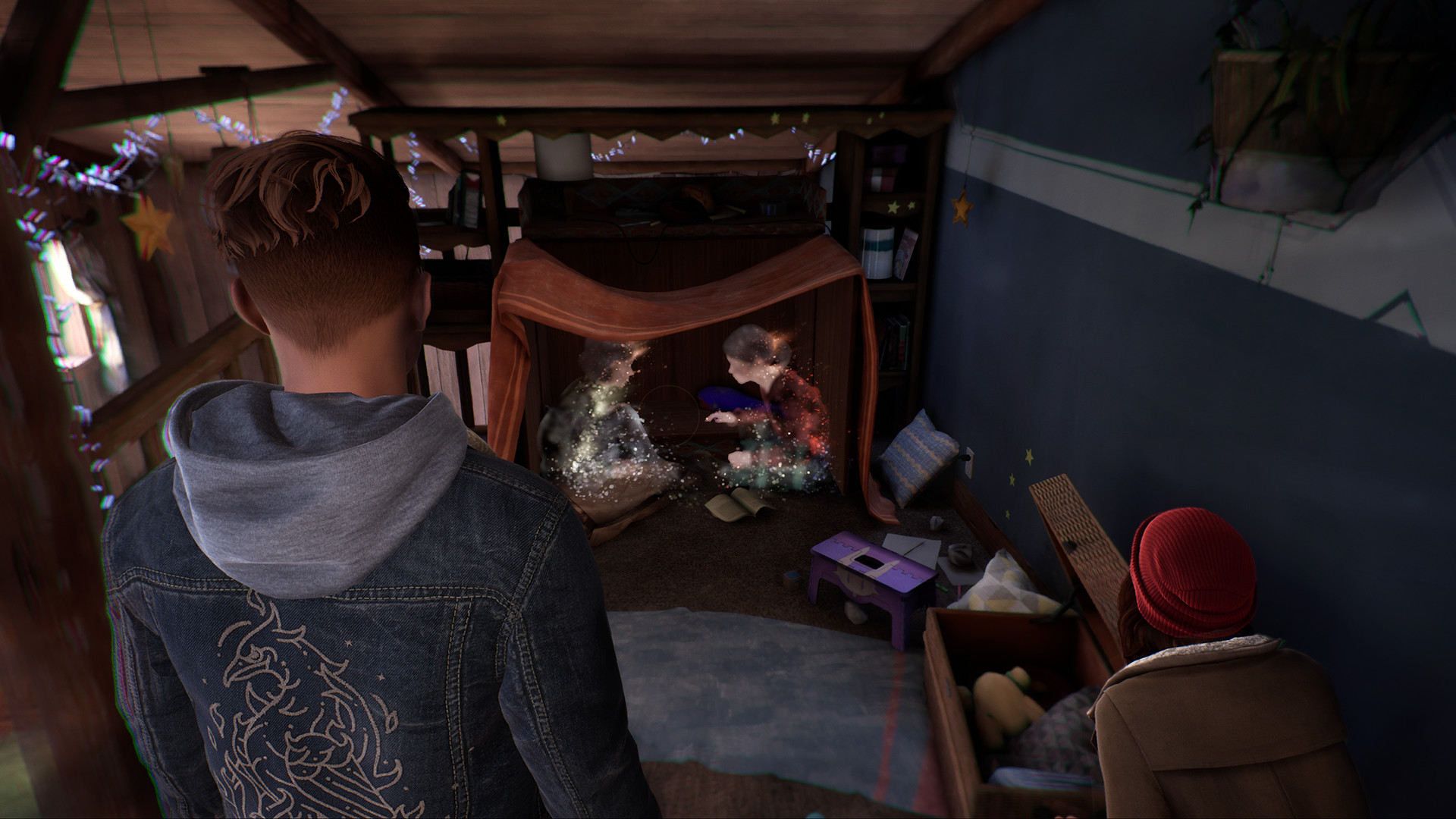
- Art direction and the Alaskan small-town setting draw consistent, specific praise even from reviewers who are otherwise disappointed by the writing, with several saying it made them want to visit the real location
- Voice acting and music are repeatedly singled out as highlights, maintaining the production quality DONTNOD's earlier narrative games are known for
- The central mystery and the twins' shared telepathic-memory power is described by multiple reviewers as a genuinely interesting hook, particularly in the first chapter
Biggest weaknesses
- A large, detailed body of reviews, including from self-identified longtime fans of DONTNOD's Life is Strange games, describes the writing and character work as noticeably weaker than the studio's earlier titles, with specific complaints about flat or annoying protagonists
- Player choices are widely reported to carry less real narrative weight than in Life is Strange, with several reviewers explicitly comparing the two and concluding this entry offers the illusion of agency more than functional branching
- Pacing draws sustained criticism, with multiple reviewers describing large stretches as slow to the point of boredom, and at least one detailed review breaking down actual playtime versus time spent disengaged
Who it's for: Fans of narrative walking-sim adventures and DONTNOD's earlier work who can accept a slower, more movie-like pace and lighter player agency than Life is Strange offered, more than players specifically drawn in by that comparison expecting an equivalent experience.
Our recommendation: It costs nothing, which makes it an easy recommendation to at least try; go in expecting a gentle, visually rich mystery rather than a spiritual sequel to Life is Strange, since that specific expectation gap is what drives most of the substantive criticism.
6 / 10
Twins Tyler and Alyson Ronan return to their childhood home in fictional Delos Crossing, Alaska, ten years after a tragedy tore their family apart, sharing a private telepathic connection that lets them relive fragments of a past neither fully remembers the same way. DONTNOD built its reputation on Life is Strange's blend of teenage drama and supernatural mystery, and Tell Me Why applies that same formula to an adult, more grounded story. The review sample treats the game's craft and its writing as two genuinely separate conversations, and it's worth keeping them separate here too.
What the studio still does well, in detail
Presentation is where almost everyone agrees. Delos Crossing's small-town Alaskan setting draws specific, repeated praise for its art direction, with more than one reviewer saying the environments made them want to visit the real place the fiction is modeled on. Voice acting and music hold up to DONTNOD's established standard, and the central hook — two people who share literal access to the same childhood memories, and don't always agree on what actually happened in them — is described by multiple reviewers as genuinely compelling, particularly across the first chapter before pacing concerns set in.
Where fans of the studio's earlier work push back
The substantive criticism is specific rather than a vague letdown. Reviewers who name Life is Strange as a favorite describe Tell Me Why's writing and characters as a clear step down, several calling the protagonists flat or unlikeable in ways that undercut a story asking players to deeply invest in their relationship. Player choice draws its own detailed complaint: multiple reviewers directly compare the branching structure to Life is Strange's and conclude this game's choices carry noticeably less real narrative weight, describing the sensation as illusory agency rather than functional divergence — the same "choices matter" gap this list has documented in other 2020 releases, here applied to a studio whose reputation was partly built on getting that mechanic right. Pacing draws sustained, specific criticism too, with reviewers describing stretches genuinely boring enough that one detailed account subtracts real playtime lost to disengagement from their total completion time.
A related, more mechanical complaint concerns how little the moment-to-moment gameplay actually asks of players: several reviewers describe walking, object inspection and narrated exposition as accounting for the overwhelming majority of playtime, with few systems layered on top even by the standards of a genre that's already lightweight on mechanics. None of this reads as a uniquely political complaint — it's the same kind of craft critique any narrative adventure could draw, made specific and repeated enough across the review sample to take seriously as the central substantive weakness.
The separate, political dimension worth naming plainly
Distinct from that craft critique, multiple reviewers independently report that a real portion of the game's negative reviews, particularly around launch, were driven by backlash against its transgender protagonist — voiced by a transgender actor, one of the first instances of that casting choice in a major Xbox-published release — rather than by the story or mechanics themselves. This review treats that political backlash as a separate, factual observation about the review record rather than blending it into the substantive quality debate above; a reader weighing whether to try the game deserves to know both that real, detailed craft criticism exists and that a real, documented political dimension exists alongside it, without either one being used to dismiss the other.
How far players actually get
Global achievement data shows a gradual, non-catastrophic taper rather than a sharp wall: over three-quarters of players clear the earliest story milestone, dropping into the thirties and forties for mid-story goals and single digits for the rarest completionist achievements. That shape is consistent with the pacing complaints above — a real, if not universal, share of players lose momentum as the story goes on rather than being blocked by any difficulty, since the game has none in the traditional sense. It also confirms the first chapter's stronger reception translates into more people actually finishing it than continuing all the way through the full three-chapter arc.
An episodic release built for a subscription-era audience
Tell Me Why launched across three chapters released roughly two weeks apart in August-September 2020, a structure DONTNOD carried over from Life is Strange's own episodic history. Reviewers playing after all three chapters were already available generally experience it as a single continuous story rather than the wait-driven event the original release format created, which may partly explain why the pacing complaints read more sharply in retrospect — a slow midsection is more noticeable played back-to-back than spread across separate release weeks with time to reflect between them. That's a structural detail worth knowing rather than a flaw in either direction, since it shapes how the same content lands depending on when a player experiences it.
Verdict
Tell Me Why looks and sounds like DONTNOD at its best while reading, by wide agreement among the studio's own longtime fans, as one of its weaker scripts — flatter characters, choices with less real weight, and pacing that tests patience more than Life is Strange ever did. Because it costs absolutely nothing to try, the honest recommendation here is genuinely simple: it's worth trying for the mystery and the setting alone, with expectations calibrated to a gentler, more linear, more movie-like experience than the comparison to the studio's biggest hit tends to imply going in.
Pros and cons
Pros
- Art direction and the Alaskan small-town setting draw consistent, specific praise even from reviewers who are otherwise disappointed by the writing, with several saying it made them want to visit the real location
- Voice acting and music are repeatedly singled out as highlights, maintaining the production quality DONTNOD's earlier narrative games are known for
- The central mystery and the twins' shared telepathic-memory power is described by multiple reviewers as a genuinely interesting hook, particularly in the first chapter
- Being entirely free removes any purchase-risk question entirely, letting curious players judge the story-quality debate below for themselves at no cost
- The game features one of the first Xbox-published titles with a transgender protagonist voiced by a transgender actor, a genuine industry milestone independent of how the surrounding narrative is judged
Cons
- A large, detailed body of reviews, including from self-identified longtime fans of DONTNOD's Life is Strange games, describes the writing and character work as noticeably weaker than the studio's earlier titles, with specific complaints about flat or annoying protagonists
- Player choices are widely reported to carry less real narrative weight than in Life is Strange, with several reviewers explicitly comparing the two and concluding this entry offers the illusion of agency more than functional branching
- Pacing draws sustained criticism, with multiple reviewers describing large stretches as slow to the point of boredom, and at least one detailed review breaking down actual playtime versus time spent disengaged
- The moment-to-moment gameplay is described by several reviewers as minimal even by walking-sim standards — inspecting objects and listening to narration accounts for the large majority of playtime with few meaningful interactive systems layered on top
- Multiple reviewers independently report that a wave of the game's negative reviews at launch was driven by backlash against its transgender protagonist rather than the game's quality, a political dimension distinct from, and this review treats separately from, the substantive craft criticism above
Screenshots
-

Tell Me WhyImage: Xbox Game Studios via Steam -

Tell Me WhyImage: Xbox Game Studios via Steam -
Tell Me WhyImage: Xbox Game Studios via Steam -
How the review scores each part of the gameWanderer Editorial -
At a glanceWanderer Editorial -
The short versionWanderer Editorial