Game review
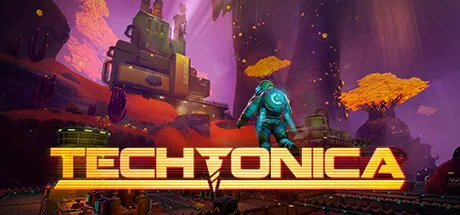
Techtonica
6.5 / 10
- Developer
- Fire Hose Games
- Publisher
- Fire Hose Games
- Released
- 7 November 2024
- Platforms
- Windows, Xbox Series X|S, Xbox One, PlayStation 5
- Genre
- First-person underground factory automation and mining
- Monetisation
- Premium, one-off purchase. No in-game purchases, no premium currency, no subscription, no ads. The only add-on is an optional soundtrack DLC
- Players
- Co-op for up to four players online; the campaign is fully playable solo
The short version
Techtonica's pitch is a real design argument, not a reskin: build a factory-automation game underground, in first person, with a tool that permanently deletes terrain, and see what changes. Quite a lot does. Without a horizon or a flat plane to default to, every base becomes a carved-out cavity you shaped yourself, and the MOLE's destructive mining turns excavation into a genuine planning decision rather than a resource-collection animation. That's a better answer to "why does this need to be underground" than most factory games manage when they bolt on a new setting.
Where it comes apart is everything around that idea. The tech tree is one of the more confusing in the genre, there's no blueprint or copy-paste system for repeating a build, frame rate sags hard once a base gets large, and four-player co-op strains visibly at scale. Steam's own news feed for the game hasn't carried a post since launch week in November 2024, and a steady stream of 2026 user reviews describe Fire Hose Games as having gone quiet, even though the studio's own site still lists Techtonica as its current project. Buy this for the idea, not for the polish.
Biggest strengths
- The MOLE's permanent terrain destruction makes excavation a real planning decision, not a resource-collection animation bolted onto a pre-built map
- Building underground removes the default flat plane every other factory game gives you for free, so verticality and cavity shape become part of the puzzle rather than an option
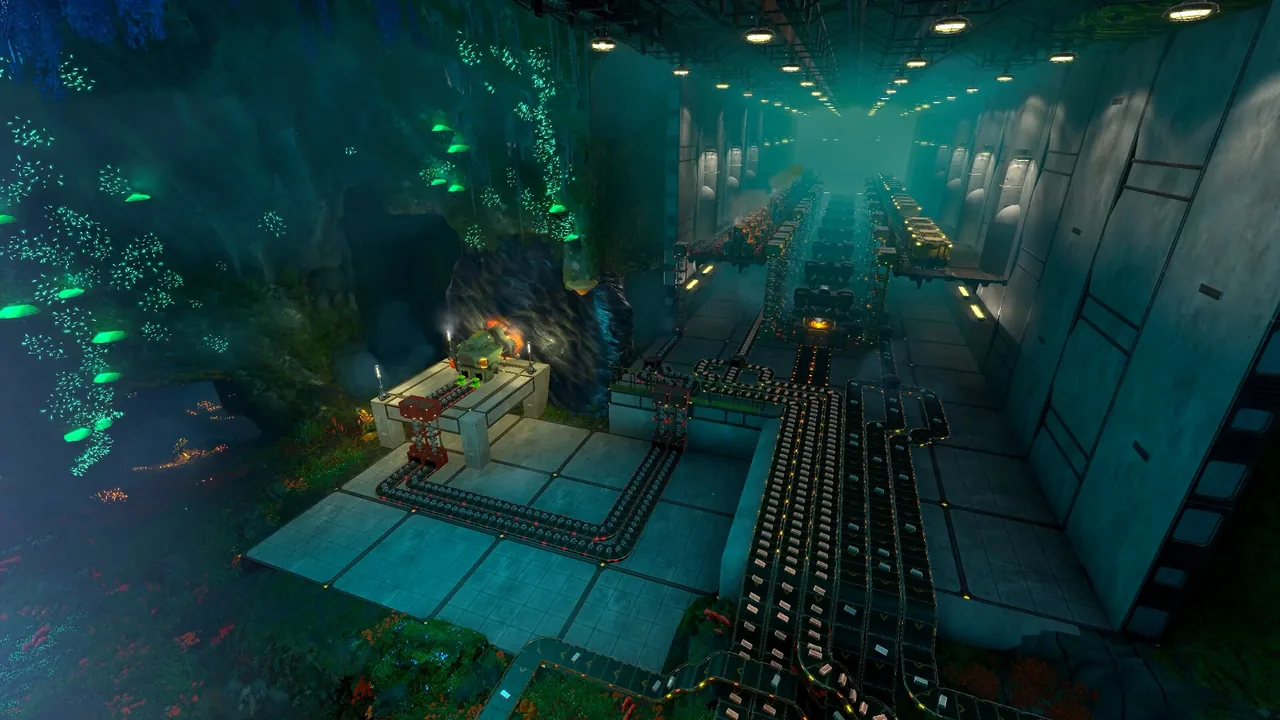
- Bioluminescent cave biomes give the underground setting a genuine visual identity instead of reading as a reskinned surface world
Biggest weaknesses
- There is no blueprint or copy-paste system for repeating a built section, so every duplicate structure in a sprawling factory gets placed by hand
- The tech tree spreads recipes and unlocks across enough disconnected menus that finding where an item is even made becomes its own chore
- Frame rate drops noticeably as a factory grows, on a scale player reports describe as worse than the genre's other big 3D entry, Satisfactory
Who it's for: Automation veterans who've already mastered Factorio or Satisfactory and want to see the genre's core loop solved from underneath, plus anyone drawn to destructible-terrain building. A weaker choice for newcomers to the genre, who'll hit its interface friction before they find its good ideas, and for anyone who needs confidence the game is still being actively supported.
6.5 / 10
Every factory-automation game eventually has to answer why its setting exists at all — why Factorio needs an alien planet under siege, why Satisfactory needs a whole open world to walk across. Fire Hose Games' answer is to remove the setting's most basic assumption: there is no ground level here, no horizon, no flat plane you default to when you're not sure where to build next. Techtonica drops you and your MOLE — a black-hole-powered mining tool that permanently deletes stone — onto the subterranean layers of an alien planet called Calyx, and the entire campaign runs in the opposite direction from every other game in this genre. You don't spread outward across a map. You dig upward, floor by floor, toward a surface you haven't seen yet, automating your way through bioluminescent caverns as you go. It's a genuinely different structural premise, and the review that matters here is whether that premise changes how the game plays or just how it looks.
Digging changes the planning problem, not just the scenery
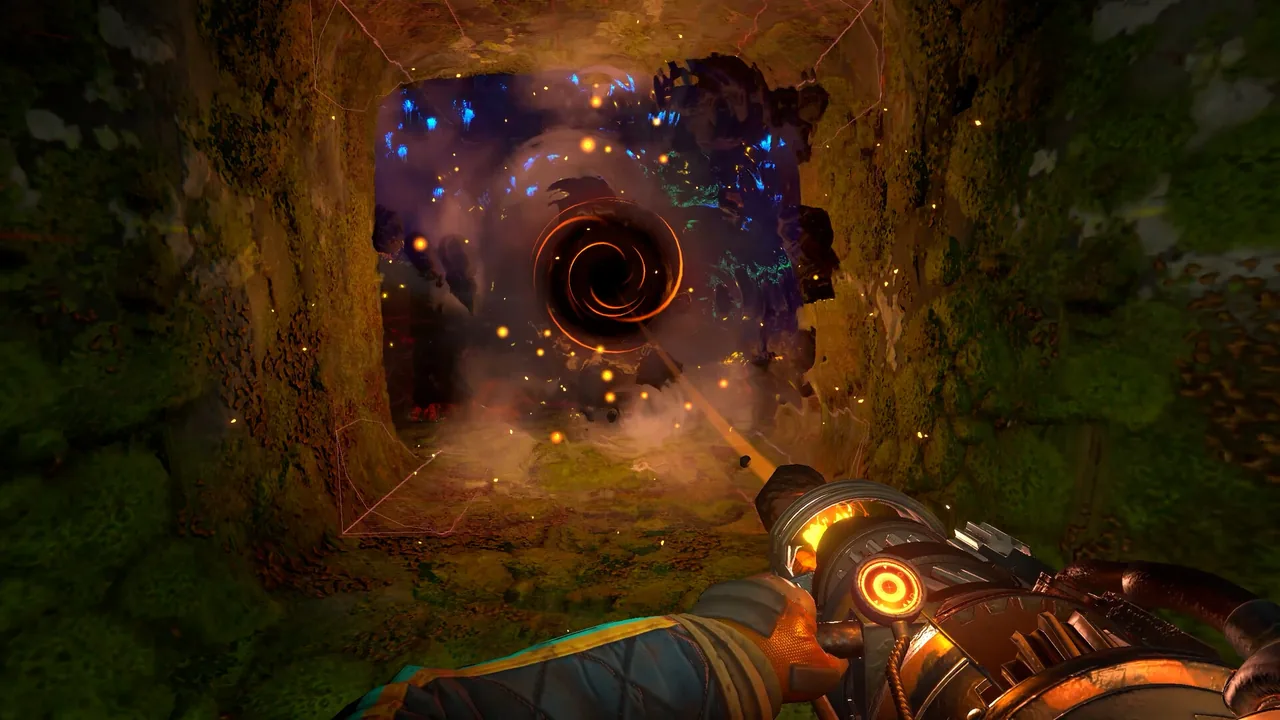
Compare this directly to Satisfactory, the other big first-person 3D entry in the genre, and the difference is immediate. Satisfactory hands you a pre-authored alien world and asks you to build across it — the terrain is fixed, and your job is to work with what's there, foundations and all. Techtonica hands you solid rock and a tool that turns it into empty space wherever you point it. That's not a cosmetic difference. In Satisfactory, an awkward cliff face is an obstacle to route around or build over. In Techtonica, it's raw material for a room you haven't decided the shape of yet. The MOLE means your factory's footprint isn't constrained by what the world happened to generate — it's constrained by how much you're willing to dig, and how far you're willing to walk back to check on something once you've carved a maze of connected chambers. That's a genuinely different planning problem, closer to mining a real quarry than laying out a surface plot, and it's the strongest evidence Techtonica isn't just Satisfactory with the sky removed.
The lighting does real work here too. Without sunlight, every space you haven't lit is functionally unusable — a beam feels less like decoration and more like the actual boundary of your factory, in a way no above-ground automation game has to reckon with. Combined with the bioluminescent flora that lines the deeper caverns, Techtonica earns a visual identity distinct from "Satisfactory, but darker" even when the core belts-and-machines loop underneath is doing familiar things.
The MOLE is the whole pitch, and it mostly delivers
Where the underground premise pays off least is in how little the game builds on top of it once the novelty settles. Excavating a chamber for a new production line is satisfying the first dozen times; by the fiftieth, it's a chore with an extra step compared to just placing a foundation on flat ground, and the game doesn't introduce enough new terrain-interaction ideas across the campaign to keep that chore feeling fresh. There's real depth in choosing whether to build compact vertical shafts or wide horizontal galleries, and in routing belts through tunnels you cut specifically for them rather than laying them over open ground — but Techtonica leans on that one mechanical idea for the length of an entire game, without much escalation. A factory-automation game can get away with that if its tech tree and interface carry the mid-game instead. Techtonica's don't.
A tech tree that actively works against you
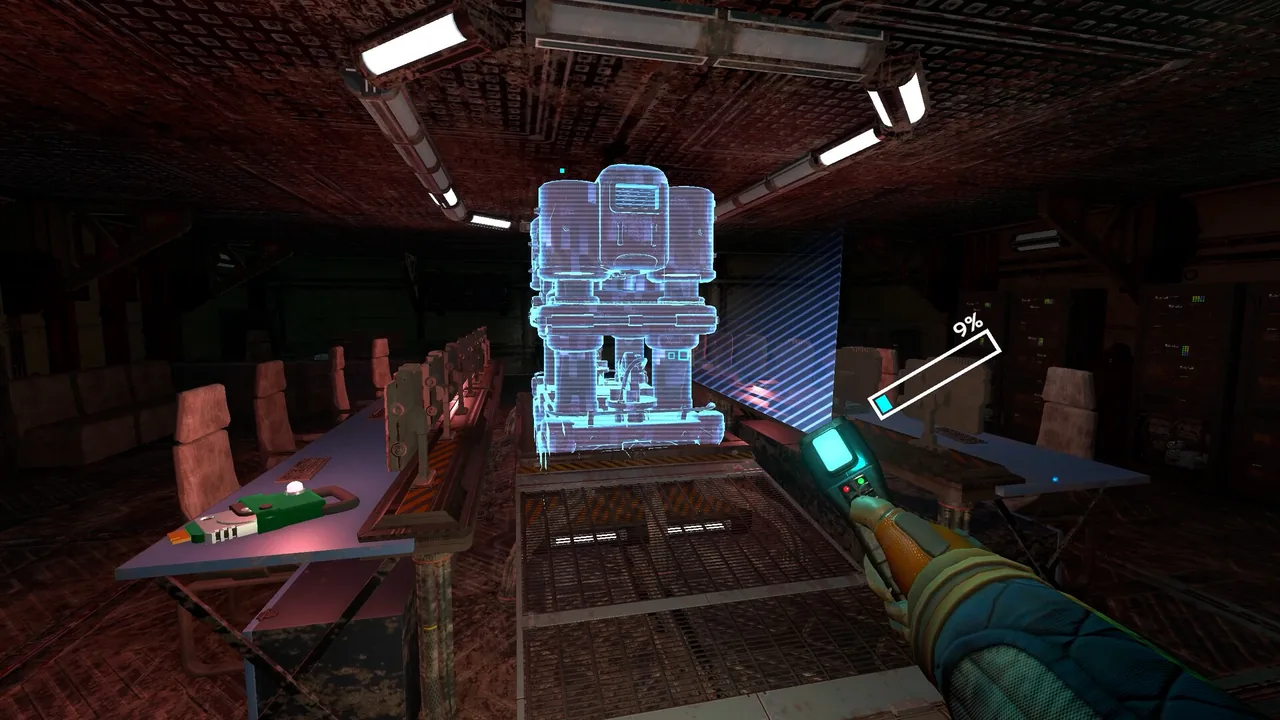
The automation loop itself — miners feeding smelters, smelters feeding assemblers, assemblers feeding a growing web of belts — sits on the simpler end of the genre next to Factorio or Dyson Sphere Program, closer in complexity to shapez 2's approachable ratio puzzles than to Factorio's spreadsheet-deep production chains. That's a reasonable design choice for a game already asking players to think in three dimensions and manage limited light and space. The problem is that the interface built around that loop doesn't respect the simplicity it's working with. Recipes and unlocks are scattered across menus that don't cross-reference each other, so a common player complaint — finding out where a specific item is actually produced — takes real effort rather than a glance. Player feedback consistently describes the tech tree itself as convoluted, and it's an accurate description: unlocks don't gate new capabilities in a clean, readable ladder the way Satisfactory's milestone system or Dyson Sphere Program's research tree do. You end up backtracking through unlock screens more than you should for a game whose underlying production math isn't that complicated.
Progression pacing has a second, stranger problem: the early game hands out enough free platforms, foundations and basic components that there's little pressure to actually automate anything for the first several hours. That's presumably meant to smooth the on-ramp, but it undercuts the genre's core hook before the player has had a reason to feel it. Factory games earn their addictiveness by making you build the thing that removes a bottleneck you're personally annoyed by. Handing out the solution before the player has felt the problem is a pacing mistake few of Techtonica's genre peers make.
Story that talks over the building
Techtonica leans harder into narrative than most of its competitors, with a fully voice-acted mystery plot delivered as you dig deeper into Calyx. That's a genuinely different pitch from Factorio's near-silent world or Satisfactory's corporate-parody flavour text, and it's a defensible attempt to give underground exploration a reason beyond resource nodes. The dialogue itself hasn't landed with a meaningful share of players, who describe it as intrusive rather than atmospheric — chatter that interrupts a building session rather than accompanying it. A quieter, more optional narrative delivery would likely have served the automation-focused half of the audience better without costing the story-focused half much.
Co-op that strains exactly where it matters
Four-player online co-op is a genuine selling point on paper — dividing excavation, logistics and production between players suits Techtonica's physical, walk-it-yourself building style, similar to how Satisfactory's shared factories work. In practice, the feature that should scale best with a group is the one that breaks down first: as a shared base grows, players report desynced environmental changes, ghost items that exist for one player and not another, and production lines that quietly stop matching between clients. That's a serious problem for a co-op-focused feature, because it hits hardest exactly when a group has invested the most time into a shared save.
Performance degrades before the ambition does
Frame rate holding up under a large factory is the genre's hardest technical problem, and Techtonica hasn't solved it any better than its peers — arguably worse. Player reports describe performance holding up reasonably in the opening hours and degrading heavily as a base expands, to the point that some describe struggling to maintain 60fps well before reaching the campaign's later biomes. Satisfactory has its own well-documented single-thread ceiling once a factory gets enormous, but it at least holds that line longer before buckling. Techtonica's smaller scope should, in theory, make this an easier problem to manage than Satisfactory's; the fact that it isn't suggests underlying optimisation work that simply hasn't happened yet.
A developer that's gone quiet
This is the part of the review that matters most for anyone deciding whether to buy in today. Techtonica's Steam news feed hasn't posted a single update since launch week in November 2024 — no balance pass, no bug-fix notes, no roadmap update, nothing in close to two years. Against that silence, a steady run of Steam user reviews through 2026 describe Fire Hose Games as having wound development down entirely, several stating plainly that known issues "will never get addressed." Fire Hose's own studio website still lists Techtonica as its current project and shows open job listings, which cuts directly against that narrative — so the honest position is that the two sources disagree, and there's no independent confirmation of a closure either way. What's verifiable is simpler and just as relevant: whatever the studio's internal status, the public support cadence that exists for Captain of Industry and other actively patched automation games isn't visible here. Anyone buying Techtonica today should do so expecting the game they see now, not a promise of what a future patch might fix.
Value
At NZ$43.59 with no in-game purchases and only an optional soundtrack DLC attached, Techtonica's pricing is fair for a genre where a single premium purchase is the norm rather than the exception. It launched day one into Xbox Game Pass in November 2024 alongside its Steam and PlayStation 5 release, which made it an easy, no-risk way to try the underground pitch for anyone already subscribed at the time — Game Pass catalogues rotate regularly, though, so that inclusion is worth confirming rather than assuming still holds. Against Satisfactory's roughly comparable price and considerably deeper, more actively maintained tech tree, Techtonica's value case rests almost entirely on how much the underground premise appeals to you specifically, since it can't currently compete on content volume or ongoing support.
Players who like the idea of a production line that keeps working while they're away, without needing to physically dig the tunnels themselves, might find a gentler cousin of that same satisfaction in Wanderer's own gathering and crafting systems.
Verdict
Techtonica asked a fair question — does an automation game genuinely change when you take away the horizon and hand the player a tool that deletes terrain — and the answer is yes. Digging your own factory space rather than building across a pre-authored one is a real structural difference from Satisfactory, not a lighting change, and the bioluminescent cave settings give that underground world its own visual identity. That idea deserved a cleaner tech tree, a blueprint system, sturdier co-op networking and a frame rate that holds up past the mid-game, and it got none of those things. Combined with a support cadence that's gone quiet for nearly two years and a Steam rating that's settled on Mixed rather than Positive, this is a game worth playing for what it tries rather than what it delivers. Automation veterans curious about the underground angle should go in with eyes open about the rough edges; anyone new to the genre should start with Satisfactory or Factorio and come back to this once they know exactly what they're forgiving.
Price and platform details checked 2 August 2026.
Pros and cons
Pros
- The MOLE's permanent terrain destruction makes excavation a real planning decision, not a resource-collection animation bolted onto a pre-built map
- Building underground removes the default flat plane every other factory game gives you for free, so verticality and cavity shape become part of the puzzle rather than an option
- Bioluminescent cave biomes give the underground setting a genuine visual identity instead of reading as a reskinned surface world
- One clean premium purchase with no in-game shop, no premium currency and no aggressive monetisation of any kind
- Four-player co-op lets a group split excavation and production duties in a way that suits the physical, walk-it-yourself building style
Cons
- There is no blueprint or copy-paste system for repeating a built section, so every duplicate structure in a sprawling factory gets placed by hand
- The tech tree spreads recipes and unlocks across enough disconnected menus that finding where an item is even made becomes its own chore
- Frame rate drops noticeably as a factory grows, on a scale player reports describe as worse than the genre's other big 3D entry, Satisfactory
- Co-op sessions develop desynced terrain and mismatched production lines once a shared factory gets large, undermining the game's best multiplayer selling point
- Steam's news feed for the game has posted nothing since the November 2024 launch week, and a large share of 2026 user reviews describe development as having stopped
- Early crafting stations hand out enough free platforms and components that the early hours can undercut the game's own case for building an automated supply chain
Screenshots
-
TechtonicaImage: Fire Hose Games via Steam -
TechtonicaImage: Fire Hose Games via Steam -
TechtonicaImage: Fire Hose Games via Steam -
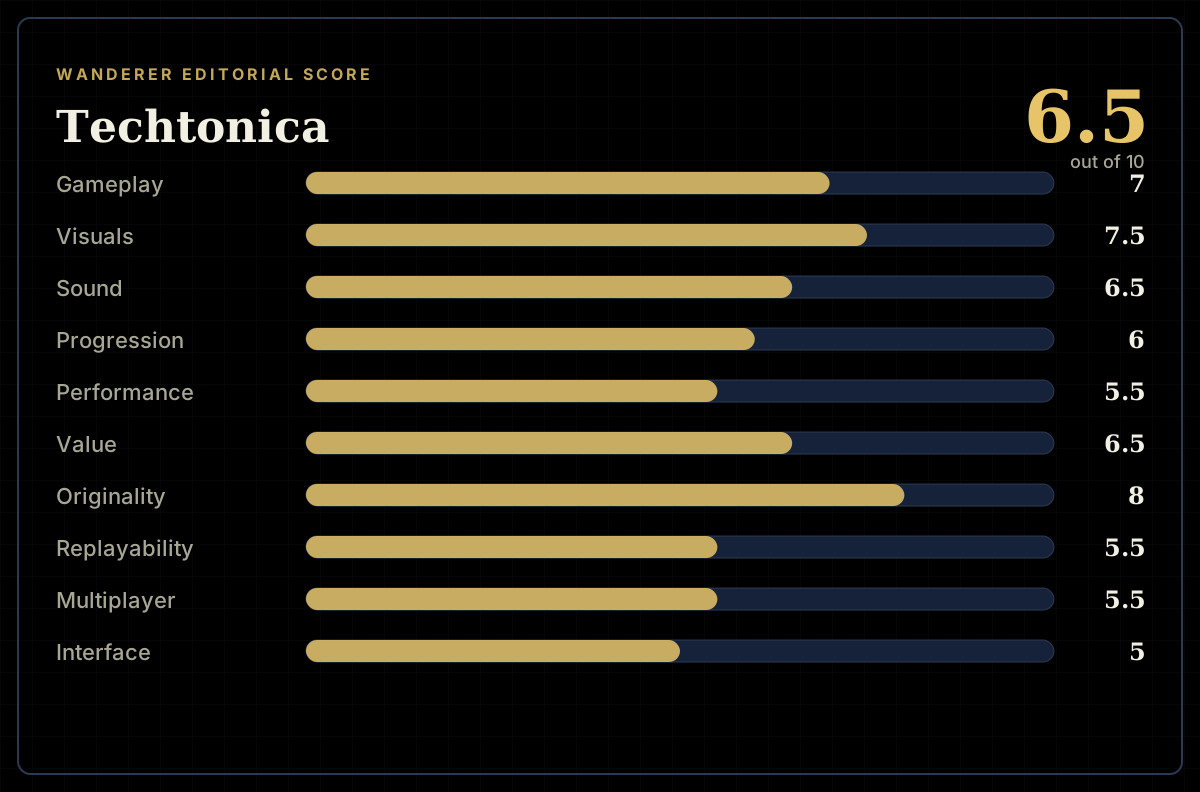
How the review scores each part of the gameWanderer Editorial -
The short versionWanderer Editorial