Game review
Captain of Industry
7.5 / 10
- Developer
- MaFi Games
- Publisher
- MaFi Games
- Released
- 31 May 2022
- Platforms
- Windows
- Genre
- Factory automation and colony management simulation
- Monetisation
- Premium, one-off purchase for the base game. Three paid add-ons exist on top of it — an optional soundtrack, a cosmetic-leaning Supporter Edition upgrade, and a March 2026 "Trains expanded" DLC that adds electrified and nuclear-tier rail infrastructure on top of the free train system every player already has
- Players
- Single-player only. The developers have said they are considering multiplayer but call it a large undertaking that may not make it into 1.0
The short version
Captain of Industry's best idea is refusing to treat the map as a fixed backdrop. Ore, rock, and the shape of the coastline are all things you consume and reshape as part of production, and waste is something you have to find somewhere to physically put — not a number that disappears into an abstraction. Layered onto a genuinely deep production-chain sandbox with ships, trade, research, and a population that needs feeding and housing rather than just slotting into a worker count, it is one of the more distinctive factory games available.
It is also, honestly, still unfinished. Four years into Early Access, MaFi Games itself expects another two to four before 1.0, the early economy punishes a bad starting layout for hours before you notice, the interface asks a lot of a new player, and a March 2026 paid DLC for optional train infrastructure drew a real backlash for landing while the base game is still incomplete. None of that erases what already works. It does mean you are buying into a project, not a finished game.
Biggest strengths
- Terrain is a genuine resource rather than scenery — excavating ore reshapes the map, and waste piles physically occupy space you have to plan around
- Production chains branch wide enough (oil, electronics, computing, rockets) that a late base rarely reduces to "build more of the same machine"
- Unity and maintenance create two competing drains on the same population, so growth has to be paced rather than just scaled up
Biggest weaknesses
- A poorly scouted starting site compounds for hours before the mistake becomes obvious, and there's no way to preview terrain quality before committing
- The interface front-loads a lot of overlapping menus, tooltips, and area-editing tools that a new player has no scaffolding to prioritise
- Late-game bases with heavy vehicle and belt counts visibly strain performance, and the developers are still actively chasing rendering and simulation optimisations as of the most recent update
Who it's for: Factorio, Satisfactory, and Rimworld players who want those games' systems combined and run through a single terrain simulation, plus anyone who specifically wants to shape the land they build on rather than build around it. A poor fit for anyone who wants a completed game today, wants multiplayer, or gets frustrated waiting years for Early Access projects to finish.
Our recommendation: Worth buying now only if you're comfortable treating the purchase as backing an actively developed Early Access project rather than a finished product — the update cadence is real and the core loop already delivers dozens of hours. If you'd rather wait for a 1.0 that currently has no date, this is an easy one to shelve and revisit later without missing anything that won't still be there.
7.5 / 10
Most factory games give you a grid and tell you to fill it efficiently. Captain of Industry gives you an island and tells you to eat it. Every mountain in reach of an excavator is a stockpile of raw ore waiting to be converted into flat, buildable ground. Every tonne of slag your smelters can't use has to go somewhere physical — dumped into a spoil heap that grows a visible hill of its own, or pushed into the ocean to claim shoreline you didn't have an hour ago. Four years after MaFi Games put it into Early Access, that single decision — terrain as an input and an output, not a backdrop — is still what separates this from the belt-and-ratio automation games it otherwise resembles.
The ground is not scenery
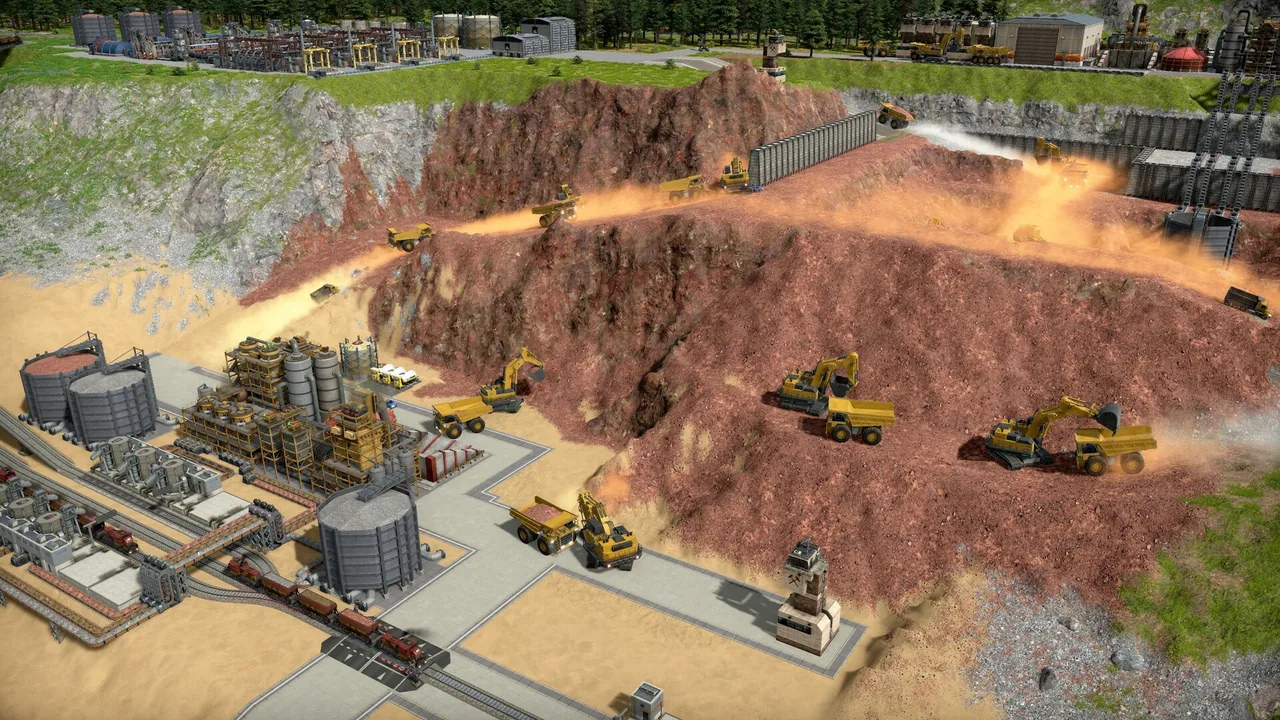
Strip away the terrain gimmick and Captain of Industry looks a lot like its genre neighbours: extract raw resources, refine them through a chain of machines, keep throughput matched to demand, research your way into better versions of the same problem. What's different is that the map itself is one of the resources in that chain. Open-pit mining doesn't just deplete an ore deposit, it lowers the terrain, and low terrain floods if you're not managing drainage. Waste products with no use — and early on, plenty won't have one — have to be dumped somewhere, and dumped material physically stacks, tile by tile, into a hill you now have to route roads and belts around. Land reclamation lets you push rubble into shallow water to grow your buildable footprint, which sounds like a minor quality-of-life feature until you realise your factory's final shape isn't something you designed on a blank canvas — it's a record of every mining and dumping decision that got you there.
That's a genuinely different feeling from watching a resource counter tick down in Factorio or Satisfactory, and it raises the stakes on your opening choices in a way those games don't. Scout a starting island badly — ore scattered too far apart, not enough flat land near the coast, an oil field buried under a ridge you'll spend hours excavating just to reach — and you won't see the cost immediately. You'll see it forty in-game days later, when your supply chains are fighting each other for the little flat ground you have left, with no way back to a better start short of restarting the whole map. The game gives you almost no tools to preview terrain quality before committing, so a rough opening is a real, hours-long tax new players pay without understanding why their base feels cramped from turn one.
Production chains that fight for physical space
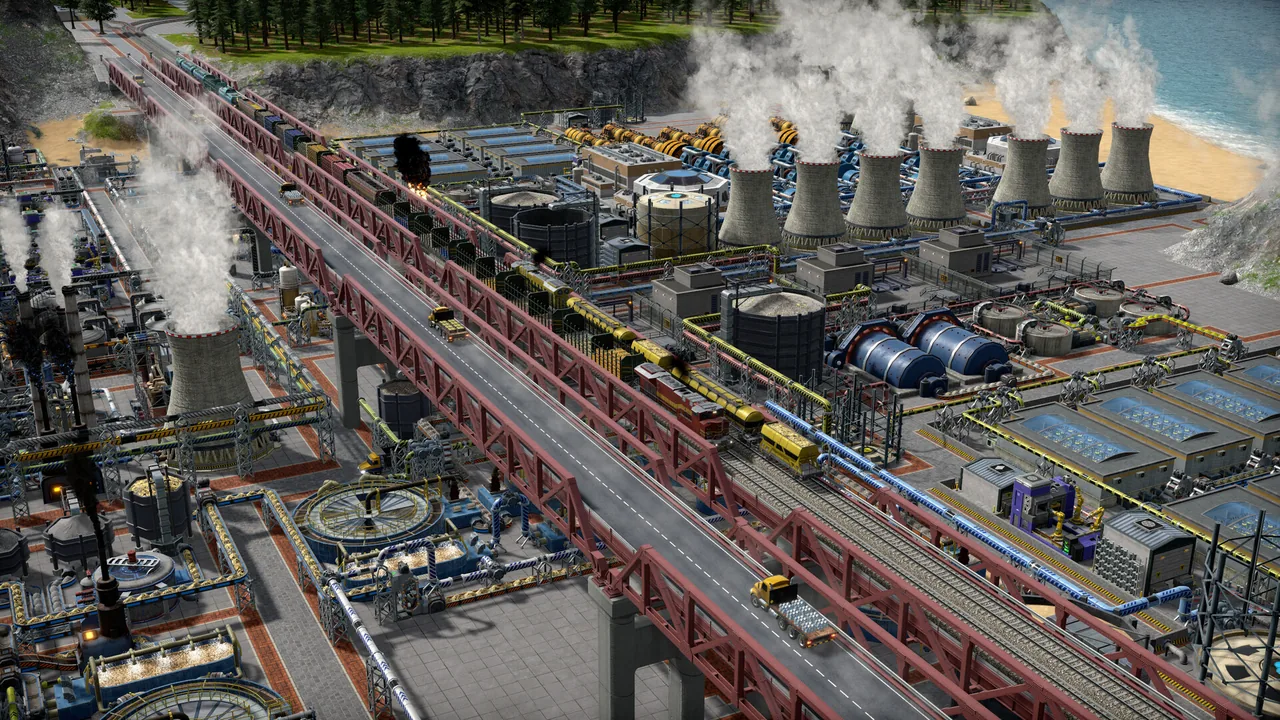
Where Factorio's puzzle is almost purely ratios and throughput, Captain of Industry's is ratios, throughput, and floor space at once, because the terrain you've reshaped is finite and every building competes for it against every future building you haven't placed yet. Iron smelting, concrete, and basic food processing carry the early hours, deliberately unglamorous, before the game hands you oil refining, electronics, computing, and eventually rocket and orbital components. Over a hundred distinct products exist to juggle deep in the tech tree, and unlike a lot of automation games that eventually let you "solve" a resource by building more of the same machine, this one keeps introducing chains with genuinely different constraints — byproducts needing their own disposal plan, processes that only run efficiently at specific throughput bands, materials only useful once you've unlocked what consumes them. It's one of the few sandboxes in the genre where a spreadsheet mindset alone won't carry you, because the spreadsheet has to share space with a shovel.
Ships, trade, and the reason to leave the island
The production loop doesn't stay self-contained for long. A ship, upgradeable with better engines, armour, and weapons, is your line to a wider world map of settlements to trade with, resources to import, and refugees who want to join your population. Shipping contracts let you set up recurring exchanges instead of manually rebooking every trip, which matters once babysitting logistics by hand stops being practical. It's a smart pressure valve: instead of forcing total self-sufficiency from minute one, the game lets you patch early gaps with trade while building toward the stated long-term goal — genuine independence, via rockets, a space station, and eventually asteroid mining for resources your island will never naturally have. That goal gives the mid-game a direction a lot of open-ended factory sandboxes lack, even if reaching it is a long haul.
Unity and maintenance, pulling in opposite directions
Population management is where Captain of Industry earns its "colony sim" half of the description rather than just being a factory game with people icons standing around. Workers need housing, clean water, electricity, and healthcare, and keeping them healthy and happy produces Unity — a resource you spend to accelerate construction, enact edicts, and claim territory on the world map. Unity is the carrot. Maintenance, the ongoing upkeep every building demands, is the stick, quietly draining resources you'd rather spend on expansion. Running both well means treating your population less like a fuel source for production and more like a second economy that has to stay solvent alongside your industrial one — a tension a lot of colony sims flatten into a single happiness meter, but that this one keeps as two separate, competing drains.
Waste and pollution as a constraint, not a warning label
Pollution here isn't a slowly ticking bar that eventually forces a vague penalty — it's downstream of the same physical waste system that reshapes your terrain. Slag, tailings, and byproducts that aren't recycled pile up, and if you let them accumulate near your population instead of managing disposal properly, disease spreads through your workforce. That's a concrete consequence rather than an abstract sustainability score, forcing the same forward planning a well-run production chain needs: where does your waste actually go, and did you build that destination before you needed it. It's one of the clearest places where the terrain gimmick stops being a novelty and becomes a genuine constraint on how you're allowed to grow.
A research ladder that keeps changing the question
The tech tree does the job well precisely because it rarely just hands you a faster version of something you already have. Unlocking oil refining reframes your whole production plan around a byproduct chain the way it does in most automation games with a petroleum step, but the terrain layer means you're also thinking about where refinery waste goes physically, not just what it converts into. Later tiers push into electronics, computing, and eventually space-program components, each opening a new category of problem rather than padding the tree with efficiency percentages. The one honest gap is that the tree currently has no confirmed ending — MaFi Games has said the finished 1.0 release will ship "a finished progression & endgame," an explicit admission that the current ladder, however well-paced, doesn't lead anywhere final yet.
Where the frame rate goes to argue back
A big, mature base — heavy vehicle traffic, long belt runs, a sprawling rail network, terrain that's been excavated and dumped on for a hundred hours — is where the ambition costs the most. The developers have been unusually transparent about this: a recent Captain's Diary post walked through achieving close to a 20x improvement in product-rendering performance, and patch notes across the past year are full of specific optimisation work — train state synchronisation, bridge mesh deduplication, transport rendering culled by camera distance, an adaptive simulation-speed mode added specifically to keep frame rates smooth under heavy load rather than letting them collapse. That's a good sign for a four-year-old project; a team still hunting for double-digit performance wins per patch hasn't stalled. It also means the problem isn't solved. The recommended system requirements list only a GTX 1660, which understates what a truly large, late-game colony asks of a CPU once thousands of individually simulated vehicles, belts, and terrain tiles are running at once. Anyone planning a genuinely enormous base should expect the frame rate to become a design constraint eventually, the same way it does in Satisfactory or Oxygen Not Included — a family trait of physically-simulated production games, not a unique flaw, but a real one that isn't gone yet.
An interface that assumes you already know the game
The UI is dense in the way a lot of deep simulation games' interfaces are dense, and it doesn't do much to soften that for a new player. Area-editing tools for mines, forestry zones, and logistics overlapped confusingly enough that it took the developers multiple patches to let you edit them together instead of separately. The in-game encyclopedia is thorough and always a click away, which helps once you know what you're looking for, but the tutorial is closer to being handed a manual than walked through a first hour, and new players routinely bounce off at "I don't know what these overlapping menus want from me" rather than at the production math itself.
Four years in, and an honest number for how much longer
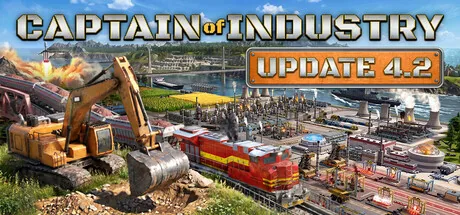
This is the fact worth sitting with before anything else: Captain of Industry has been in Early Access since 31 May 2022, and MaFi Games' own storefront page says their timeline "is still uncertain, but we expect 2-4 more years in EA" from where things stand today. That's the developers' own words, and it's an unusual amount of honesty for an Early Access page to volunteer — it also means anyone buying today isn't buying a game with a visible finish line. The upside is that the update cadence backs it up: Update 4.2 landed 20 July 2026 with a substantial batch of performance work and quality-of-life features, following Update 4.1 in April and Update 4 in March, and the pace across four years has stayed sustained rather than trailing off the way plenty of long-running Early Access projects do. The downside is arithmetic — another two to four years on top of four already spent points to a 1.0 somewhere around 2028 to 2030, and the planned full release is explicitly still missing pieces: MaFi Games lists world map and exploration, settlement and people management, and parts of the UI/UX as areas still needing work, alongside a "finished progression & endgame" that doesn't exist yet.
Paid DLC in an unfinished game
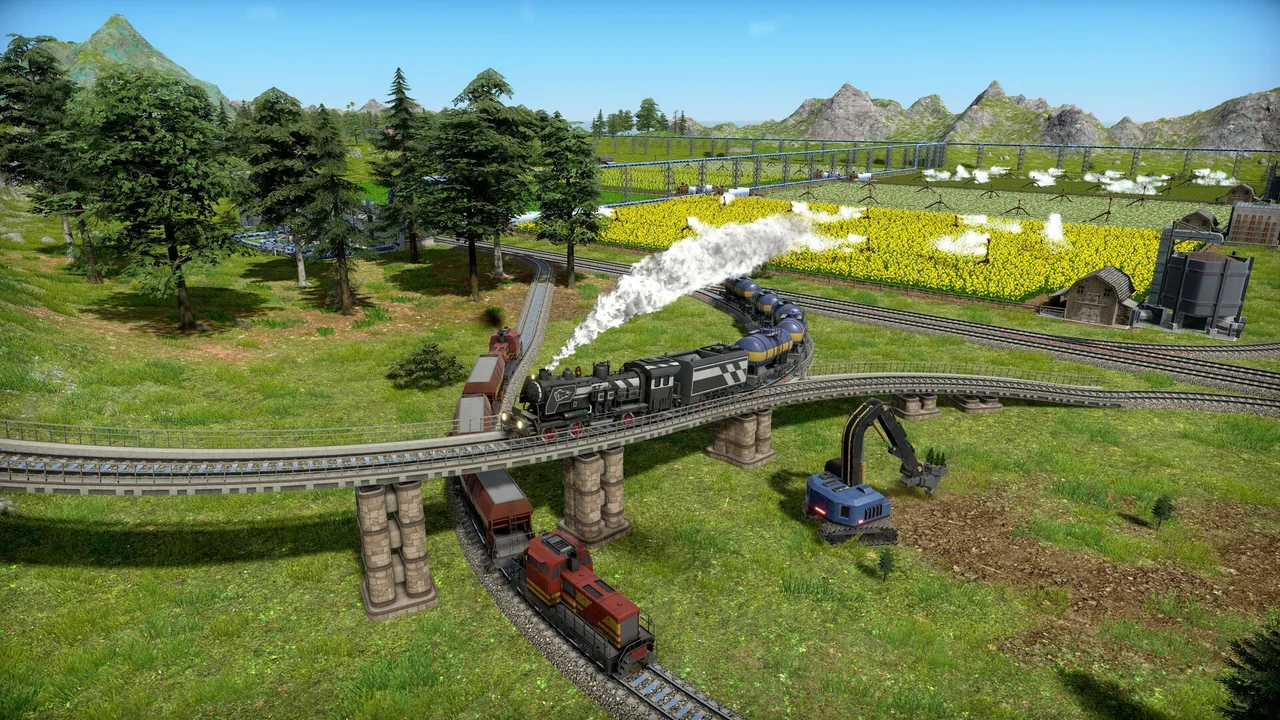
In March 2026, alongside the free Update 4, MaFi Games launched Trains expanded, a DLC adding electrified rail infrastructure, five new locomotives including a nuclear-powered option, and specialised wagons for molten materials — priced separately from the base game while that base game is still, by the developers' own admission, years from finished. It landed badly with a vocal slice of the player base: a portion of negative reviews since March 2026 read as a direct reaction to "paid DLC in Early Access" as a principle, arguing that any non-cosmetic content sold before a game is complete amounts to charging twice for something still unfinished. MaFi Games responded at length in the same patch notes, stating that trains have been part of the free base game since Update 3, that Update 4 itself added tier-2 locomotives and wagons to every player at no cost, and that the DLC is built around optional, late-game-relevant advanced rail features rather than content pulled out of the core game. They also committed, in writing, to keeping "core pillars, progression, and major features" in free updates going forward, framing the DLC as funding for continued development rather than a change in direction.
That explanation is coherent and, on the specific facts, largely checks out — the electrified and nuclear rail tiers are genuinely additive rather than a gate on the basic train system everyone already has. But it doesn't fully answer the underlying discomfort: a studio four years into Early Access, already charging a premium NZ$49.99 up front, choosing to sell a second paid tier of content before finishing the first one will read as reasonable to some buyers and as a bad-faith pattern to others, and no amount of dev-post reasoning changes which side of that line a given player lands on.
Value, honestly weighed
NZ$49.99 is a real premium price for a game that its own developers say needs another two to four years of work, before the optional NZ$14.75 Trains expanded, NZ$14.75 Supporter Edition, and NZ$7.39 soundtrack are even added on top. Against that, the base game already delivers something in the neighbourhood of a hundred hours for a player who wants to see the full research tree through, and the update cadence over four years has actually delivered rather than stalled. The honest framing is that you're not buying a finished product at a discount for early access; you're backing an actively developed one at full price, with a developer that's unusually candid about how far there is left to go and that, this specific controversy aside, has mostly kept its word about major content staying free.
Players who like the idea of a production system that keeps running and growing on its own terms, rather than one built entirely around a loot table, might recognise a distant cousin of that appeal in Wanderer's own gathering and crafting loop — a much smaller-scale version of the same "let the system work while you're not staring at it" satisfaction.
Verdict
Captain of Industry earns its reputation with a single idea executed with real conviction: the ground you build on is a consumable and a byproduct sink at the same time, not scenery, and that changes what a factory game asks of you in ways that feel genuinely new. Layer that onto a deep production tree, a population system with two competing drains instead of one flattened happiness bar, and a research ladder that keeps introducing new problems instead of bigger numbers, and there's a legitimately excellent simulation sandbox in here.
It's just not a finished one. Four years of Early Access with another two to four expected, a punishing early economy with no way to check a bad start before you're stuck with it, a dense interface that assumes prior knowledge, real performance strain at scale, and a paid DLC decision that became a genuine trust problem for part of the player base are all real costs standing between this and the top tier. Buy it today if you want to be part of an actively developed project and can live with an unknown finish line. Wait if you'd rather meet this game once it actually has one.
Price and platform details checked 30 July 2026.
Pros and cons
Pros
- Terrain is a genuine resource rather than scenery — excavating ore reshapes the map, and waste piles physically occupy space you have to plan around
- Production chains branch wide enough (oil, electronics, computing, rockets) that a late base rarely reduces to "build more of the same machine"
- Unity and maintenance create two competing drains on the same population, so growth has to be paced rather than just scaled up
- The research ladder consistently introduces new categories of problem instead of flat efficiency bumps
- Update cadence has stayed genuinely active through four years of Early Access, with major free content updates alongside the optional paid DLC
- Sandbox mode, a map editor, and blueprint sharing give experienced players real tools to design and test without restarting a full campaign
Cons
- A poorly scouted starting site compounds for hours before the mistake becomes obvious, and there's no way to preview terrain quality before committing
- The interface front-loads a lot of overlapping menus, tooltips, and area-editing tools that a new player has no scaffolding to prioritise
- Late-game bases with heavy vehicle and belt counts visibly strain performance, and the developers are still actively chasing rendering and simulation optimisations as of the most recent update
- Four years in Early Access with another two to four expected is a long runway for a NZ$49.99 premium purchase with no confirmed 1.0 date
- The March 2026 Trains expanded DLC drew a genuine backlash for shipping as paid content while the base game remains incomplete, even though the developers argue it's additive rather than content moved out of the base game
- No multiplayer of any kind, and the developers themselves aren't certain it will exist even at 1.0
Screenshots
-
Captain of IndustryImage: MaFi Games via Steam -
Captain of IndustryImage: MaFi Games via Steam -
Captain of IndustryImage: MaFi Games via Steam -
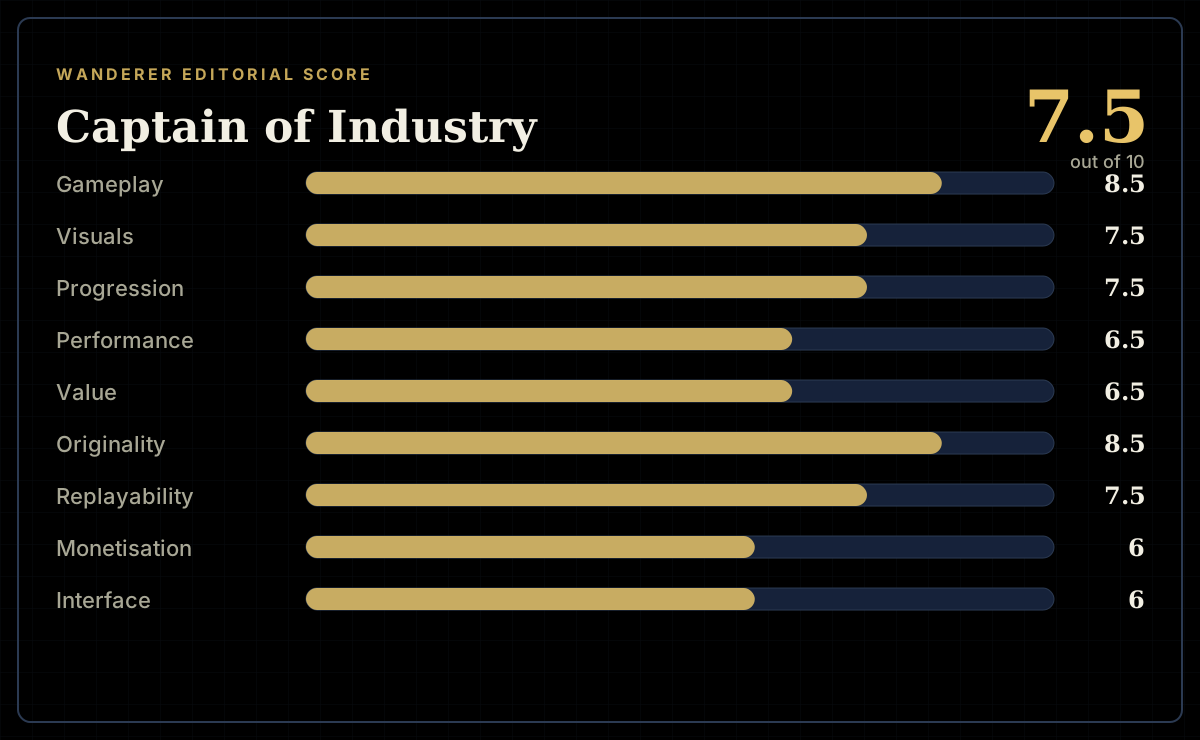
How the review scores each part of the gameWanderer Editorial -
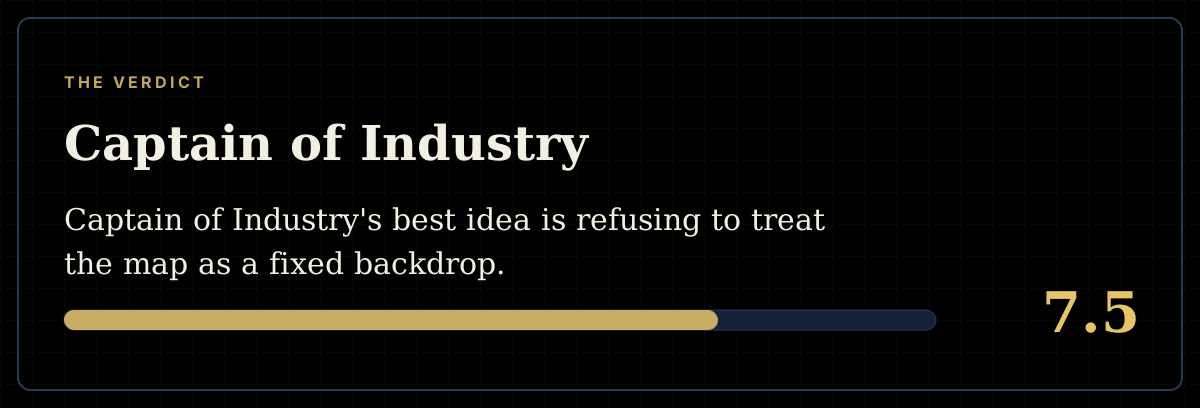
The short versionWanderer Editorial