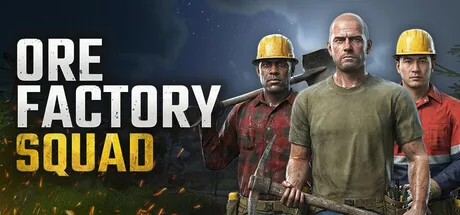
Game review
Ore Factory Squad
7.5 / 10
- Developer
- threeW
- Publisher
- PlayWay S.A.
- Released
- 16 July 2026
- Platforms
- Windows
- Genre
- Co-op mining and factory automation simulation
- Monetisation
- Premium, one-time purchase. No in-app purchases, energy systems, or loot boxes found on the store listing; a free demo exists as a separate Steam entry, and optional bundle tiers are available above the base price
- Players
- Online co-op for up to four players, with role specialisation between mining and factory work; full single-player support for running the whole operation solo
The short version
Ore Factory Squad's trick is refusing to let either half of its name win. It's a genuine digging game, with procedurally generated terrain and no fixed paths through it, and a genuine factory game, with conveyor belts, multi-stage refining, and delivery contracts that actually reward building a real production line instead of just hauling ore to a sell button. Co-op is where it clicks hardest — splitting a crew between someone underground and someone running the surface operation turns the whole thing into a logistics relay instead of four people digging the same hole.
It launched with real rough edges. Softlocks, crashes, and connection issues needed a patch within days of release, and a chunk of the mining loop is, by its own players' account, more soothing than deep once the novelty of freeform digging wears off. Neither problem is fatal — the developer patched fast and the factory half of the game carries plenty of weight on its own — but they're the difference between a very good release and an outstanding one.
Biggest strengths
- Freeform digging with no fixed tunnel layout makes every property feel genuinely unscouted rather than a set piece dressed up as a sandbox
- Splitting a co-op crew between mining and factory roles turns the game into a real logistics relay instead of four players doing the same job in parallel
- Over 60 resources and products give the production chain enough branching to avoid reducing to one optimal factory layout
Biggest weaknesses
- Launch-week crashes, controller softlocks during the tutorial, and connection issues needed a follow-up patch before the core loop felt reliable
- Solo digging sessions are reported to grow repetitive once the novelty of freeform terrain wears off and no one else is managing the factory side
- The premise leans heavily on two well-established templates (Hydroneer-style digging, Factorio-style automation) rather than introducing a genuinely new mechanic of its own
Who it's for: Fans of Hydroneer's dig-anywhere terrain and Factorio-style production chains who have been waiting for someone to combine both without diluting either. Best suited to a regular co-op group of two to four rather than solo players, though the single-player mode is complete on its own. A poor fit for anyone who wants pure automation with no digging attached, or pure digging with no supply-chain management.
Our recommendation: Worth buying at its current price, especially with a friend or three — the co-op role split is the single best reason to own this over either genre's more established solo entries. Solo players get a complete, well-built game but should know upfront that the mining half thins out faster without someone else handling logistics behind you.
7.5 / 10
Most games that mix mining and factory-building pick one half to actually care about and let the other coast as set dressing. Ore Factory Squad refuses to do that. The ground under every property is procedurally generated with no scripted tunnels to follow, which makes the digging half a real sandbox rather than a resource-gathering minigame bolted onto an automation game. Then everything you pull out of that ground has to flow through conveyor belts, refining stages, and delivery contracts that actually reward building a proper production line. It's an odd pairing on paper — a physics-driven dig sim stitched to a spreadsheet-adjacent factory game — and the fact that it mostly works is the whole review.
A property with no map
Every site you buy in Ore Factory Squad generates its underground fresh, so there's no memorised optimal route and no wiki diagram to follow. You start with a shovel, graduate to a pickaxe once the shallow layers stop giving way easily, bring in a jackhammer to speed through denser rock, and eventually reach for dynamite when a section needs clearing outright rather than chipped away. That equipment ladder gives the digging a sense of escalation that a lot of "dig anywhere" sandboxes lack — you're not just moving faster, you're qualifying for deeper, more valuable ground with each tool tier. Ore distribution is randomised per property rather than hand-placed, so buying a new site is a genuine bet rather than a formality before the next automation puzzle.
Turning a hole in the ground into a business
The other half of the game is where Ore Factory Squad earns the "factory" in its name. Raw ore doesn't sell for much on its own — the real money is in running it through machines, conveyor belts, and multi-stage refining lines that turn a pile of rock into a finished product worth shipping. Forklifts move pallets, trucks carry contracts out the door, and employees and warehouse robots gradually take over the parts of the loop you'd rather not babysit by hand. With more than sixty resources and products in the game, the production side has enough genuine branching that a base doesn't collapse into one dominant layout the way some lighter factory games do once you've found the "best" recipe. Contracts give that production chain a reason to exist beyond personal stockpiling — you're not just accumulating resources, you're running a company that has to fulfil orders on a schedule.
Four players, two jobs
The co-op design is the most interesting decision in the whole game, and it's built around a specific idea: mining and factory management are different enough jobs that splitting them between players changes the entire feel of a session. One person can spend the whole game underground, chasing deposits and clearing tunnels, while someone else runs the surface operation — managing the conveyor lines, driving the forklift, prepping deliveries, and keeping contracts on schedule. That's a genuinely different structure from most four-player co-op games, where everyone is nominally doing the same task in the same space. Here, a squad functions more like a small company with an extraction division and a logistics division, and the game is explicitly built to let coordination break down into chaos when the surface team can't keep pace with what's coming up from below, or when the miners flood the warehouse faster than anyone can process it.
That role split is also the honest answer to how the game changes with friends versus alone. Solo, you're doing both jobs yourself — descending to dig, then resurfacing to manage the factory, then heading back down — and the loop still works, but it's fundamentally a single-player management game wearing a co-op game's tools. With even one other person, it turns into something closer to a relay: someone's always mining while someone's always processing, and the property never sits idle waiting for one player to finish the other half of the job. Four players pushes that further into genuine specialisation, with room for a dedicated logistics runner alongside the digger and the refiner. It's a rare case of a co-op mode that isn't just "the same content, more players" — the presence of teammates measurably restructures what you're doing minute to minute.
Where the shine comes off
None of that comes free of friction. Ore Factory Squad launched on 16 July 2026 as a direct 1.0 release with no Early Access run beforehand, and it showed: controller users could get softlocked during the tutorial, a bug could open the wrong in-game application during the stock-selling step, and various crashes and connection issues needed ironing out. To threeW's credit, a v1.0.1 patch addressing those problems, plus stutter fixes and general performance work, landed within about two weeks — the kind of response time that suggests active post-launch support rather than a studio that shipped and moved on. It's still worth knowing that the game you'd have bought in the first fortnight wasn't the game it is now.
The other recurring complaint is more structural than a bug list. A slice of player feedback singles out the digging itself as pleasant early on but repetitive over longer solo sessions — swinging a pickaxe through procedurally varied rock is satisfying for a while, but the terrain generation doesn't introduce enough new wrinkles to keep excavation interesting purely on its own merits once a player has seen a few properties. That tracks with how the co-op design is built: the mining loop is clearly meant to be one job in a two-job system, and it holds up best when someone else is handling the factory side in parallel. Play it entirely solo for long stretches and the seams between "genuinely engaging" and "just repeating the same input" start to show.
A clean asking price
At roughly NZ$20 (around US$12.99), Ore Factory Squad is priced like a focused indie title rather than a AAA release, and the monetisation matches that framing. There's no premium currency, no energy system gating how much you can dig or produce per session, and no loot boxes sitting between you and better equipment — everything is earned through the contract and production loop itself. A separate free demo exists for players who want to try the mining and factory basics before committing, and Steam lists optional bundle tiers above the base price, but nothing in the core game reads as built around a later upsell. For a genre where idle and incremental games routinely lean on timers and paywalled speed-ups, a straightforward one-time purchase with achievements and cloud saves included is worth calling out as a point in its favour.
Players who like a system that keeps running productively while they're not micromanaging every input — automation that pays off the setup work you put in earlier — will recognise a smaller-scale cousin of that idea in Wanderer's own gathering and crafting loop, even without the digging or the factory floor attached.
Verdict
Ore Factory Squad earns its Very Positive reception by committing fully to both halves of its premise instead of treating one as a wrapper for the other. The digging is genuinely freeform, the factory side is genuinely deep enough to reward real production planning, and the co-op role split between miner and factory manager is a smarter piece of multiplayer design than the premise initially suggests. Set against that: a rocky first fortnight of crashes and softlocks that needed a patch to fix, a mining loop that some players find thin once it's no longer paired with a co-op partner running the surface side, and a concept that's honestly more a confident remix of two established genres than something wholly new. Buy it if you've got even one regular co-op partner and like either half of its premise — the combination is more than the sum of its parts. Go in solo-only and it's still a complete, well-priced game, just a less distinctive one.
Price and platform details checked 31 July 2026.
Pros and cons
Pros
- Freeform digging with no fixed tunnel layout makes every property feel genuinely unscouted rather than a set piece dressed up as a sandbox
- Splitting a co-op crew between mining and factory roles turns the game into a real logistics relay instead of four players doing the same job in parallel
- Over 60 resources and products give the production chain enough branching to avoid reducing to one optimal factory layout
- Contracts and a full economic loop (properties, employees, vehicles) give the mid-game a direction beyond "dig faster"
- A clean one-time purchase with no energy systems, premium currency, or loot boxes to work around
- The developer shipped a substantial stability patch within roughly two weeks of launch rather than leaving known softlocks and crashes unaddressed
Cons
- Launch-week crashes, controller softlocks during the tutorial, and connection issues needed a follow-up patch before the core loop felt reliable
- Solo digging sessions are reported to grow repetitive once the novelty of freeform terrain wears off and no one else is managing the factory side
- The premise leans heavily on two well-established templates (Hydroneer-style digging, Factorio-style automation) rather than introducing a genuinely new mechanic of its own
- Recommended specs ask for a fairly recent mid-range GPU, which will price out players on older laptops despite the game's approachable art style
Screenshots
-
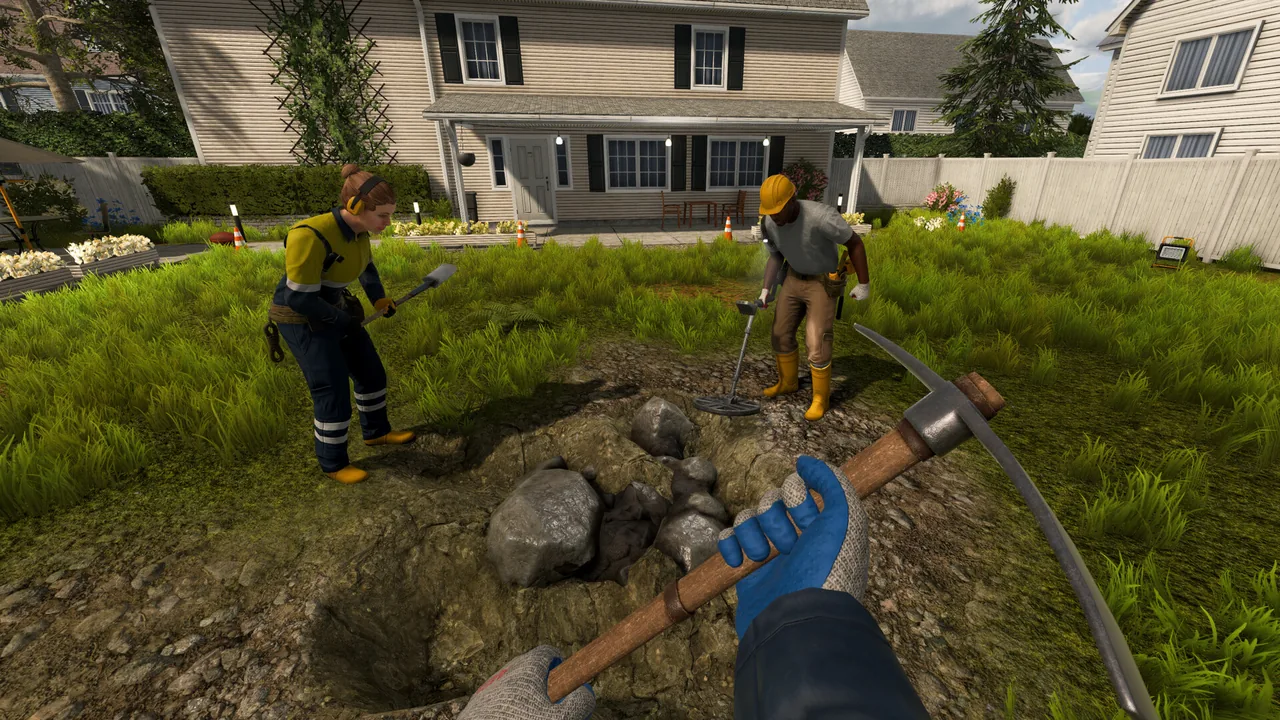
Ore Factory Squad ⛏️Image: PlayWay S.A. via Steam -
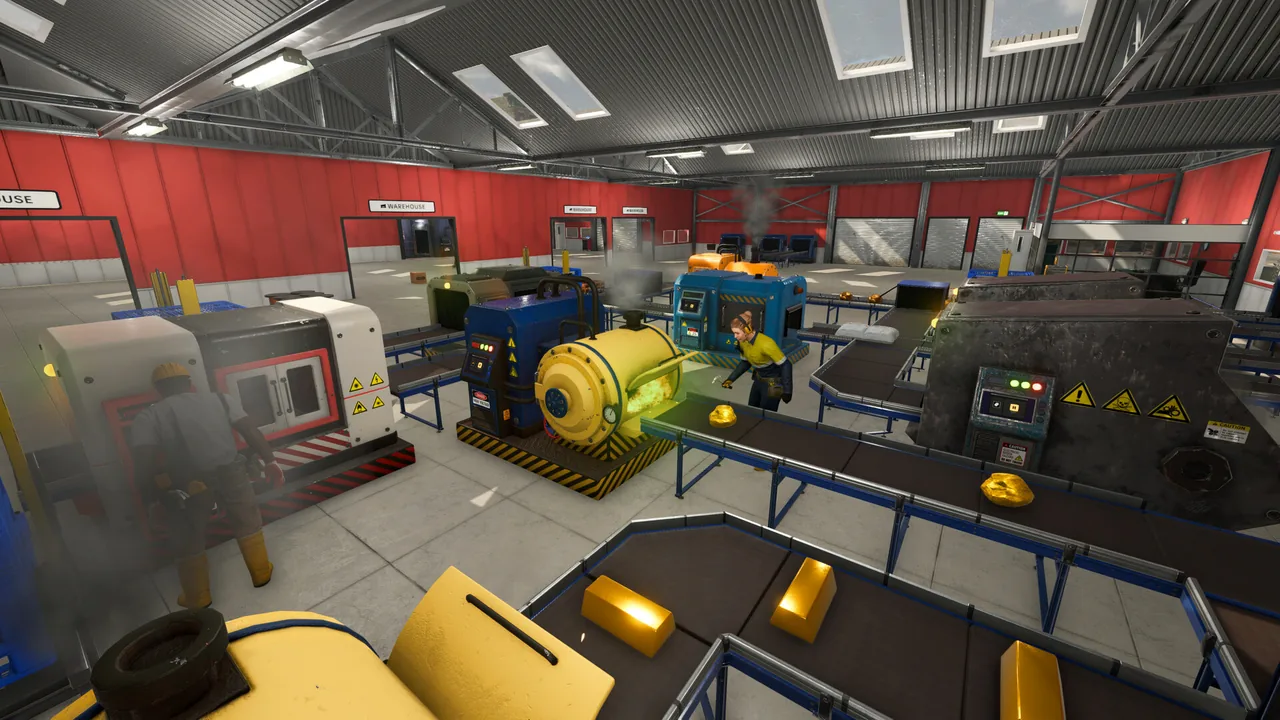
Ore Factory Squad ⛏️Image: PlayWay S.A. via Steam -
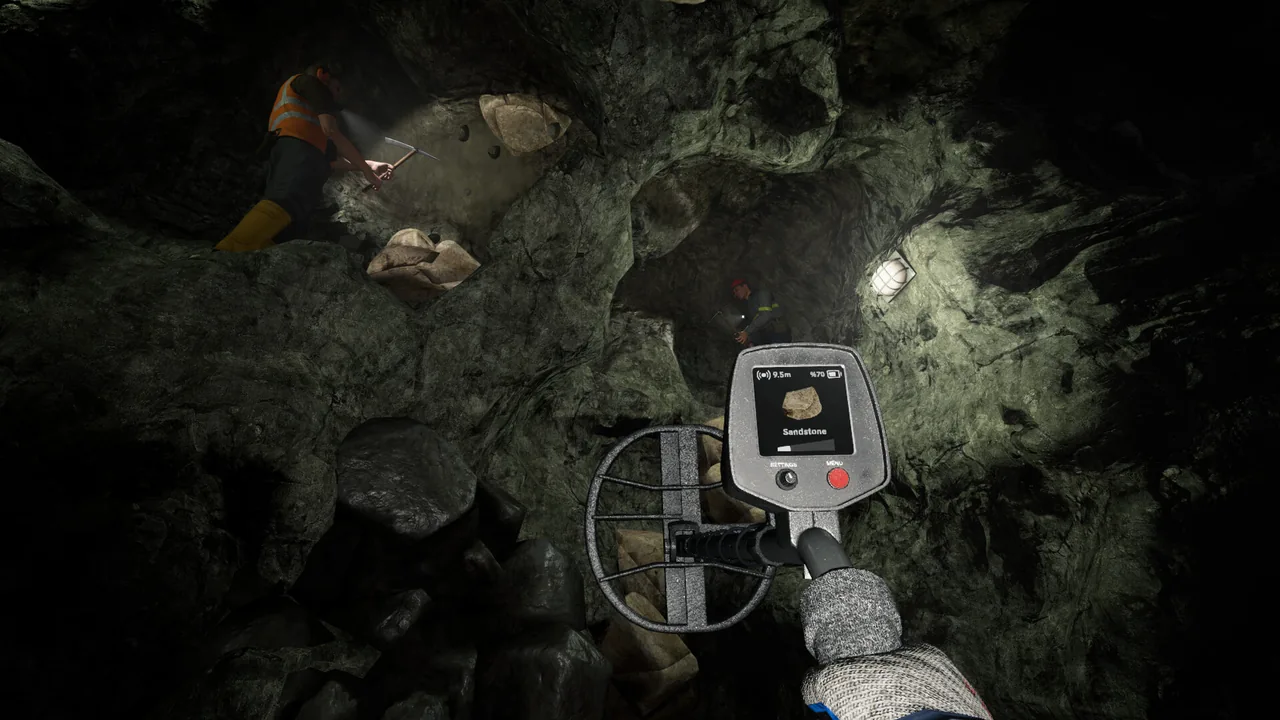
Ore Factory Squad ⛏️Image: PlayWay S.A. via Steam -
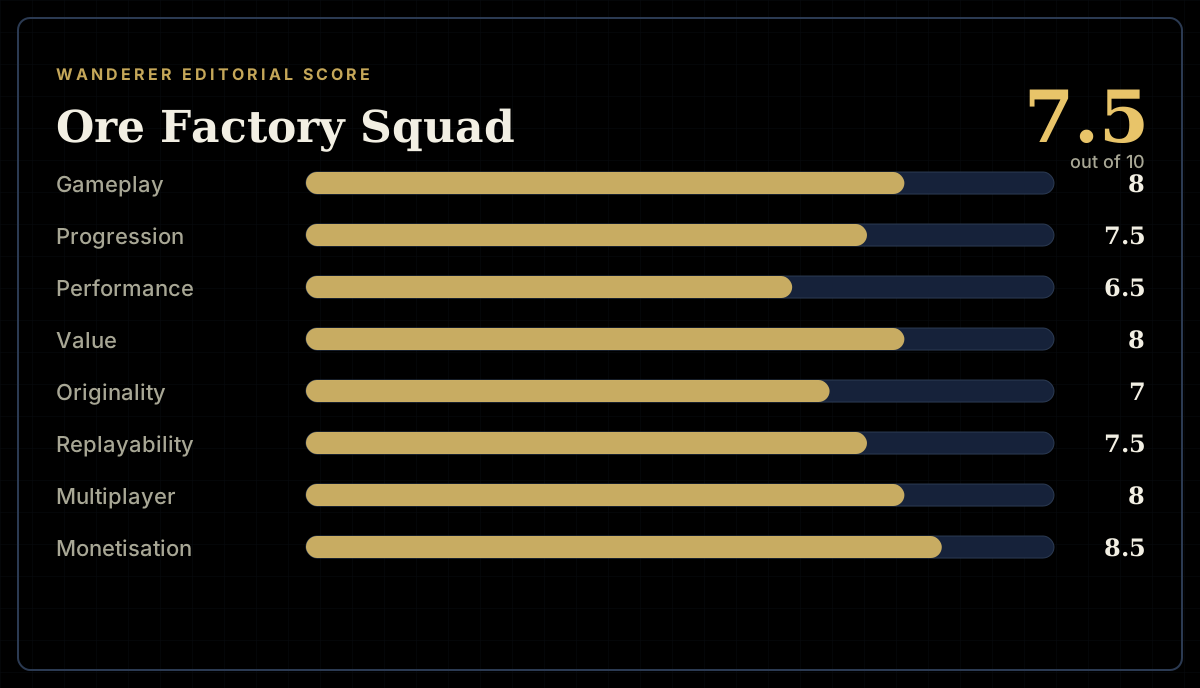
How the review scores each part of the gameWanderer Editorial -
The short versionWanderer Editorial