
Game review
Tales of Berseria
6.5 / 10
- Developer
- BANDAI NAMCO Studios Inc.
- Publisher
- BANDAI NAMCO Entertainment
- Released
- 18 August 2016
- Platforms
- Windows
- Genre
- Action JRPG
- Monetisation
- Paid, one-time purchase, plus cosmetic and convenience DLC packs.
- Players
- Single-player only, with local co-op support for party members.
The short version
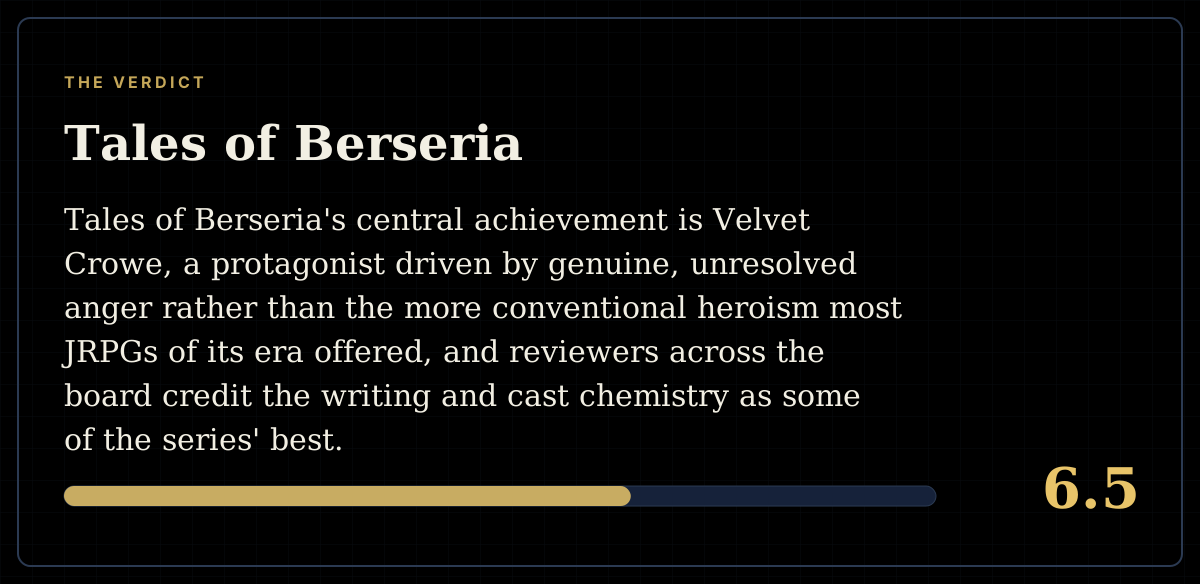
Tales of Berseria's central achievement is Velvet Crowe, a protagonist driven by genuine, unresolved anger rather than the more conventional heroism most JRPGs of its era offered, and reviewers across the board credit the writing and cast chemistry as some of the series' best. Very Positive across more than 14,000 reviews reflects that. What a remarkably consistent thread of criticism argues, spanning nearly a decade, is that the real-time combat and pacing underneath that story don't hold up to the same standard — described repeatedly as stiff, repetitive and tedious, with slow movement and oversized, generic dungeons dragging against a story reviewers otherwise want to keep experiencing.
Biggest strengths
- Velvet Crowe is widely regarded as one of the more compelling, morally complicated protagonists in the Tales series, driven by genuine anger rather than conventional heroic motivation.
- Strong ensemble writing and party banter ("skits") that reviewers consistently credit as some of the best character work in the franchise.
- A distinctive visual and tonal identity within the Tales series, leaning darker than many of its more lighthearted entries.
Biggest weaknesses
- A remarkably consistent complaint, spanning nearly a decade of reviews, describes the real-time combat as stiff, repetitive and eventually tedious.
- Multiple reviewers separately criticise slow character movement and oversized, generic dungeon design as dragging pacing between story beats.
- An isolated but real 2018 complaint describes Denuvo DRM blocking offline play even after the protection had reportedly been bypassed elsewhere.
Who it's for: JRPG fans who prioritise character writing and story over combat depth, and who are prepared for a real, consistently-reported gap between the two halves of this specific game.
Our recommendation: Worth playing for Velvet's story and the cast alone; go in with modest expectations for the combat carrying its own weight.
6.5 / 10
A protagonist built on unresolved anger
Tales of Berseria's premise centres on Velvet Crowe, described by the store page as "a young woman whose once kind demeanor has been replaced and overcome with a festering anger and hatred after a traumatic experience three years prior to the events" of the game. That's a genuinely different starting point from most JRPG protagonists of its era, and it's the element of the game reviewers return to most consistently and most positively. The official screenshot shows the full ensemble assembled — Velvet front and centre in dark red-and-black armour, sword drawn, flanked by a varied cast including a witch-hatted companion and a masked swordsman — and the tone that image conveys, tense and morally unresolved rather than triumphantly heroic, matches what reviewers describe finding in the writing itself. A 2023 review, even while ultimately mixed on the game overall, opens by crediting "the character personality and their interaction with each other throughout the main story" as the clear highlight, and a separate review states plainly that the story here is "great... not even just 'for a Tales game,' it's just a good story."
A consistent gap between the writing and the combat
What tempers that praise, across nearly the entire span of the game's review history, is an equally consistent complaint about what happens between story beats. "If I had to sum up Tales of Berseria in one word, it would be tedious. If I had to do it in two, it would be infuriatingly tedious," reads a February 2025 review. A 2024 review states the tension directly: "Wish I could recommend this game, because the story and characters are all very very good. Unfortunately, the combat is extremely stiff, repetitive, and boring." A 2022 review is specific about the pacing mechanics behind that complaint: "I found the game to be too slow. The dungeons were extremely generic, overly large and your character moves painfully slow. Most of the game is spent in skits and running around." An August 2026 review — among the most recent in the sample — reaches a similar conclusion after extensive play: "I don't think I can recommend this... I think the gameplay overstays its welcome." Checking a broad sample of negative reviews, well over a third raise this same combination of complaints independently, which reads as a genuine, structural pacing and combat-feel issue rather than a handful of players simply preferring a different combat style.
Smaller, more specific complaints
Two narrower issues round out the picture. A 2018 review raises a real technical grievance: Denuvo anti-tamper protection "continues to lock me out when I try to play offline," despite the reviewer noting the protection had reportedly already been bypassed by the time of writing — a frustration aimed as much at Bandai Namco's DRM choices as at the game itself. Separately, an August 2026 review raises a translation-fidelity concern, arguing for closer adherence to the original Japanese script without the involvement of "censors and translators" reshaping content. This is a genuinely recurring topic of discussion across the wider Tales series and JRPG localisation more broadly, but this review has no independent way to verify the specific claims in that one account against the source material, and reports it as that reviewer's characterisation rather than a confirmed finding.
An unconfirmed claim worth flagging rather than repeating as fact
One further review, from November 2025, advises against buying this version specifically "in light of the remaster announcement," describing the current release as poor value by comparison. This review's own research did not turn up a corroborating official announcement of a Tales of Berseria remaster, and it isn't repeating that claim as established fact — it's flagged here only because a prospective buyer weighing a purchase deserves to know the claim exists in the public review record, with the explicit caveat that this review could not verify it independently.
Why "great story, weak combat" is a harder split for a JRPG specifically
It's worth explaining why this particular gap matters more here than it might in a shorter, narrative-focused game. Tales of Berseria's main campaign runs well past thirty hours for most players, and the overwhelming majority of that time is spent in combat encounters and dungeon traversal between story beats, not in the cutscenes and character skits reviewers praise most directly. A JRPG that front-loads its best material into scenes bracketing long stretches of repetitive fighting asks more patience of its audience than a shorter game with the same quality gap would. Several of the negative reviews cited above make exactly this point implicitly by describing genuine affection for the writing right up until the moment they stop recommending the game — the issue isn't that the story fails to deliver, it's that reaching enough of it to matter requires sustained engagement with a combat system a meaningful share of players don't find rewarding on its own terms. That structural reality is why this review treats the combat complaints as a serious factor in the score rather than a minor asterisk on an otherwise glowing recommendation.
Where the combat does have real defenders
It would be inaccurate to present the combat complaints as unanimous, and a fair number of reviewers in the broader sample specifically praise the Liberation Edge system and character-switching combos the series introduced with this entry, describing genuine depth for players willing to learn its specific rhythms rather than button-mash through it. The split appears to track reasonably closely with how much a given player enjoys the Tales series' particular action-combat style already — returning fans are more likely to find depth where newer players report only repetition. That's a normal and reasonable divide for an action-RPG combat system with a learning curve, and this review doesn't want to overstate the criticism into a claim that the combat is simply broken; it's better read as a system that rewards series-familiar players more than the story rewards everyone regardless of prior experience.
Final verdict
Tales of Berseria's writing, and Velvet Crowe specifically, remain genuinely worth experiencing, and this review has no hesitation recommending the game on the strength of its story and cast alone. What keeps the score short of the aggregate's full enthusiasm is a remarkably consistent, nearly decade- long argument that the combat and pacing don't rise to meet that writing — repetitive, stiff combat and slow, padded traversal recurring across reviewers who otherwise clearly wanted to love the whole game. That's a fair trade for players who prioritise story above all else, and a legitimate reason for combat-focused JRPG fans to adjust their expectations accordingly.
Pros and cons
Pros
- Velvet Crowe is widely regarded as one of the more compelling, morally complicated protagonists in the Tales series, driven by genuine anger rather than conventional heroic motivation.
- Strong ensemble writing and party banter ("skits") that reviewers consistently credit as some of the best character work in the franchise.
- A distinctive visual and tonal identity within the Tales series, leaning darker than many of its more lighthearted entries.
- Local co-op support lets a second player join combat directly, adding a social option beyond the primarily single-player story.
Cons
- A remarkably consistent complaint, spanning nearly a decade of reviews, describes the real-time combat as stiff, repetitive and eventually tedious.
- Multiple reviewers separately criticise slow character movement and oversized, generic dungeon design as dragging pacing between story beats.
- An isolated but real 2018 complaint describes Denuvo DRM blocking offline play even after the protection had reportedly been bypassed elsewhere.
- A 2026 review raises a translation-fidelity concern relative to the original Japanese script, a recurring topic of discussion for this series generally that this review could not independently verify.
Screenshots
-

Tales of Berseria™Image: BANDAI NAMCO Entertainment via Steam -

Tales of Berseria™Image: BANDAI NAMCO Entertainment via Steam -

Tales of Berseria™Image: BANDAI NAMCO Entertainment via Steam -
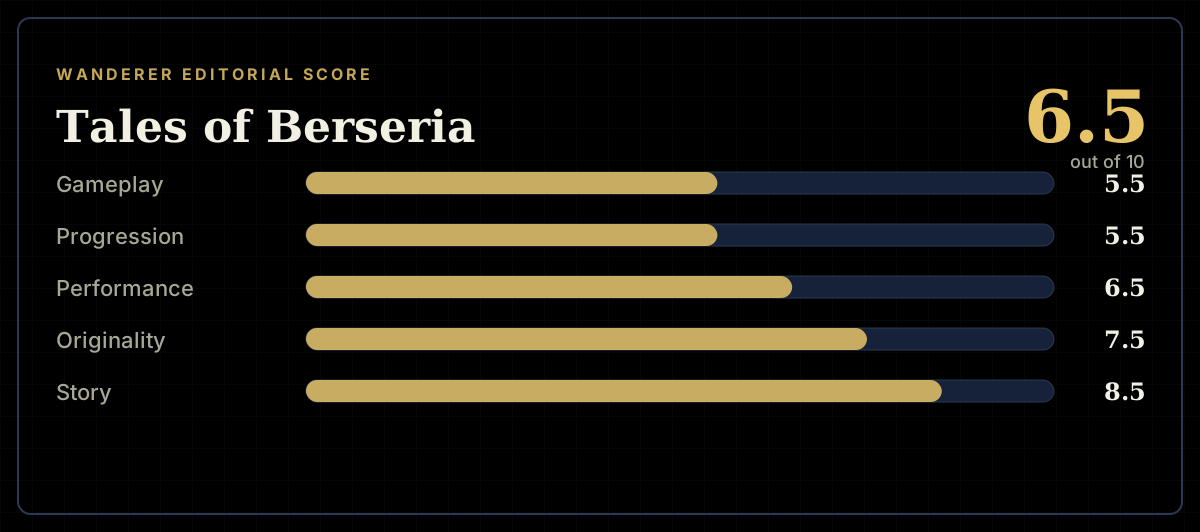
How the review scores each part of the gameWanderer Editorial -
The short versionWanderer Editorial