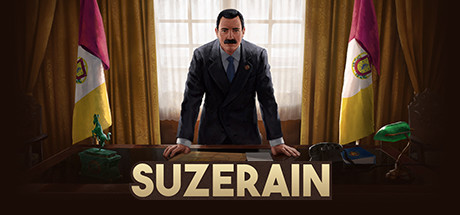
Game review
Suzerain
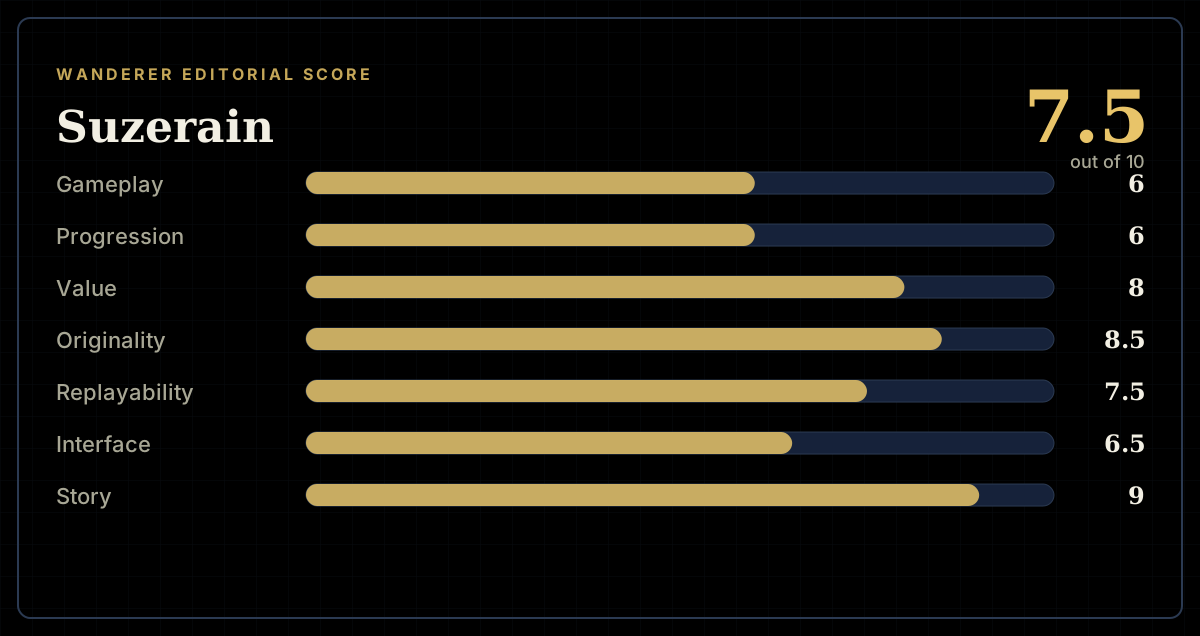
7.5 / 10
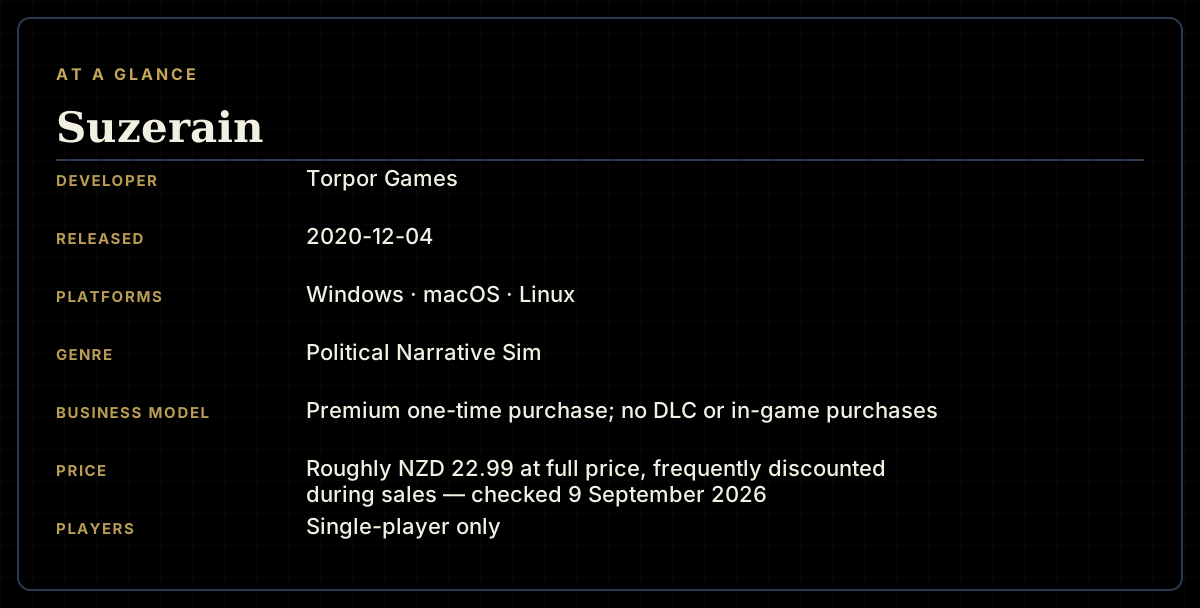
- Developer
- Torpor Games
- Publisher
- Torpor Games
- Released
- 4 December 2020
- Platforms
- Windows, macOS, Linux
- Genre
- Political Narrative Sim
- Monetisation
- Premium one-time purchase; no DLC or in-game purchases
- Players
- Single-player only
The short version
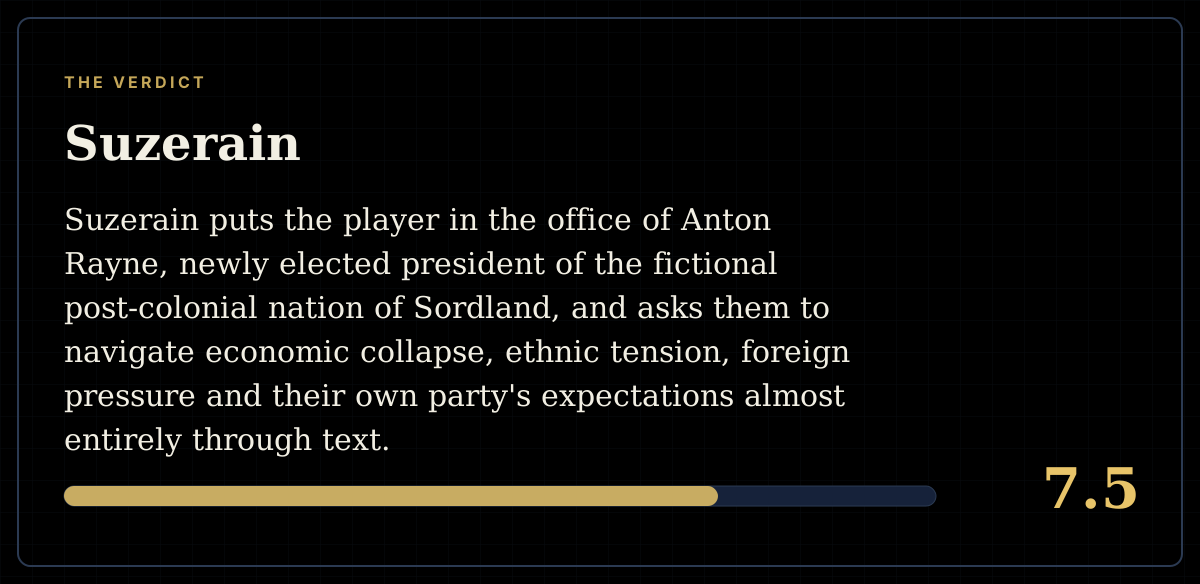
Suzerain puts the player in the office of Anton Rayne, newly elected president of the fictional post-colonial nation of Sordland, and asks them to navigate economic collapse, ethnic tension, foreign pressure and their own party's expectations almost entirely through text. Reviewers are close to unified that the writing, worldbuilding and sense of consequence are genuinely exceptional, drawing comparisons to prestige political drama rather than typical strategy-game fare. The recurring fracture in an otherwise glowing reception is mechanical rather than narrative: a large, detailed share of reviewers argue the game is a visual novel wearing a simulation's clothing, with real, specific complaints about reactive rather than proactive decision-making and endings that punish reasonable choices as often as they reward them.
Biggest strengths
- The writing and worldbuilding draw close to unanimous, often superlative praise, with multiple reviewers comparing the political drama favorably to prestige television and describing Sordland as a genuinely convincing fictional nation
- Player choices are widely reported to carry real, felt weight, with several reviewers specifically praising how earlier decisions echo forward into later chapters in ways that feel earned rather than arbitrary
- A number of reviewers explicitly recommend multiple playthroughs, citing distinct, meaningfully different political paths and endings as genuine replay value rather than superficial variation
Biggest weaknesses
- A large, detailed and independently corroborated share of reviewers argues the game plays as a visual novel rather than a genuine simulation, describing player agency as almost entirely reactive — choosing between options the game presents rather than proactively directing policy
- Multiple reviewers report the ending and branching-path logic as opaque and occasionally punishing, describing cases where sensible, consistent choices throughout a playthrough still led to an unexpected bad outcome without a clear causal thread to learn from
- Several reviewers describe the game losing momentum in its back half, with at least one detailed account describing the player's role becoming passive for a long stretch partway through a given playthrough
Who it's for: Players who enjoy dense political fiction and are prepared to read carefully and replay for different outcomes, more than anyone expecting a systems-driven strategy game with granular, proactive control over their nation.
Our recommendation: One of the strongest text-driven political dramas on Steam and well worth the asking price for the right audience, but go in expecting a guided visual novel with real weight behind its choices rather than an open-ended nation-management simulation.
7.5 / 10
Anton Rayne inherits the presidency of Sordland, a fictional post-colonial nation loosely evoking mid-century Turkey, at the exact moment its economy, its ethnic divisions and its patience with democracy itself are all fraying at once. Suzerain hands the player almost nothing but text, dialogue trees and consequence to work with, and reviewers overwhelmingly agree that's enough — right up until a large, detailed share of them start asking how much of what happens was actually theirs to decide.
Writing reviewers keep describing in genuinely rare terms
Across a review sample of nearly 8,000, the density and specificity of praise for Suzerain's writing stands out even against this lane's usual run of strong narrative indies. Reviewers compare the political drama unprompted to prestige television, and several specifically credit the game with making a fictional nation's economy, military and factional politics feel concretely real rather than abstractly gestured at. Choices are widely reported to carry genuine weight, with earlier decisions echoing forward into later chapters in ways multiple reviewers single out as feeling earned rather than arbitrary — one detailed account traces a full democratic reform arc, from ousting entrenched oligarchs to enacting civil rights, only to be assassinated for it, and cites that exact outcome as evidence of a story willing to let consequences land honestly rather than rewarding the player for good intentions alone.
The mechanical complaint that recurs even in glowing reviews
What keeps this review from scoring higher despite that praise is a specific, recurring argument that shows up even inside reviews that ultimately recommend the game. Reviewers describe the actual play pattern as closer to a visual novel than the "political simulation" framing implies: player agency is largely reactive, choosing among options the game presents at scripted moments, rather than proactively setting policy and watching a system respond to it. Multiple reviewers frame this as the core tension of the whole experience — the writing sells the illusion of a functioning, responsive nation, but the underlying structure is closer to a branching story than the systemic simulation some players expect from the marketing and the genre comparisons it invites.
That reactive structure feeds directly into the review sample's second major complaint: an opaque, occasionally punishing relationship between choices and endings. Multiple reviewers report cases where a consistent, sensible playthrough still ended badly through causes that weren't clearly traceable back to any specific decision, arguing the game sometimes forces a player to make choices against their own stated values just to steer toward a specific ending rather than letting endings emerge naturally from a coherent playthrough. A related, more technical complaint follows the same thread: reviewers report continuity errors where dialogue references alliances, wars or decisions that don't match what actually happened earlier in that specific playthrough, a state-tracking problem that undercuts the sense of a fully reactive world the writing otherwise builds so carefully.
A back half several reviewers say loses its own momentum
Beyond the systemic debate, a specific pacing complaint recurs across multiple detailed reviews: the player's role is reported to become notably more passive partway through a given playthrough, with one reviewer describing roughly the back third of a run as the point where proactive decision-making largely stops and the story simply carries the player toward its conclusion. That's a meaningfully different complaint from the reactive-choices argument above — it's specifically about a mid-to-late structural lull rather than a criticism of the choice system itself — but it's repeated often enough across otherwise positive reviews to be worth flagging as a real, shared observation rather than an isolated one.
What the branching achievement list confirms about how differently playthroughs actually diverge
Global achievement data backs up reviewers' emphasis on real narrative divergence in a striking way. The prologue clears 91% of players, but that figure roughly halves by the end of the first full chapter and keeps falling steadily through each subsequent chapter milestone. Far more tellingly, dozens of path-specific and ending-specific achievements each sit below one percent of the player base, a pattern consistent with a genuinely branching structure where reaching any one specific outcome, rather than simply finishing the game, is a comparatively rare accomplishment — concrete evidence behind reviewers' repeated claims that different playthroughs can diverge dramatically, even if the moment-to-moment agency that drives those divergences is more scripted than some players expected going in.
A patch that reviewers say changed the game's difficulty after the fact
Worth flagging directly for buyers relying on older reviews: at least one detailed, fairly recent reviewer reports that a patch meaningfully increased the game's economic difficulty relative to how it played at launch, describing the shift as making the new-player experience noticeably harder without a corresponding change in how clearly the game explains its own underlying systems. This review cannot independently verify the exact scope of that balance change, but notes it as a specific, attributed claim worth factoring in when comparing current impressions against a launch-era review that may describe an easier game than what a new player encounters today.
Verdict
Suzerain earns its Very Positive standing honestly: the writing, worldbuilding and sense of consequence are genuinely exceptional, and for the right audience — readers who want dense political fiction more than a systems-driven strategy game — few other releases in this lane come close. It doesn't reach the very top of the scale here because the mechanical debate underneath that writing is real and well documented: a large, detailed share of reviewers argue the choices that define the experience are more reactive than the marketing and genre comparisons suggest, compounded by opaque ending logic and reported continuity errors. Strongly recommended for anyone drawn to its premise, with expectations calibrated to a guided political drama rather than an open nation-management simulation.
Pros and cons
Pros
- The writing and worldbuilding draw close to unanimous, often superlative praise, with multiple reviewers comparing the political drama favorably to prestige television and describing Sordland as a genuinely convincing fictional nation
- Player choices are widely reported to carry real, felt weight, with several reviewers specifically praising how earlier decisions echo forward into later chapters in ways that feel earned rather than arbitrary
- A number of reviewers explicitly recommend multiple playthroughs, citing distinct, meaningfully different political paths and endings as genuine replay value rather than superficial variation
- Accessibility is specifically praised by at least one reviewer using voice-activated software, crediting the game's hotkey-driven, largely untimed interface as unusually well suited to alternative input methods
- The game is frequently framed as a rare, successful entry in a niche political-simulation genre many reviewers say has been underserved since far older titles attempted something similar
Cons
- A large, detailed and independently corroborated share of reviewers argues the game plays as a visual novel rather than a genuine simulation, describing player agency as almost entirely reactive — choosing between options the game presents rather than proactively directing policy
- Multiple reviewers report the ending and branching-path logic as opaque and occasionally punishing, describing cases where sensible, consistent choices throughout a playthrough still led to an unexpected bad outcome without a clear causal thread to learn from
- Several reviewers describe the game losing momentum in its back half, with at least one detailed account describing the player's role becoming passive for a long stretch partway through a given playthrough
- At least one detailed reviewer reports the game's economic difficulty was meaningfully increased by a later patch, degrading the experience for players unfamiliar with the game's underlying scripting relative to what earlier reviews described
- Reviewers report continuity and state-tracking errors, including dialogue referencing decisions, alliances or wars that don't match what actually happened earlier in that specific playthrough
Screenshots
-
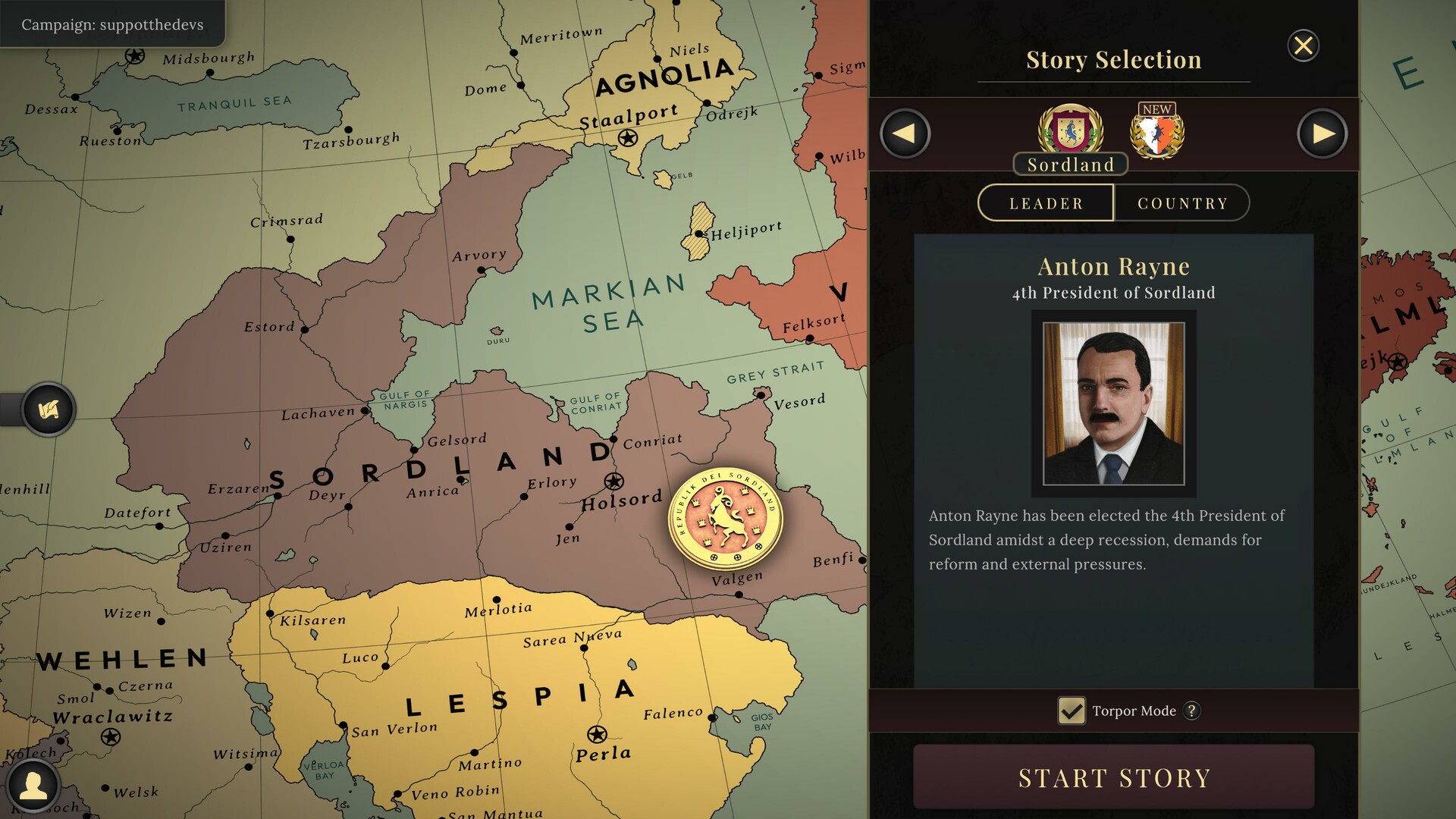
SuzerainImage: Torpor Games via Steam -
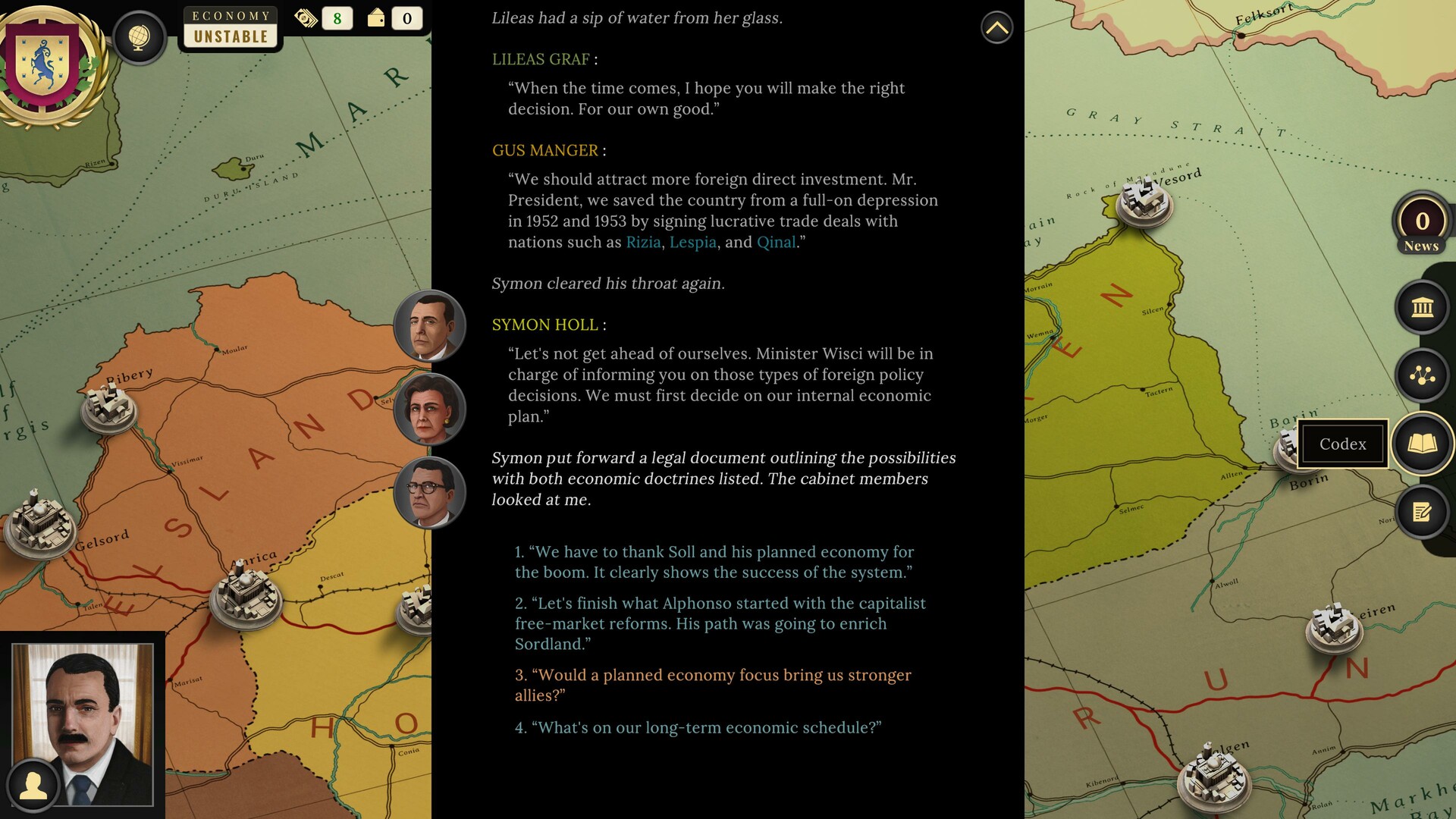
SuzerainImage: Torpor Games via Steam -
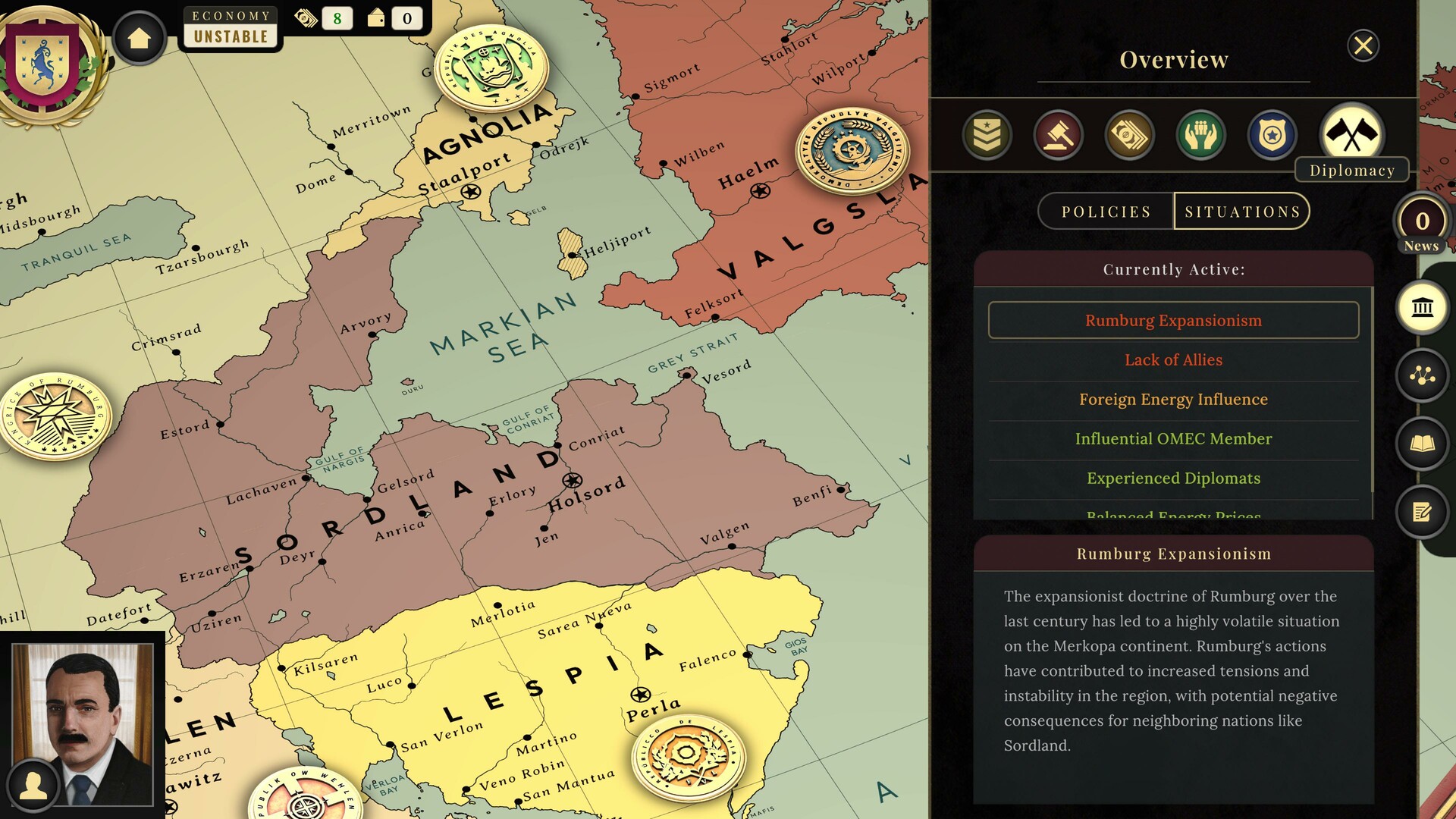
SuzerainImage: Torpor Games via Steam -
How the review scores each part of the gameWanderer Editorial -
At a glanceWanderer Editorial -
The short versionWanderer Editorial