Game review
Frostpunk 2
7 / 10
- Developer
- 11 bit studios
- Publisher
- 11 bit studios
- Released
- 20 September 2024
- Platforms
- Windows
- Genre
- City Builder / Society Survival
- Monetisation
- Full premium purchase, plus separately sold narrative expansion DLC; no in-app purchases or premium currency
- Players
- None. Single-player only, with no leaderboard, co-op or shared-progress feature
The short version
Frostpunk 2 sends players 30 years past the apocalyptic blizzard of the original game, now managing a growing city through political factions and district-scale planning rather than placing individual buildings one at a time. Mostly Positive across nearly 27,000 Steam reviews, the game earns real, independent credit as a well-crafted political-strategy title in its own right — but this review finds a remarkably consistent, specific complaint recurring across a striking share of the sample, almost always from reviewers who explicitly describe loving the original: the zoomed-out, district-based redesign has lost the intimate, personal weight that made Frostpunk 1 distinctive. "I can no longer zoom in on little Billy and see what he is up to," one detailed review states, describing the shift from individually-placed buildings and named citizens to abstract "Districts." Another frames the change precisely: "By replacing individual citizens with abstract 'Districts' and constant faction bickering, the game loses its emotional soul and feels more like managing a cold spreadsheet than leading a desperate struggle for humanity." This isn't a fringe complaint — it recurs across dozens of independent, detailed reviews using strikingly similar language, even while many of the same reviewers explicitly credit the game as well-made and worth playing on its own terms, distinct from the original.
Biggest strengths
- The shift to district-scale political strategy draws real, independent credit as a genuinely ambitious, well-executed redesign rather than a lazy rehash, even from reviewers who ultimately prefer the original's approach
- Faction politics and council negotiation systems draw sustained, specific praise as a genuinely deep, meaningful layer of decision-making distinct from the original game's more survival-focused structure
- 11 bit studios has sustained an unusually active, substantial post-launch content cadence, with two separate narrative expansions and a steady stream of hotfixes and balance patches through mid-2026
Biggest weaknesses
- A remarkably consistent, specific complaint recurring across a striking share of the sample, almost entirely from self-identified fans of the original, describes the district-based redesign as having lost the personal, emotional intimacy that made Frostpunk 1 distinctive
- Several detailed reviewers describe the zoomed-out camera and district abstraction specifically as replacing individually-placed buildings and named citizens with what multiple reviewers independently call "a cold spreadsheet" experience
- A real, specific complaint concerns difficulty balance, with several reviewers describing playthrough-defining decisions as feeling consequence-free compared to the original's harder, more punishing choices
Who it's for: Strategy and political-simulation fans open to Frostpunk 2 as a genuinely different game rather than a direct sequel, with realistic expectations set by the original's very different, more intimate design.
Our recommendation: A well-crafted, ambitious political strategy game that succeeds on its own terms, with a real, widely-shared caveat for fans of the original's intimate city-building specifically — understand which game you're buying before purchasing.
7 / 10
Frostpunk 2, released 20 September 2024, followed one of the most beloved, emotionally distinctive city-builders of its generation — a game whose central pitch was that every decision, and every individually placed building, carried real, personal weight. Mostly Positive across nearly 27,000 Steam reviews, this review finds a genuinely interesting reception pattern: the sequel is widely credited as a well-made, ambitious game in its own right, even as a remarkably consistent share of the sample describes it as having lost something specific and irreplaceable in the process of becoming that new game.
A genuinely ambitious, well-executed redesign
The review sample credits Frostpunk 2's structural reinvention as deliberate and largely successful on its own terms, rather than a lazy sequel. "It is a good game, a worthy successor but don't expect Frostpunk 1.5, this is a completely new game," one detailed review states, describing genuine appreciation for the shift to district-scale planning and ongoing narrative continuity rather than the original's separate scenarios. Another frames the achievement precisely: "Frostpunk 2 is strategic city builder first and a survival title second... which completely inverts the priorities of its prequel" — a specific, accurate description of the redesign's core trade-off. Council politics and faction negotiation draw their own sustained, independent credit: "the second game can be described as post-apocalyptic. You survived the crisis, so now what?... It's less of a colony management game, and more of a society simulator," one review states, describing genuine appreciation for the game succeeding at a different, equally valid design goal.
A remarkably consistent complaint about lost intimacy
What makes this review necessary to write in full, rather than simply reporting a Mostly Positive score, is how consistently a specific, detailed complaint recurs across reviewers who explicitly identify as devoted fans of the original. "I can no longer zoom in on little Billy and see what he is up to. I can no longer see how many visitors my local tavern has that evening. I can no longer get a moral dilemma by old Martha being beaten up by guards even though my city has 700 souls," one detailed review states, describing the shift from Frostpunk 1's individually-placed buildings and named citizens to abstract Districts. Another frames the same loss in strikingly similar terms independently: "By replacing individual citizens with abstract 'Districts' and constant faction bickering, the game loses its emotional soul and feels more like managing a cold spreadsheet than leading a desperate struggle for humanity." A third, with 409 hours in the original: "Those gorgeous scenes of families moving through the snow to gather resources, the stunning visuals of glowing houses when warmed, and the spectrum of feelings you had as a player to help your people or send them without what they need? These are non-existent in Frostpunk 2." That precision — independent reviewers converging on nearly identical imagery and language to describe the same specific loss — is the sample's clearest, load-bearing finding, and it recurs regardless of whether the reviewer ultimately recommends the game or not.
Notably, several reviewers explicitly separate their assessment of the game's quality from this specific complaint: "I don't think the game itself warrants any review score below positive... [the negative reviews are] sometimes fair complaints on how it's different from the original," one detailed review states, arguing the sequel suffers specifically from what it calls the "'Sequel to great thing' curse" rather than any inherent flaw. Other reviewers push back directly on the complaint itself: "I don't get all the people wanting Frostpunk 1 again... The devs pretty much said it to our faces with how they presented the game that this is NOT the same as Frostpunk 1," one review states, arguing the redesign was clearly signposted and shouldn't be held against the game.
Real, separate complaints about balance and interface
A distinct, more mechanical complaint concerns difficulty: "Within 2 hours of starting my first and only playthrough, I'd completely solved all resource issues and turned the game into a map painter," one review states, describing playthrough-defining decisions as feeling consequence-free compared to the original's harder, more punishing choices. A separate, specific UI complaint recurs independently: "Selecting any district, overworld map pip, or research forcibly moves the camera... you have to constantly 'chase' buttons on the UI," one detailed review states, describing a specific, repeated interface friction point. This review can confirm 11 bit studios has sustained real, substantial post-launch investment in response to feedback broadly: the developer's own patch communications show a steady hotfix cadence through 2025 and 2026, alongside two narrative expansions — Fractured Utopias, released 8 December 2025, and Breach of Trust, released 23 June 2026 — directly addressing an earlier, real complaint from some reviewers that the game lacked substantial narrative content beyond its base Endless Mode.
Where this leaves a buyer
At NZ$64.49, discounted to roughly $32 at the time of writing, Frostpunk 2 delivers a genuinely ambitious, well-executed political strategy game this review's sample credits independently and specifically, alongside real, substantial post-launch content investment from 11 bit studios. The honest, necessary context concerns a remarkably consistent, specific complaint from a meaningful share of the original's own devoted fans — not that the game is poorly made, but that its deliberate shift away from individually-placed buildings and named citizens toward abstract district management cost it something genuinely distinctive the first game had. Players approaching Frostpunk 2 as its own, different political-strategy game are very likely to find real, substantial value here. Players specifically hoping for more of the original's intimate, personal survival-city-building should understand, going in, that this review's sample describes that particular experience as genuinely, consistently absent from the sequel.
Pros and cons
Pros
- The shift to district-scale political strategy draws real, independent credit as a genuinely ambitious, well-executed redesign rather than a lazy rehash, even from reviewers who ultimately prefer the original's approach
- Faction politics and council negotiation systems draw sustained, specific praise as a genuinely deep, meaningful layer of decision-making distinct from the original game's more survival-focused structure
- 11 bit studios has sustained an unusually active, substantial post-launch content cadence, with two separate narrative expansions and a steady stream of hotfixes and balance patches through mid-2026
- Several detailed reviewers explicitly frame the game as unfairly judged against its predecessor, arguing it succeeds fully as its own distinct work when evaluated on its own terms
Cons
- A remarkably consistent, specific complaint recurring across a striking share of the sample, almost entirely from self-identified fans of the original, describes the district-based redesign as having lost the personal, emotional intimacy that made Frostpunk 1 distinctive
- Several detailed reviewers describe the zoomed-out camera and district abstraction specifically as replacing individually-placed buildings and named citizens with what multiple reviewers independently call "a cold spreadsheet" experience
- A real, specific complaint concerns difficulty balance, with several reviewers describing playthrough-defining decisions as feeling consequence-free compared to the original's harder, more punishing choices
- A recurring, specific complaint describes the game's UI forcibly moving the camera on every selection, requiring players to repeatedly "chase" interface elements around the screen
Screenshots
-
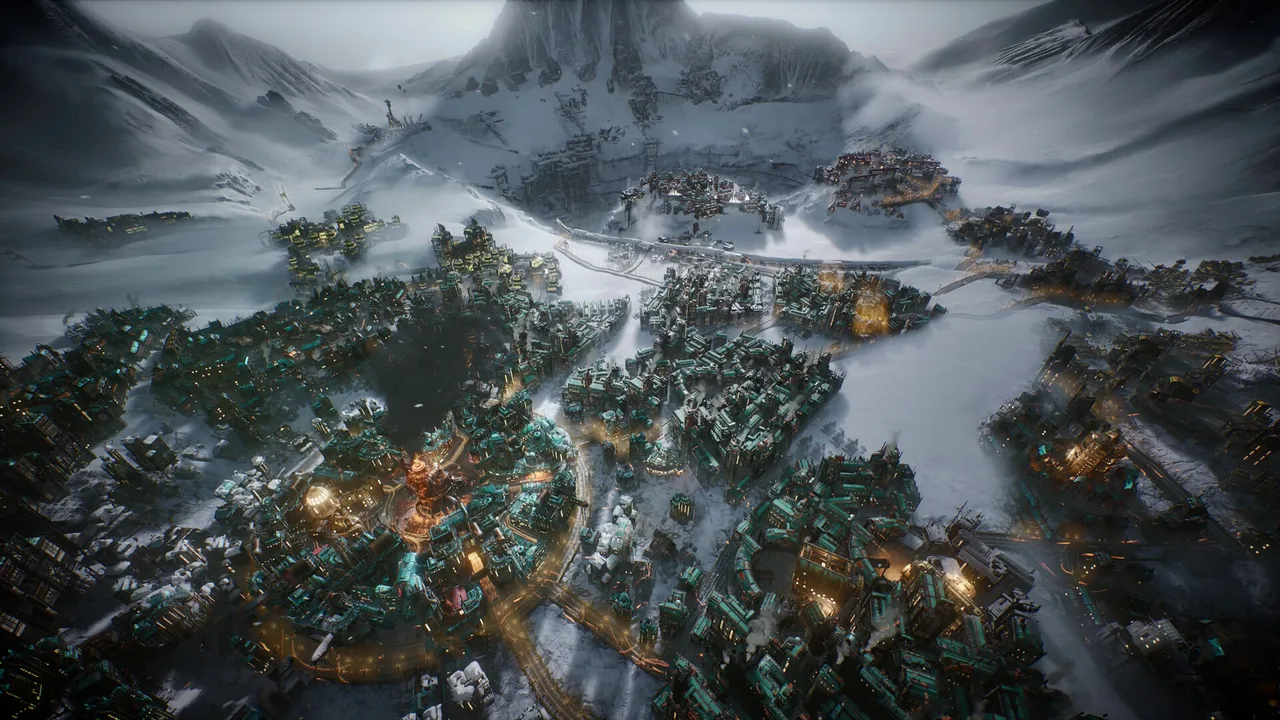
Frostpunk 2Image: 11 bit studios via Steam -
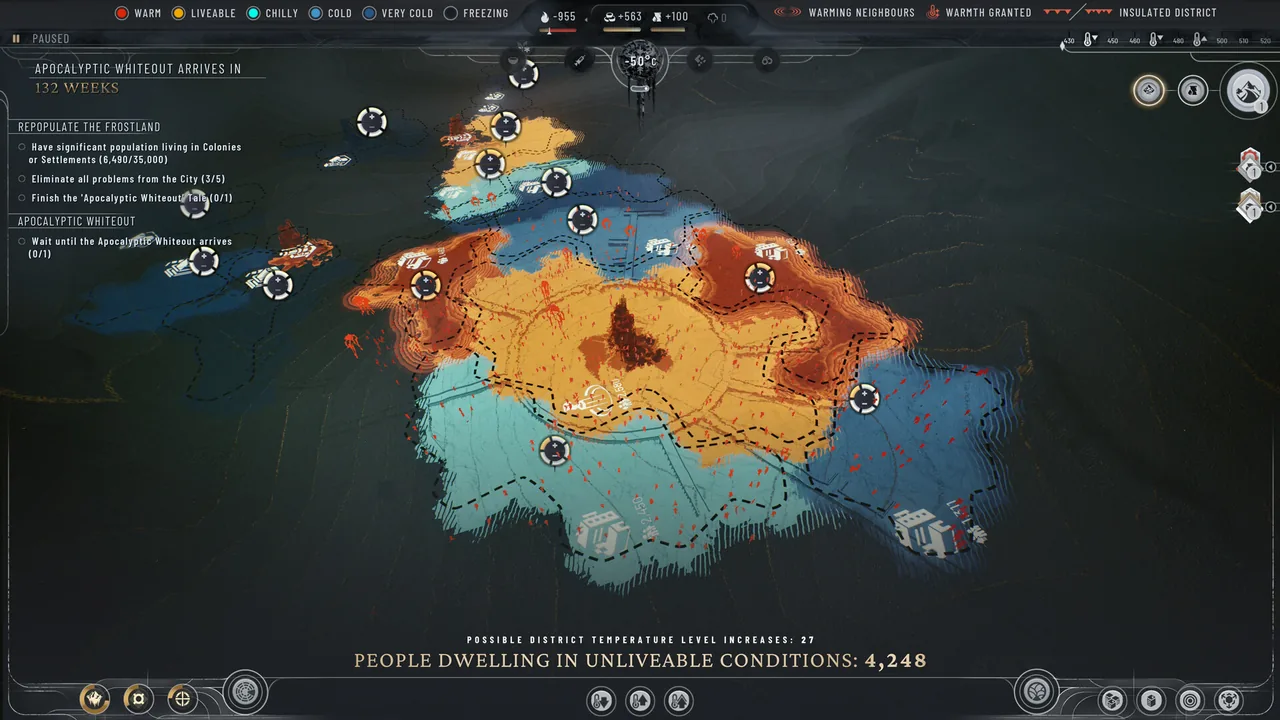
Frostpunk 2Image: 11 bit studios via Steam -
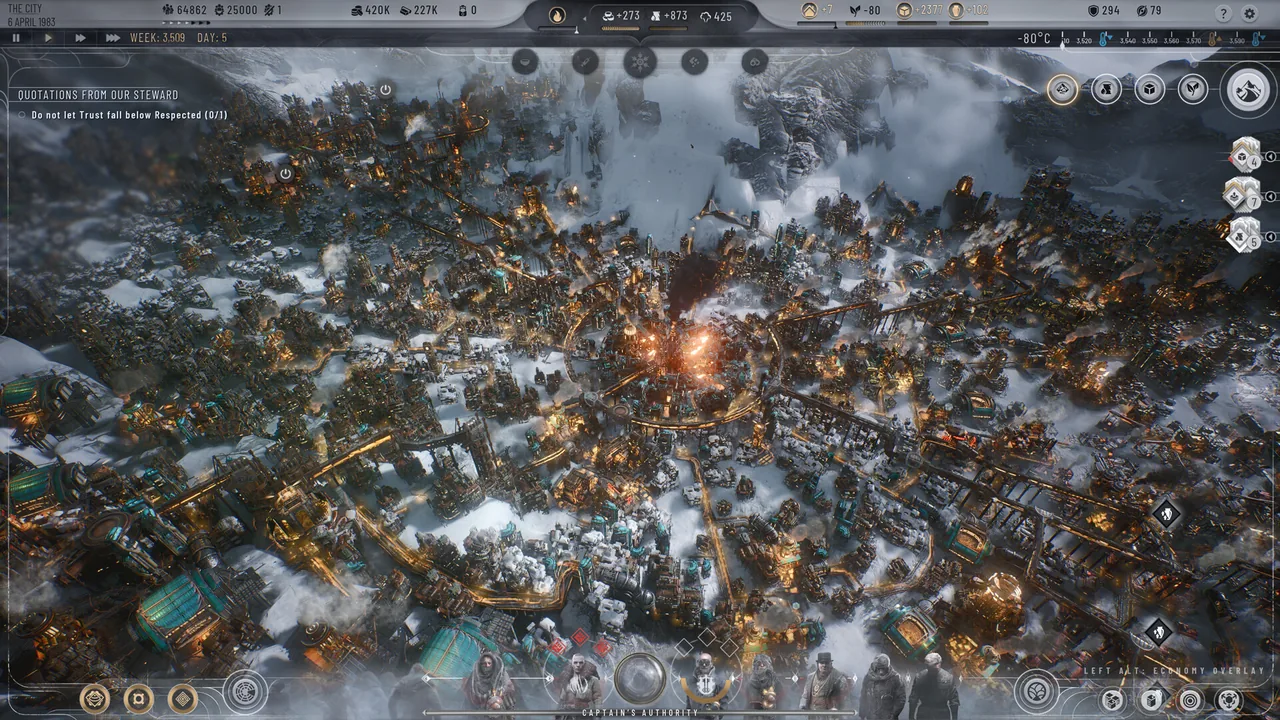
Frostpunk 2Image: 11 bit studios via Steam -
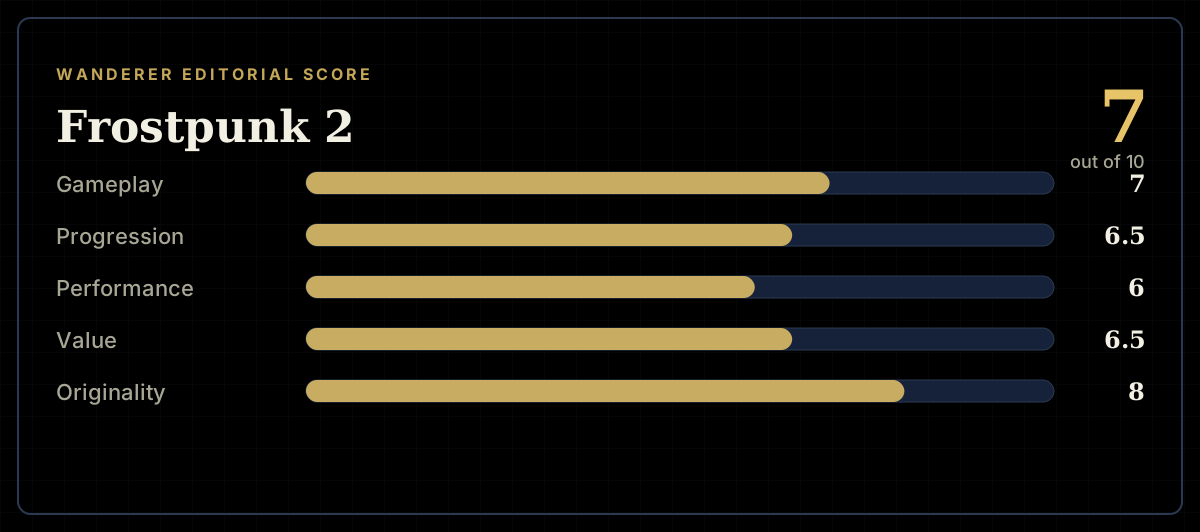
How the review scores each part of the gameWanderer Editorial -
The short versionWanderer Editorial