Game review
Suncraft
7.5 / 10
- Developer
- Spicy Tuna Games
- Publisher
- Spicy Tuna Games
- Released
- 28 July 2026
- Platforms
- Windows
- Genre
- Cozy Crafting / Village Restoration
- Monetisation
- One-time purchase. No in-app purchases, no ads, no premium currency, no DLC. Listed at NZ$11.25 with a 15% launch discount bringing it to NZ$9.56, roughly US$6 — checked 3 August 2026.
- Players
- Single-player only, with Steam leaderboards and stats
The short version
Suncraft does one thing very well: it makes gathering, crafting and rebuilding feel like a rhythm rather than a chore list. The village fills in as you work, the story underneath it is warmer than it needs to be, and there's a genuine thirty hours here for players who want all of it. The catch is the shelf it's sitting on — this is a hands-on crafting game wearing the visual language of an idle one, its automation is partial by design, and the players who bounce are almost always the ones who expected the machines to do the work.
Biggest strengths
- The core rhythm is genuinely restful — gather, process, upgrade, watch a piece of the village come back — and the progression is tuned so there's almost always something reachable
- Real content for the price: roughly nine hours to the middle of the story for most players and around thirty to see everything, at about six US dollars
- The village restoration is visible, not abstract; the world changes as you work, which does the motivational job that a progress bar normally has to
Biggest weaknesses
- Automation is partial and stays partial — companions gather into storage but won't feed your production, which is the single most common disappointment among buyers who expected otherwise
- Crafting speed becomes the bottleneck in the back half, and several players describe the grind overtaking the enjoyment somewhere around hour five
- The endgame leans on RNG ingredient hunting for mandatory quests, with some of those ingredients deliberately excluded from the in-game market
Who it's for: Players who want a small, warm, unhurried crafting game to unwind with — the Stardew and Forager audience rather than the Melvor one. Poorly suited to anyone shopping for an idle game to leave running, or to players who need production lines that feed themselves.
Our recommendation: Buy it if "collect, process, upgrade, watch the village come back" is a loop you find restful rather than repetitive. Play the demo first if you're unsure — it's generous, and its save carries forward, so nothing is wasted. Expect to hand-manage your crafting all the way through, and don't buy it hoping the endgame automates itself, because it doesn't.
7.5 / 10
Somewhere in Suncraft's second act you recruit a bee. It is far larger than a bee should be, it joins your industrial operations without explanation, and nobody in the village finds this worth remarking on. One reviewer flagged this as their favourite thing about the game, and having spent a while with what Suncraft is doing, that reaction makes complete sense. This is a game with a warm, slightly silly heart, and it is not especially interested in justifying itself to you.
What it is interested in is rhythm. Gather, process, upgrade, watch a piece of a ruined village come back. Repeat. It's the oldest loop in the cozy genre and Suncraft executes it with real care — which is why the interesting question about this game isn't whether it's good. It's why a slice of its buyers arrive expecting something else entirely.
The loop, and why it works
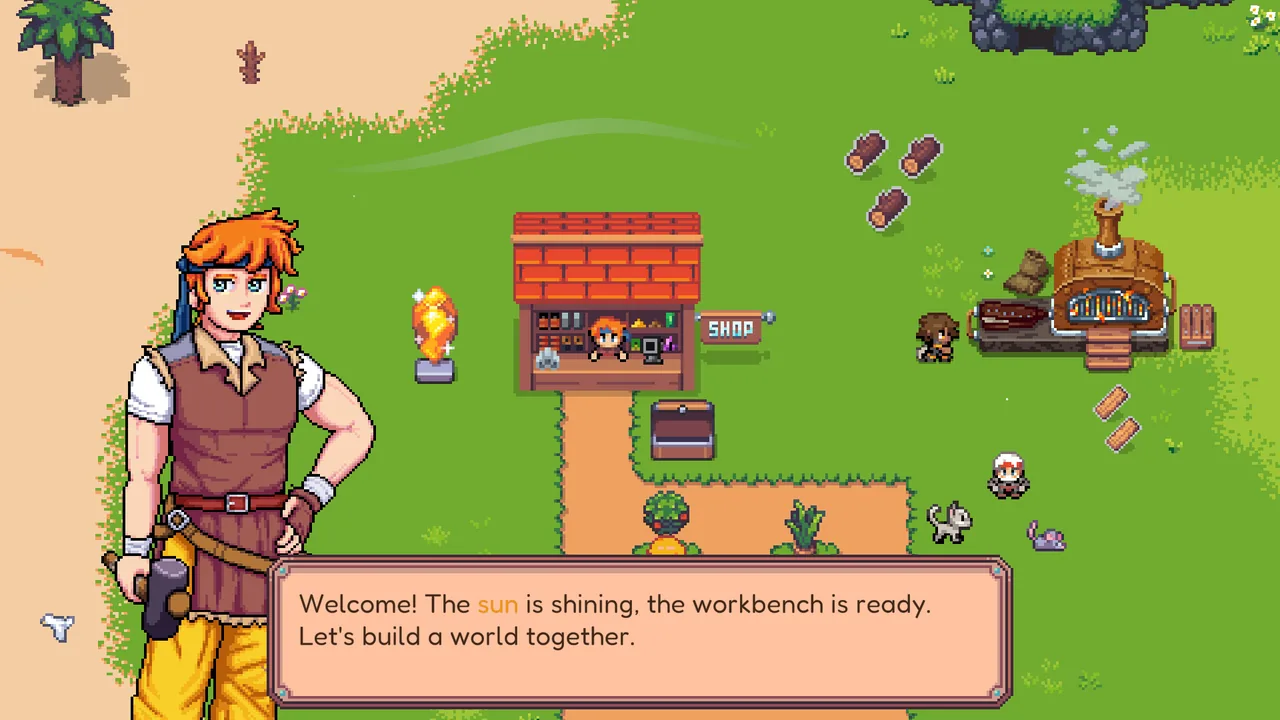
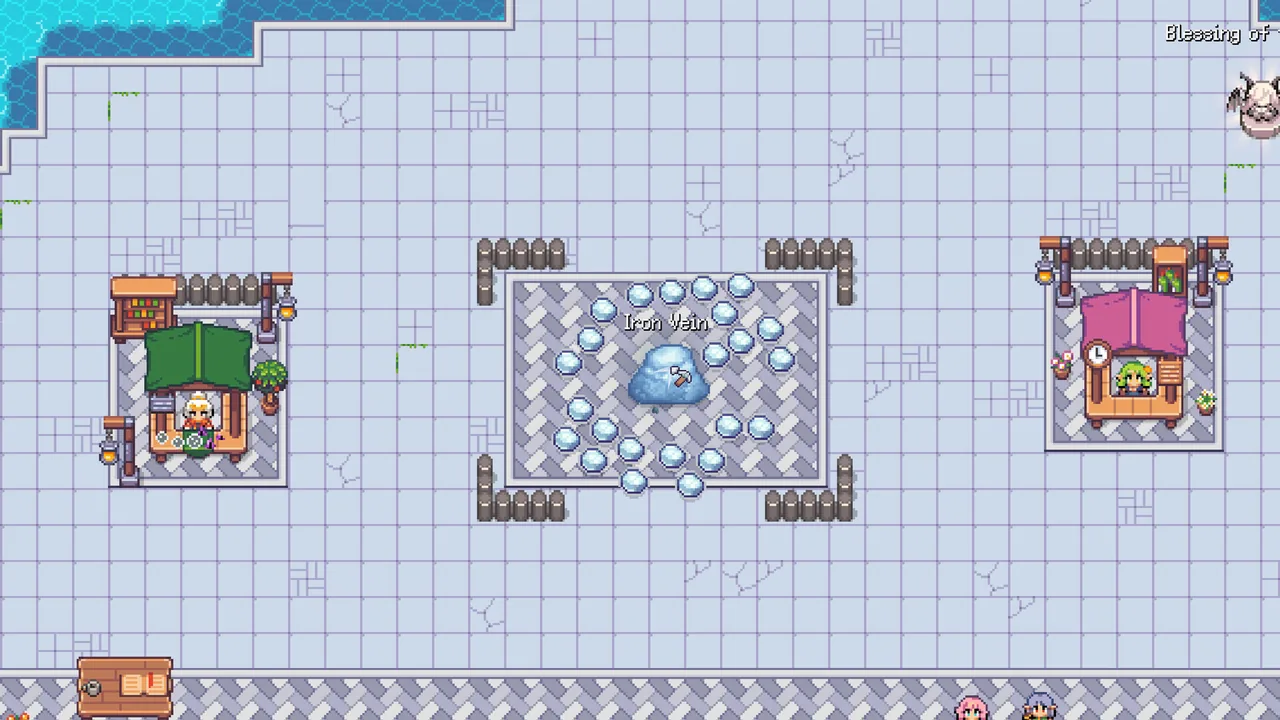
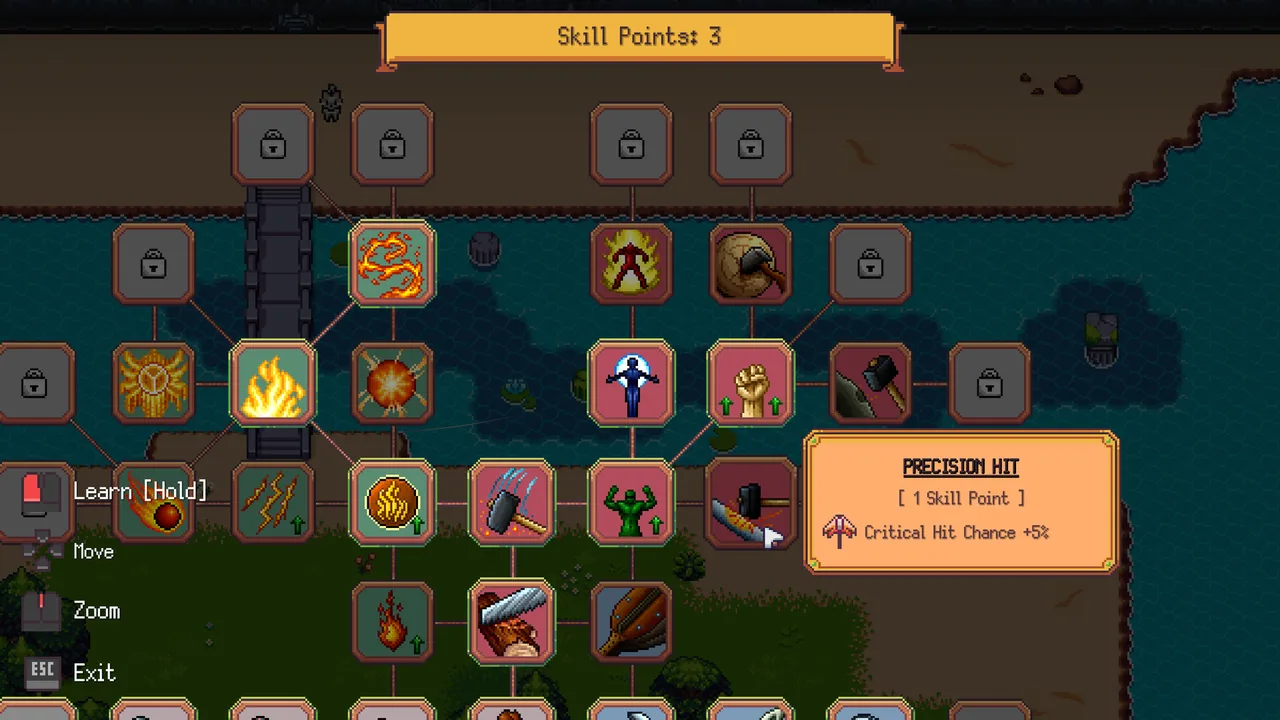
You wash up in a village that used to be something. Raw materials come first — wood, stone, ore — then workstations to process them, then the components those processed goods enable, then the repairs those components unlock. Bridges get fixed. A lab opens. Blueprints accumulate. Skills come off a tree, blessings and companions arrive, and gradually the map opens into new biomes with new material tiers behind them.
The reason this lands better than the average copy of the same idea is that the world visibly responds. Most crafting games express progress as a number going up in a menu. Suncraft expresses it as a village that looks different than it did an hour ago, tied to a story about restoration that's told in small pieces through villager quests. It gives the grinding a destination, which is exactly what Stardew Valley understood and most of its imitators didn't.
The quality-of-life is good too. Save anytime. Steam Cloud. Full controller support alongside a mouse-only scheme. And an accessibility list that's frankly better than most games ten times its budget manage: colour alternatives, camera comfort settings, subtitle options, and no timed inputs anywhere in the game. For a small studio's second-tier price point, someone made deliberate choices there.
It is not an idle game
Here's the fault line, and nearly every negative review sits on it.
Suncraft carries the tags, the art style and the shop placement of an incremental. It has skills, upgrades, companions who gather for you, and a store description that promises you'll "upgrade and automate." What it does not have is production automation. Companions collect resources into a storage box; they do not feed those resources into your workshops. Crafting is something you do, hand-managed, all the way to the end.
For most of the audience that's fine, and several of the warmest reviews are explicit about preferring it — one describes the game as rewarding you for playing rather than for building production lines, and means it as praise. But the players who bounce are consistently the ones who came in expecting Autonauts or Nova Lands and found a game where the bottleneck is crafting speed and the fix is your own attention. One reviewer with 28 hours logged is still angry about it. Another puts it precisely: it's neither a clicker nor an idle game, it lands in between, and in the back half that in-between feels slow.
That's a marketing problem more than a design one, but it's a real one, and it's the single most useful thing to know before buying.
Where the grind starts and where players stop
The pacing complaint has a shape. It's not the opening — that's tuned well, and the achievement data shows almost everyone getting through it. It's the middle, where crafting throughput becomes the limiting factor and the upgrades that would relieve it are themselves gated behind crafting. Multiple reviewers put the turn at around hour five.
The 34 achievements shipped with the game, so the completion curve is trustworthy, and it reads like this: 94% finish the first quest, 89% repair the bridge, 64% reach the first real crafting milestone, 56% open the lab. Then the middle: 43% collect all blueprints, 40% hit the second mining tier. And 32% earn the achievement for the sun returning — which, given the title and the story, is very likely the main arc's conclusion.
A third of buyers finishing the story in the first week is a good number, not a bad one. Below that it thins the way completionist tails always do — 22% for all skills, 20% for all ghosts, 12% for the final gold milestone — and the reviewers who got there describe the last stretch as a grind rather than a finale. The 30-hour completion run one player logged is real, but it's the ceiling, not the average. The median English-language positive reviewer sits around nine hours.
Verdict
For roughly six dollars, Suncraft delivers a well-made, visibly cared-for crafting game with a story worth finishing and a village worth rebuilding. The 94% rating on nearly 300 reviews is not a fluke, and neither is the fact that almost every complaint is a variation on the same expectation mismatch.
Buy it as a cozy game. Do not buy it as an idle game, do not buy it hoping the back half automates itself, and go in knowing that the endgame's mandatory RNG ingredient hunting is the weakest thing here by a distance. Do that, and this is one of the better small purchases of the summer — the kind of game that ends up open on a second monitor for a week and then gets recommended to a friend.
Players who like the restoration fantasy but want the world to keep growing on its own between sessions, rather than waiting patiently for you to come back and click the furnace, may also enjoy Wanderer.
Pros and cons
Pros
- The core rhythm is genuinely restful — gather, process, upgrade, watch a piece of the village come back — and the progression is tuned so there's almost always something reachable
- Real content for the price: roughly nine hours to the middle of the story for most players and around thirty to see everything, at about six US dollars
- The village restoration is visible, not abstract; the world changes as you work, which does the motivational job that a progress bar normally has to
- An unusually complete accessibility list for a small indie — colour alternatives, camera comfort, subtitle options, a mouse-only control scheme and no timed inputs anywhere
- The pre-launch demo carries its save into the full game, so trying it costs nothing but time
Cons
- Automation is partial and stays partial — companions gather into storage but won't feed your production, which is the single most common disappointment among buyers who expected otherwise
- Crafting speed becomes the bottleneck in the back half, and several players describe the grind overtaking the enjoyment somewhere around hour five
- The endgame leans on RNG ingredient hunting for mandatory quests, with some of those ingredients deliberately excluded from the in-game market
- The last stretch of achievements is a completionist slog rather than a design — the final milestones sit at 12–16% for a reason
- Nothing here is new; it's a well-executed assembly of ideas the cozy-crafting genre settled on years ago
Screenshots
-
SuncraftImage: Spicy Tuna Games via Steam -
SuncraftImage: Spicy Tuna Games via Steam -
SuncraftImage: Spicy Tuna Games via Steam -
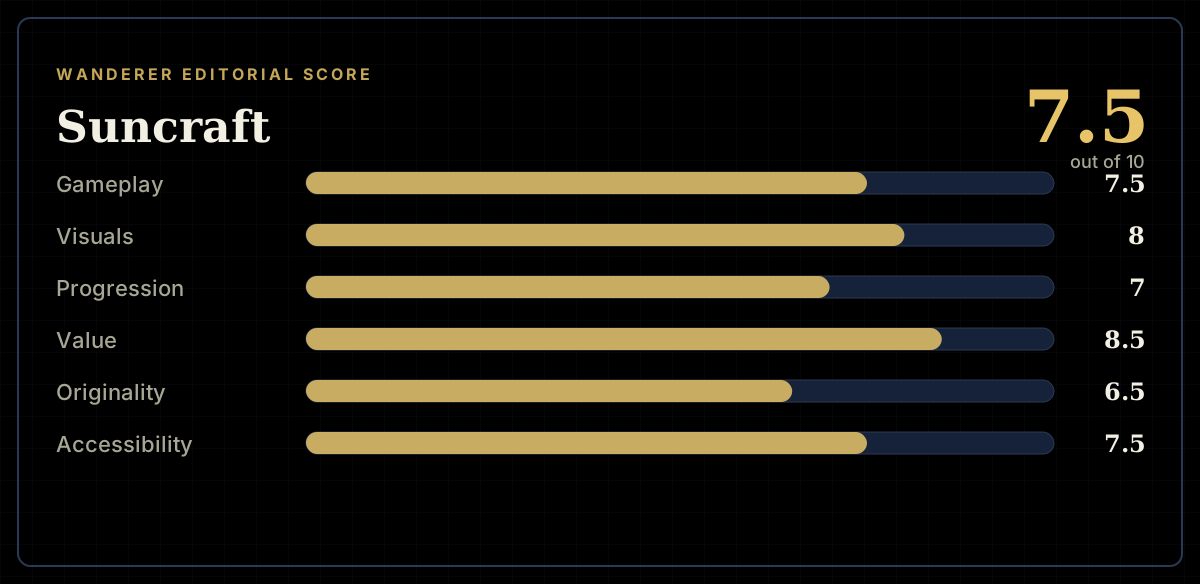
How the review scores each part of the gameWanderer Editorial -
The short versionWanderer Editorial