
Game review
SUMMERHOUSE
5.5 / 10
- Developer
- Friedemann
- Publisher
- Future Friends Games
- Released
- 8 March 2024
- Platforms
- Windows, macOS
- Genre
- Goal-free small-scale building toy
- Monetisation
- One-time purchase, no in-game store or additional currency purchases
- Players
- Single-player only
The short version
SUMMERHOUSE is exactly as small as its own store page says it is: a solo-developer building toy with no goals, no failure state, and no pressure, built entirely around the pleasure of clicking little roof tiles, deck chairs, and potted plants into place until a tiny home takes shape. At its best, reviewers describe it as a genuinely lovely, low-stakes creative outlet, and its Townscaper-adjacent art style earns consistent praise. But a large and specific share of the review sample describes real friction getting there: pieces that don't line up cleanly with each other, a placement and rotation system several reviewers call confusing or outright broken, and a piece count that most buyers say they've fully explored within one to three hours. The developer shipped one meaningful update shortly after launch and then, by all visible evidence, moved on to a different project — which some reviewers read as the game being finished exactly as scoped, and others read as an early promise of ongoing content that never arrived.
Biggest strengths
- The art style and overall atmosphere draw consistent, specific praise across nearly the entire review sample, with reviewers repeatedly calling it exactly the relaxing, pressure-free experience the store page promises
- The developer directly engaged with player feedback during the demo period, with at least one reviewer describing a specific request — outdoor seating — that Friedemann personally modelled and added to the finished game
- At its low price, several reviewers frame the purchase as reasonable even accounting for its limited scope, comparing it favourably to the cost of a coffee for a genuinely charming afternoon
Biggest weaknesses
- The single most repeated complaint concerns basic placement mechanics, with multiple independent reviewers describing pieces that don't align cleanly with each other, forcing awkward workarounds or visible gaps in otherwise simple builds
- Item selection and rotation are described by several reviewers as confusing or clunky, including a specific complaint that browsing the object list means clicking through pieces one at a time with no category menu or way to jump directly to a specific item
- A large share of the negative sample reports running out of meaningful content within one to three hours, citing a limited total piece count and no options to resize, recolour, or otherwise meaningfully customise individual objects
Who it's for: Anyone who wants a short, low-stakes, aesthetically pleasing building toy to unwind with for an afternoon and doesn't need a long-term project or deep customisation options. Not for players looking for a building game with real mechanical depth or years of ongoing content.
Our recommendation: A cheap, pleasant way to spend an hour or two if the cozy Townscaper-style premise appeals to you, and reasonable to buy on sale specifically for that short experience. Don't expect meaningful creative control or lasting replay value, and expect some real friction with the placement controls along the way.
5.5 / 10
SUMMERHOUSE doesn't oversell itself. Its own store description calls it "a small game with no goals or challenges, created by a single person," and asks players to adjust their expectations accordingly before they buy. That honesty is worth taking at face value, and it should shape how any review scores it — this was never pitched as a deep building sim, and judging it as one would be unfair. What's genuinely useful about the review sample, though, is how consistently reviewers who read that same honest pitch still ran into a specific, repeated set of frictions once they actually started building, frictions that have nothing to do with the game's modest scope and everything to do with how the building itself feels to use.
The mood it's actually going for, and where it lands
The core appeal is straightforward and, for a large majority of the review sample, genuinely delivered: pick a setting — coastal, urban, or alpine — and click together a tiny, lived-in home out of roof pieces, walls, furniture, and small decorative touches, with a visual style reviewers repeatedly compare to Townscaper's chunky, colourful charm. "It's a relaxing, creative building simulator," one reviewer writes, capturing the tone most positive reviews share: no stats, no failure state, nothing to optimise, just placing blocks until something looks right. One especially warm account describes the developer personally modelling and adding a requested plastic deck chair after being asked on social media during the demo period — a small, specific, and verifiable-sounding gesture that speaks well of the solo developer's engagement with early feedback.
Where the placement system gets in its own way
Set against that atmosphere, the single most repeated complaint in the negative sample has nothing to do with content volume — it's about the basic act of putting a piece down. "Half of the blocks do not align properly," one reviewer writes, describing 25 minutes lost trying to build a simple small house. Another, more detailed account lists a specific structural gap: "no resizing or rotating and not many blocks," alongside a selection system that requires clicking through pieces one at a time with no category browser, meaning a player moving quickly can easily skip past the exact piece they wanted. A third describes items that "randomly cling to each other and rotate" unpredictably, with no clear way to tell which of several build layers a given piece currently occupies. These aren't vague dissatisfaction — they're specific, mechanically identical complaints repeated by reviewers who otherwise have nothing but goodwill for the game's concept and art.
A short experience, by design or by scope
The second major thread concerns how much there actually is to do. Multiple reviewers independently describe running out of new pieces and ideas within one to three hours, a duration several frame as reasonable for the price but others find disappointing given how much promotional attention the "Overwhelmingly Positive"-adjacent review score attracted them with. "It feels too barebones. There just isn't enough substance to keep me engaged," one representative negative review states, having gone in expecting more from the review sample's enthusiasm than the actual content on offer. This review's own check of the store page confirms the developer never claimed otherwise — the description is upfront about the game's small scope — but that honesty doesn't change the practical experience of a buyer who wanted the cozy mood to last longer than an afternoon.
Finished, or unfinished? The review sample argues both
A pointed disagreement runs through the sample about whether the game's current state represents a deliberate, completed scope or an abandoned promise of more. "Really frustrated people say the dev abandons their projects. It's simply untrue. The game is finished," one reviewer writes, explicitly pushing back against that framing. Set against that is at least one negative reviewer who states plainly the game "seems to be abandoned," pointing to the total absence of new content since launch. This review can confirm directly, from the partner-events feed, that the developer shipped one substantive quality-of-life patch about a month after the March 2024 launch and then moved on to other work, including a new and unrelated game announced in mid-2025 — a pattern consistent with a small, intentionally scoped project reaching a natural stopping point rather than a larger promise being broken, though reasonable buyers can and clearly do read that same timeline differently depending on what they expected going in.
What the achievement data adds
Steam's own completion figures offer a useful, independent read here. The easiest achievement sits above 98%, meaning nearly everyone who buys the game does something with it, but the hardest completion-oriented unlocks — full 10,000-block milestones and similar long-haul goals — sit below 2% and 5% respectively. That's a steep drop-off for a game with no failure state and nothing standing between a player and full completion except their own attention span, and it lines up neatly with the review sample's dominant story: an appealing opening hour or two that a real share of buyers don't feel motivated to push much further.
Final verdict
SUMMERHOUSE is a small, honestly-scoped, genuinely charming building toy that delivers real, if brief, cozy satisfaction for most of the people who try it — and real, specific frustration for a meaningful minority who run into its fiddly placement system before the atmosphere has a chance to win them over. It's an easy, low-cost recommendation for exactly what it says it is on the store page: a short, pressure-free afternoon with some lovely little houses. Just go in with modest expectations about both the piece count and the placement controls, since both are the actual, specific limits of what this particular small game has to offer.
Pros and cons
Pros
- The art style and overall atmosphere draw consistent, specific praise across nearly the entire review sample, with reviewers repeatedly calling it exactly the relaxing, pressure-free experience the store page promises
- The developer directly engaged with player feedback during the demo period, with at least one reviewer describing a specific request — outdoor seating — that Friedemann personally modelled and added to the finished game
- At its low price, several reviewers frame the purchase as reasonable even accounting for its limited scope, comparing it favourably to the cost of a coffee for a genuinely charming afternoon
- The game is explicit and upfront on its own store page about being a small, goal-free project from a single developer, which several reviewers specifically credit for setting honest expectations rather than overpromising
Cons
- The single most repeated complaint concerns basic placement mechanics, with multiple independent reviewers describing pieces that don't align cleanly with each other, forcing awkward workarounds or visible gaps in otherwise simple builds
- Item selection and rotation are described by several reviewers as confusing or clunky, including a specific complaint that browsing the object list means clicking through pieces one at a time with no category menu or way to jump directly to a specific item
- A large share of the negative sample reports running out of meaningful content within one to three hours, citing a limited total piece count and no options to resize, recolour, or otherwise meaningfully customise individual objects
- Following one meaningful quality-of-life patch about a month after launch, the developer appears to have moved on to other projects, including a new game announced in mid-2025, leaving the small additional content some reviewers hoped for undelivered
- Steam's own achievement data shows a steep drop-off in engagement, with the easiest achievement sitting above 98% but the hardest completion-related unlocks sitting below 5%, consistent with reviewers' accounts of interest fading well before "finishing" everything the small piece pool has to offer
Screenshots
-

SUMMERHOUSEImage: Future Friends Games via Steam -

SUMMERHOUSEImage: Future Friends Games via Steam -

SUMMERHOUSEImage: Future Friends Games via Steam -
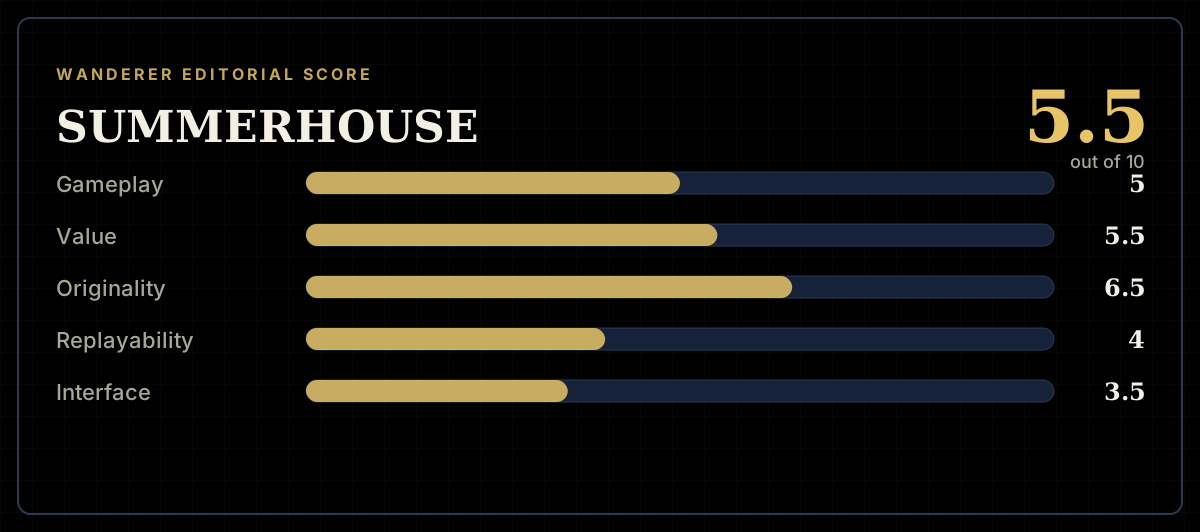
How the review scores each part of the gameWanderer Editorial -
The short versionWanderer Editorial